Architectural Review & Historic Preservation
Designated Local Historic
- ≈ Landmarks
- ≈ Districts
- ≈ Multiple Properties
2024 Edition

- Dennis Fernandez, Manager
- Elaine Lund
- Aminta Owen
- Ron Vila
- Alan Villa
- Alexis Guzman
- Heather Bonds
- Hillsborough County Library Special Collections
- USF Special Collections
- www.haithitrust.org
TABLE OF CONTENTS
- Introduction ...............................................................................................................................iii
- History ...........................................................................................................................................v
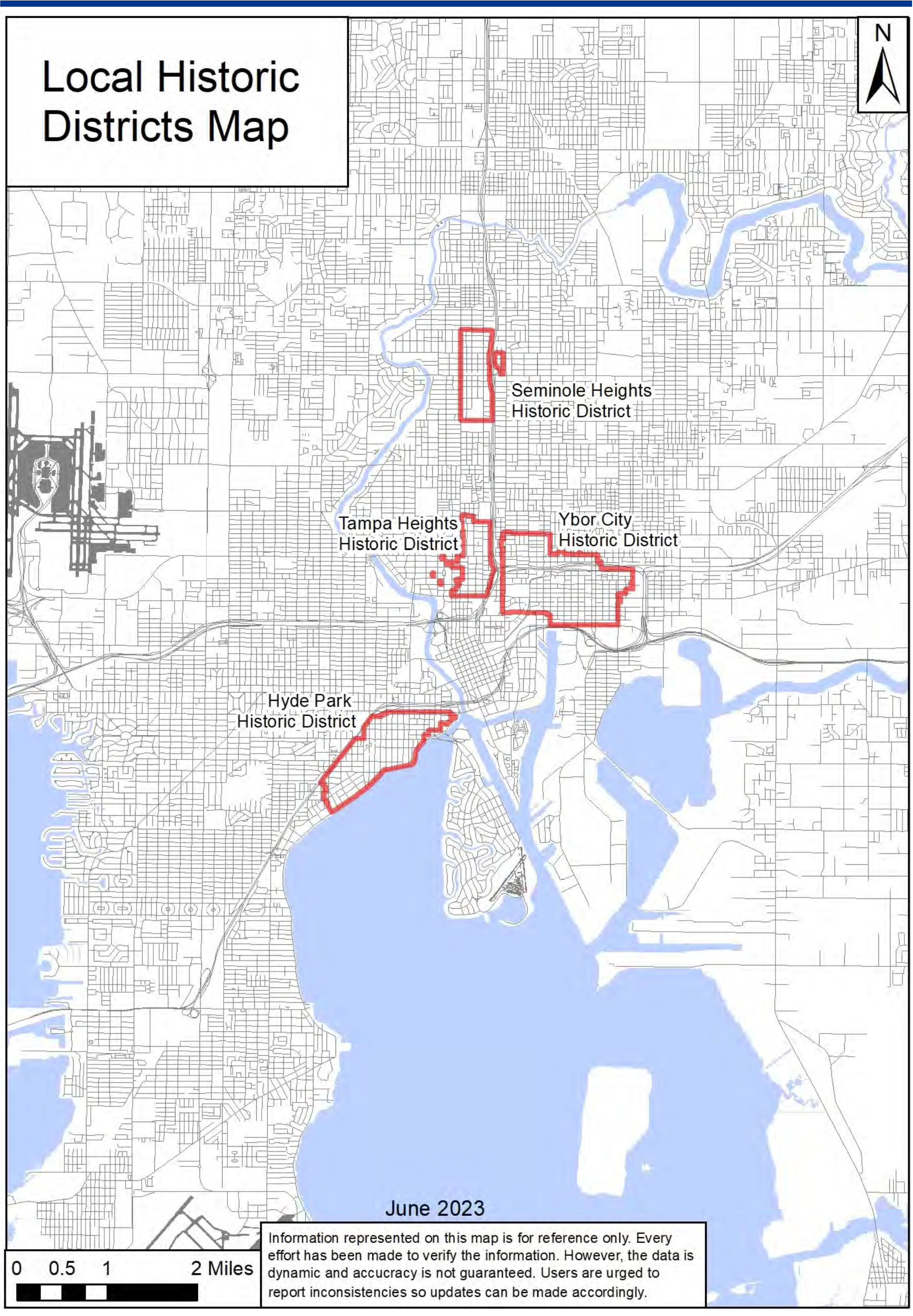
Local Historic Districts
- Local Historic Districts Map.............................................................................................. 1
- Hyde Park Historic District .................................................................................................. 2
- Hyde Park Boundary Map................................................................................................. 3
- Seminole Heights Historic District ...................................................................................... 4
- Seminole Heights Boundary Map..................................................................................... 5
- Tampa Heights Historic District .......................................................................................... 6
- Tampa Heights Boundary Map......................................................................................... 7
- Ybor City Historic District .................................................................................................... 8
- Ybor City Boundary Map................................................................................................... 9
Local Historic Landmarks
- Balbin Brothers Cigar Factory ........................................................................................... 14
- Berriman-Morgan Cigar Factory ....................................................................................... 15
- Biglow-Helms House ......................................................................................................... 16
- Bustillo Brothers & Diaz Cigar Factory .............................................................................. 17
- Captain William Parker Jackson House............................................................................. 18
- El Centro Español de West Tampa.................................................................................... 19
- Classic Courthouse ............................................................................................................ 20
- Commercial Bank Building ................................................................................................ 21
- Cuscaden Park and Swimming Pool.................................................................................. 23
- Episcopal House of Prayer ................................................................................................ 24
- Fire Station No. 1 / Tampa Firefighters Museum ............................................................. 25
- First Federal Savings & Loan Association of Tampa ......................................................... 26
- Floridan Hotel ................................................................................................................... 27
- Fort Homer W. Hesterly.................................................................................................... 28
- Giunta Homestead and Farm............................................................................................ 29
- George Guida, Sr. House................................................................................................... 30
- Tom Henderson Memorial Chapel.................................................................................... 31
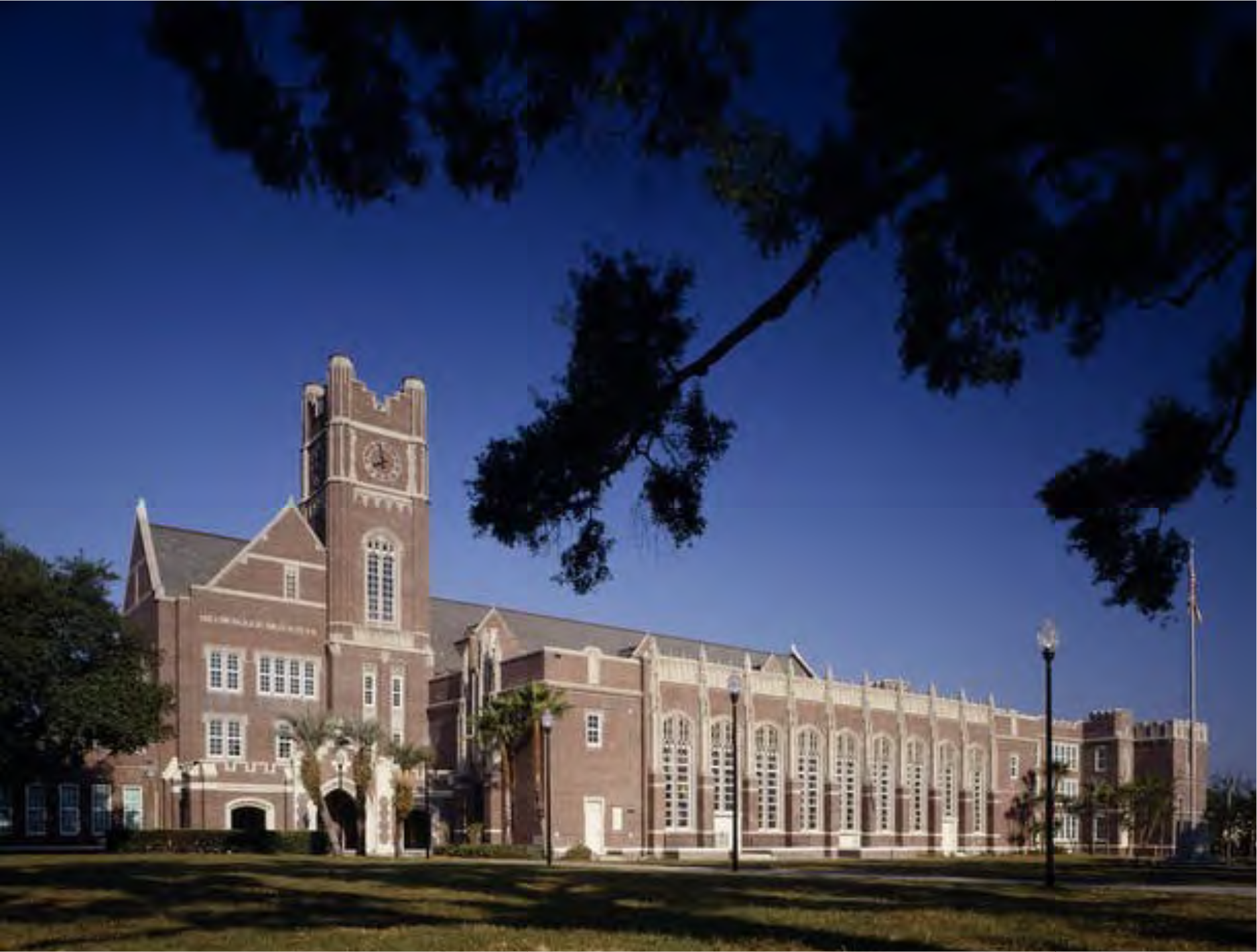
- Hillsborough County High School ..................................................................................... 32
- Hillsborough Lodge No. 25, F.&A.M. ................................................................................ 33
- Historic Structures of MacFarlane Park ............................................................................ 34
- Home Association ............................................................................................................. 35
- Jackson House................................................................................................................... 37
- Roy Jenkins Swimming Pool.............................................................................................. 38
- Peter O. Knight Cottage .................................................................................................... 39
- S.H. Kress Building............................................................................................................. 40
- Larmon Factory Warehouse ............................................................................................. 41
*Larger versions of maps can be viewed online at www.tampa.gov/Historic-Preservation
Local Historic Landmarks (continued)
- Kid Mason Center .............................................................................................................. 42
- Metal Works - Dicus Building ............................................................................................ 43
- Oaklawn-St. Louis Cemetery ............................................................................................. 46
- Old St. Mark Community Aid Center ................................................................................ 48
- Old School House .............................................................................................................. 49
- Palace of Florence ............................................................................................................. 50
- Palmerin Hotel .................................................................................................................. 52
- Plant-Hatton House ........................................................................................................... 53
- Horace Theodore Robles House ....................................................................................... 54
- Roosevelt Elementary School ........................................................................................... 55
- St. Paul A.M.E. Church ...................................................................................................... 56
- St. Peter Claver School ...................................................................................................... 57
- Seybold Bakery Building .................................................................................................... 58
- Sicilian Club ....................................................................................................................... 59
- Sociedad La Union Marti-Maceo ...................................................................................... 60
- Souders Building ............................................................................................................... 61
- Stovall House ..................................................................................................................... 62
- Strickland Transportation Company Warehouse ............................................................. 63
- Stringer-Stalnaker House .................................................................................................. 64
- Sulphur Springs Gazebo .................................................................................................... 65
- Sulphur Springs Water Tower ........................................................................................... 66
- Tampa Armature Works .................................................................................................... 67
- Tampa Bay Hotel / Plant Hall ............................................................................................ 68
- Tampa City Hall ................................................................................................................. 71
- Tampa Free Library ........................................................................................................... 72
- Tampa Theatre and Office Building .................................................................................. 73
- Tampa Union Station ........................................................................................................ 74
- Tampa Water Works ......................................................................................................... 75
- Tierra del Lago Cigar Factory ............................................................................................ 76
- David L. Tippin Water Treatment Facility ......................................................................... 77
- Tolle Parsonage / Coombs Log Cabin ............................................................................... 78
- West Tampa Public Library ............................................................................................... 79
- Dr. Jacob White, Sr. House ............................................................................................... 80
- Babe Zaharias Golf Course ................................................................................................ 81
- Zion Evangelical Lutheran Church .................................................................................... 82
Multiple Properties Designations
- Beach Park ......................................................................................................................... 86
- Historic Bridges on the Hillsborough River ....................................................................... 90
- Historic Central Avenue Area / African-American Heritage Sites ..................................... 92
- North Franklin Street / Downtown ................................................................................... 94
- West Tampa ...................................................................................................................... 98
Index by Address
Index by Address .................................................................................................................. 101
INTRODUCTION
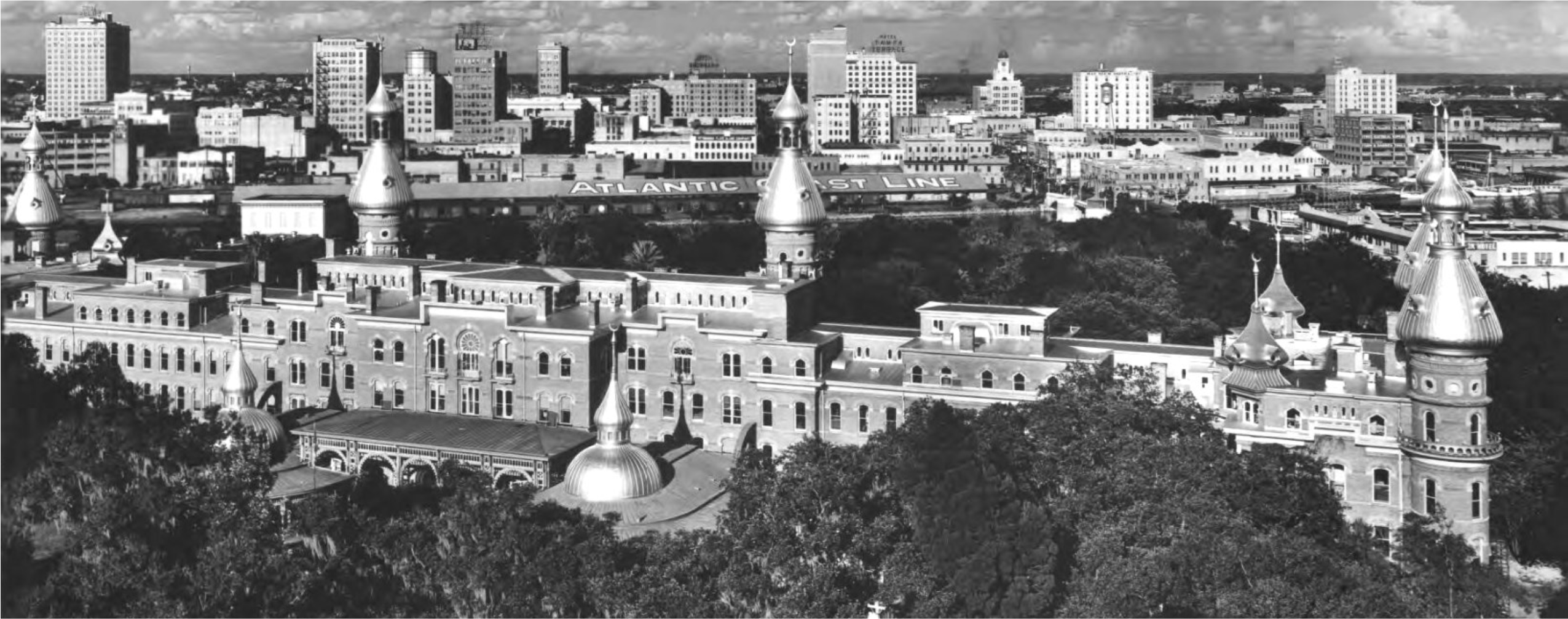
The City of Tampa designates historic properties that have distinctive character, architectural value, or cultural significance. This local historic designation protects properties for the future. The City has four local historic districts, 61 local historic landmarks, and five multiple property designations, all of which encompass approximately 4,530 buildings and other historic resources. Each structure and site represents a piece of the physical development of Tampa’s history, from the bridges spanning the Hillsborough River, to the grand Tampa Bay Hotel and Plant Park, to the modest shotgun homes that were built by the hundreds to support the cigar industry. Each structure was constructed to satisfy Tampa’s booming growth as the area transformed from a small community around an Army fort to a major urban center.
Local historic designation encourages sensitive treatment and discourages unsympathetic changes from occurring. This is ensured through a process called design review, whereby the appropriate architectural review commission reviews and approves changes, additions, new construction, and demolitions.
Designations occur by local ordinance and the process is described within Chapter 27, City of Tampa Code of Ordinances. The designation is layered over the existing zoning classifications and results in regulations over only the exterior appearance of the improvements within the designated historic area. The historic designation does not change the uses for which the properties are permitted.
The majority of the properties described in this document are also listed in the National Register of Historic Places. The National Register is the United States’ official list of historic places. The listing identifies buildings, structures, and objects as well as historic districts that are historically, architecturally, or archaeologically significant.
HISTORY
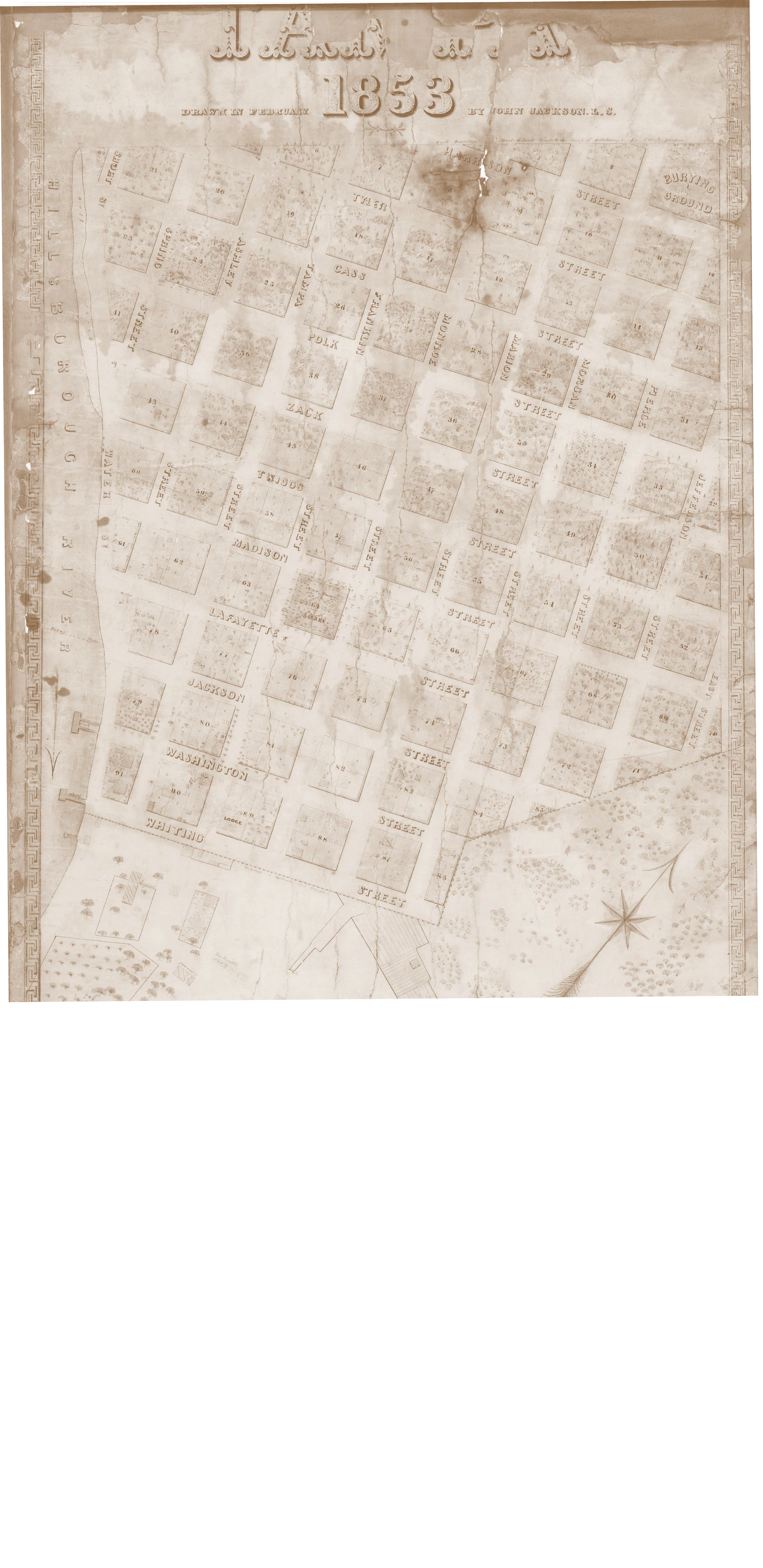
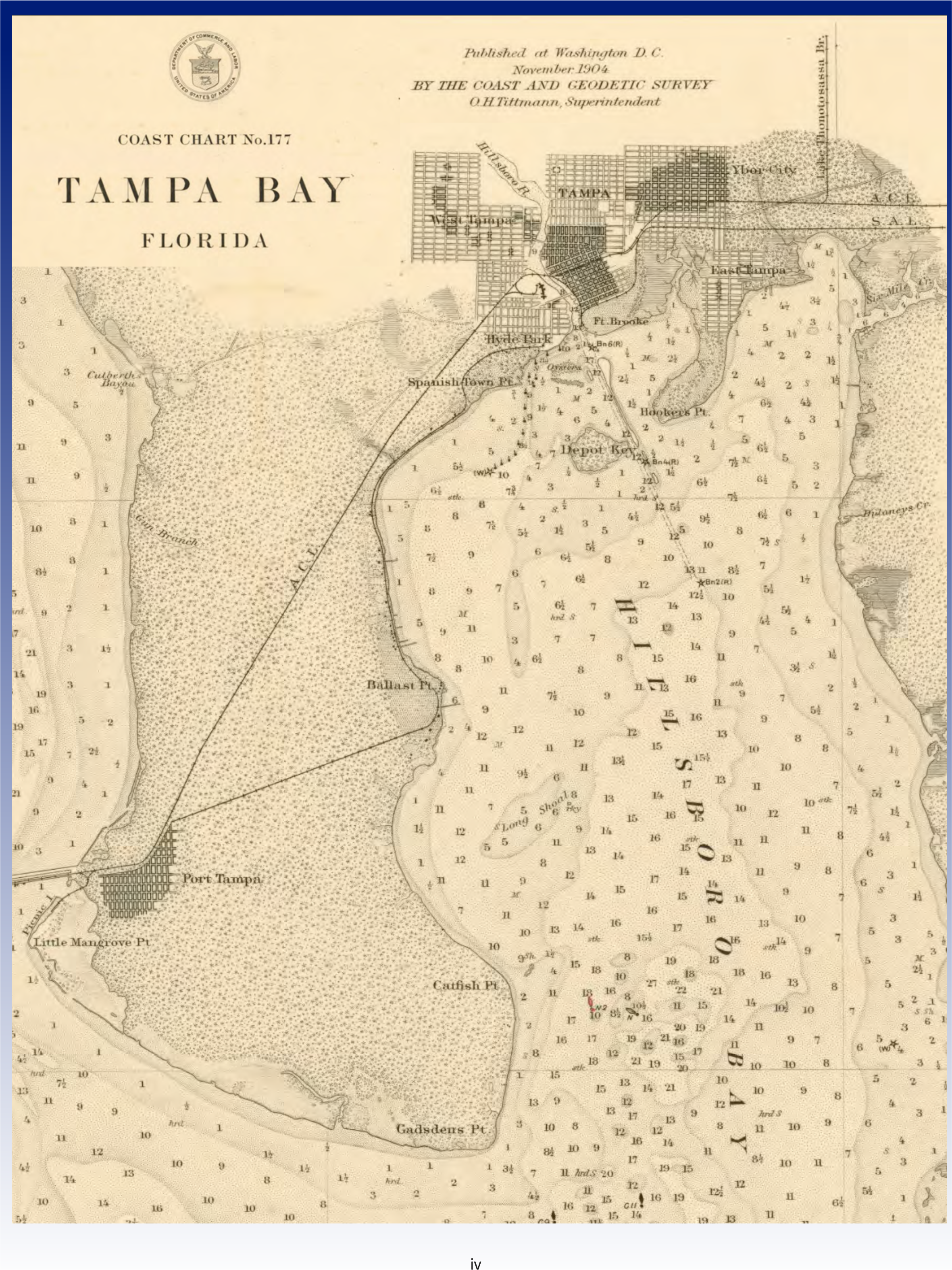
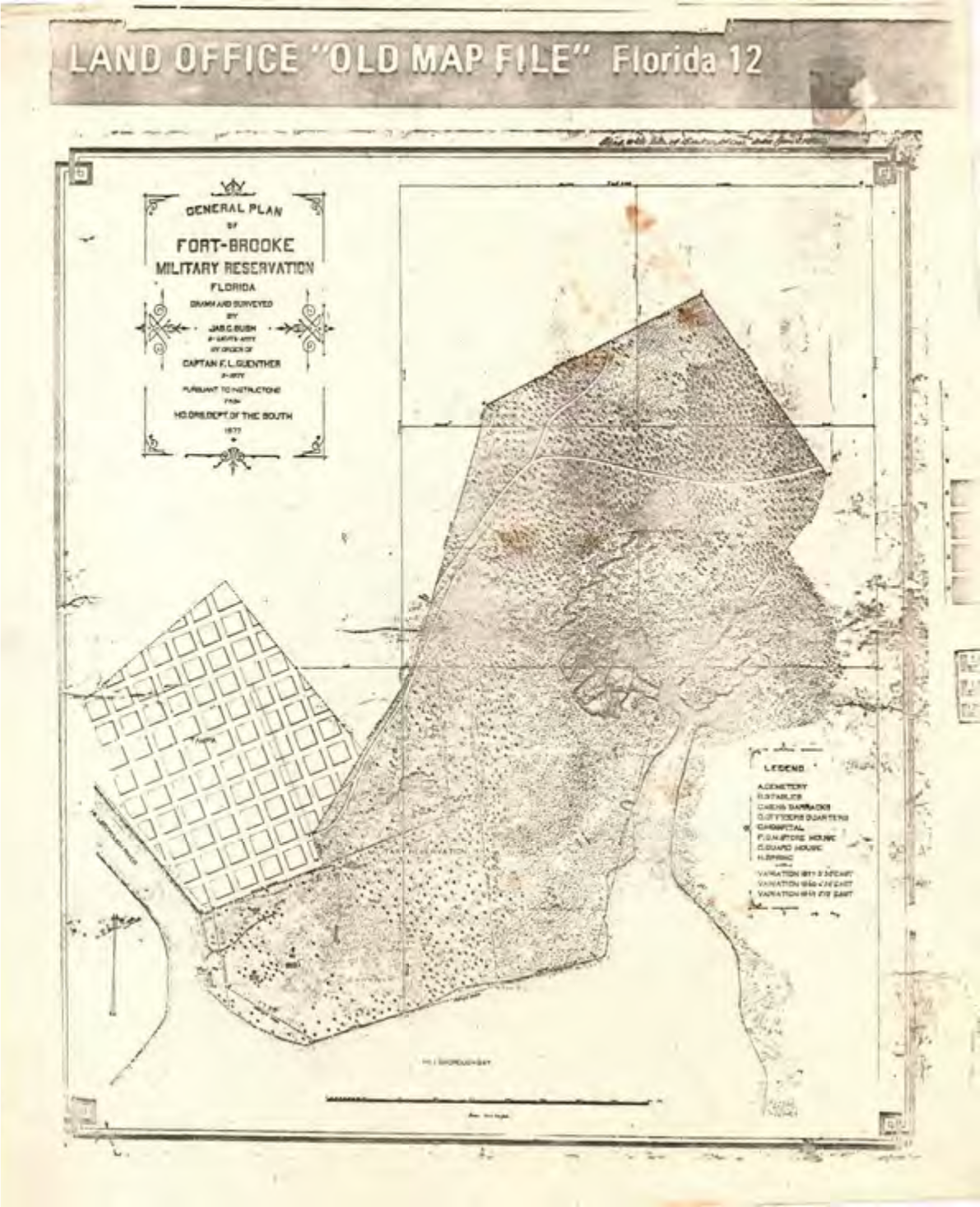
Florida officially became a United States territory in 1821, when the U.S. acquired it from Spain under the Adams-Onis Treaty. President James Monroe appointed General Andrew Jackson as Governor of the recently acquired territory in 1822, and the U.S. Army established an outpost at Tampa Bay in 1824. Colonel George Mercer Brooke commanded the fort, which served as a garrison for the Seminole Wars. With the founding of Fort Brooke, some settlers were drawn to the area. The Army reduced the size of Fort Brooke in 1846, and 160 acres north of Whiting Street were granted to Hillsborough County for the county seat. John Jackson then surveyed and laid out the first plan of Tampa. By 1858, Tampa was dotted with houses, churches, and businesses.
For Tampa, the last part of the 19th century was a time of phenomenal growth. By 1883, all of the Fort Brooke military reservation was restored to the public domain and opened to civilian settlement, causing a flurry of real estate speculation.
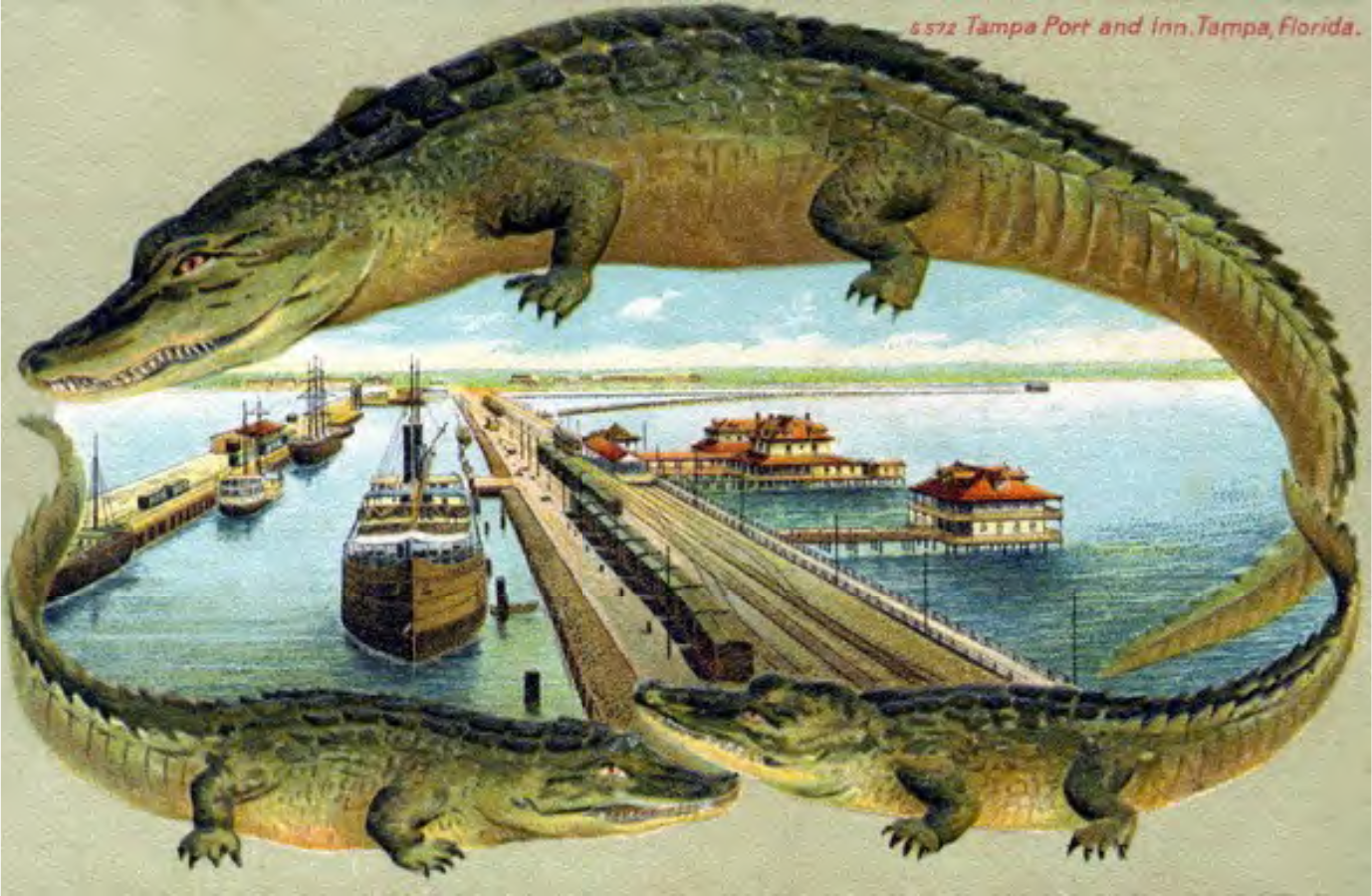
January 1884 saw the completion of Henry B. Plant's South Florida Railroad, finally linking Tampa to the nation’s essential transportation network. Plant’s railroad extended to Port Tampa, connecting with his steamship lines. Plant built the lavish Tampa Bay Hotel on the west bank of the Hillsborough River and the Inn at Port Tampa over the water. When phosphates were discovered nearby in the 1880s, the resulting mining and shipping industries prompted a boom of growth and wealth.

Growing prosperity led to the spread of residential development and the new suburbs of Tampa Heights and Hyde Park. These neighborhoods, previously wilderness and farmland, transformed into streets lined with elegant houses. In 1888, the first bridge over the Hillsborough River, the Lafayette Street Bridge, linked the City of Tampa with Hyde Park and the site of Plant’s grand Tampa Bay Hotel. By the early twentieth century, Tampa was a thriving community.
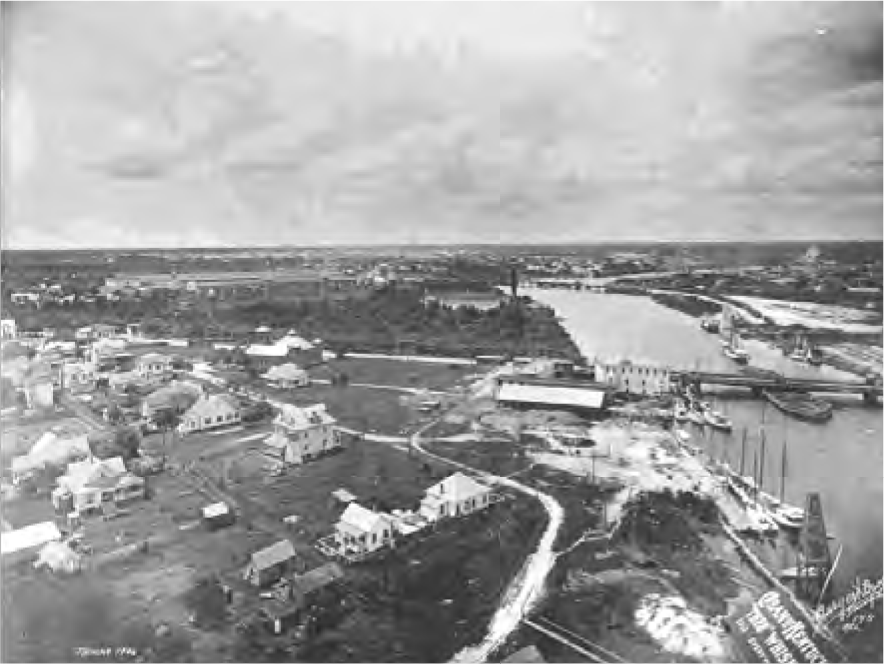
Vicente Martinez Ybor, a Spanish cigar maker, and fellow cigar maker Ignacio Haya visited Tampa in 1885. They recognized the potential in Tampa's port and new rail line. After forming a land deal with the Tampa Board of Trade, Ybor and Haya laid out a cigar manufacturing city. By the end of 1886, Ybor City had become a reality. The Ybor and Haya cigar factories were in full operation, several hundred worker houses were occupied, and many businesses had opened. The City of Tampa annexed Ybor City in June 1887.
Across the river, Hugh C. Macfarlane set out to turn 120 acres of swampland into another cigar manufacturing town. Macfarlane’s Investment Company raised the money to build the Fortune Street Bridge and constructed factory buildings to attract cigar manufacturers and housing for their future employees. 1893, West Tampa had 25 cigar factories and was quickly developing into a rival of Ybor City. In 1895, West Tampa incorporated as a city, and it remained independent until 1925.
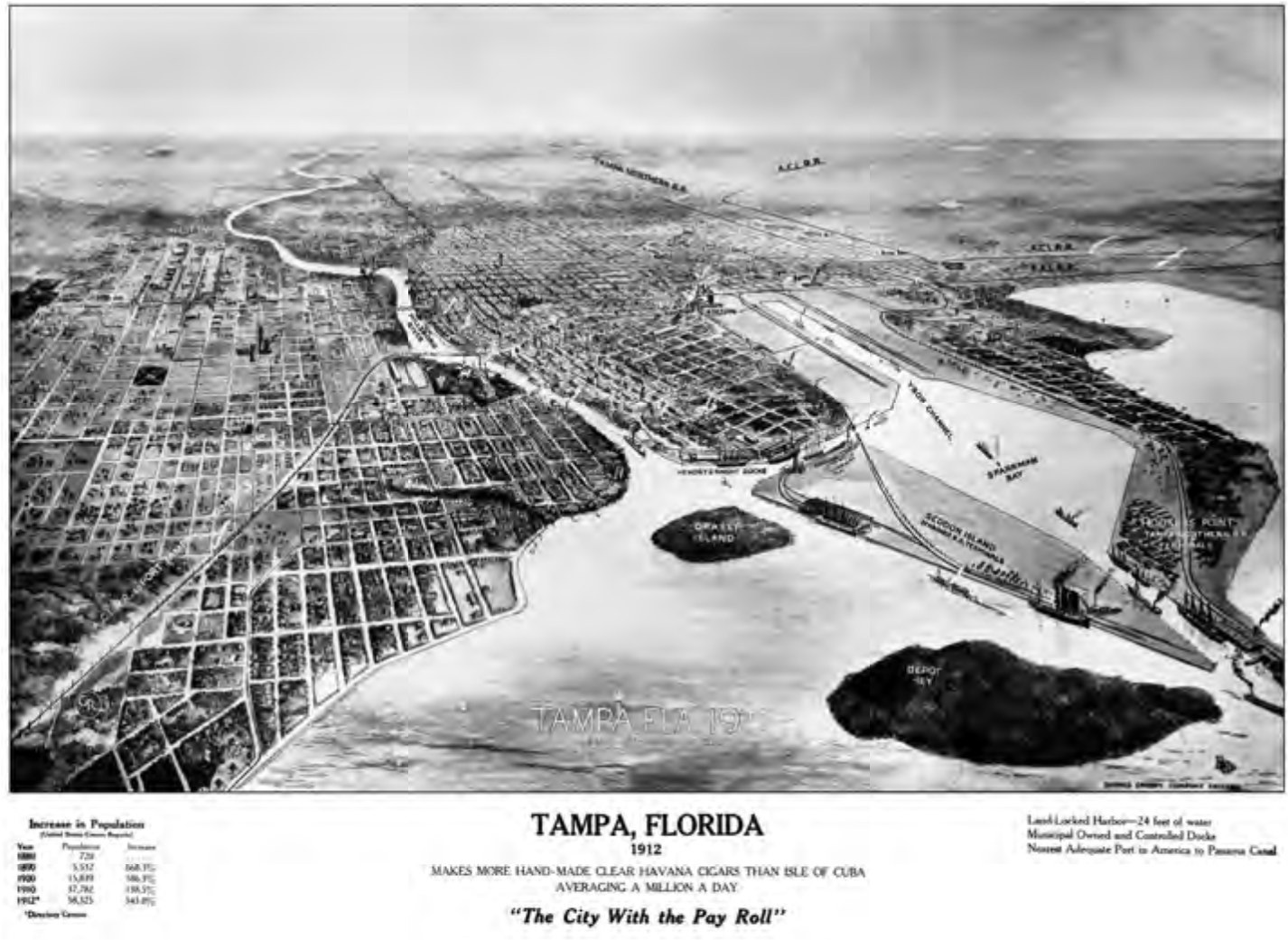
The use of Port Tampa as a major staging area for the training and embarkation of military forces during the Spanish-American War prompted the U.S. Congress to provide funding for the improvement of Tampa’s downtown docking facilities. The construction of terminals and piers along Ybor Channel during the first World War established Tampa as a major port.
and West Tampa.
The 1920s Land Boom saw the rapid development of real estate, including the exclusive Davis Islands. Extended streetcar lines and the popular, affordable bungalow made new suburban neighborhoods like Seminole Heights ideal for the middle class.
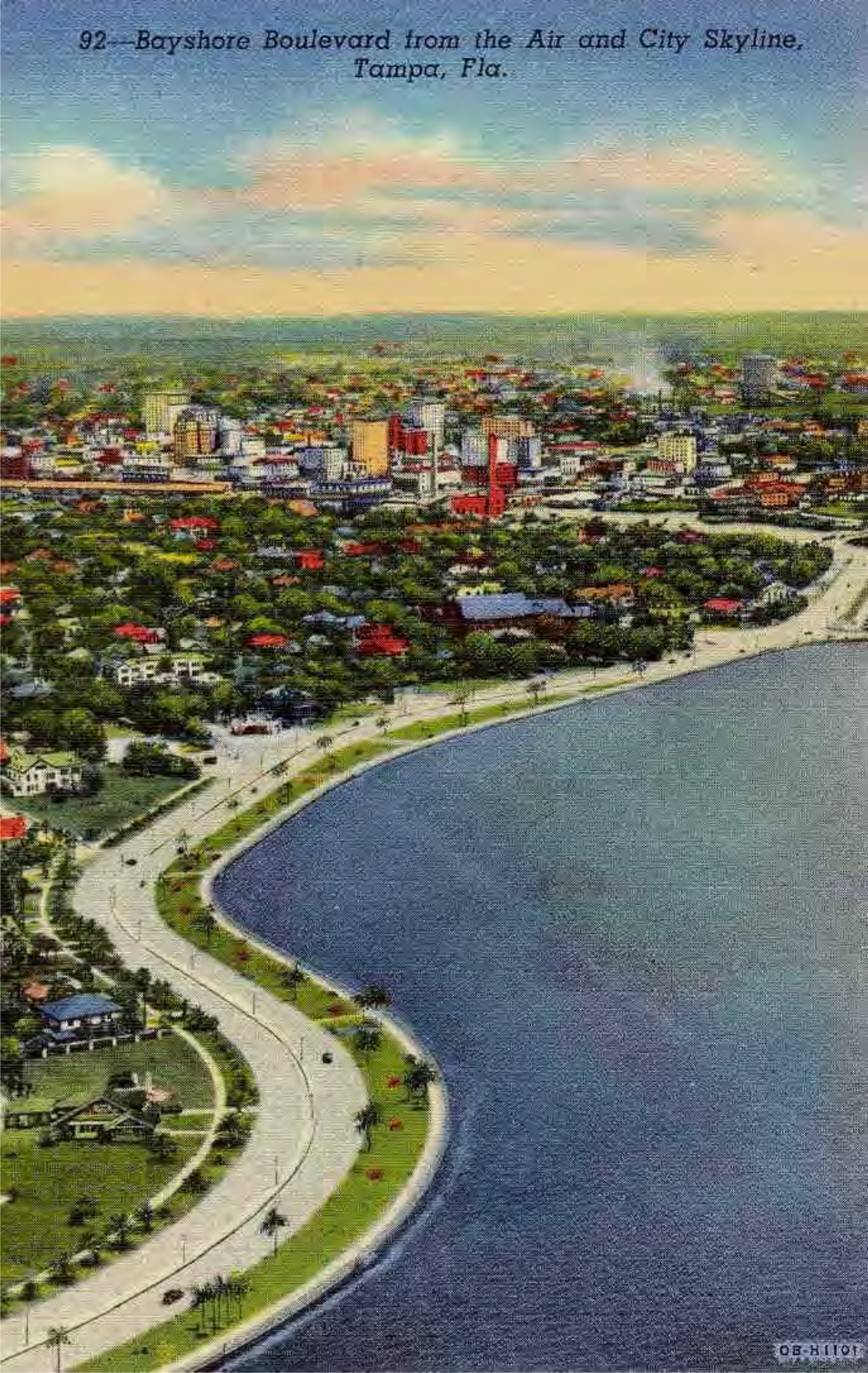
New Deal Era projects completed Bayshore Boulevard, connecting it to Platt Street, and built the Peter O. Knight Airport on Davis Islands and the Fort Homer W. Hesterly Armory in West Tampa.
The creation of MacDill Field in 1939 set the course for Tampa to be a major military headquarters. The G.I. Bill and a post-war population boom encouraged young families to move away from Tampa’s core and into the expanding suburbs of South Tampa
In 1953, the city annexed over 60 square miles of unincorporated land, including the communities of Sulphur Springs and Palma Ceia. As a result, the city’s population grew rapidly, increasing by 150,289 residents during the 1950s. The University of South Florida was established in 1956, sparking development in northern Tampa and nearby Temple Terrace. Downtown, businesses left along with the residents. Meanwhile, Urban Renewal and construction of the Interstate Highway System and the Crosstown Expressway forever changed large swaths of land in Tampa’s oldest neighborhoods. Today, Tampa’s downtown and historic neighborhoods are once again thriving.


Ł ŁŁ Ł Ł Ł Ł Ł Ł Ł Ł ŁŁ Ł Ł ŁŁŁŁ Ł Ł ŁŁ ŁŁ Ł %k Ł Ł Ł Ł Ł ŁŁ ŁŁŁŁŁŁŁŁŁŁ Ł Ł ŁŁŁ Ł ŁŁŁ ŁŁ Ł Ł ŁŁ Ł Ł Ł Ł Ł Ł ŁŁŁŁ Ł Ł Ł Ł Ł Ł Ł Ł Ł "i. .. Ł Ł /. # Ł Ł • Ł Ł Ł Ł Ł Ł Ł Ł Ł Ł ŁŁ Ł Ł Ł Ł Ł 1° • Ł sr Ł ŁŁŁŁ Ł Ł Ł Ł Ł Ł Ł Ł Ł Ł Ł Ł . , Ł
--f Ł ' Ł Ł Ł Ł a1h+, 1I4 Ł ,1: ·542 J "" .1 Ł 7 "Mlu, Ł Ł y7
Delightful, health -giving climate. Glorious sunsets, moonlit bay. Come and enjoy South Florida Fair, Gasparilla Carnival, hunting, fishing, golfing, band concerts, innumerable games and recreations.
Tampa's metropolitan atmosphere will please you. Largest resort in America's playground, and the fastest growing city in the South. Excellent opportunity for investment. Ships of seven seas meet in Tampa's port. Write for illustrated literature.
3
Tampa Board of Trade
Box 3025
Tampa, Florida
LOCAL HISTORIC DISTRICTS
HYDE PARK
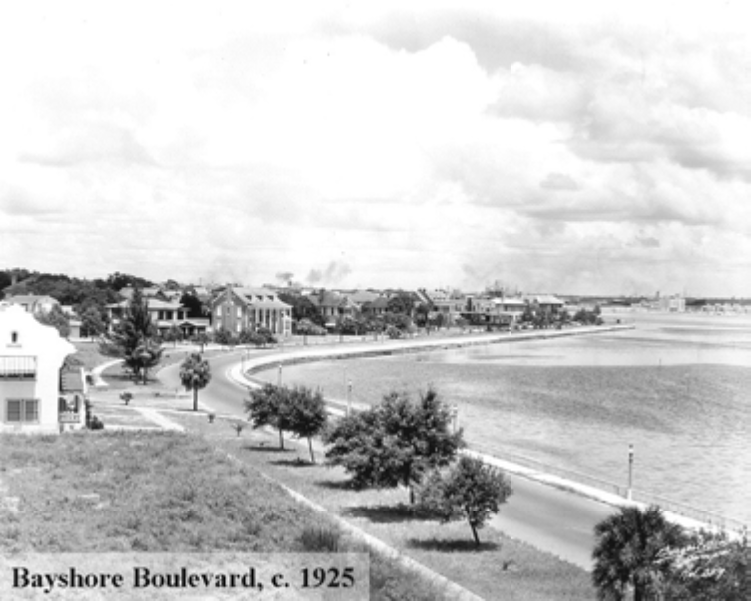
The Hyde Park Local Historic District encompasses approximately 600 acres with a majority of the structures reflecting American architectural trends during the late 19th and early 20th centuries. Revival styles and bungalows along tree-lined avenues are particularly evident. In addition to residential structures, the district contains schools, churches, commercial structures, and other non-residential buildings that contribute to the historic character of Hyde Park.
- Period of Significance: 1886-1933
- National Register Listing: 1985
- Local Historic Designation: 1988
- Local Historic District Expanded: 2023
- Contributing Buildings: 918
- Non-Contributing Buildings: 533

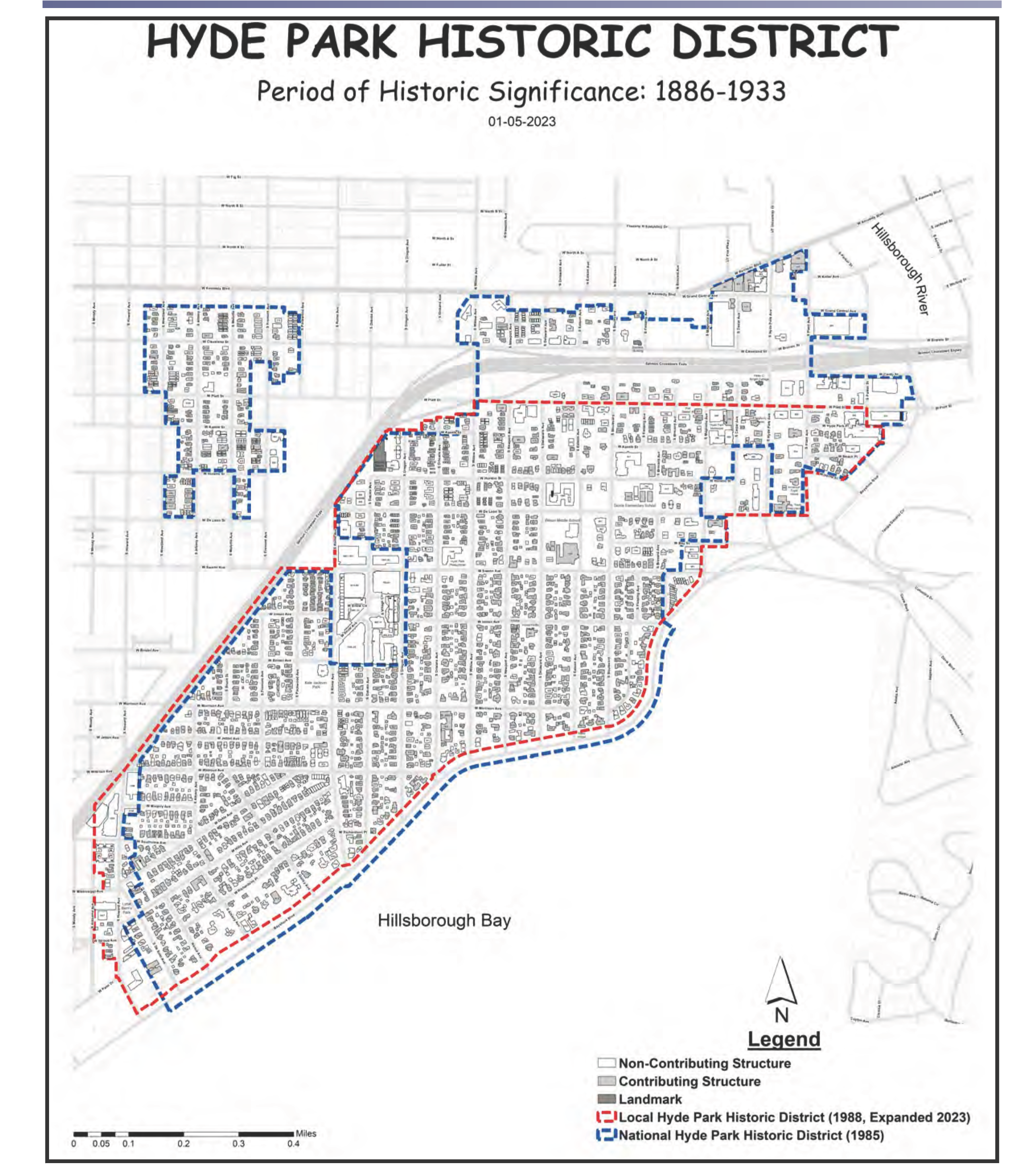
HYDE PARK HISTORIC DISTRICT Period of Historic Significance: 1886-1933
IT K III!mMiles 0 0.05 0 1 0.2 0.3 0.4 01-05-2023 Hillsborough Bay Legend □ Non-Contributing Structure □ Contributing Structure ■ Landmark st.mo.e e I -L'ILocal Hyde Park Historic District (1988, Expanded 2023) l'National Hyde Park Historic District (1985)
SEMINOLE HEIGHTS
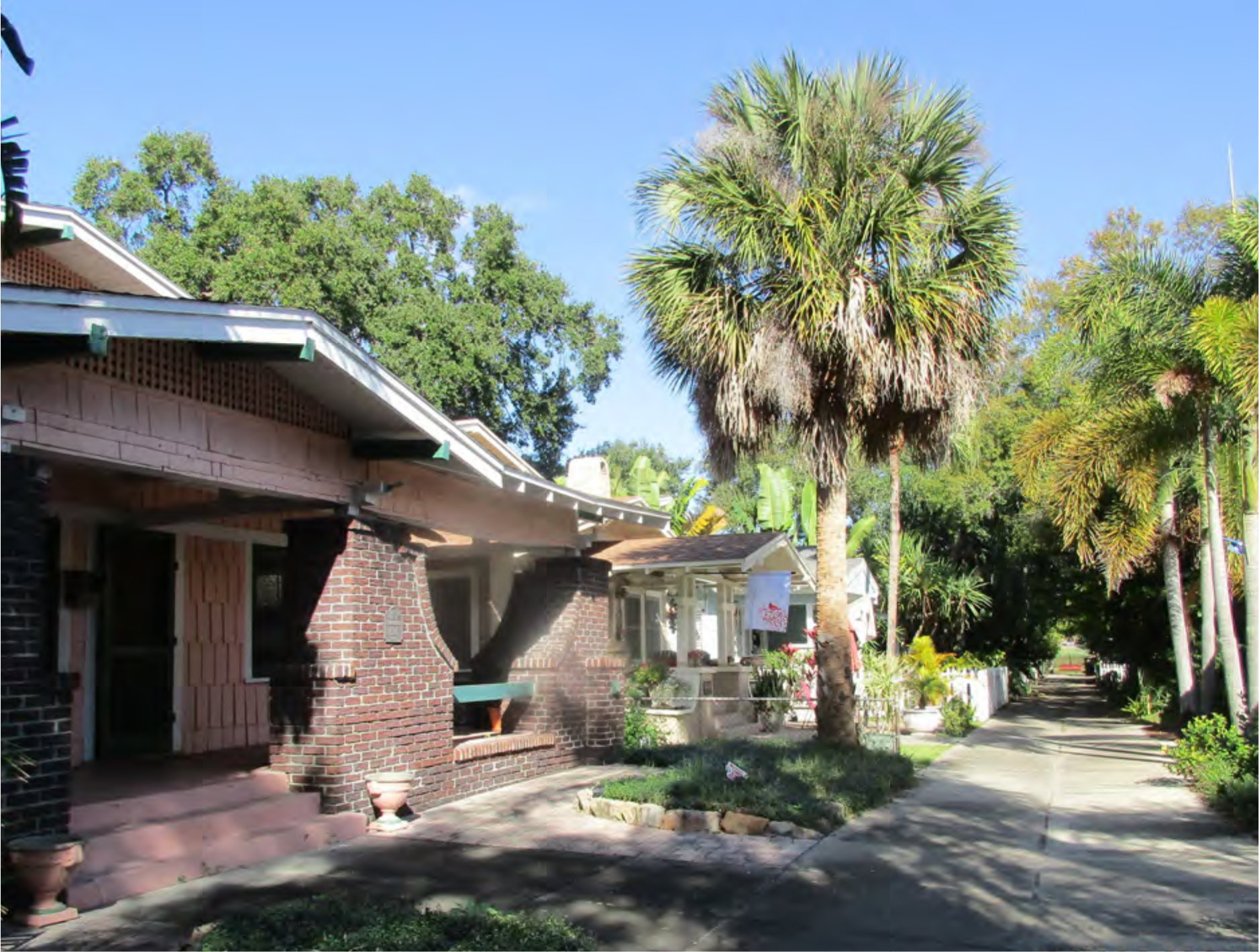
Seminole Heights was developed as one of Tampa’s early suburbs, originally outside of the city limits. It was established along the trolley line that ran from Tampa north to Sulphur Springs. Seminole Heights Local Historic District exhibits an old neighborhood flavor with its bungalow lined avenues and oak tree canopied streets. The district, composed of approximately 215 acres, features a large concentration of bungalow style residences constructed between 1912 and 1939, many of which are elaborately detailed.
- Period of Significance: 1912—1939
- National Register Listing: 1993
- Local Historic Designation: 1995
- Contributing Buildings: 374
- Non-Contributing Buildings: 326
TAMPA HEIGHTS
As one of the earliest residential neighborhoods, Tampa Heights has retained many of its original streetscape features such as brick streets, granite curbstones, and stamped concrete sidewalks. The Tampa Heights Local Historic District consists of approximately 200 acres and represents a wide variety of formal architectural styles, including Colonial Revival, Queen Anne, Tudor Revival, and Mediterranean Revival. Urban professionals of the time selected Tampa Heights based on its architectural qualities and close proximity to downtown Tampa.
- Period of Significance: 1890—1945
- National Register Listing: 1995
- Local Historic Designation: 2000
- Contributing Buildings: 282
- Non-Contributing Buildings: 254
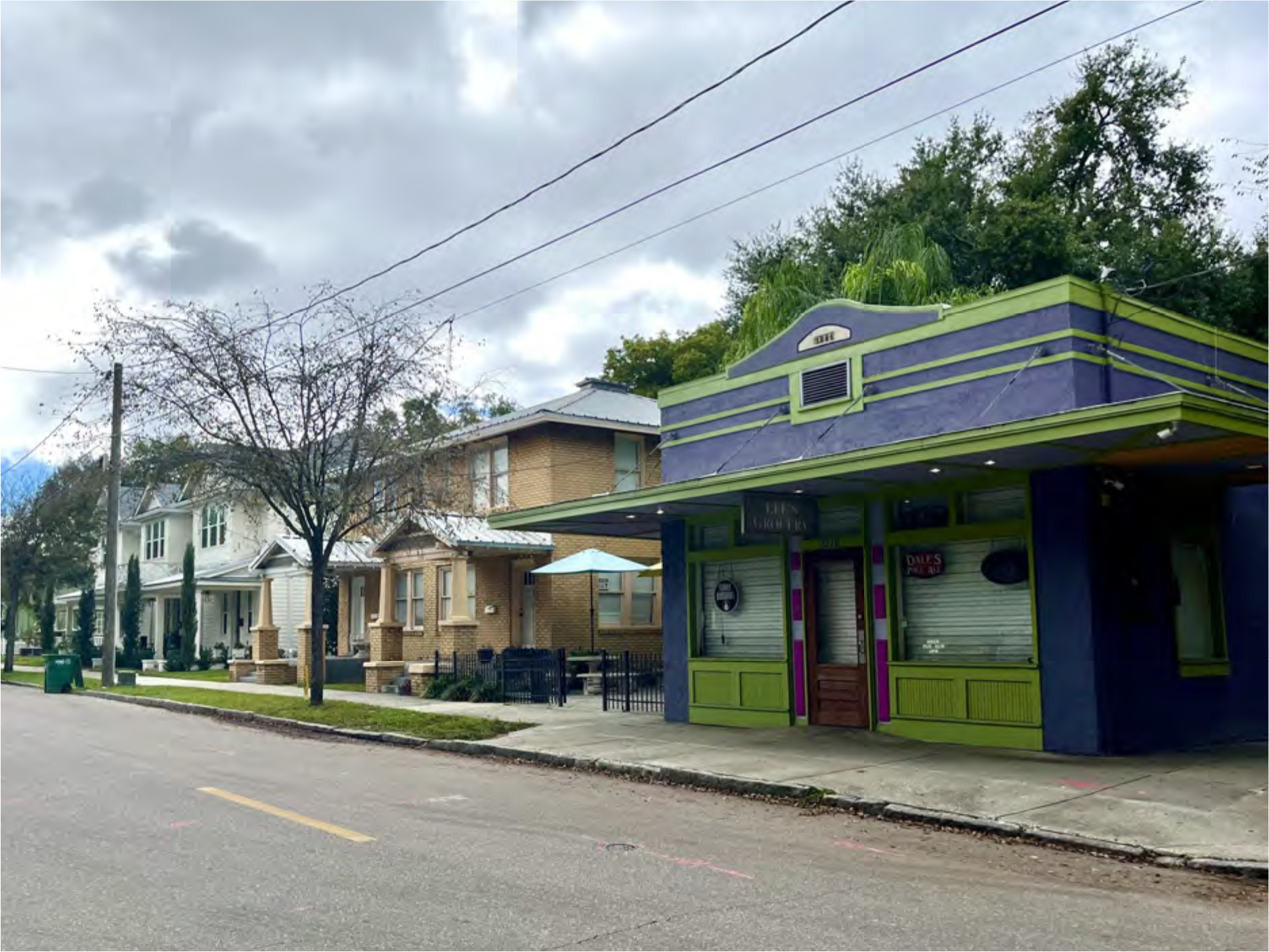
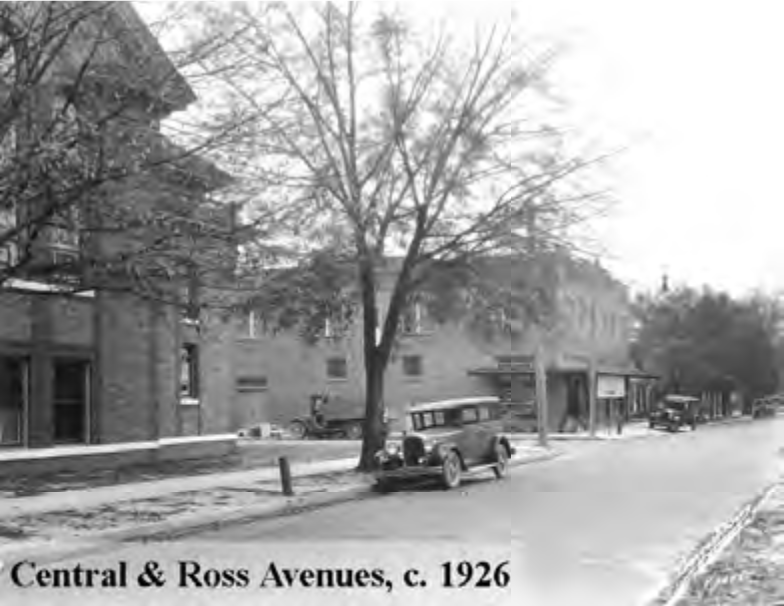
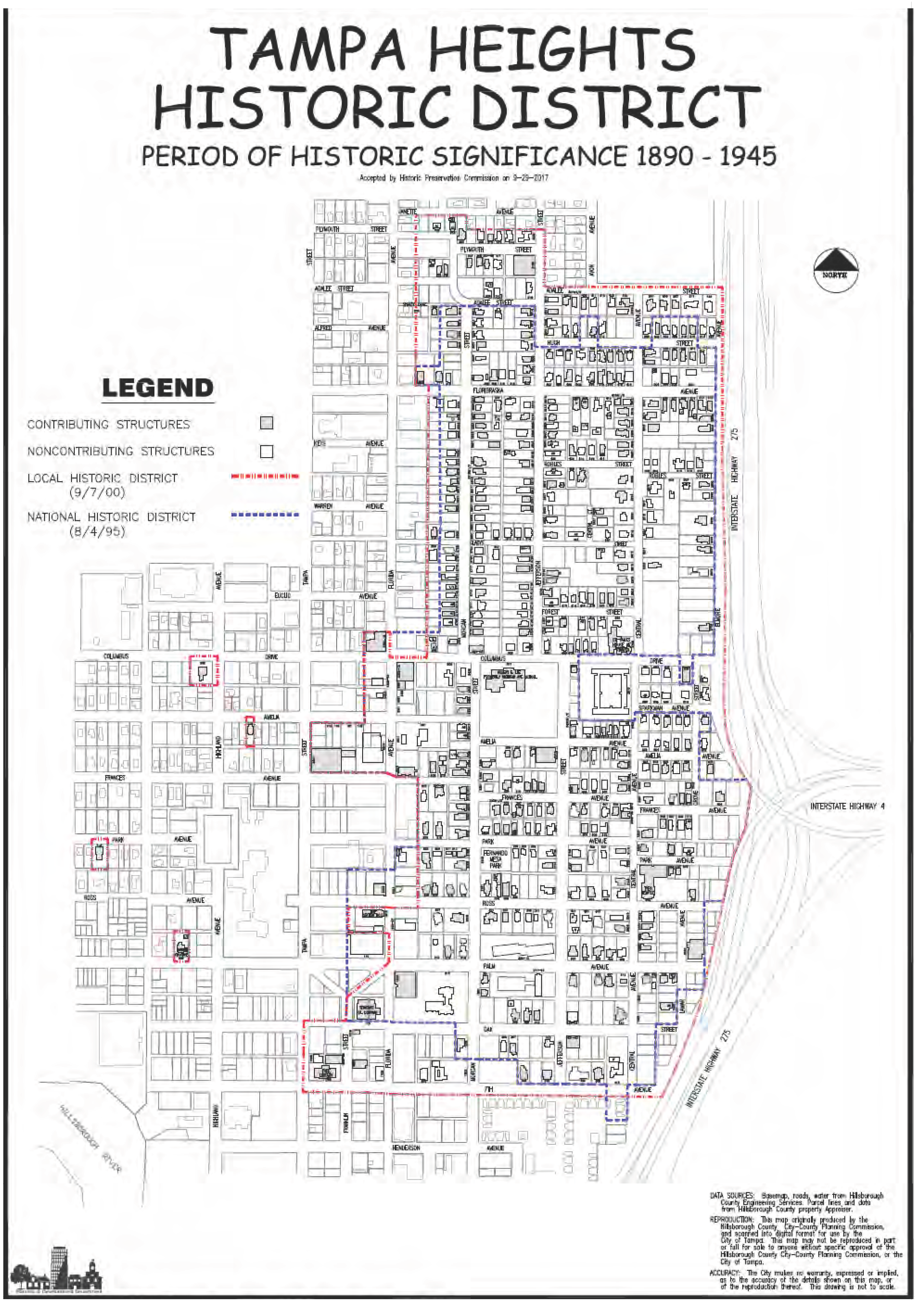
TAMPA HEIGHTS HISTORIC DISTRICT PERIOD OF HISTORIC SIGNIFICANCE 1890 -1945
Accepted by His±zri: Preservation Grmmision on 9-29-2017
CONTRIBUTING STRUCTURES Y INTERSTATE HIGHWAY 4
YBOR CITY
Period of Significance: 1886—1940
National Register Listing: 1974
National Historic Landmark District: 1990
Local Historic Designation: 1975
Local Historic District Expanded: 1998, 2002, 2013
Contributing Buildings: 1,409
Non-Contributing Buildings: 645
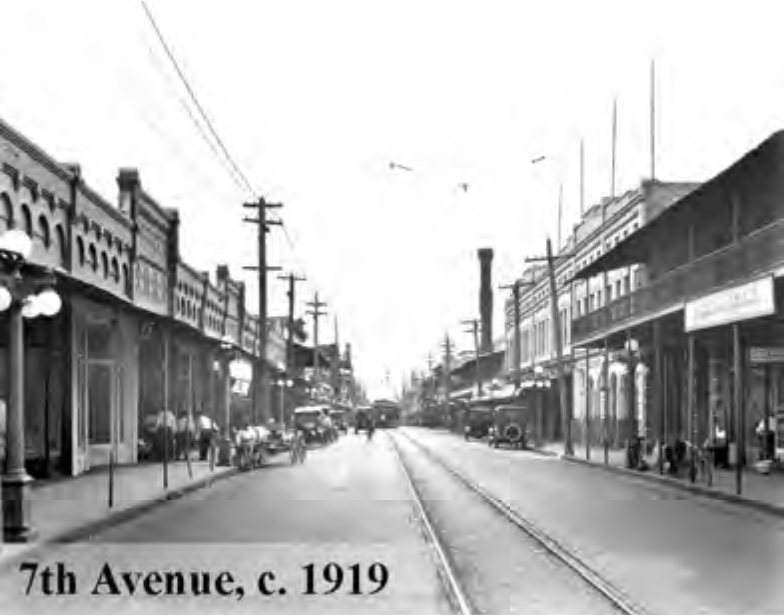
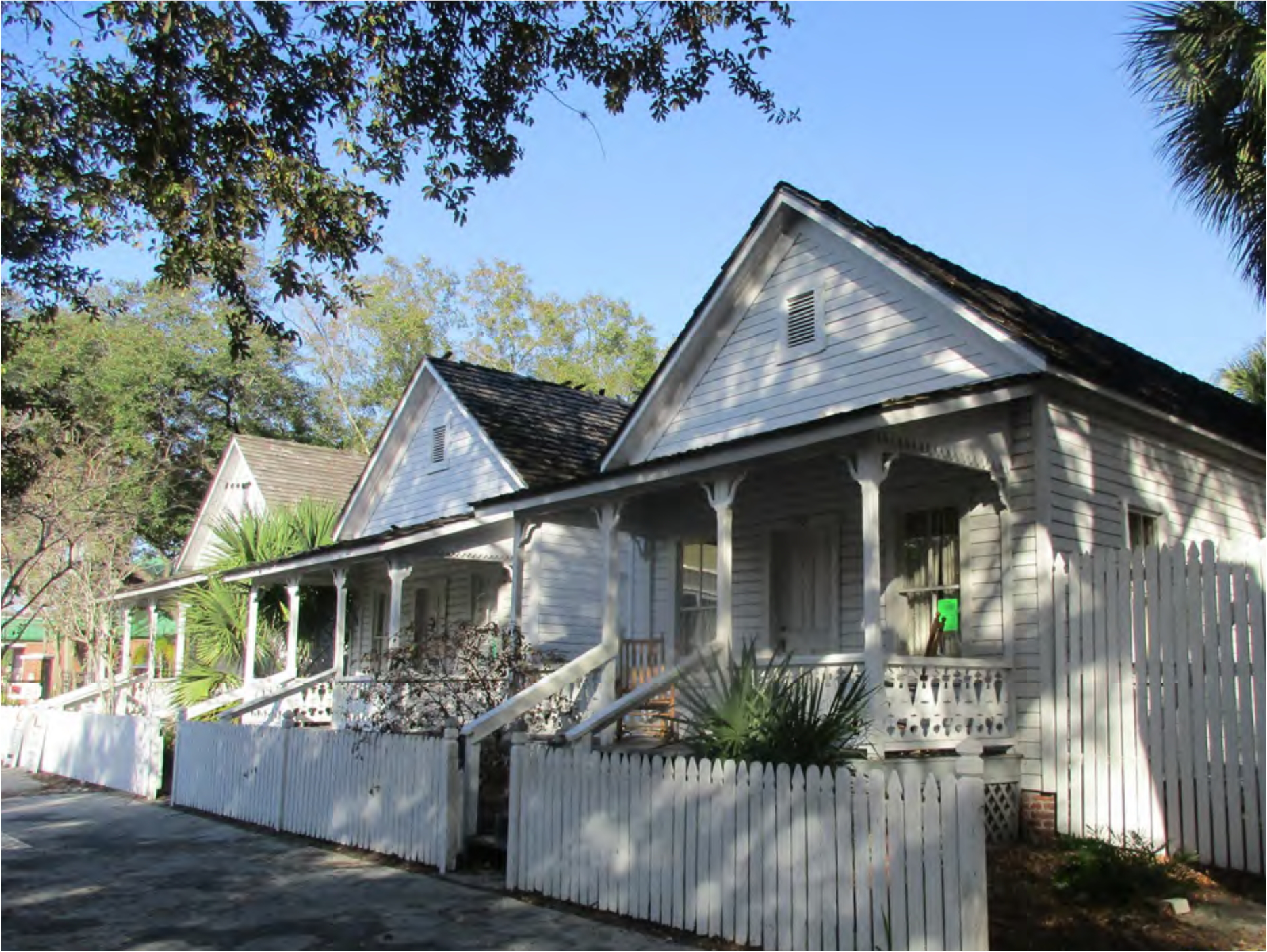
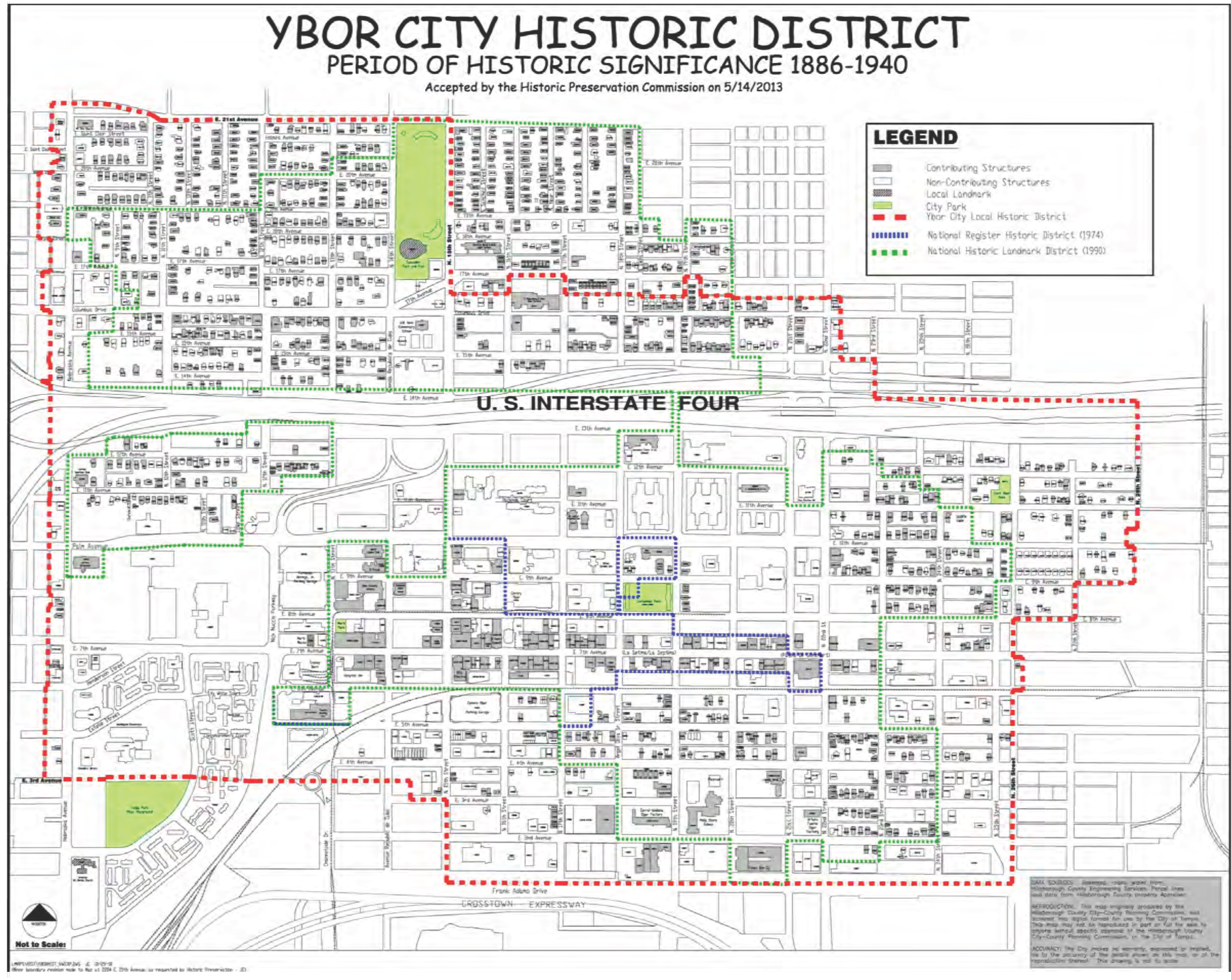
The Ybor City Local Historic District encompasses about 600 acres and 2,054 structures. The district constitutes the most outstanding group of structures associated with late 19th and early 20th century Cuban and Spanish settlement in the United States, and it has strong Italian, German, and other ethnic associations. Ybor City is home to the largest collection of cigar factories in the U.S., complemented by a significant amount of commercial buildings, ethnic clubhouses, and worker housing. Ybor City is distinguished as a National Historic Landmark District due to its exceptional ability to illustrate the lives of these immigrants and their role in the local and national economy.
YBOR CITY HISTORIC DISTRICT PERIOD OF HISTORIC SIGNIFICANCE 1886-1940
- LEGEND
- Contriowtng Strwctw/es
- Non-Contriowtng Structures
- Local Landmark
- City Park
- Ybor City Local Historic District
- National Register Historic District (1974)
- National Histor Lanansrk District (1990)
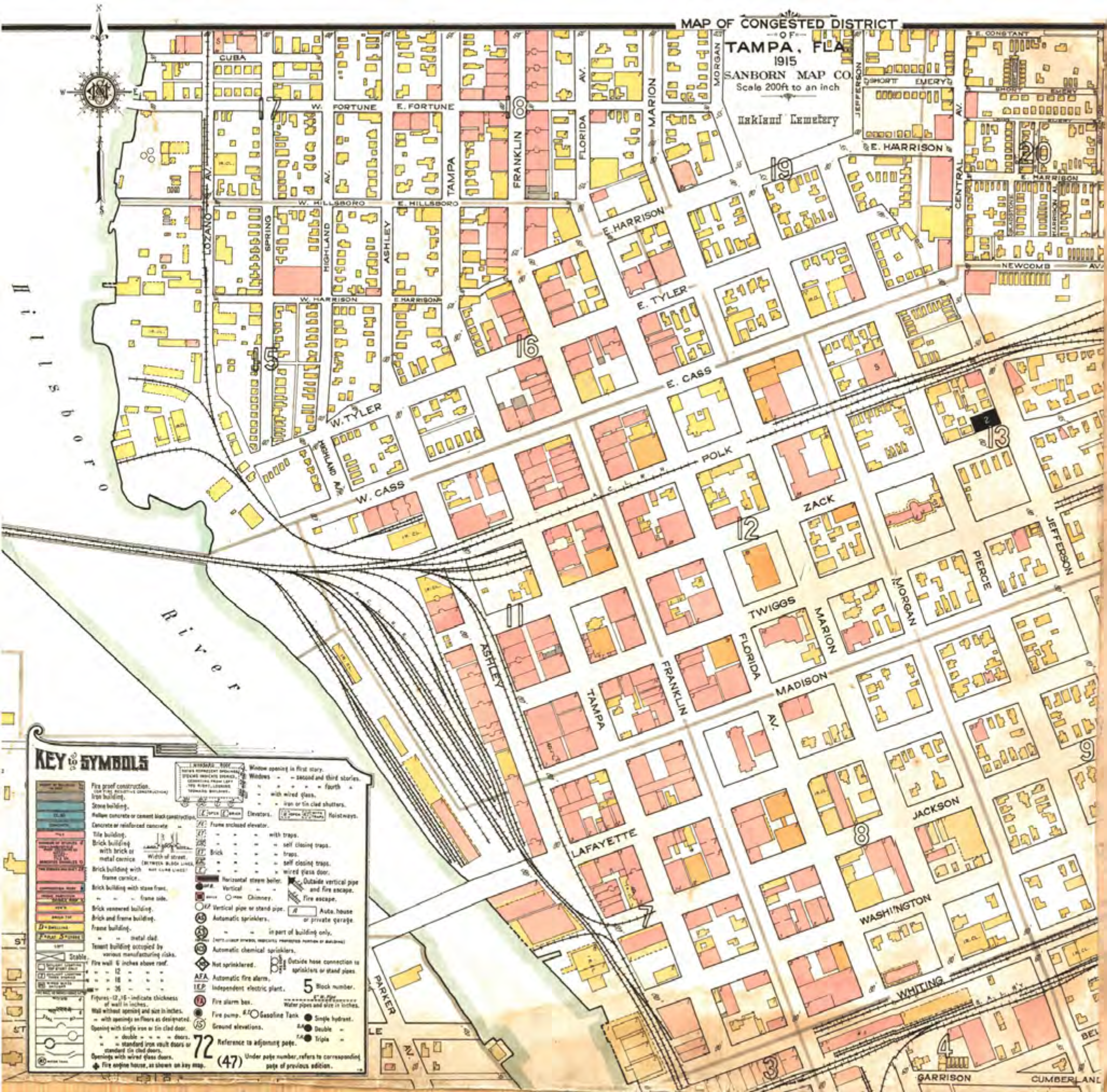
RESEARCH REFERENCE
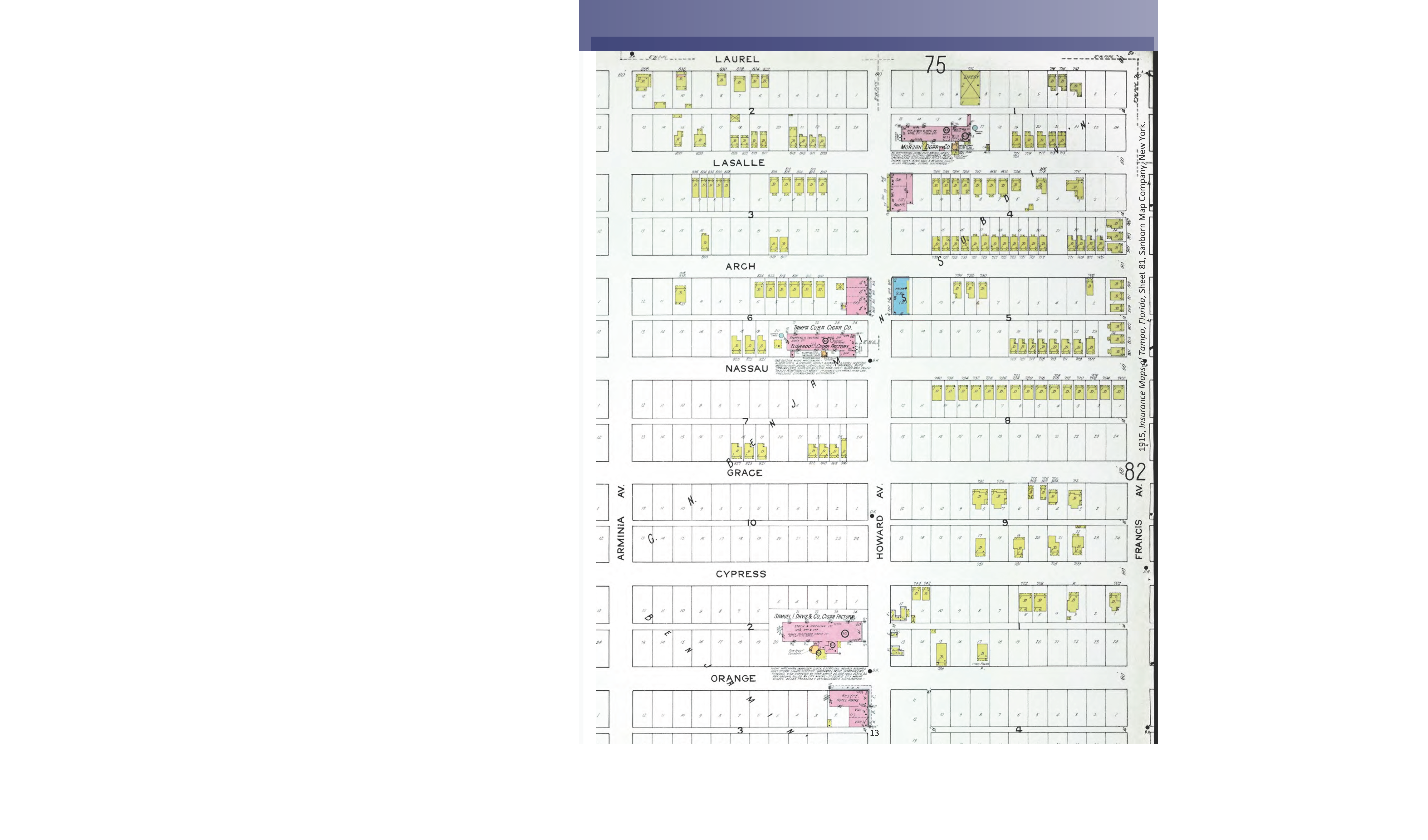
Founded by D.A. Sanborn in 1867, the Sanborn Map Company surveyed the built environment for fire insurance companies, noting building uses, footprints, heights, and construction materials. The firm issued and periodically updated maps for 12,000 American cities and towns, including Tampa. Today, the Sanborn Maps are a highly useful resource for conducting historical research in the areas of planning, preservation, genealogy, sociology, and urban geography. These maps provide details about each area in terms of its physical make-up as well as the infrastructure of each city or town.
LOCAL HISTORIC DMARKS
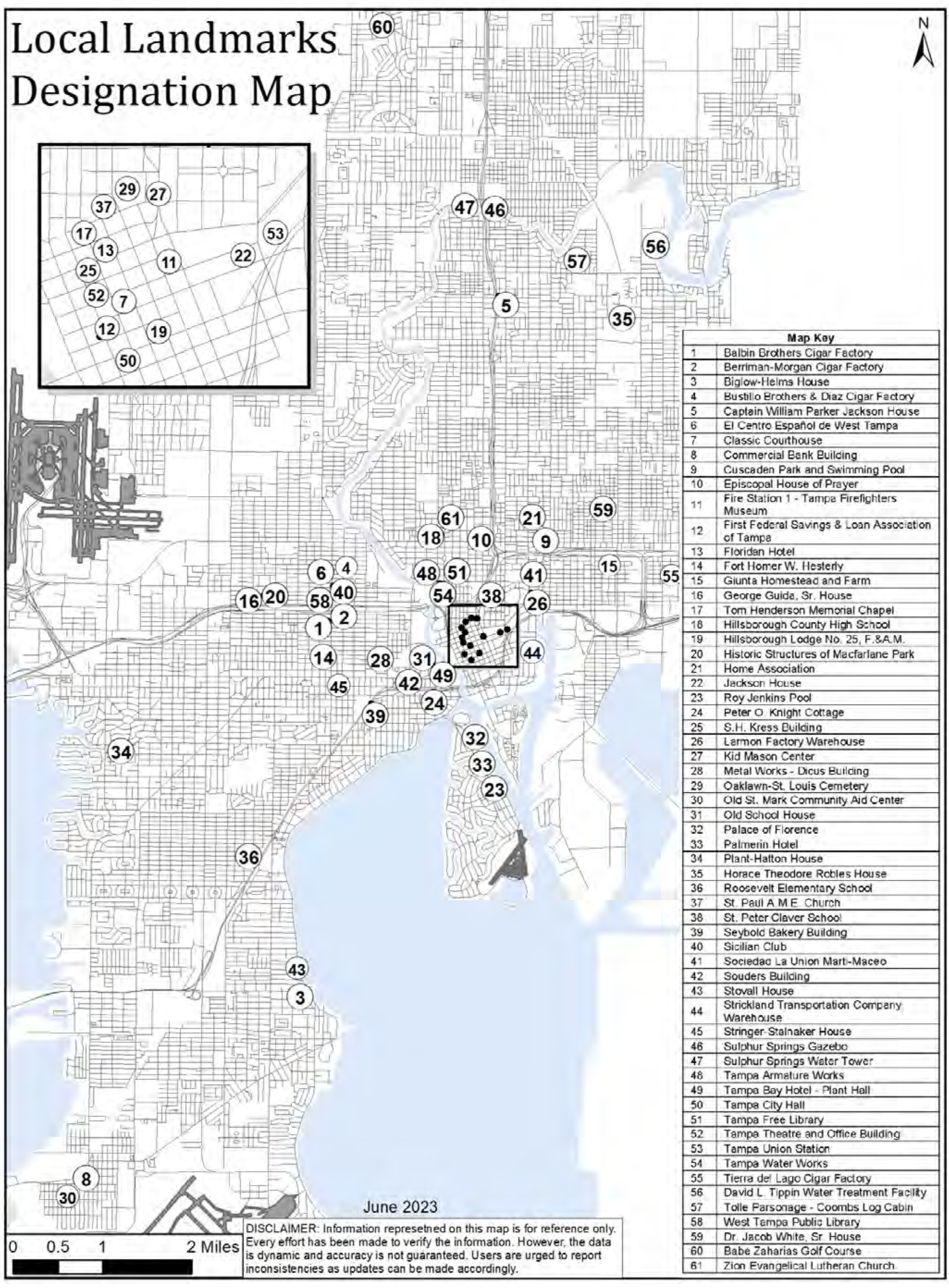
- Cuscaden Park and Swimming Pool
- Episcopal House of Prayer
- Fire Station 1 - Tampa Firefighters Museum
- First Federal Savings & Loan Association of Tampe
- Floridan Holel
- Fort Homer W. Hesterly
- Giunta Homestead and Farm
- George Guida, Sr. House
- Tom Henderson Memorial Chapel
- Hillsborough County High School
- Hillsborough Lodge No. 25, F.&A.M.
- Historic Structures of Macfarlane Park
- Home Association
- Jackson House
- Roy Jenkins Pool
- Peter O Knight Cottage
- S.H. Kress Buildin
- Larmon Factory Warehouse
- Kid Mason Center
- Metal Works - Dicus Building
- Oaklawn-St. Louis Cemet
- Old St. Mark Community Aid Center
- Old School House
- Palace of Florence
- Palmerin Hotel
- Plant-Hatton House
- Horace Theodore Rcbles House
- Roosevelt Elementar School
- St Paul A M E Church
- Souders Buildin
- Stovall House
- Strickland Transportation Company House
- azebo
- ator Tower
- arks
- Ta ater Works ant Hell
- Tierra de! LagoCigar Fact
- David L Tippin Water Treatment Facilty
- Tolle Parsa iCabin
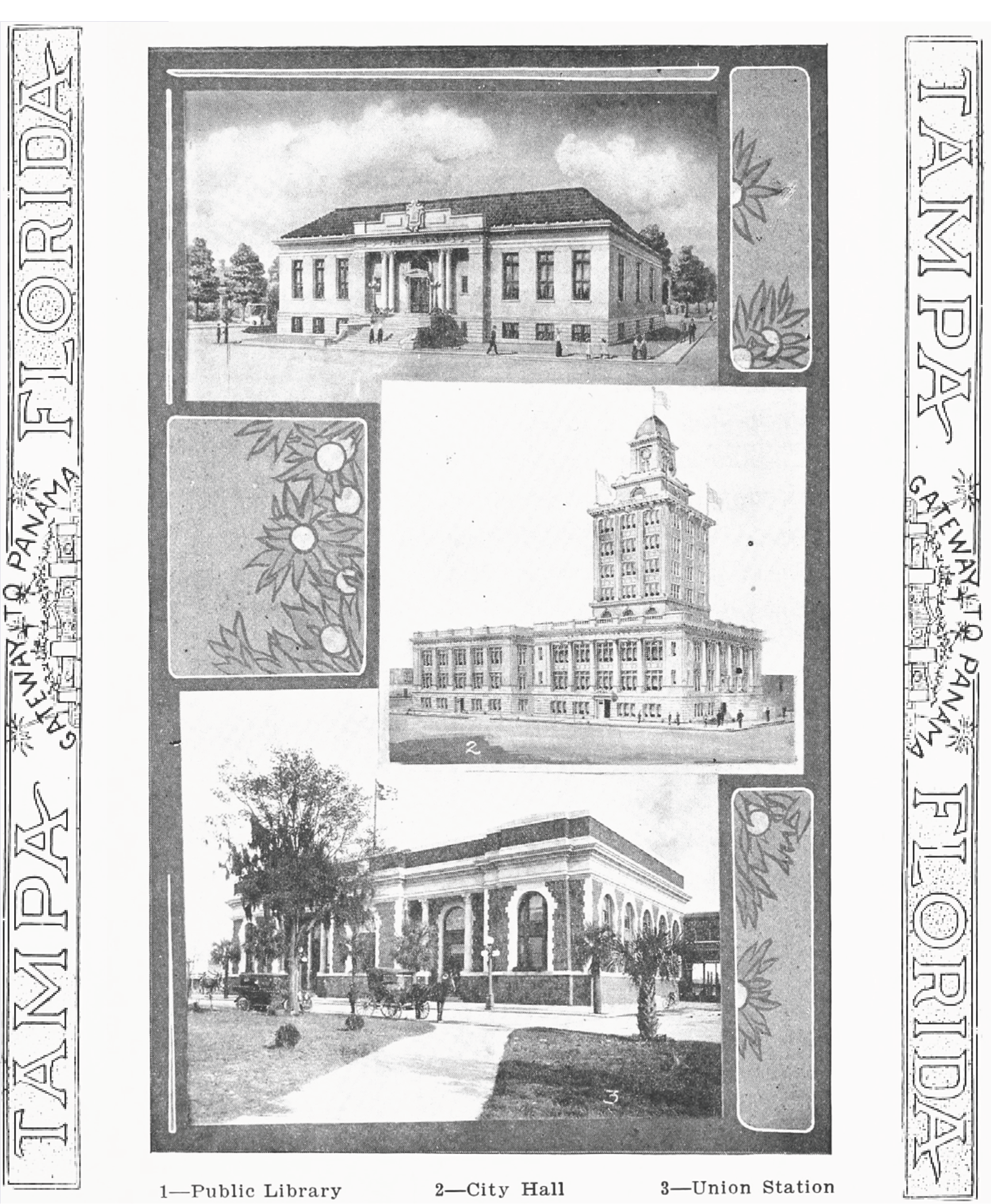
1-Public Library 2-City Hall 3-Union Station
Balbin Brothers Cigar Factory1202 N. Howard Avenue
- Constructed: 1904
- Architectural Style: Brick Vernacular
- National Register Listing: 1983
- Local Historic Designation: 2007
- Architect: Fred J. James
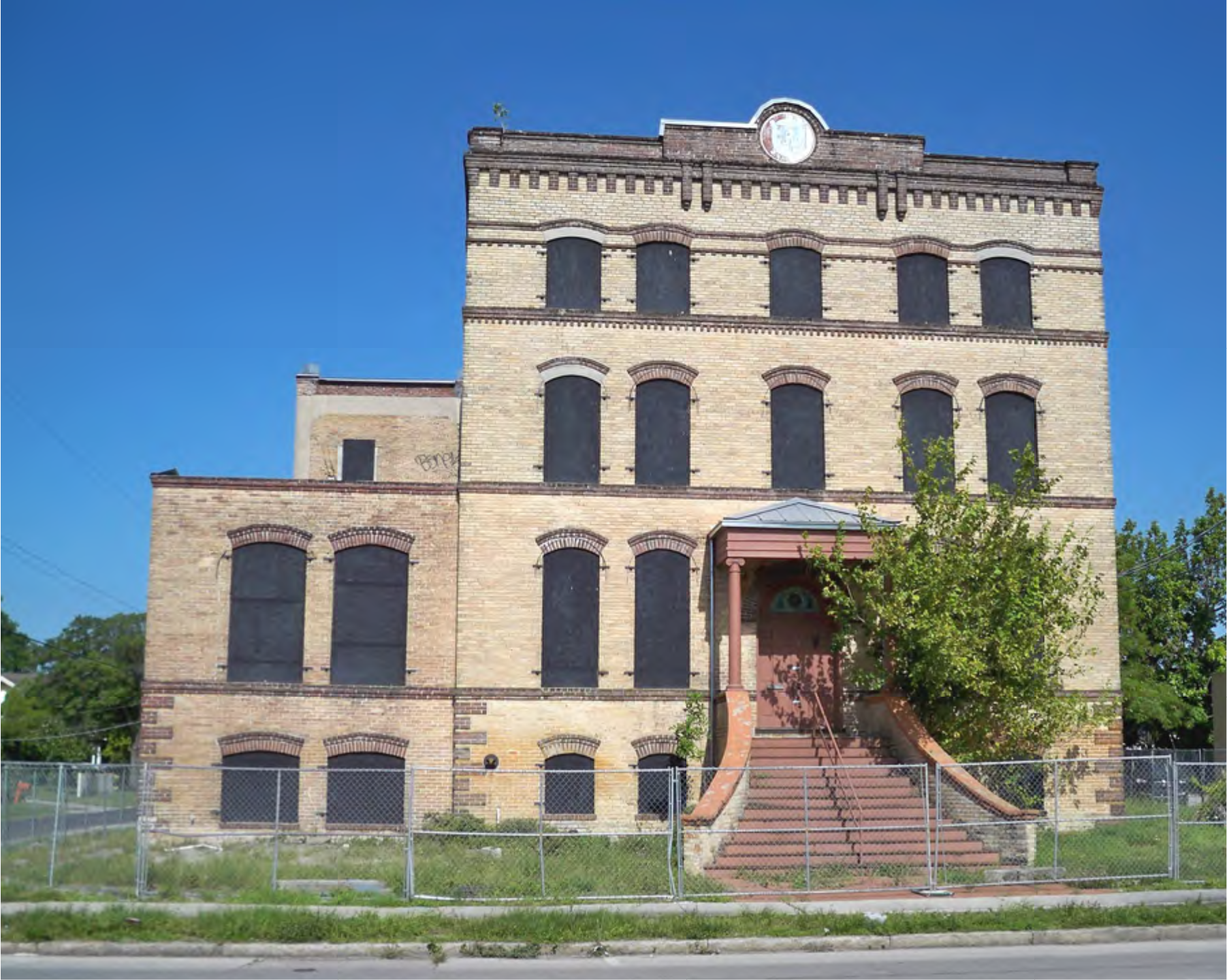
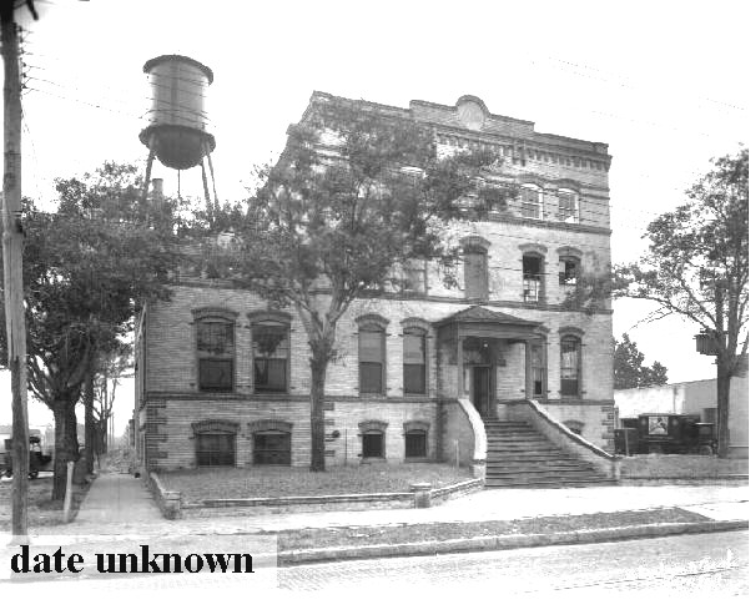
During the late 19th century, West Tampa rapidly gained success in the cigar manufacturing industry. Like most cigar factories of this period, the basic building design is an achievement of form and function and features a façade application influenced by a popular architectural style. Frequently, cigar manufacturers relocated their operation from factory building to factory building while producing the same label. While this building was originally constructed for the Samuel I. Davis Company, the Balbin Brothers occupied it from 1911 through the 1930s. The West Tampa community has continued to refer to it as the Balbin Brothers Cigar Factory building.
Berriman-Morgan Cigar Factory
1403 N. Howard Avenue
Constructed: 1904
Architectural Style: Brick Vernacular
National Register Listing: 1983
Local Historic Designation: 2004
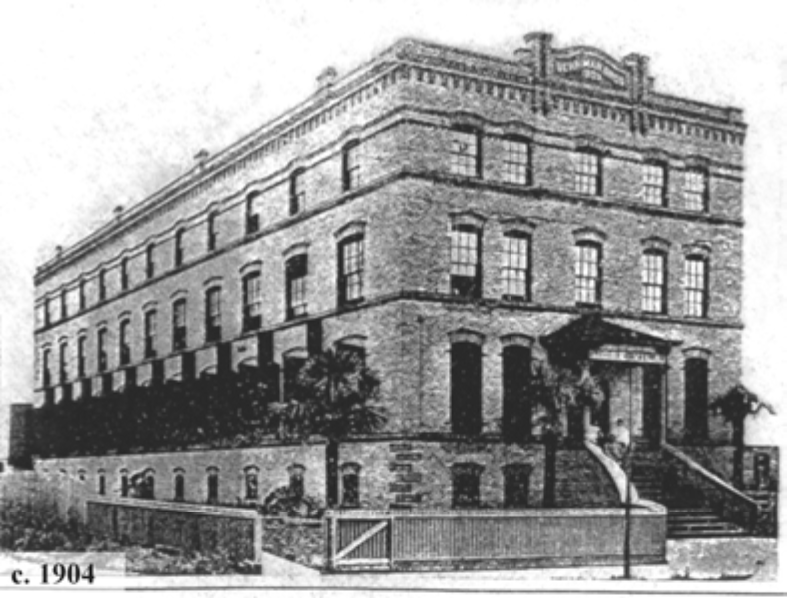
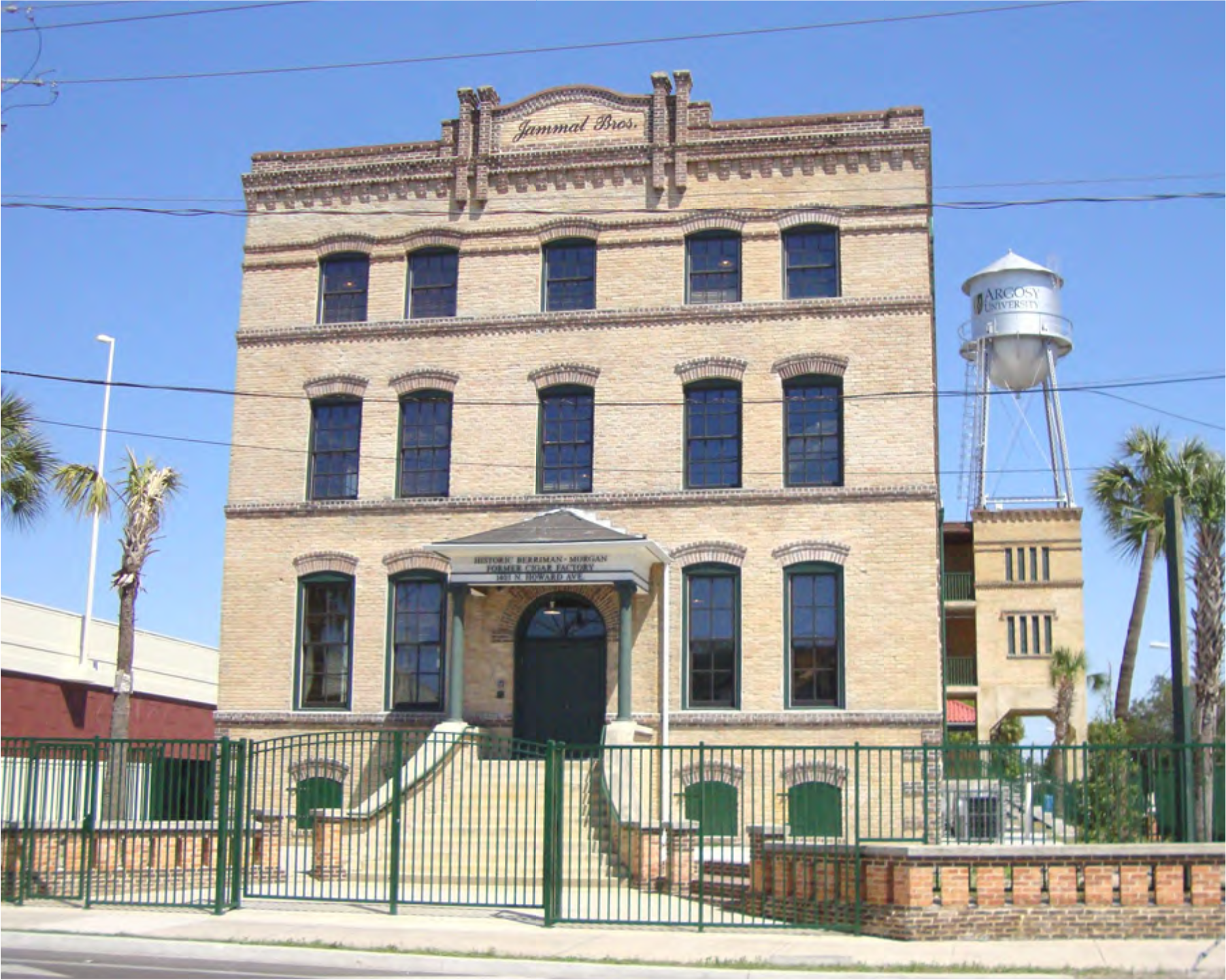
Architect: Fred J. James
One of Tampa’s remaining historic cigar manufacturing buildings, this factory was built and operated by the Berriman Brothers Cigar Company until 1911. The Morgan Cigar Company occupied the factory through the mid-1960s. Both companies were major contributors to the development of the community. The Berriman-Morgan Cigar Factory building is an excellent example of design and function of cigar factories and exemplifies their role in the architectural heritage of Tampa. The building is an important part of the historical landscape and cityscape of West Tampa. After an extensive rehabilitation in 2008, the building now serves as a college campus.
Biglow-Helms House4807 Bayshore Boulevard
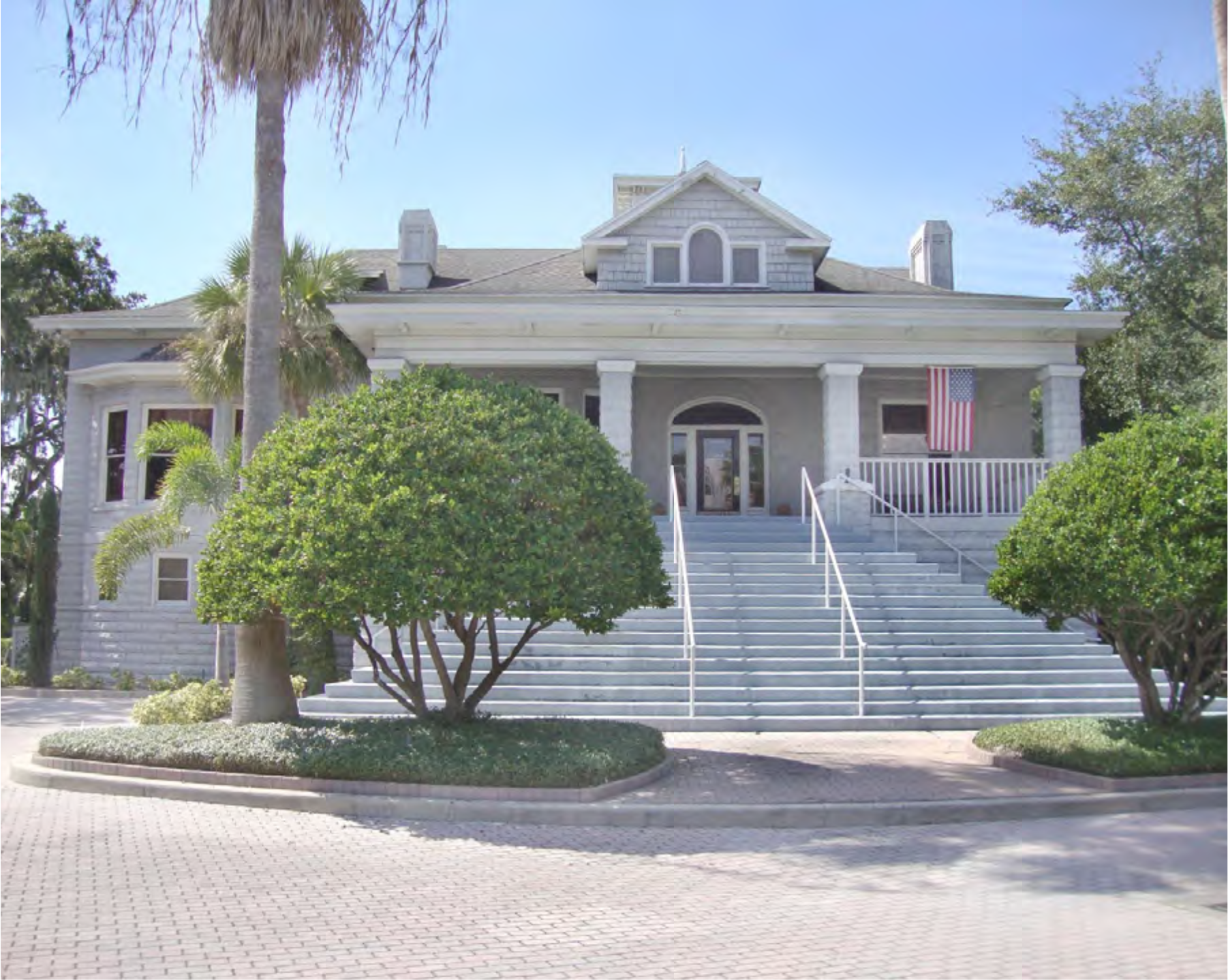
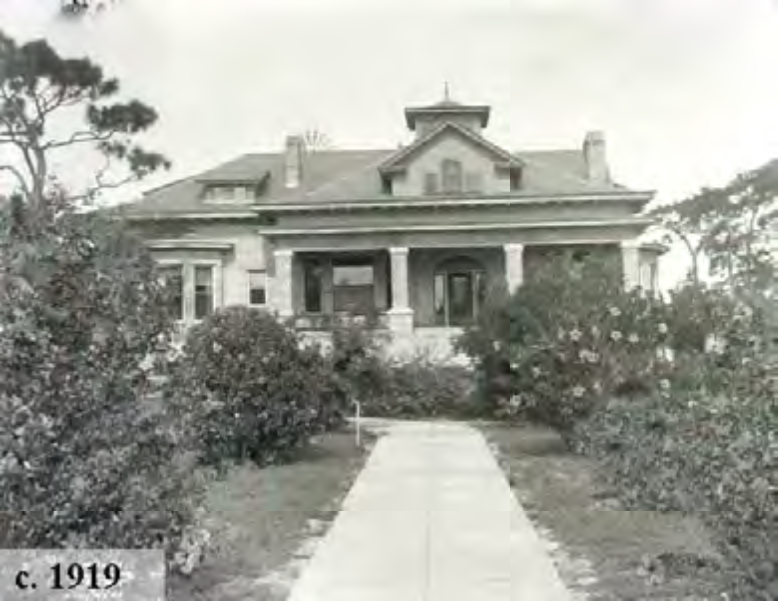
The Biglow-Helms House is one the most distinguished and historically significant early 20th century residences on Bayshore Boulevard. The house is an exceptional example of the use of artificial stone made from pre-cast concrete blocks. Ornamental block construction, while popular nationally at the time, was less common in Florida.
Dr. John Sullivan Helms, a prominent Tampa surgeon, purchased the property in 1919 and converted the structure to the Bayside Hospital. When the Tampa Municipal Hospital was established, Dr. Helms closed Bayside and became a consulting surgeon at Tampa’s first general hospital.
| Constructed | 1908 |
|---|---|
| Architectural Style | Colonial Revival |
| National Register Listing | N/A |
| Local Historic Designation | 1988 |
| Architect | Unknown |
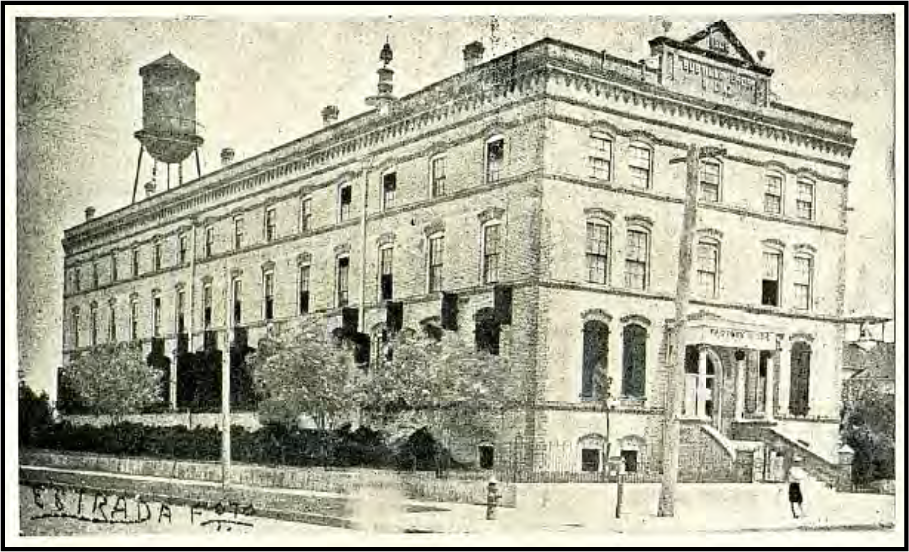
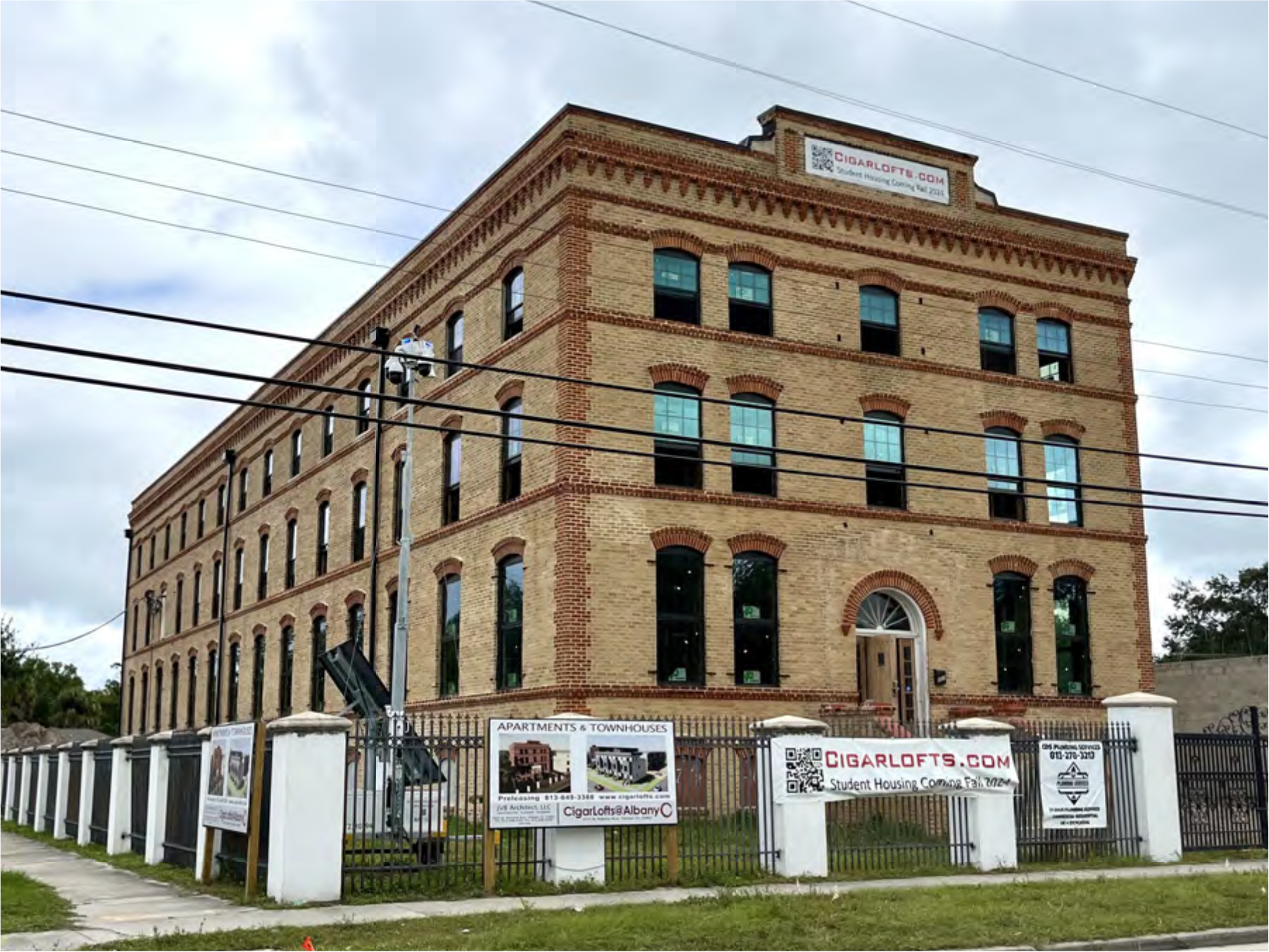
Bustillo Brothers & Diaz Cigar Factory
2111 N. Albany Avenue
- Constructed: 1902
- Architectural Style: Renaissance Revival
- National Register Listing: 1983
- Local Historic Designation: 2022
- Architect: M.J. Miller, Francis J. Kennard
In 1902, the Bustillo Brothers & Diaz required a larger, more modern structure than their original wood frame factory. Miller & Kennard, well-known local architects, drew the plans for the new brick factory. It is a three and a half story yellow brick building with Renaissance Revival style red brick detailing. A high parapet, wrapped in a brick corbelled cornice, obscures the gabled roof, while a classical portico shelters the main entryway. Bustillo Brothers & Diaz was widely known for the Henry the Fourth, Alexander Humboldt, and Flor del Mundo brands, which were sold throughout the United States.

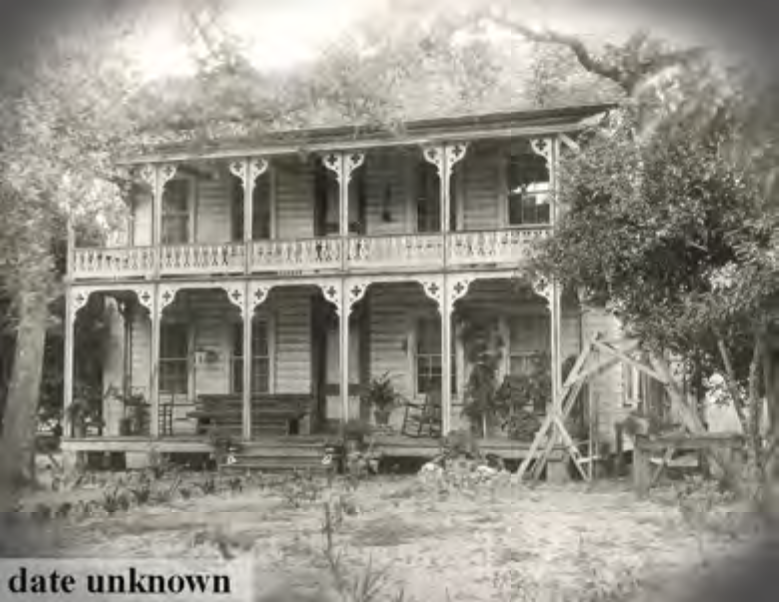
Captain William Parker Jackson House
800 E. Lambright Street
- Constructed: c.1885
- Architectural Style: Folk Victorian
- National Register Listing: 2011
- Local Historic Designation: 2015
- Architect: Unknown
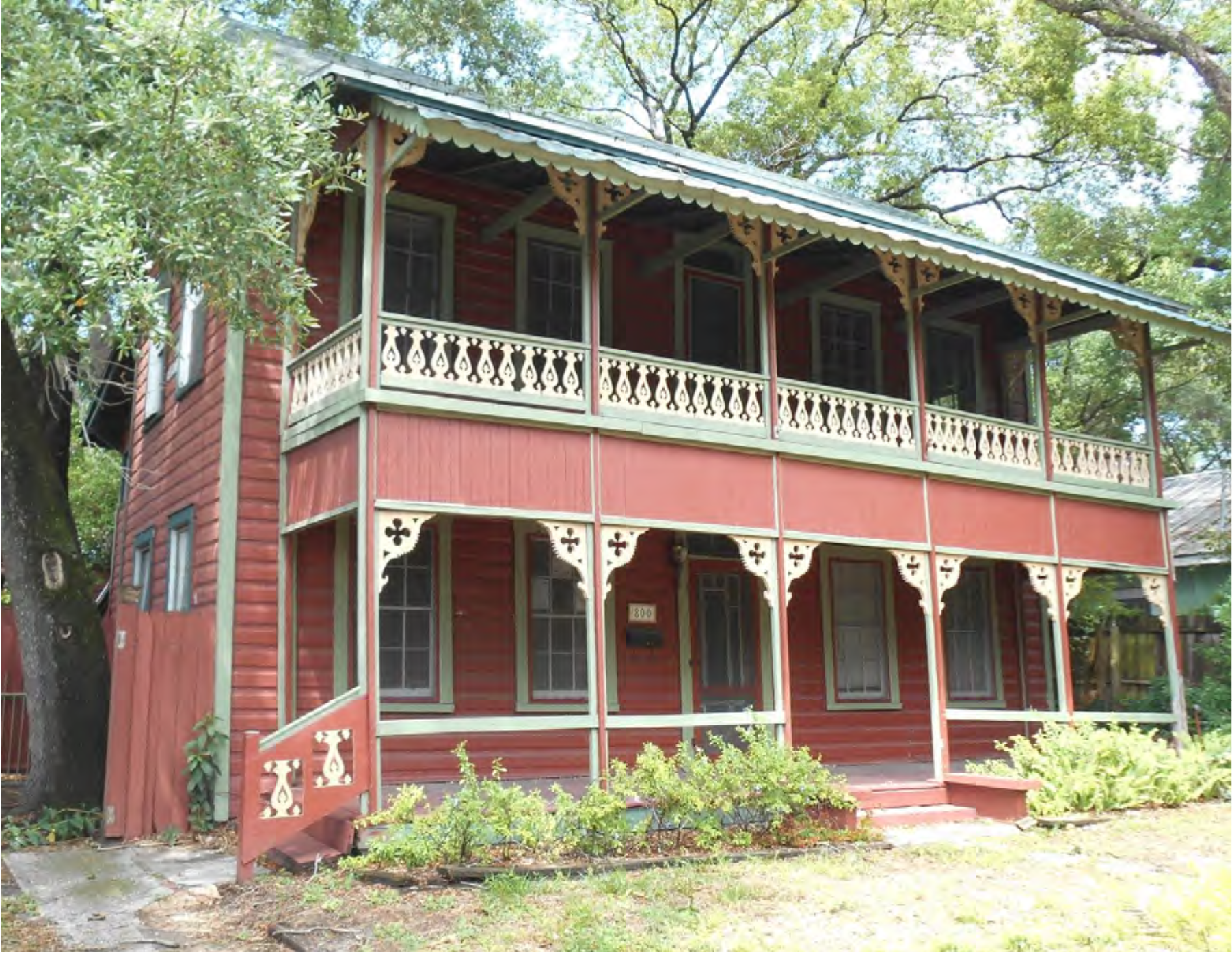
The Captain William Parker Jackson House is one of the few remaining examples of a Folk Victorian I-House house in Tampa. One of the earliest children born to white settlers in the Tampa/Fort Brooke area, Captain Bill commanded steamships throughout the Gulf of Mexico before homesteading 152 acres north of Tampa.
The house that Captain Jackson built on his North Park Farm remains largely unaltered. It is a reminder of the resilience of the area’s early settlers. The original agricultural surroundings were replaced by early twentieth century development as Tampa grew and expanded.
El Centro Español de West Tampa
2306 N. Howard Avenue
- Constructed: 1912
- Architect: Fred J. James
- Architectural Style: Moorish Revival
- National Register Listing: 1974
- Local Historic Designation: 2001
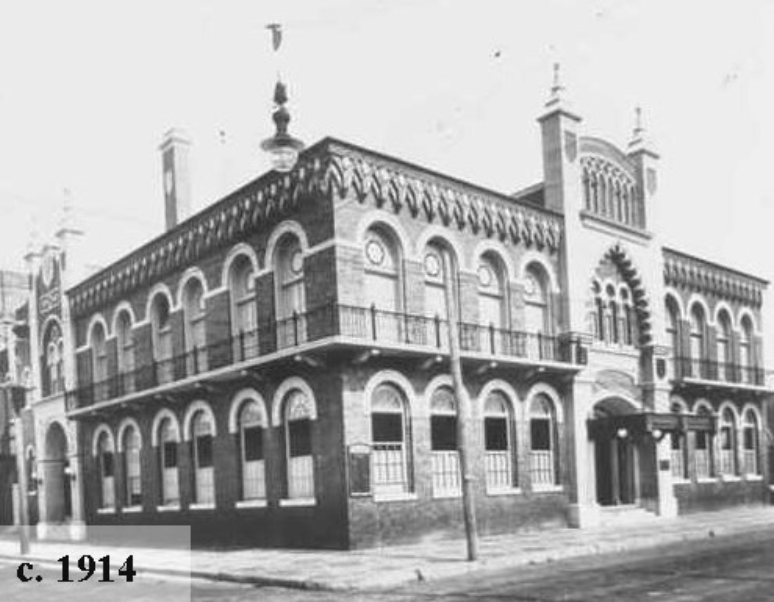
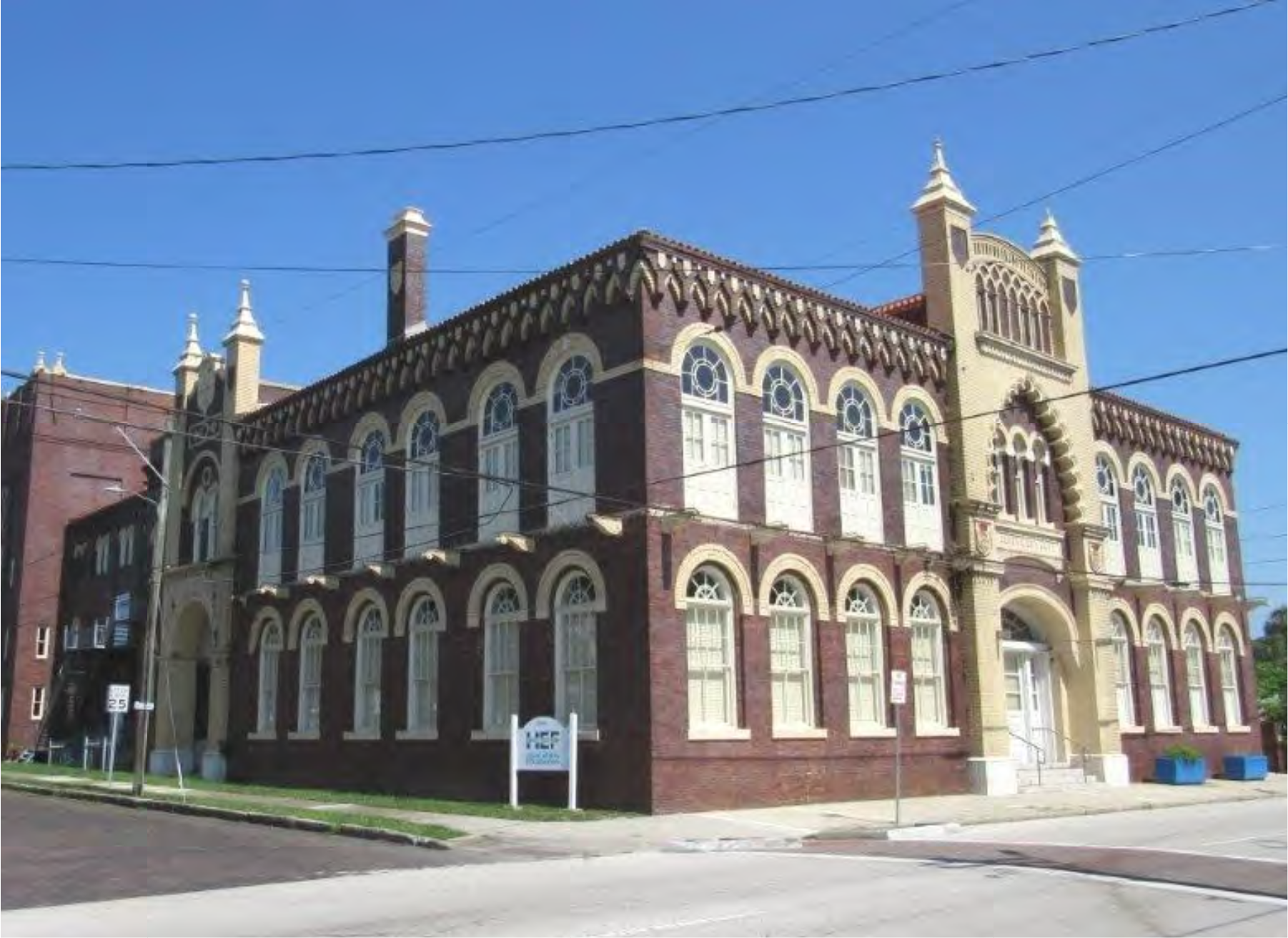
El Centro Español de West Tampa is one of the city’s few architectural examples that features an elaborate use of patterned brickwork of dark red and yellow tones and intricate terra cotta tracery, influenced by Spanish and Moorish detailing.
Built as an ethnic club to serve the immigrant members of the City of West Tampa, its presence has made a significant contribution to the patterns of social development within the cigar manufacturing-based community. The club provided low-cost family medical services, educational, recreational, entertainment, and citizenship programs.
Classic Courthouse
611 N. Florida Avenue
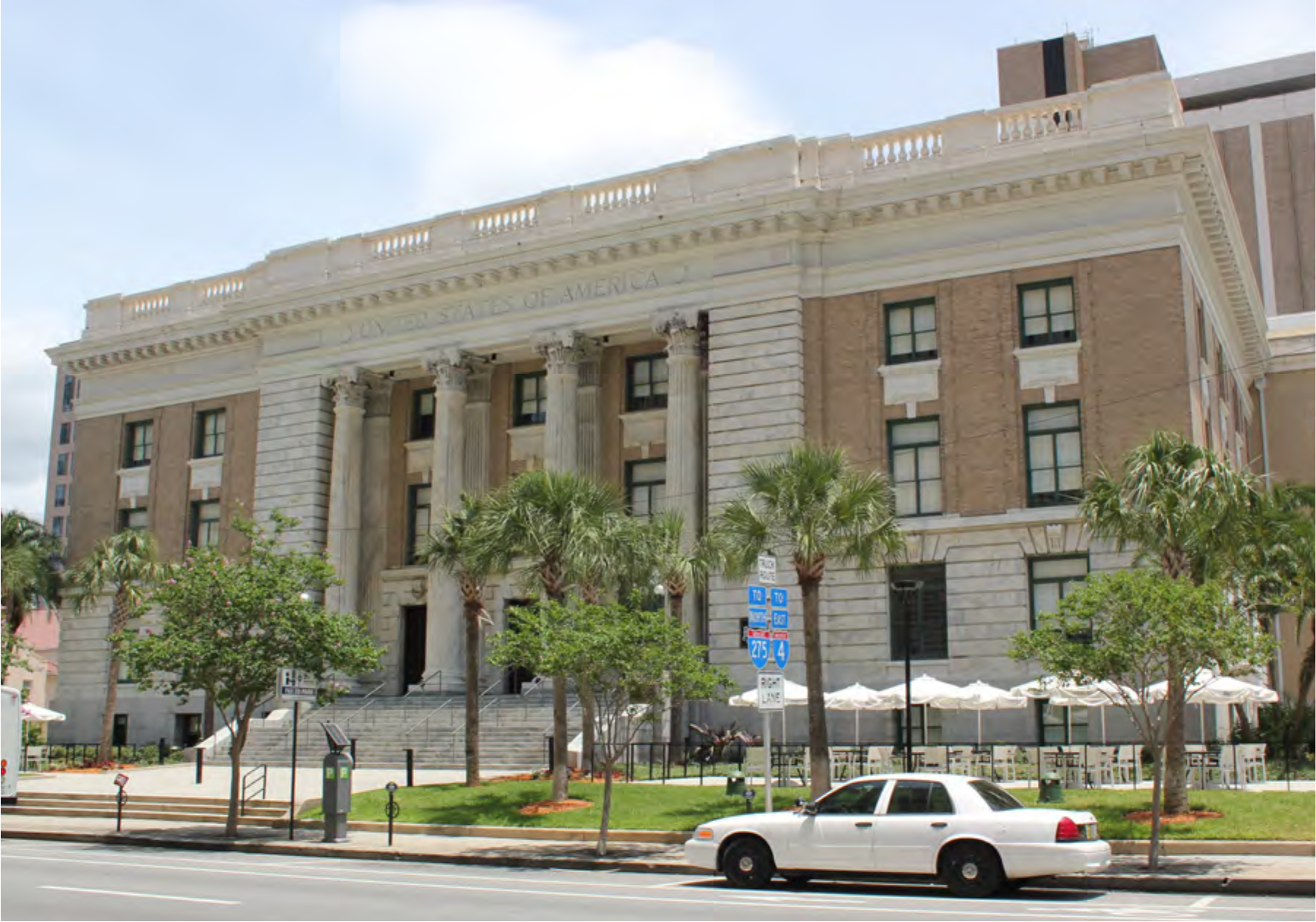
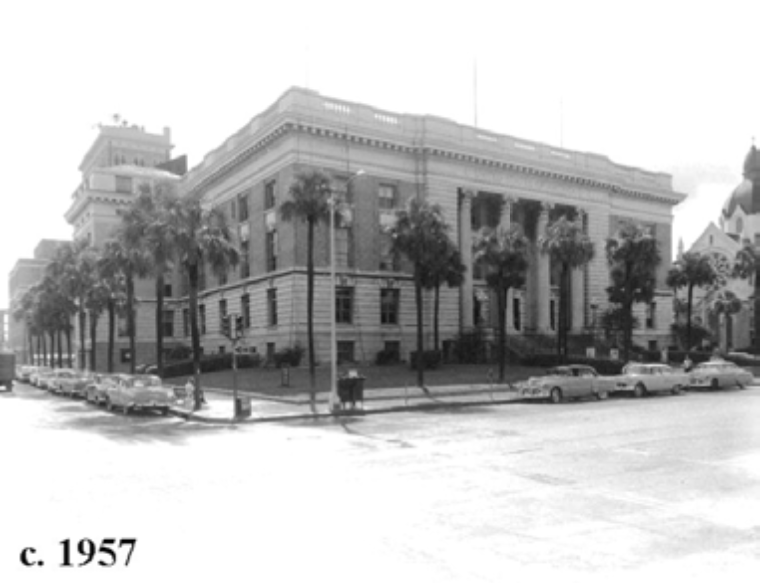
Originally serving Tampa as its Federal Building, Customs Building, and Post Office, the Classic Courthouse is an outstanding expression of the Beaux Arts style of architecture. The building’s classically inspired proportions and treatments were common to early 20th century government buildings, which sought to project a sense of permanence and power. Rusticated granite defines the base and faces the heavy pilasters that frame the three story portico’s entrance.
A sensitive addition to the original foot print was constructed to the east in 1931.
- Architect: James Knox Taylor
- National Register Listing: 1974
- Local Historic Designation: 2004
- Architectural Style: Beaux Arts
- Constructed: 1905
Commercial Bank Building
4902 Commmerce Street
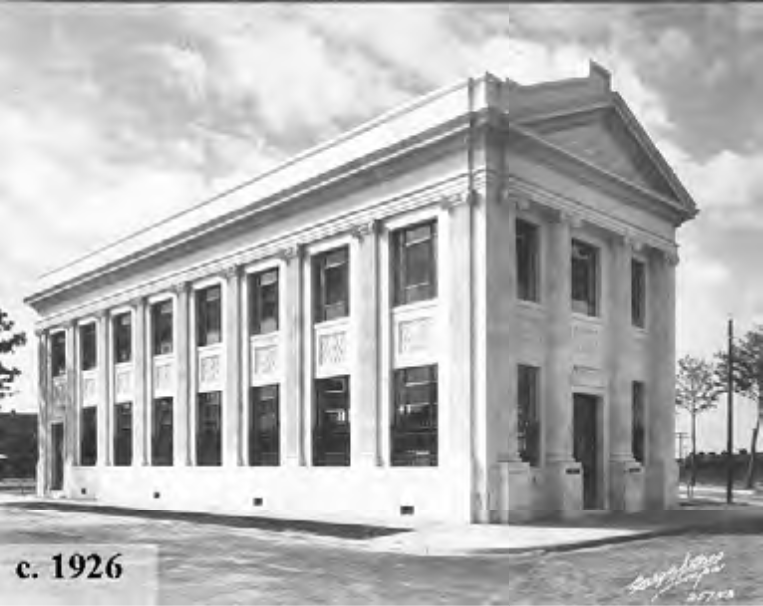
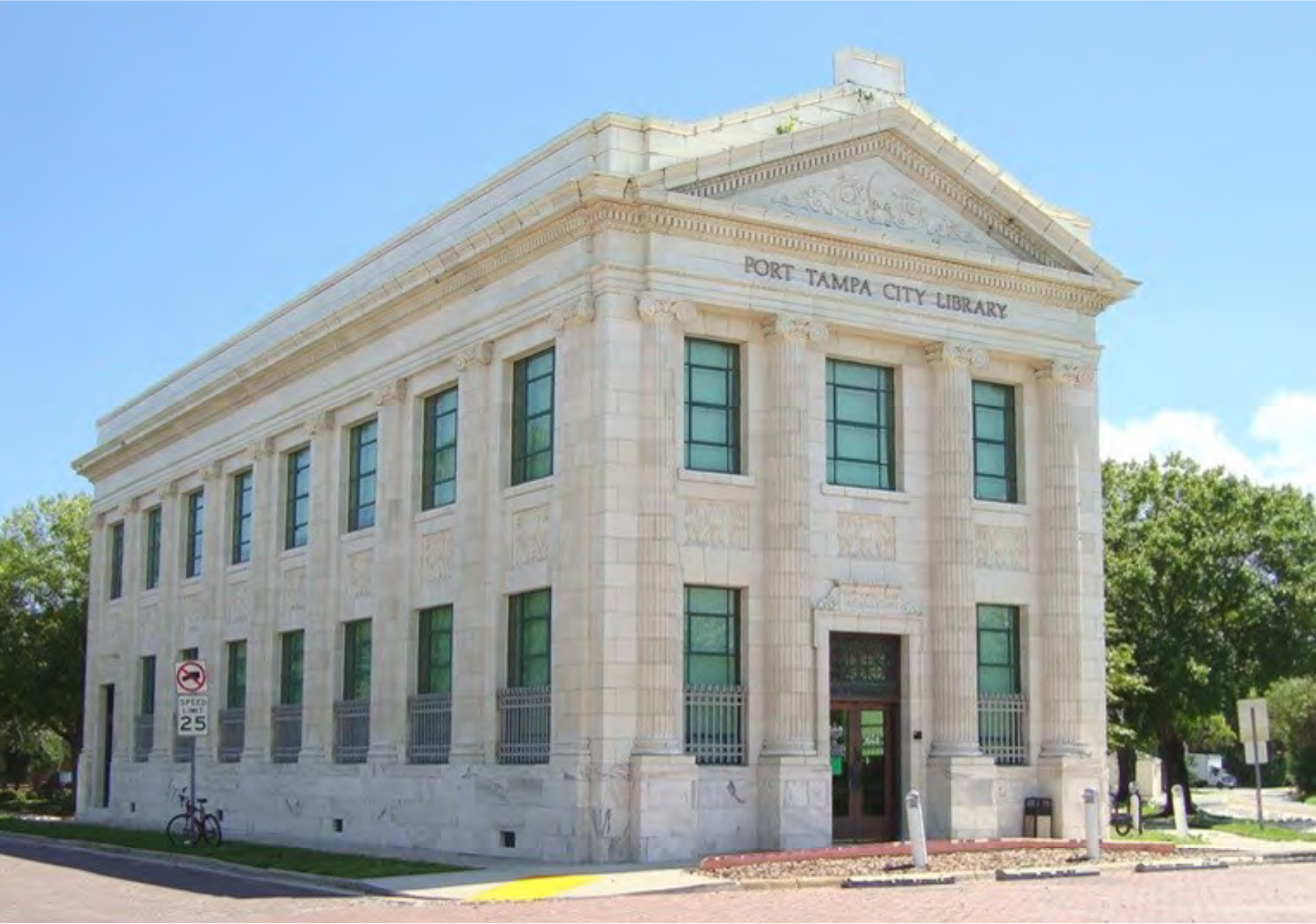
Originally populated by small farming homesteads, Port Tampa became an active port town when Henry B. Plant extended his rail lines to the western side of the Interbay Peninsula. At the turn of the century, the city served as the major shipping port for the region. The Commercial Bank Building, originally the Bank of Port Tampa, is one of the few remaining commercial vestiges of the period when the City of Port Tampa was an independent city. The architecture is an excellent example of the Neoclassical style, which was a dominant building style throughout the country during the first half of the 20th century.
- Constructed: 1926
- Architectural Style: Neo-Classical
- National Register Listing: N/A
- Local Historic Designation: 1994
- Architect: Unknown

Cuscaden Park and Swimming Pool
2900 N. 15th Street
- Constructed: 1937
- Architectural Style: Art Deco
- National Register Listing: 1990
- Local Historic Designation: 2003
- Designer: Wesley Bintz
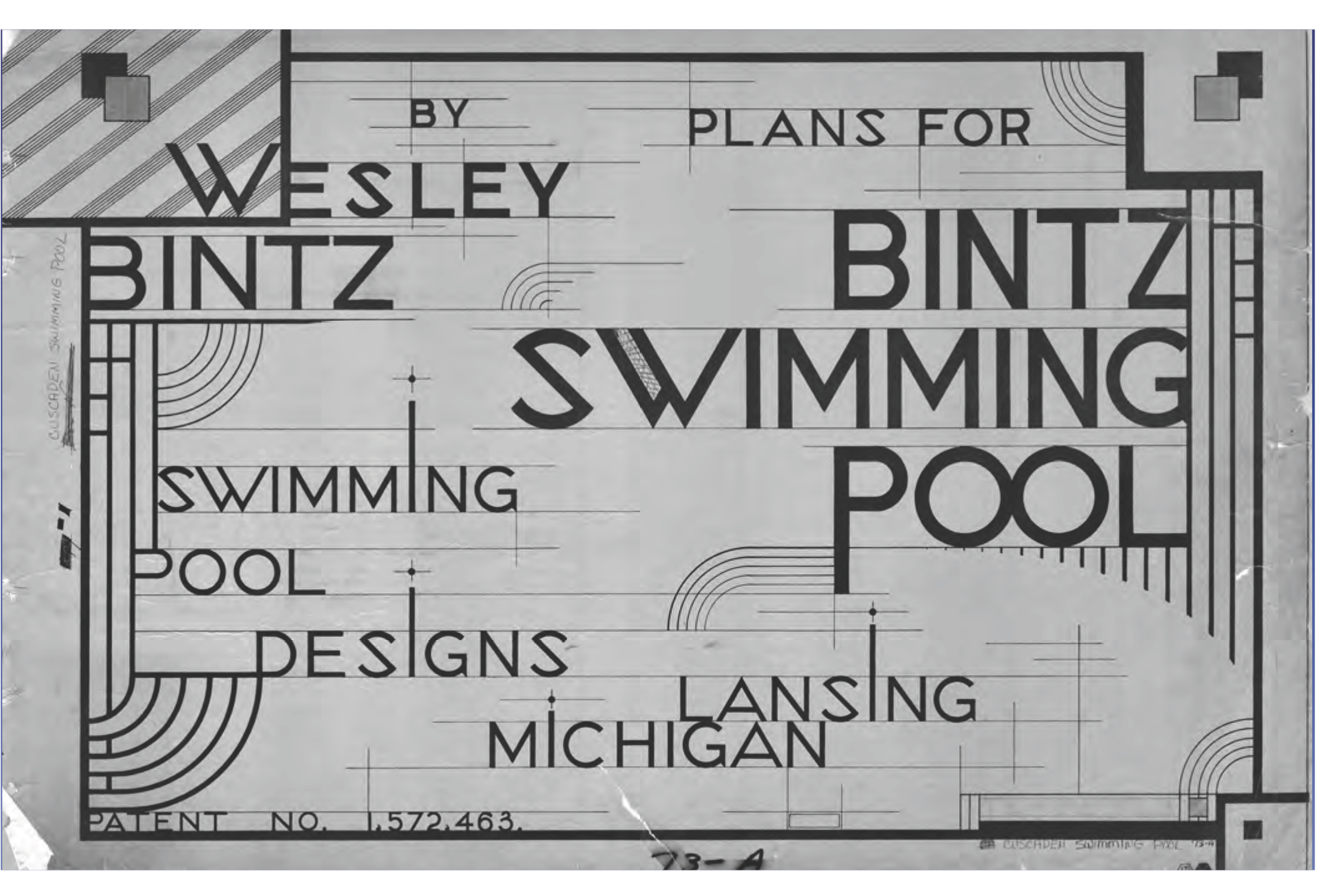
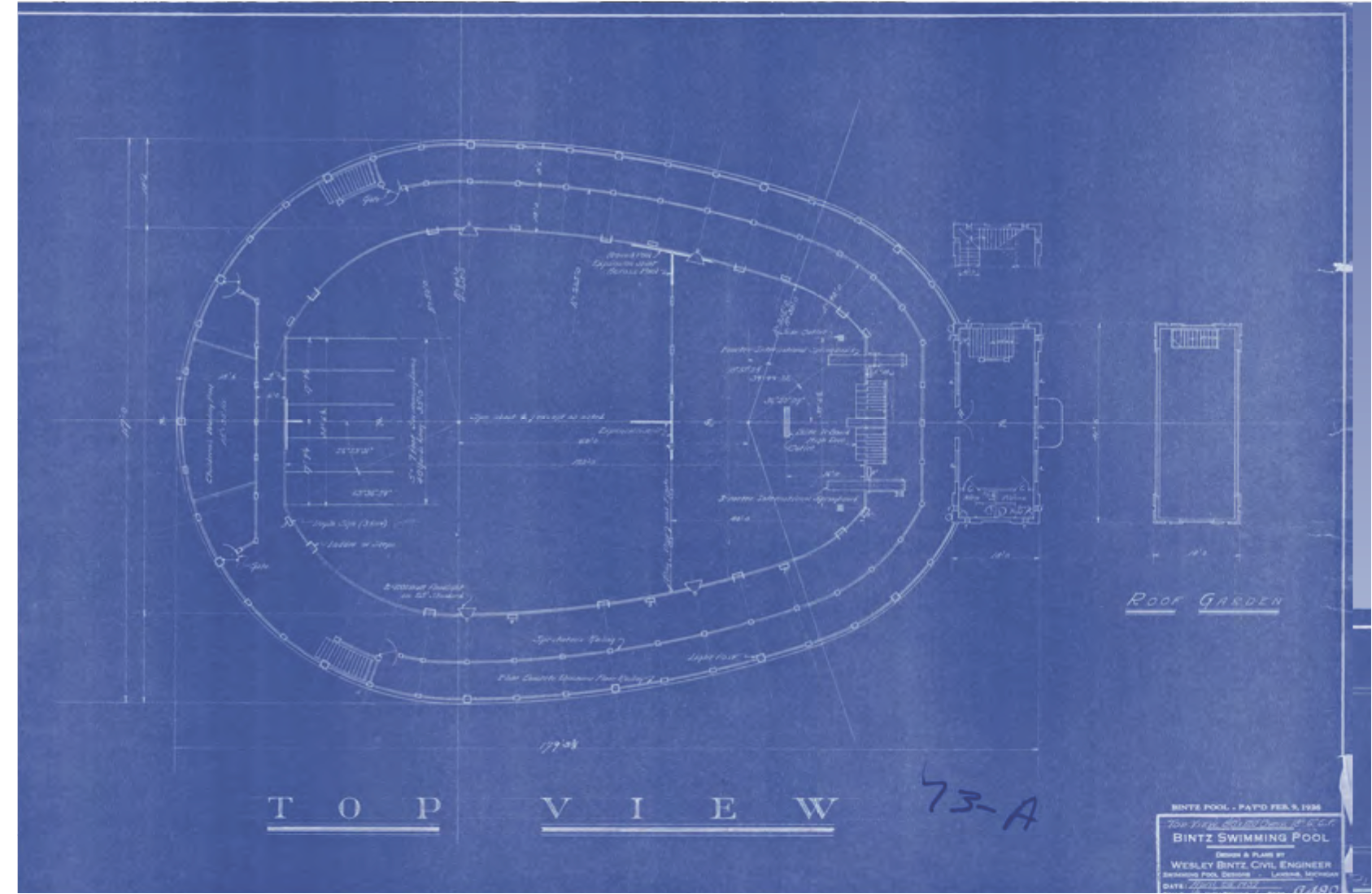
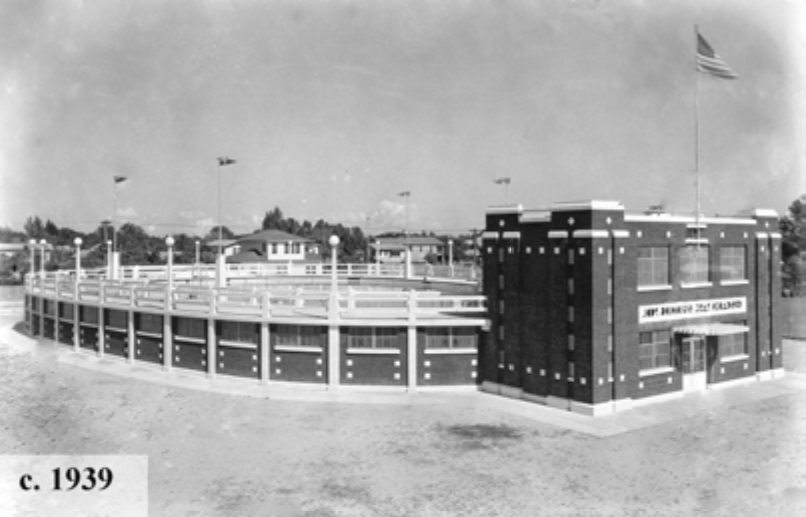
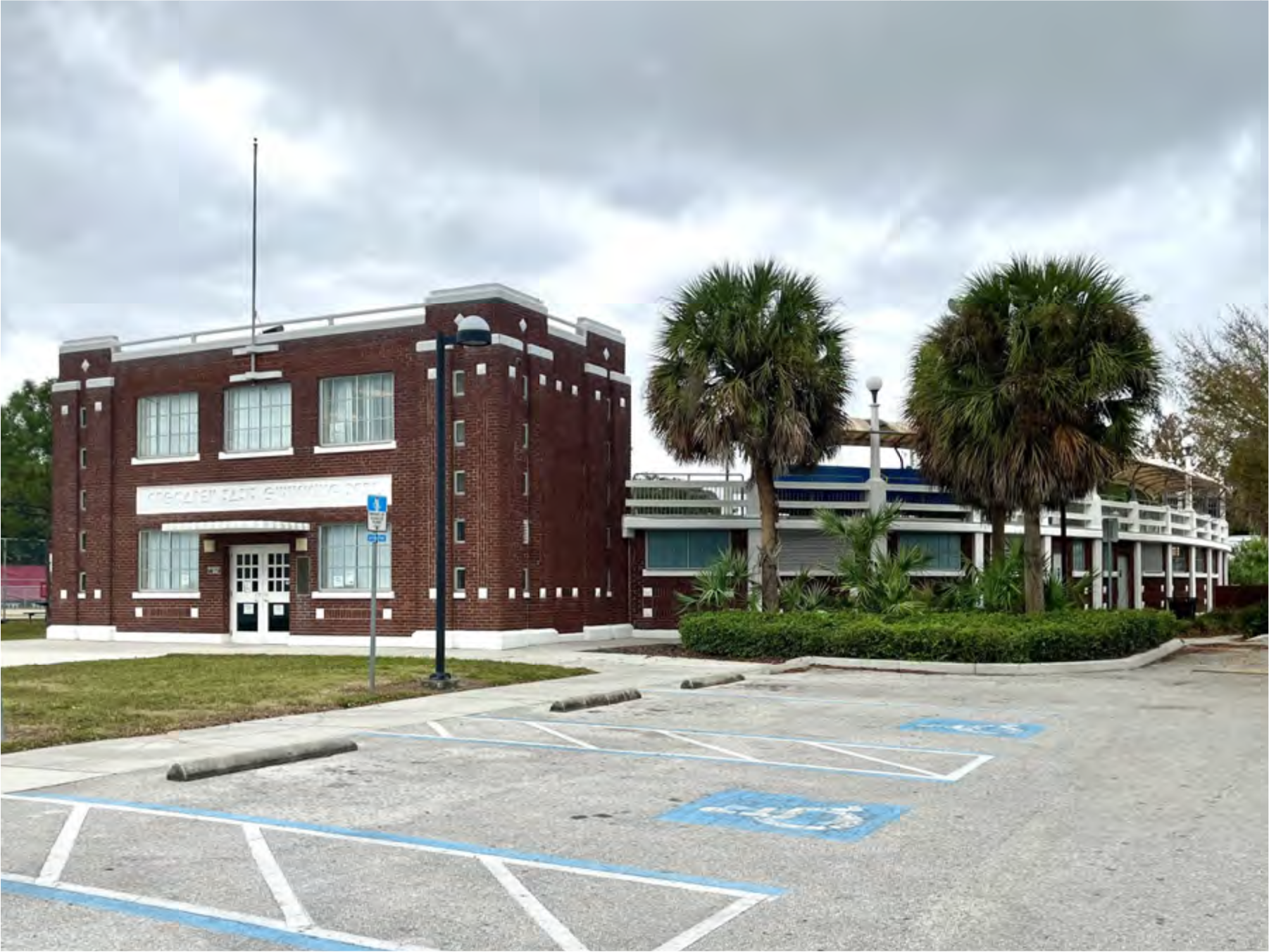
Cuscaden Park and Swimming Pool was built on land that was part of Cuscaden Orange Grove, under a Works Progress Administration (WPA) project of the late 1930s. The pool was designed by engineer Wesley Bintz, known for employing a unique patented oval pool configuration. This design was employed nationwide with a different architectural style for each pool’s façade. The construction of the pool brought Ybor City residents much needed relief from Tampa’s scorching summers, while the park provided a home playing field for the very popular Inter-Social Baseball League for many years.
Episcopal House of Prayer
2708 N. Central Avenue
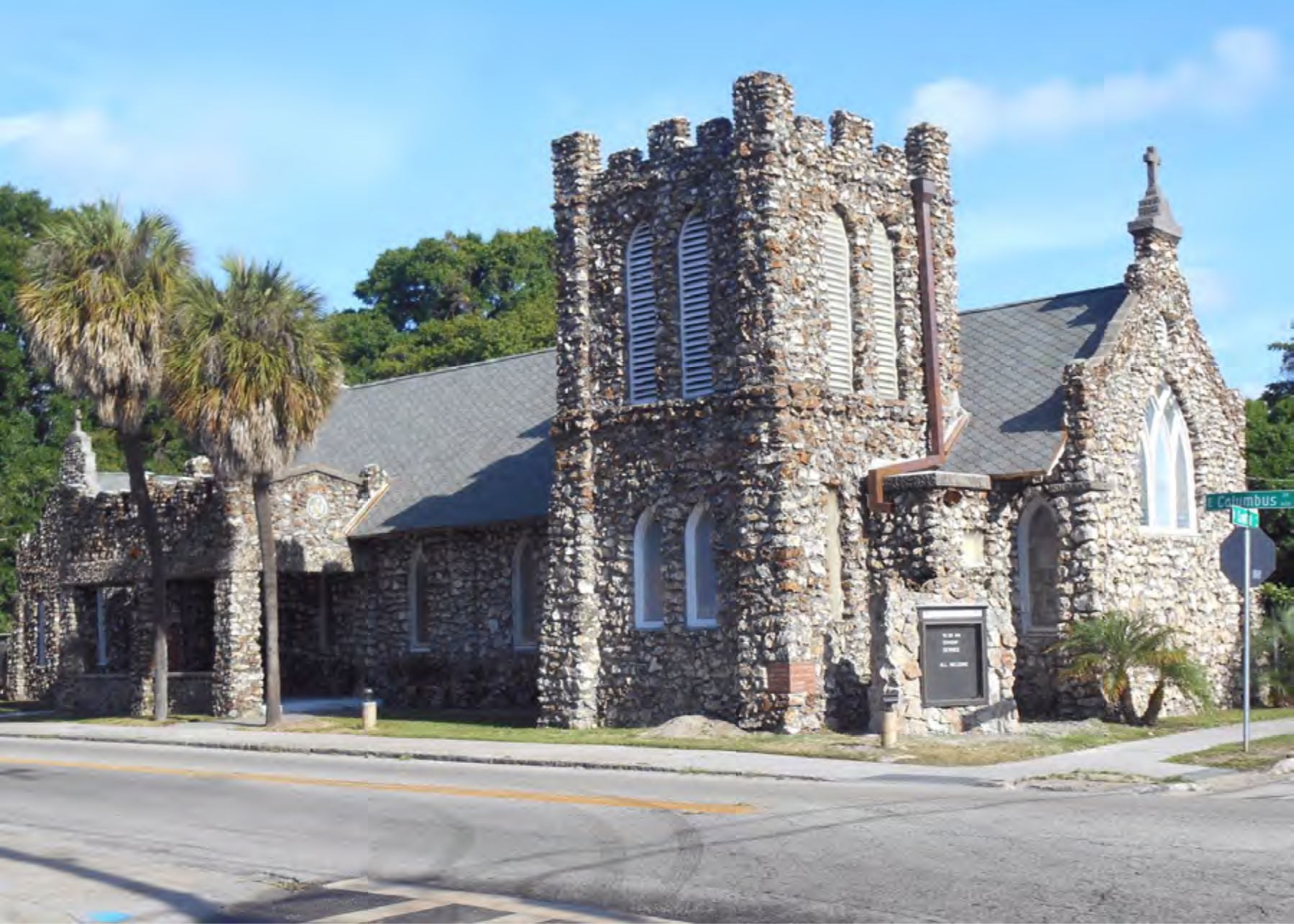
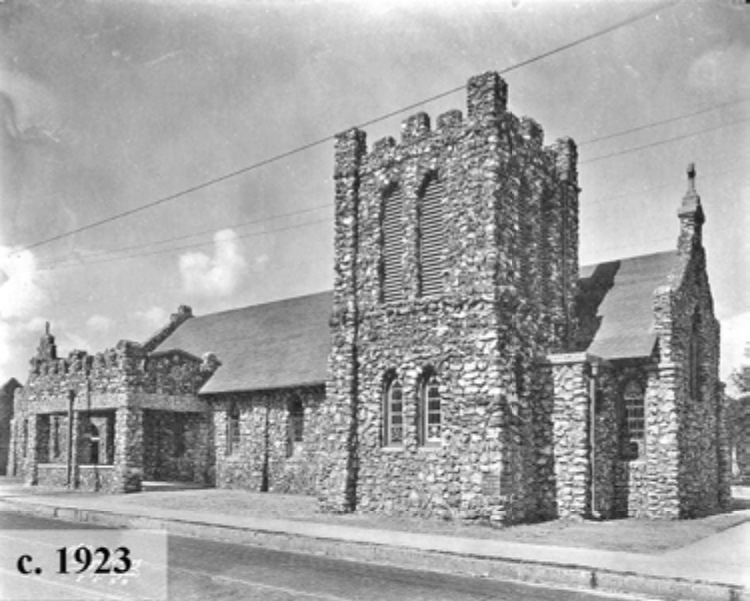
The Episcopal House of Prayer, also known as St. James House of Prayer, is one of two identified buildings in the state employing the use of chert, a native stone, as a structural building material.
The Episcopal House of Prayer was organized in 1908. The congregation quickly grew under the leadership of William Conckling Richardson, necessitating the construction of a new sanctuary. During most of the 1920s and through the 1940s, the Episcopal House of Prayer was the third largest Episcopal Church in Tampa and one of the most successful in ministering to community needs.
- Architect: Louis A. Fort
- Constructed: 1922
- Architectural Style: Gothic Revival
- National Register Listing: 1991
- Local Historic Designation: 1994
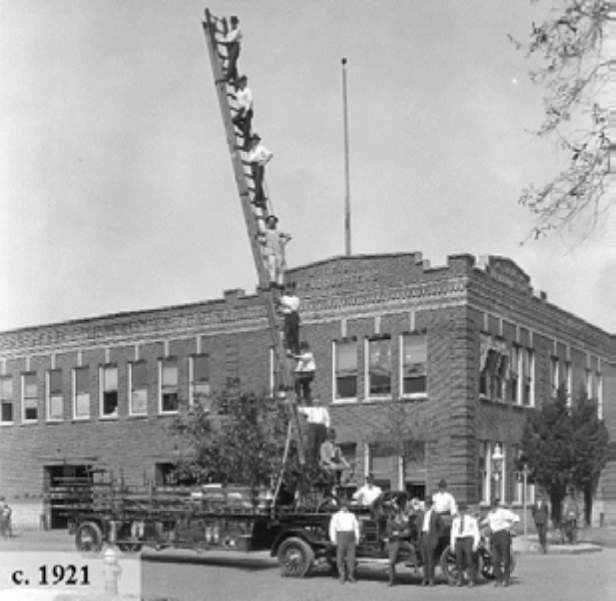
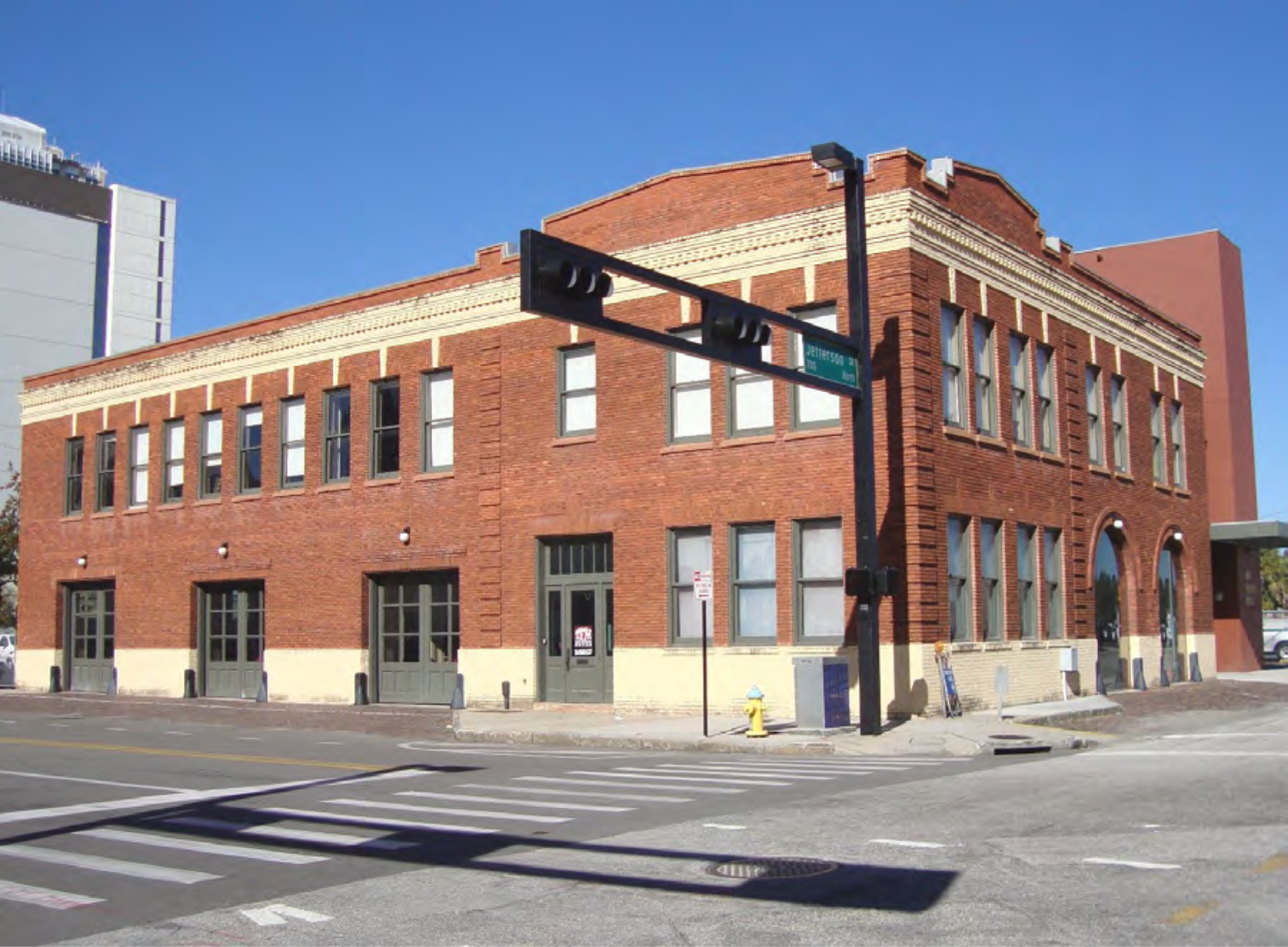
Fire Station No. 1 / Tampa Firefighters Museum
720 E. Zack Street
- Constructed: 1911
- Architectural Style: Brick Vernacular
- National Register Listing: N/A
- Local Historic Designation: 2002
- Architect: Unknown
Fire Station No. 1 was the first building to exclusively house the Tampa Fire Department, having previously operated out of City Hall along with the city’s police department. Tampa had one of Florida’s first and largest professional fire departments of its time. Constructed by the City of Tampa under the Public Works Commission, Fire Station No. 1 was operational from 1911 until 1974.
After a complete rehabilitation in 2002, the building now serves as the Tampa Firefighters Museum.
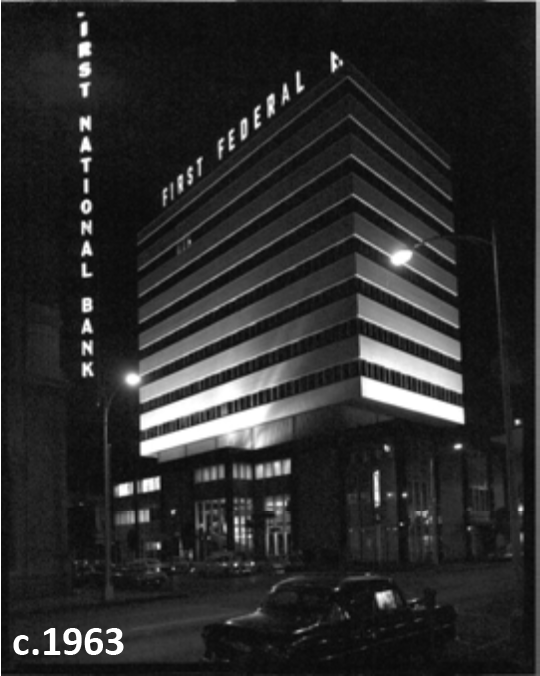
First Federal Savings & Loan Association of Tampa
220 E. Madison Street
c.1963
- Constructed: 1963
- Architectural Style: International
- National Register Listing: 2018
- Local Historic Designation: 2018
- Architect: Harry A. MacEwen
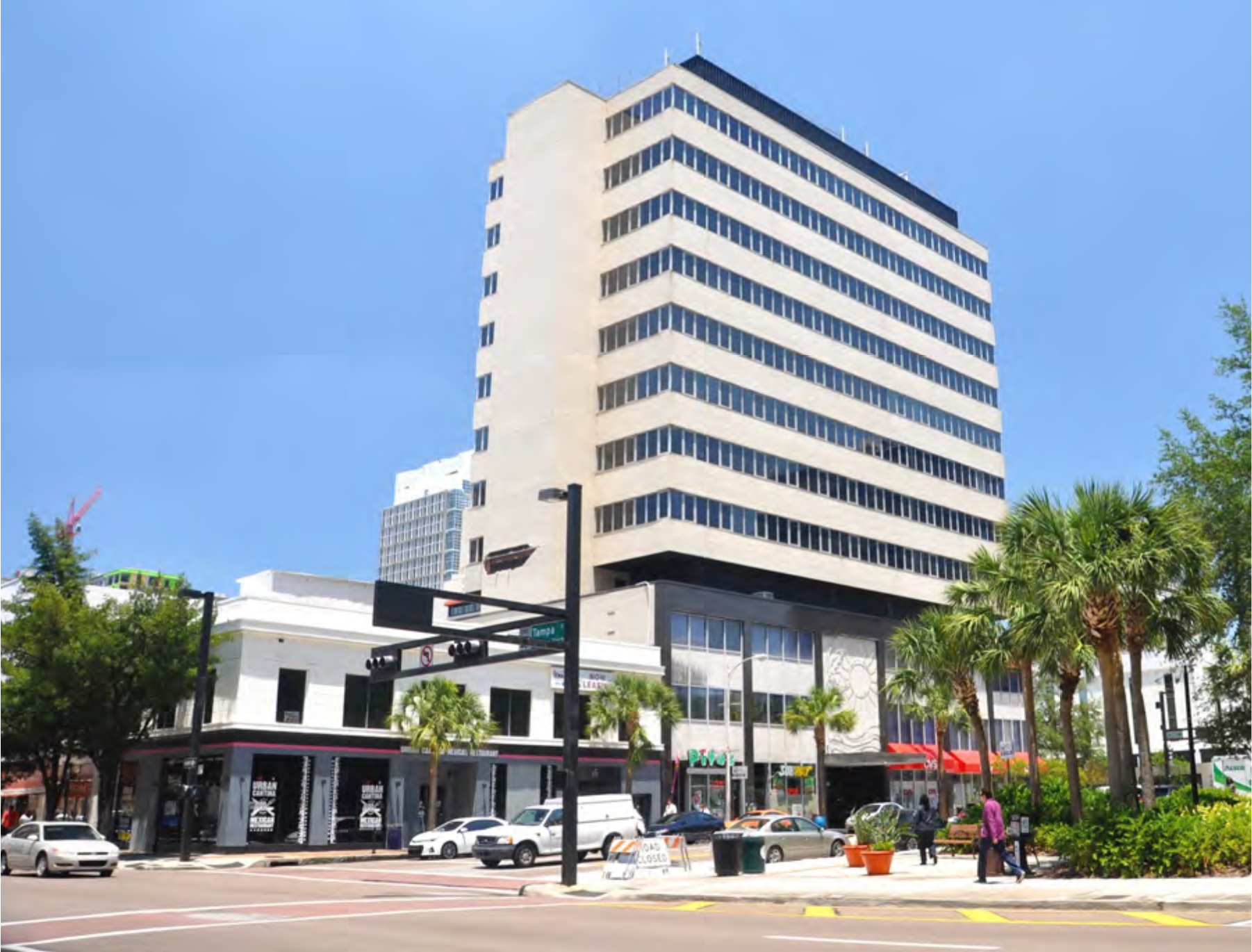
This International Style building’s steel beam and girder frame structure permitted a curtain wall with large expanses of plate glass and Mondragone marble, framed in emerald pearl granite, to enclose the three-story base and ribbons of brick and glass to wrap around the tower. The inset fourth story, clad in dark aluminum, made the rectangular tower appear to hover over its base. Harry “Bo” MacEwen established his Tampa office in 1959. While best known for residential structures, MacEwen designed over 250 buildings for financial institutions, including the 1966 22-story addition to Exchange National Bank on Franklin Street.
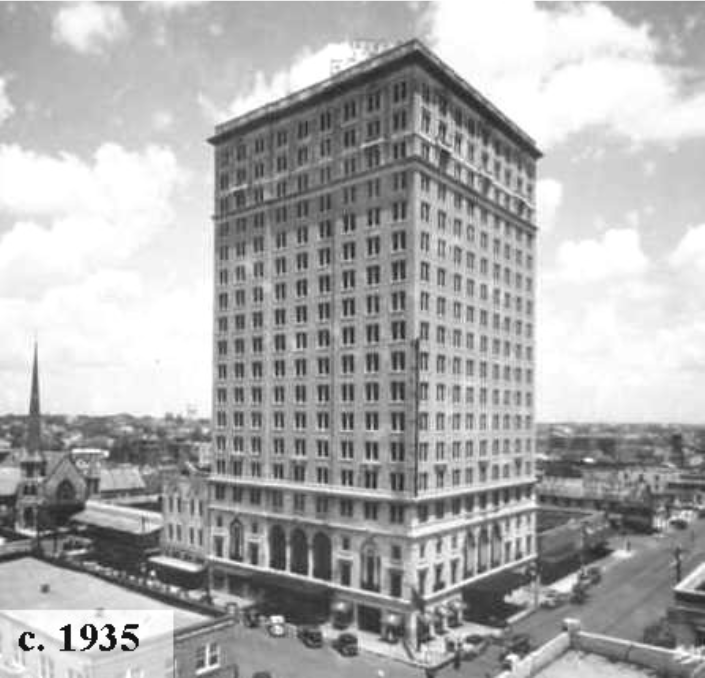
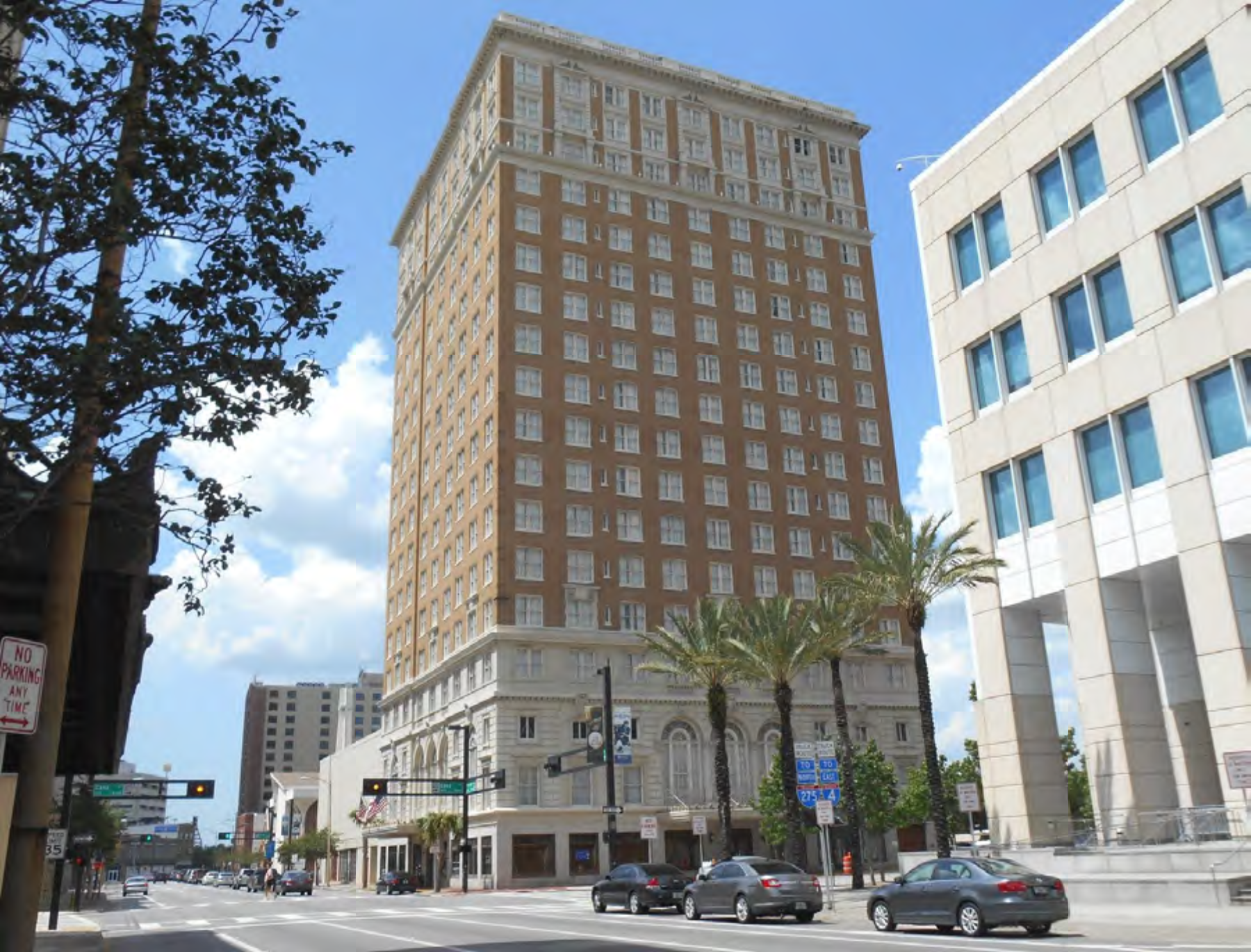
Floridan Hotel
905 N. Florida Avenue
The Floridan Hotel is the only historic skyscraper remaining of the six constructed downtown prior to 1930. The Renaissance Revival elements and form base are typical of early skyscrapers. When the 18-story hotel was completed in 1926, the owners described the building as, “Tampa’s greatest and Florida’s tallest hotel,” and boasted, “Every convenience utilized in metropolitan hotels is found in the structure.” The rooms were furnished with walnut desks, chifforobes, chairs, telephones, and steel beds. The Floridan Hotel underwent an extensive restoration and reopened in 2012.
- Constructed: 1926
- Architectural Style: Renaissance Revival
- National Register Listing: 1996
- Local Historic Designation: 1996
- Architect: Francis J. Kennard
- Builder: G. A. Miller
Fort Homer W. Hesterly
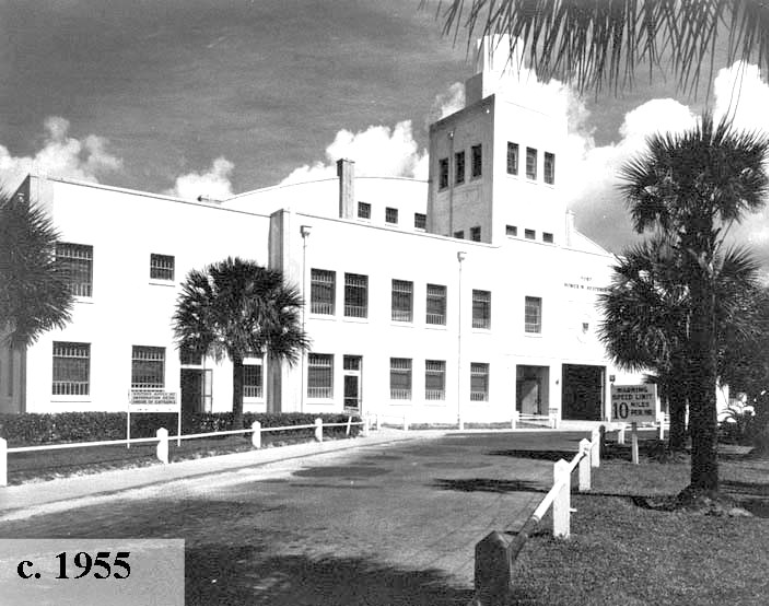
522 N. Howard Avenue
Colonel Homer Wynne Hesterly was instrumental in the decision to construct the Armory building. Shortly after completion, the property was renamed to commemorate Colonel Hesterly.
Built on a site used as an encampment for Teddy Roosevelt’s Rough Riders during the 1898 Spanish-American War, the Florida National Guard Armory provided arms storage and operations and drill space for the Guardsman. The Armory also served the community as a venue for sporting, social, and speaking events and hosted persons such as President John F. Kennedy, Martin Luther King, Jr., and Elvis Presley.
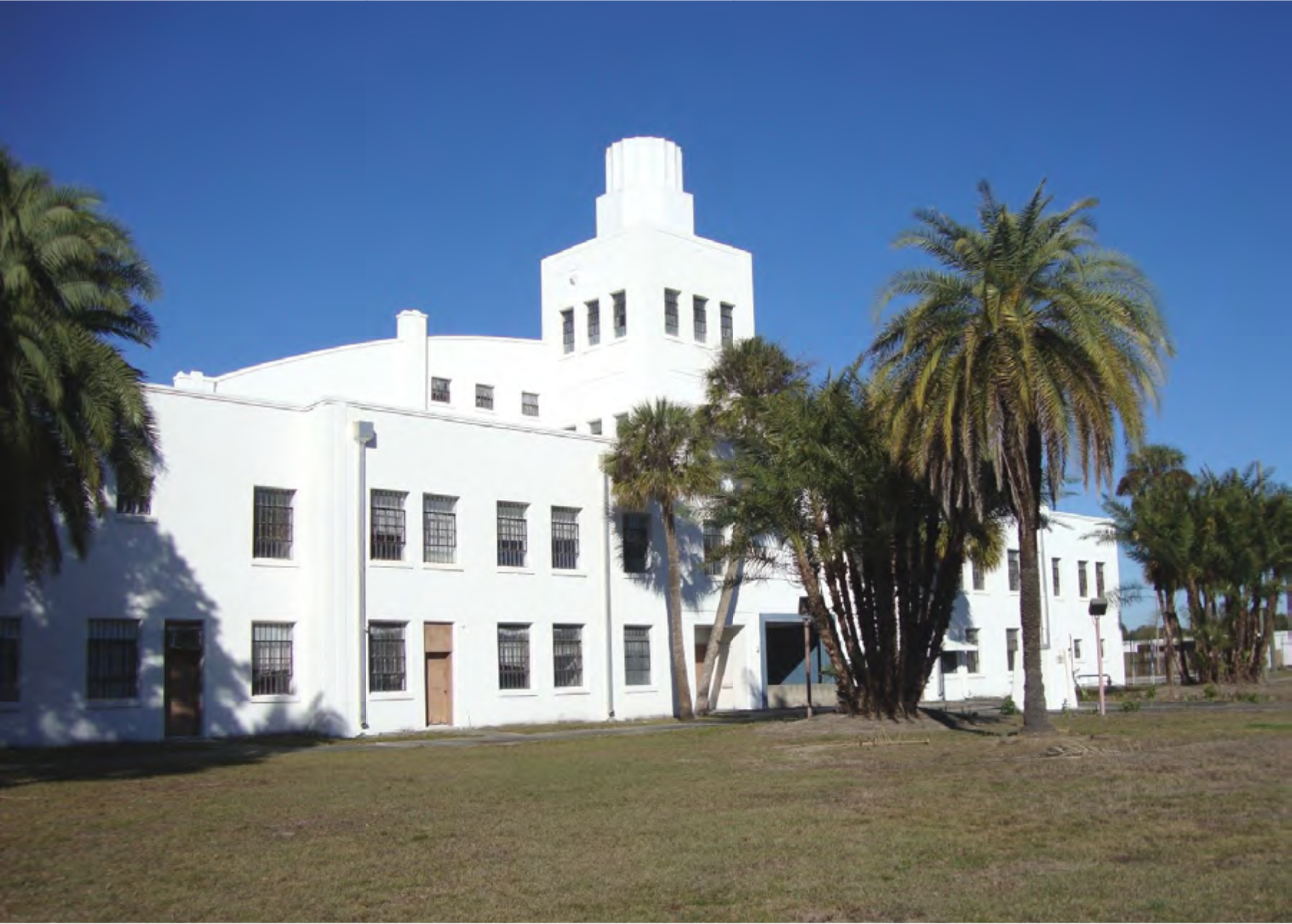
- Architect: Unknown
- Local Historic Designation: 2006
- National Register Listing: 2013
- Architectural Style: Art Deco
- Constructed: 1941
Architectural Style: Craftsman Bungalow
National Register Listing: N/A
Local Historic Designation: 2020
Builder: Giovanni Fonte
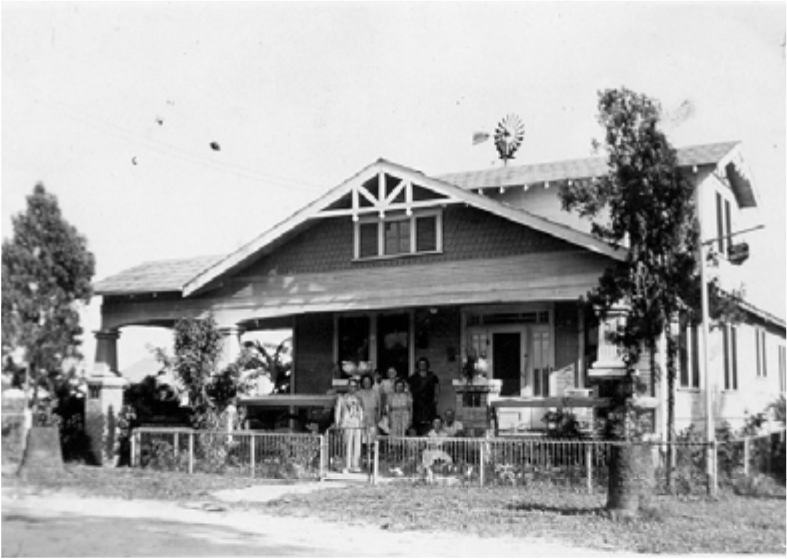
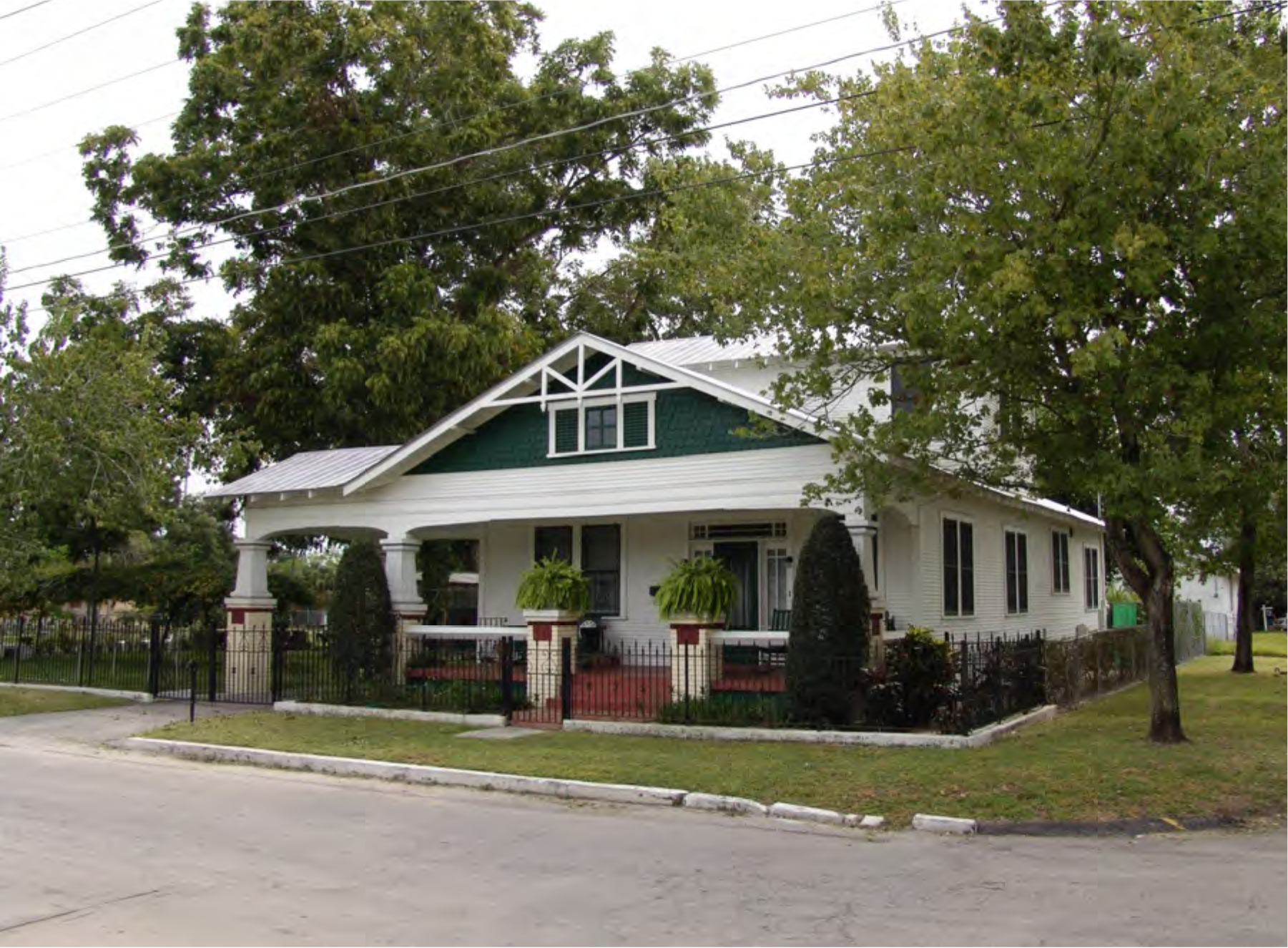
In 1907, Salvatore and Victoria Giunta left Santo Stefano Quisquina, Sicily, for the United States. They settled on the east side of Ybor City, where many other Sicilians had small farms and dairies. Being peasant farmers, the Giuntas brought seeds with them from their homeland. Once the family purchased their homestead, they began to farm their heirloom produce and herbs for income. The 1924 Giunta house, the historic garage and auxiliary structures, well-maintained fields, chicken yard, and orchard represent a resource type significant to the early growth of Ybor City. The Giunta Homestead and Farm is an excellent and rare surviving example of an early Sicilian immigrant family homestead and farm.
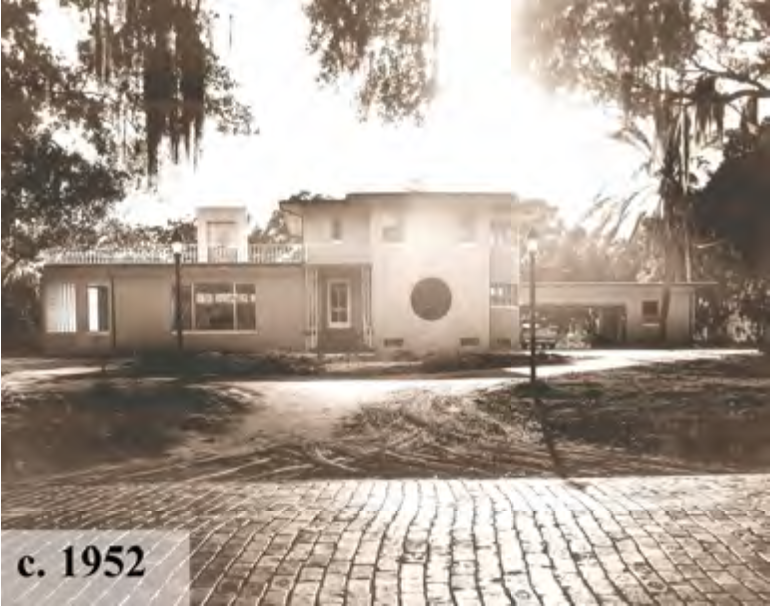
Constructed: 1952
Architectural Style: Art Moderne
National Register Listing: 2006 Local Historic Designation: 2005
Architect: Joseph P. Rodriguez
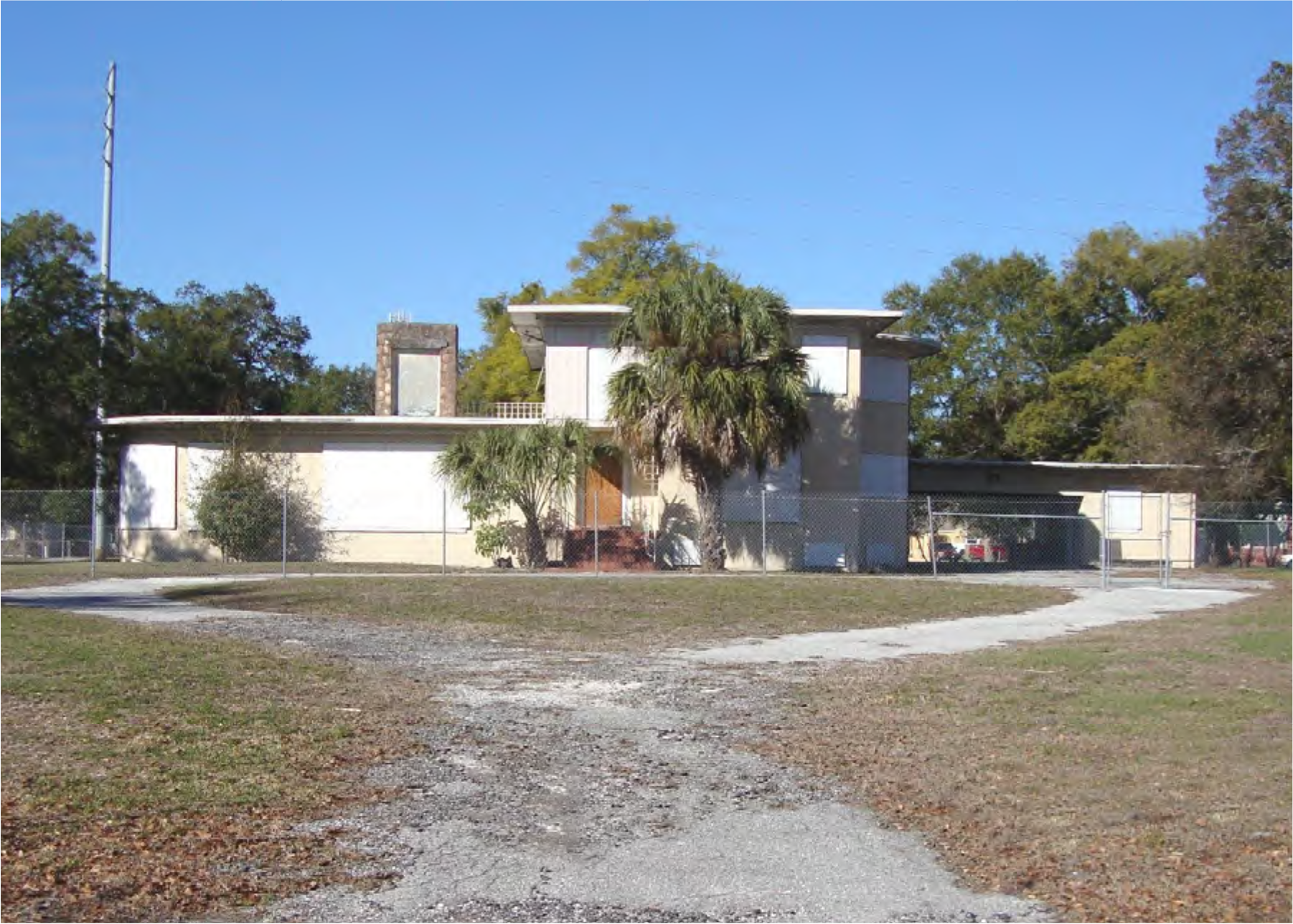
As a successful businessman and prominent civic leader, George Guida, Sr. received a wealth of awards and honors for his dedication to his community and was fondly referred to as “Mr. West Tampa.” His private residence was designed to reflect his personal interpretation of the Art Moderne style, which was an expression of his own progressive nature.
The Guida family was well known for their generous hospitality. Over the years, the house served as a center for civic and charitable events related to West Tampa.
Architectural Style: Late Gothic Revival
National Register Listing: N/A
Local Historic Designation: 2017
Architect: Leslie N. Iredell
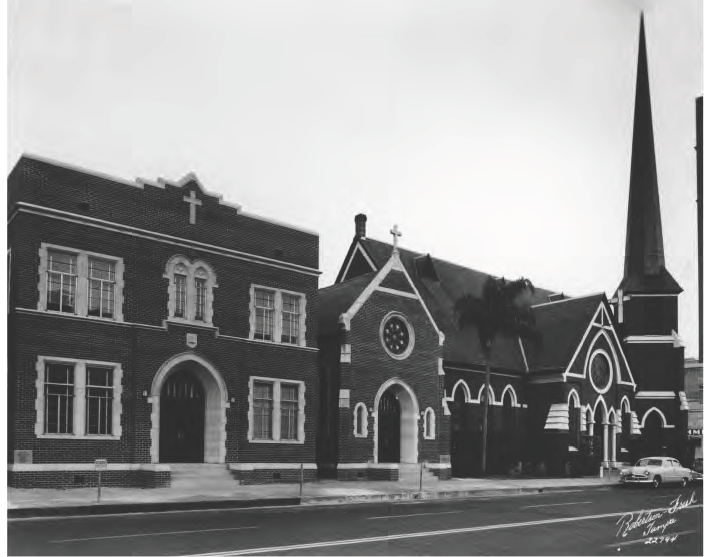
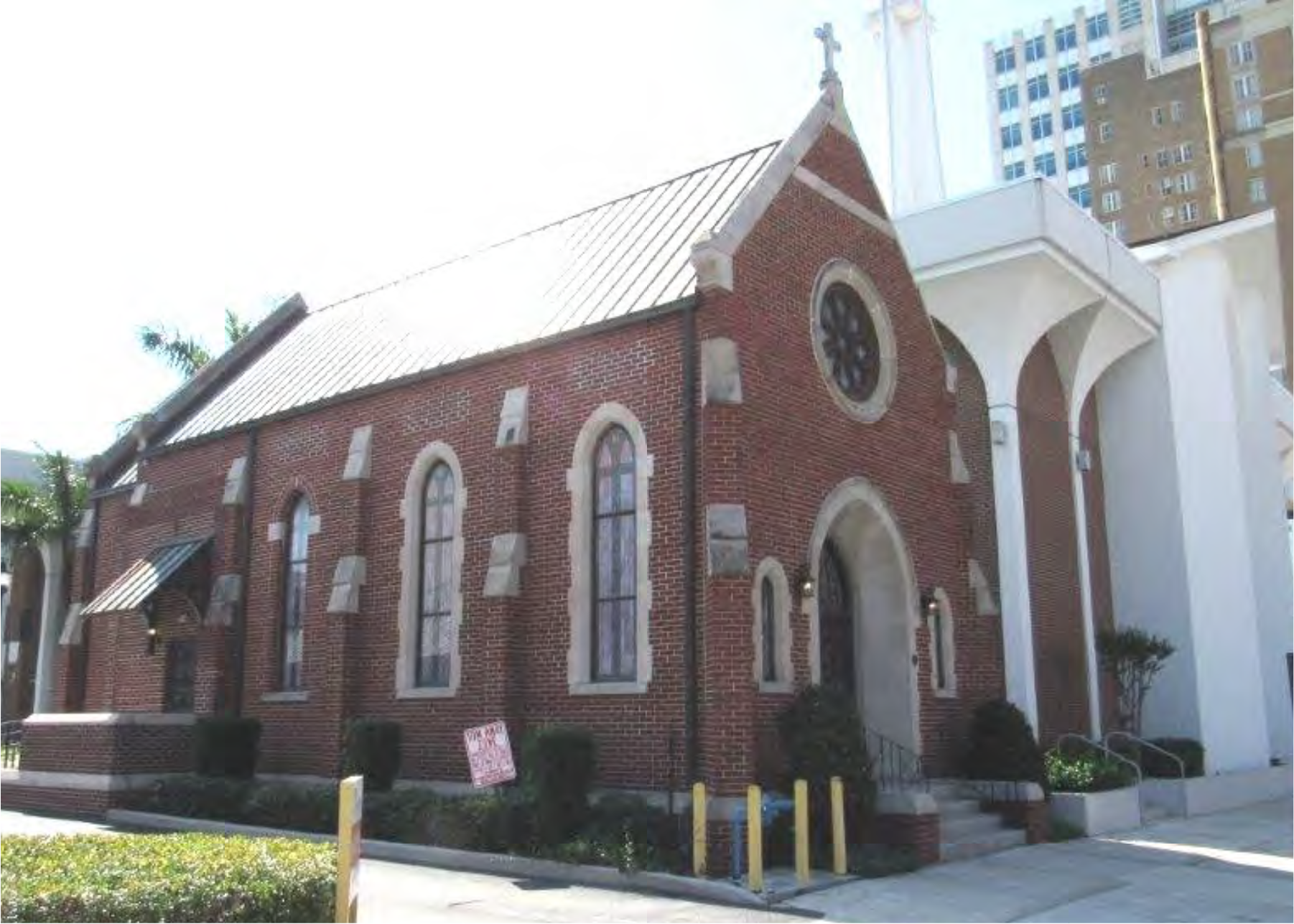
The Henderson Chapel is the oldest structure associated with First Methodist Church, Tampa’s oldest church (est.1846). After a rudimentary chapel in Fort Brooke washed away in the Great Gale of 1848, the Methodists built Tampa’s first official church building, the “Little White Church,” at Morgan and Lafayette Streets. The church moved to its present site in 1891, and its campus continually grew and evolved to fit the needs of downtown Tampa. Designed by Tampa architect Leslie N. Iredell, the Chapel remains true to its original exterior and interior design. It is a rare example of a Late Gothic Revival style structure in downtown Tampa.
Constructed: 1911
Architectural Style: Classical Revival
National Register Listing: 2008
Local Historic Designation: 2004
Architect: William Potter
Addition: M. Leo Elliott
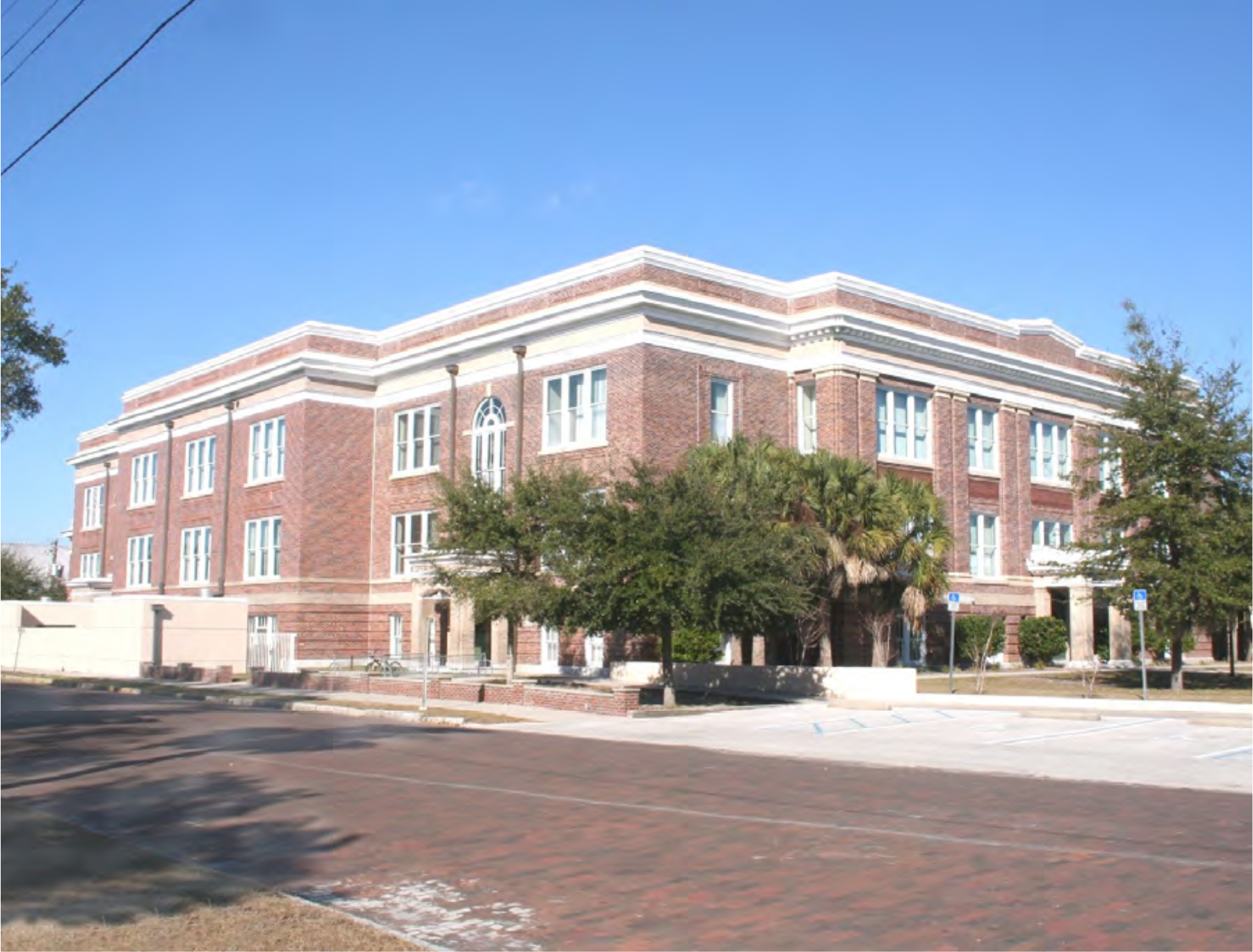
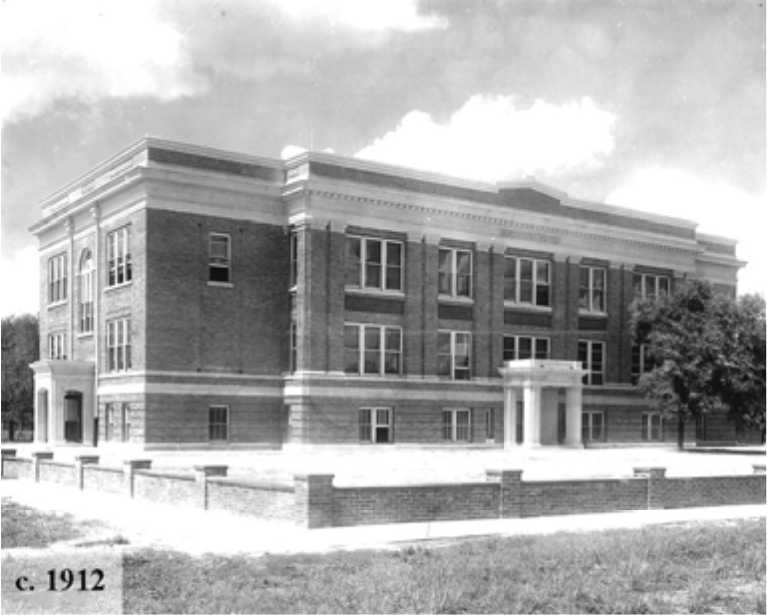
Hillsborough County High School was the earliest high school in Hillsborough County. Architect William Potter designed the school, which officially opened in 1911. In 1923, an addition designed by M. Leo Elliott partially filled the building’s open center. The building served as the Thomas Jefferson Jr. High School from 1928 to 1938, then as Jefferson High School until 1967. In 2002, the school was renamed the D.W. Waters Center in honor of an educator who served as a principal for Hillsborough County School system for 41 years. Today, the school specializes in career development education.
- Constructed: 1928
- Architectural Style: Mediterranean Revival
- National Register Listing: 1986
- Local Historic Designation: 1994
- Architect: M. Leo Elliott
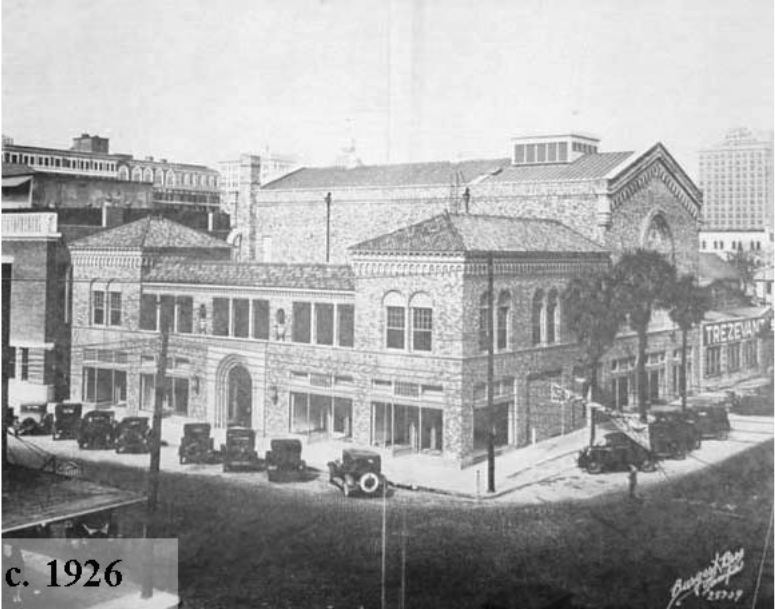
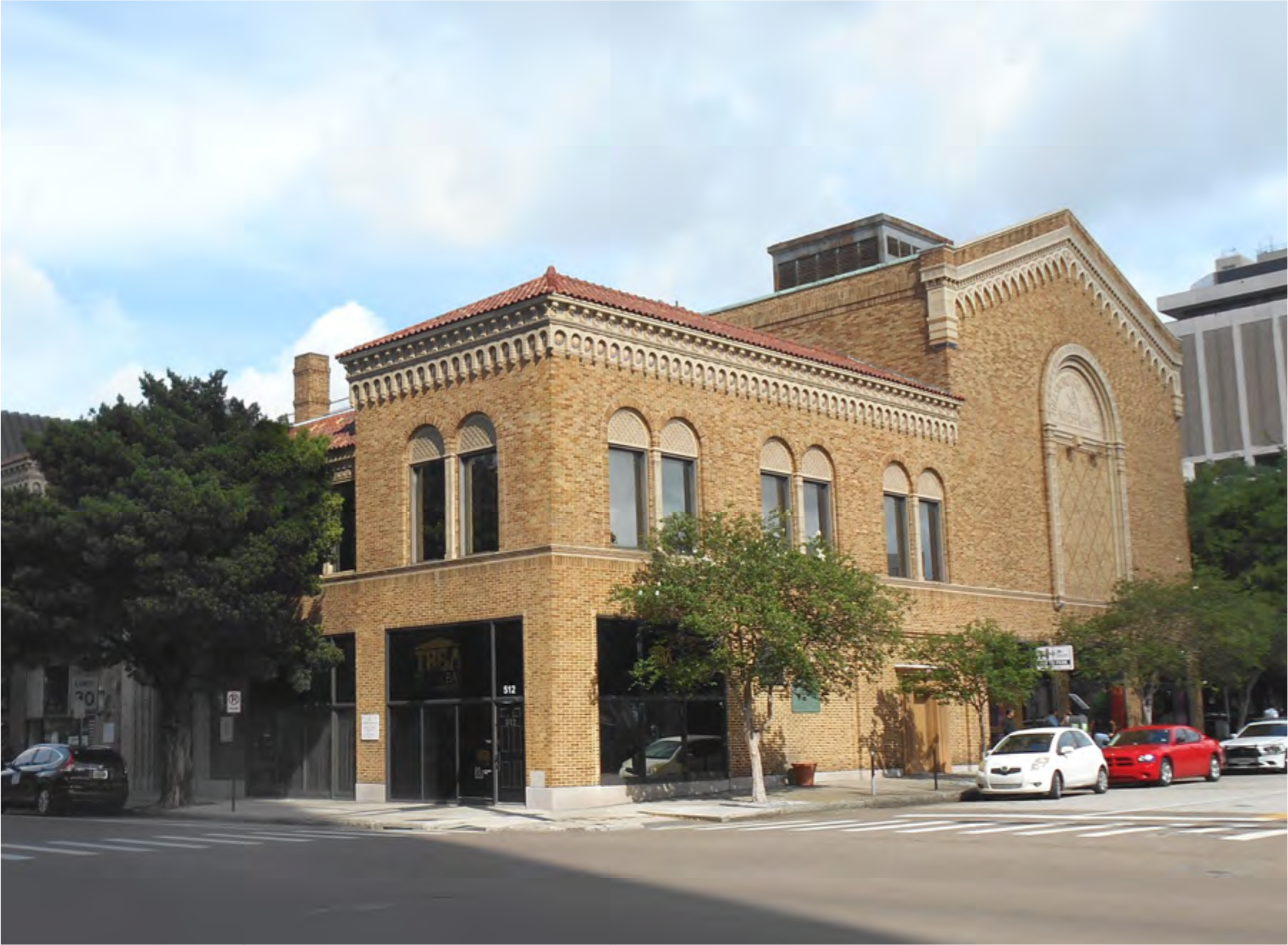
The Hillsborough Lodge No. 25, F.&A.M., historically known as the Masonic Temple, chose architect M. Leo Elliott, a member of the Lodge, to develop a new structure in the Mediterranean Revival style to house ceremonial, administrative, and commercial functions. The architectural details represent the primary use of the gavel, plumb, ruler, square, level, and trowel that were employed in construction, particularly within the terracotta work. The Lodge membership was comprised of community and business leaders who played important roles in the social, economic, and political development of the Tampa area.
Constructed: 1924
Architectural Style: Masonry Vernacular
National Register Listing: N/A
Local Historic Designation: 2006
Architect: Unknown
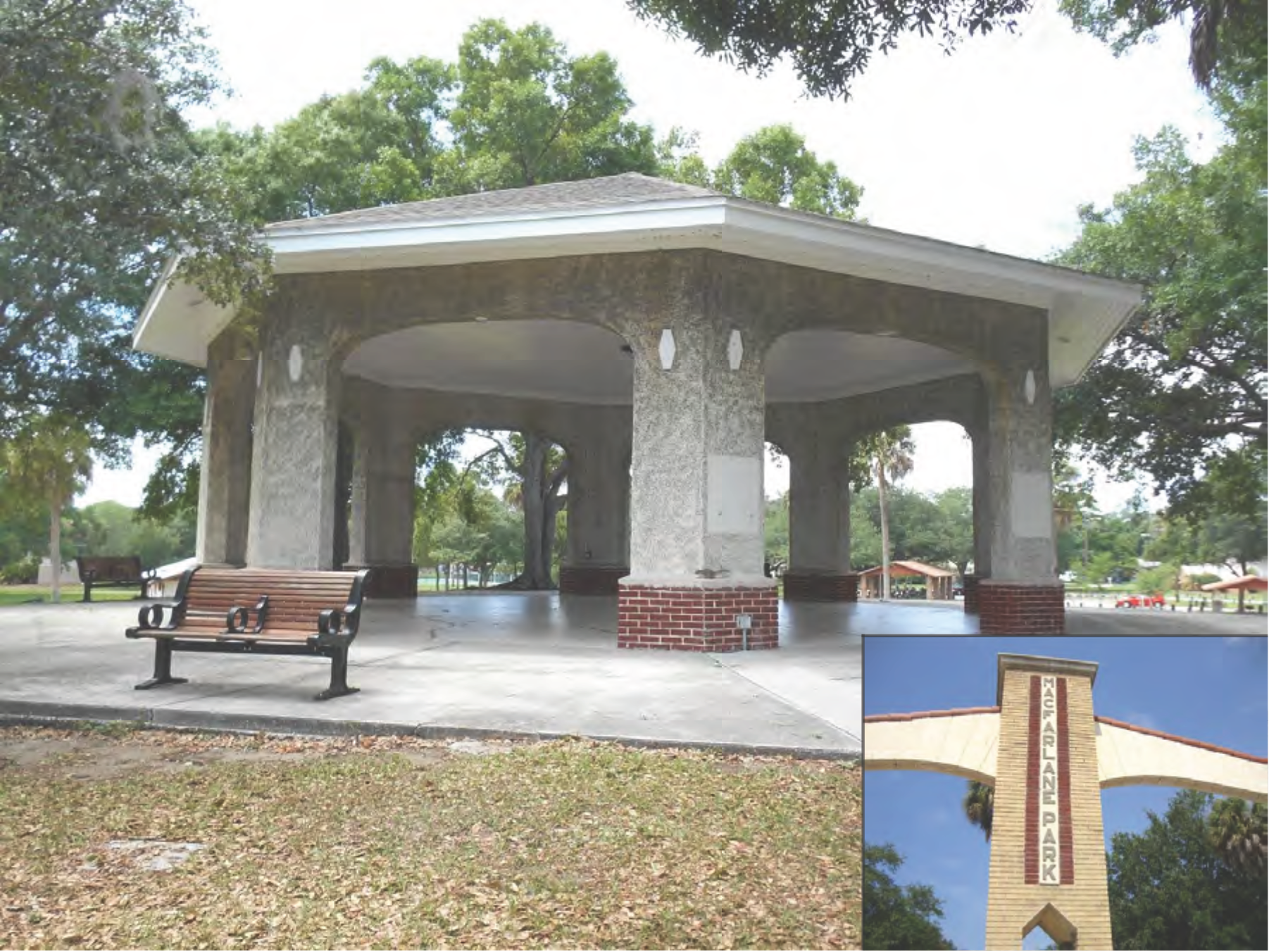
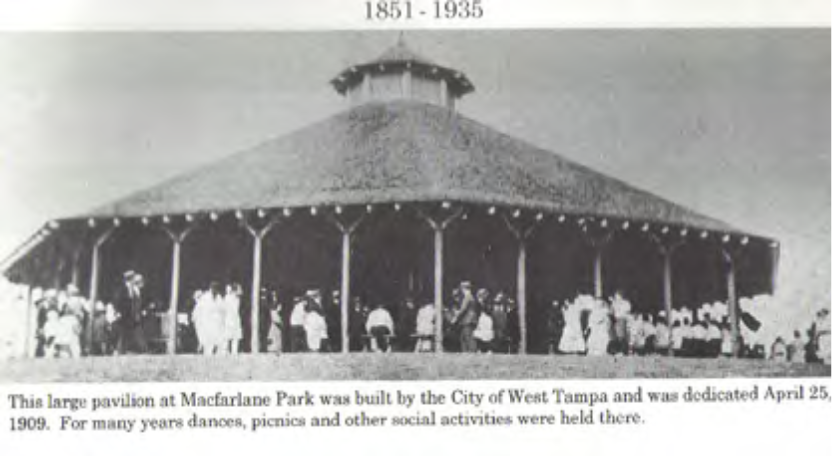
MacFarlane Park’s historic Pavilion and Gateway symbolize the importance of the park to the lives of West Tampa residents, past and present. While the park offers a variety of amenities, it was the octagon Pavilion atop the hill centered in the park that offered itself as the physical beacon as well as the venue for many West Tampa social activities.
A new pavilion, replacing the original wooden predecessor, made its debut at the dedication of the MacFarlane Park in 1924. The red and blonde brick gateway, built in the mid-1930s, heralds the main entrance to the park.
Home Association
1203 E. 22nd Avenue
- Constructed: 1924
- Architectural Style: Colonial Revival
- National Register Listing: 2000
- Local Historic Designation: 2001
- Architect: A.H. Johnson
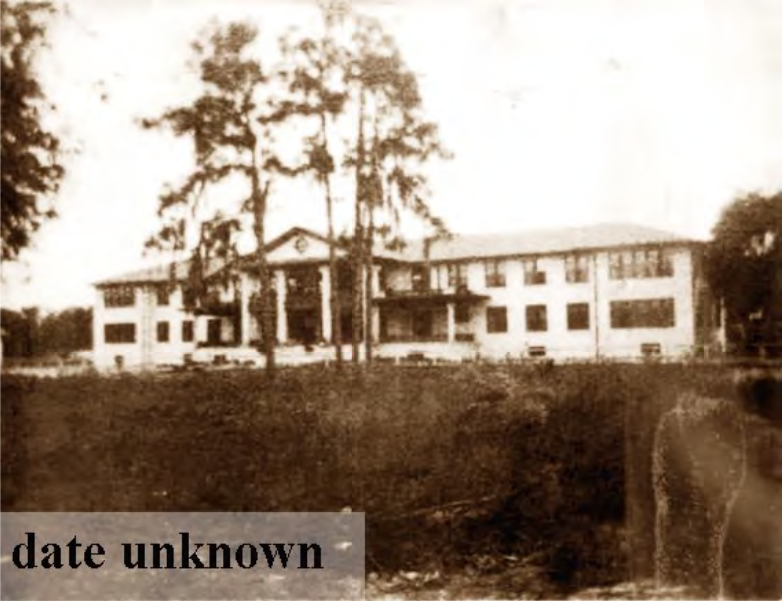
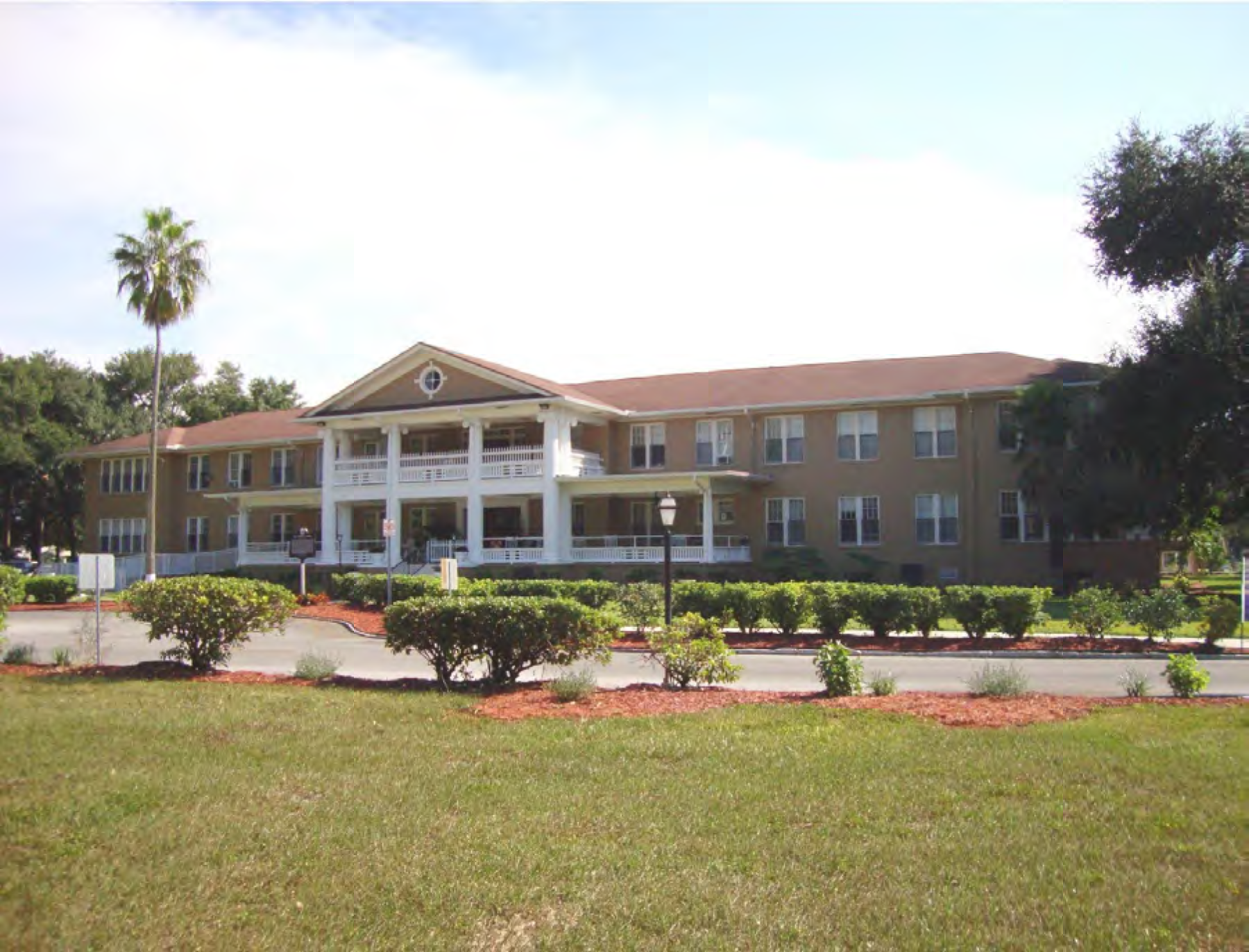
The Home Association, also known as The Old People’s Home, originated in 1899 when two elderly women arrived at the Tampa Union Station without lodging, funds, family, or friends. Answering the call were four women who rented them living quarters at 405 Washington Street and formed “Kadesh Barnea,” the Hebrew translation of “Place of Rest.”
When a larger facility was needed, Peter O. Knight donated the land for the new building and additional acreage for a tree-filled park. The Home Association became the largest publicly-supported home for the elderly in Tampa and represented a major civic achievement for the city.
RESEARCH REFERENCE
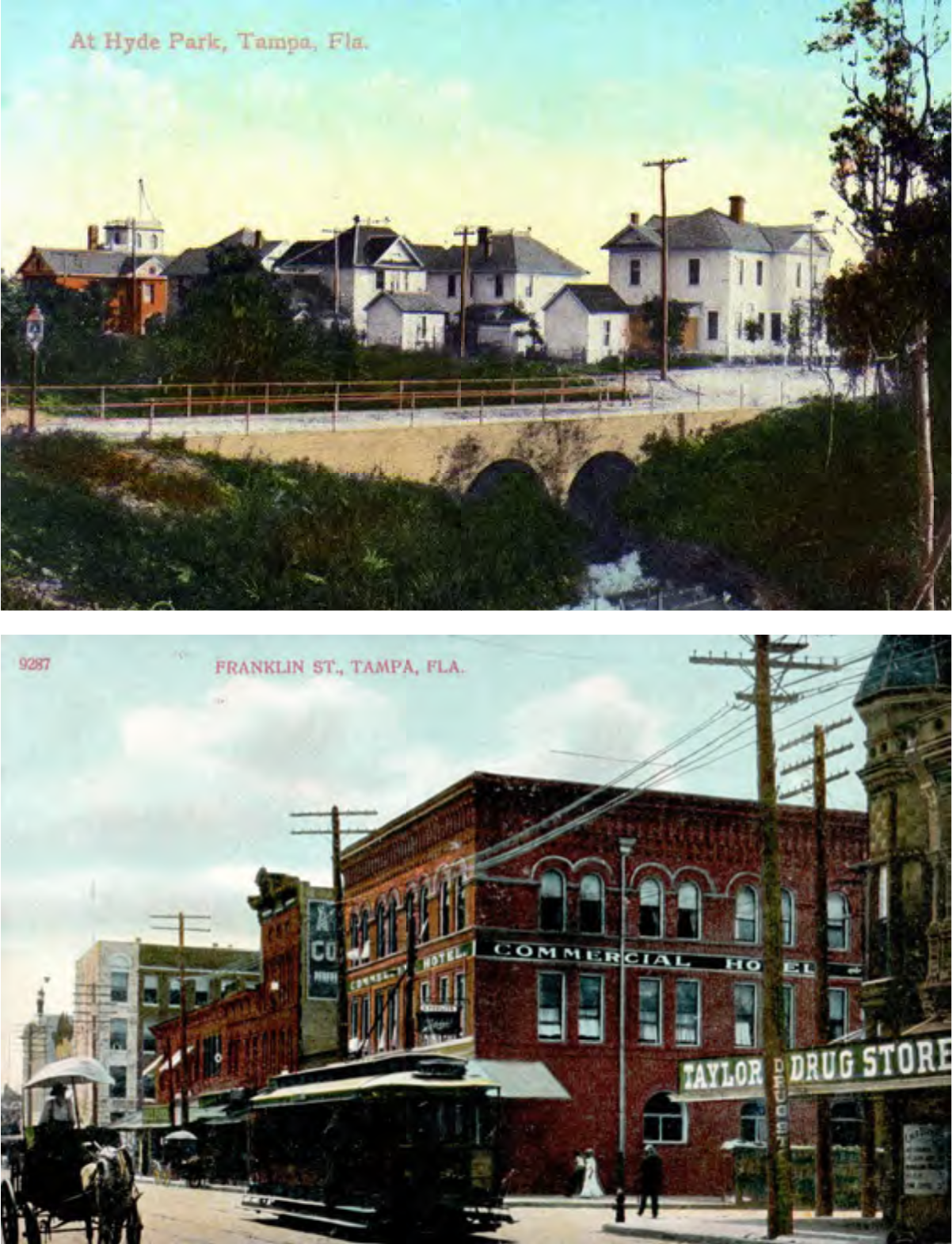
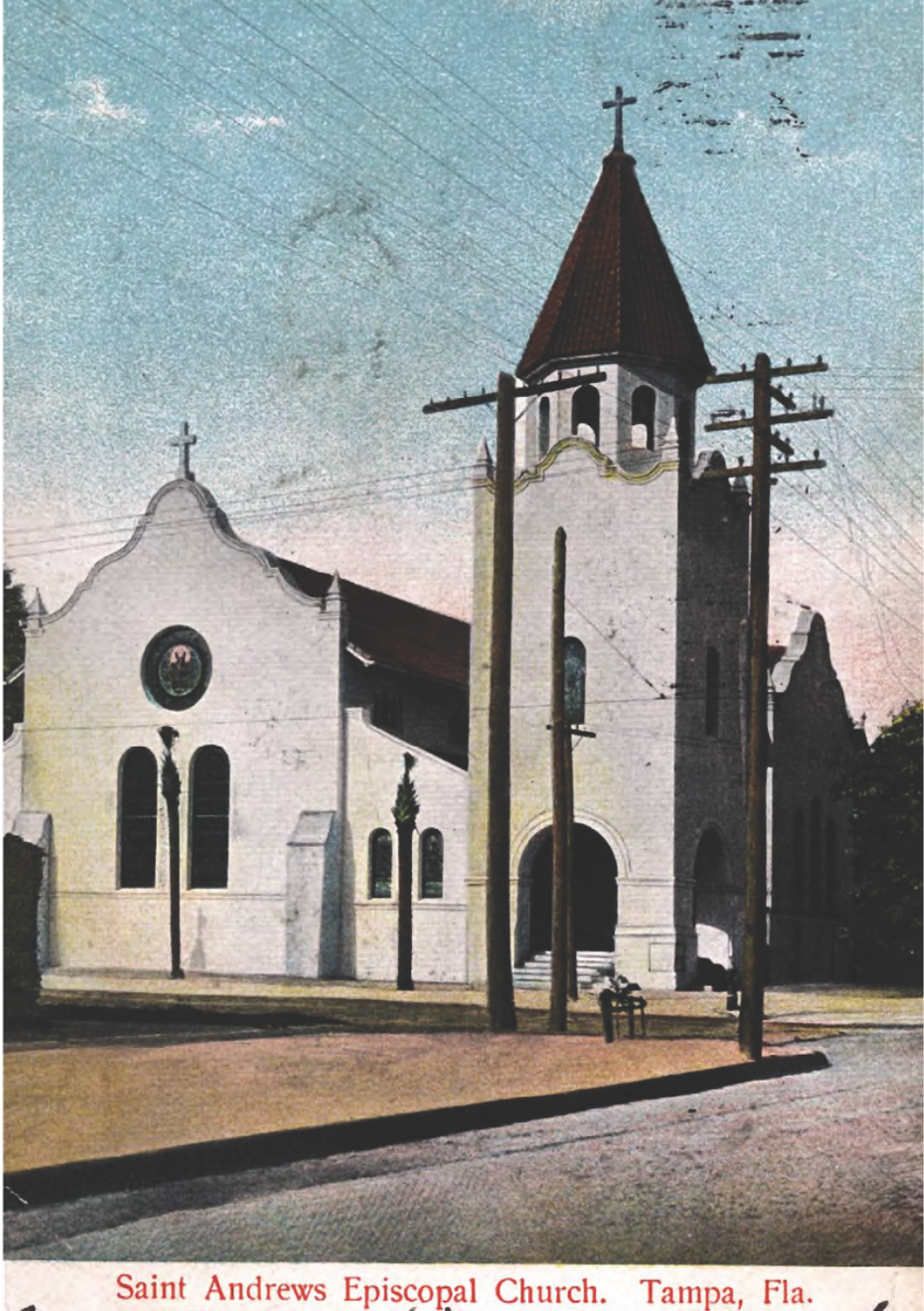
Henry Hampton Dunn championed Florida’s history over the course of his career as a journalist, tourism promoter, and author. He donated his large collection of Floridania to the University of South Florida (USF). The Hampton Dunn Collection includes rare books found at thrift stores, maps scoured from antique shops, newspaper clippings, letters, tourist brochures, and numerous historic postcards.
During his travels throughout the state as a newspaper correspondent, Dunn collected postcards featuring scenery of Florida’s past and (then) present. These postcards provide scenic images from early twentieth century Florida, conveying a sense of what earlier times looked like, or may have looked like, displaying color images of street scenes, natural vistas, and Floridians at work and play.
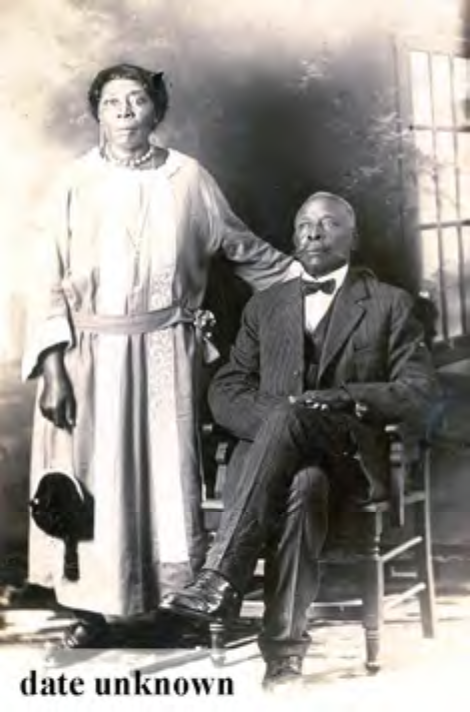
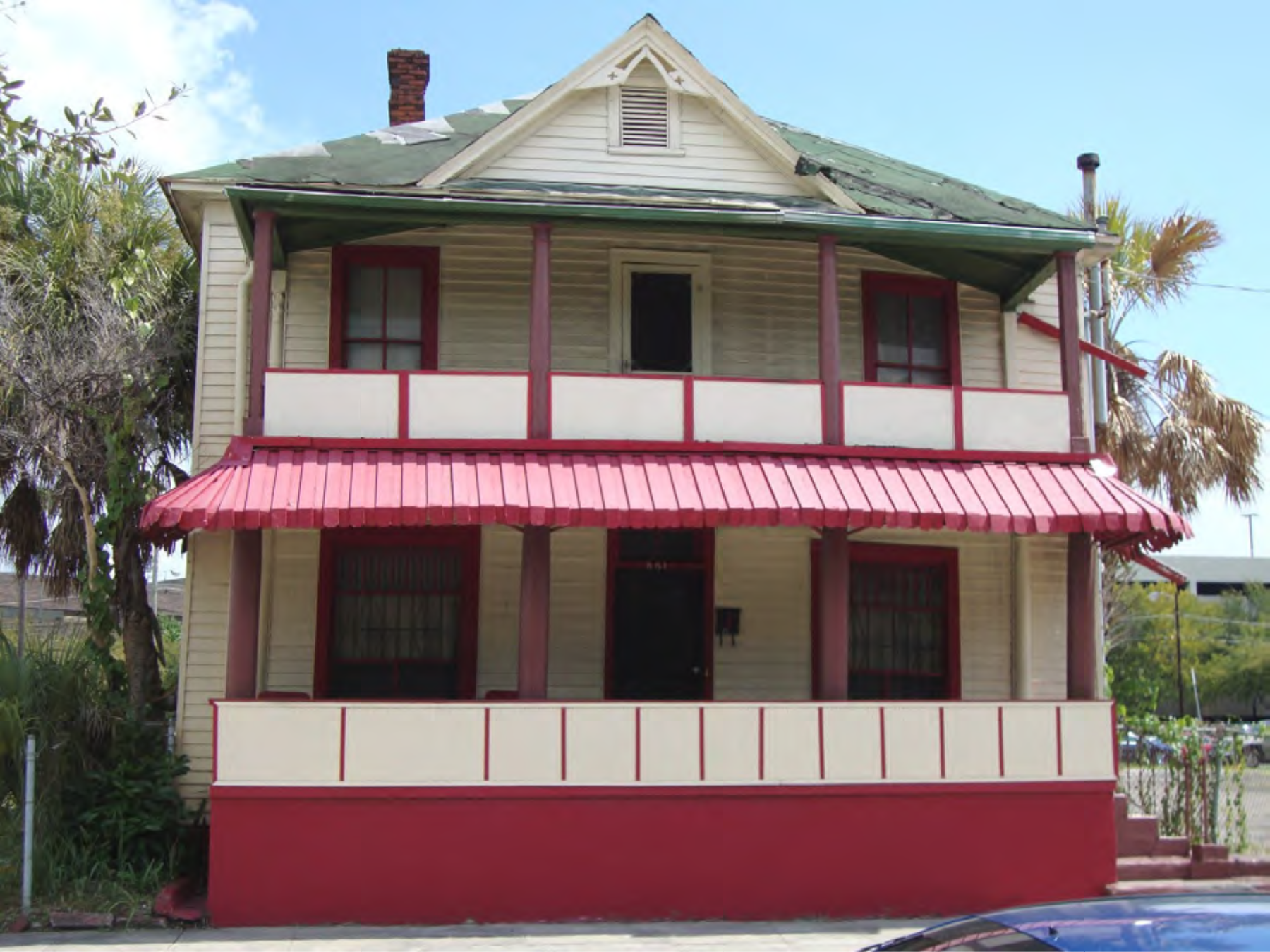
The Jackson House has weathered through 100 years of change in Tampa and in the Black community. In 1899, Moses Jackson purchased the property. He expanded the structure in the early 20th century to serve as a boarding house for African-American travelers, whether they were servicemen, railroad workers or passengers, entertainers, or transients. The Jackson House’s contribution to the community surpassed that of merely providing a night’s lodging; it fostered an atmosphere that contributed to the cohesiveness of the Black community through the years of segregation.
Architectural Style: Four Square National Register Listing: 2007 Local Historic Designation: 2004
Architect: Unknown
| Attribute | Value |
|---|---|
| Constructed | 1929 |
| Architectural Style | Mediterranean Revival |
| National Register Listing | N/A |
| Local Historic Designation | 2010 |
| Architect | Franklin O. Adams |
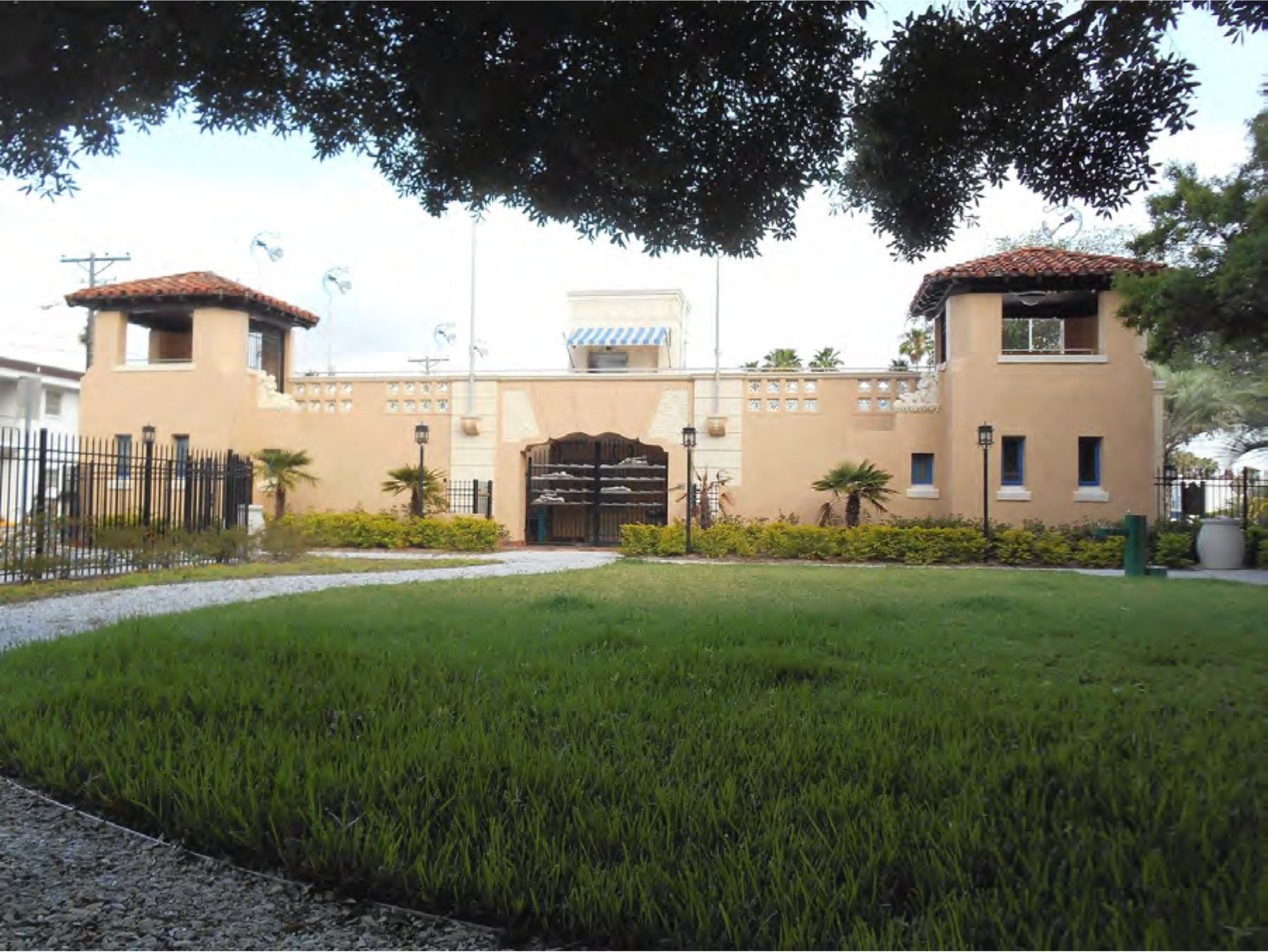
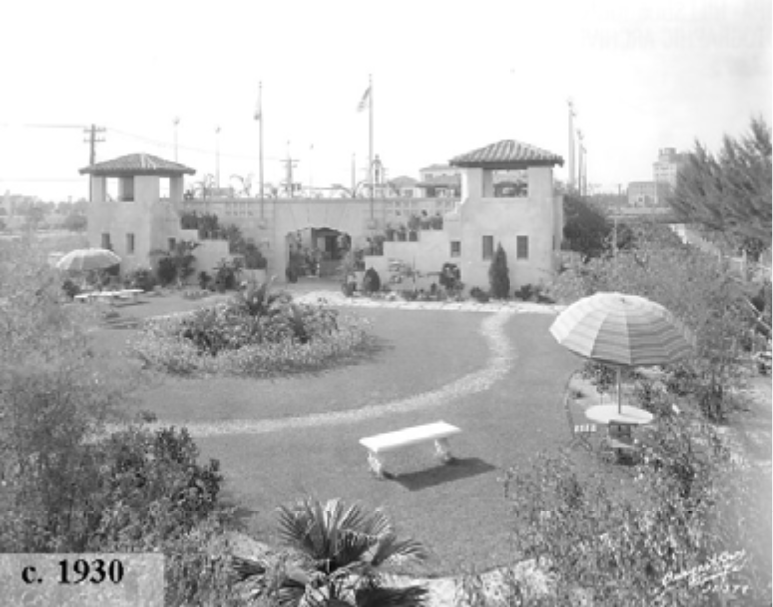
Davis Islands, formerly known as Big and Little Grassy Islands, were the dream of real estate developer D.P. Davis. His architectural style of choice was Mediterranean Revival, which is reflected in all of the Islands’ original buildings from residential to commercial. The Davis Islands Swimming Pool was modeled after the Venetian Pools in Italy. The pool was the last of the large scale public projects on Davis Islands. In 1965, the name of the pool changed to honor Roy Jenkins, a long-standing community leader in youth and aquatics safety.
- Constructed: 1889
- Architectural Style: Folk Victorian
- National Register Listing: 1985
- Local Historic Designation: 2006
- Architect: Unknown
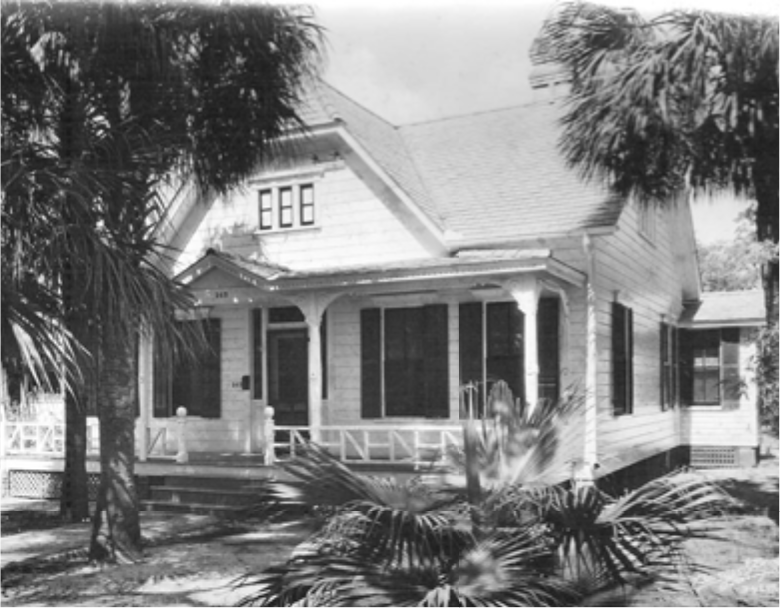
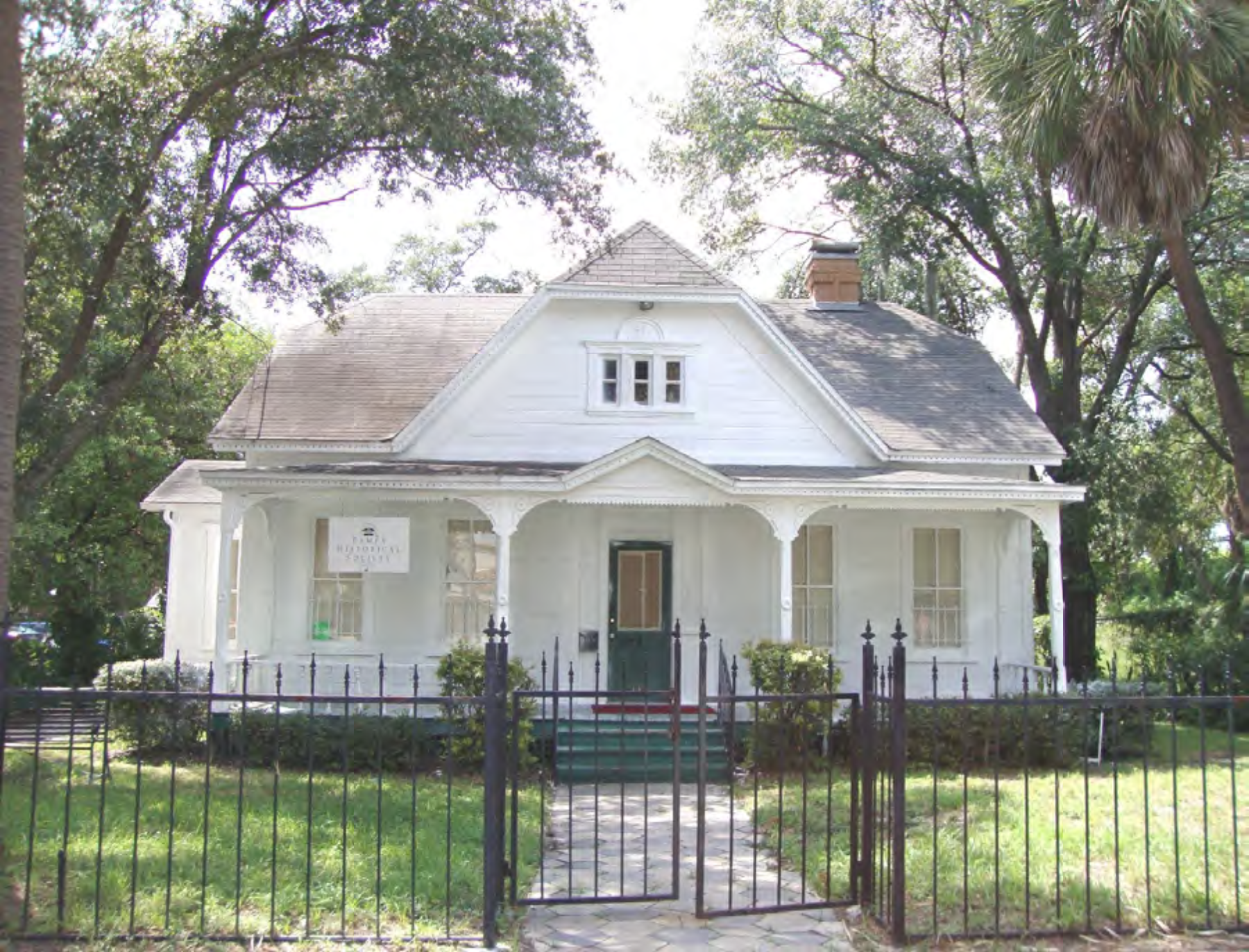
Peter O. Knight was one of Tampa’s early professional and community leaders. Beginning in 1889, he practiced law in Tampa while serving the community in a wide array of involvements. Knight and his wife, Lillie Frierson, lived in their “honeymoon cottage” from 1889 to 1900, before moving to larger accommodations. The gingerbread trim adorning their vernacular home was a reference to the Victorian style of architecture on a modest scale.
The cottage now serves as the headquarters for the Tampa Historical Society.
S.H. Kress Building
810 N. Florida Avenue
- Constructed: 1929
- Architectural Style: Renaissance Revival
- National Register Listing: 1983
- Local Historic Designation: 2006
- Architect: G.F. McKay
- Builder: G.A. Miller
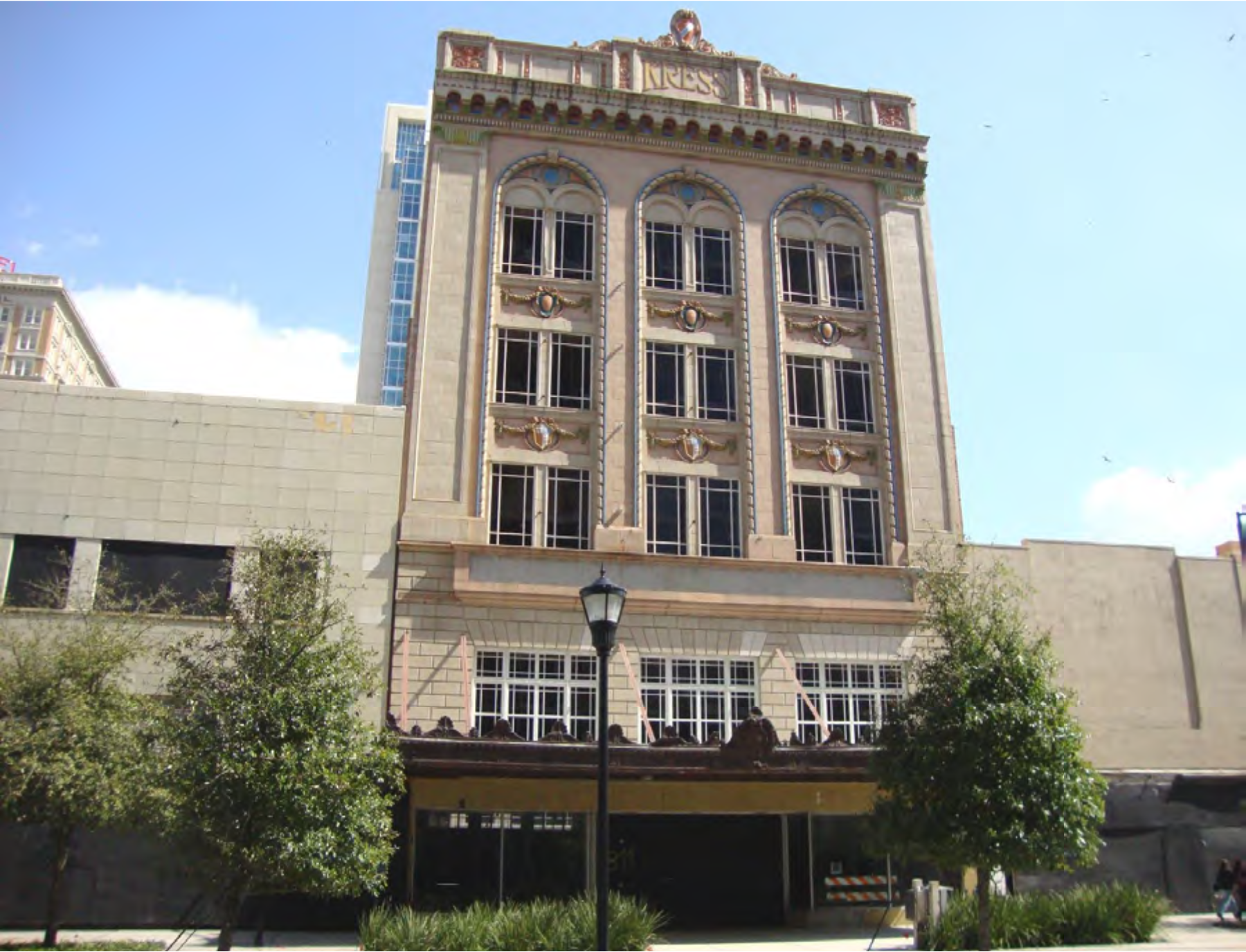
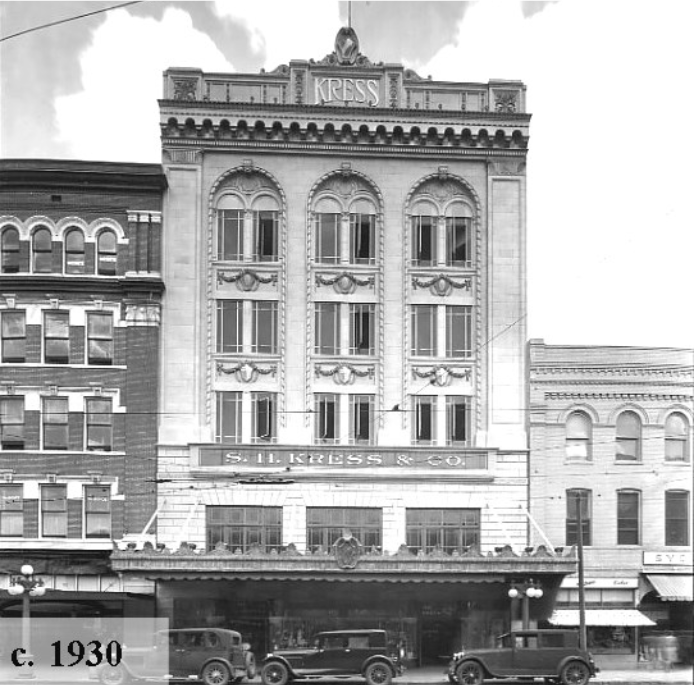
The S.H. Kress Department Store was, for decades, one of the most prominent and popular retail establishments in downtown. The first Kress store opened its doors in 1904, making it among the earliest chain variety stores to serve Tampa and one of the earlier outlets established by the Kress organization. The rapid success of the Kress chain in Tampa paralleled the growth of the city itself.
The Kress is a Renaissance Revival style building, with nearly identical facades on Franklin Street and Florida Avenue, faced in terra cotta simulating granite, featuring polychrome decorative elements.
Architectural Style: Industrial Vernacular
National Register Listing: N/A
Local Historic Designation: 2016
Architect: Unknown
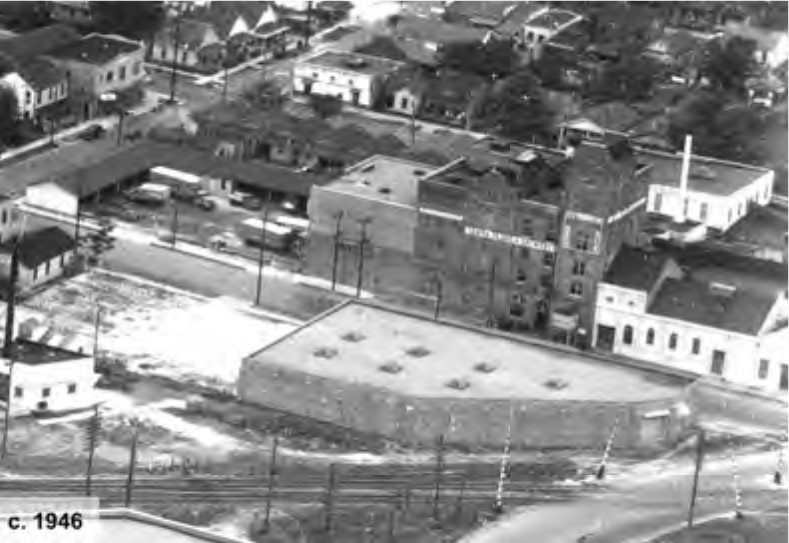
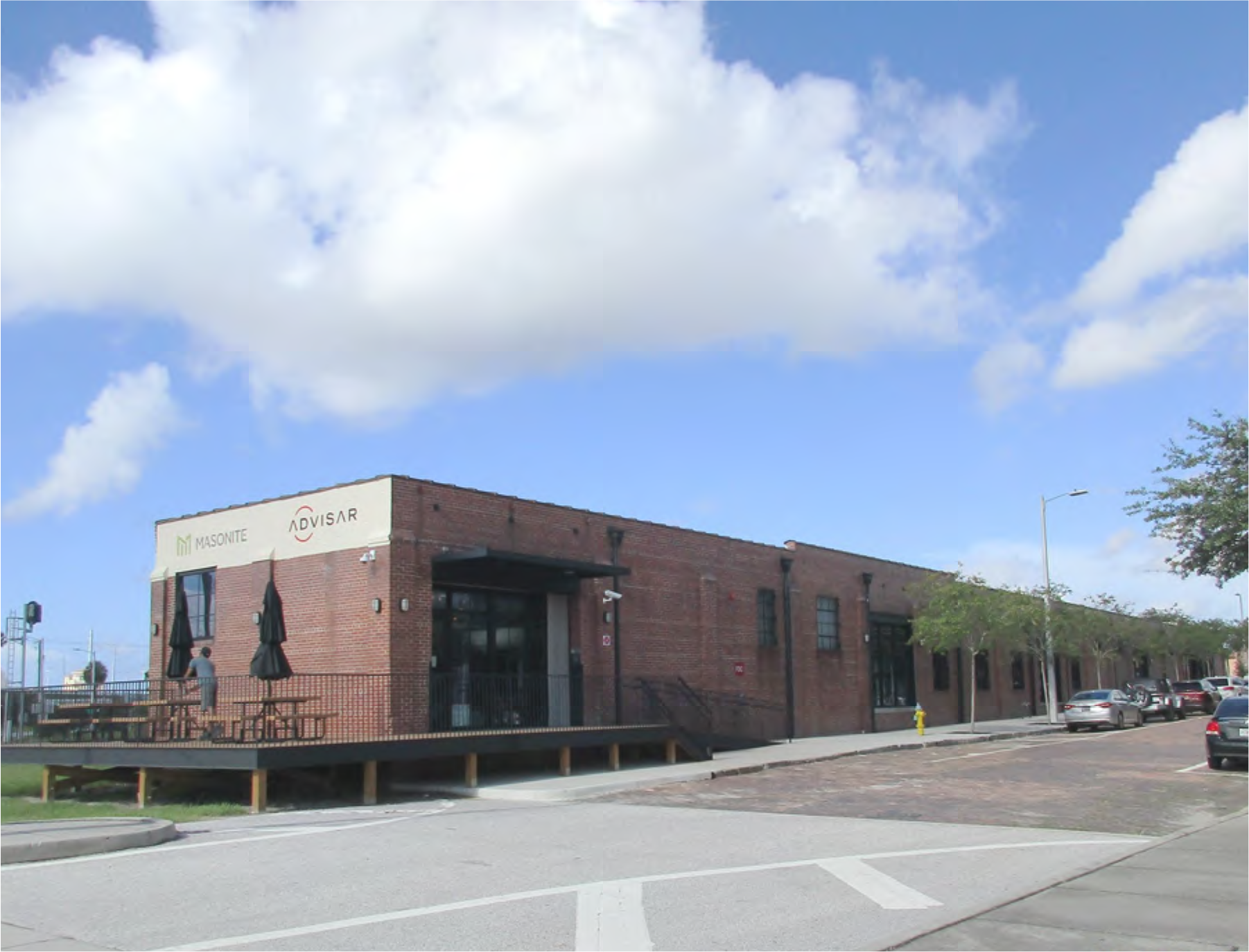
The Larmon Factory Warehouse, built c.1946, is a one story brick building, constructed in the industrial vernacular style seen throughout Ybor City.
This structure was built alongside an existing spur of the Atlantic Coast Line Railroad Company, at a location that had served industrial uses for decades. The building received two major additions in the 1950s, as this part of Ybor City transitioned to a more industrial area in the post-war years. The building served as the warehouse for Larmon Furniture from the late 1960s until 2013.
Kid Mason Center
1101 N. Jefferson Street
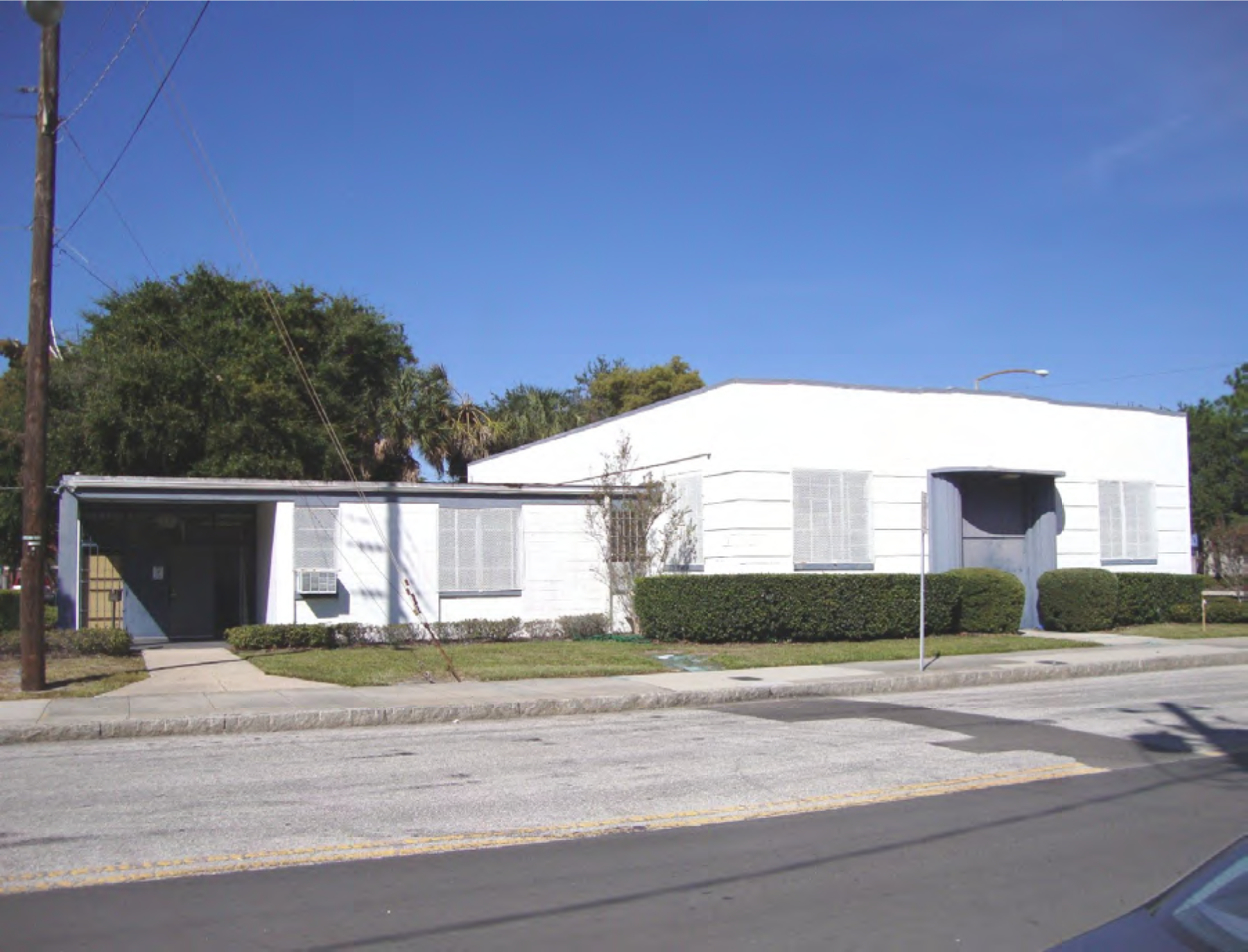
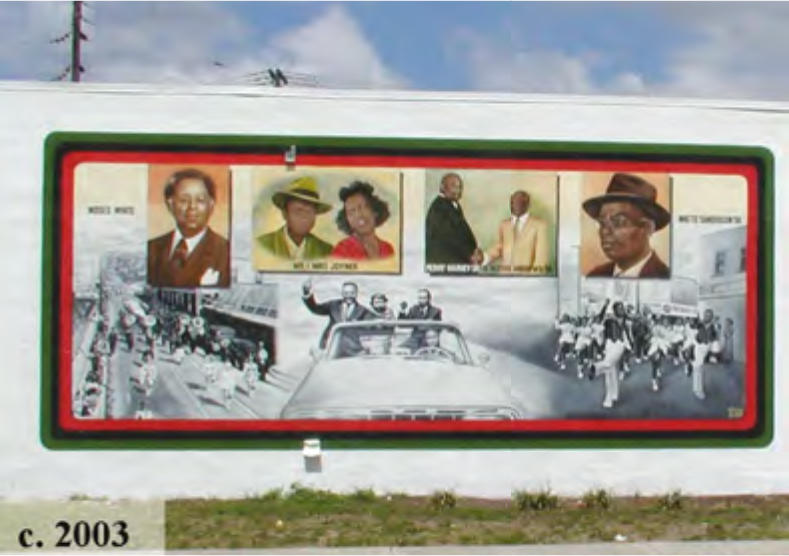
The Kid Mason Center has been an important resource to the social development of the surrounding community over the years and continues to benefit the youth of the area today.
Kid Mason Fendall, the namesake of the Kid Mason Center, played an integral role in the flourishing African-American business community of the Central Avenue commercial district. He dedicated his time and money to the betterment of the lives of the children of Tampa’s African-American community. Fendall also served as an umpire for local baseball teams.
- Architect: Ivo DeMinicis
- Constructed: 1948
- Architectural Style: Masonry Vernacular
- National Register Listing: N/A
- Local Historic Designation: 2003
- Constructed: 1925
- Architectural Style: Commercial Vernacular
- National Register Listing: N/A
- Local Historic Designation: 2007
- Architect: Unknown
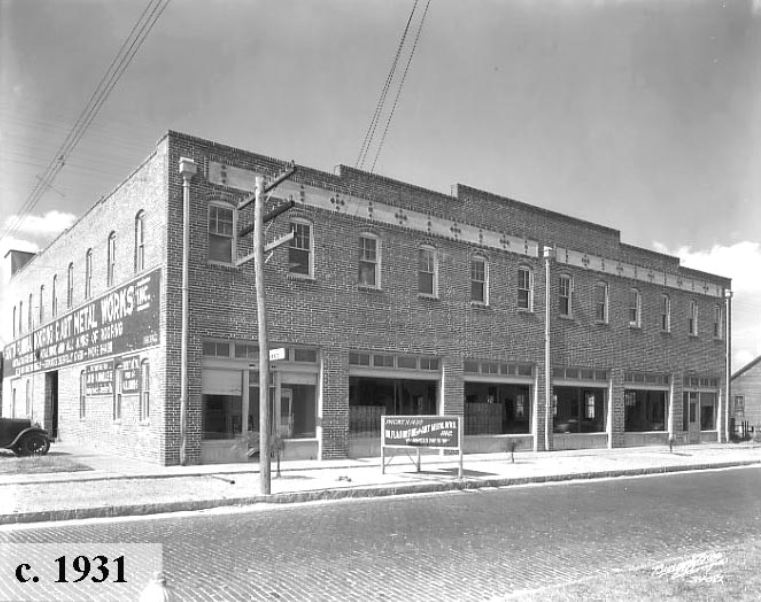
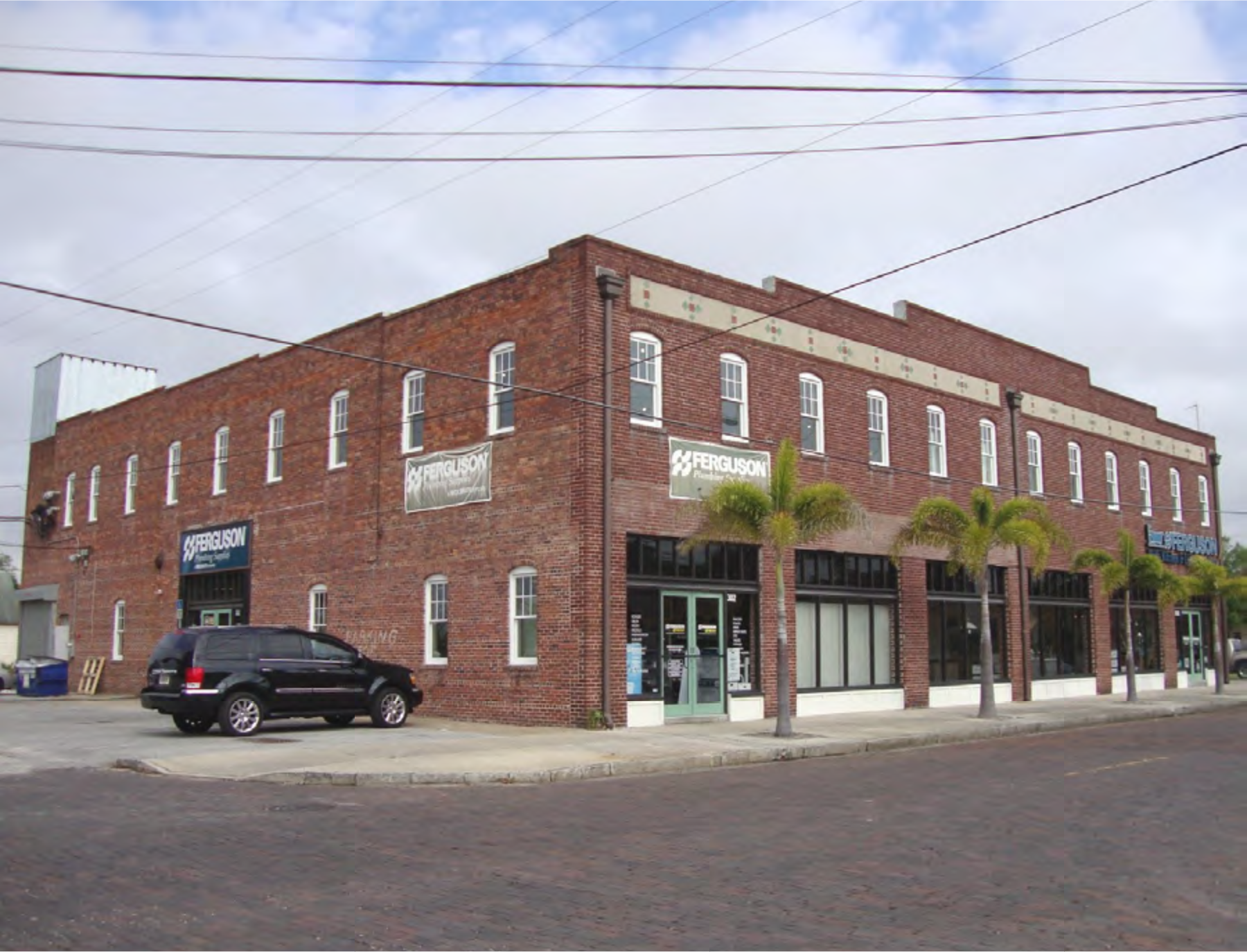
The Metal Works - Dicus Building is located in an area historically known as Dobyville. Primarily an African-American community, Dobyville offered a mix of uses for living and working. The two-story brick commercial structure is representative of construction for its function and time. It is one of few remaining commercial buildings in the area and is representative of buildings that existed there in the early 20th century.
In 2007, the building underwent an extensive rehabilitation that included restoration of the windows, storefront, and interior spaces.
The Burgert Brothers Photographic Collection chronicles the history of Tampa and the surrounding area. S. P. Burgert and Son opened a photographic studio in 1899. In 1917, Al and Jean Burgert purchased William A. Fishbaugh’s photography business at 506 ½ Franklin Street and opened the Burgert Brothers Commercial Photography Studio. Primarily focusing on the Tampa Bay area, including Ybor City, Port Tampa, Temple Terrace, and Ballast Point, Burgert Brothers provided commercial photography services to the West Coast region of Florida. Their photographers captured Tampa’s development from small town to major city, with images of people, churches, residences, businesses, and street scenes. Typical clients included real estate agents, contractors, insurance companies, and major companies such as Stone and Webster and the Atlantic Coast Line Railroad. The firm continued in operation until 1963.
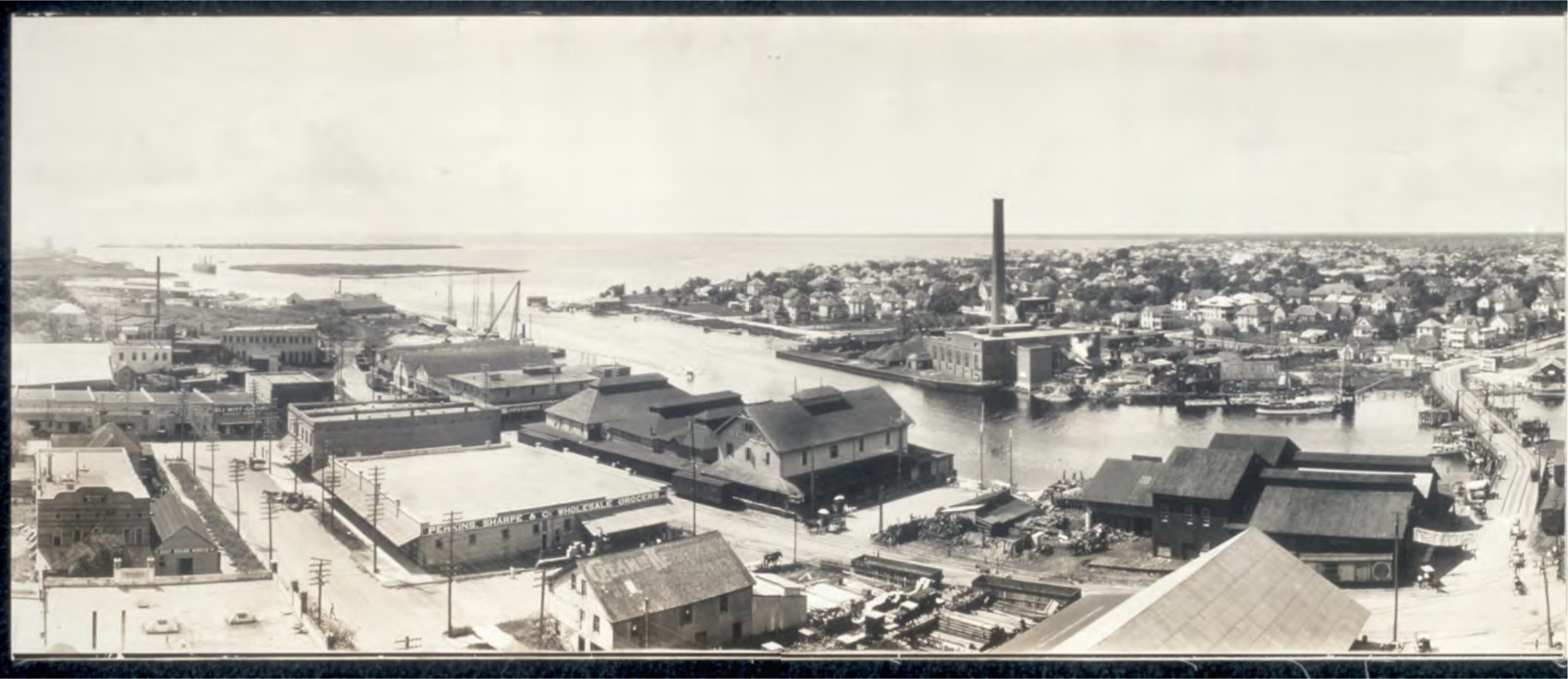
After the Burgert Brothers Studio closed, their photographs and negatives were stored in a garage in South Tampa. Many negatives were destroyed by heat, humidity, and rain. In 1974, the Friends of the Library recognized the historic significance of the photographic images and purchased the collection for the Library so that the Burgerts' photographs would be accessible to the public. The collection is housed at the John F. Germany Public Library. The Library has transferred over 19,000 of the original nitrate-based and cellulose acetate negatives to modern safety film.
The Library’s collection includes over 440 panoramic photographs taken with a Cirkuit brand camera. The Cirkuit camera rotated on a turntable-style tripod head set on a gear driven by a heavy duty wind up clock spring, making it capable of taking 360 degree photographs without edge distortion or perspective problems. For group shots, people would line up in a semicircle so that every person was the same distance from the camera. The Cirkuit camera was often used for photographing rural landscapes, such as orchards and lakes, downtown skylines, and coastlines. Before he sold his business to Burgert Brothers, William A. Fishbaugh was known for his Cirkuit photographs in Tampa.
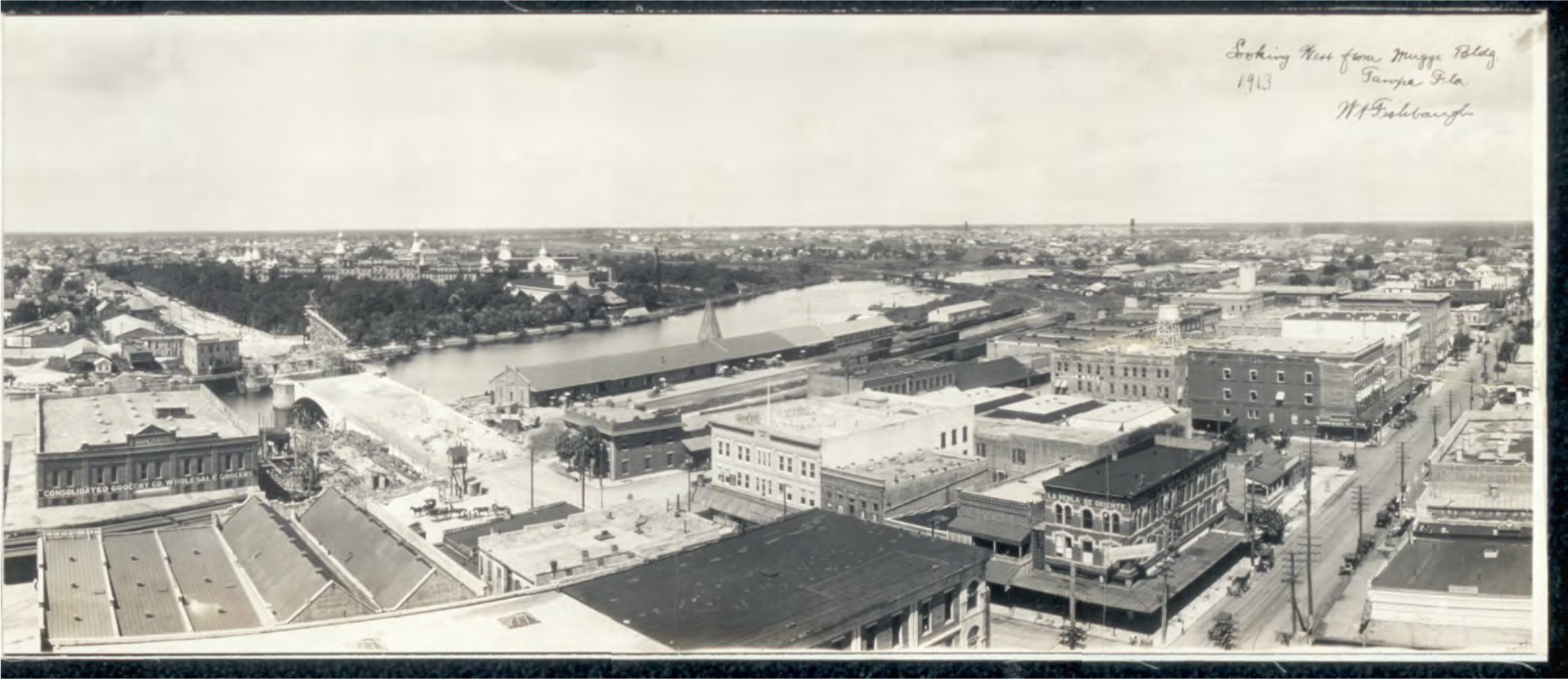
The University of South Florida (USF) maintains an online collection of 860 digitized Burgert Brothers photographs. Another photographic collection at USF comes from the firm of Robertson and Fresh, which was active in Tampa from 1932 to 1960. William Vernon "Red" Robertson took the photographs while Harry Fresh processed and printed them.
The negatives and prints were donated by Hampton Dunn, Tony Pizzo, and Mrs. Verna Lee Lupo, daughter of William Robertson. Approximately 2,900 digitized Robertson and Fresh photographs are available as part of the USF Libraries Digital Collections.
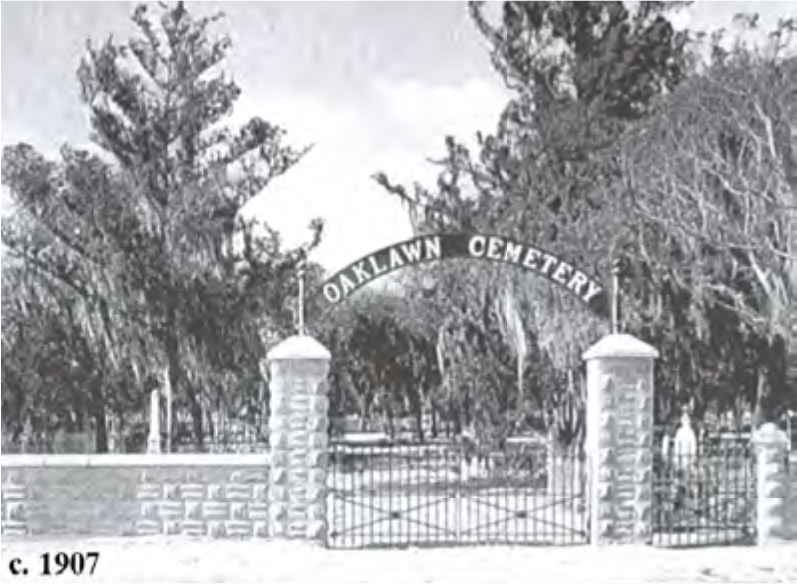
Established: 1850
Architectural Period: Victorian
National Register Listing: 2017
Local Historic Designation: 2011
Architect: N/A
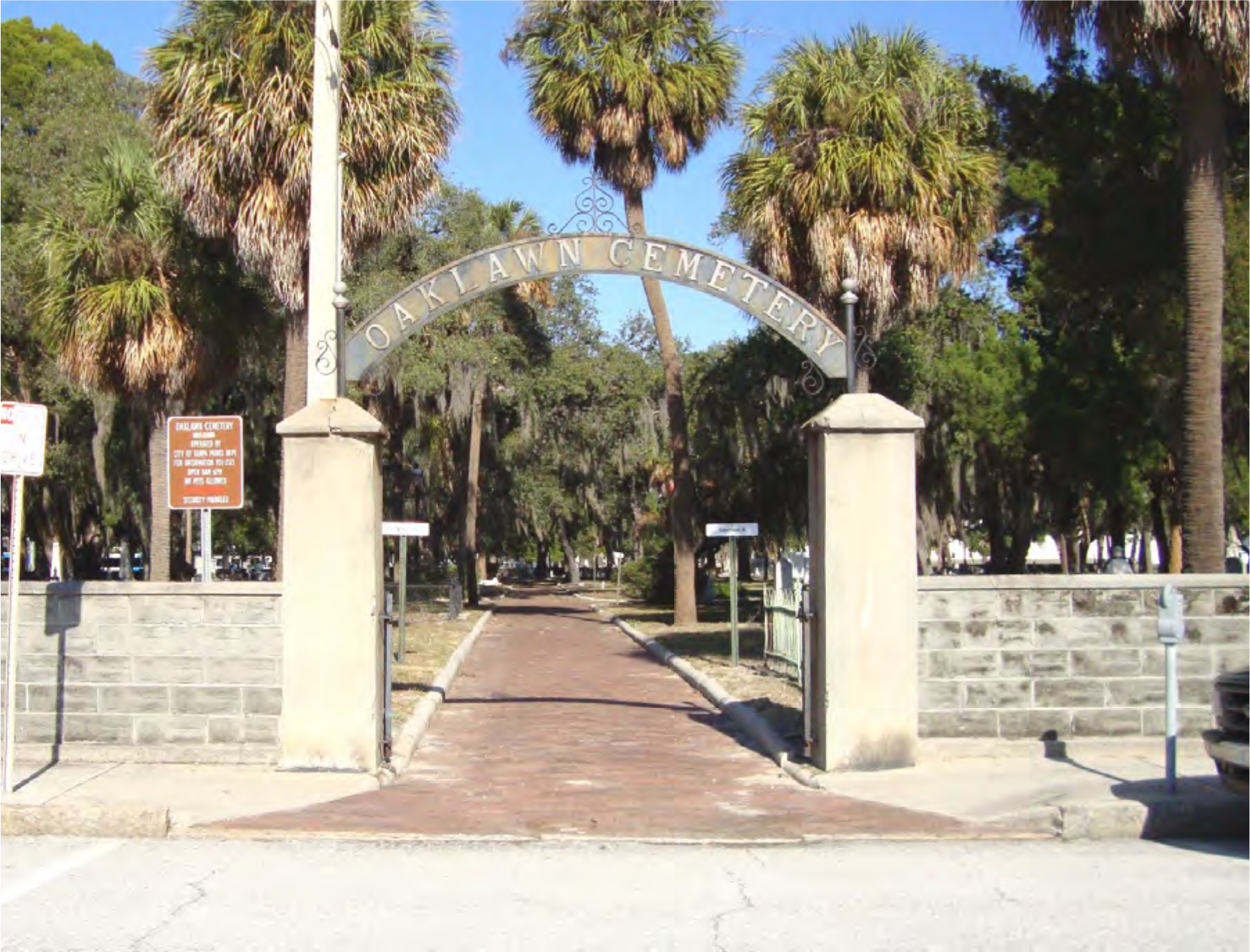
Oaklawn Cemetery was Tampa’s first public burying ground, established April 1, 1850, by the Alachua County Commission. When the City of Tampa officially incorporated in 1855, Oaklawn Cemetery was still the only public burial ground. In 1874, the Leonardi family donated the adjacent land to serve as the Catholic St. Louis Cemetery. Many of Tampa’s founding families, as well as subsequent political figures and veterans of seven wars, are interred here. The cemetery features a number of elaborate Victorian-era funerary markers, in addition to a Sexton’s House, built in 1910, and a Receiving Vault, built in 1894.
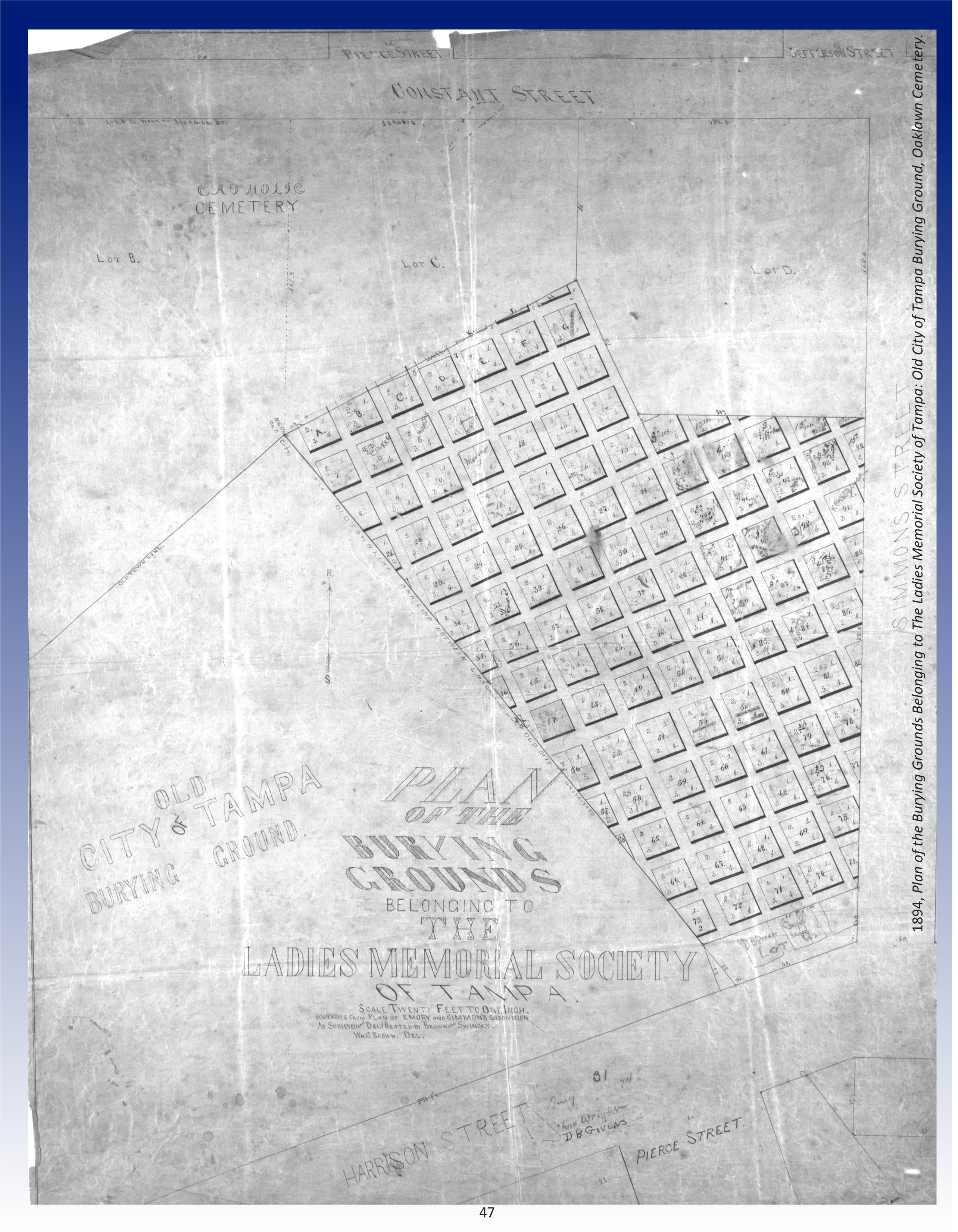
S\;AI.\.\\\I.Wn tl':.l':.1 ,o\)¼\.\NCH. Łl\Łltif,.,Ji.-. i't..Ato OT t."-'0Ł'( ,o,1t1S\M'Ml.)"t_Ł\)t,\'M ŁG'N. fi.l-Ł''Ł"t"to,.r \)1..._c-,uŁ'-O't>\ Ł '""' Sw,"{'ll..'<. '%•. C.ii-'i)Y..-., IJt.\.. 47 ,o.
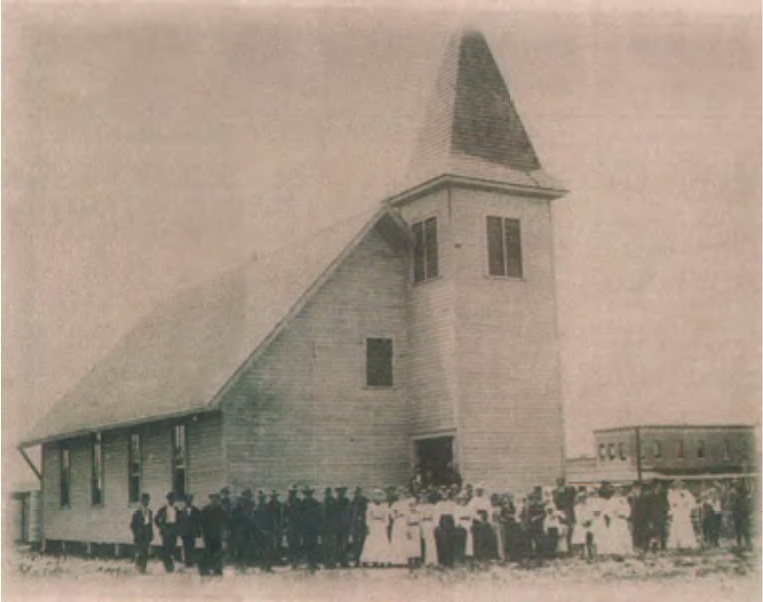
Constructed: c.1898
Architectural Style: Frame Vernacular
National Register Listing: N/A
Local Historic Designation: 2018
Architect: Unknown
Builder: Rev. J.T. Johnson
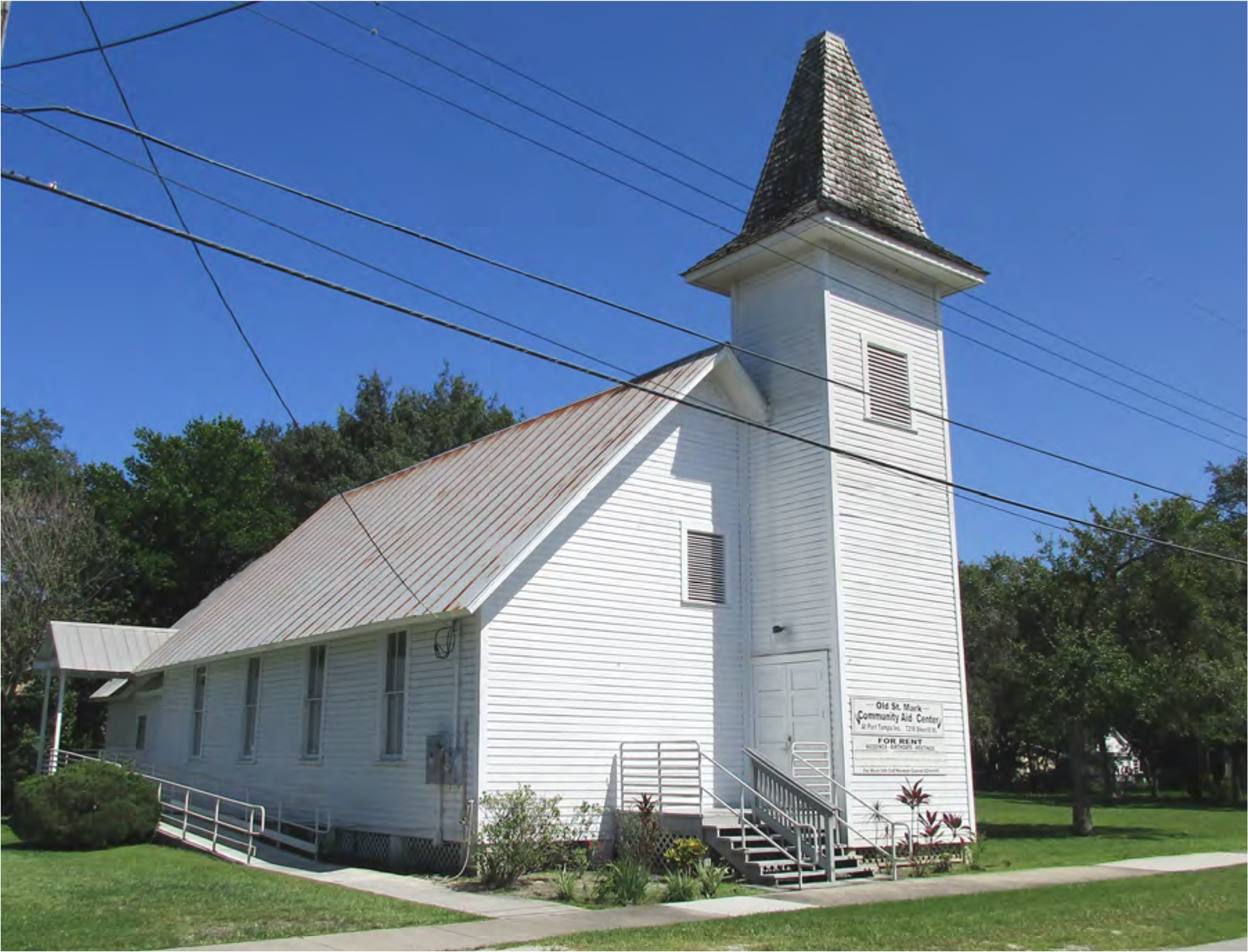
Constructed c.1898 on Mascotte Street for the Advent Christian Church, this building is one of the few remaining that tells the early history of Port Tampa. The structure is representative of the early church architecture found in Port Tampa City during the Spanish-American War Era. Since its relocation to Hall (Sherrill) Street in the 1910s, this building has played a significant role in the lives of the African-American citizens of Port Tampa. In 1984, St. Mark Missionary Baptist Church transferred ownership of this building to the Old St. Mark Community Aid Center at Port Tampa, Inc., for the purpose of providing social support for neighborhood residents and youth.
Old School House
Constructed: c.1855
Architectural Style: Classical Revival
National Register Listing: 1974
Local Historic Designation: 2014
Builder: General Jesse Carter
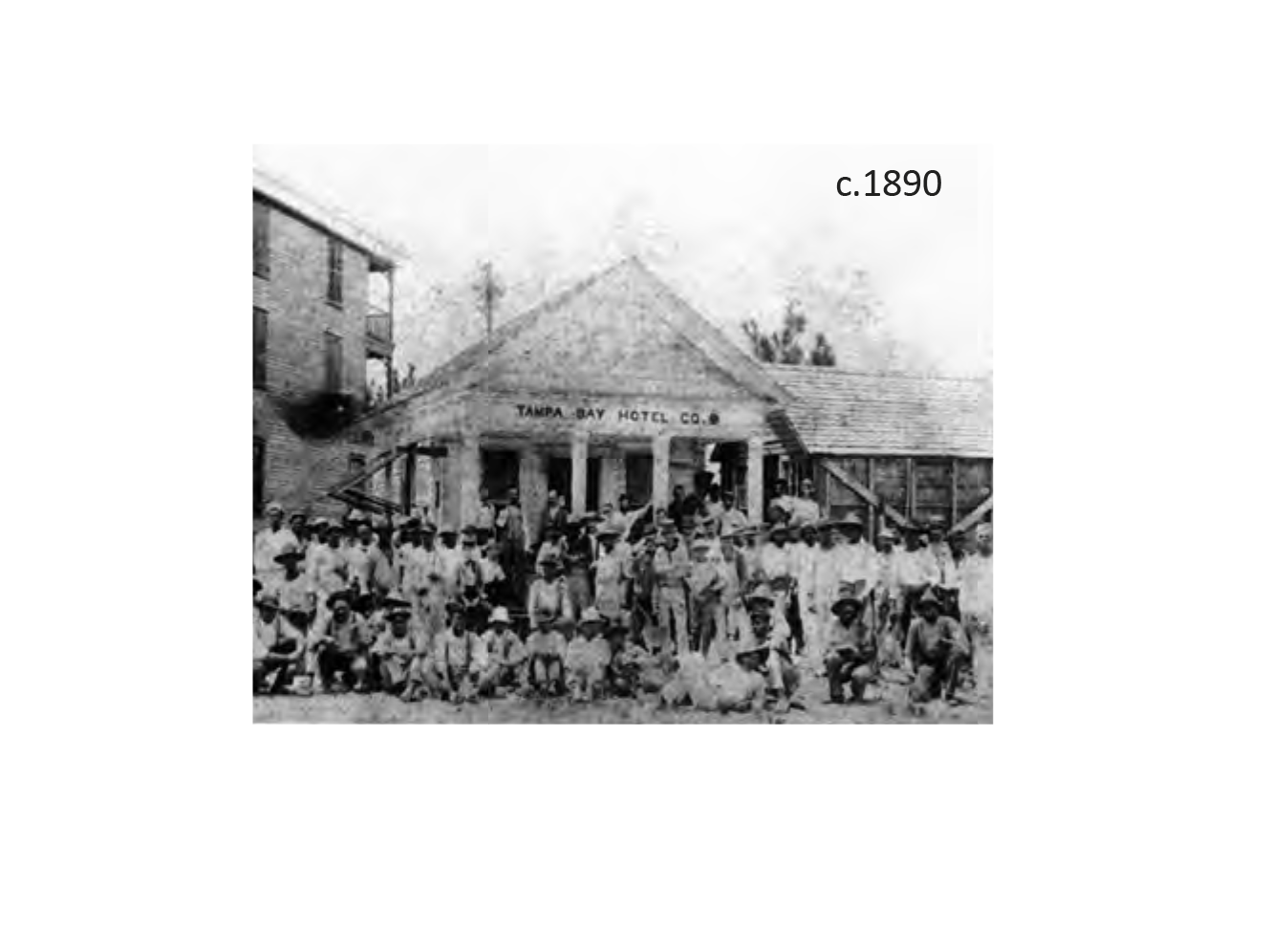
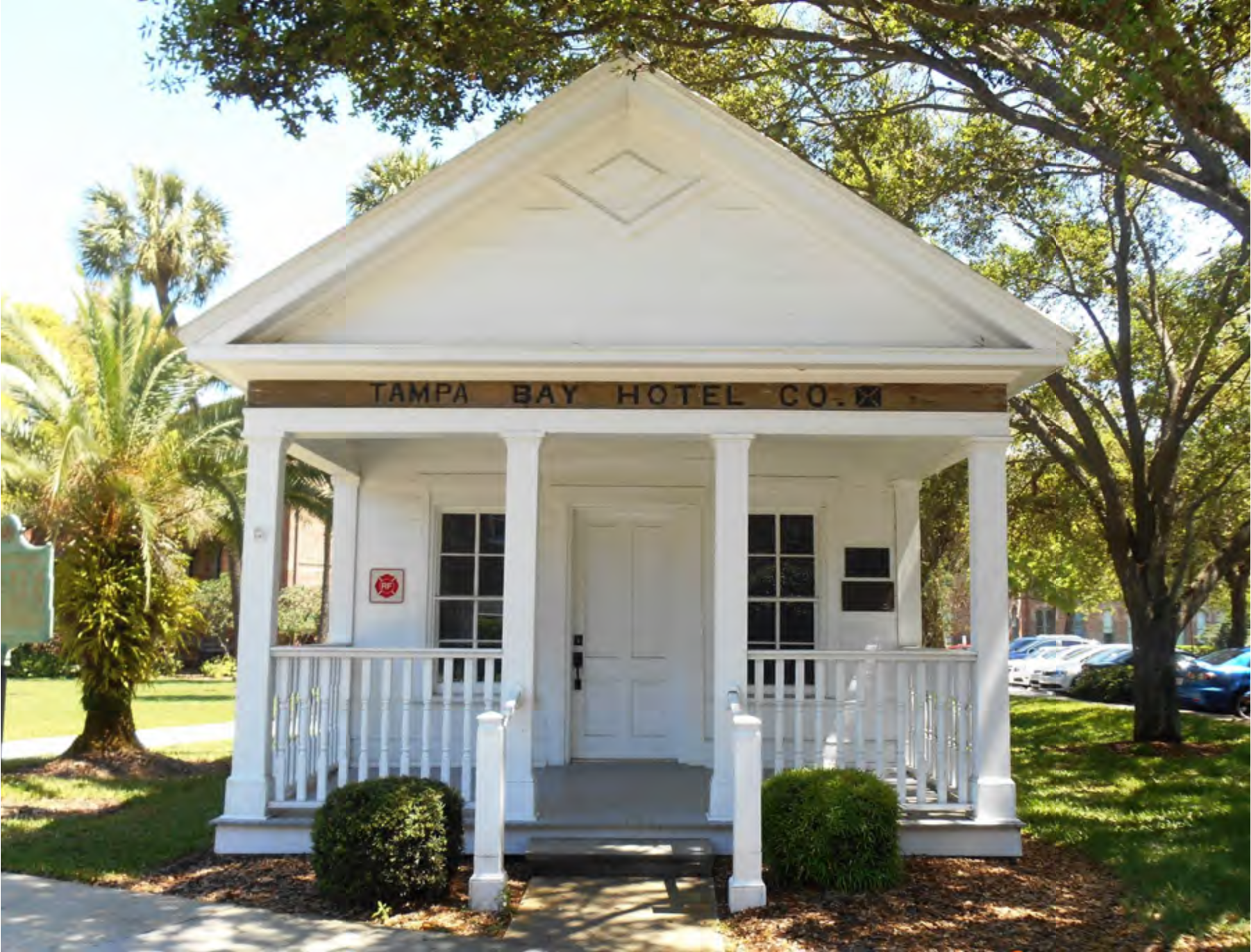
One of the earliest remaining structures and the first freestanding publicly-accessible school house built in Hillsborough County, the Old School House was originally constructed as a school for girls, then served as one of the ancillary buildings of the Tampa Bay Hotel, a major tourist destination, and later acted as a civic meeting space.
In 1931, the DeSoto Chapter of the National Society of the Daughters of the American Revolution petitioned Mayor McKay to save the building. The City of Tampa offered the school house to the DeSoto Chapter with the stipulation that it be restored and used as a meeting place and a museum.
Location
Old School House
403 UT Old School House Way
- Constructed: 1925
- Architectural Style: Mediterranean Revival
- National Register Listing: 1989
- Local Historic Designation: 2002
- Architect: M. Leo Elliott
- Builder: Island Construction Co.
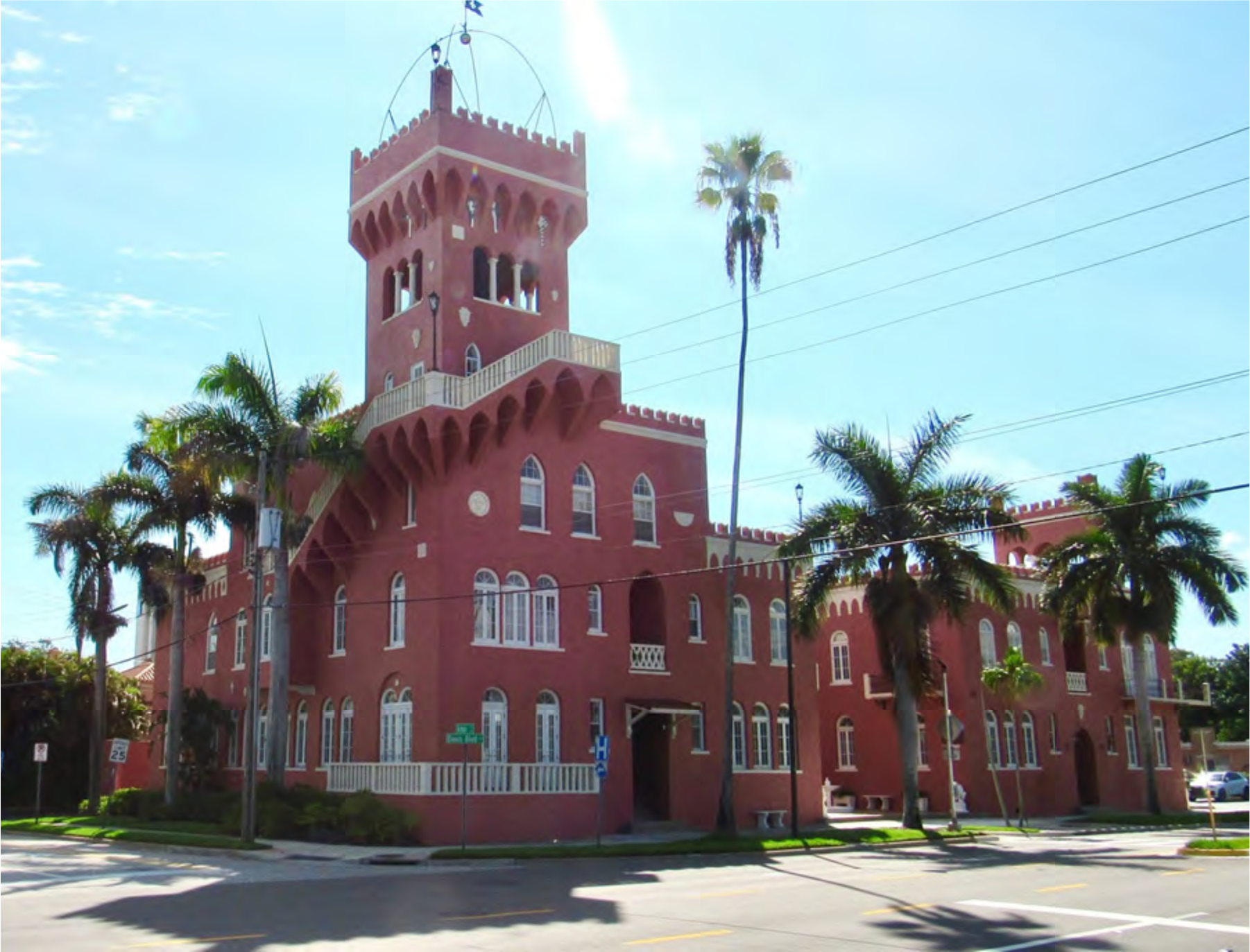
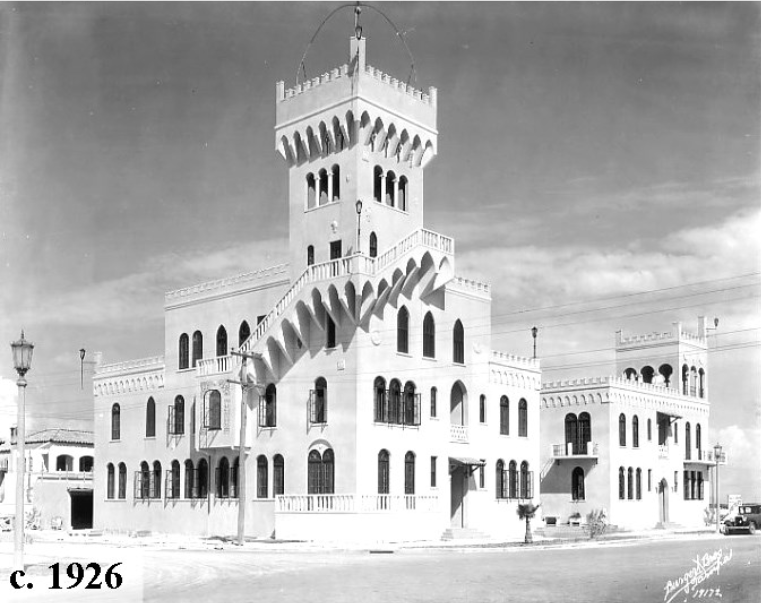
The Palace of Florence (Palazzo Firenze) apartment building was an important piece in D.P. Davis’ plan to develop the Grassy Islands into a community reminiscent of old world Italy. The building was conceived by Italian-born artist Athos Menaboni, who used the Palazzo Vecchio and Palazzo del Podestá as design inspirations.
The distinctive apartment building evokes the romantic Mediterranean streetscape Davis intended for his island community. The picturesquely-massed structure follows a rectangular plan with north and south sections divided by a recessed tile-paved courtyard.
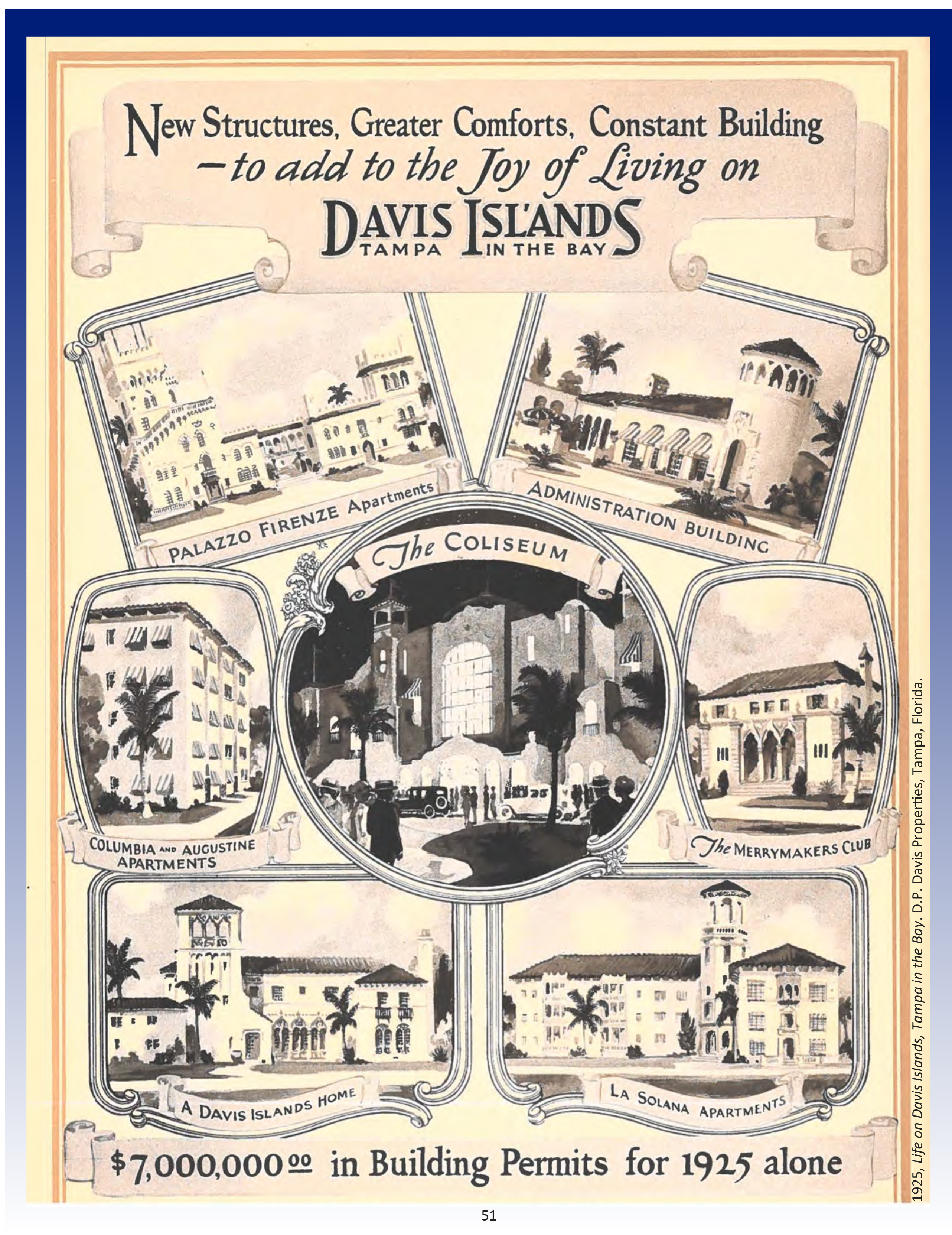
New Structures. Greater Comforts, Constant Building -to add to the Joy qf/Jving on DAVIS JSI:ANDC ) TAMPA INTHE BAY..J � ��� �� � --�, . ,, � , .,(... , r ._,1 ..: ·, 'Jf ull ,, ...r.:¢-, \ � 11�' -o "< --�t !\ l ,, •♦:.., •• \ \' \\ 1 i' �'-\.x.. -\\\ ' ,... ' :!.IW� BIA loND A PARTMENTS � 51 rn -c ·;:: 0 L.L rn' 0.. E rn f-
- Constructed: 1925
- Architectural Style: Mediterranean Revival
- National Register Listing: 1989
- Local Historic Designation: 1990
- Architect: Martin L. Hampton
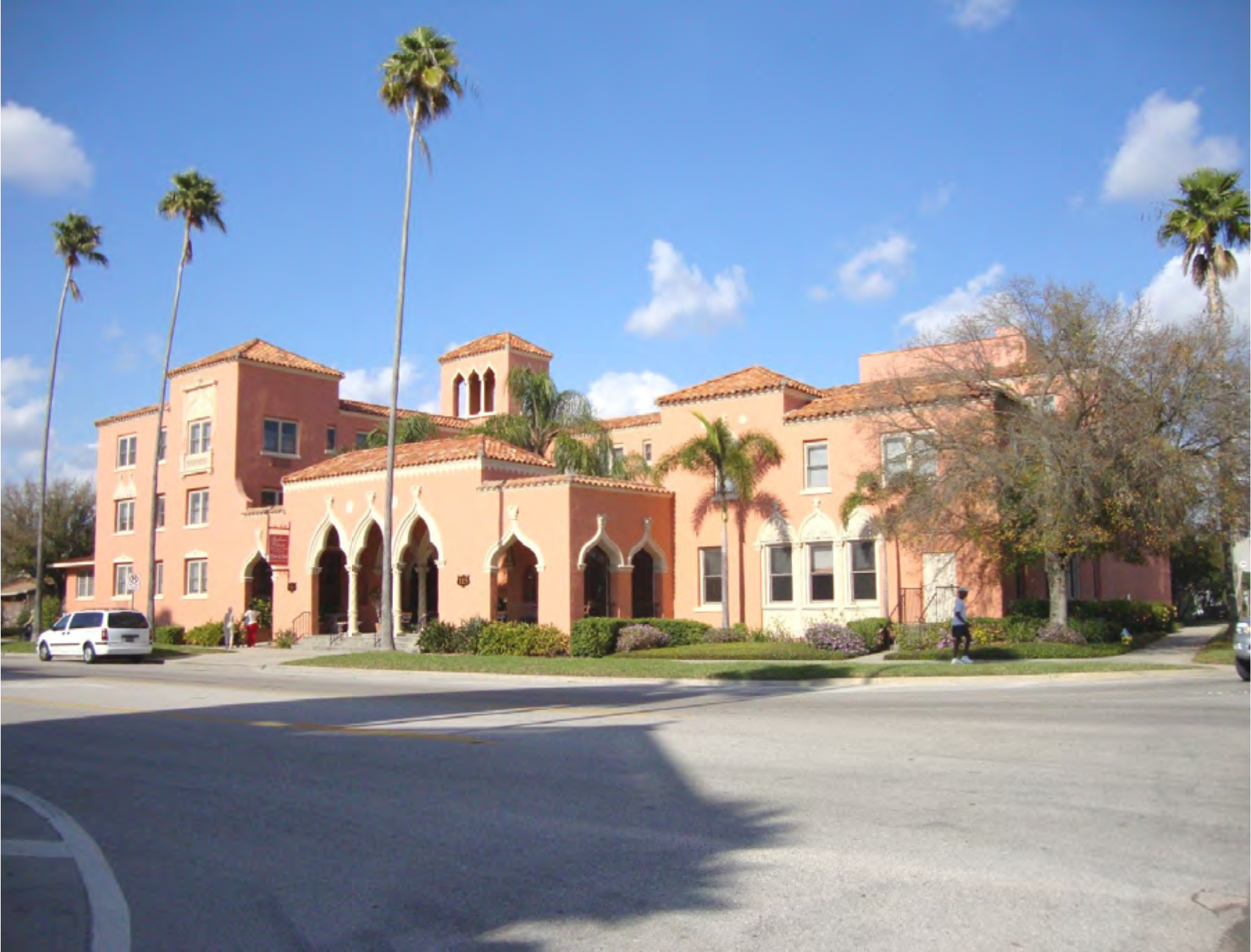
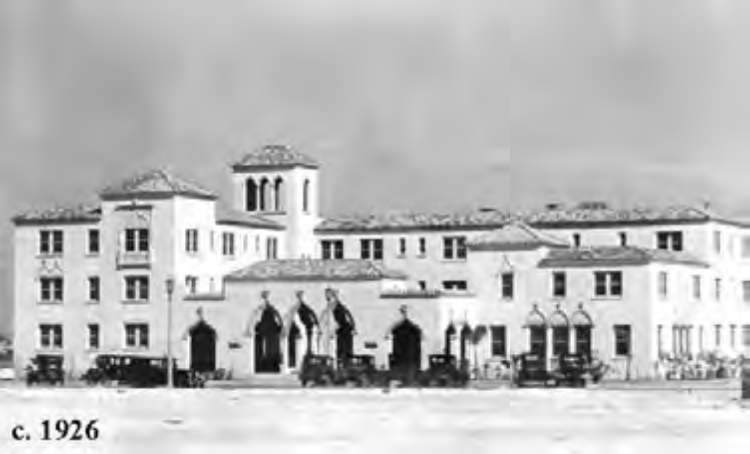
Like the Palace of Florence, the Palmerin Hotel is a picturesque and monumental expression of Mediterranean Revival style architecture. It is one of the 20 remaining Mediterranean Revival style buildings on Davis Islands that are listed in the National Register of Historic Places for being historically and architecturally significant as outstanding examples of Florida’s Boom Times development during the 1920s. The Palmerin Hotel building is one of the most important visible surviving elements of the subdivision founded by real estate developer D.P. Davis.
Today, the building houses as an elderly care facility.
- Constructed: 1926
- Architectural Style: Mediterranean Revival
- National Register Listing: N/A
- Local Historic Designation: 2005
- Architect: Franklin O. Adams
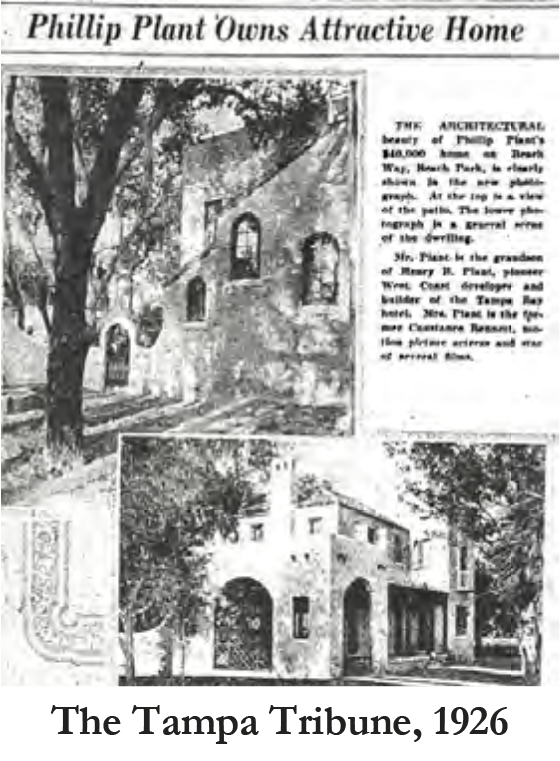
Designed by Tampa architect Franklin O. Adams, the two-story Plant-Hatton house is one of the original homes in the Beach Park neighborhood. The hollow clay tile structure is topped with a red tile roof.
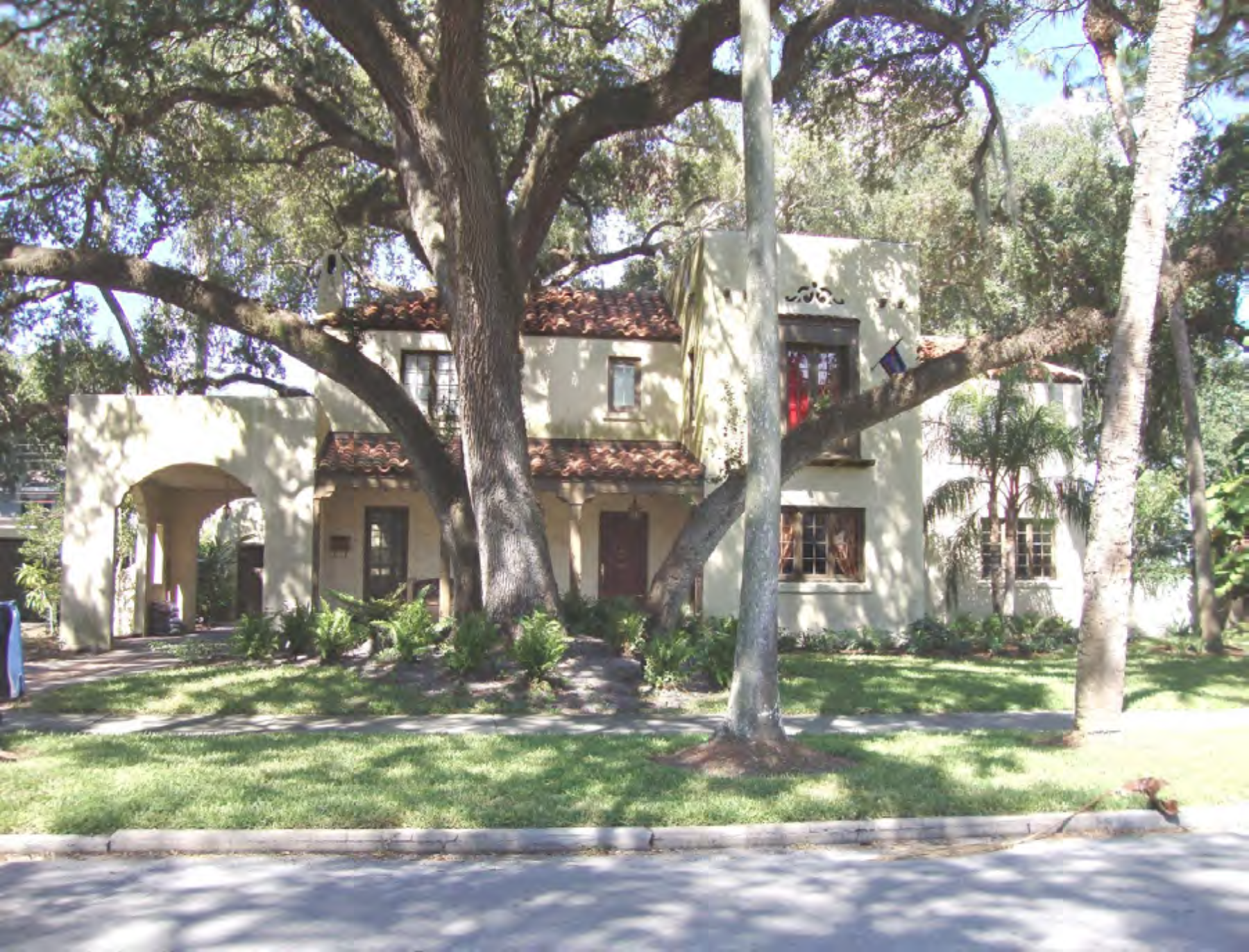
Phillip Plant, New York socialite and grandson of Henry B. Plant, married film star Constance Bennett in 1925. After their honeymoon in Cuba, the couple visited Tampa, where Mr. Plant explored real estate investment opportunities. Mrs. Plant chose the neighborhood of Beach Park and the fashionable two-story Mediterranean Revival style house for their Tampa residence, which they maintained until 1929.
Constructed: c.1888
Architectural Style: Frame Vernacular
National Register Listing: 2006
Local Historic Designation: 2004
Architect: Unknown
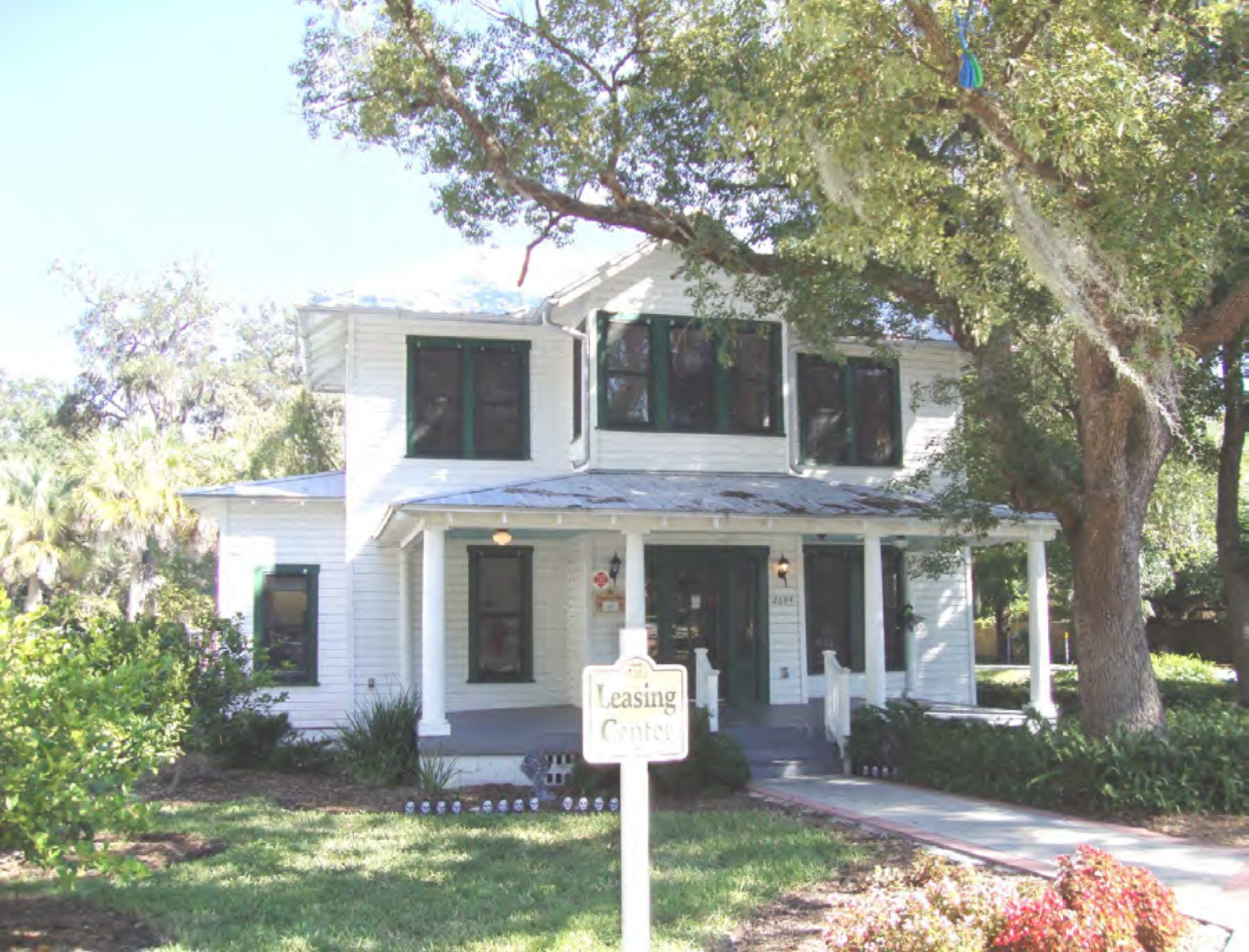
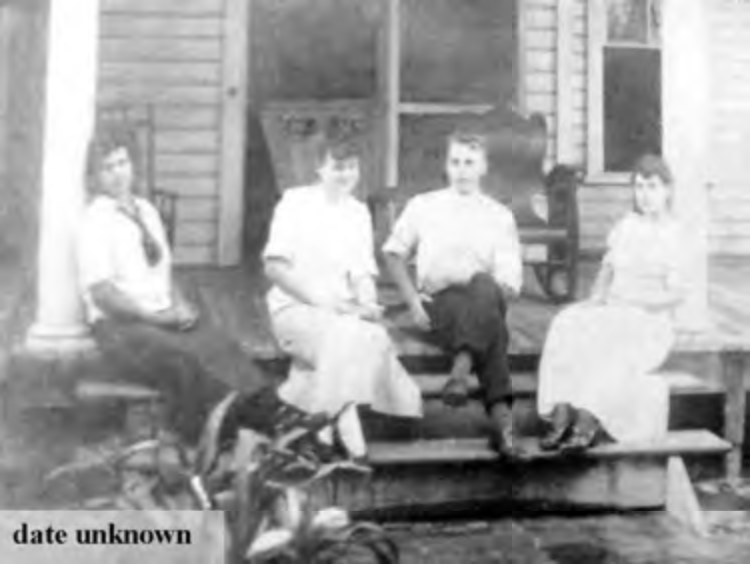
The Joseph Robles family is one of the earliest pioneer families in Tampa, homesteaded in 1851. Horace, the seventh of ten children, continued the family tradition of farming and horticulture. He and his father built the house on Hanna Avenue as part of a dairy farm and orange grove. The Robles have always been dedicated to community progress, and they have made their name intrinsic to Tampa’s history. Horace’s daughter Edith was born in the house in 1898, living there until her death in 1997.
Today, the Robles House serves as a leasing office for the Grande Oaks Apartments.
Architectural Style: Mediterranean Revival
- National Register Listing: 2006
- Local Historic Designation: 2004
- Architect: B.C. Bonfoey
- Builder: Horton & Smith
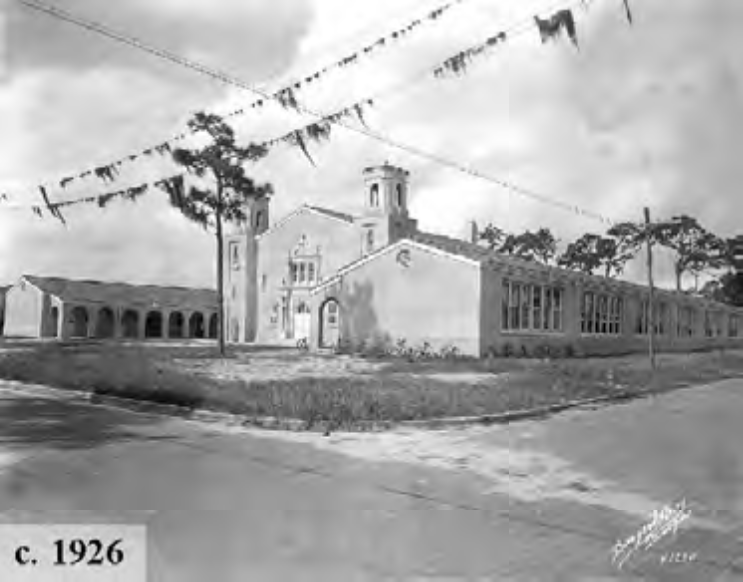
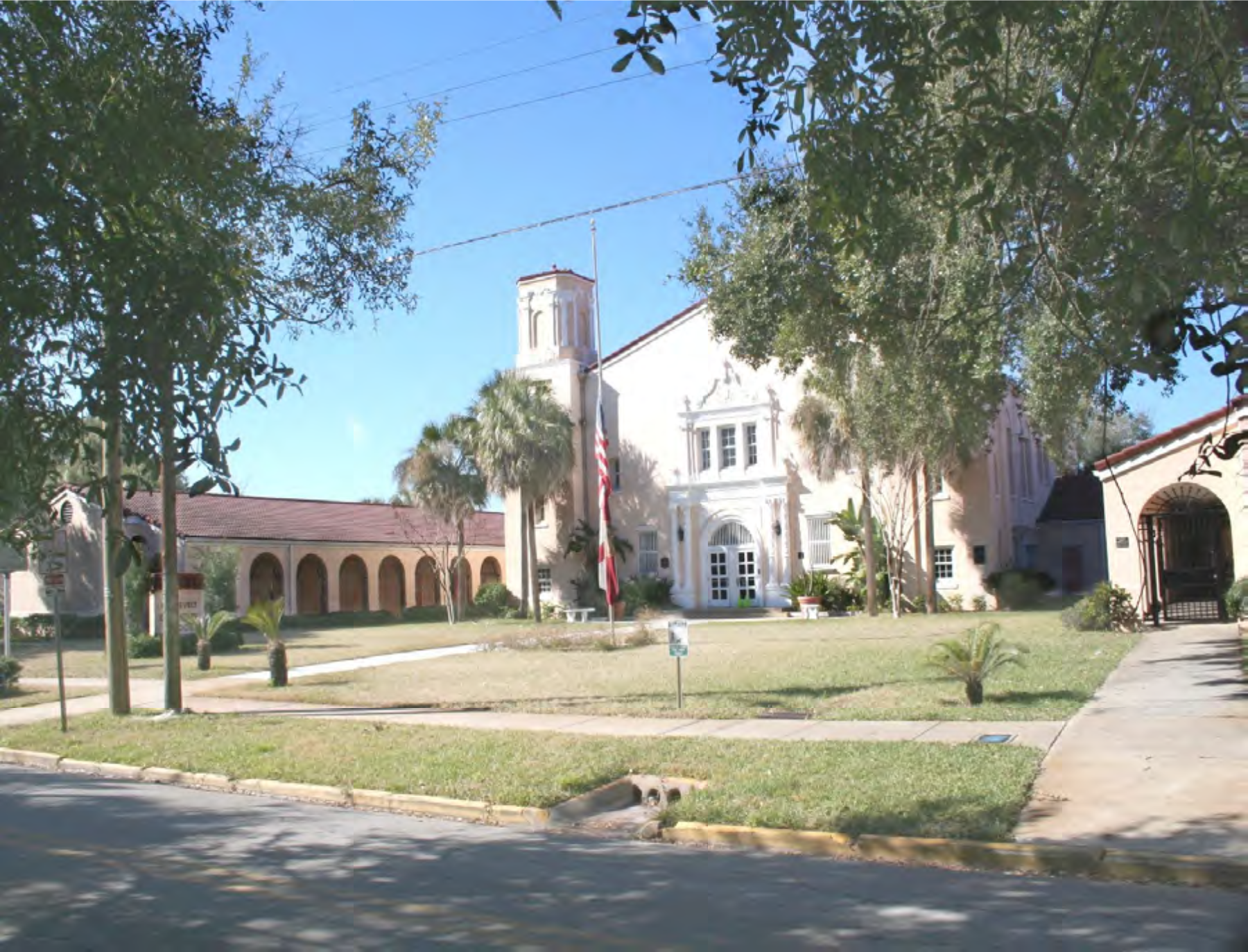
The Boom Times of the 1920s brought a flurry of construction to accommodate Tampa’s growing population. Mediterranean Revival was a very popular architectural style during this period, as evidenced by many of the era’s remaining buildings. The Palma Ceia School, as it was originally named, serviced the educational needs of the rapidly developing South Tampa neighborhood.
Originally thought to be one of the locations of Teddy Roosevelt’s Rough Riders encampments during the Spanish-American War of 1898, the school changed its name shortly after construction to honor Roosevelt’s legacy.
- Constructed: 1917
- Architectural Style: Gothic Revival
- National Register Listing: N/A
- Local Historic Designation: 1990
- Architect: Albert H. Johnson
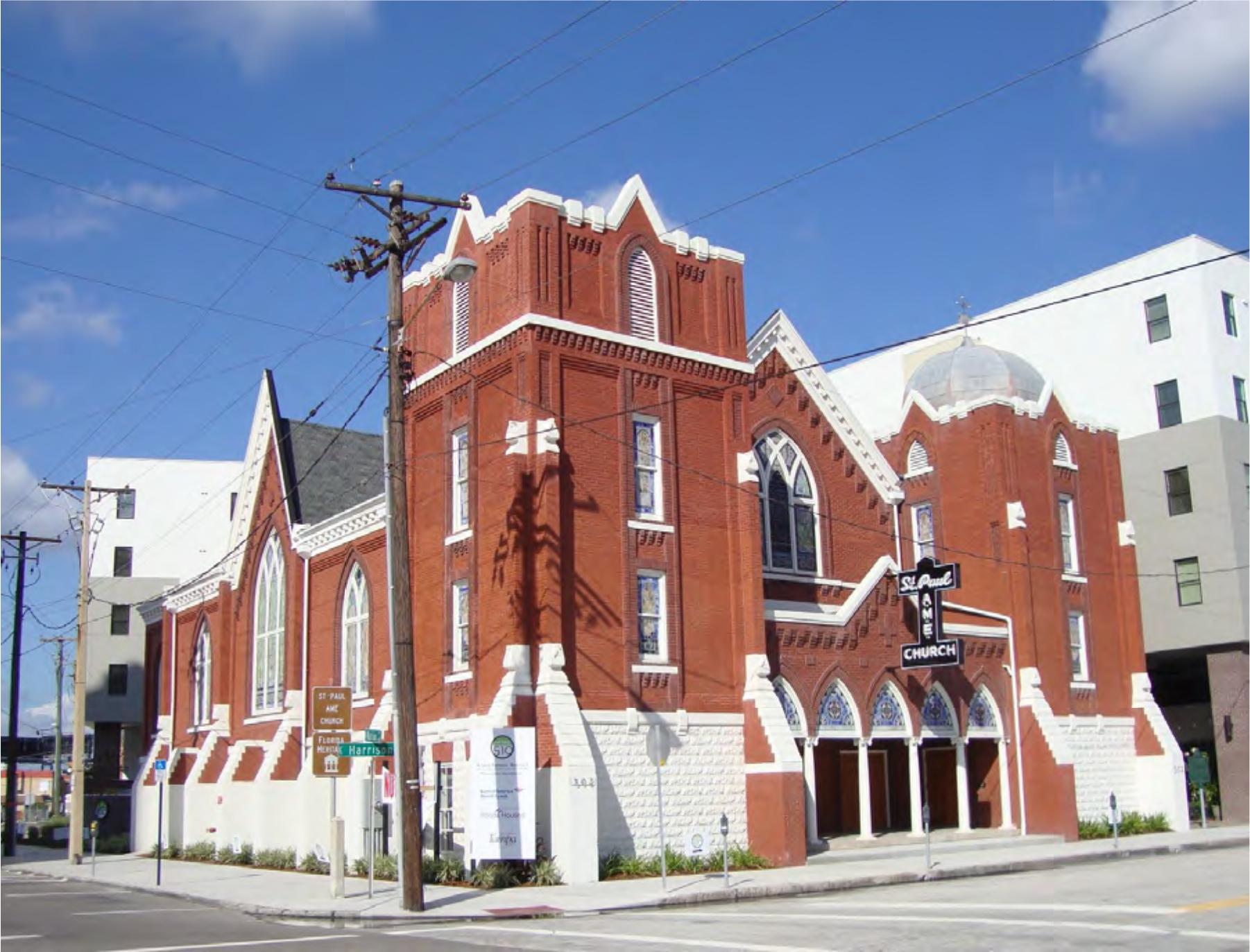
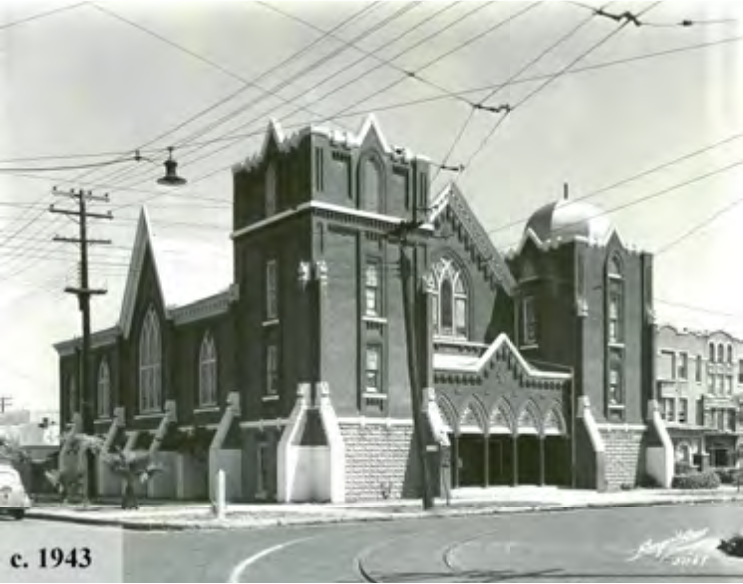
From its establishment in the late 19th century, the St. Paul A.M.E. Church has played a significant role in the African-American community. By the late 1960s, it was one of the oldest and strongest religious organizations in the city. Notable individuals such as Dr. Martin Luther King, Jr., Mary McLeod Bethune, and Jackie Robinson have addressed this congregation over the years.
Today, the Gothic Revival church building is home to a community center, leasing office, exercise facility, and library for the residents of the Metro 510 community.
Constructed: 1929
Architectural Style: Brick Vernacular
National Register Listing: N/A
Local Historic Designation: 2006
Architect: Unknown
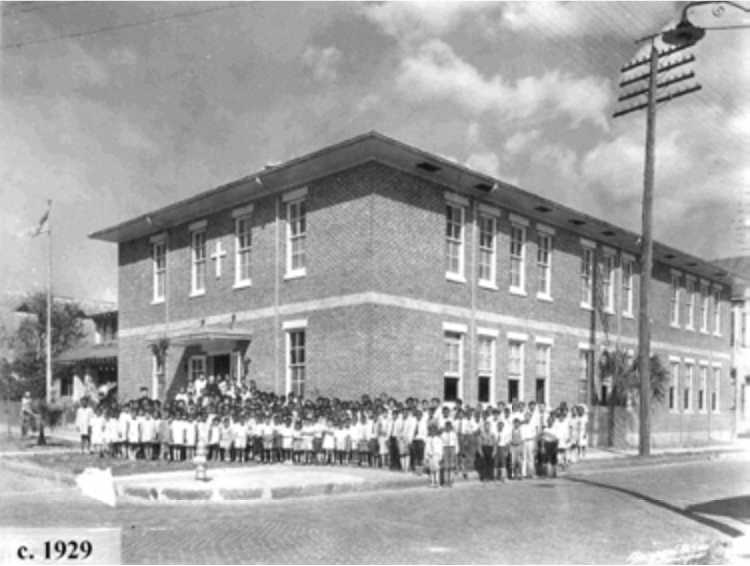
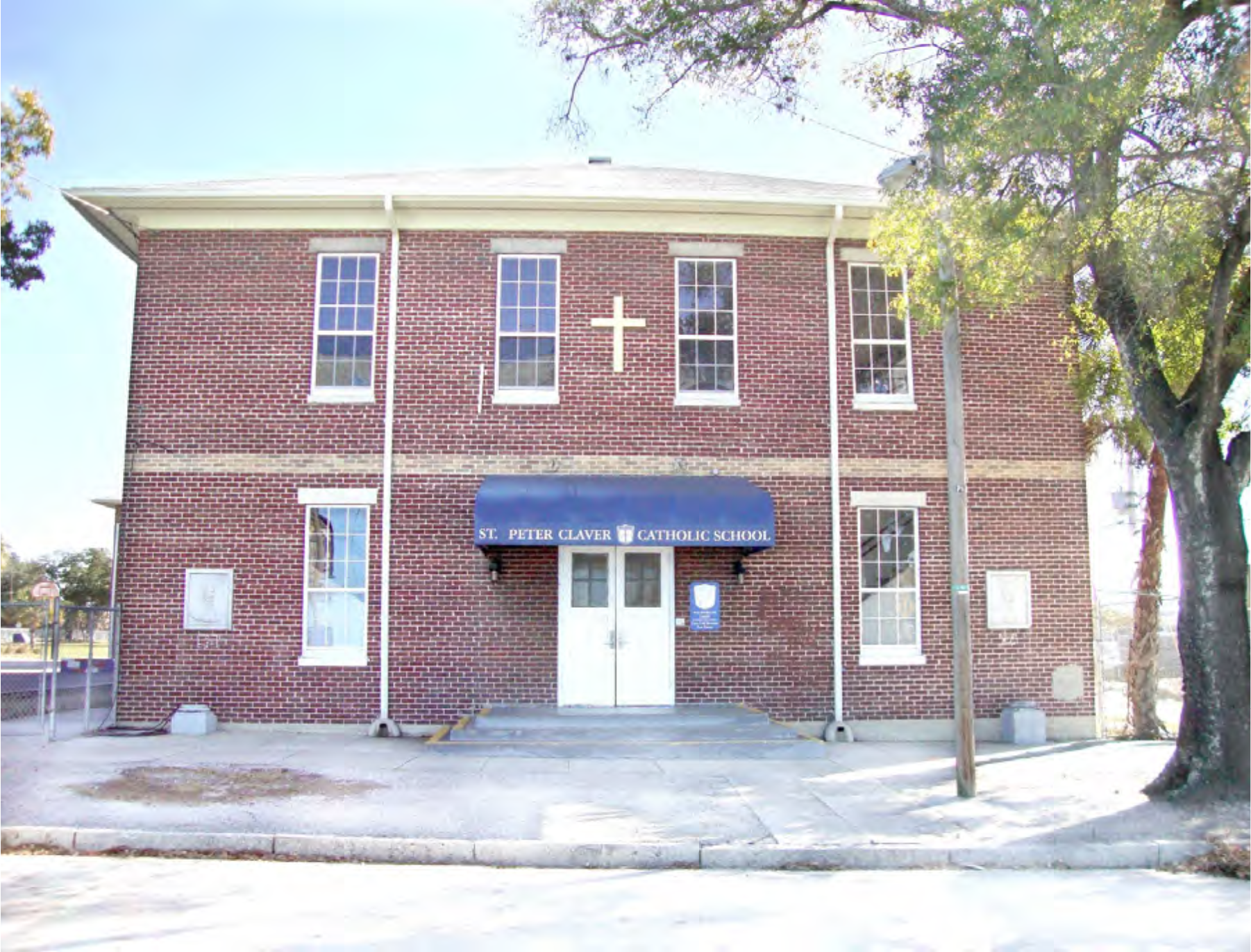
The main building of St. Peter Claver Catholic School is one of the few historic structures remaining in the once-thriving neighborhood of The Scrub. In 1952, an annex was constructed on the east side of the main building to accommodate the growing number of students. The school and annex have been minimally altered since their construction.
St. Peter Claver has played a integral role in the education and cultural heritage of many residents of Tampa and is the oldest African-American school still in operation in Hillsborough County.
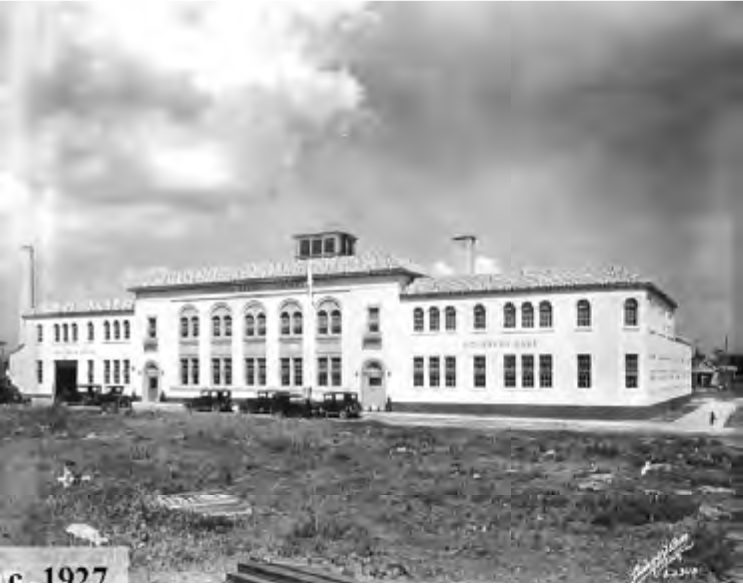
Located in the predominantly African-American Dobyville neighborhood adjacent to Hyde Park, Daylusia Investment’s Seybold Baking Company was the producer of “Southern Bread.” Seybold continued its operations in this building until 1971, and ITT Continental Baking Company, the producers of “Wonder Bread,” operated here through 2003, when the plant relocated to the Orlando area.
Today, the Mediterranean Revival style Seybold Bakery building has been rehabilitated and adaptively reused as the Seybold Lofts Condominiums.
- Constructed: 1926
- Architectural Style: Mediterranean Revival
- National Register Listing: 1985
- Local Historic Designation: 2005
- Architect: Unknown
Sicilian Club 2001 N. Howard Avenue
- Architectural Style: Mediterranean Revival
- National Register Listing: 1983
- Local Historic Designation: 2001
- Architect: Fred J. James
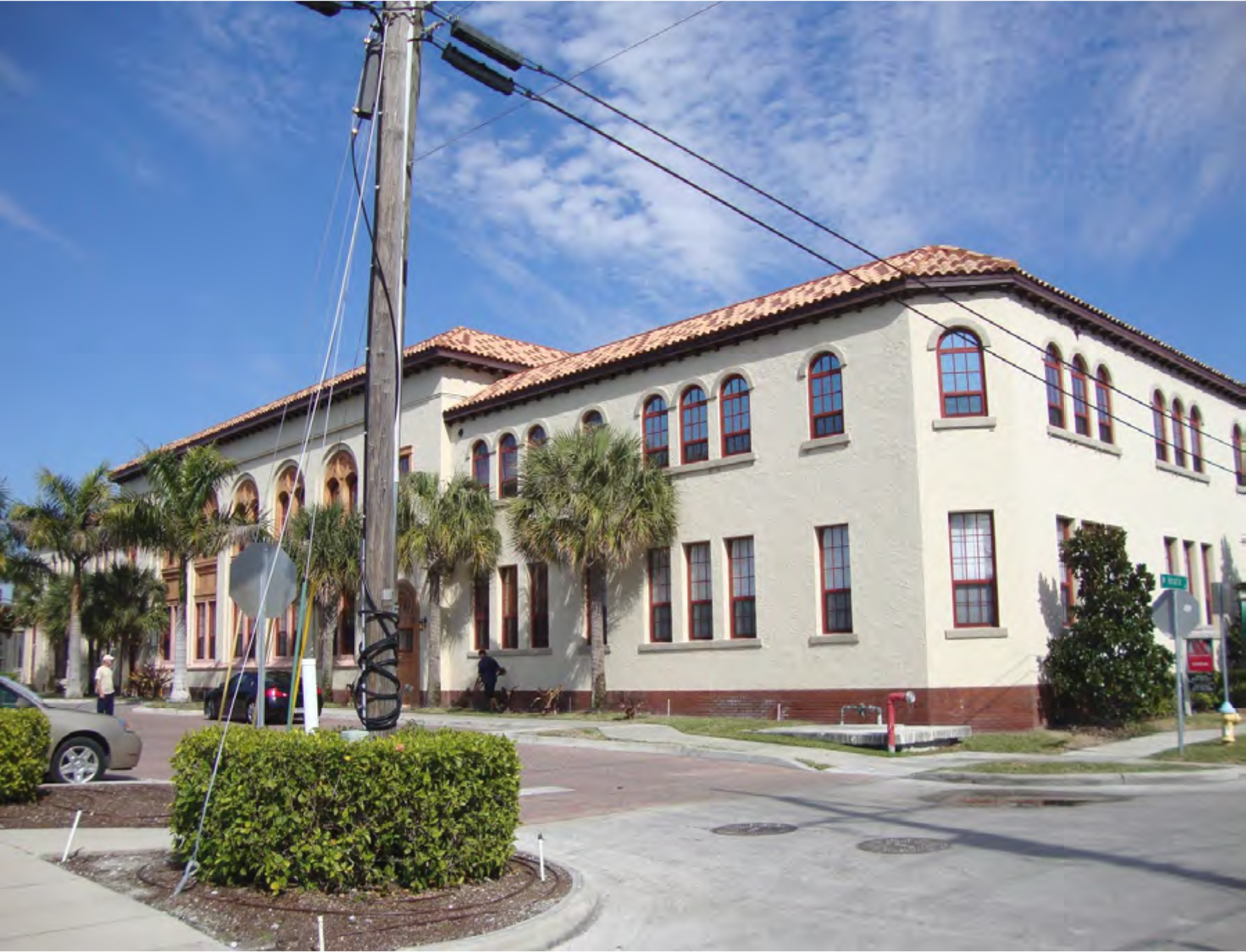
The Sicilian Club is one of Tampa’s original ethnic clubs that aided immigrants in their assimilation into the Tampa area. The Club offered members the same “cradle to grave” benefits as the ethnic clubs in Ybor City. The rear portion of the building houses a theatre that provided an array of entertainment options. The Sicilian Club building was significant to the development of West Tampa and served as a focal point to the West Tampa community.
The Sicilian Club is an excellent example of Mediterranean Revival style architecture, as evidenced in its elaborate blond and red brick detailing.
Constructed: 1950
Architectural Style: Masonry Vernacular
National Register Listing: N/A
Local Historic Designation: 2008
Architect: Unknown
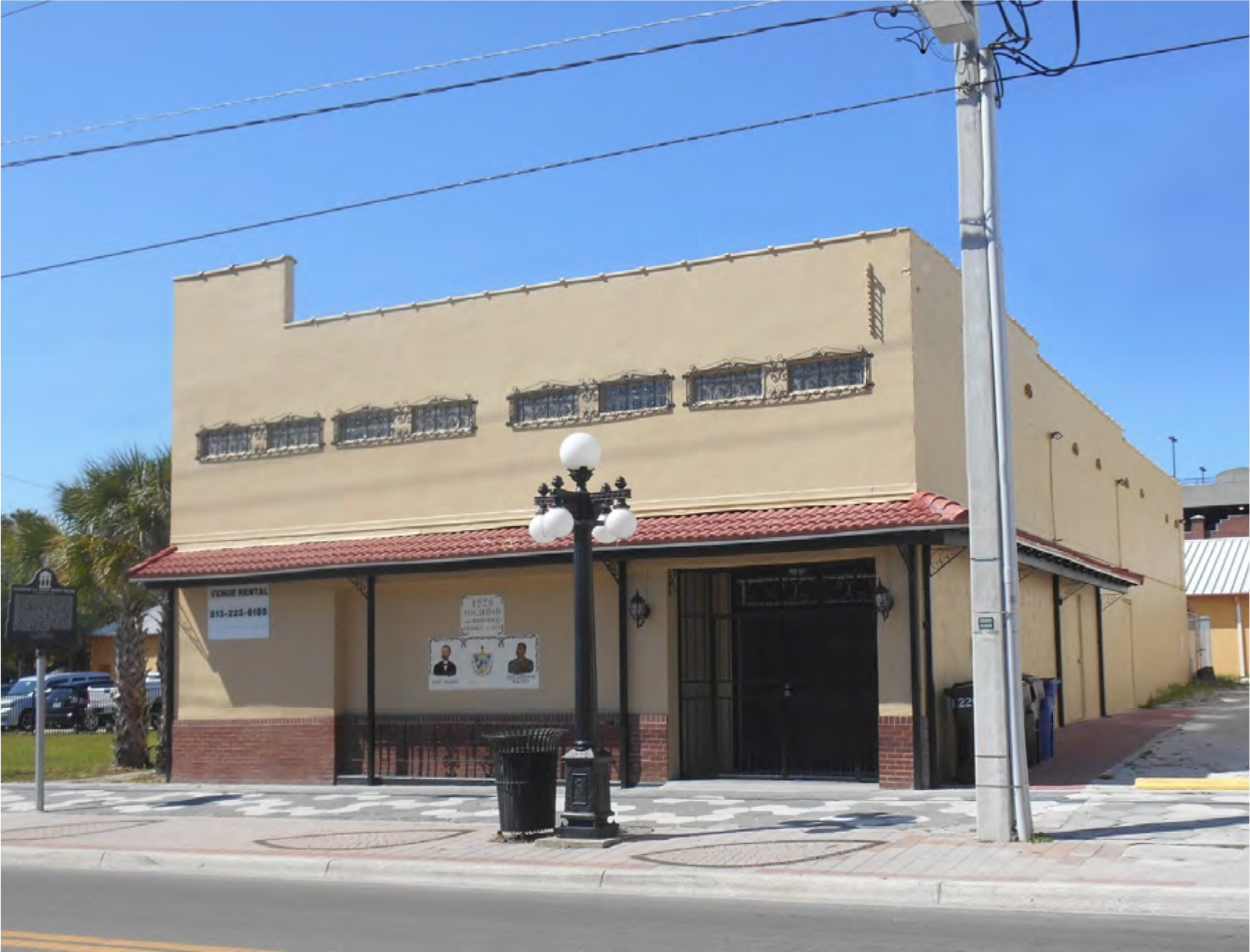
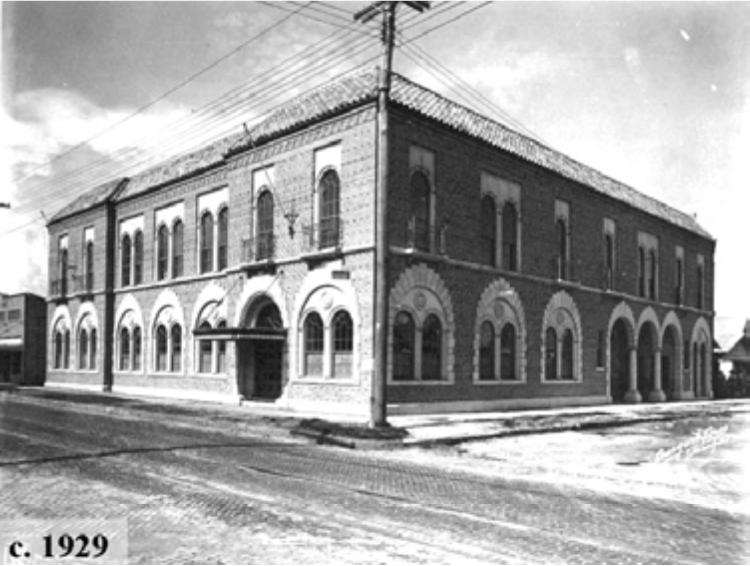
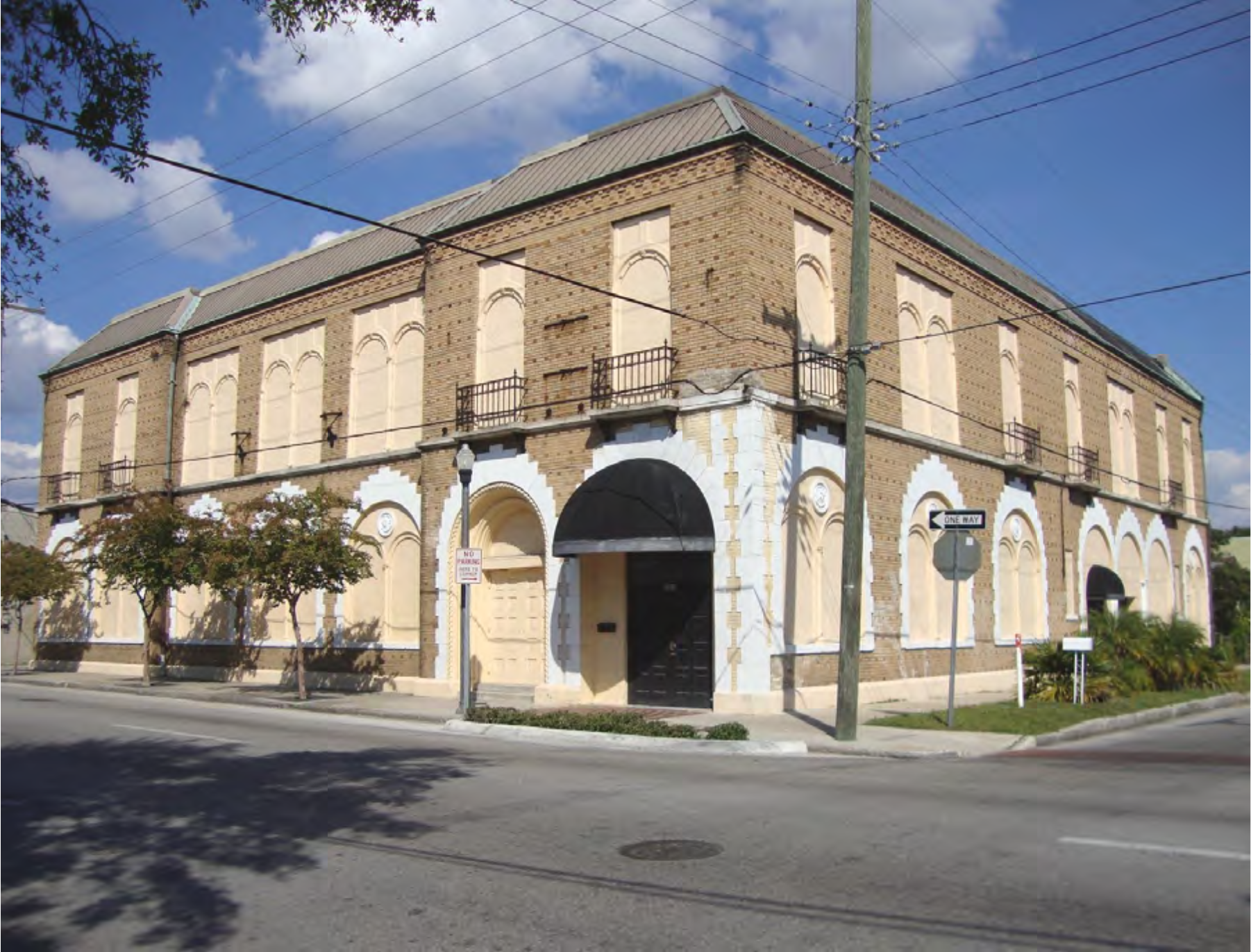
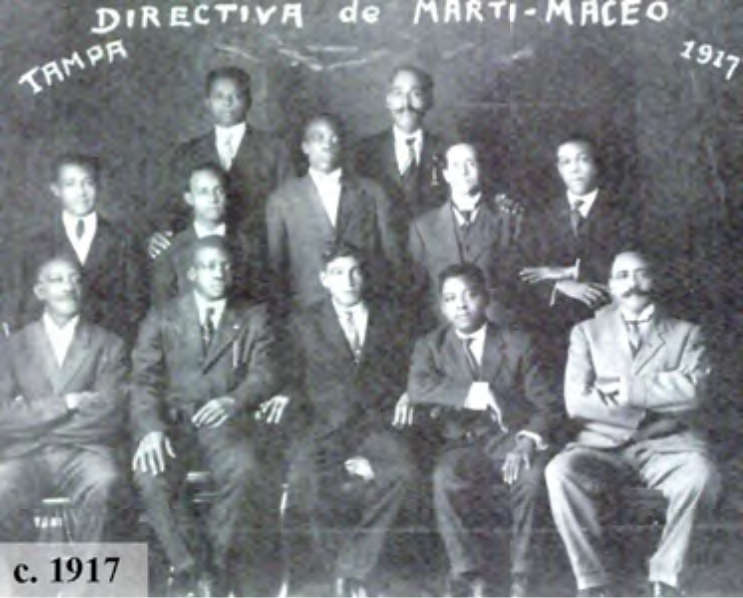
After recognizing the need for their own ethnic club distinct from the Circulo Cubano, Afro-Cubans formed La Sociedad de Libre Pensadores de Marti-Maceo in 1900. Celebrating the legacy and perseverance of Cuban liberators Jose Marti and General Antonio Maceo, the original society building was located at 1907-1909 E. 6th Avenue but was demolished in 1965 during Urban Renewal. The membership relocated to the current facility in 1966. While the clubhouse is modest among social clubs in Ybor City, the very existence of the Marti-Maceo building is a testimony to the perseverance and commitment of Tampa’s Afro-Cuban community.
- Constructed: 1914
- Architectural Style: Craftsman
- National Register Listing: 1985
- Local Historic Designation: 2001
- Architect: Unknown
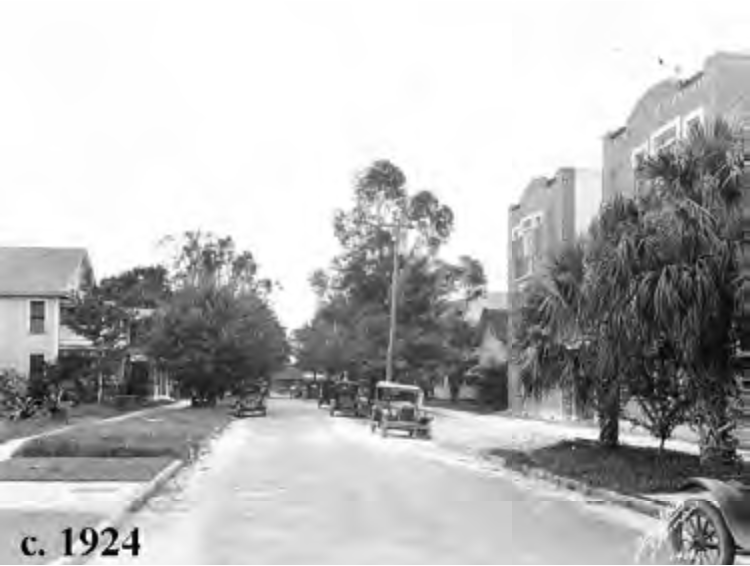
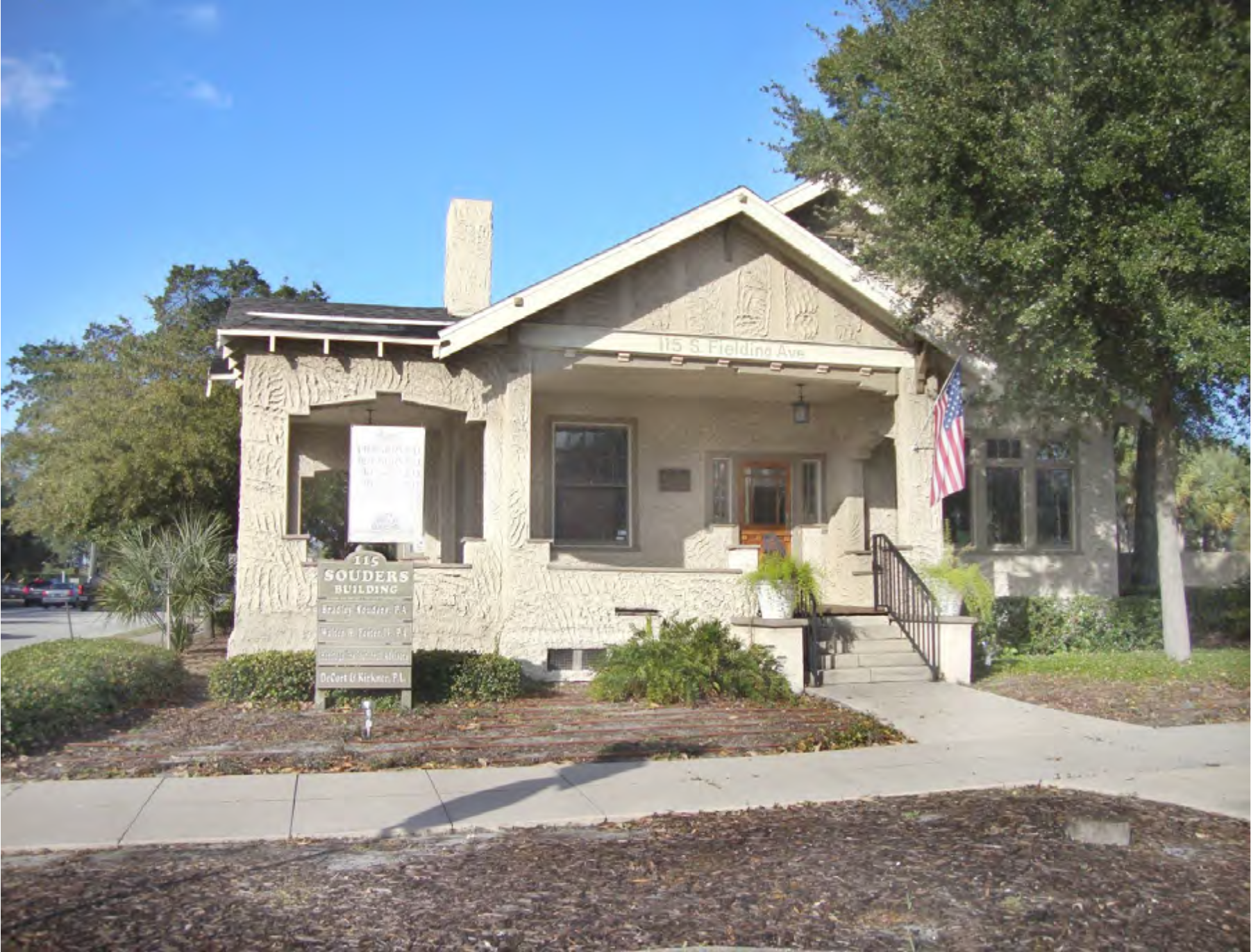
The development of Hyde Park began in 1886, when O.H. Platt purchased 20 acres of land from the Robert Jackson homestead and subdivided the land into residential lots. With the opening of the Tampa Bay Hotel in 1891, the Hyde Park neighborhood began attracting prominent residents and became regarded as a highly desirable neighborhood.
The stylistic elements of applied texture and exposed timbering on the Souders Building is typical of the Craftsman architectural style, which was popular throughout Tampa in the early 1900s.

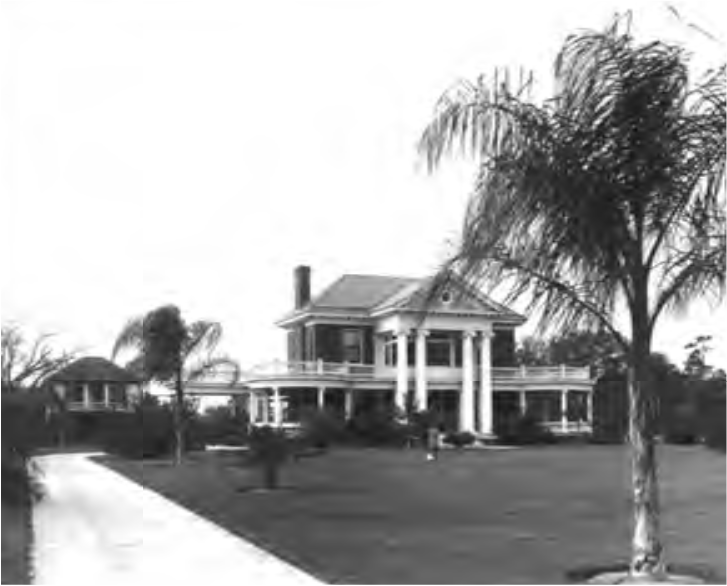
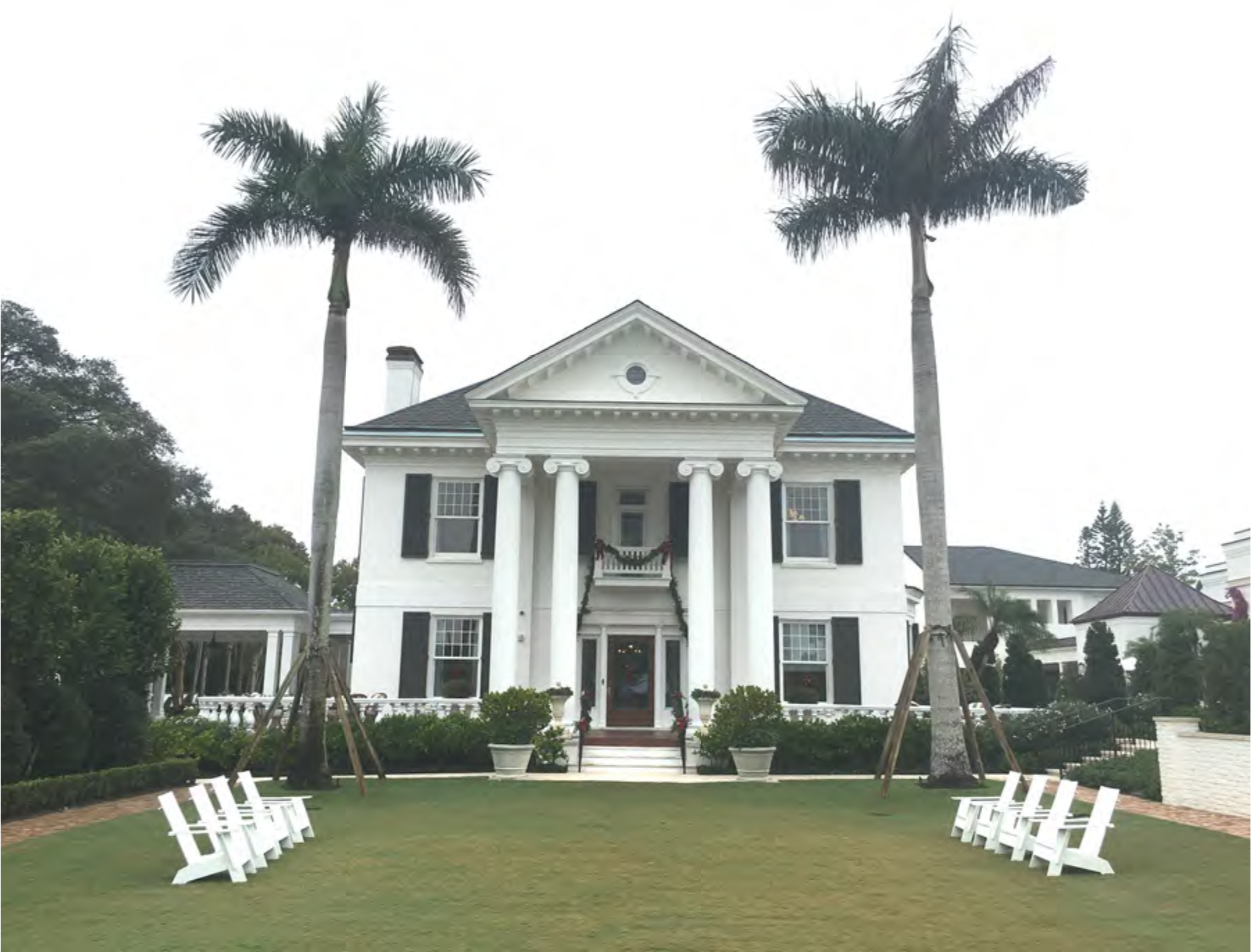
This Neoclassical residence was built in 1909 by Logan T. and Florence M. Trousdale. In 1915, the Trousdales sold their home to Wallace F. Stovall, the founder and long-time publisher of The Tampa Tribune. Stovall lived here for 30 years, during which time he constructed some of the best known buildings that contributed to the 1920s downtown skyline. The Stovall House is one of the few fine residences of prominent Tampans that survives along the city’s prestigious Bayshore Drive. Originally the choice location for Tampa’s grandest homes, only a few of these buildings remain to dot the shore of Hillsborough Bay, most having been replaced by contemporary homes and condominium high-rise buildings.
- Constructed: 1909
- Architectural Style: Neoclassical
- National Register Listing: 1974
- Local Historic Designation: 2022
- Architect: Francis J. Kennard
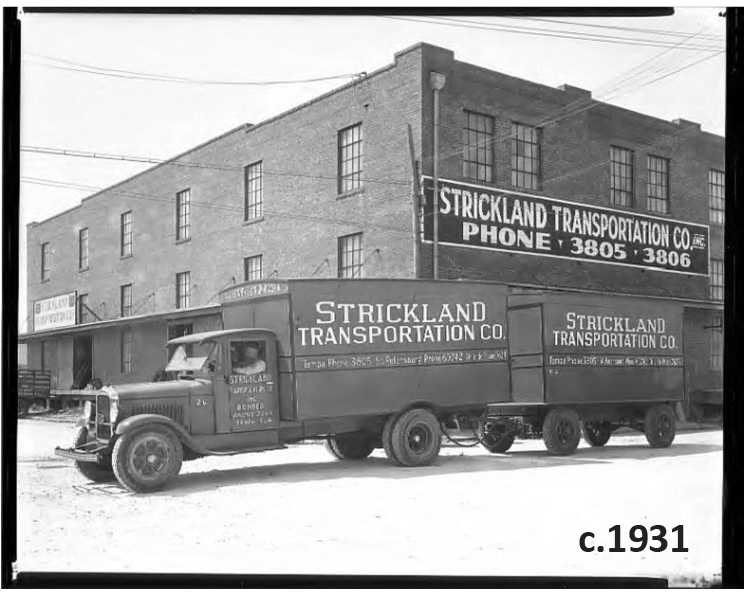
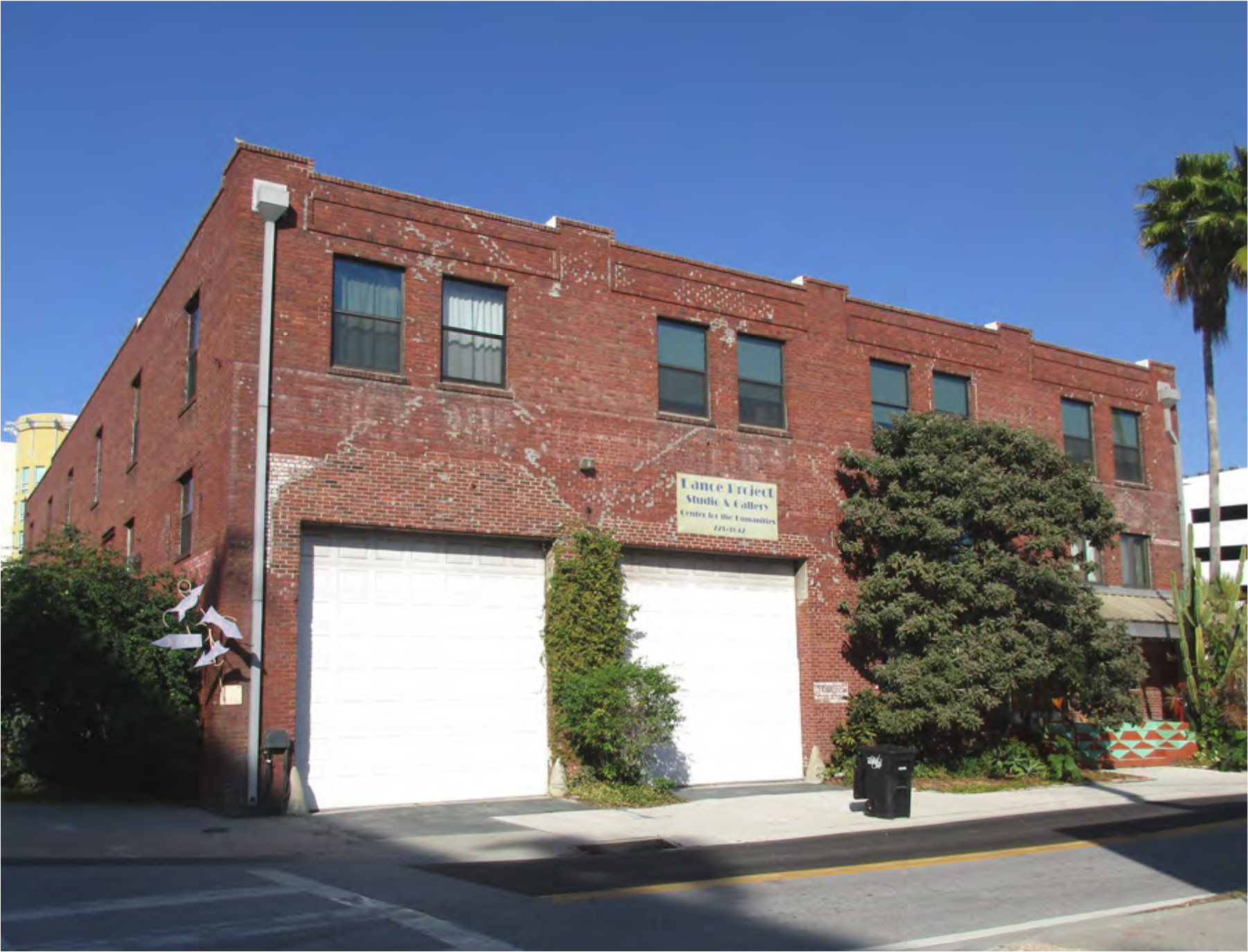
Strickland Transportation Company Warehouse204 N. 12th Street
- Constructed: 1926
- Architectural Style: Industrial Vernacular
- National Register Listing: N/A
- Local Historic Designation: 2017
- Architect: Unknown
The 1926 brick Industrial Vernacular style Strickland Transportation Company Warehouse exhibits minimal architectural details. Elements of its design, such as the division of the primary façade into four bays and the introduction of the third tier of windows, decrease the impact of the mass of the building by creating an exterior that relates to the human scale. The Strickland Transportation Company Warehouse is a well-preserved example of historic industrial architecture near the Ybor Channel. It is one of the few remaining original warehouses in the Channel District neighborhood.
c.1948
- Constructed: c.1842
- Architectural Style: Frame Vernacular
- National Register Listing: N/A
- Local Historic Designation: 2018
- Architect: Unknown
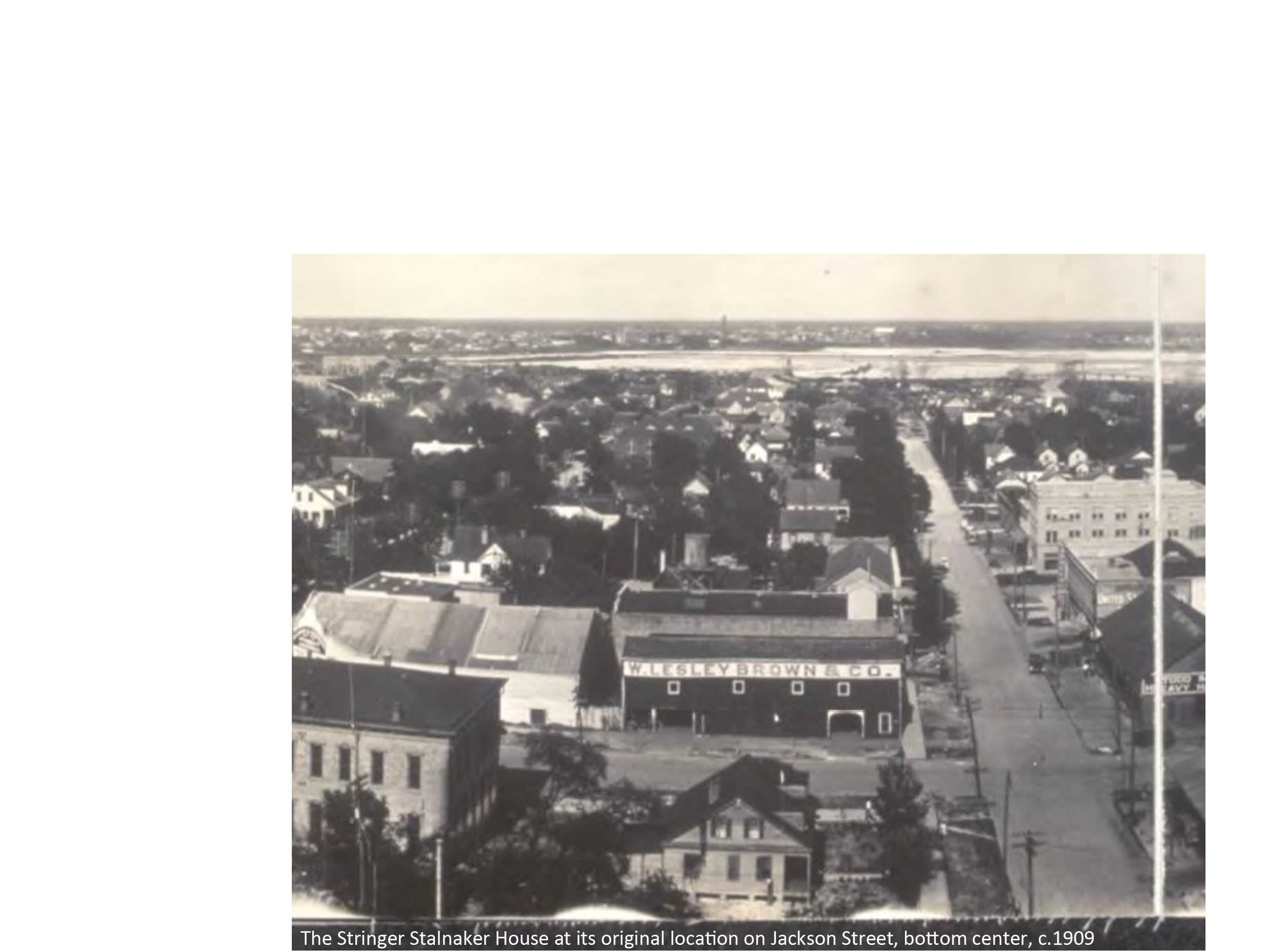
The Stringer Stalnaker House at its original location on Jackson Street, bottom center, c.1909
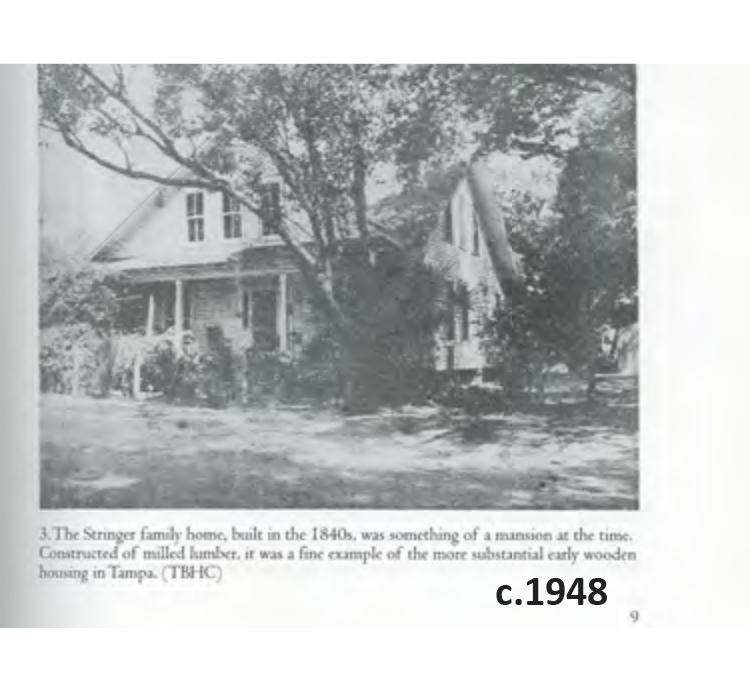
This wood frame building was built by the Stringer family, c.1842, at the corner of Jackson Street and Florida Avenue. Dr. Sheldon Stringer, Sr., was raised in this house by his mother, Mary Stringer, who ran it as a boarding house. In 1914, the city announced plans to build a new city hall and police department, using the land where the old Stringer House stood as the police department site. The city sold the house to Stalnaker Bros., who moved it to 8th Avenue in Gary, east of Ybor City. Imboden Stalnaker, who ran a grain and feed store, and his family lived in the house until he died in 1949. After 104 years in Gary, the Stringer-Stalnaker House was moved to its present site in 2018.
- Constructed: 1925
- Architectural Style: Classical Revival National Register Listing: N/A
- Local Historic Designation: 2013
- Builder: Josiah Richardson
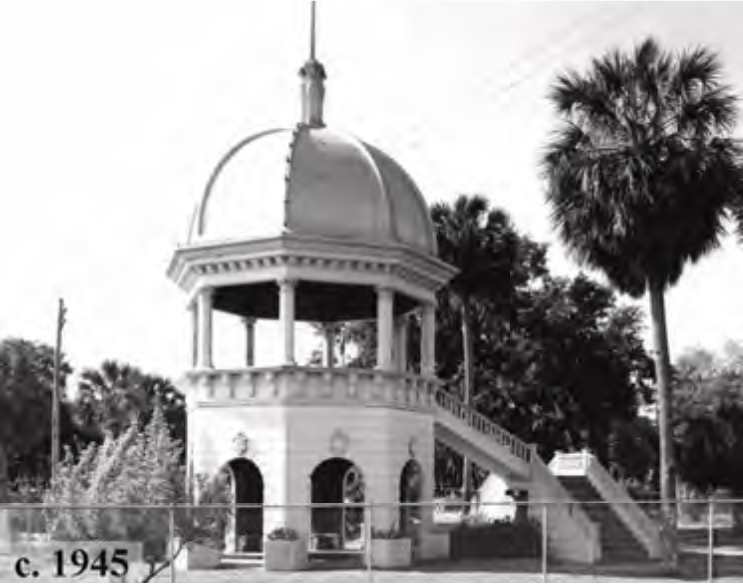
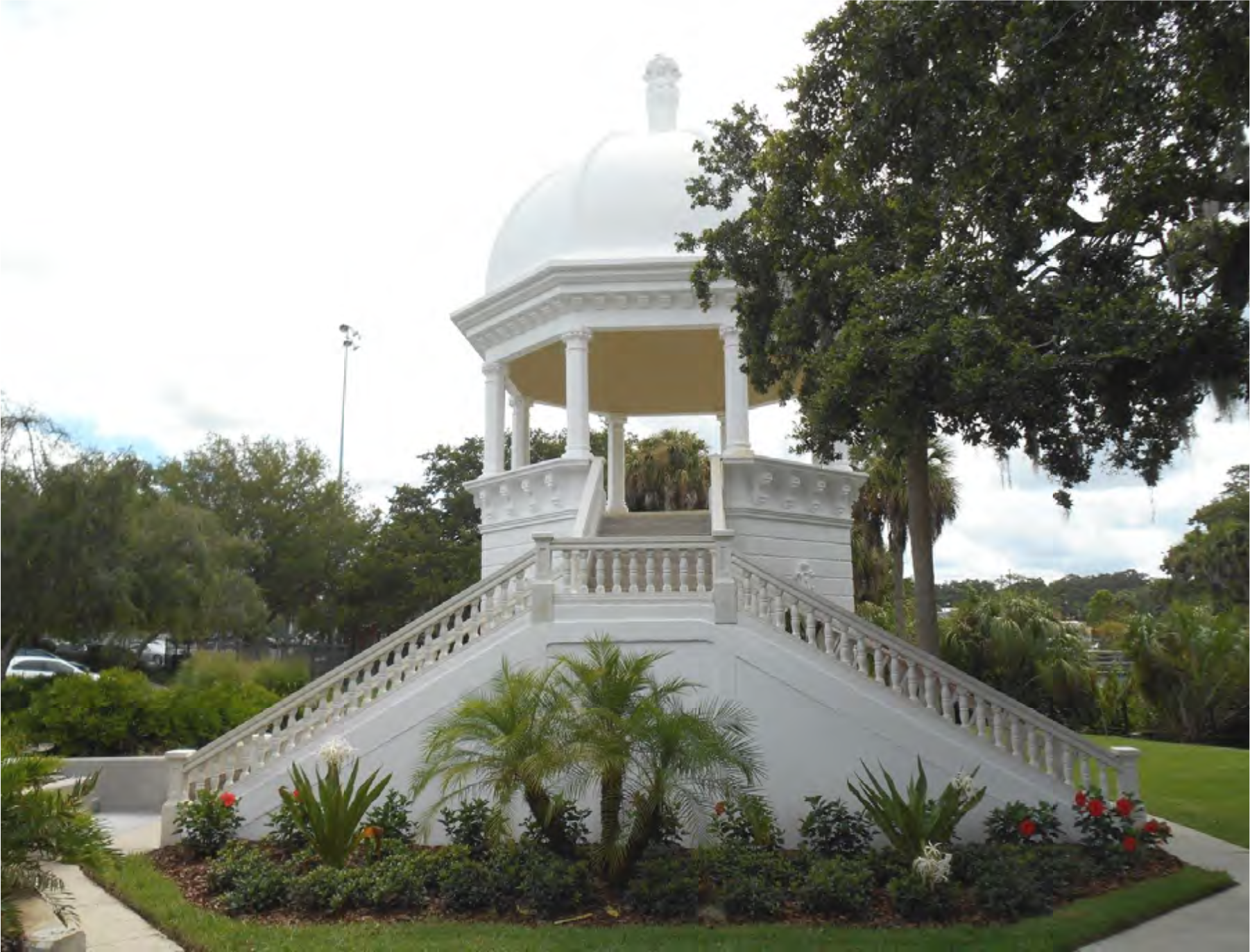
Built by Josiah Richardson, the octagonal two-story Sulphur Springs Gazebo sits on top of the spring for which the park and the surrounding community are named. In the early 1900s, the area surrounding the spring was platted and sold with small cottages marketed primarily to tourists. Following the extension of a streetcar line north along Nebraska Avenue, Sulphur Springs became readily accessible to Tampa residents. By the 1920s, Sulphur Springs was a popular destination for both locals and tourists. In addition to the medicinal waters, the Sulphur Springs park featured an alligator farm, a pool, toboggan slide, and dance hall.
- Constructed: 1927
- Architectural Style: Gothic Revival
- National Register Listing: 1989
- Local Historic Designation: 1989
- Builder: Josiah Richardson
- Engineer: Grover Poole
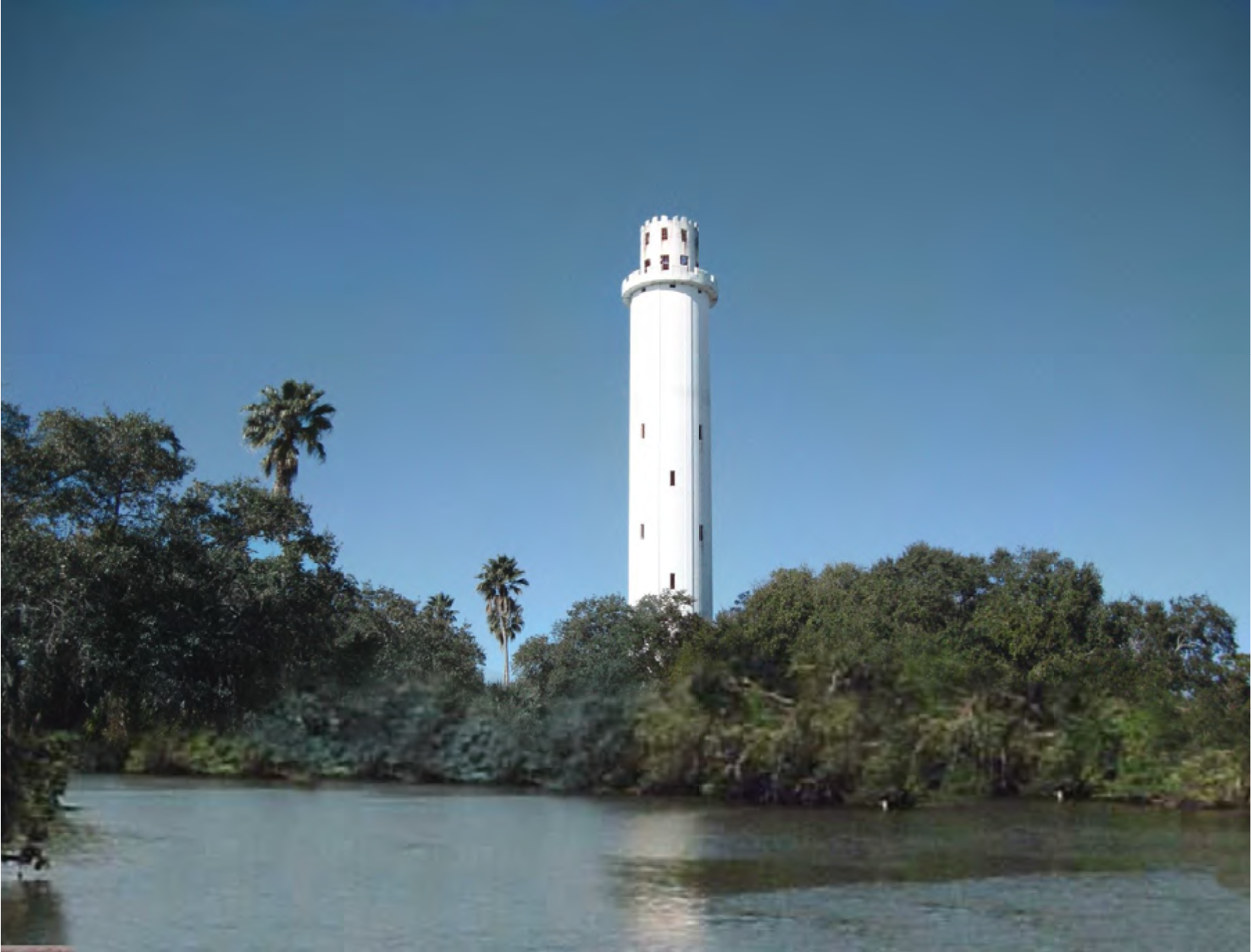
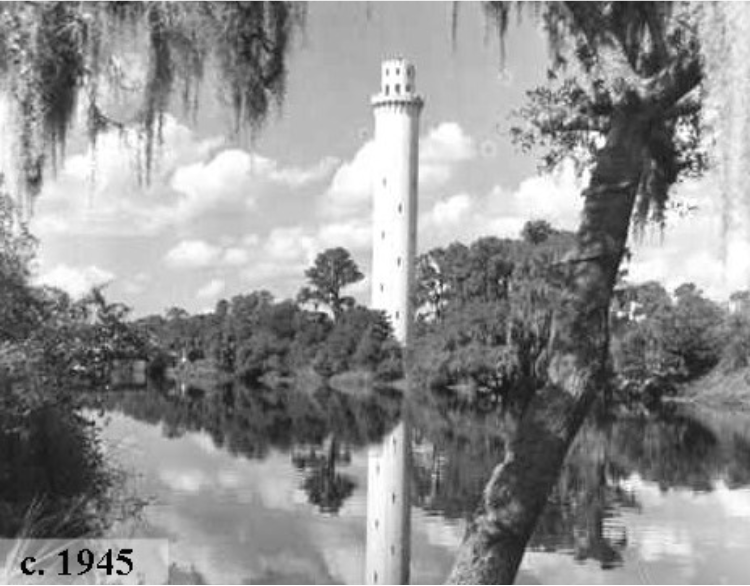
Built 214 feet high over a spring on the banks of the Hillsborough River and housing a 150 thousand gallon holding tank, the Sulphur Springs Water Tower was the principal water source for the area until the early 1970s. Constructed by Josiah Richardson, the tower is one of only two architecturally-designed water towers in the state.
The Sulphur Springs Water Tower is one of the few remnants of a successful tourist and recreation center that flourished around a naturally bubbling spring and included a direct street car line from Tampa.
Constructed: 1911
Architectural Style: Industrial Brick Vernacular
National Register Listing: N/A
Local Historic Designation: 2004
Architect: Unknown
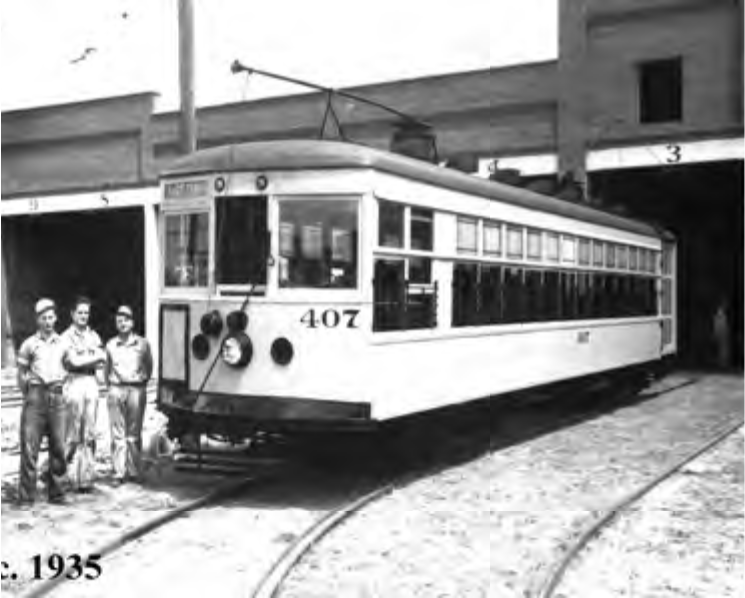
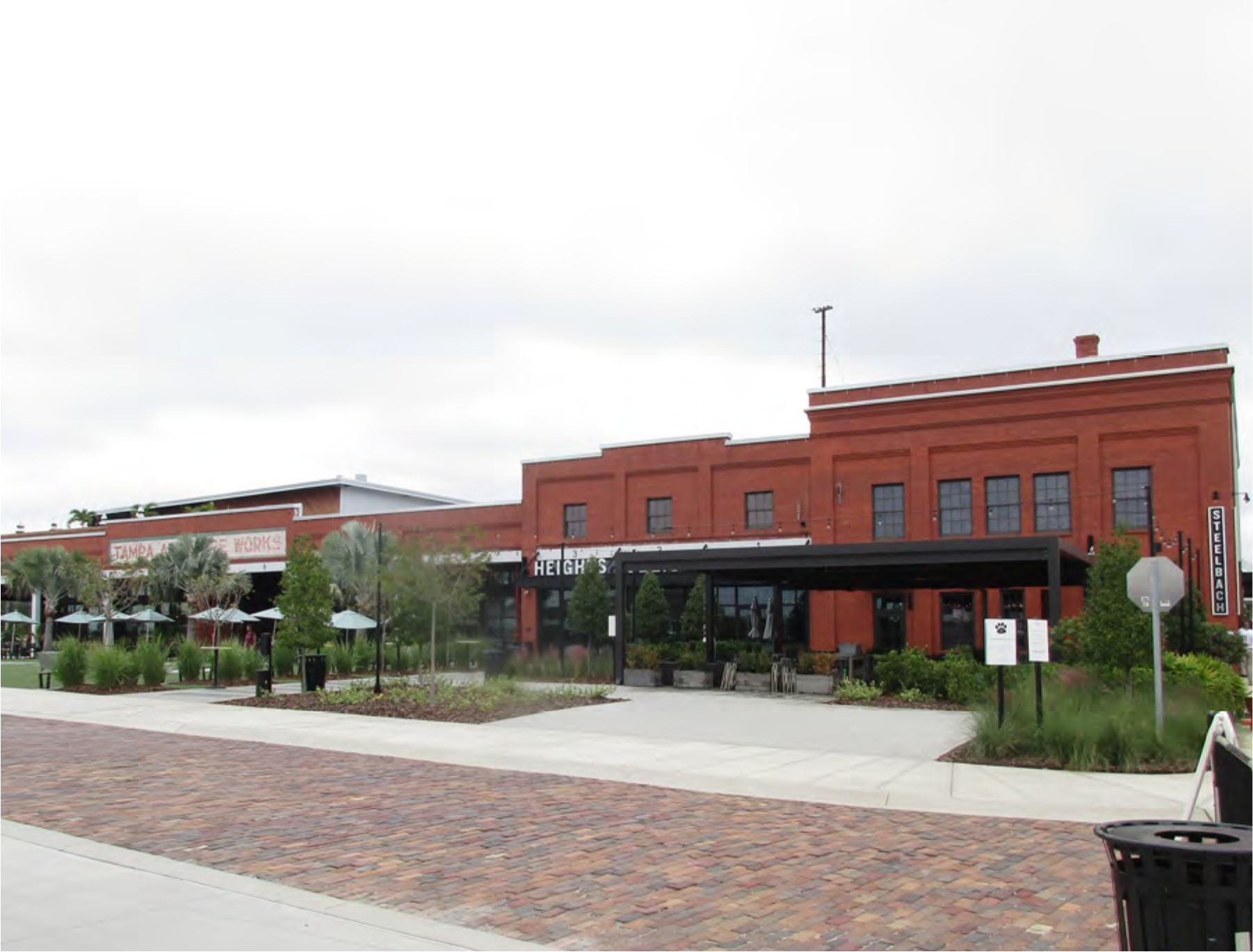
The Tampa Armature Works, also known as TECO Trolley Barn, played a significant role in the early development of Tampa as the repair and storage facility for the Tampa Electric Street and Railway Company. From its beginning in 1897, the electric streetcar system had an important effect on the development of the city’s neighborhoods. At the turn of the century, lines connected Ybor City, South Tampa, West Tampa, DeSoto Park, Ballast Point, and points in between. In 1946, the system was abandoned for more modern means of transportation: buses and automobiles. In 1960, Tampa Armature Works, a phosphate machinery manufacturer, purchased the building from TECO.
Constructed: 1891
Architectural Style: Moorish Revival
National Register Listing: 1972
National Historic Landmark: 1976
Local Historic Designation: 1989
Architect: John A. Wood
Builder: Alex Browning
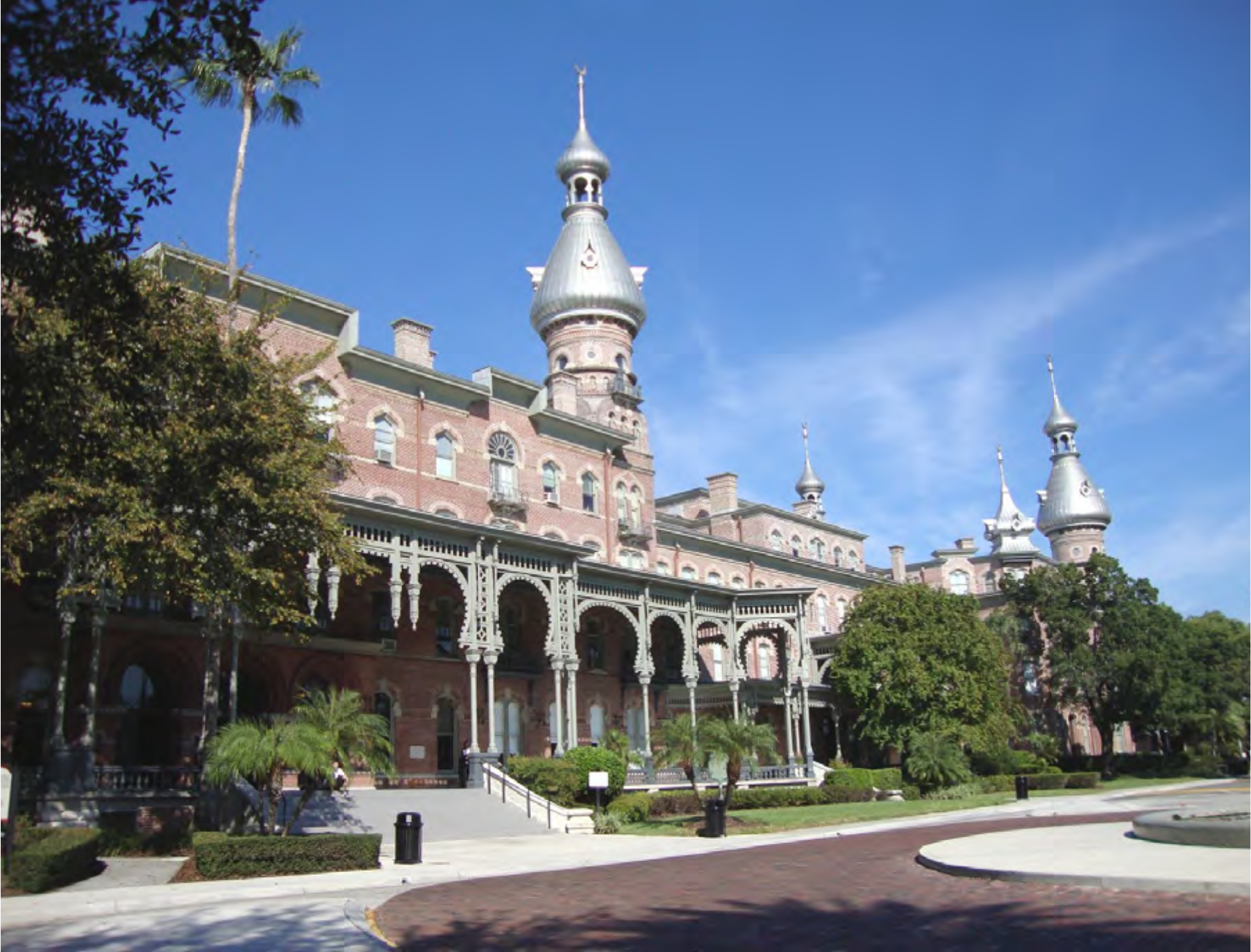
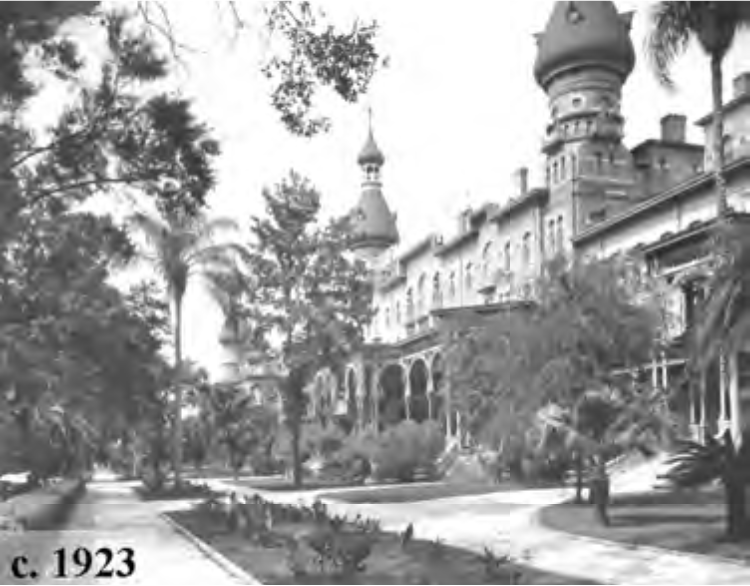
Built by railroad and shipping magnate Henry Bradley Plant, the Tampa Bay Hotel has the reputation of being the finest example of Moorish architecture in the nation. As such, it is listed as a National Historic Landmark. Located on the Hillsborough River, the unique design of the red brick structure features three silver-painted domes, 13 minaret towers, a large horseshoe-arched entrance, a carved two-story veranda, and a Victorian style garden.
Having ceased operation as a hotel in 1932, the building has served as an iconic component of the University of Tampa since 1933.
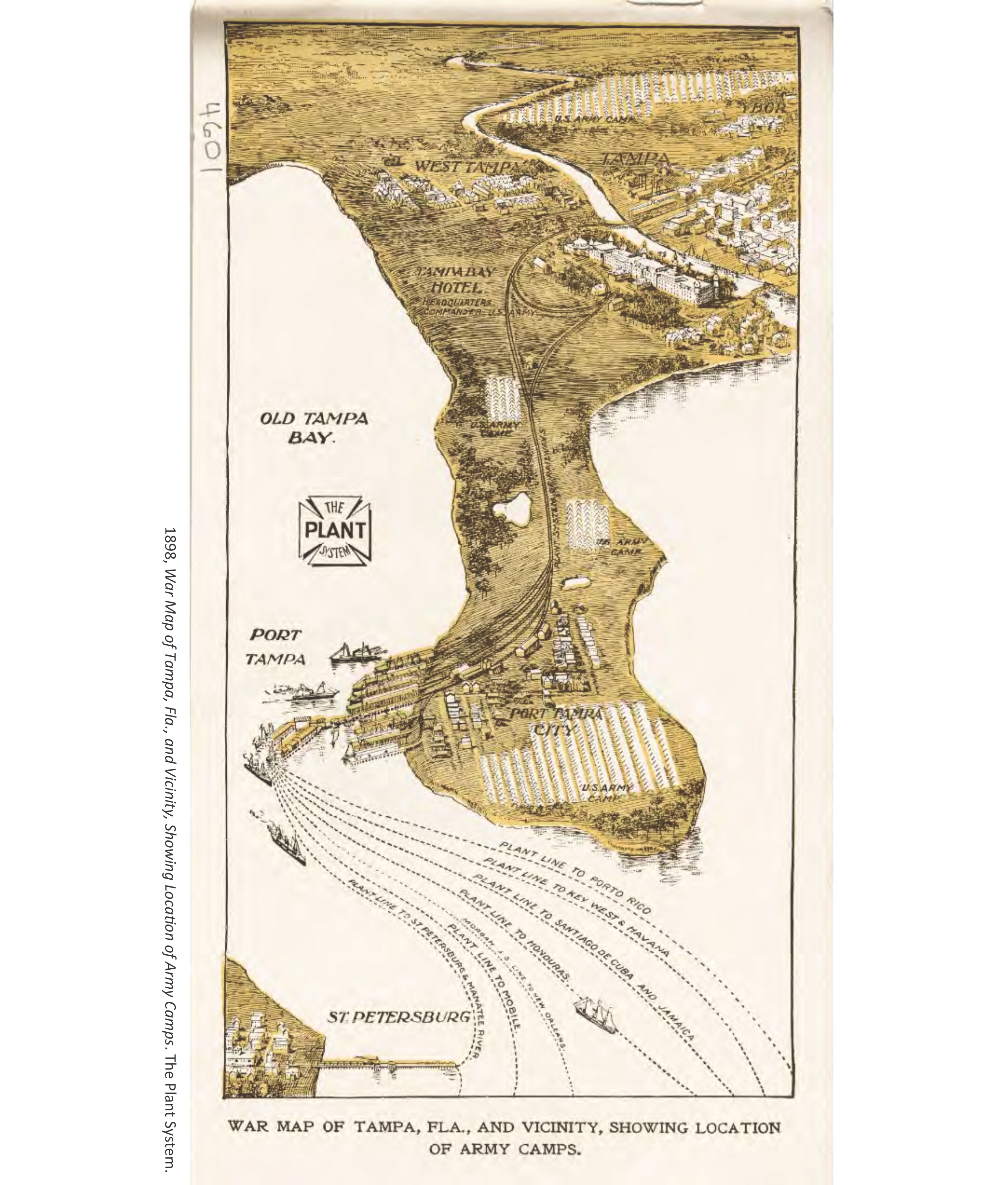
RESEARCH REFERENCE 1898, War Map of Tampa, Fla., and Vicinity, Showing Location of Army Camps. The Plant System.
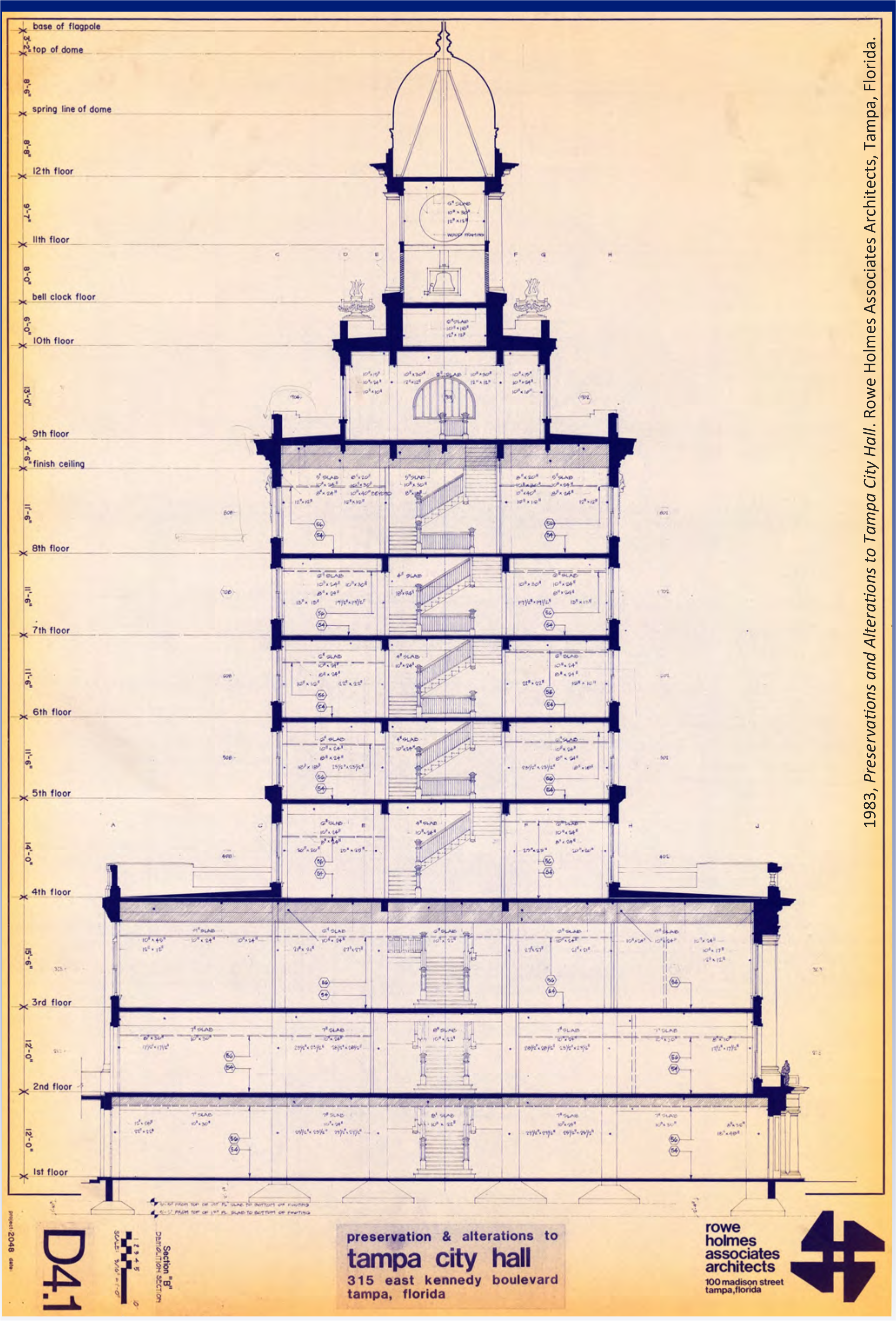
Tampa City Hall
315 E. Kennedy Boulevard
- Constructed: 1915
- Architectural Style: Beaux Arts
- National Register Listing: 1974
- Local Historic Designation: 1994
- Architects: B.C. Bonfoey and M. Leo Elliott
- Builder: McGucken & Hyer
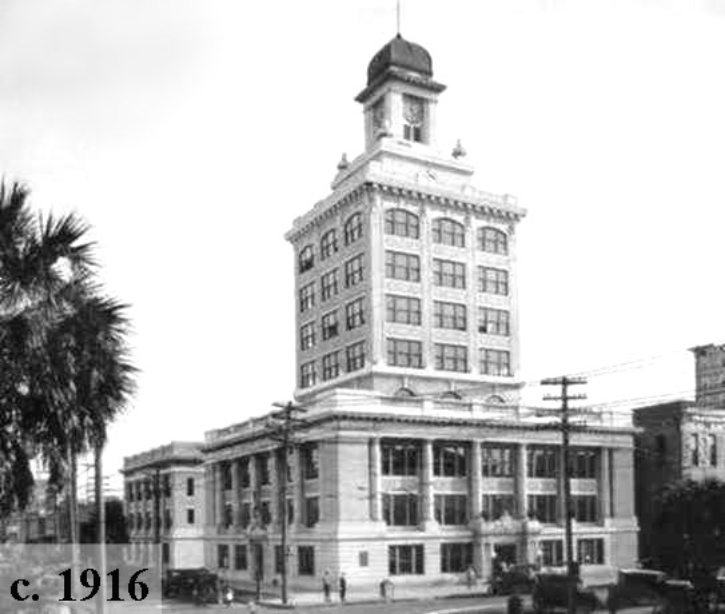
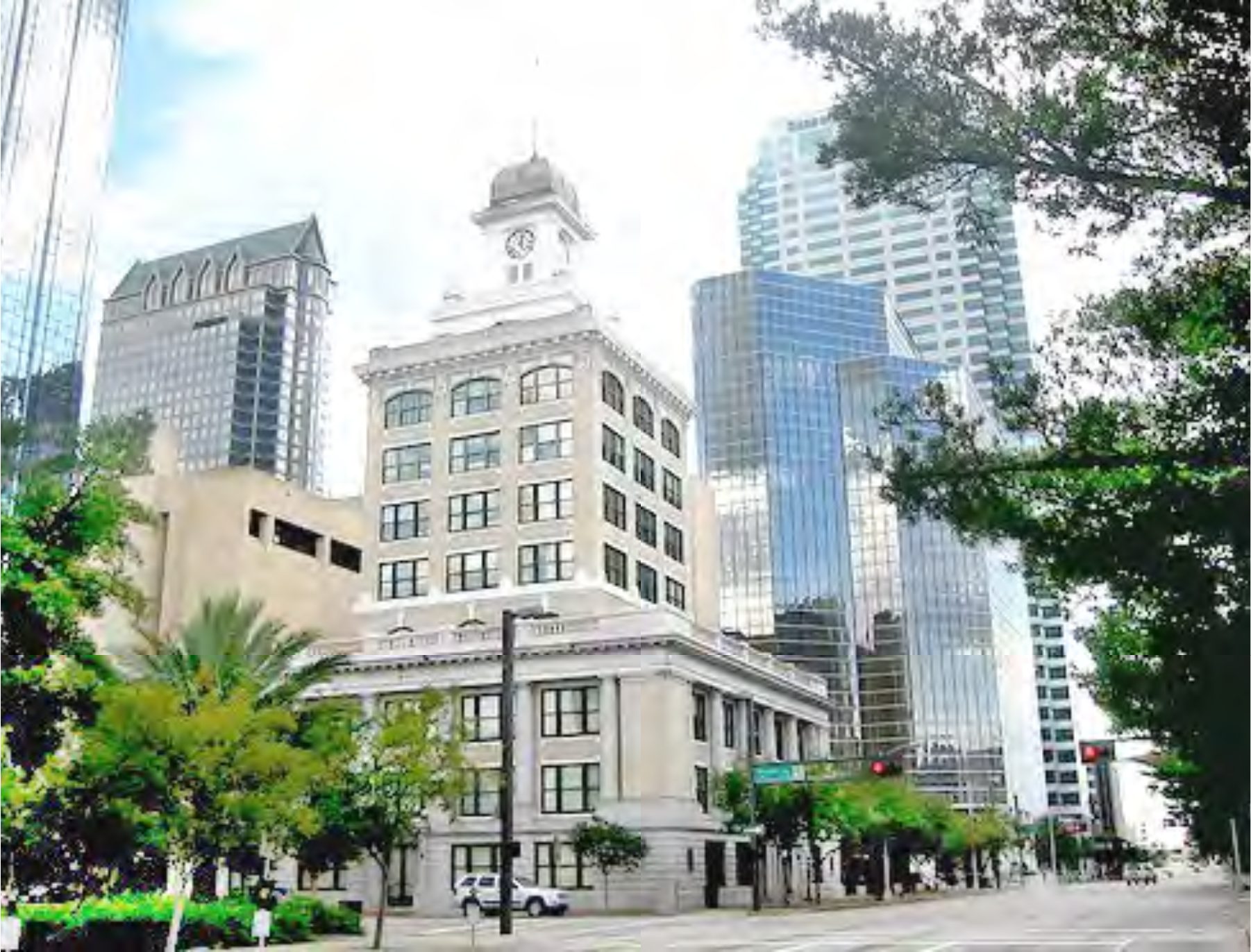
When ground broke for the construction of Tampa’s new City Hall in 1914, it was considered a milestone in linking the city’s early days with its promising future. Designed in the Beaux Arts style by prominent architects B.C. Bonfoey and M. Leo Elliott, Tampa City Hall was the tallest building south of Jacksonville and featured a tower that made it a focal point of the city’s rapidly growing skyline.
The Seth Thomas clock set in the tower was named after local resident Miss Hortense Oppenheimer, who led the effort to raise money for a public clock like those she had seen in northern cities.
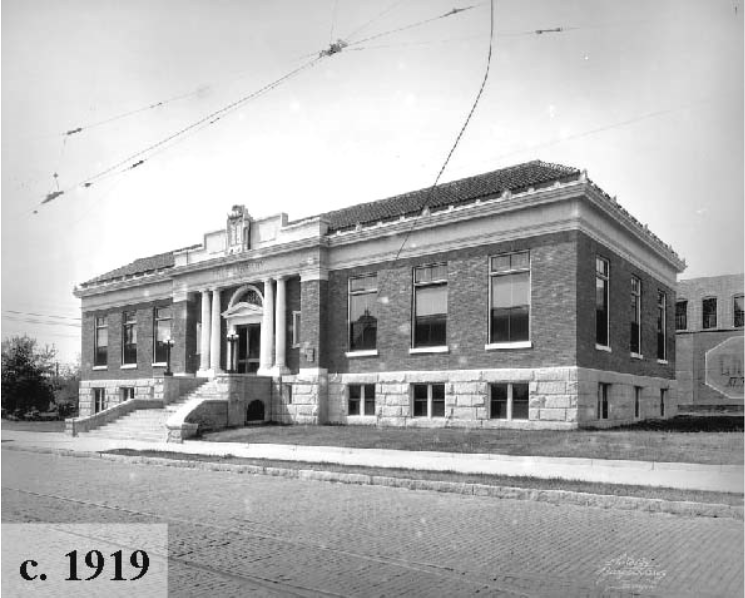
- Constructed: 1915
- Architectural Style: Classical Revival
- National Register Listing: 1991
- Local Historic Designation: 1995
- Architect: Fred J. James
- Builder: Aulic, Bastes & Hudnell
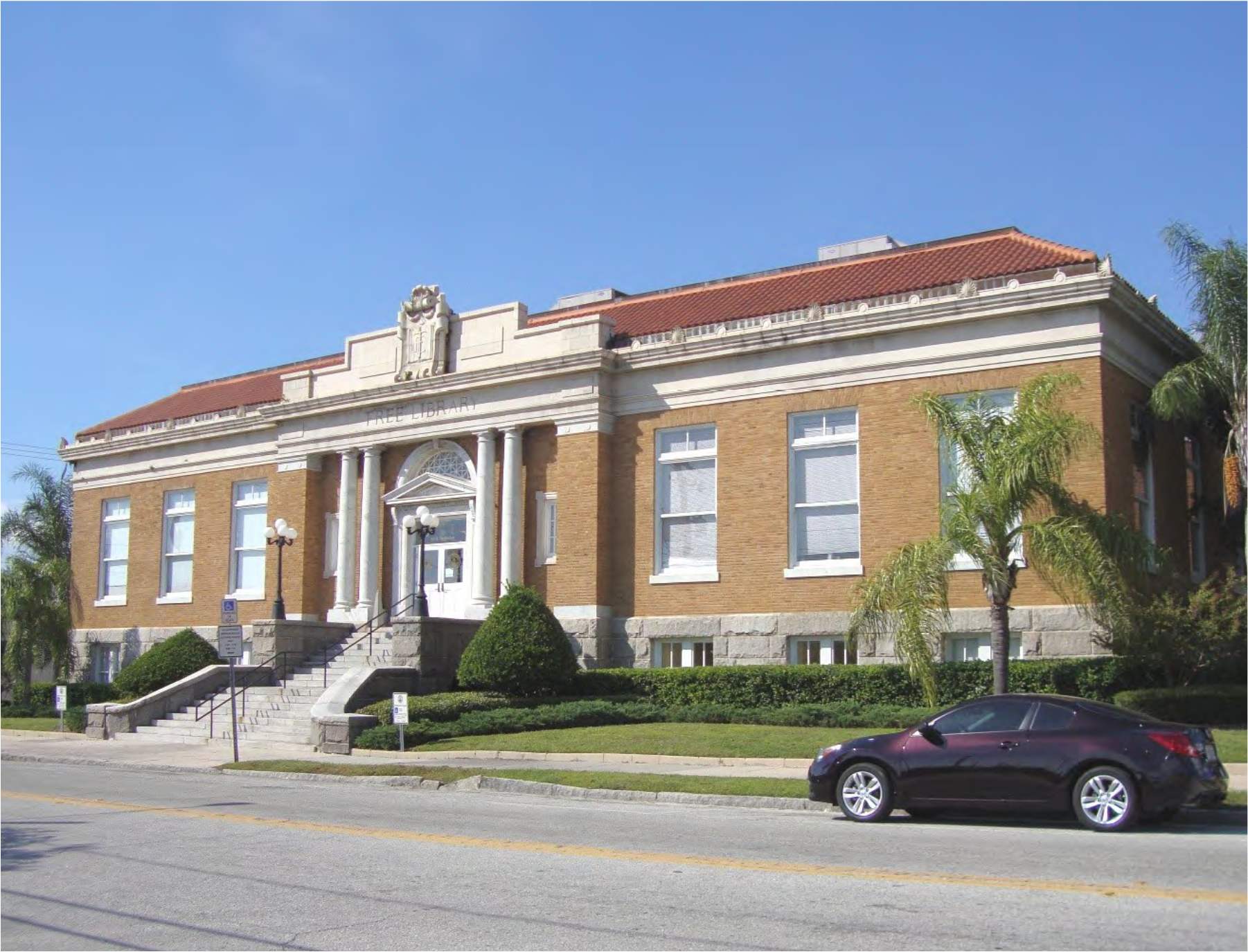
The Tampa Free Library is the second of two public libraries in Tampa constructed through a grant from the Carnegie Foundation. Andrew Carnegie’s donations of more than $40 million paid for 1,679 new library buildings across the nation.
The library is a visible reflection of the rapid development of the city and its effort to establish cultural and educational amenities for the public during the early 1900s. The Tampa Free Library fulfilled its function for more than 50 years for the educational benefit of Tampa’s residents.
- Constructed: 1925
- Architectural Style: Mediterranean Revival
- National Register Listing: 1978
- Local Historic Designation: 1988
- Architect: John Eberson
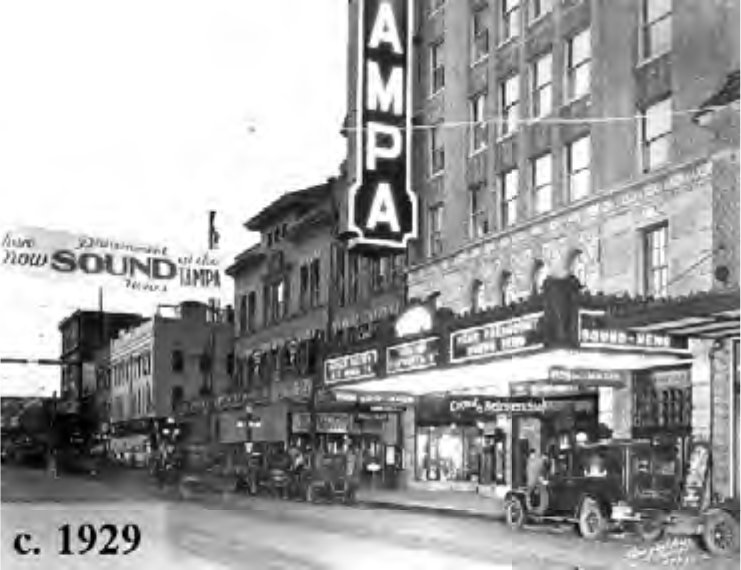
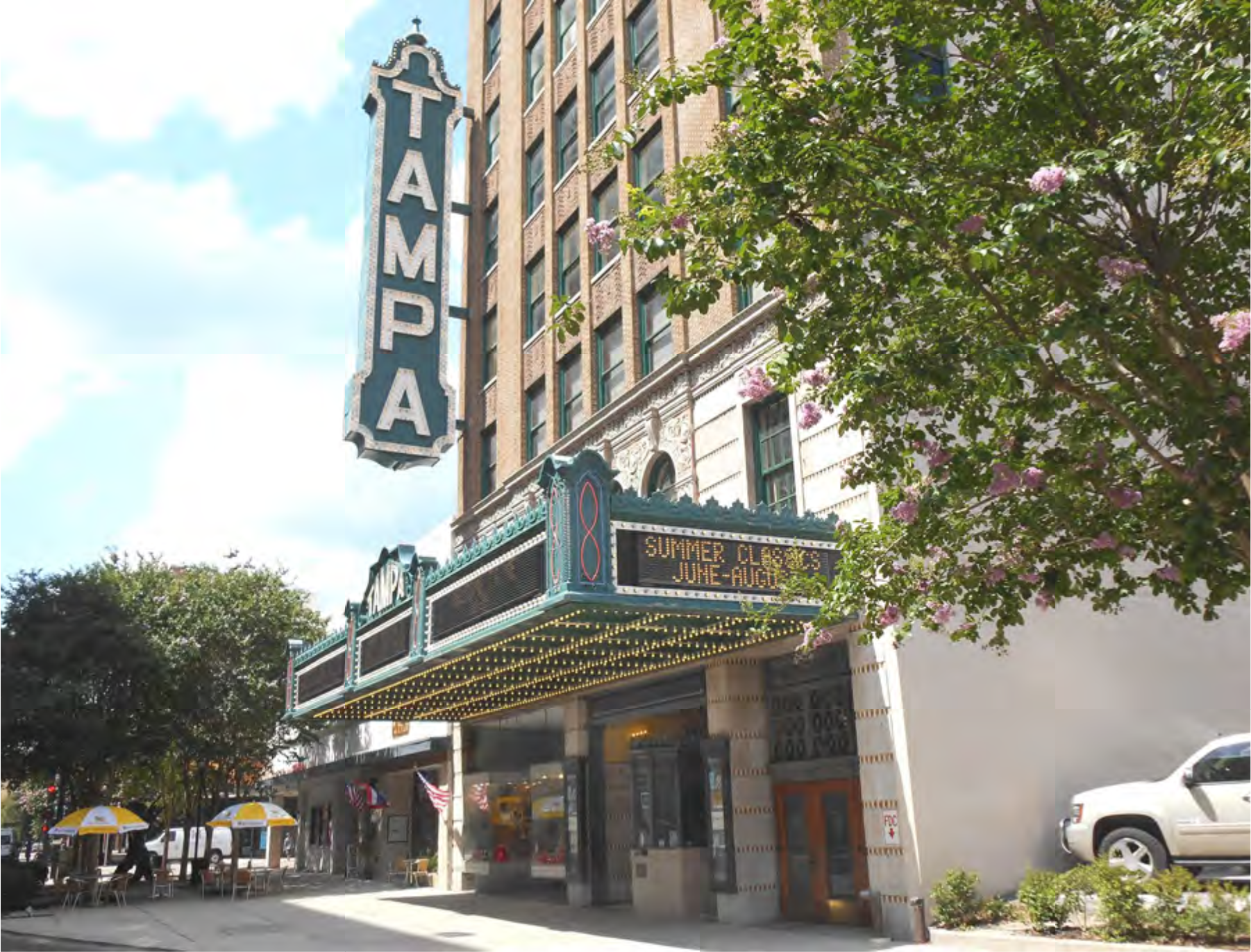
The Tampa Theatre is a well-preserved example of atmospheric theater design. At the time of its construction, the theatre was the most exciting and elaborate piece of architecture to be built in Tampa since the Tampa Bay Hotel. The theatre is an early movie palace housed in a ten-story office building. It was a dominant element of Tampa’s skyline during the 1920s. The atmospheric design of the interior gives the audience an illusion that they are within an imaginary garden of a Spanish Villa. A myriad of stars punctuate the ceiling above. The lighted blade sign and marquis on the front of the theatre have served as an iconic image of the city for decades.
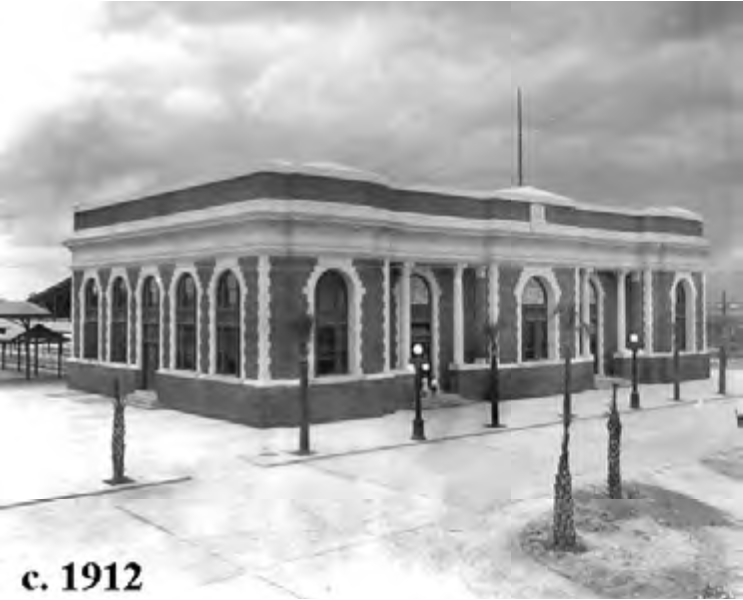
- Constructed: 1912
- Architectural Style: Italian Renaissance Revival
- National Register Listing: 1974
- Local Historic Designation: 1988
- Architect: J.F. Leitner
- Builder: W.C. Hobbs
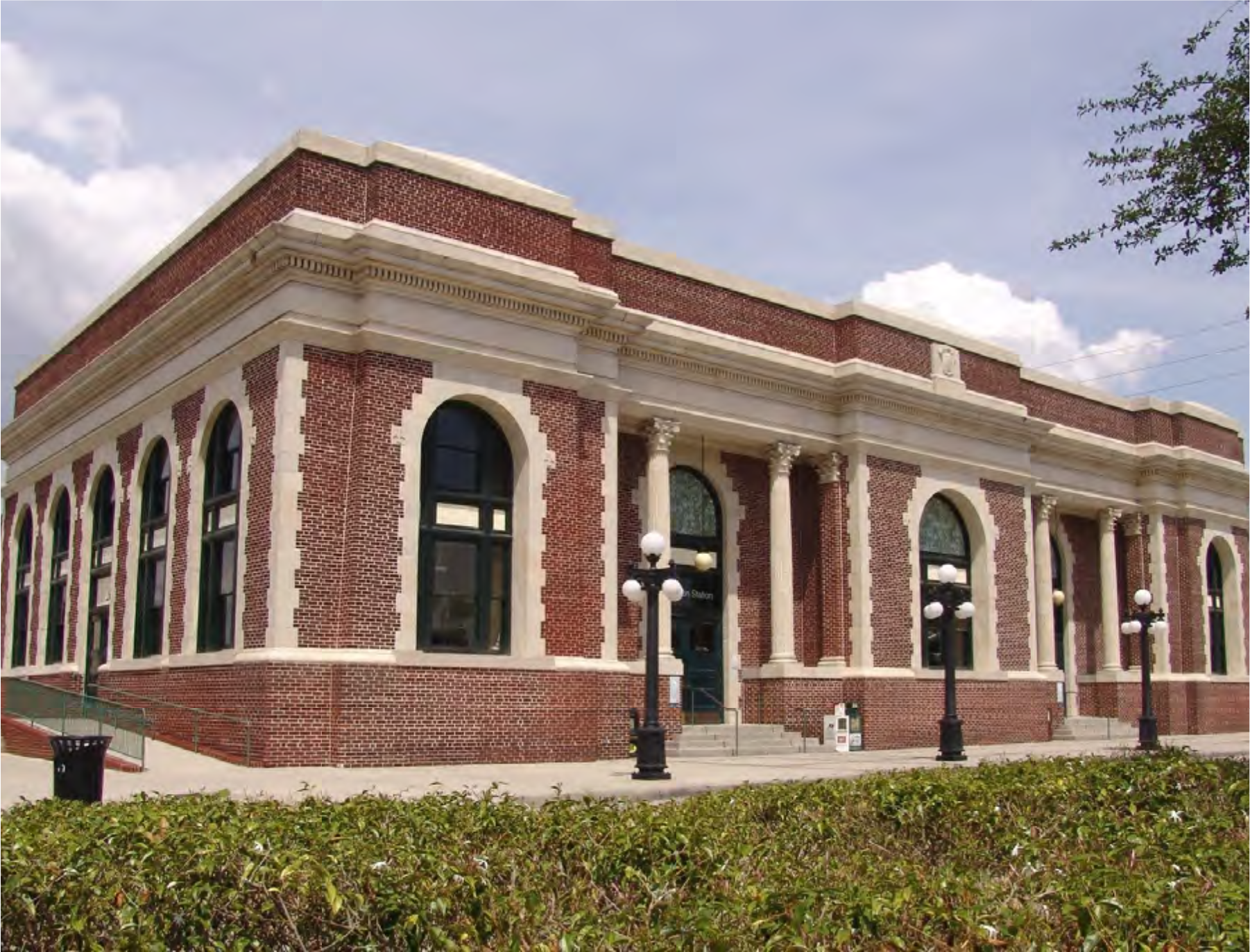
Unlike many early railroad stations, Tampa’s Union Station was not a project of a railroad company, but a group of businessmen. Led by Peter O. Knight and assisted by the Tampa Tribune company, these businessmen negotiated with two railroad companies to construct a new and extensive facility for transportation. The success of their efforts has benefited the city for nearly a century. The main façade of the building is a wide and undulating expanse. It has five large staggered bays with entrances set in the recessed bays. The building, according to an early newspaper account, was an “ornament to the City of Tampa and an example to other cities of the South.”
| Attribute | Value |
|---|---|
| Constructed | 1902 |
| Architectural Style | Industrial Brick |
| Vernacular | Vernacular |
| National Register Listing | N/A |
| Local Historic Designation | 2002 |
| Architect | Unknown |
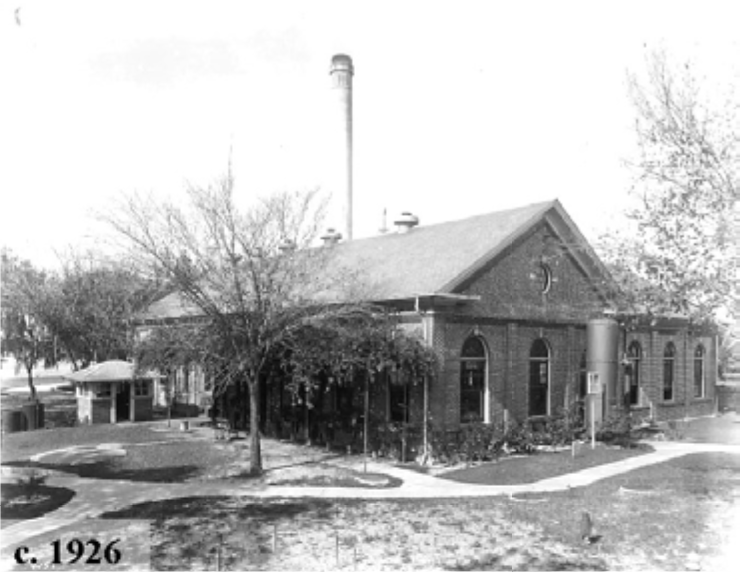
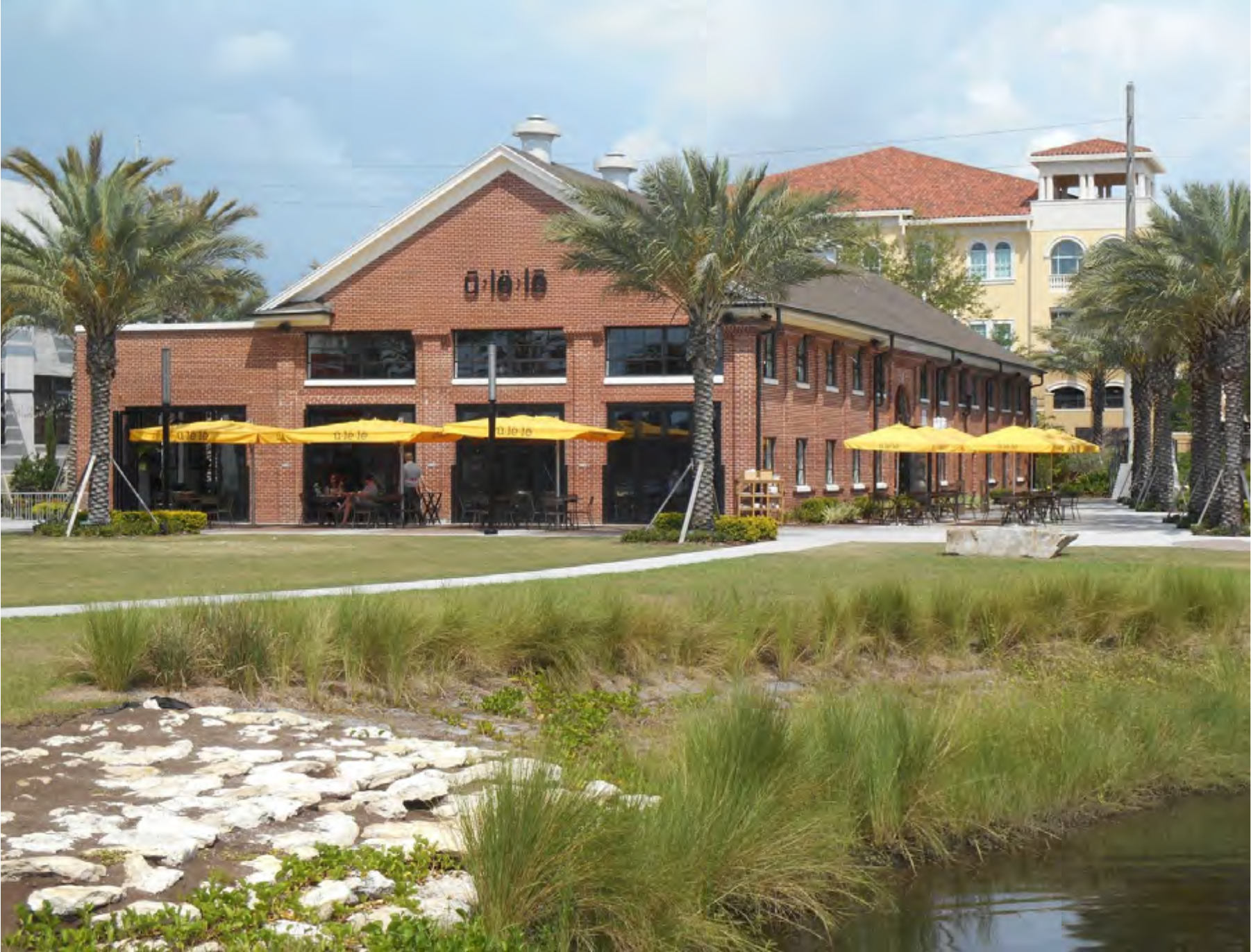
The City of Tampa was progressive in its construction of steam powered pumping stations to bring fresh water to its citizens. Late in the 19th century, the availability of less expensive steam power made the technology cost effective for small cities to install water systems of this sort. The construction of this pumping station increased the city’s spring water capacity to four million gallons per day. This building was rehabilitated in accordance with the Secretary of the Interior’s Standards for Rehabilitation for adaptive reuse in 2014. The adjacent Ulele Spring has also been restored and reconnected to the Hillsborough River.
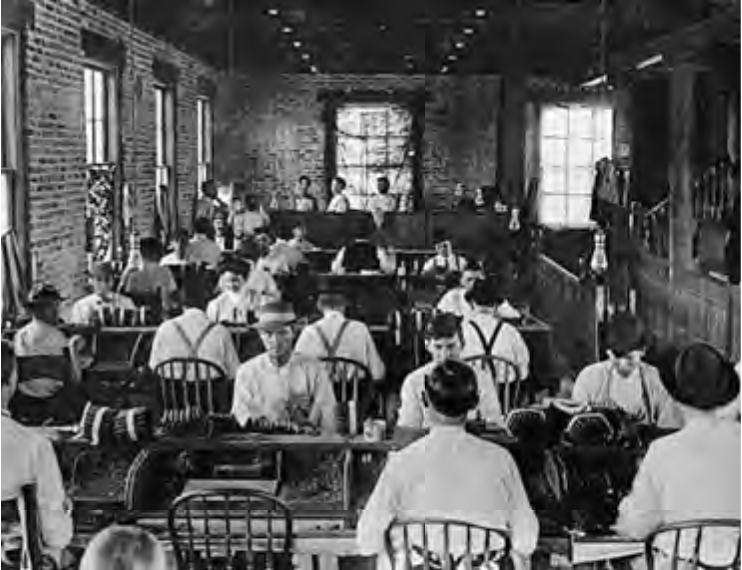
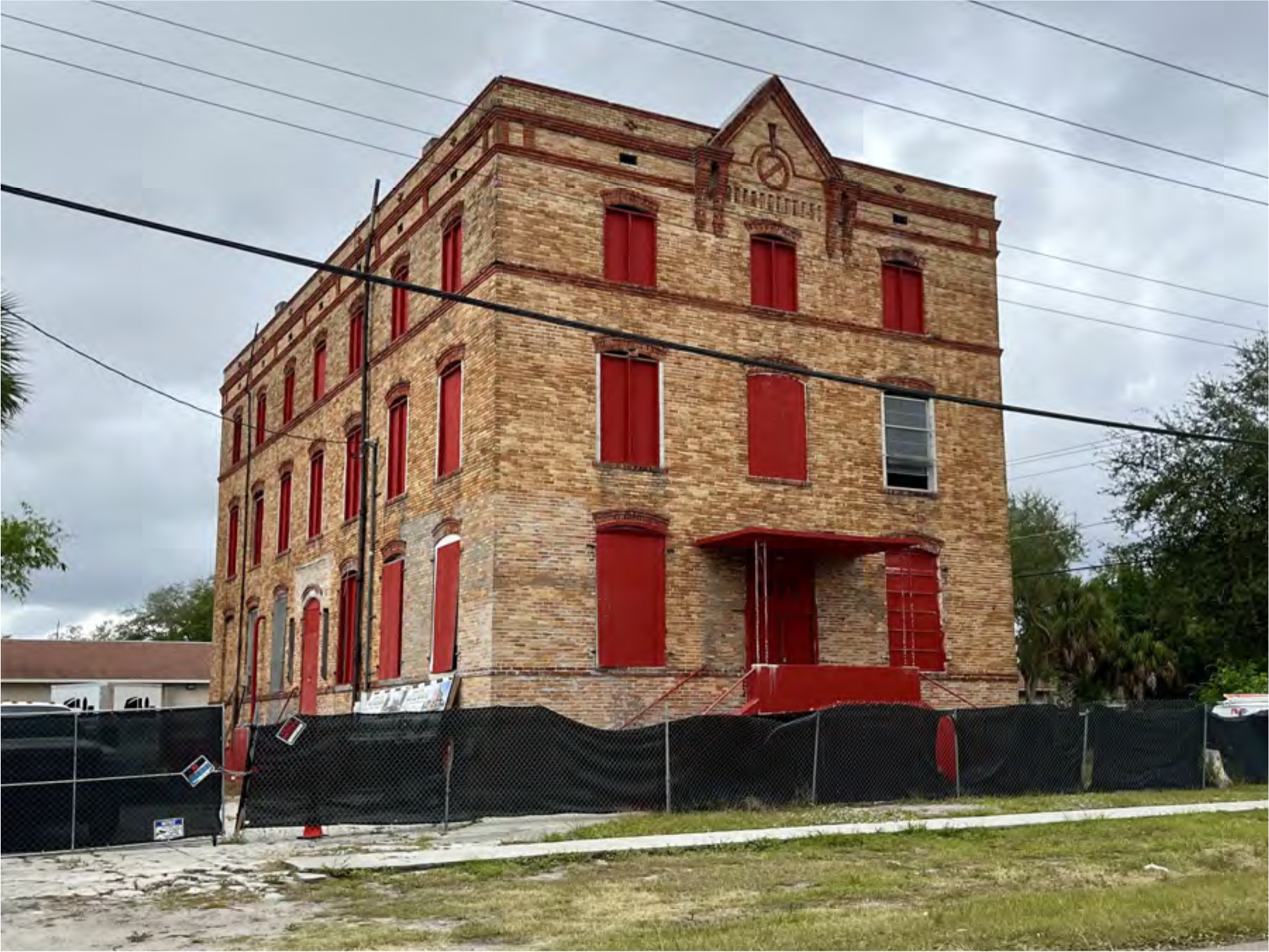
Tierra del Lago was founded by W.H. Streeter in the early 1900s. In 1908, Streeter moved his cigar factory from Lakeland to Gary, east of booming Ybor City. Fred J. James, the designer of multiple West Tampa cigar factories, prepared plans for Tierra de Lago at a cost of $3,000. The building is a rectangular three and a half story blond brick cigar factory with decorative brick work reflecting the Romanesque Revival style.
The Tierra del Lago Cigar Company was best known for the “O U NO” clear Havana cigar. Gary Lodge, No. 240 F&AM, moved into this structure in 1921 and occupied the building until 1972.
| Constructed | 1908 |
|---|---|
| Architectural Style | Brick Vernacular |
| National Register Listing | N/A |
| Local Historic Designation | 2021 |
| Architect | Fred J. James |
- Constructed: 1925
- Architectural Style: Mediterranean Revival
- National Register Listing: N/A
- Local Historic Designation: 2004
- Architect: Nicholas S. Hills, Jr.
- Builder: Gauger-Korsomo
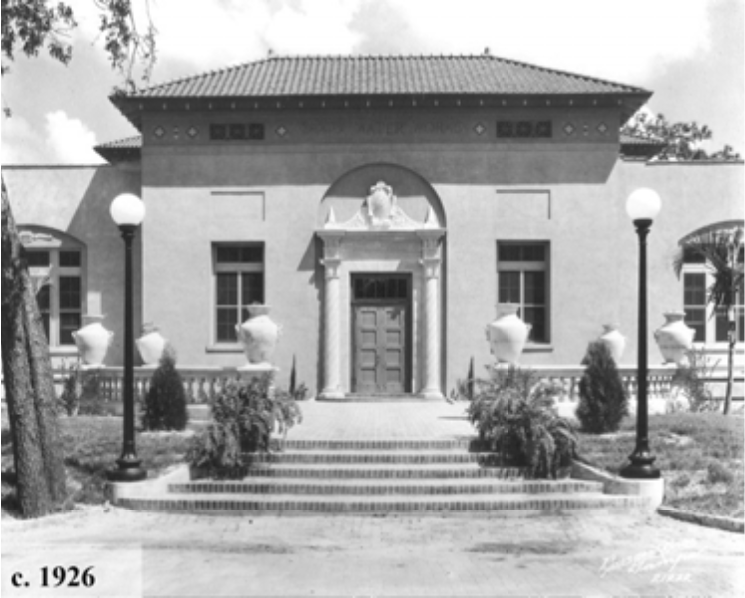
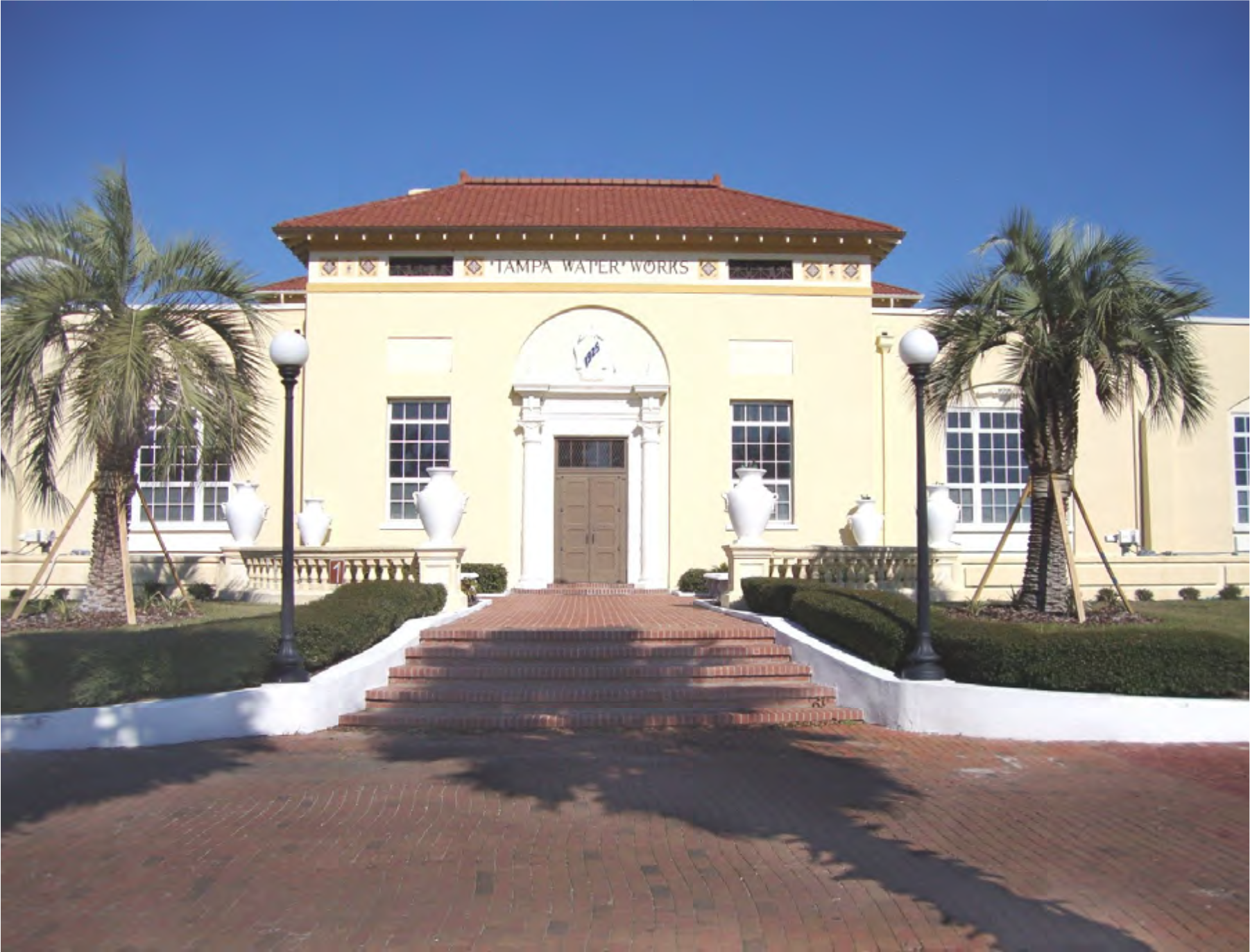
Construction of this facility replaced Pumping Station #3 and allowed the City to continue to utilize the water of Magbee Spring. It was built at the height of the Florida 1920s real estate Boom Times and reflects the Mediterranean Revival style associated with the period. The building is part of a 55-acre water treatment facility still in full operation. This facility houses Florida’s only municipally-owned drinking water laboratory.
Today, the plant produces approximately 90% of the roughly 65 million gallons of water that is consumed per day by Tampa residents.
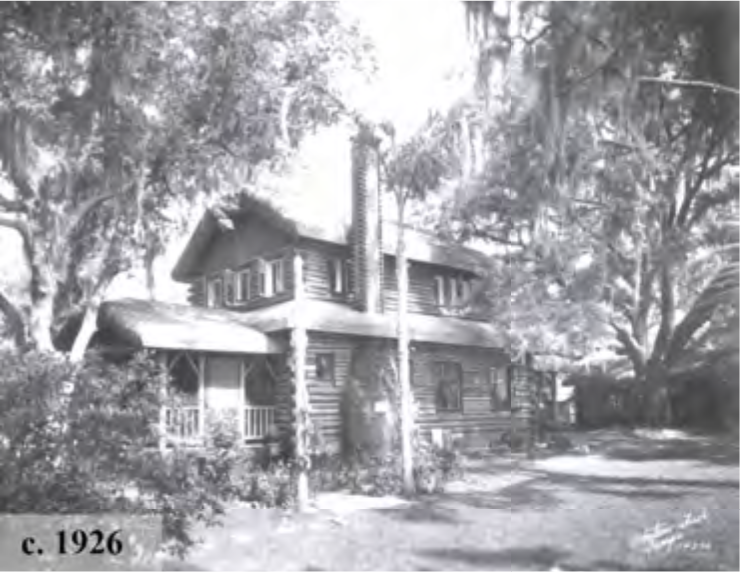
Designed for Dr. H.F. Tolle, a long-serving Tampa pastor, the parsonage has the architectural distinction of being Tampa’s only historic, wood-framed building clad in seasoned cypress logs. Adding rustic charm to the design, the roof was fabricated to mimic historic thatching. Constructed in an area of Tampa that was relatively remote in the 1920s, Dr. Tolle chose a design that referenced the rural nature of the site rather than architectural fashion of the time. The enormous grand live oak tree in the front yard, estimated at over 300 years of age and dubbed Tolle’s Tree, served as a directional beacon in the area for many years.
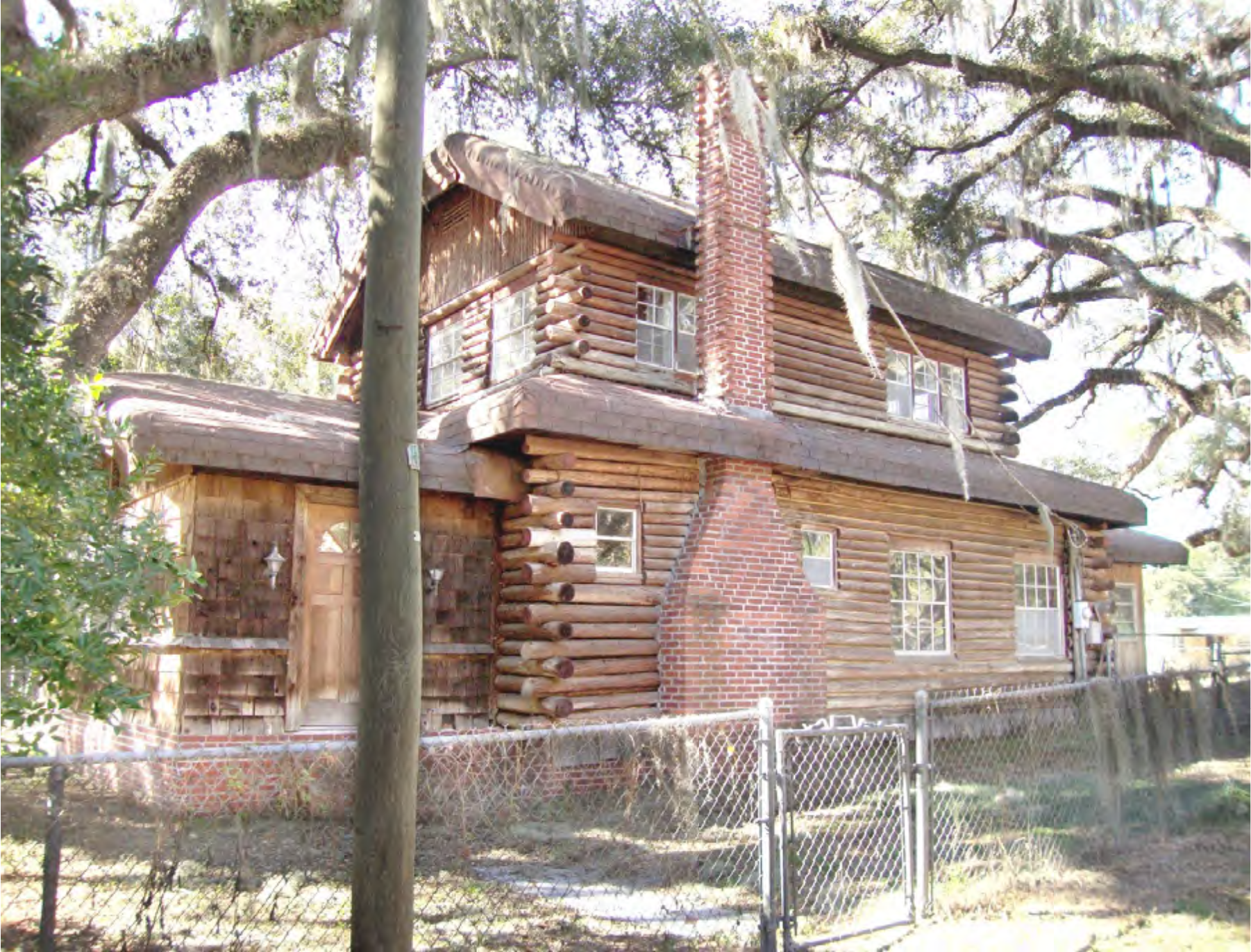
- Constructed: 1925
- Architectural Style: Log Cabin
- National Register Listing: N/A
- Local Historic Designation: 2007
- Builder: D.P. Vanforden
- Architectural Style: Classical Revival
- National Register Listing: 1983
- Local Historic Designation: 1988
- Architect: John W. Biggar
- Builder: G.A. Miller
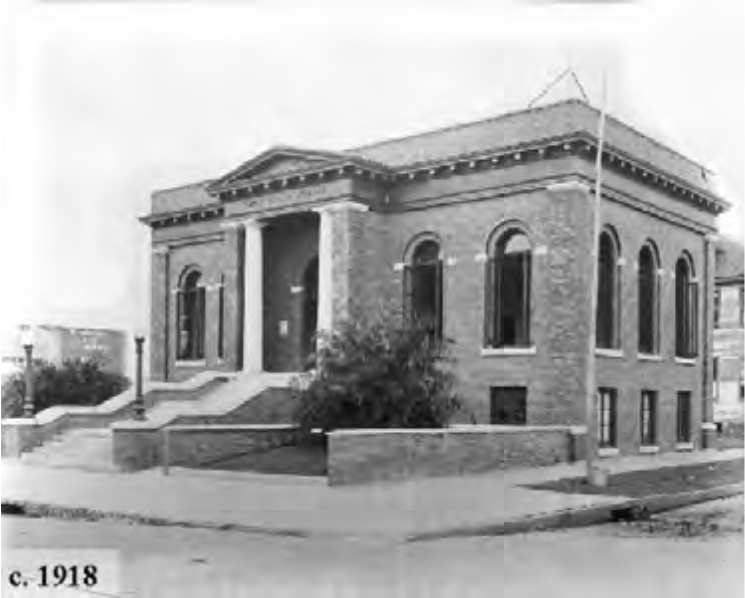
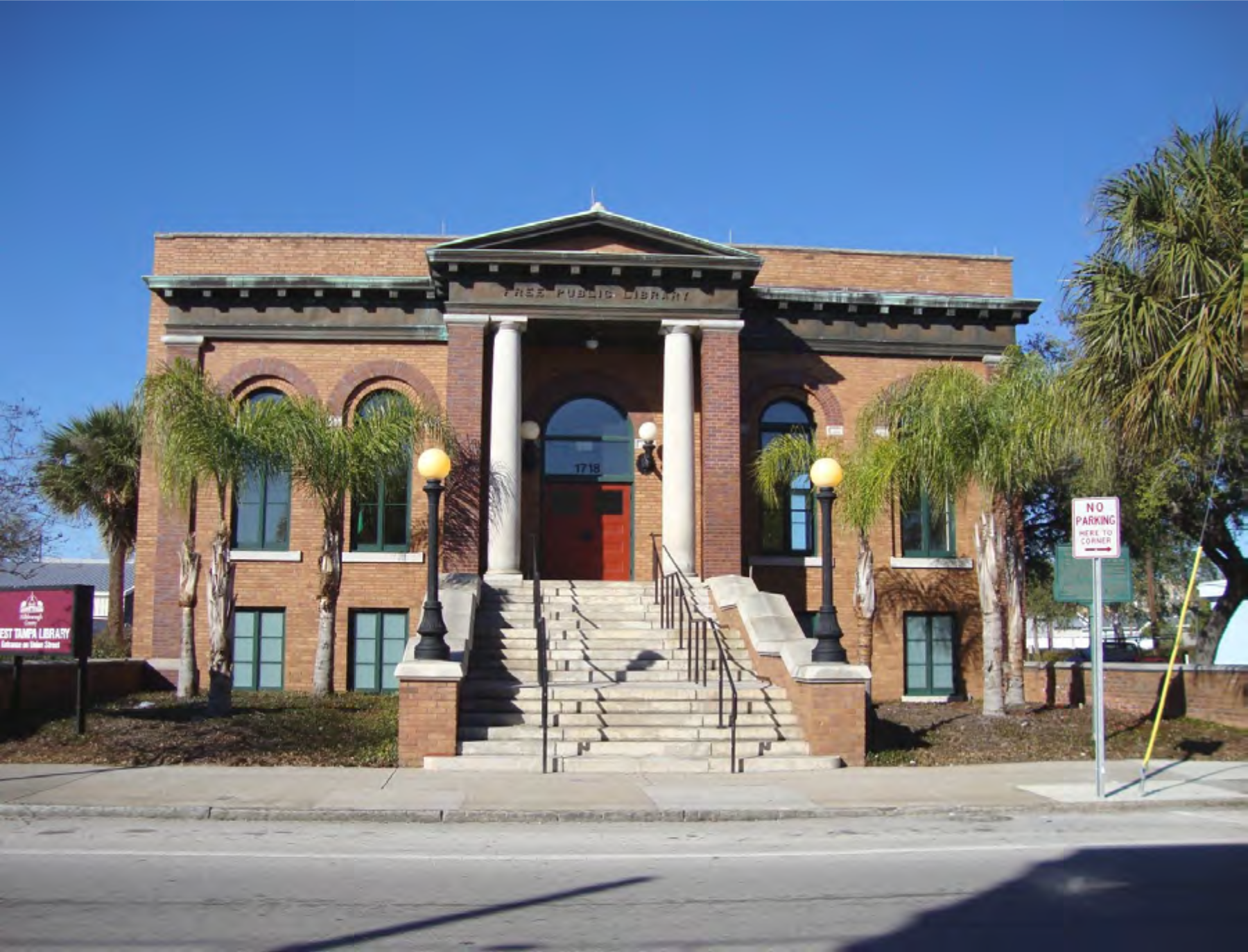
The West Tampa Public Library is the first free public library in Tampa, built by the City of West Tampa using a grant from the Andrew Carnegie Foundation. The library served as a link between the City of West Tampa, the cigar industry, the immigrant community, and the commitment of the Carnegie Foundation to facilitate literacy.
The West Tampa Public Library continues to support the immediate community by providing materials in Spanish, materials for the visually impaired, and sponsorship of educational programs that benefit the surrounding community.
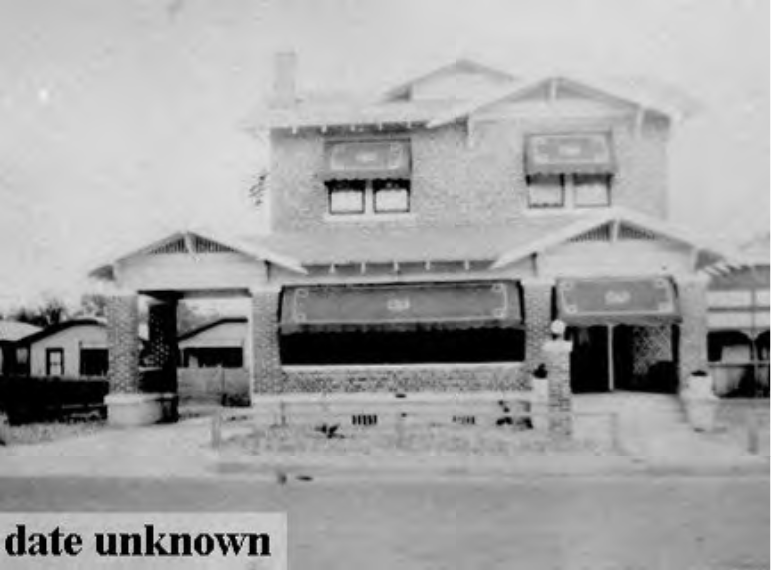
Constructed: 1925
Architectural Style: Craftsman
National Register Listing: N/A Local Historic Designation: 2004
Architect: Unknown
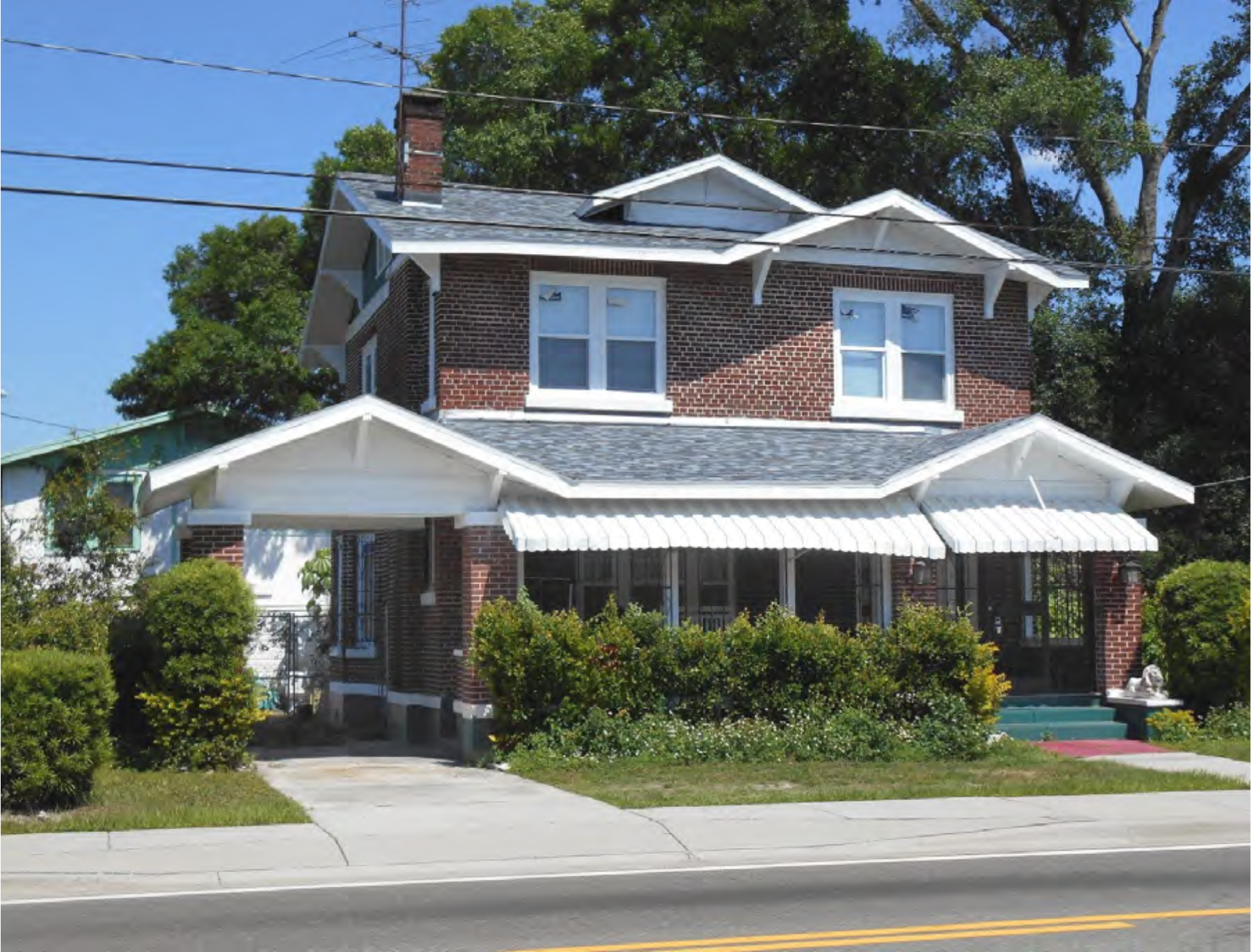
This two-story brick Craftsman style structure was built by Dr. Jacob White, Sr., the first Black general practitioner of medicine in Tampa. The house later served as the residence of his son, Dr. Jacob White, Jr., who was the first and only Black doctor in Florida in the field of tuberculosis studies during his years of practice.
The elegance of design and richness of materials in this Craftsman style house is an architectural testament to the success of the White family in their commitment to excellence and dedication to the community.
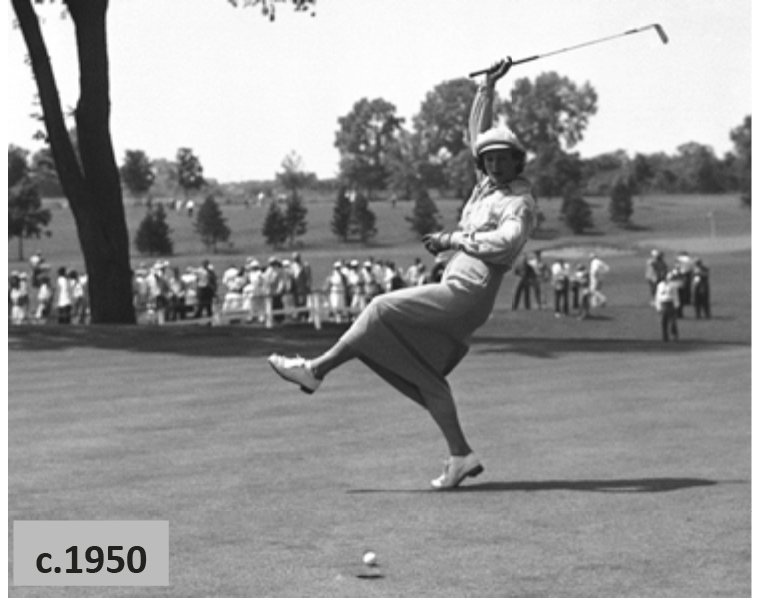
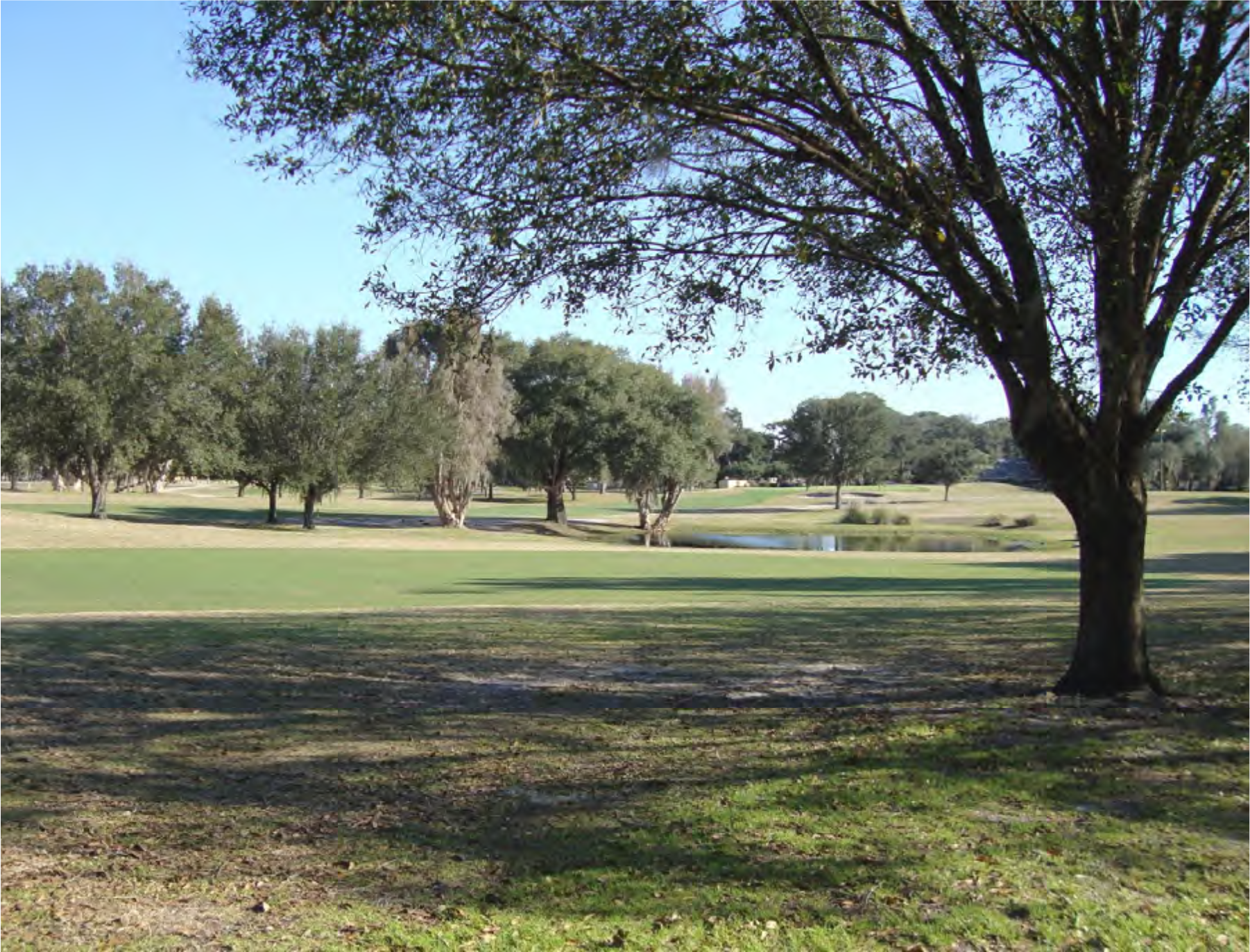
This golf course was part of the original development by B.L. Hamner that included an English Tudor-style clubhouse and cottage-style homes. While the development was never fully realized, the course regained significance when it was purchased by George and Babe (Didrikson) Zaharias in 1949. Together, they operated and lived on site until 1955. While Babe Zaharias was voted “Outstanding Woman Athlete of the Year” for six consecutive years (1949-1954) and “Female Athlete of the Century,” she was best known for her success in golf and was instrumental in the founding of the Ladies Professional Golf Association.
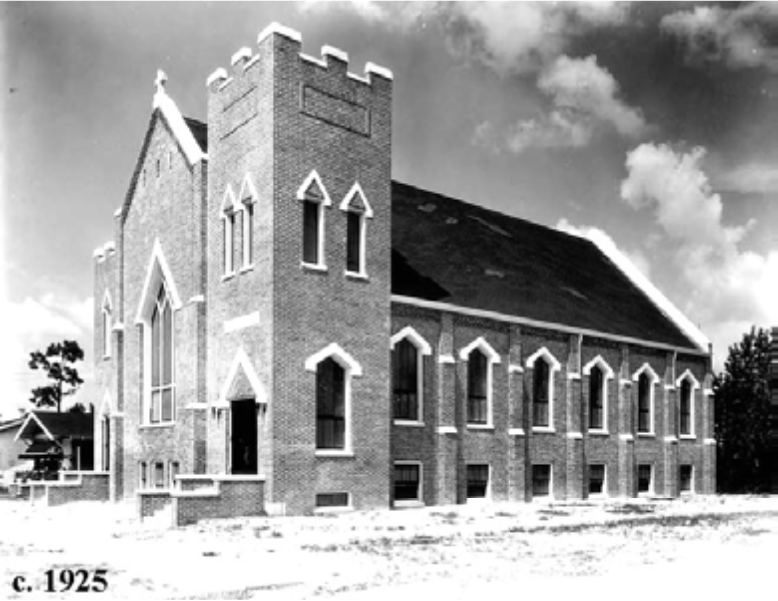
- Constructed: 1925
- Architectural Style: Gothic Revival
- National Register Listing: N/A
- Local Historic Designation: 2003
- Architect: Henry Worthman
- Builder: August Mugge
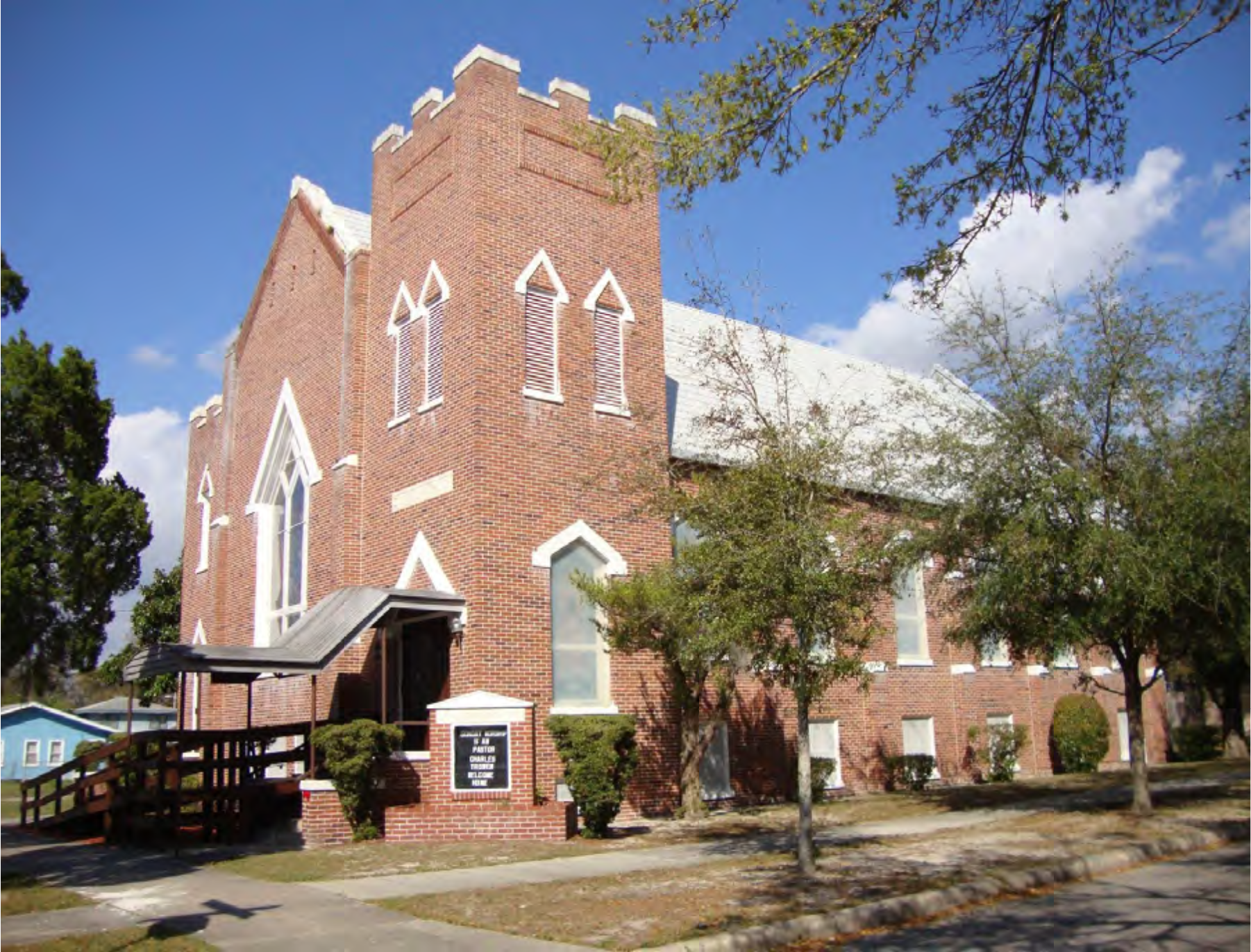
In 1888, Zion Evangelical Lutheran Church became the "Mother Congregation" of the Gulf Coast and Central Ridge Region for the German Evangelical Lutheran Synod of Missouri. The church was incorporated in 1893, and it constructed its first building in 1894. By 1924, the congregation had outgrown the original church building, compelling the construction of a new facility. The new sanctuary was of a traditional Gothic Revival style with arched art glass windows and a square bell tower. The Zion Church continues to play an active role in the lives of the residents of the community.
RESEARCH REFERENCE
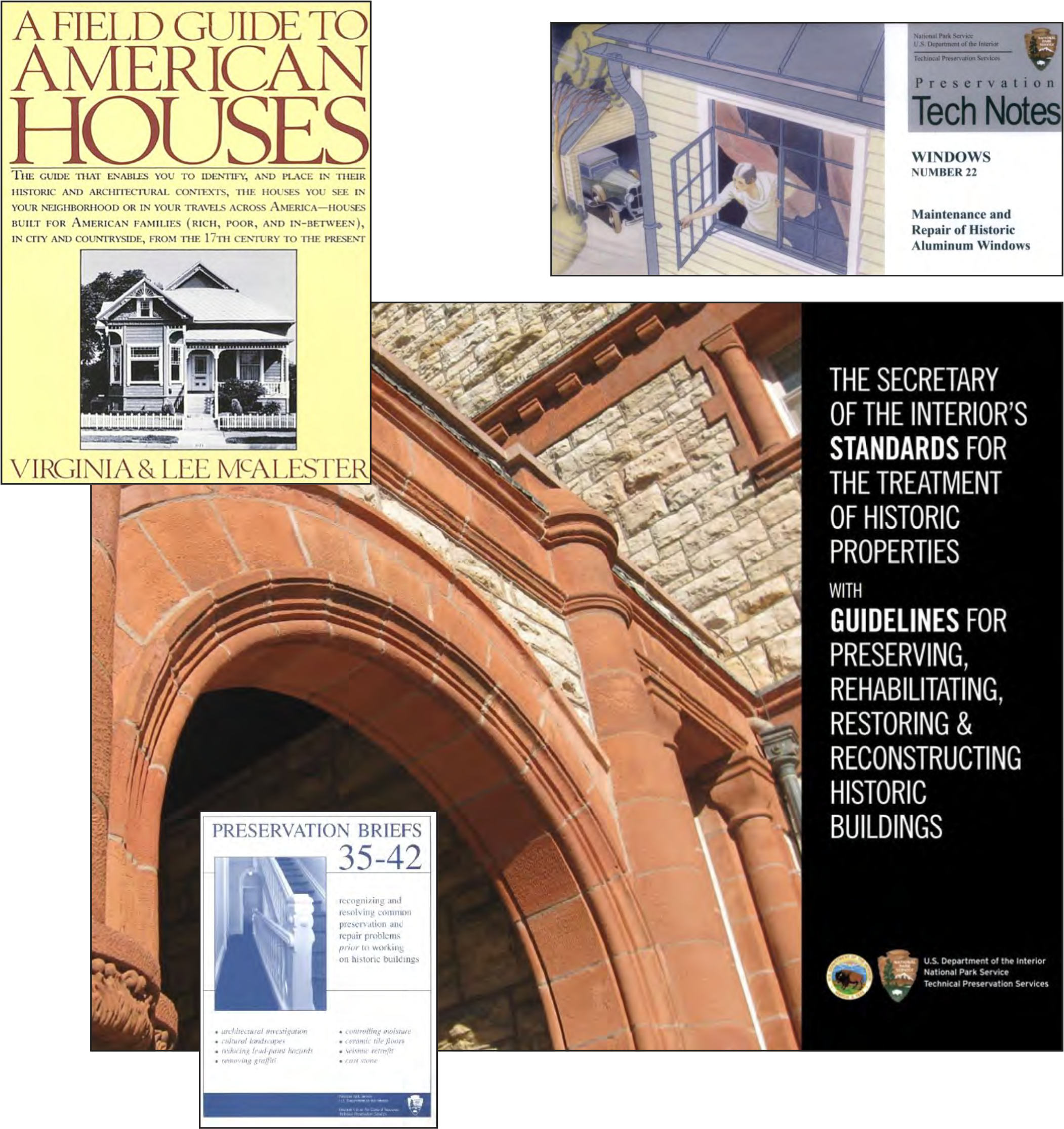
A Field Guide to American Houses (McAlester), and National Park Service publications such as The Secretary of the Interior’s Standards and Preservation Briefs are a sampling of resource references available for determining architectural style and appropriate rehabilitation and restoration techniques for historic structures throughout the nation, including those in Tampa.
December 25,1913, The Weekly Tribune, Tampa, Florida
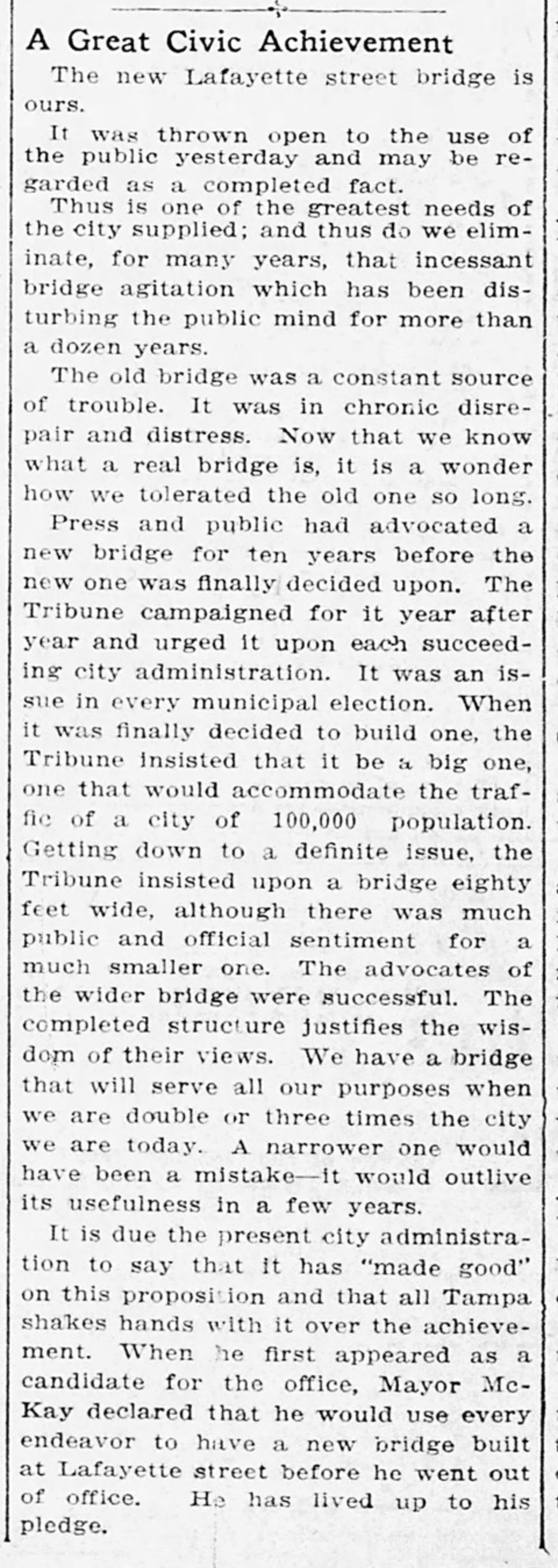
October 27,1913, The Tampa Tribune, Tampa, Florida
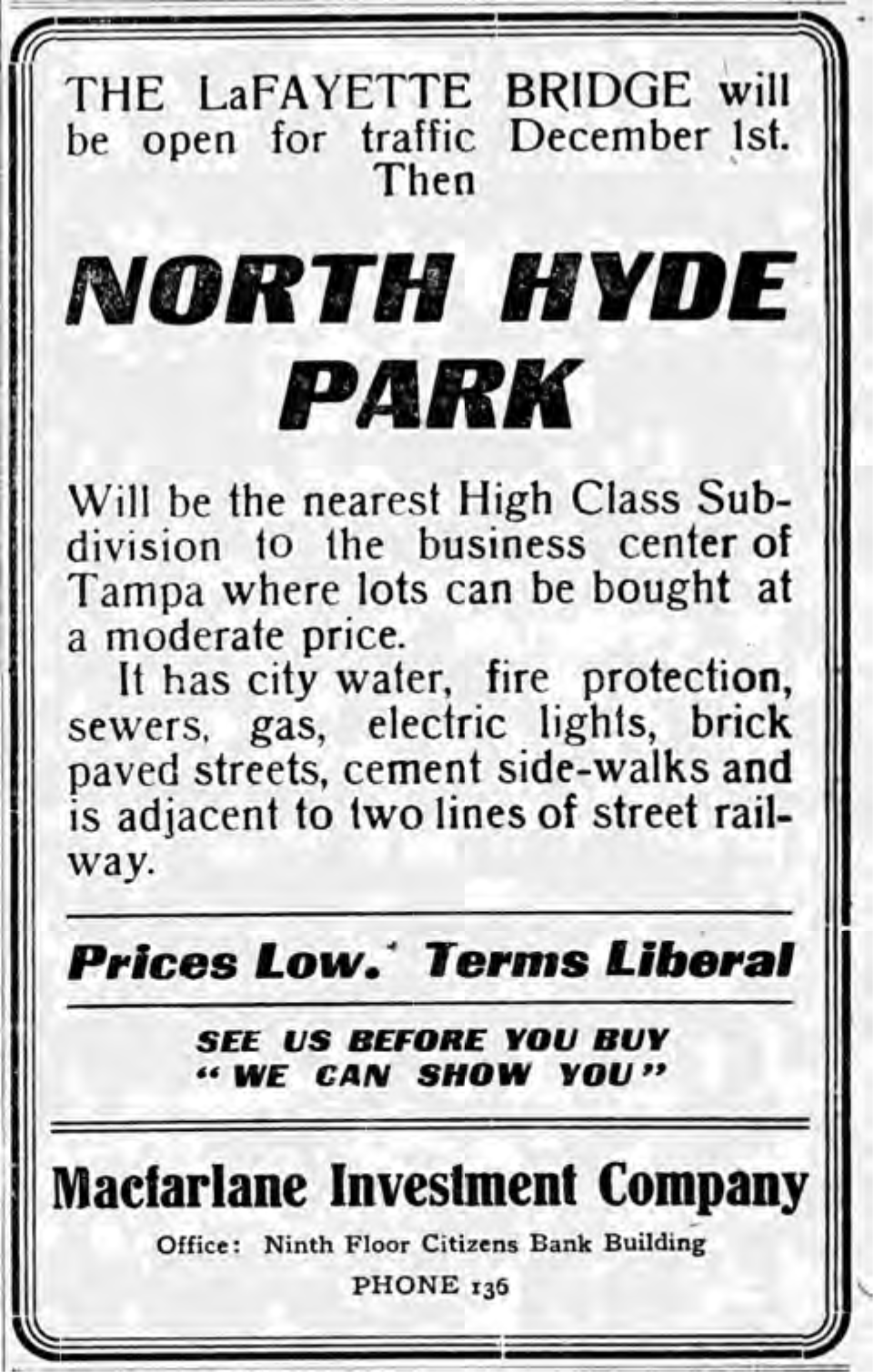
Historic newspaper articles can supply important dates and other facts about significant people, places, and events. They provide insight into the growth and development of the City of Tampa, as well as the social and political atmospheres of the times. The Tampa Tribune was published for over a hundred years, from 1895 to 2016.
MULTIPLE PROPERTY DESIGNATIONS
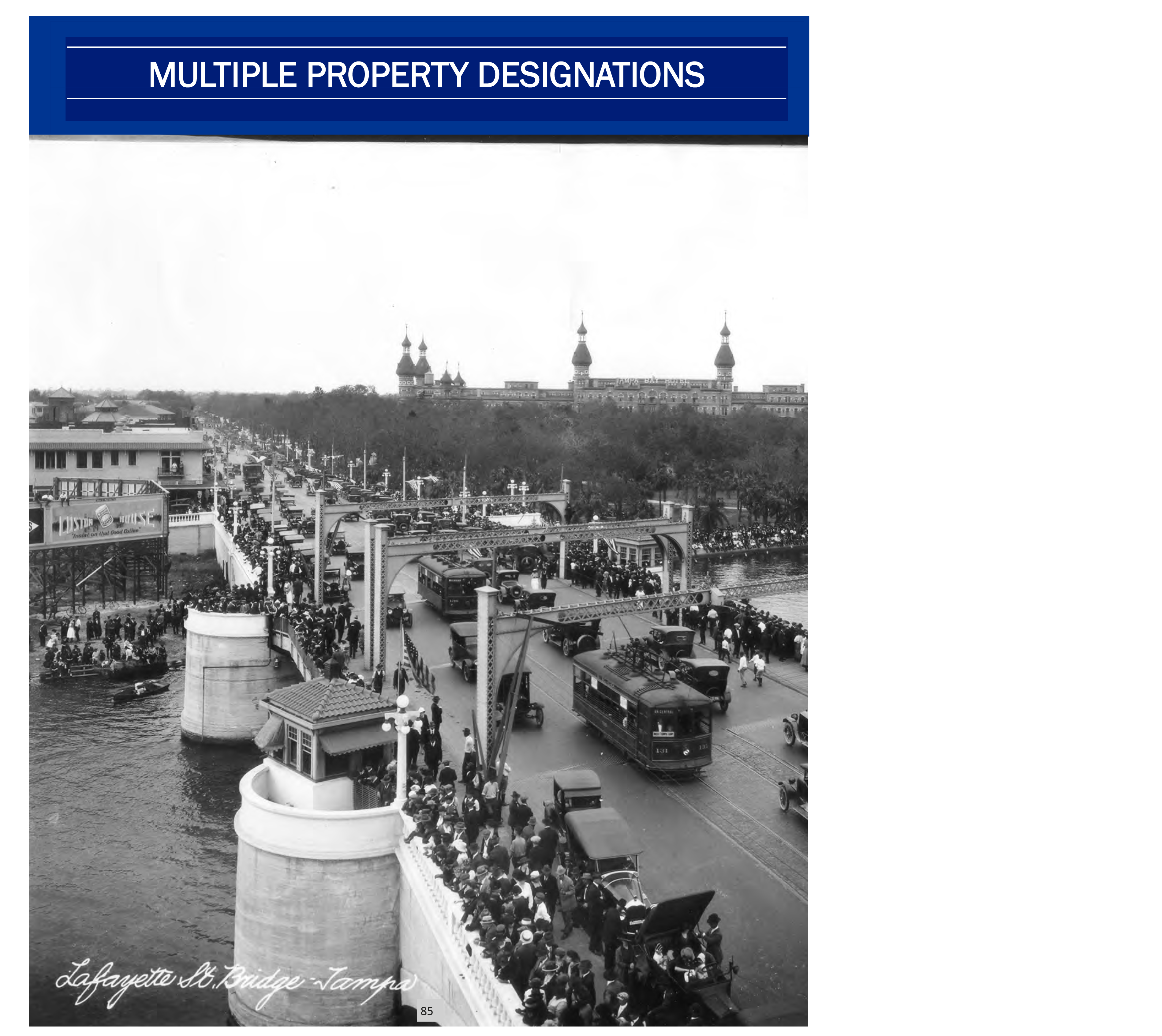
Period of Significance: 1923-1929
Local Historic Designation: 2010-2014
Total of Ten (10) Buildings
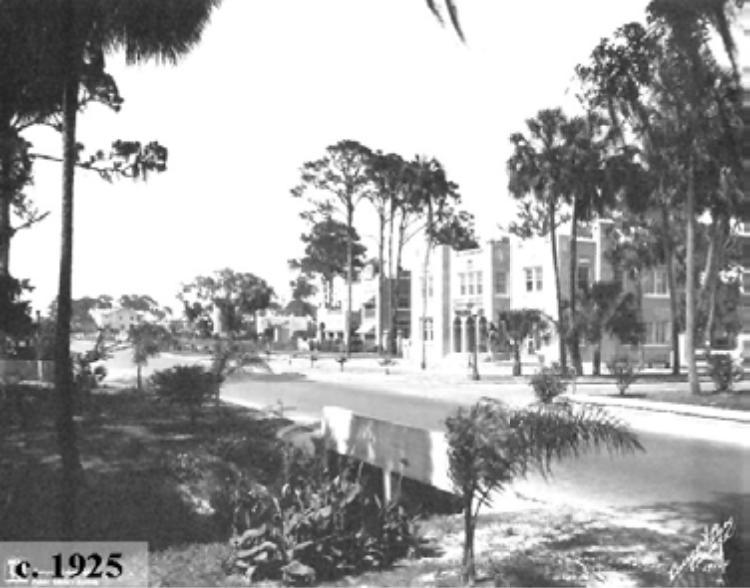
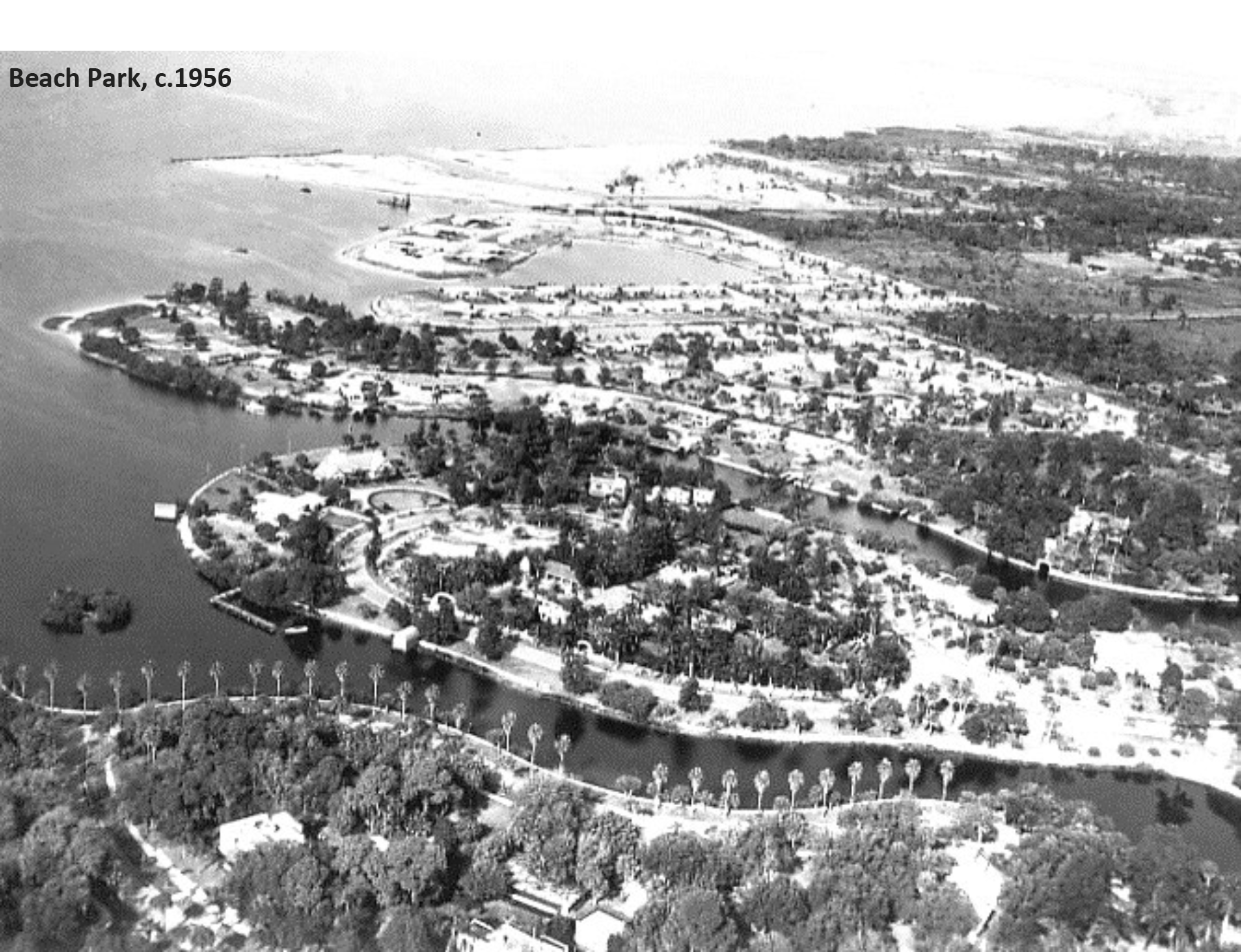
In 1923, developer T. Roy Young and his partners William Trice and Milton and Giddings Mabry acquired a major portion of William Culbreath’s property with the intent to subdivide the area under the name of “Beach Park on the Bay.” The exotic Mediterranean Revival architectural style was chosen by the developers in an effort to exemplify the lifestyle of residents. Entrance gateways were incorporated into the Beach Park development as stylistic beacons associated with the upscale community that would denote a “sense of place.” One of these gateways, located at Lois and Swann Avenues, still stands to serve its original purpose.
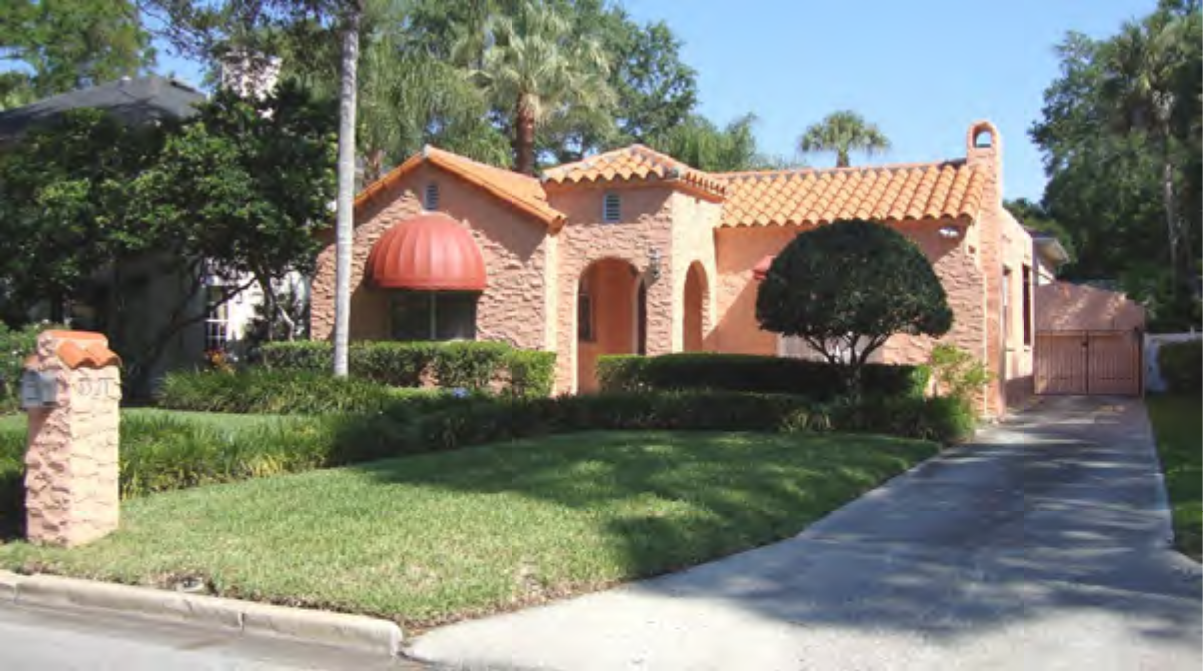
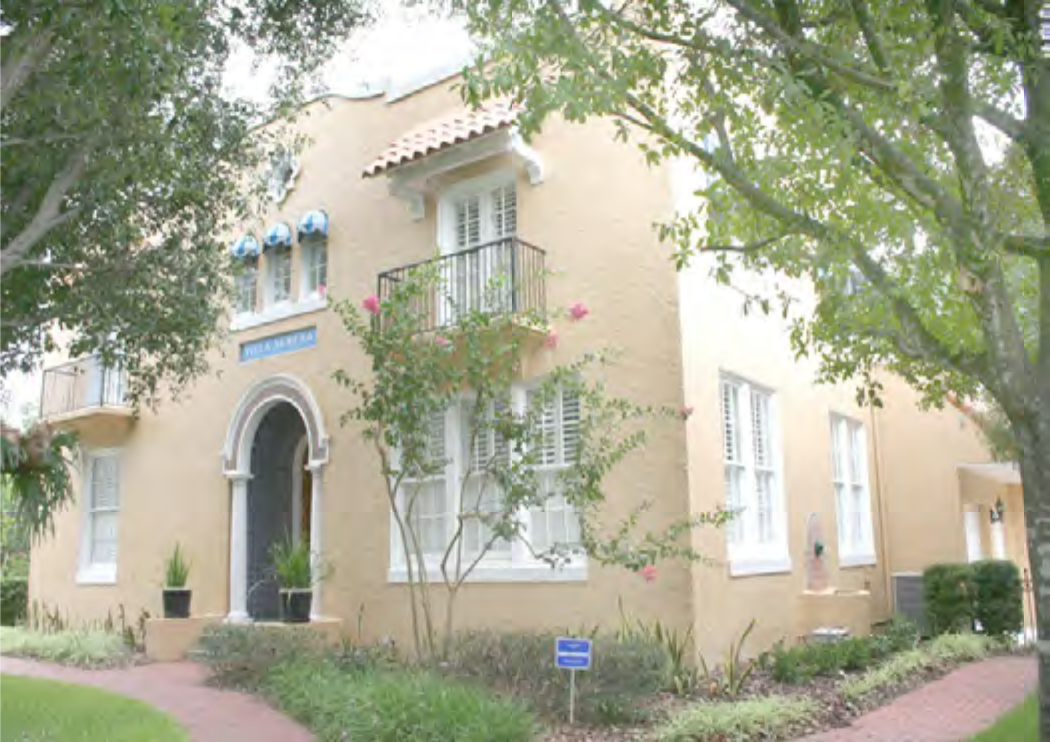
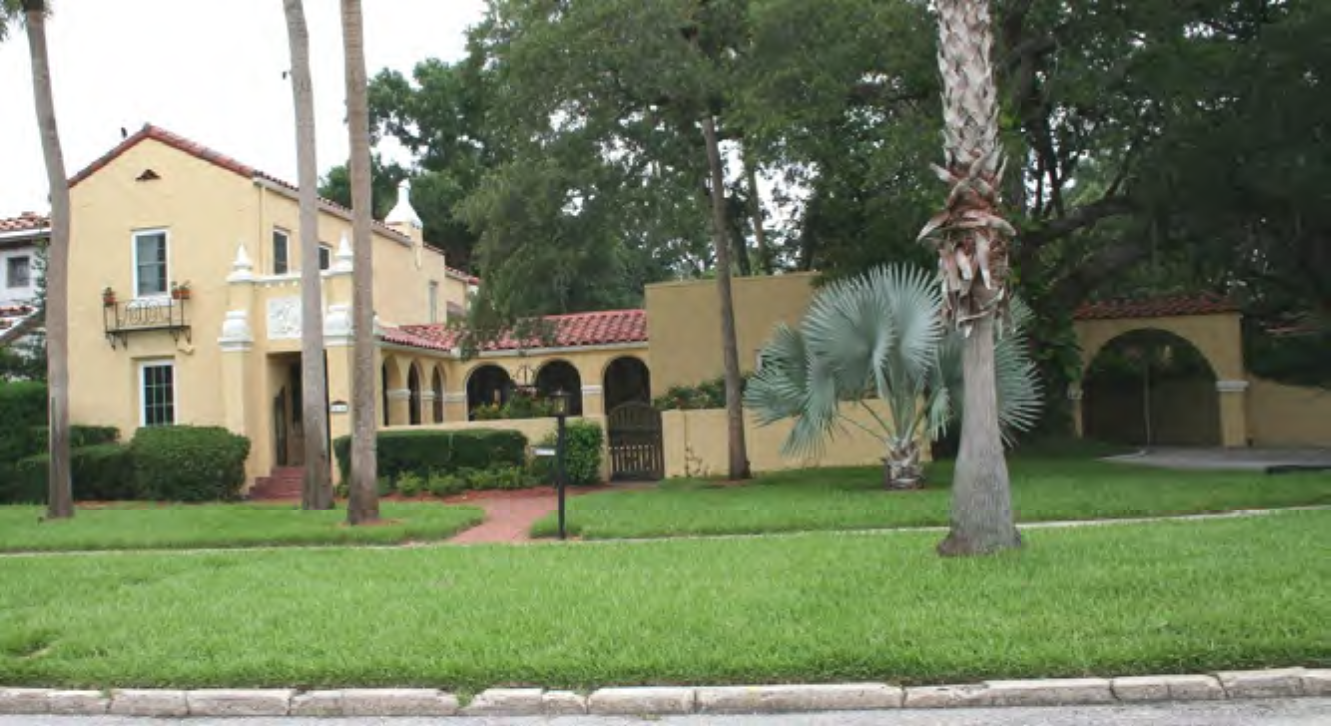
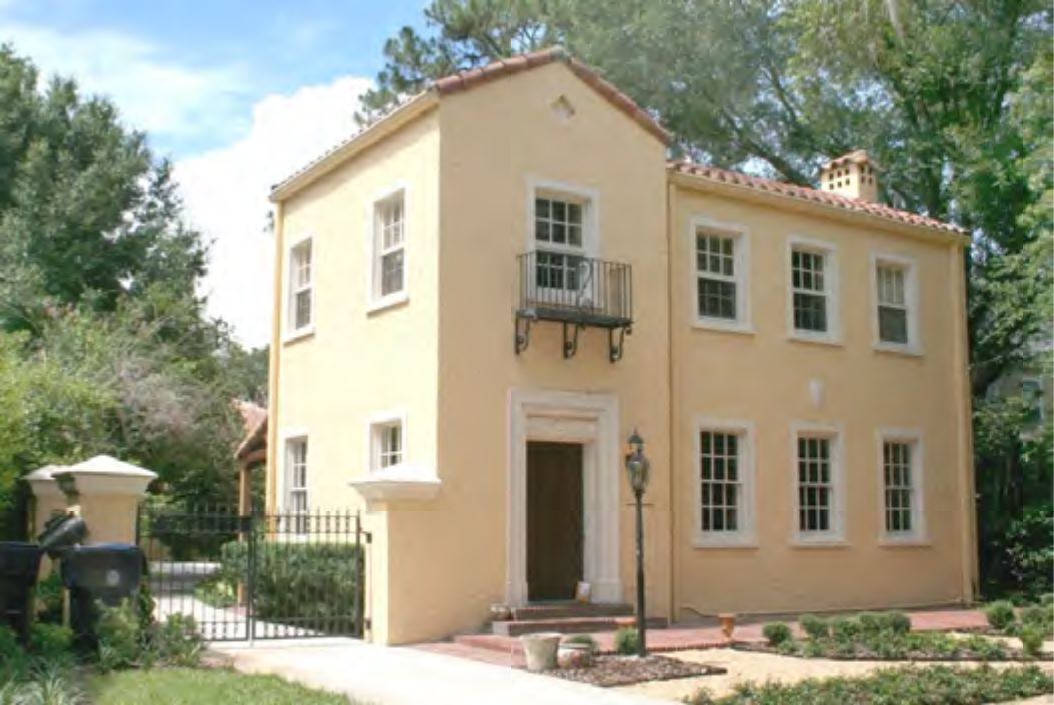
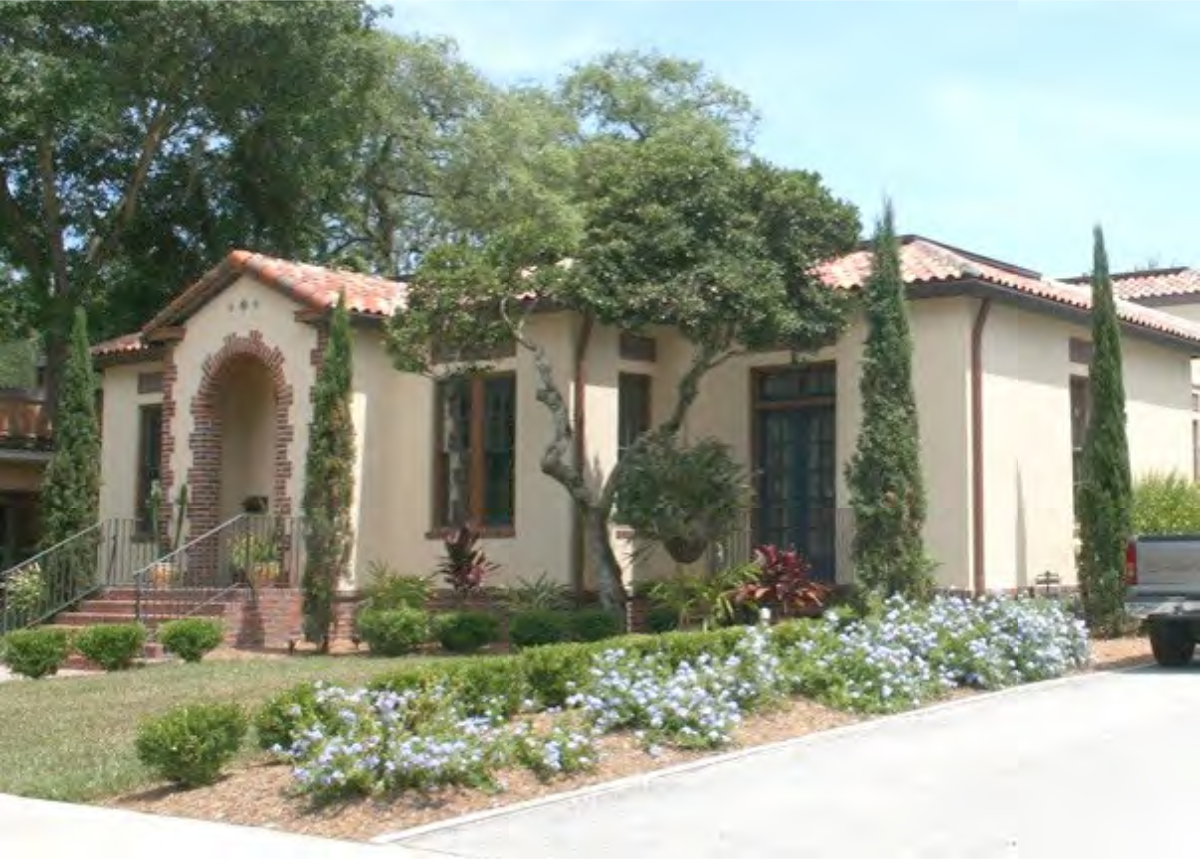
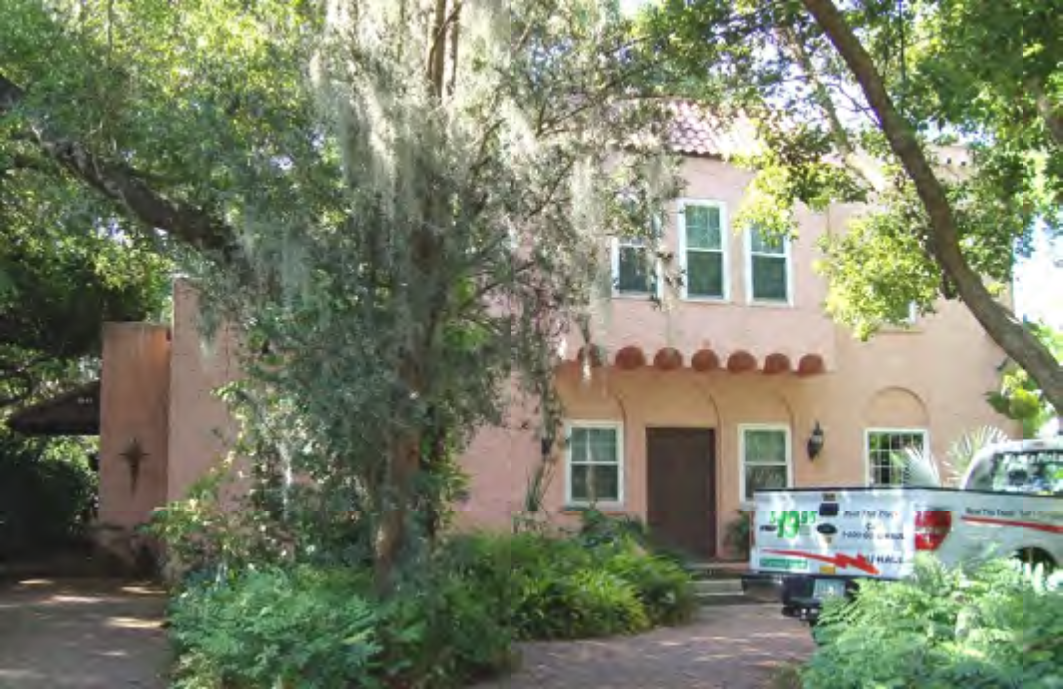
4506 W. Sylvan Ramble Street, constructed 1925
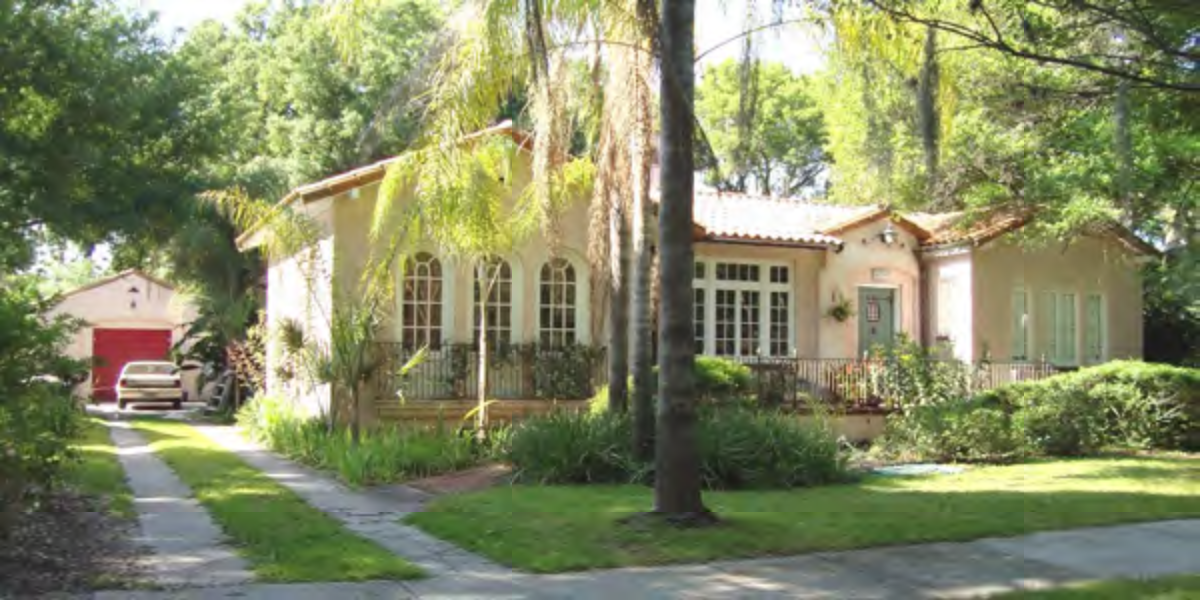
4508 W. Rosemere Road, constructed 1924
407 S. Royal Palm Way, constructed 1925
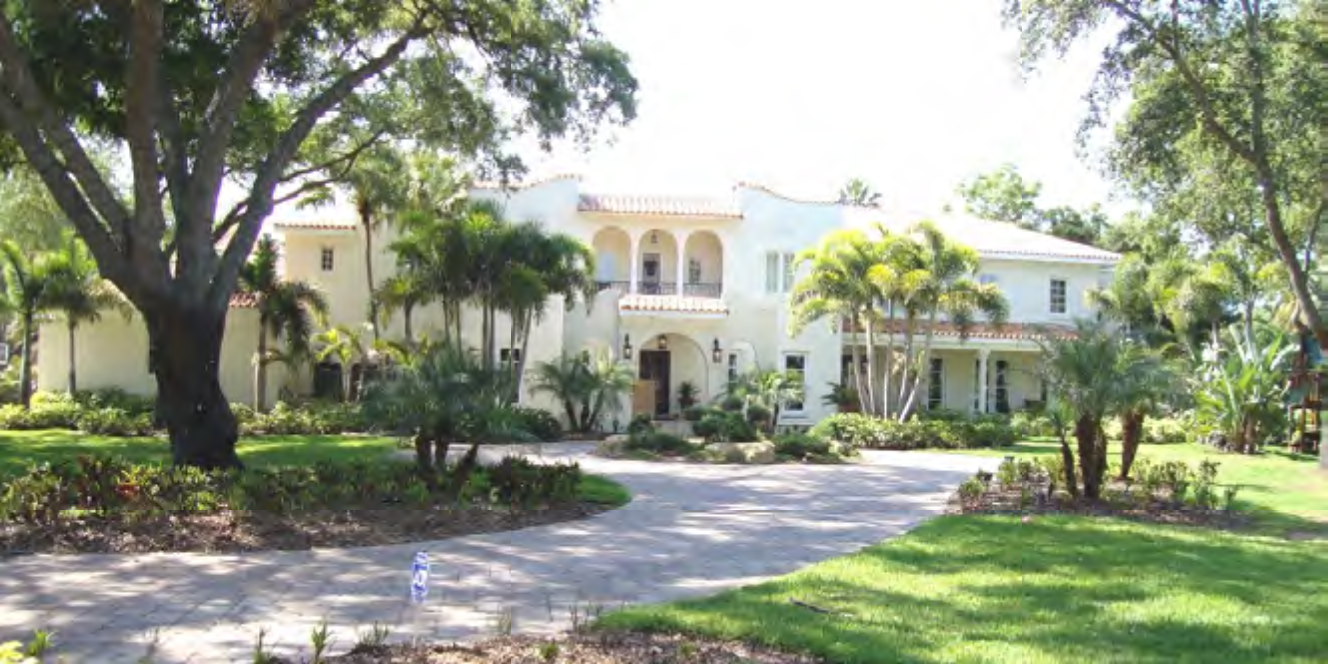
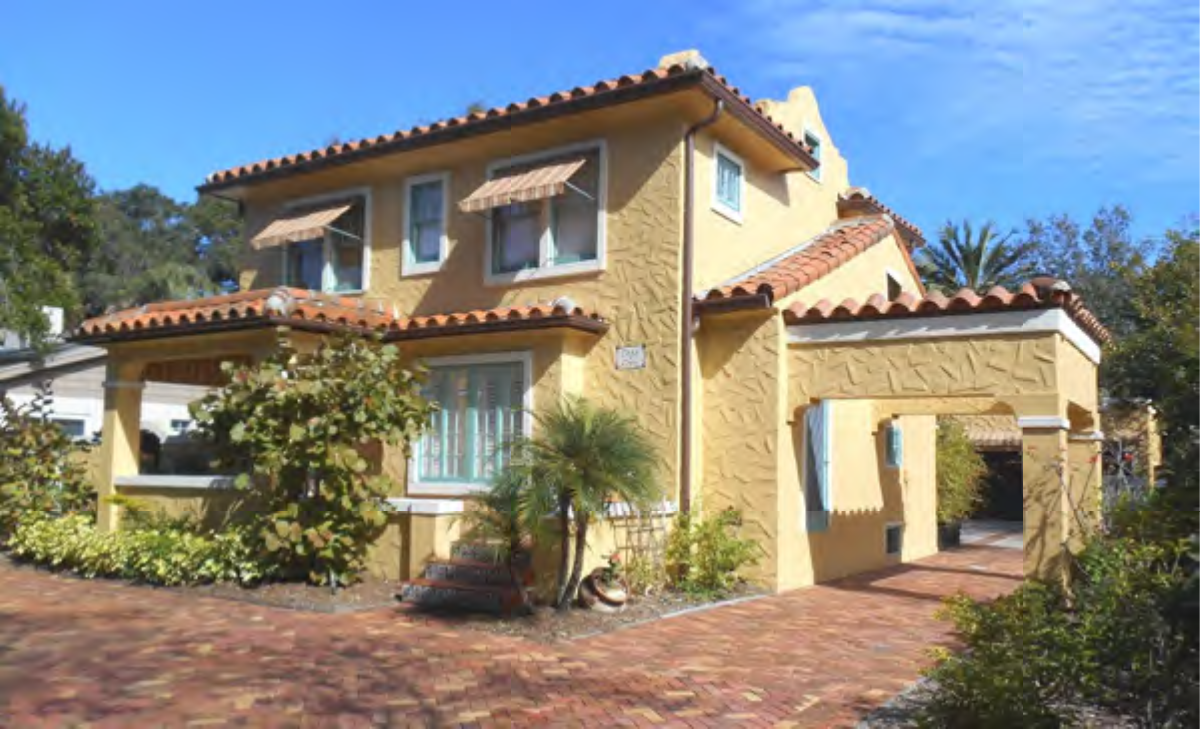
414 S. West Shore Boulevard., constructed 1927
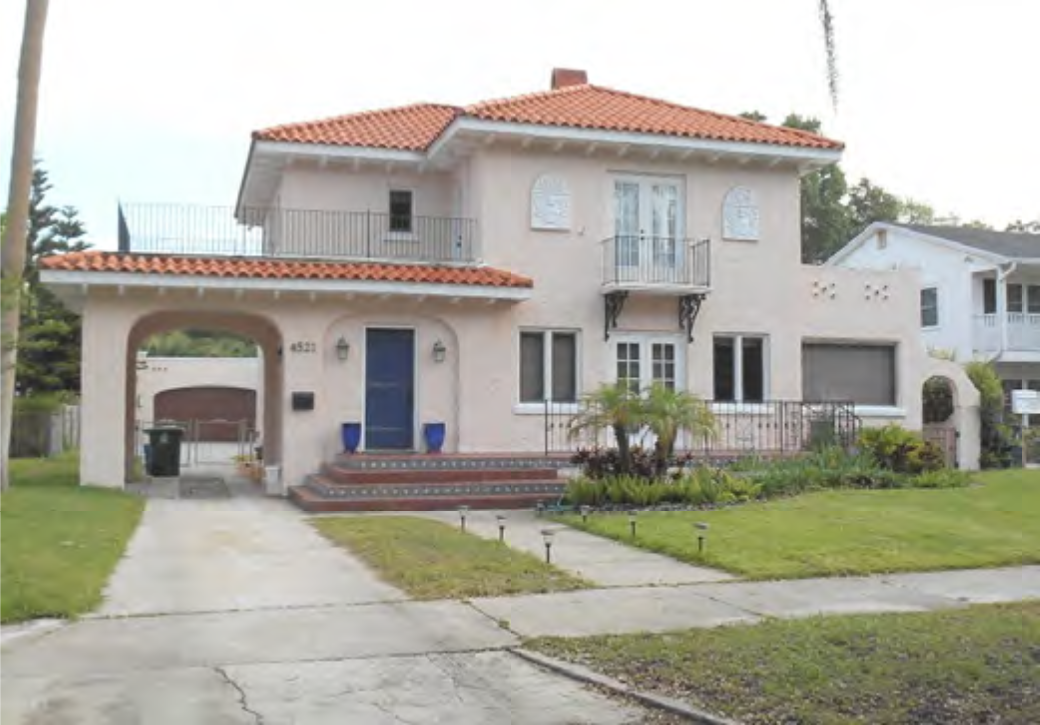
4521 W. Dale Avenue, constructed 1925
RESEARCH REFERENCE
In the early 1900s, mail order companies sold house plans and kits. Customers who bought plans could use local sources to fill the bill of materials. If a customer ordered an entire kit, the pre-cut and labeled materials were shipped from the factory by train. Houses were quickly constructed from these kits, which could include lumber, flooring, plaster, siding, doors, windows, hardware, paint, mill work, and built-in shelving, cabinets, and ironing boards. Plumbing and electrical fixtures were offered at an additional cost. “Custom” houses had different façade designs, reversed floor plans, upgraded materials, cellars and porte cocheres. Garage and summer cottage plans and kits were also available.
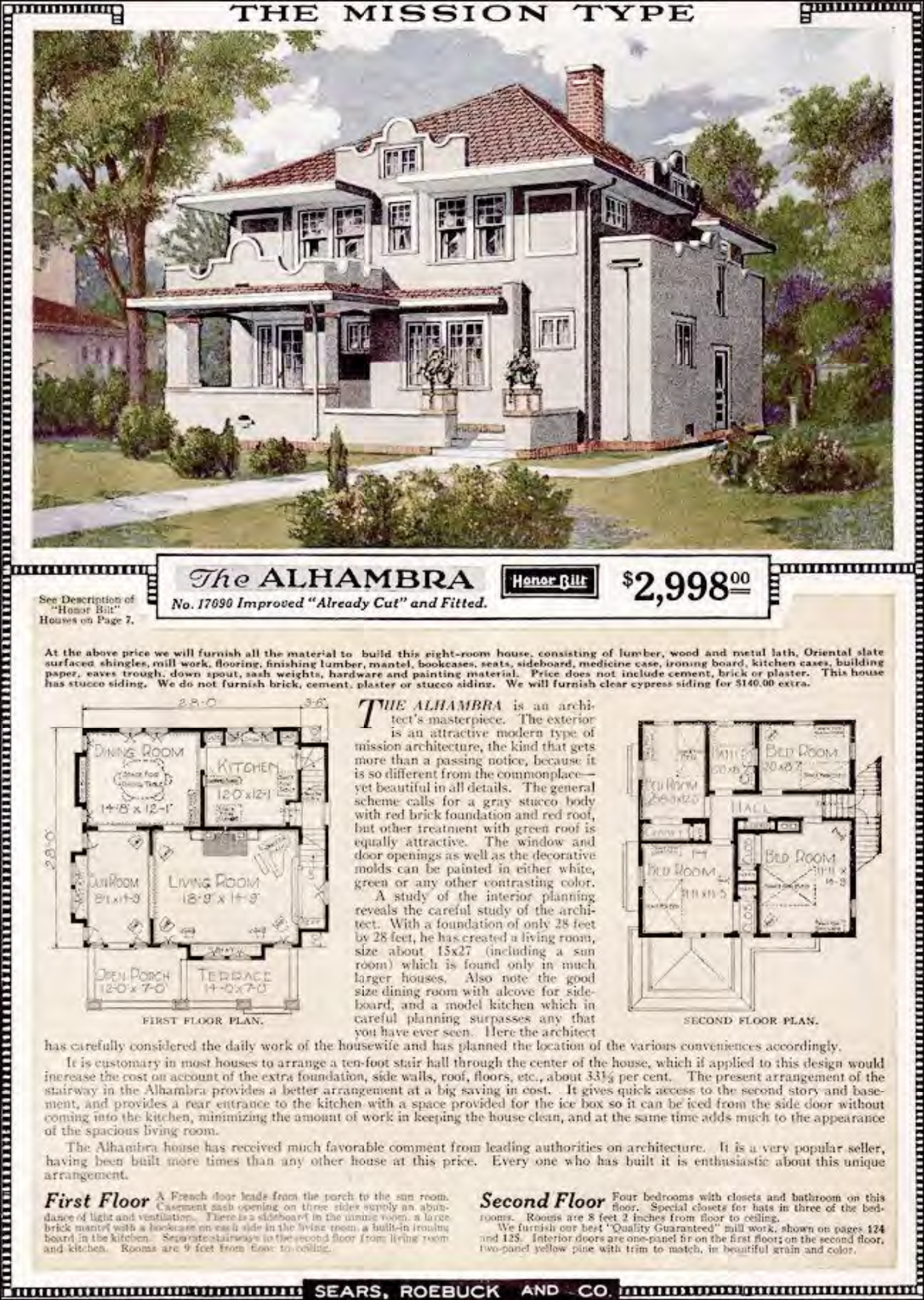
Period of Significance: 1913-1939
National Register Listing: 2017-2018
Local Historic Designation: 2006
Total of Six (6) Bridges
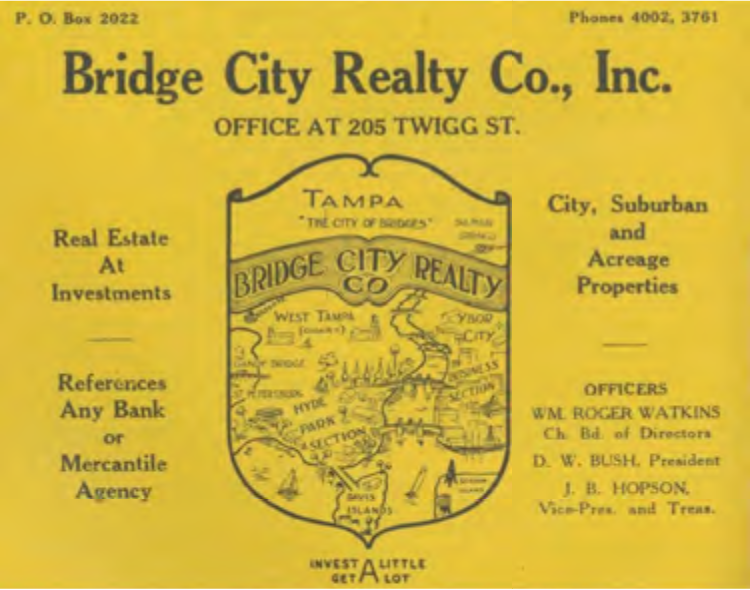
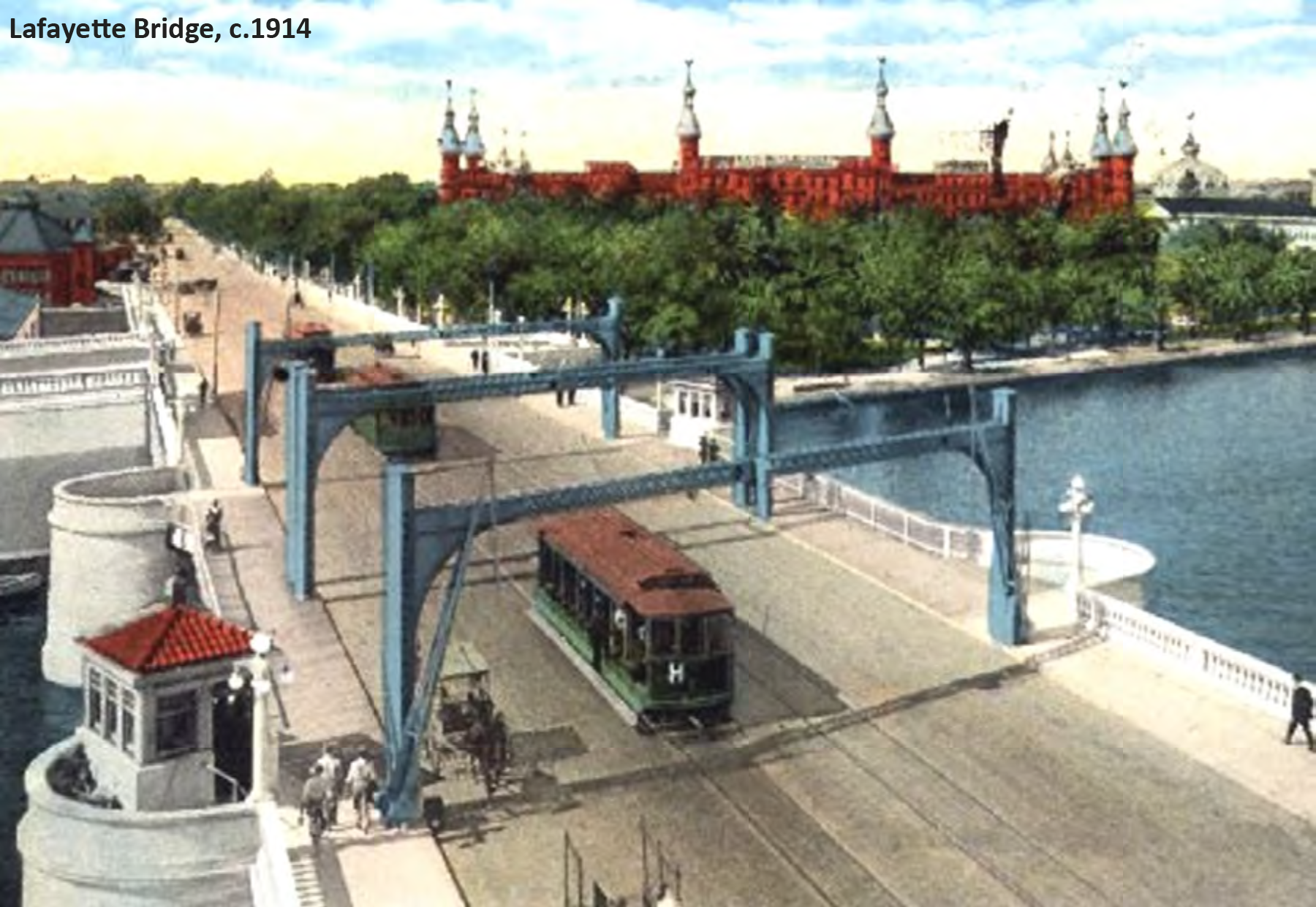
By the 1880s, Hyde Park and West Tampa needed greater access to Tampa’s business district across the river. With each new bridge, the connection between the two sides of the river strengthened. The 1913 Kennedy Boulevard Bridge, the third bridge built at this crossing, is the oldest bascule span in Florida. The Platt and Cass Street Bridges both exhibit the Mediterranean Revival style popular in Florida’s Boom Period. An unusual overhead counterweight opens the single-leaf bascule Fortune Street Bridge. The Henderson Bridge is one of only two operable vertical lift bridges in Florida. The Columbus Drive Bridge is one three bob-tailed swing bridges left in the state.
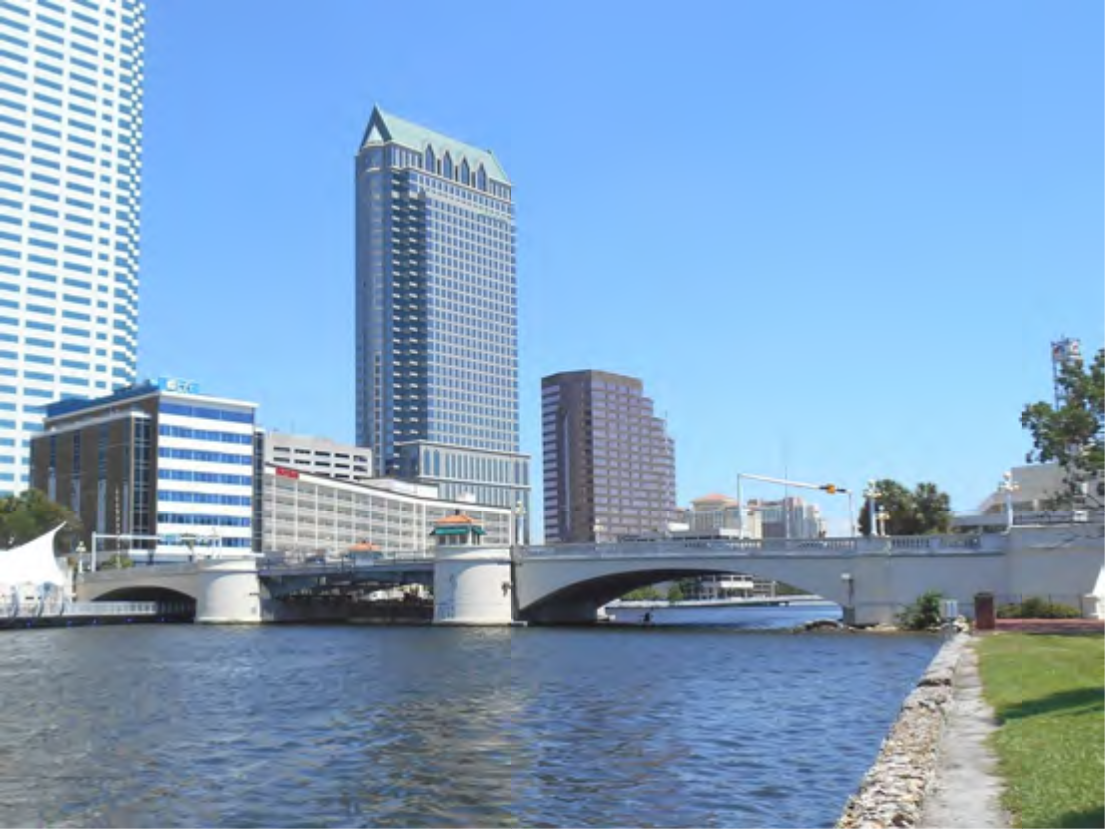
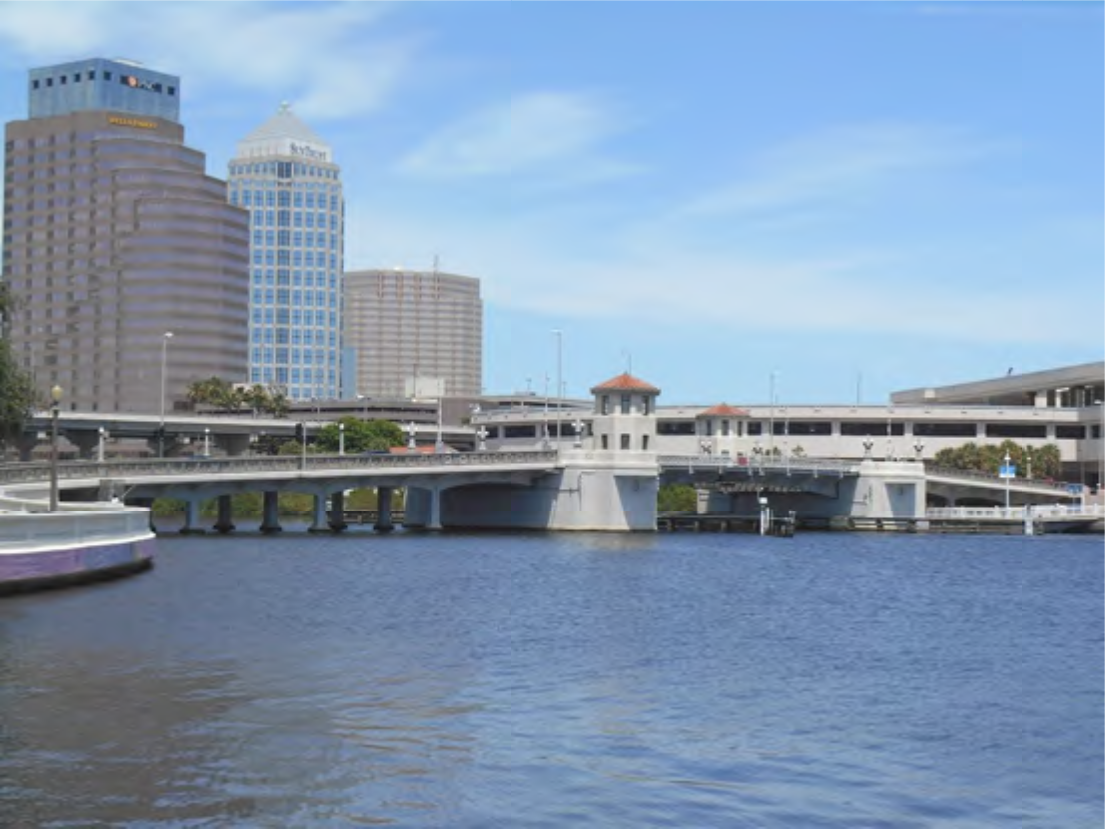
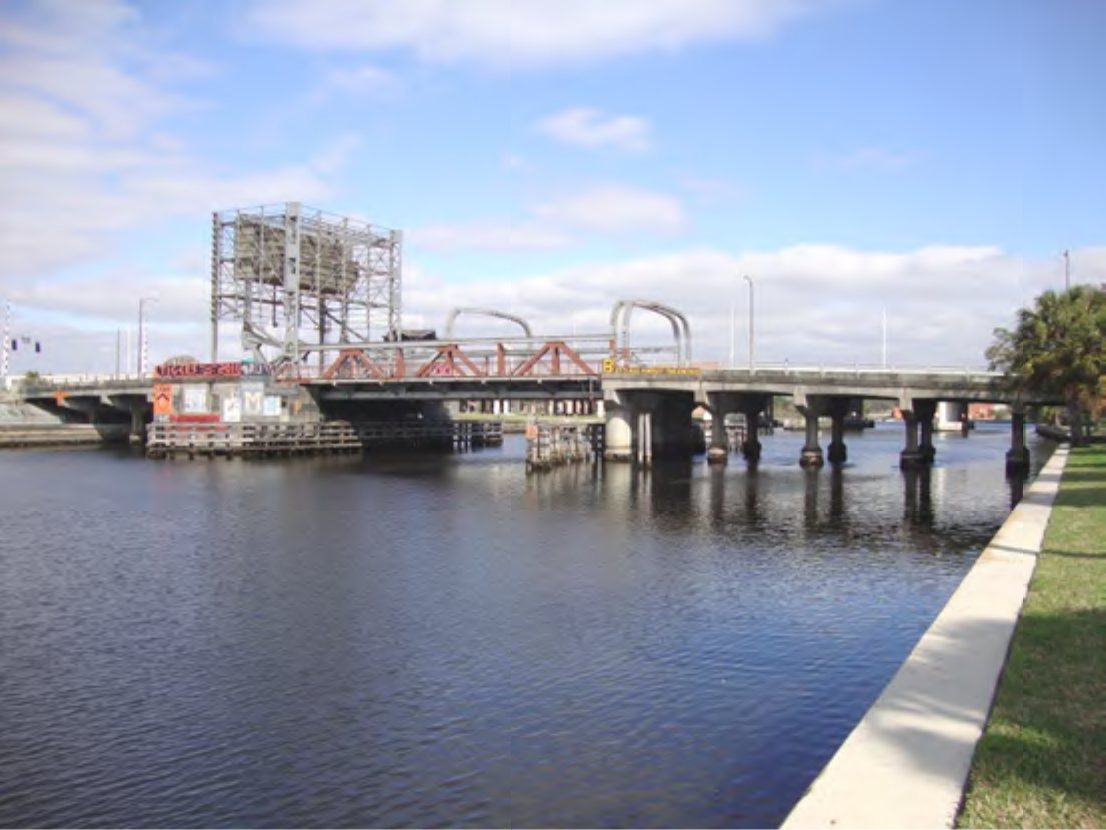
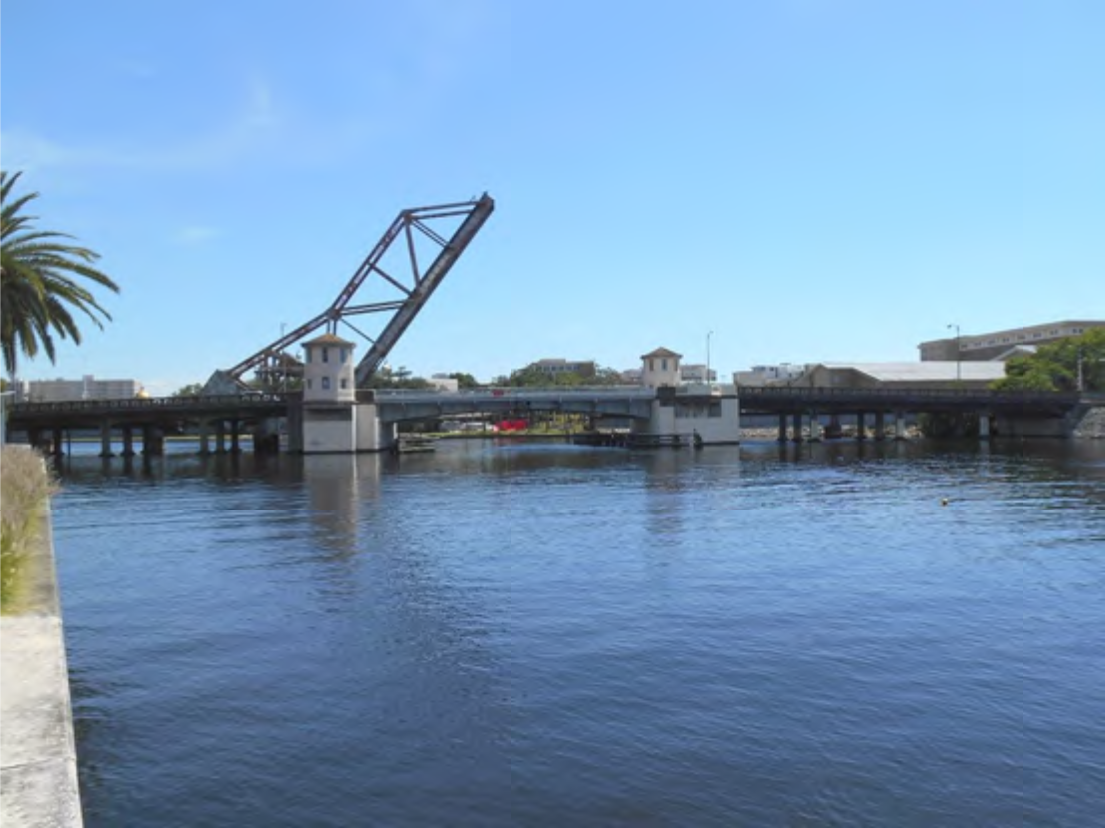
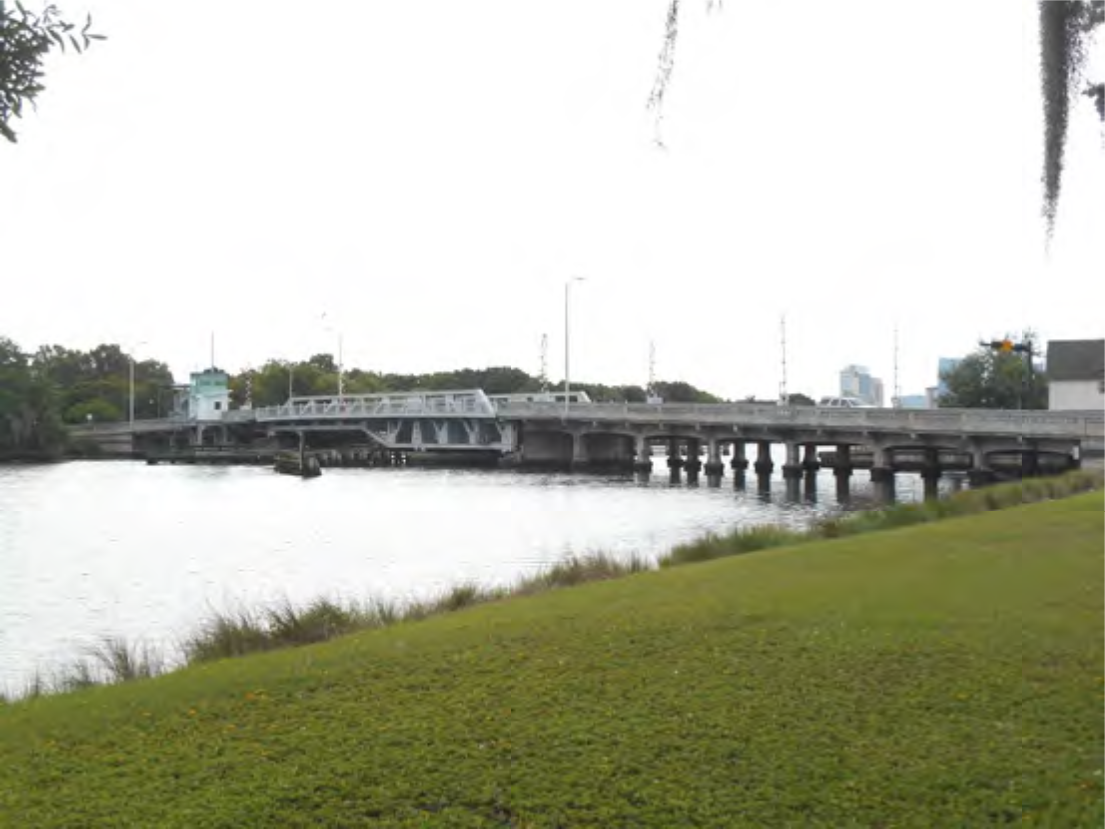
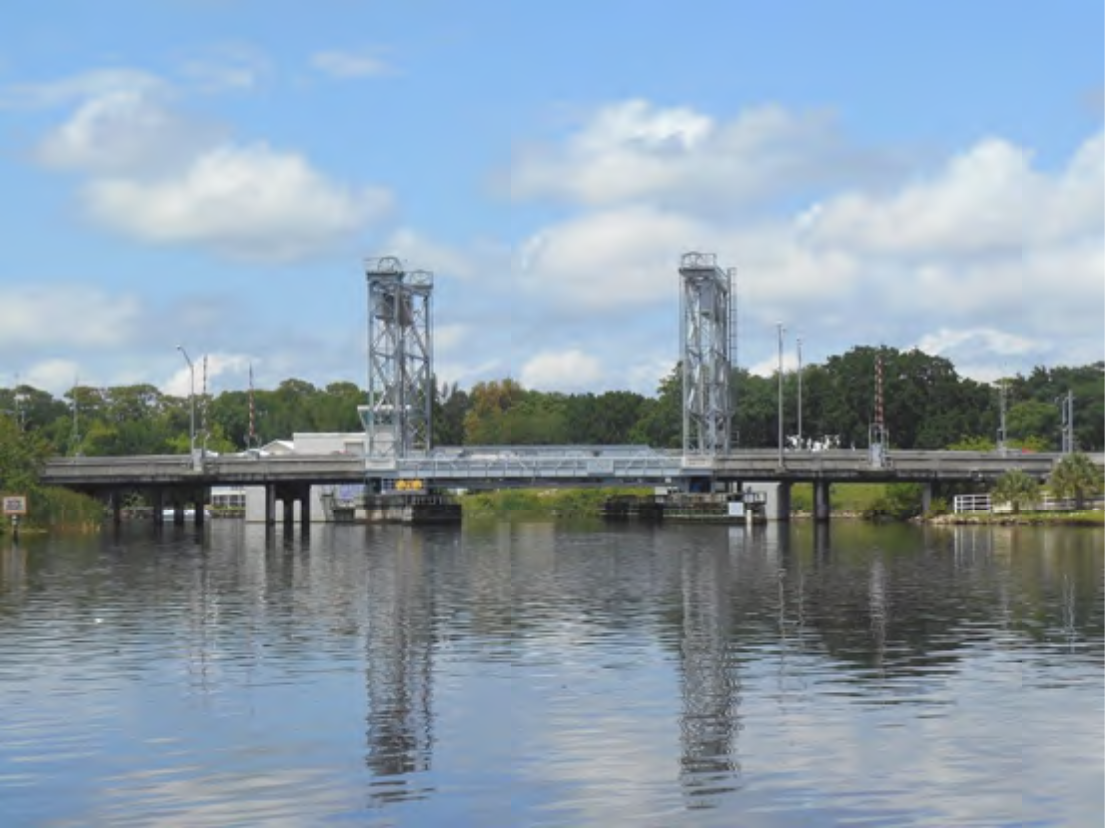
Historic Central Avenue Area / African-American Heritage Sites
- Period of Significance: 1900-1948
- Local Historic Designation: 2004, 2023
- Total of Seven (7) Buildings
The Central Avenue business district was the heartbeat of the Black American community and offered all services needed for daily life. These buildings rank among the few remaining structures that represent a neighborhood that formed prior to the turn of the 20th century and thrived for several decades. These buildings are culturally important as a symbol of the continued strength, unity, and growth of the Black American community in Tampa. Architecturally, these buildings demonstrate the community’s commitment to permanence and success in choice of building materials and style and represent its daily life.
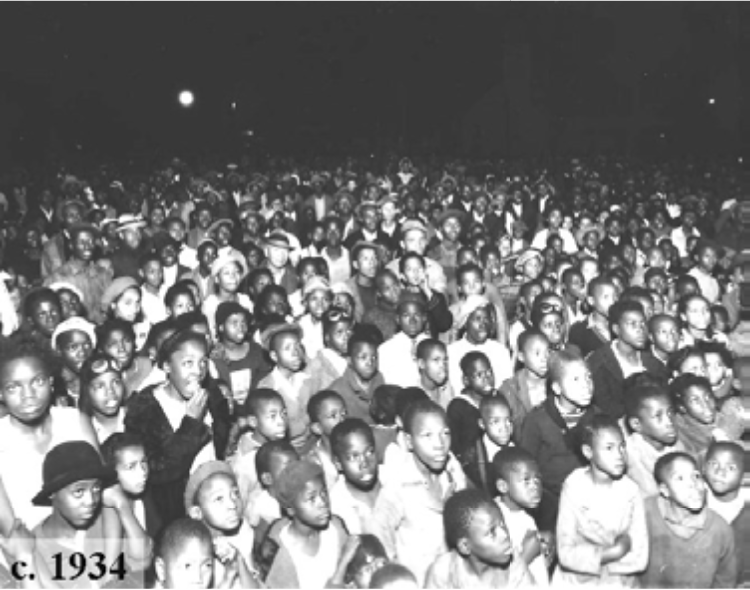
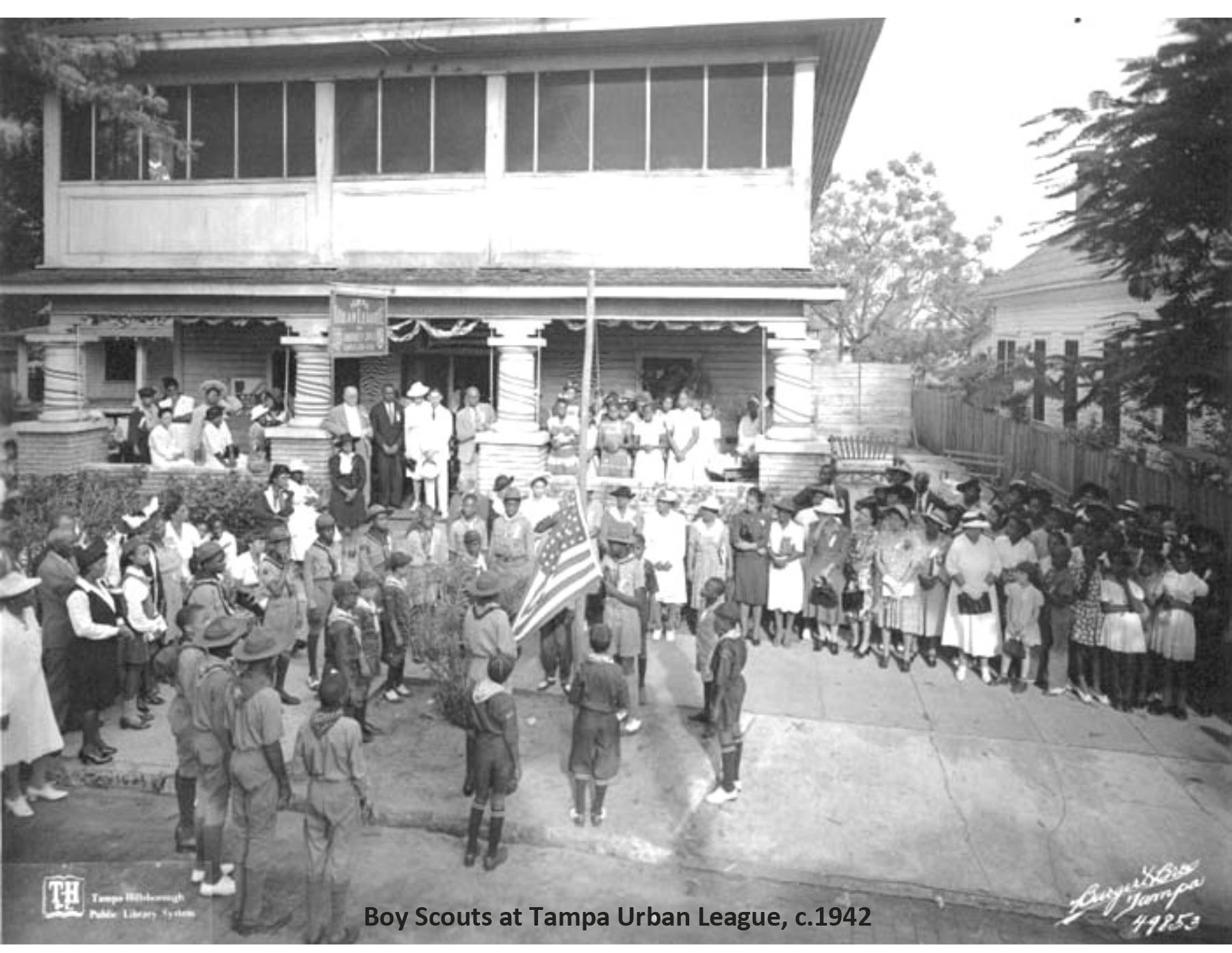
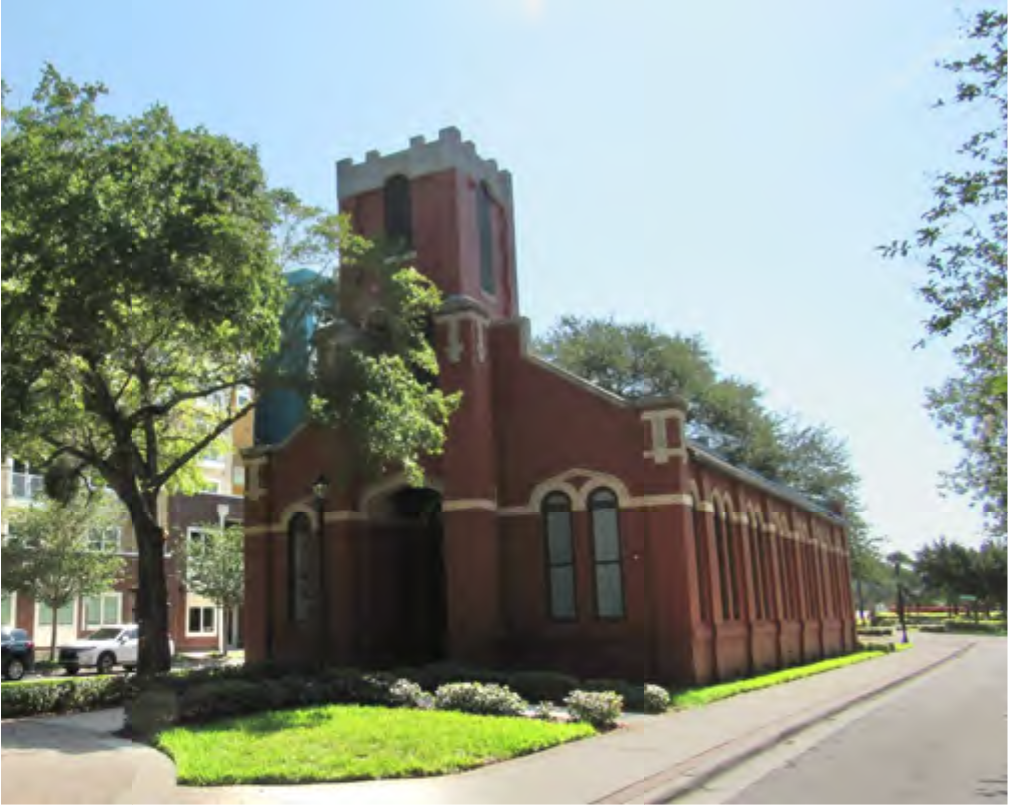
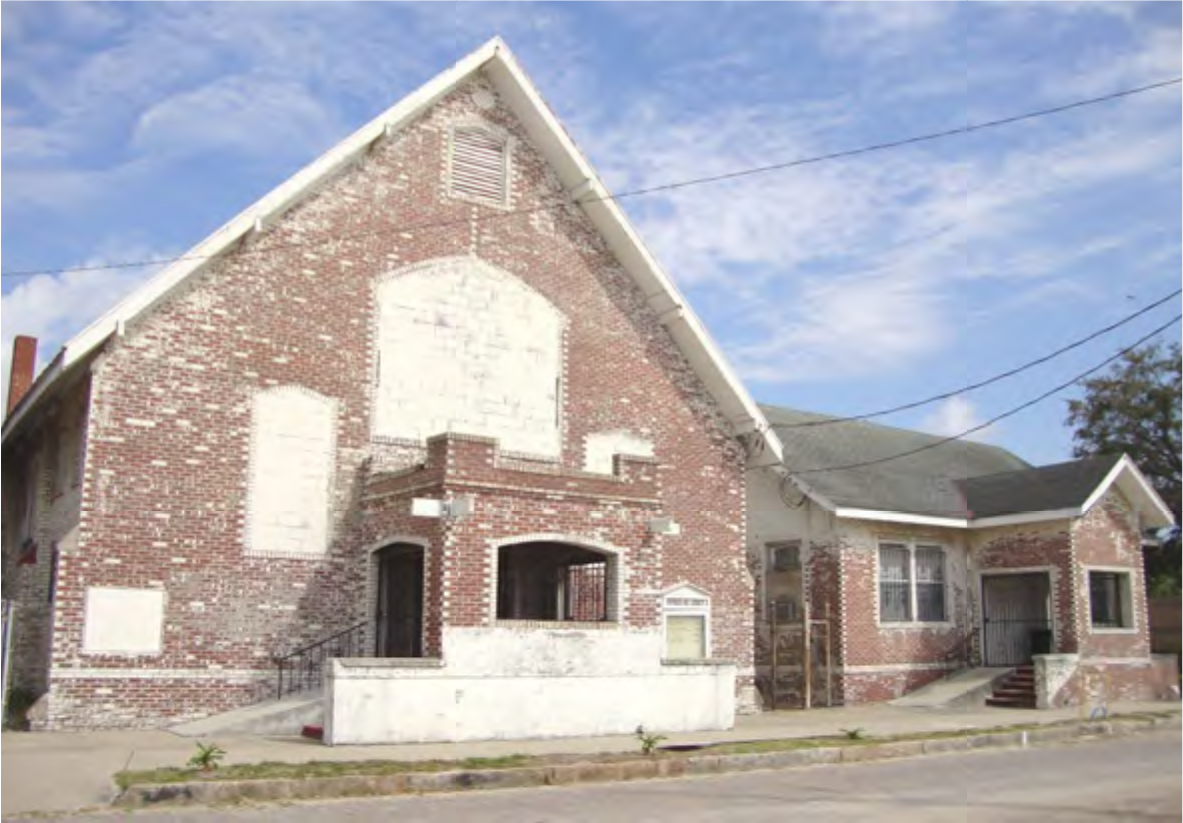
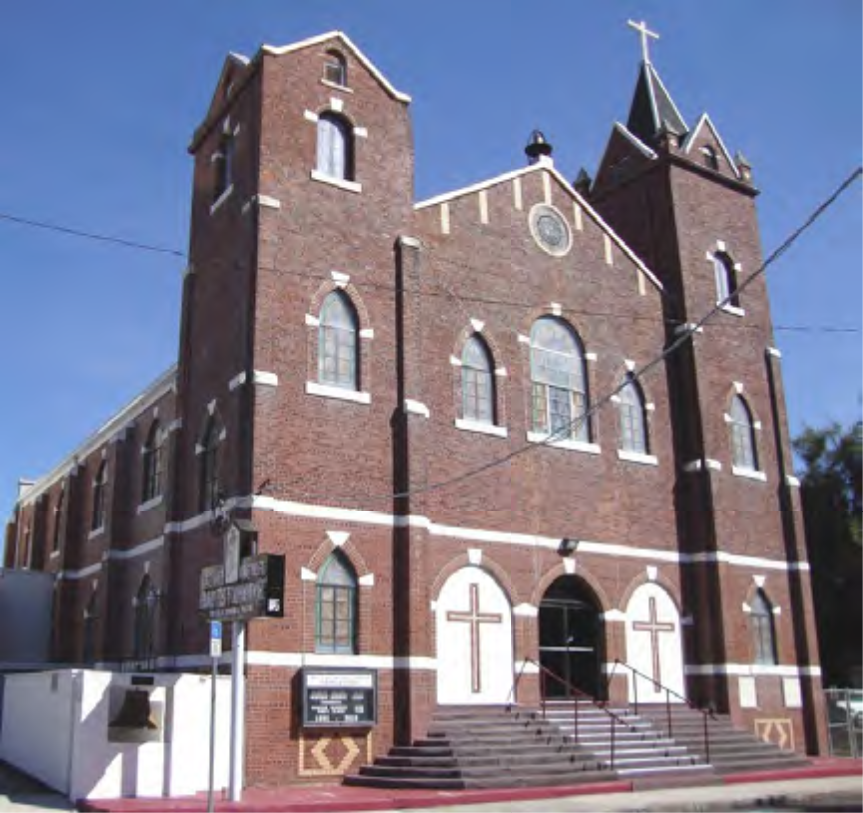
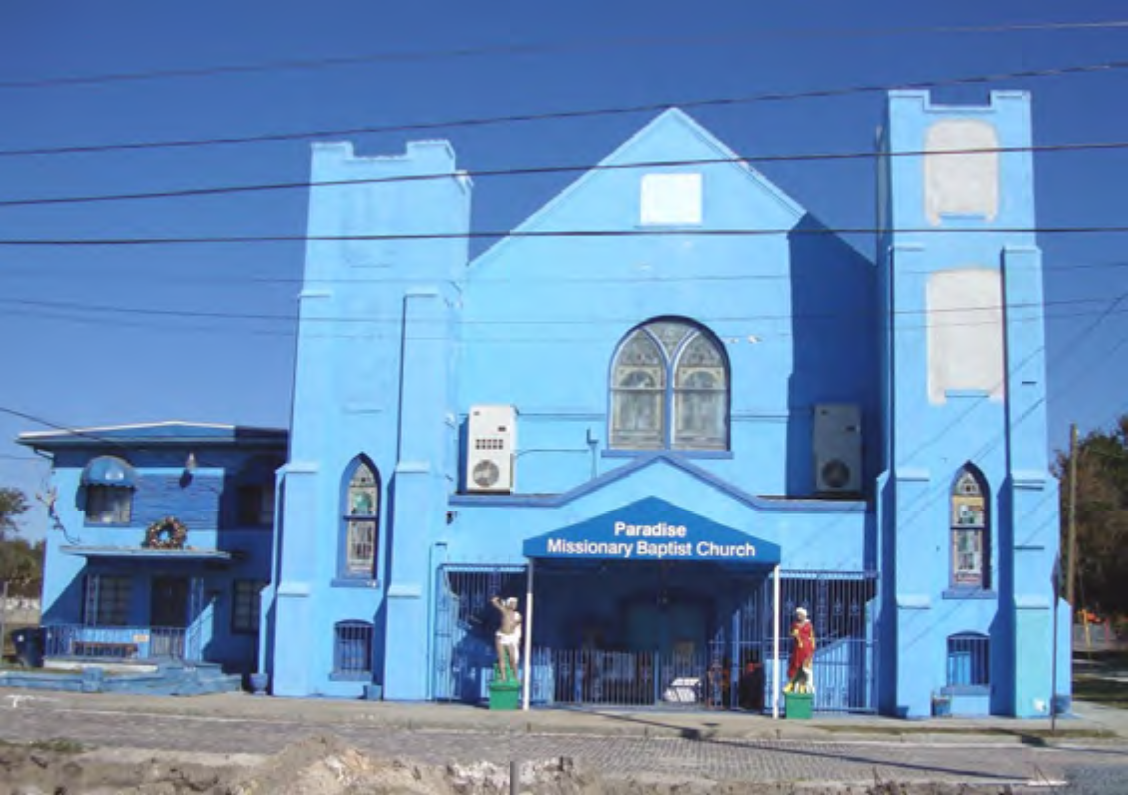
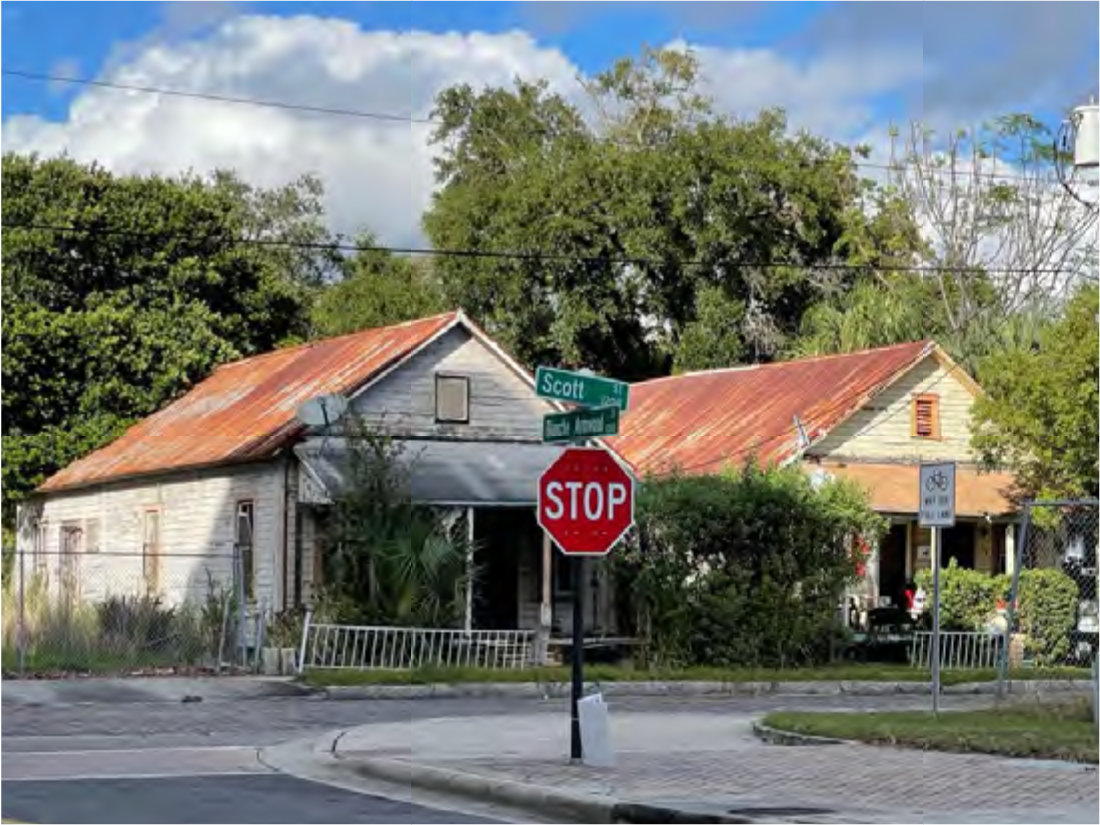
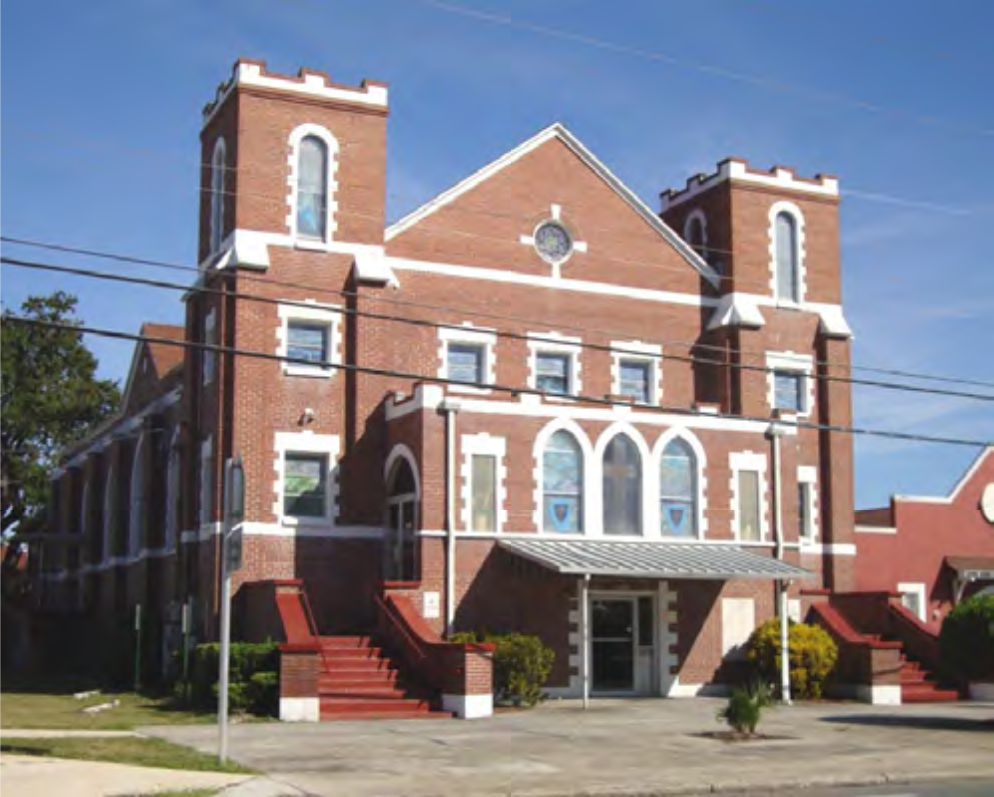
North Franklin Street / Downtown
- Period of Significance: 1895-1951
- National Register Listing: 2002-2010
- Local Historic Designation: 2003-2017
- Total of Twelve (12) Buildings
These historic buildings represent the last surviving elements of Tampa’s early downtown business district, which began development as a commercial area prior to 1900 and reached its peak in the 1930s. The buildings included in this grouping were constructed between 1906 and 1922. They represent the commercial styles typical of those popular in the United States during the first half of the 20th century. The district served the daily needs of the downtown residents living in the areas lying between the Hillsborough River to the west and Nebraska Avenue to the east.
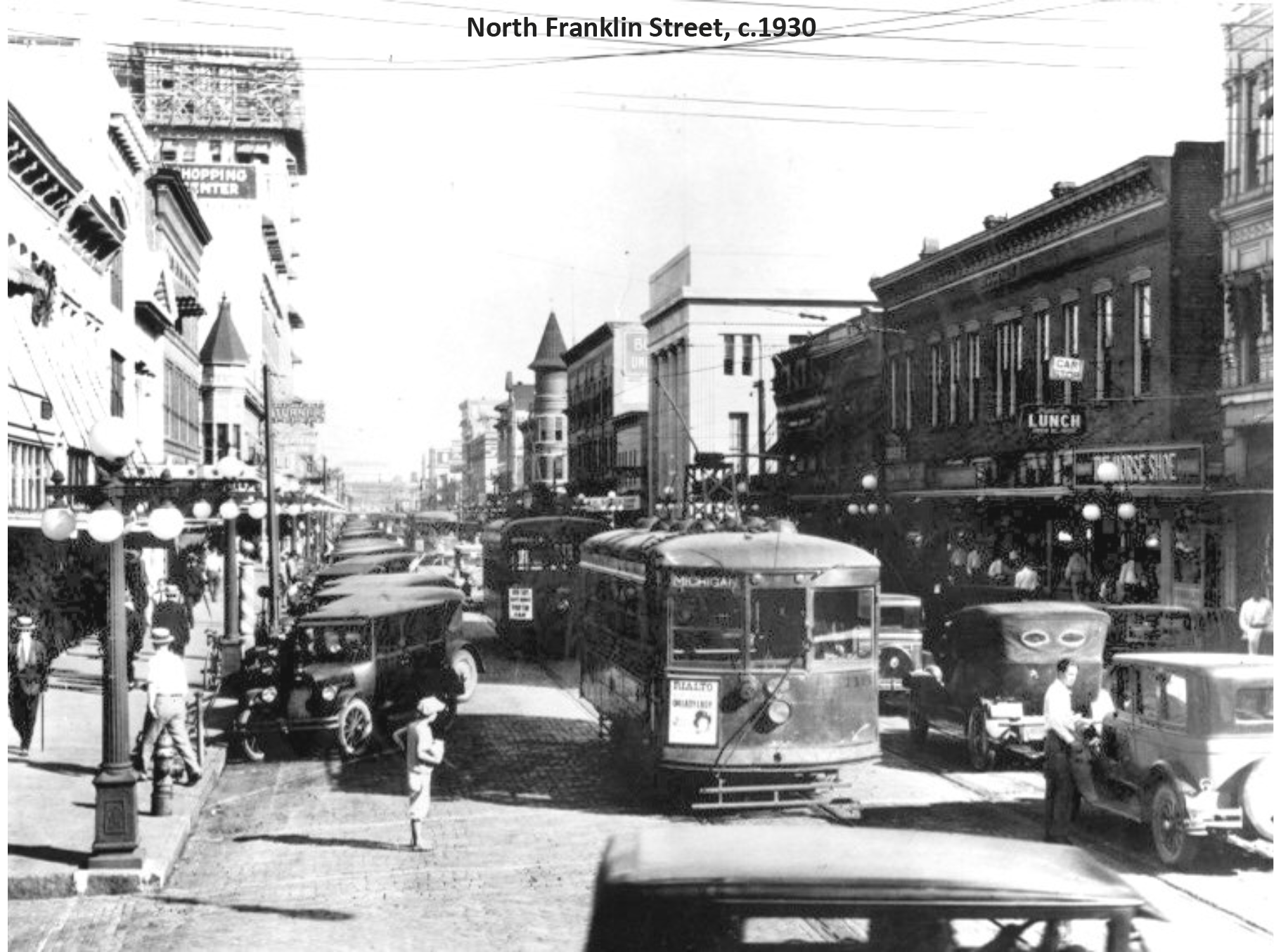
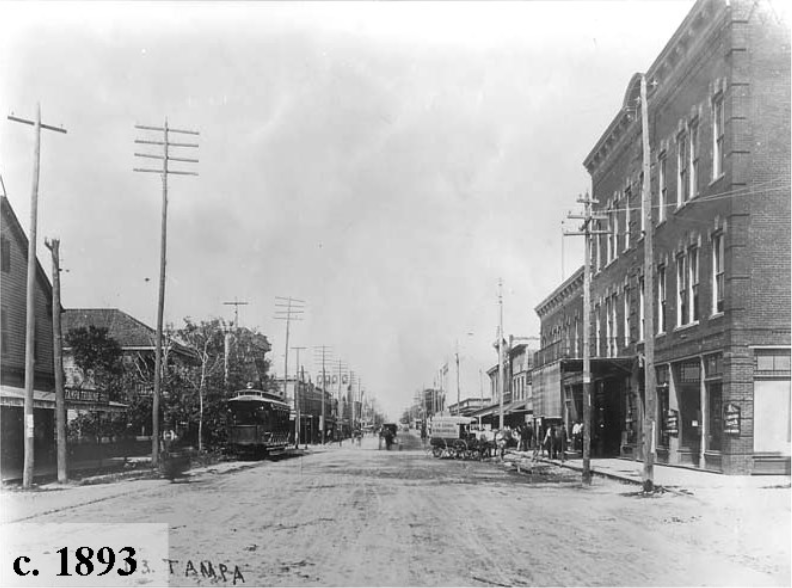
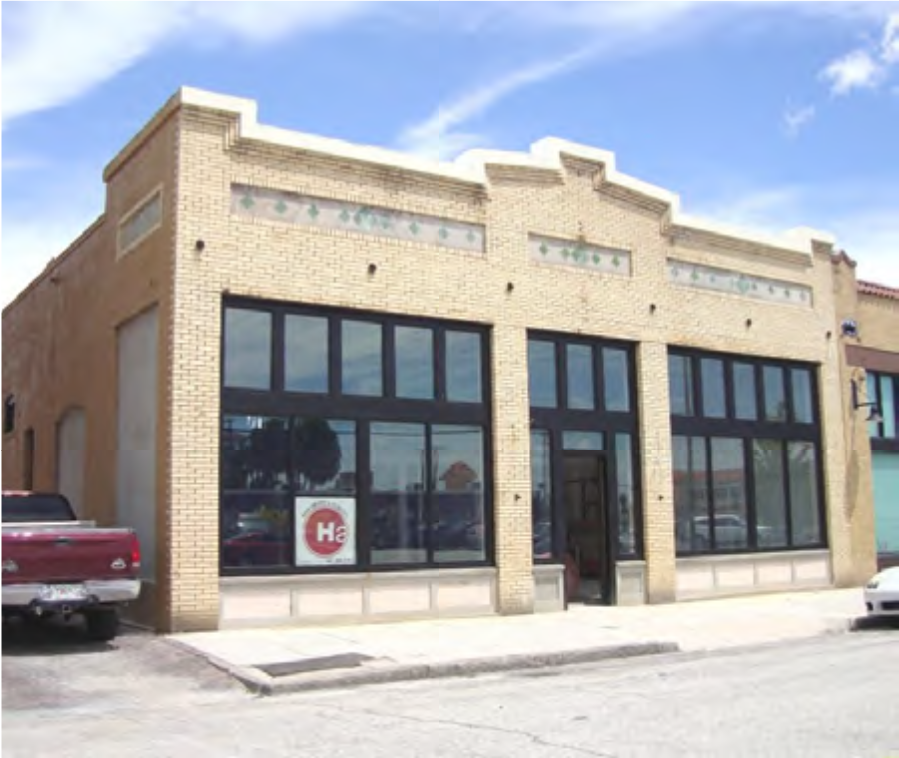
1613 N. Franklin Street constructed 1920
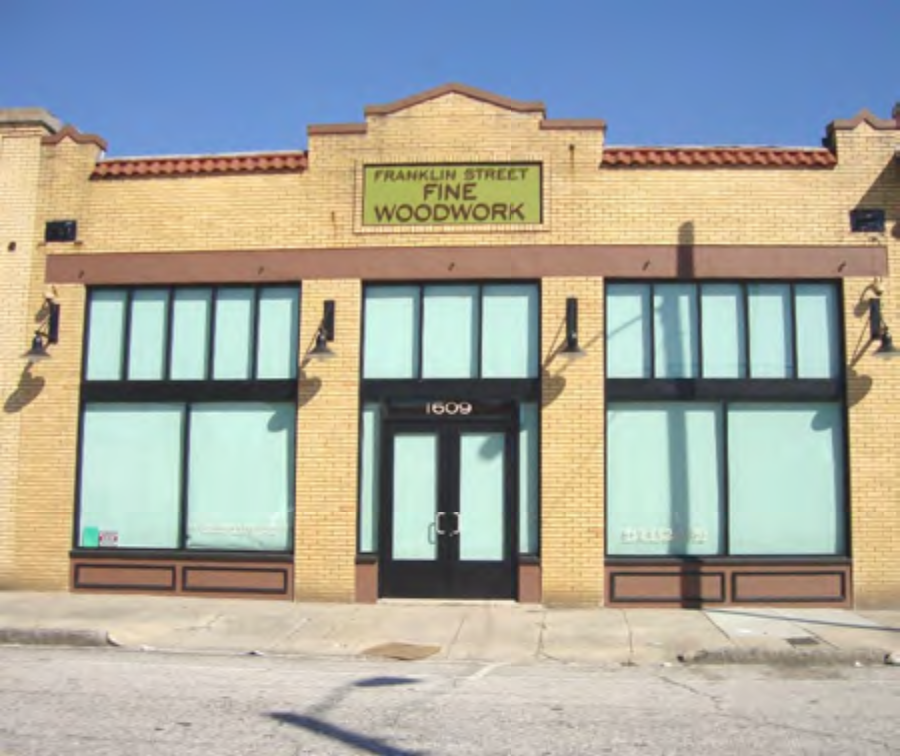
1609 N. Franklin Street constructed 1920
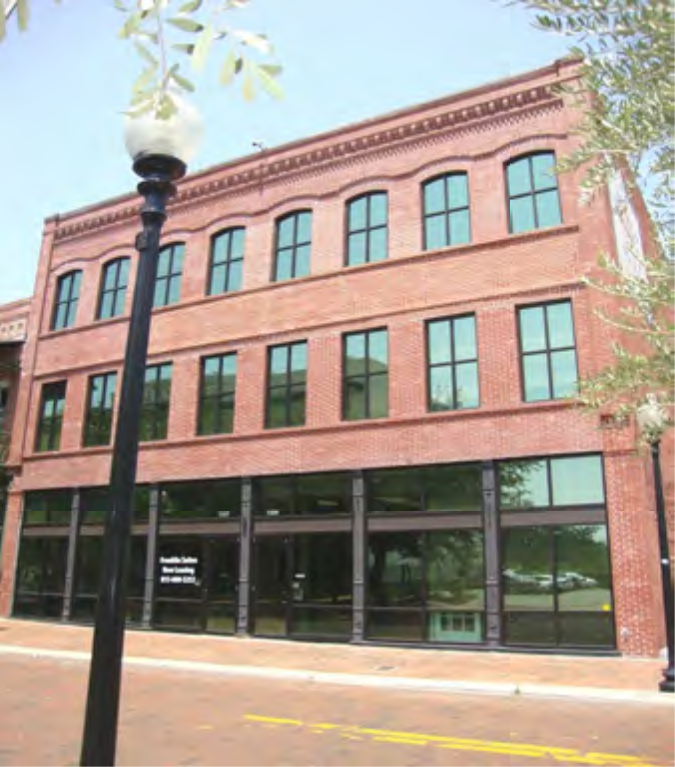
1207 N. Franklin Street constructed 1910
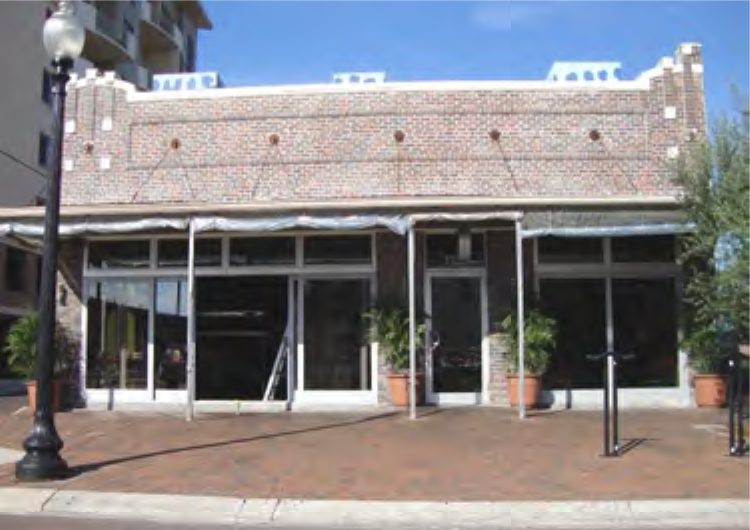
1202 N. Franklin Street constructed 1923
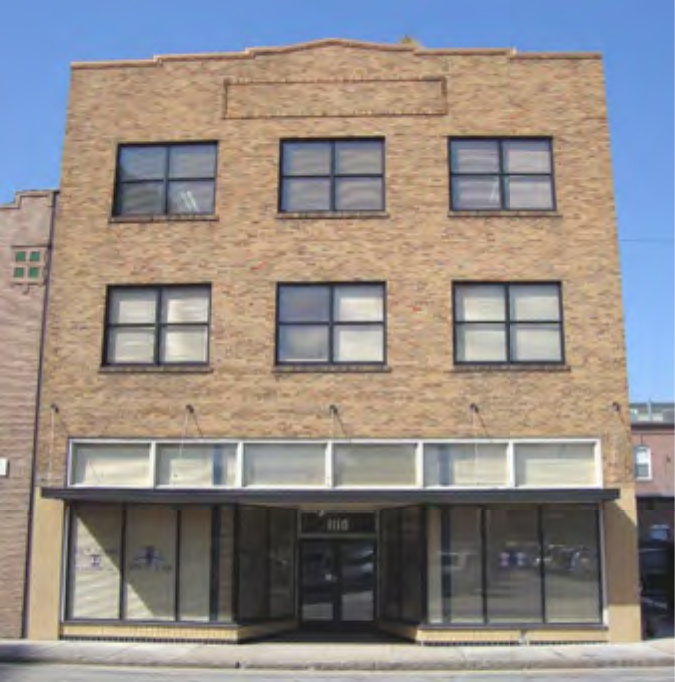
1110 N. Florida Avenue constructed 1921
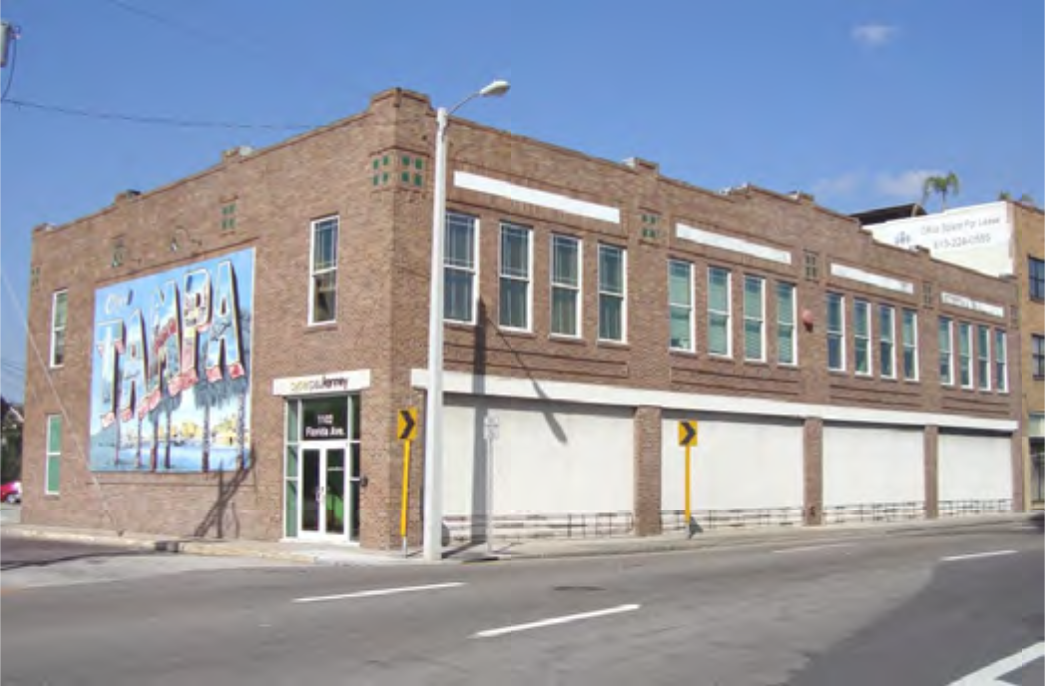
1102 N. Florida Avenue constructed 1910
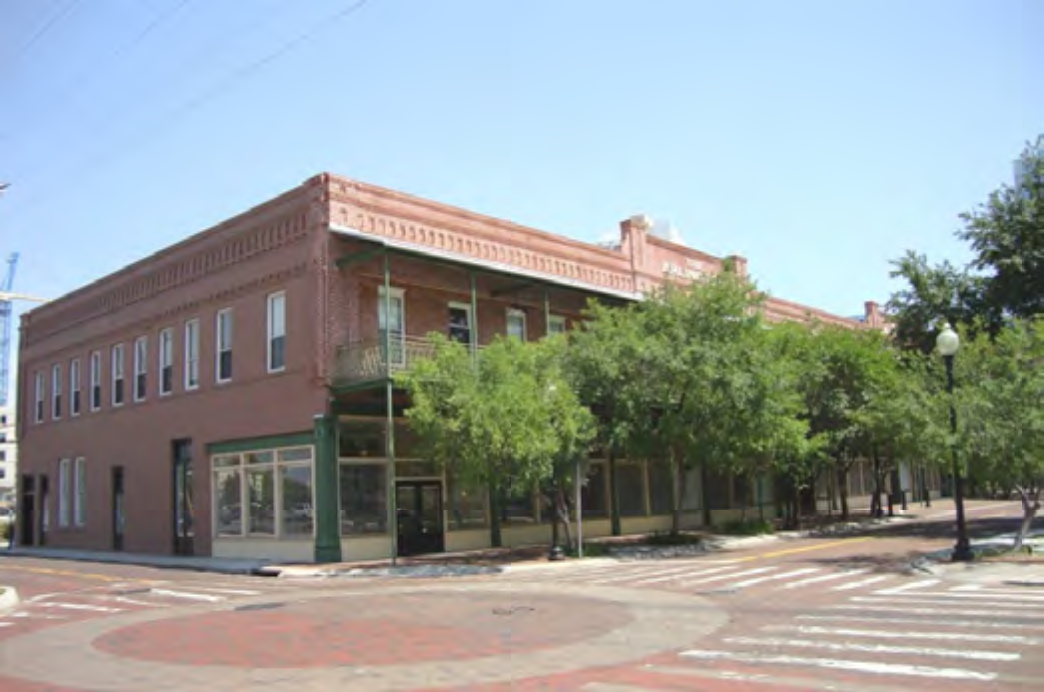
1209-1211 1/2 Franklin Street constructed 1910
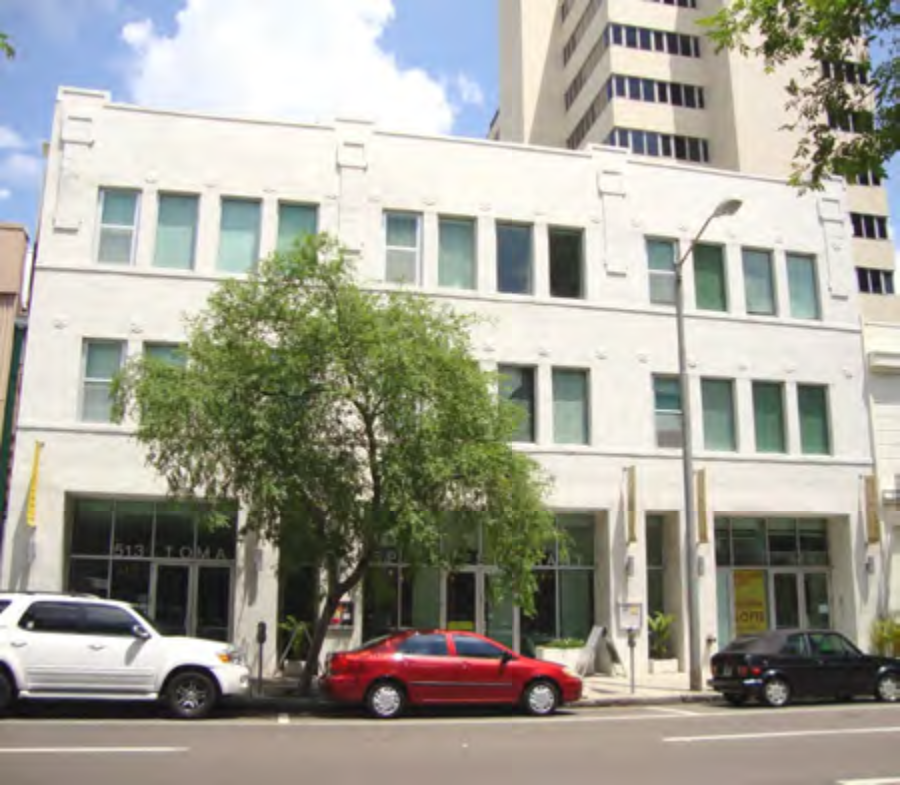
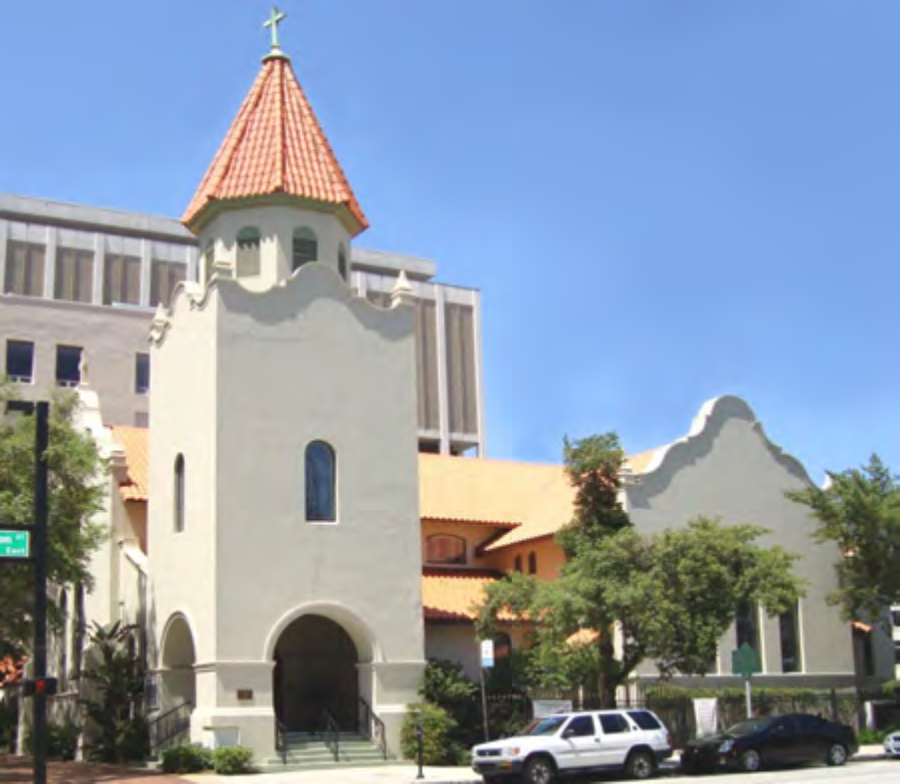
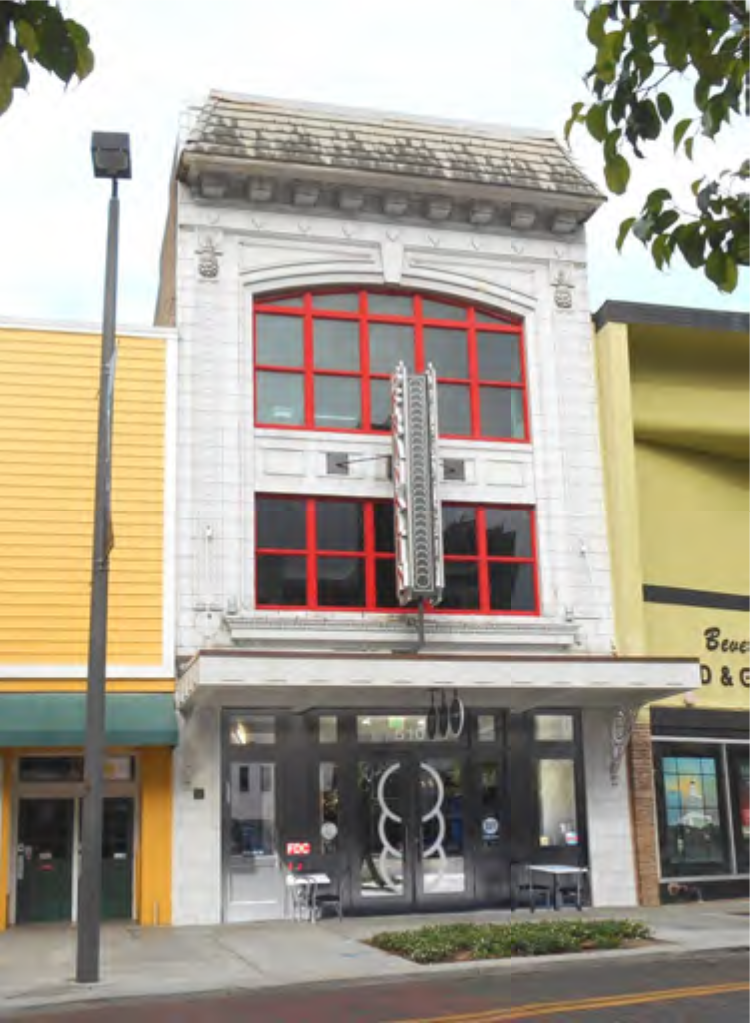
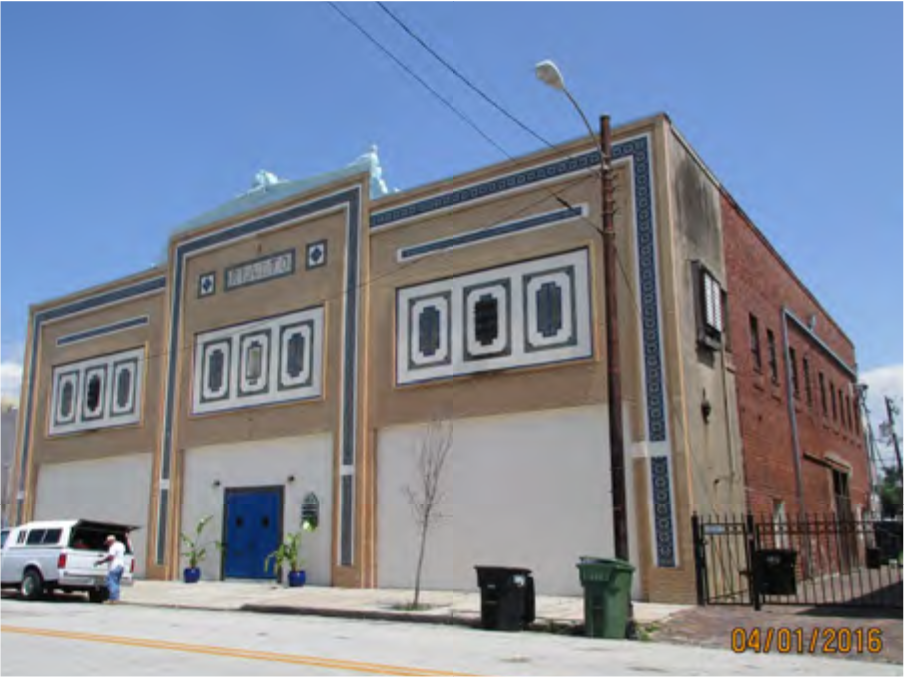
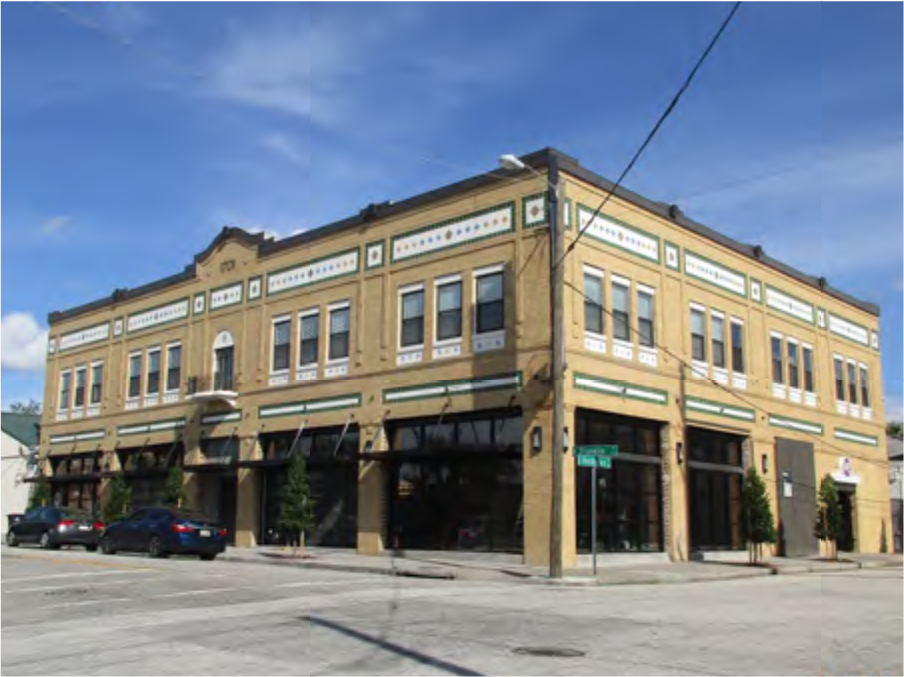
RESEARCH REFERENCE
City directories are a useful tool for researching a building’s occupants and their occupations, narrowing down construction dates, and identifying the locations of early civic, social, religious, and charitable institutions, as well as named blocks and meeting halls. R.L. Polk & Company published the Tampa city directories for most of the 20th century, beginning in 1905. Tampa’s early directories also provided a description of the city, including population and climate statistics, and listings of steamship and railroad schedules. City directories were filled with advertisements for various goods and services, including banks, boarding houses, restaurants, haberdashers, and coffin makers, providing insight into the way our forefathers lived.
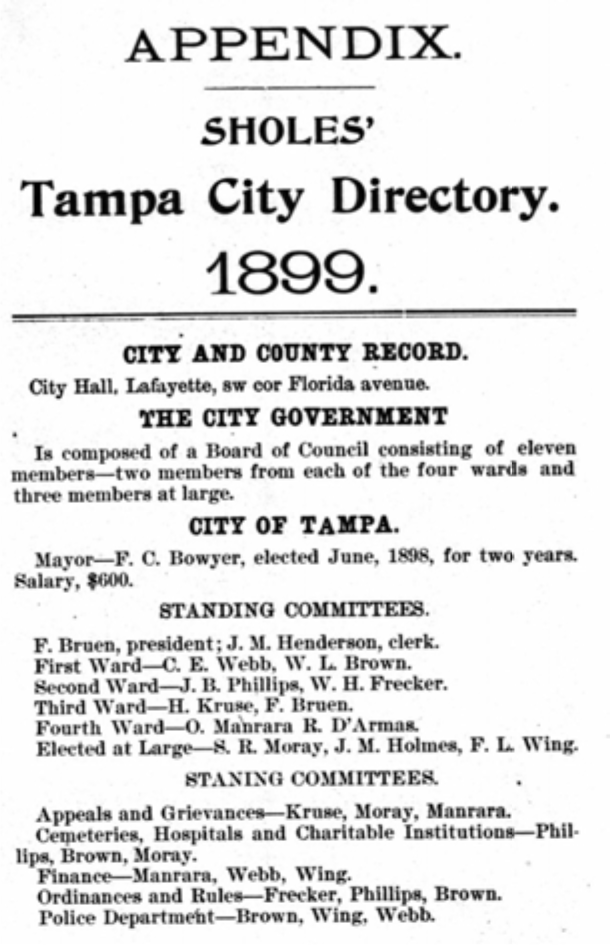
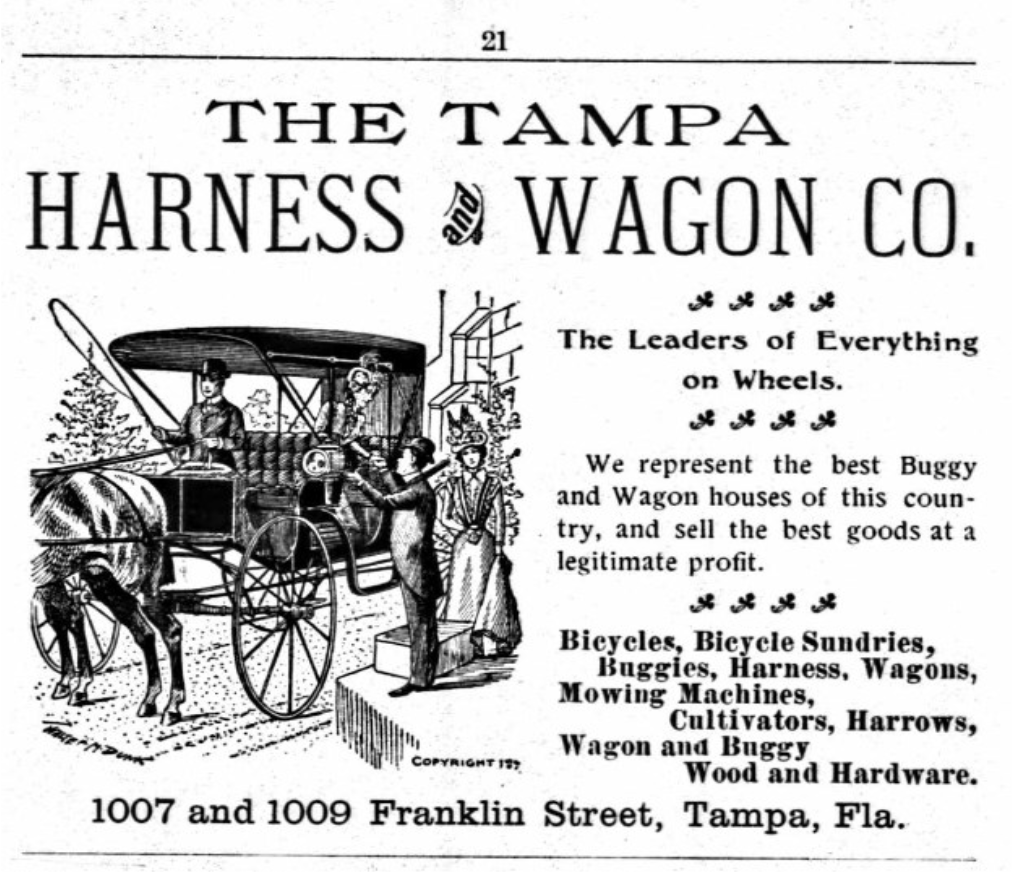
Period of Significance: 1894-1945
National Register Listing: 1983
Local Historic Designation: 2006, 2022
Total of Five (5) Buildings
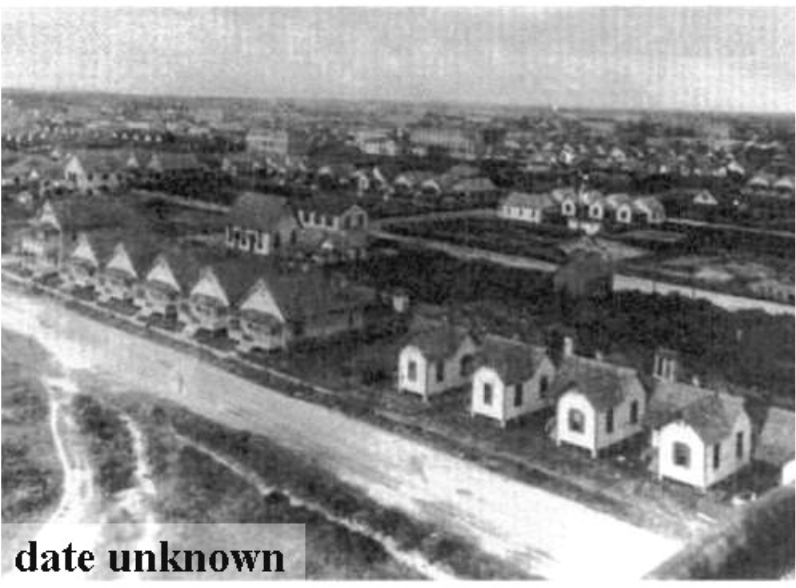
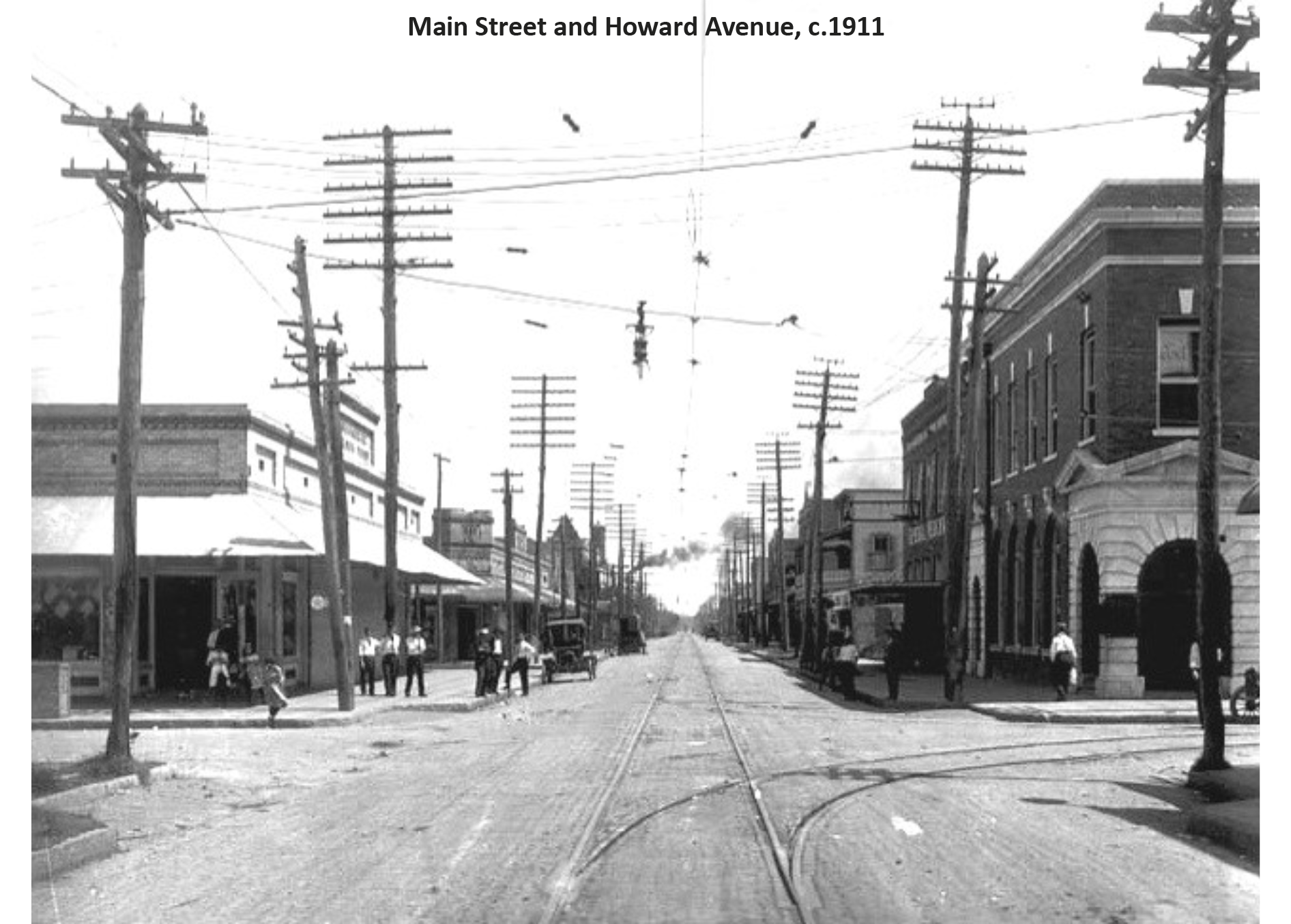
Incorporated in 1895, West Tampa was primarily populated by Spanish, Italian, and Cuban immigrants employed by the local cigar factories. The Latin community provided the city not only with a work force but also with the cultural identity that contributed to the neighborhood’s distinctive heritage.
Today, West Tampa contains a number of cigar factories, social clubs, schools, and civic buildings, as well as hundreds of factory workers’ homes that date from its early years. Many of the brick paved streets, granite curbstones, and hexagonal concrete sidewalk pavers still exist.
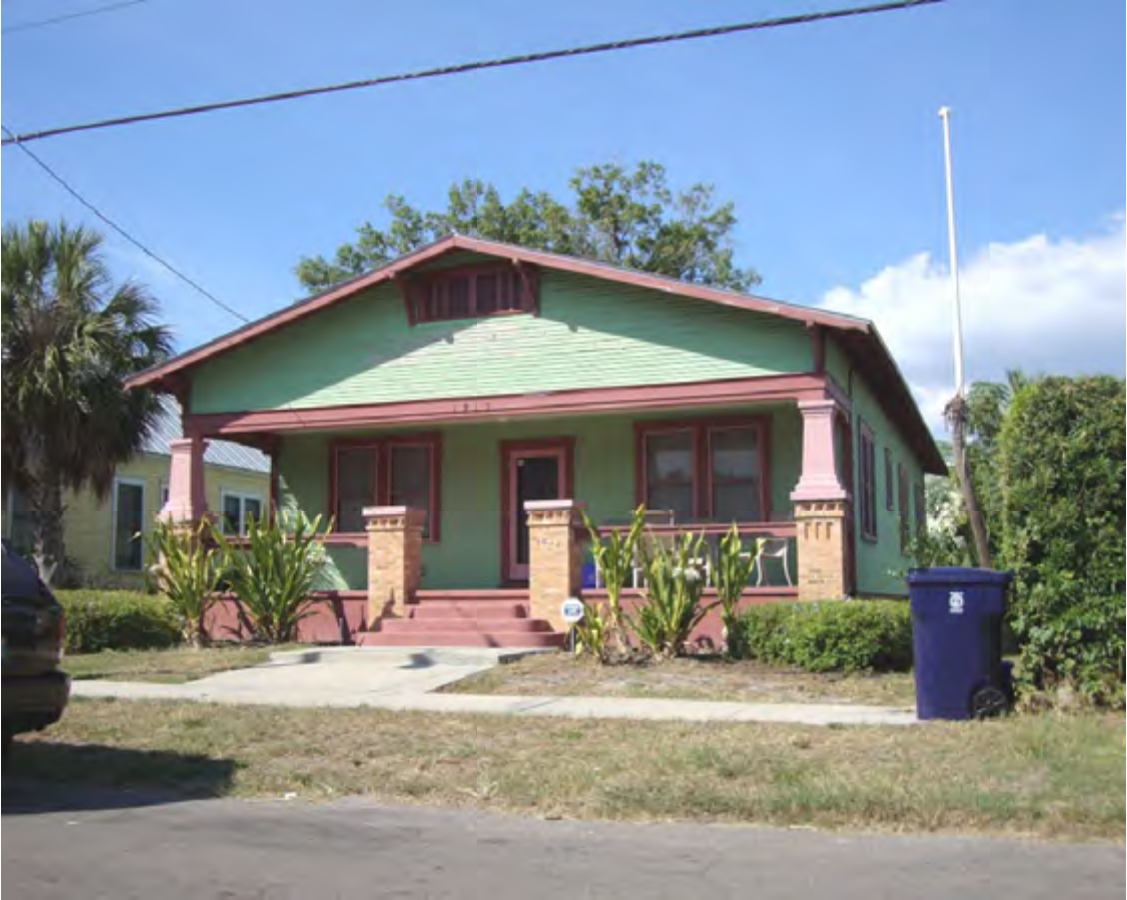
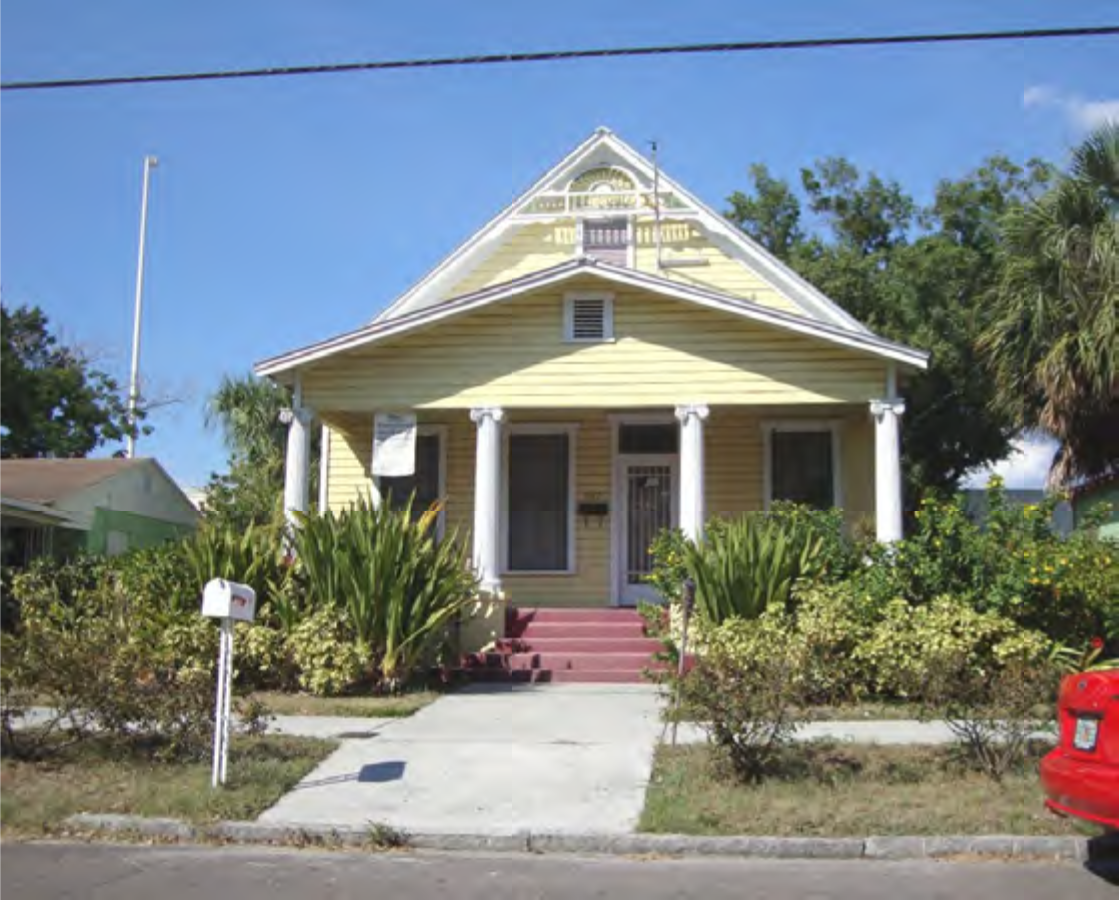
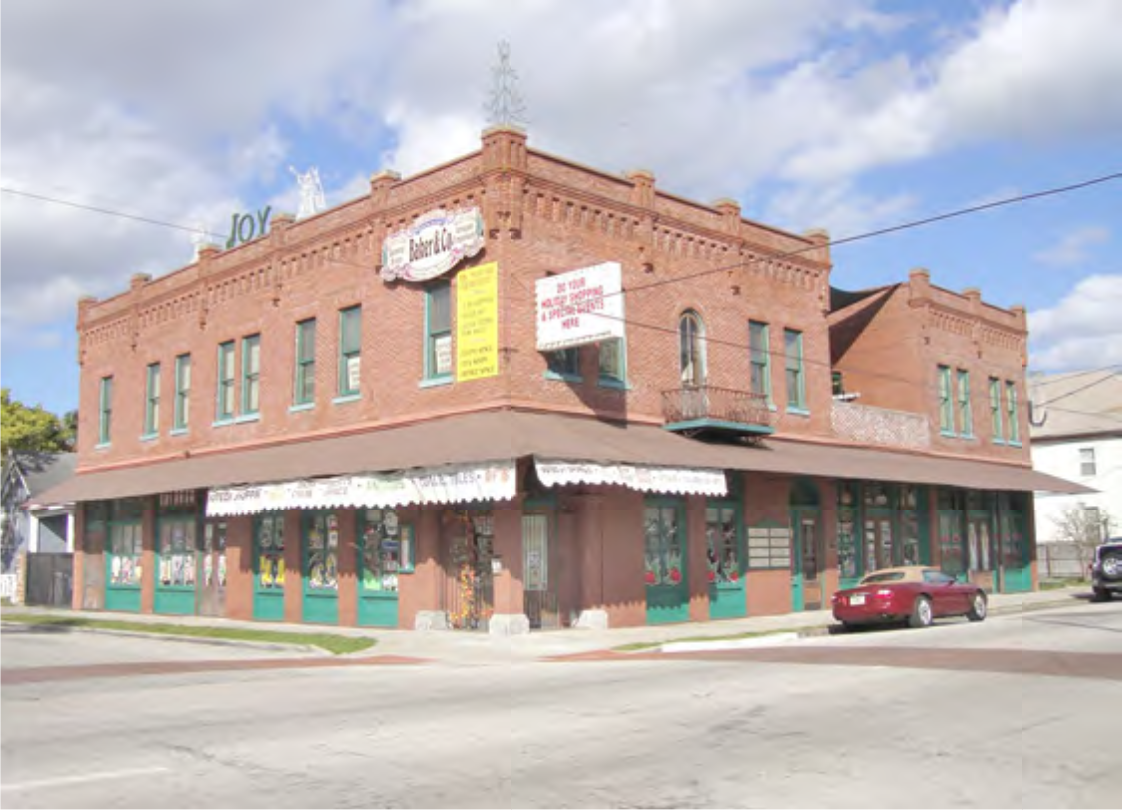
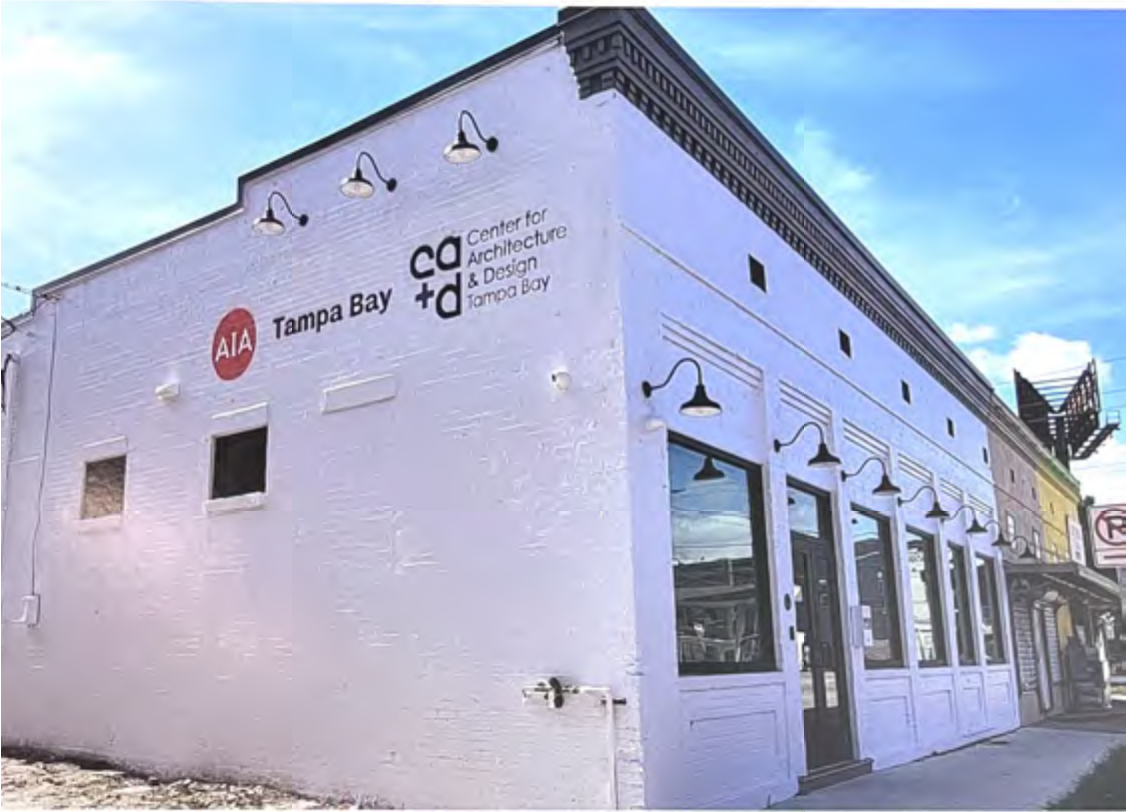
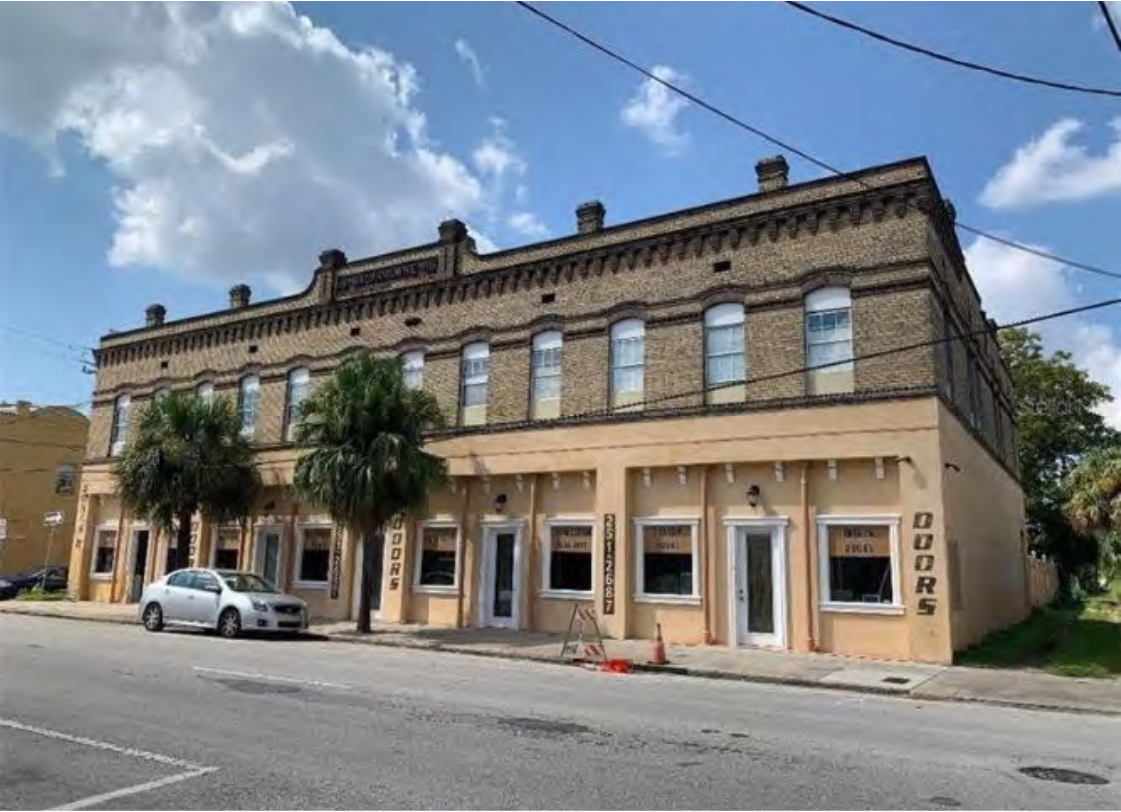
RESEARCH REFERENCE
Historic maps assist in identifying potential archaeological sites and visualizing population growth and urbanization patterns. Precise maps, such as the Sanborn Company maps, provide many details necessary for historic building rehabilitation. Maps such as these bird’s eye views were drawn by artists and generally embellished to illustrate a city’s assets, providing a rich visual historical context.
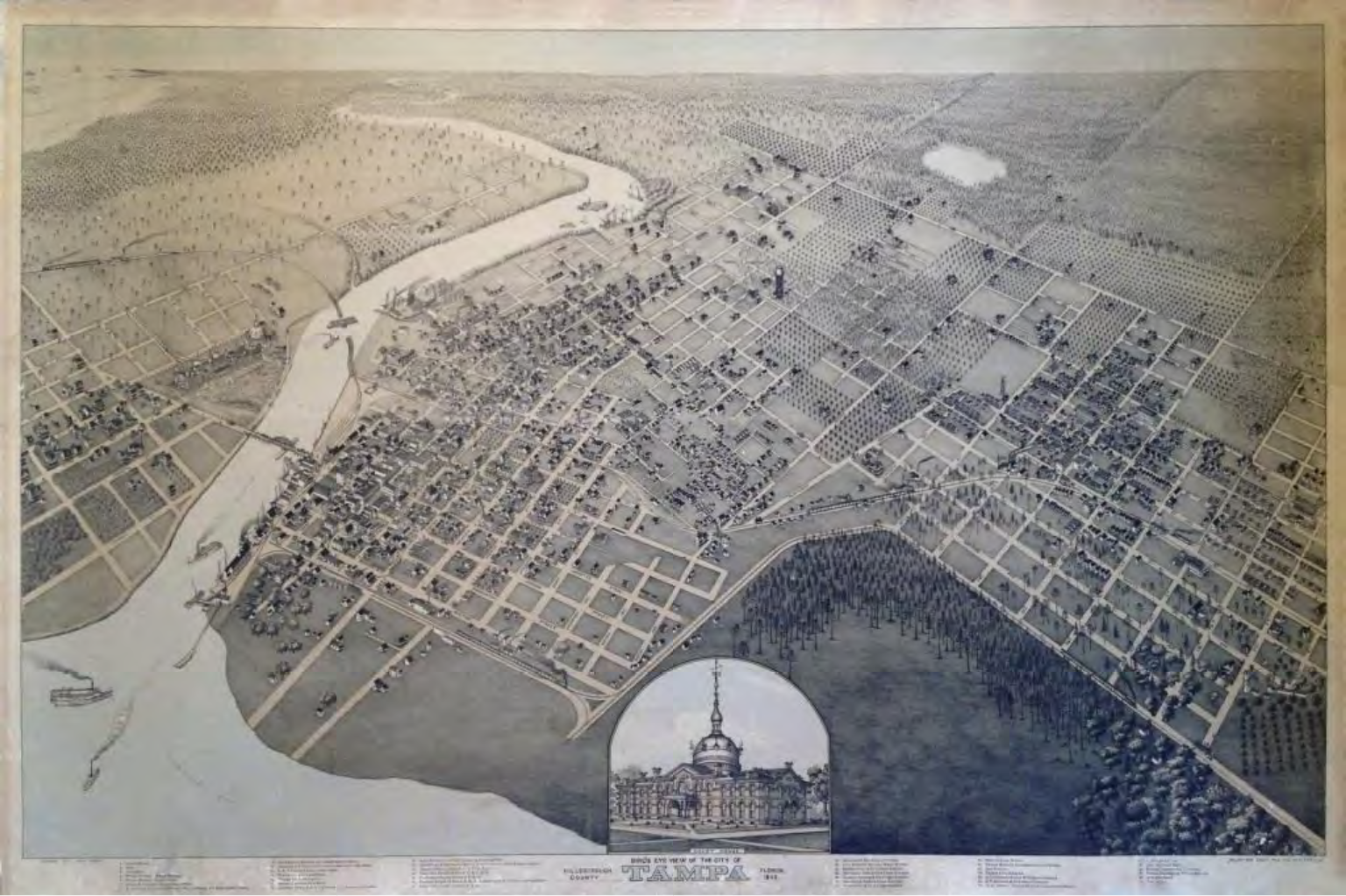
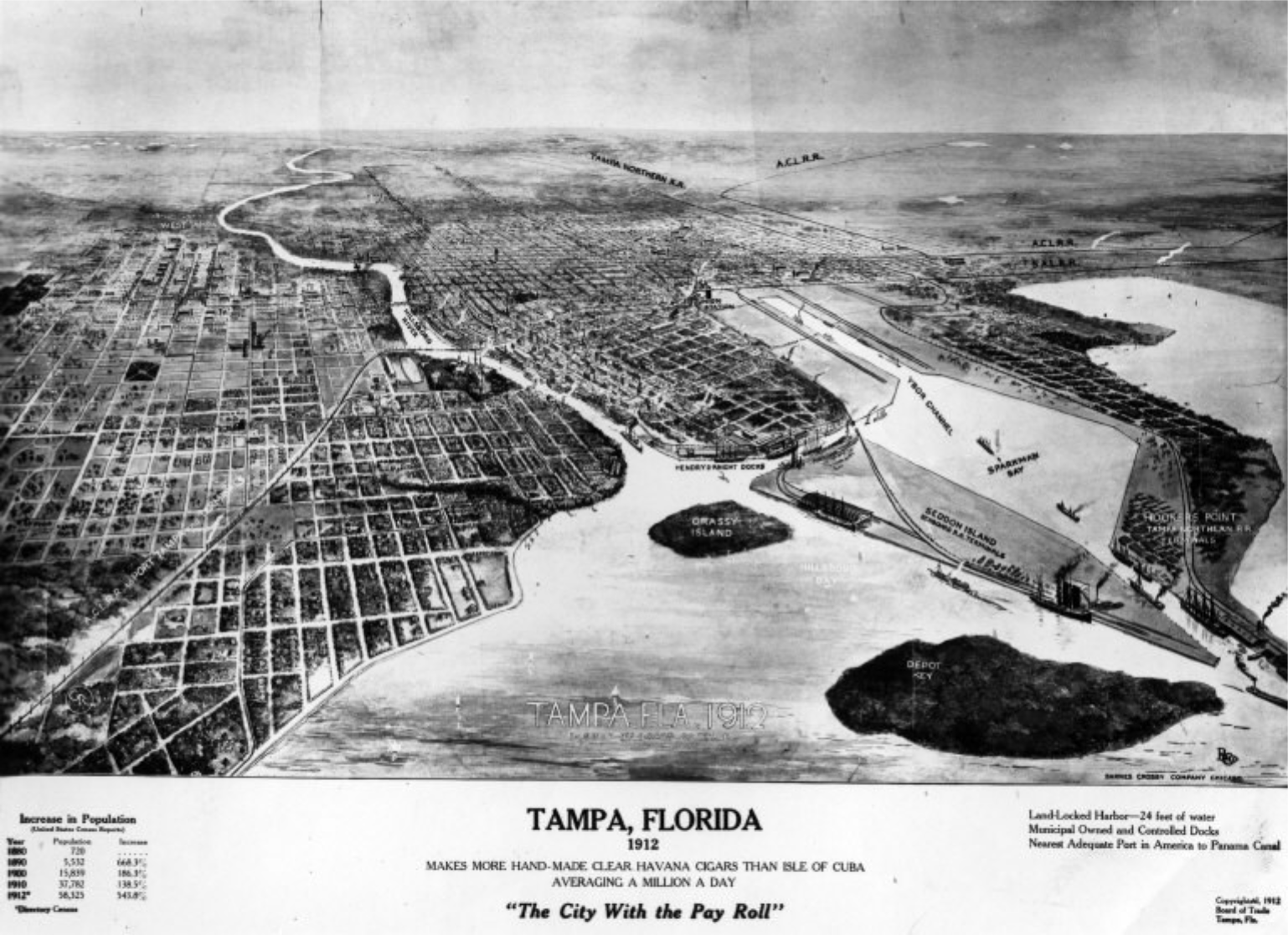
INDEX BY ADDRESS
| Street | Number | Site/Building | Page |
|---|---|---|---|
| 5th Avenue | 1209 | E. 5th Avenue, Larmon Factory Warehouse | 41 |
| 7th Avenue | 102 | E. 7th Avenue, Tampa Free Library | 69 |
| 1226 | E. 7th Avenue, Sociedad La Union Marti-Maceo | 60 | |
| 11th Avenue | 2401 | E. 11th Avenue, Giunta Homestead and Farm | 29 |
| 12th Street | 204 | N. 12th Street, Strickland Transportation Company Warehouse | 62 |
| 15th Street | 2900 | N. 15th Street, Cuscaden Park & Pool | 23 |
| 22nd Avenue | 1203 | E. 22nd Avenue, Home Association | 35 |
| 22nd Street | 3321 | N. 22nd Street, Dr. Jacob White, Sr. House | 77 |
| 30th Street | 7125 | N. 30th Street, David L. Tippin Water Treatment Facility | 74 |
| Albany Avenue | 2111 | N. Albany Avenue, Bustillo Brothers & Diaz Cigar Factory | 17 |
| Azeele Street | 4521 | W. Azeele Street | 82 |
| Bayshore Boulevard | 4621 | Bayshore Boulevard, Stovall House | 62 |
| 4807 | Bayshore Boulevard, Biglow-Helms House | 16 | |
| Beach Park Drive | 4505 | W. Beach Park Drive | 82 |
| Beachway Drive | 4505 | W. Beachway Drive, Plant-Hatton House | 53 |
| 4510 | W. Beachway Drive | 82 | |
| Bird Street | 701 | E. Bird Street, Sulphur Springs Gazebo | 64 |
| Cass Street | 650 | W. Cass Street, Cass Street Bridge | 86 |
| Central Avenue | 2708 | N. Central Avenue, Episcopal House of Prayer | 24 |
| Cleveland Street | 2111 | W. Cleveland Street, Stringer-Stalnaker House | 63 |
| Street | Address | Building/Site | Page |
|---|---|---|---|
| Columbia Drive | 154 Columbia Drive | Roy Jenkins Swimming Pool | 40 |
| Columbus Drive | 1199 W. Columbus Drive | Columbus Drive (Michigan Avenue) Bridge | 86 |
| Commerce Street | 4902 Commerce Street | Commercial Bank Building | 21 |
| Dakota Avenue | 420 S. Dakota Avenue | Seybold Bakery Building | 58 |
| Dale Avenue | 4521 W. Dale Avenue | 82 | |
| Davis Boulevard | 45 E. Davis Boulevard | Palace of Florence | 50 |
| 115 E. Davis Boulevard | Palmerin Hotel | 52 | |
| Ferdinand Avenue | 3505 S. Ferdinand Avenue | Roosevelt Elementary School | 55 |
| Fielding Avenue | 115 S. Fielding Avenue | Souders Building | 61 |
| Florida Avenue | 611 N. Florida Avenue | Classic Courthouse | 20 |
| 905 N. Florida Avenue | Floridan Hotel | 27 | |
| 1102 N. Florida Avenue | General Automobile Supply Building | 90 | |
| 1110 N. Florida Avenue | Southern Exchange Building | 90 | |
| 8105 N. Florida Avenue | Sulphur Springs Water Tower | 65 | |
| Forest Hills Drive | 11412 Forest Hills Drive | Babe Zaharias Golf Course | 78 |
| Franklin Street | 510 N. Franklin Street | Easley Building | 90 |
| 810 N. Franklin Street | S.H. Kress Building | 40 | |
| 1207 N. Franklin Street | C.C. Burns Furniture Store Building | 90 | |
| 1212 N. Franklin Street | Majestic-Hedges Building | 90 | |
| 1609 N. Franklin Street | Vintage Auto Building No. 2 | 90 | |
| 1613 N. Franklin Street | Vintage Auto Building No. 1 | 90 | |
| 1617 N. Franklin Street | Rialto Theatre | 90 | |
| 1701 N. Franklin Street | Fariss Company Building | 90 | |
| 1209-1211 1/2 N. Franklin Street | Arlington Hotel | 90 | |
| 707-711 N. Franklin Street | Tampa Theatre and Office Building | 71 | |
| Governor Street | 1202 N. Governor Street | St. James Episcopal Church | 88 |
| 1401 N. Governor Street | St. Peter Claver School | 57 | |
| Hanna Avenue | 2604 E. Hanna Avenue | Horace Theodore Robles House | 54 |
| Street | Address | Description |
|---|---|---|
| Highland Avenue | 1810 N. Highland Avenue | Tampa Water Works....................................................................................73 |
| 2704 N. Highland Avenue | Hillsborough County High School ................................................................32 | |
| 2901 N. Highland Avenue | Zion Evangelical Lutheran Church ...............................................................79 | |
| Hillsborough Avenue | 400 W. Hillsborough Avenue | T.N. Henderson Bridge ...........................................................................86 |
| Howard Avenue | 522 N. Howard Avenue | Fort Homer W. Hesterly ..................................................................................28 |
| 1202 N. Howard Avenue | Balbin Brothers Cigar Factory .......................................................................14 | |
| 1208 N. Howard Avenue | N. Howard Avenue.........................................................................................94 | |
| 1403 N. Howard Avenue | Berriman-Morgan Cigar Factory ...................................................................15 | |
| 1718 N. Howard Avenue | West Tampa Public Library ...........................................................................76 | |
| 1902 N. Howard Avenue | Macfarlane Building ......................................................................................94 | |
| 2001 N. Howard Avenue | Sicilian Club ...................................................................................................59 | |
| 2306 N. Howard Avenue | El Centro Español de West Tampa ................................................................19 | |
| 2502 N. Howard Avenue | N. Howard Avenue.........................................................................................94 | |
| Hyde Park Avenue | 245 S. Hyde Park Avenue | Peter O. Knight Cottage................................................................................39 |
| Jefferson Street | 1101 N. Jefferson Street | Kid Mason Center ..........................................................................................42 |
| Kennedy Boulevard | 315 E. Kennedy Boulevard | Tampa City Hall ..........................................................................................69 |
| 508 E. Kennedy Boulevard | Hillsborough Lodge No.2, F.&A.M..............................................................33 | |
| 125 W. Kennedy Boulevard | Kennedy Boulevard (Lafayette Street) Bridge ..........................................86 | |
| 401 W. Kennedy Boulevard | Tampa Bay Hotel / Plant Hall....................................................................67 | |
| Lambright Street | 800 E. Lambright Street | Captain William Parker Jackson House ..........................................................18 |
| LaSalle Street | 1915 W. LaSalle Street | W. LaSalle Street............................................................................................94 |
| 1917 W. LaSalle Street | W. LaSalle Street............................................................................................94 | |
| Laurel Street | 805 E. Laurel Street | Greater Bethel Baptist Church ..............................................................................88 |
| 300 W. Laurel Street | Fortune Taylor Bridge..........................................................................................86 | |
| Lincoln Avenue | 1801 N. Lincoln Avenue | Historic Structures of MacFarlane Park..........................................................34 |
| Madison Street | 220 E. Madison Street | First Federal Savings & Loan Association of Tampa .........................................26 |
| Marion Street | 501 N. Marion Street | St. Andrew’s Episcopal Church ...........................................................................90 |
| Street | Address | Description |
|---|---|---|
| Nebraska Avenue | 601 N. Nebraska Avenue | Tampa Union Station ....................................................................................72 |
| 1225 N. Nebraska Avenue | Greater Mt. Moriah Primitive Baptist Church ............................................88 | |
| Ola Avenue | 1910 N. Ola Avenue | Tampa Armature Works .......................................................................................66 |
| Park Circle | 1822 E. Park Circle | Tolle Parsonage-Coombs Log Cabin .......................................................................75 |
| Platt Street | 99 W. Platt Street | Platt Street Bridge ....................................................................................................86 |
| Renfrew Avenue | 1516 N. Renfrew Avenue | George Guida, Sr. House ..............................................................................30 |
| Rosemere Road | 4508 W. Rosemere Road | ........................................................................................................................82 |
| Royal Palm Way | 407 S. Royal Palm Way | ...........................................................................................................................82 |
| 414 S. Royal Palm Way | ...........................................................................................................................82 | |
| Scott Street | 1112 E. Scott Street | Paradise Missionary Baptist Church .....................................................................88 |
| 1212 E. Scott Street | Ebenezer Missionary Baptist Church ....................................................................88 | |
| 1248 & 1250 E. Scott Street | Johnson Brothers Houses.........................................................................88 | |
| Sherrill Street | 7218 S. Sherrill Street | Old St. Mark Community Aid Center .................................................................48 |
| Sylvan Ramble | 4506 W. Sylvan Ramble Street | ...............................................................................................................82 |
| Tampa Street | 509-513 N. Tampa Street | Spain Restaurant ..........................................................................................90 |
| Tyler Street | 410 E. Tyler Street | Tom Henderson Memorial Chapel..........................................................................31 |
| UT Old School House Way | 403 UT Old School House Way | Old School House.................................................................................49 |
| Westshore Boulevard | 414 S. Westshore Boulevard | ..................................................................................................................82 |
| 704 S. Westshore Boulevard | ..................................................................................................................82 | |
| Willow Avenue | 302 N. Willow Avenue | Metal Works-Dicus Building .............................................................................43 |
| Zack Street | 720 E. Zack Street | Fire Station No. 1 / Tampa Firefighters Museum ....................................................25 |
| 851 E. Zack Street | Jackson House..........................................................................................................37 |
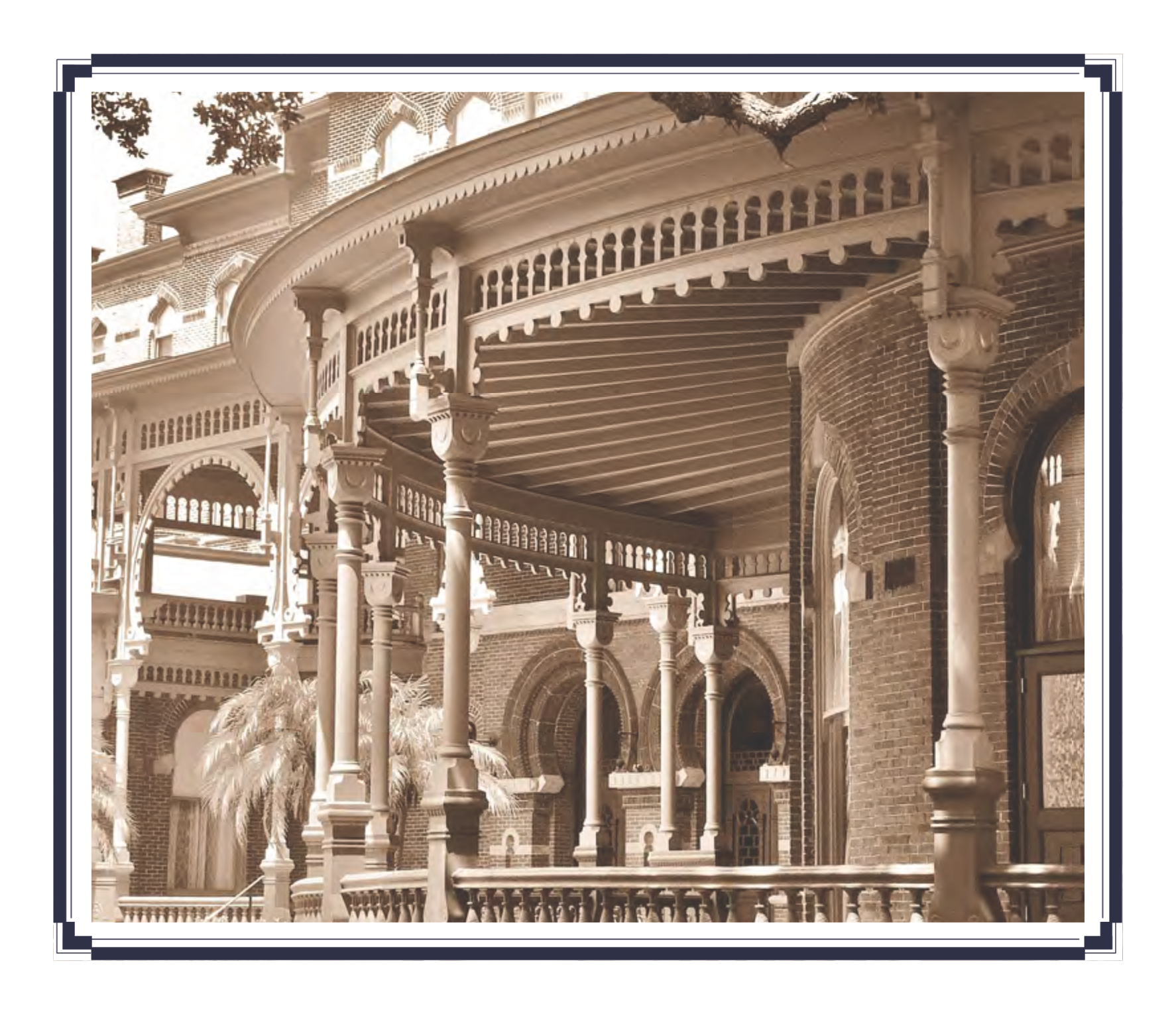
For questions and additional information related to Tampa’s designated historic properties, contact the City of Tampa’s Architectural Review & Historic Preservation Division at (813) 274-3100, Option 3, or visit www.tampa.gov/Historic-Preservation.
Architectural Review and Historic Preservation
www.tampa.gov/Historic-Preservation