for
What is Trees for Tampa?
Trees for Tampa is a multi-departmental effort to increase tree planting in the City of Tampa. The comprehensive approach includes programs targeted at both public and privately owned property.

Planting in Public Spaces
Planting in Public Spaces – Is a City of Tampa program that offers a comprehensive approach to increasing tree canopy along streets, in parks, and in other publicly owned land. The effort is led jointly by City Planning and the Sustainability and Resiliency Departments.
Benefits of the Urban Forest
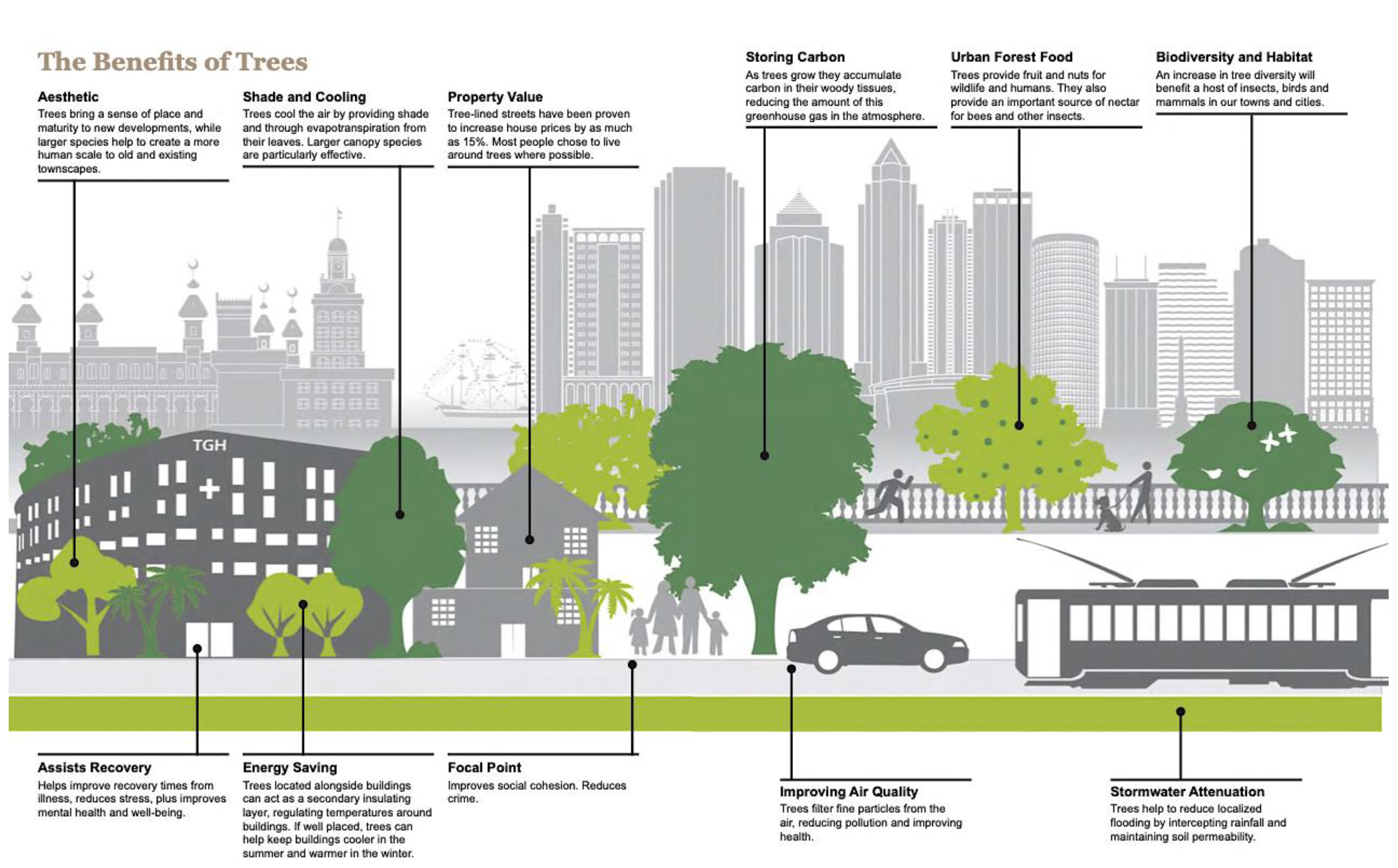
- The Benefits of Trees
- Aesthetic: Trees bring a sense of place and maturity to new developments, while larger species help to create a more human scale to old and existing townscapes.
- Assists Recovery: Helps improve recovery times from illness, reduces stress, plus improves mental health and well-being.
- Shade and Cooling: Trees cool the air by providing shade and through evapotranspiration from their leaves. Larger canopy species are particularly effective.
- Energy Saving: Trees located alongside buildings can act as a secondary insulating layer, regulating temperatures around buildings. If well placed, trees can help keep buildings cooler in the summer and warmer in the winter.
- Property Value: Tree-lined streets have been proven to increase house prices by as much as 15%. Most people chose to live around trees where possible.
- Focal Point: Improves social cohesion. Reduces crime.
- Storing Carbon: As trees grow they accumulate carbon in their woody tissues, reducing the amount of this greenhouse gas in the atmosphere.
- Improving Air Quality: Trees filter fine particles from the air, reducing pollution and improving health.
- Urban Forest Food: Trees provide fruit and nuts for wildlife and humans. They also provide an important source of nectar for bees and other insects.
- Biodiversity and Habitat: An increase in tree diversity will benefit a host of insects, birds and mammals in our towns and cities.
- Stormwater Attenuation: Trees help to reduce localized flooding by intercepting rainfall and maintaining soil permeability.
What happens when we lose our canopy?
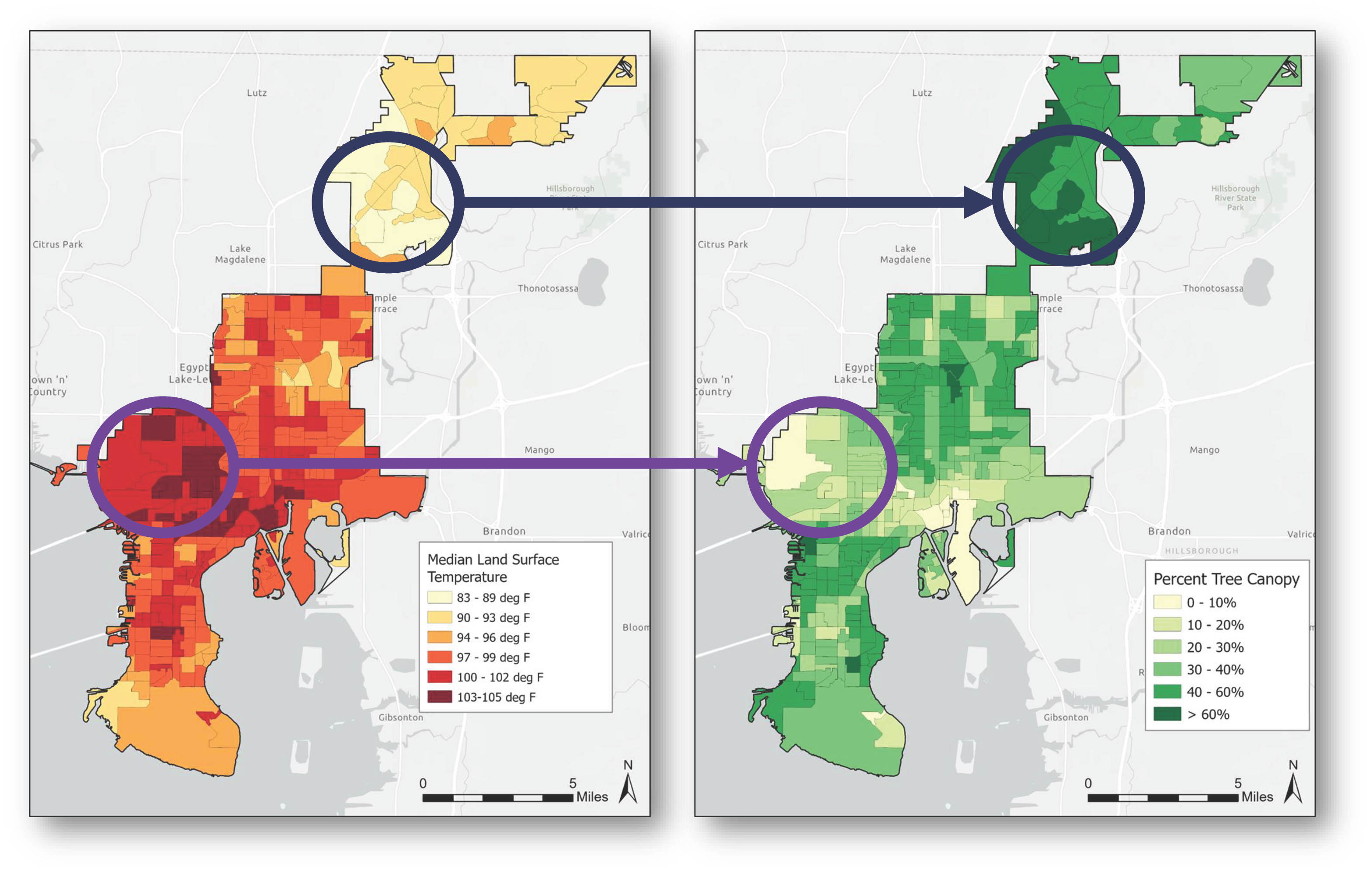
- “Urban heat islands” can form where tree canopy is removed.
- This effect can be reduced by planting more trees in heat intensive areas.
- The maps illustrate how areas with less canopy register higher temperatures in Tampa.
What is the Right of Way?
The right-of-way (ROW) begins where the private property line ends. It includes the physical infrastructure needed for transportation but can also include amenity elements such as landscaping, benches, medians, streetlights, and newspaper boxes.
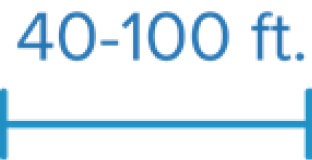
The width of the ROW is generally about 40-100 feet. Some older neighborhoods may have less than 30-foot ROWs for their streets

| Jurisdiction | Description |
|---|---|
| City of Tampa | Streets in Tampa consist of a mosaic of ownership between different jurisdictions, including the City of Tampa, Hillsborough County, and the Florida Department of Transportation. |

Maintenance of the ROW, such as filling a pothole or planting a tree, typically falls on the various entities who have ownership of the street.
Planting Challenges and Opportunities in the Right of Way
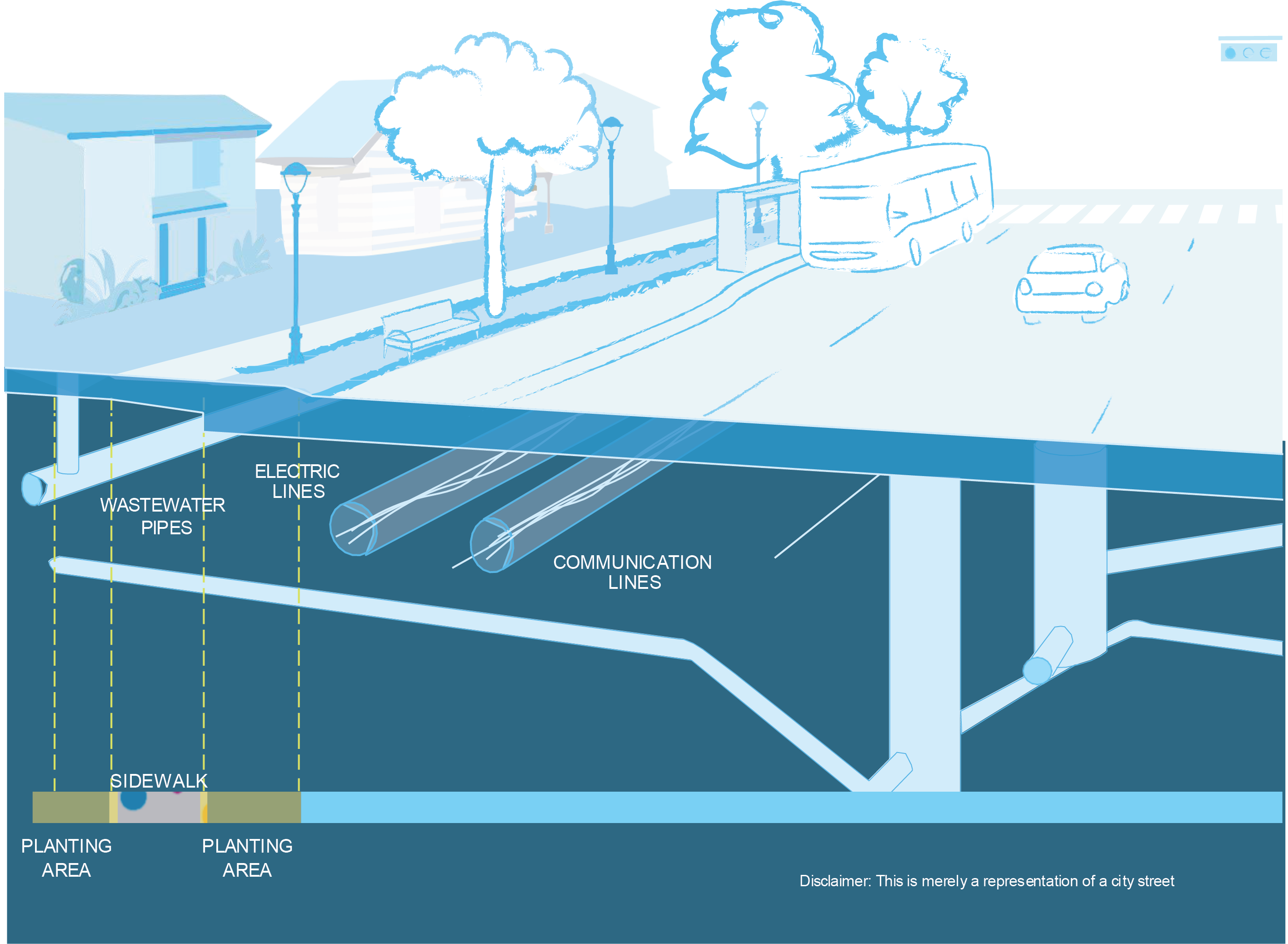
- The ROW is home to critical infrastructure that is often competing for a small amount of space.
- This can create challenges for planting trees
Shade Trees Provide the Most Benefits
In the City of Tampa, 1% increase in tree canopy cover adds $155 to $164 to the sales price of an individual home. A 10% increase would add $1,550 to the sale price in a neighborhood

- Shade trees provide large leaf areas that intercept rainwater
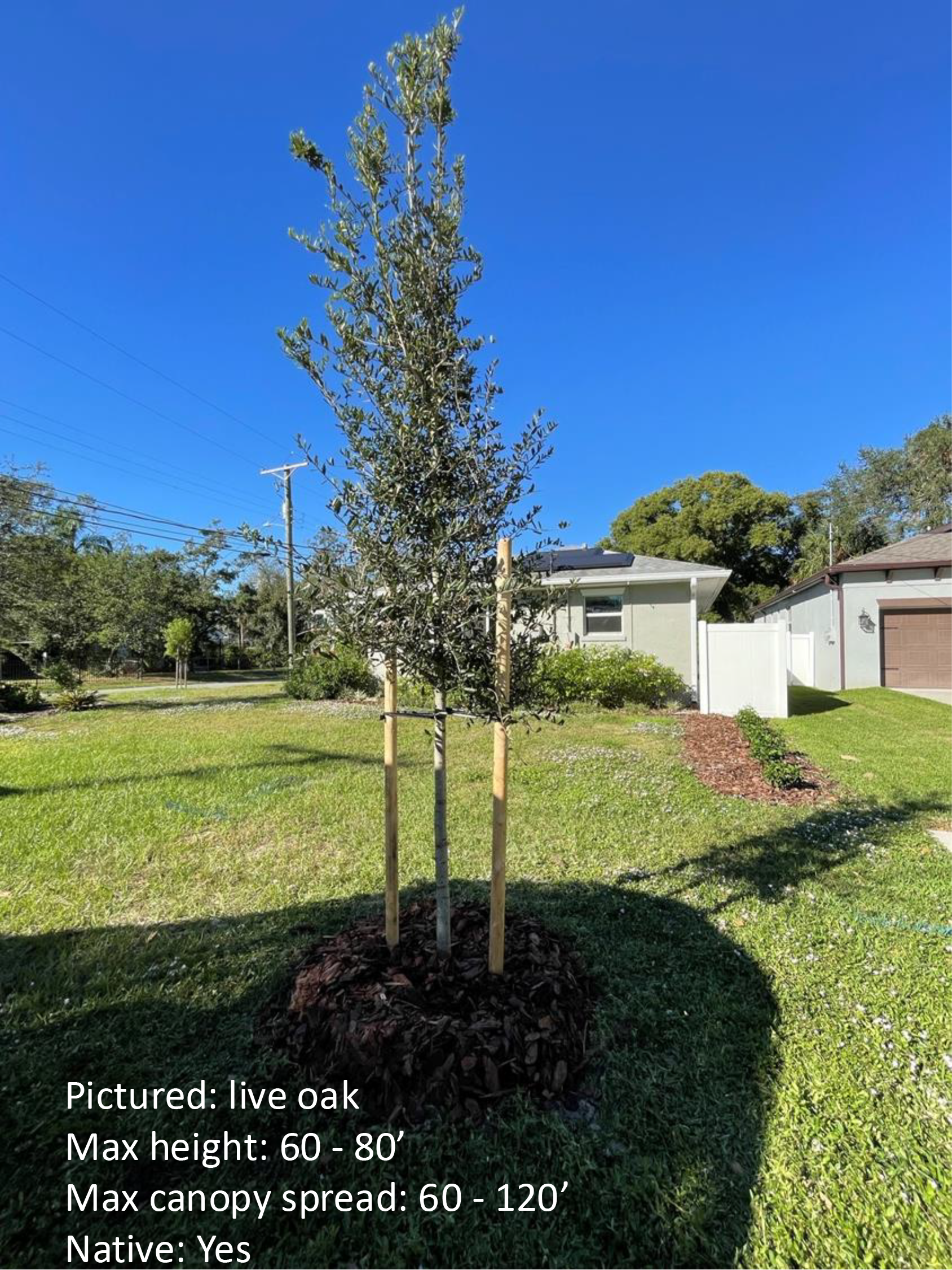
- Large native trees, such as the live oak pictured, are more capable of withstanding strong winds such as hurricanes and thunderstorms
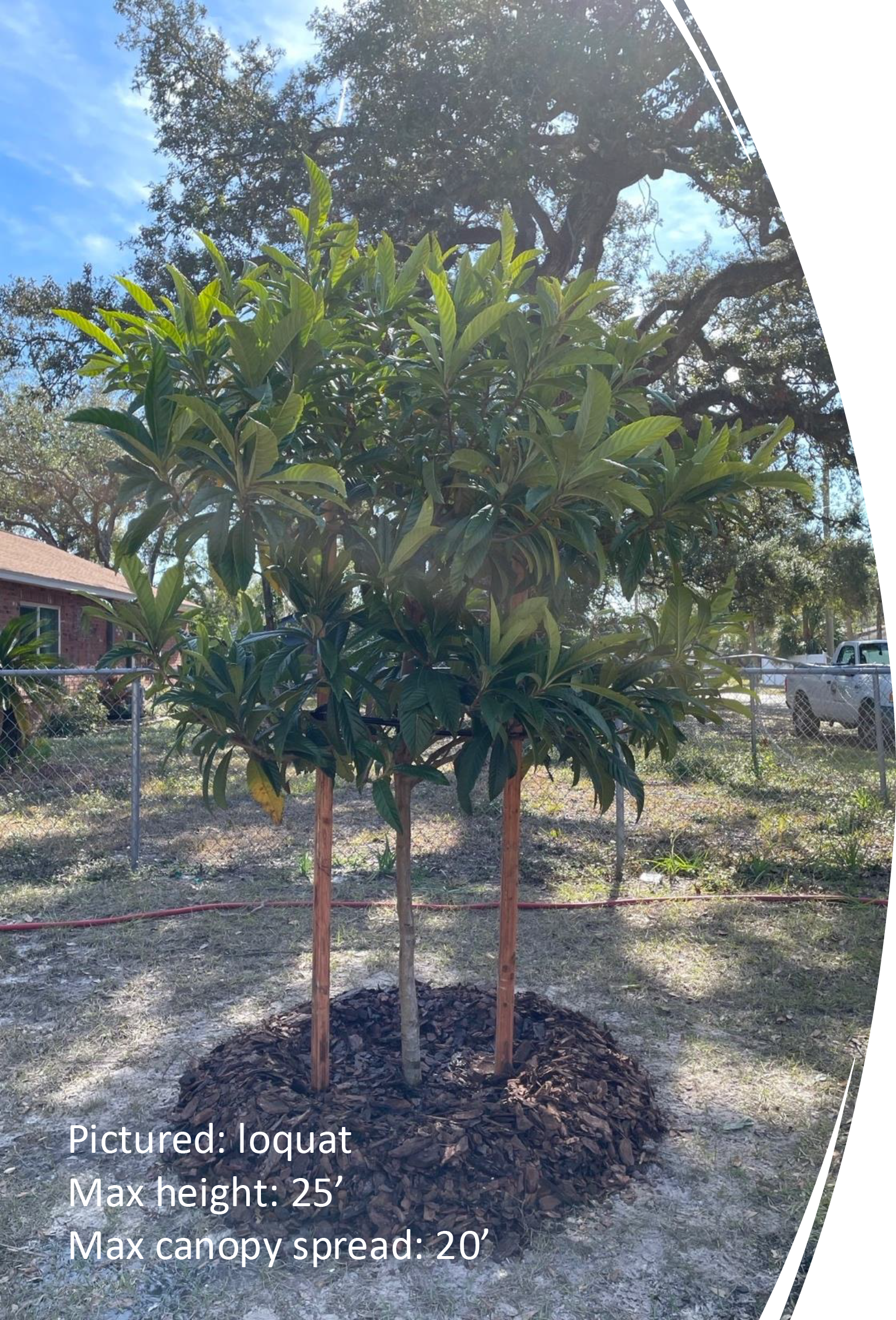
Understory (small) trees provide benefits in places where large trees cannot be planted

- Understory trees provide nuts, berries, and flowers that attract birds and native wildlife
- With an average height of 15-30 ft. small trees can be an ideal species for planting underneath powerlines