City of Tampa Annual Sustainability Report April 2017 Update ***
… Preserving Tampa’s natural resources while creating a sustainable future
Mayor’s Message

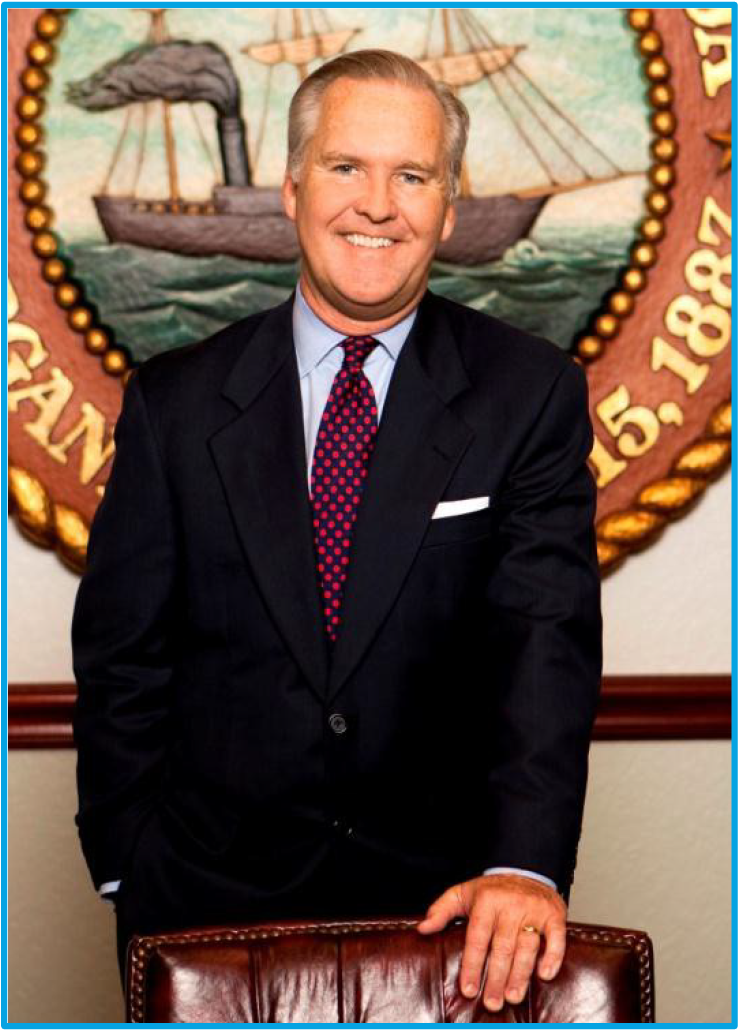
Bob Buckhorn, Mayor
City Government is working constantly to improve the overall quality of life in our community and that includes preservation of our unique and limited natural resources.
Initiatives such as encouraging the use of the City’s undeveloped lots for the development of public green spaces; modernization of land development codes and practices to promote urban redevelopment; fostering the City’s walkable and bikable urban policies; and the implementation of long-term sustainable methods of operations will increase this great City’s sense of permanence.
The City’s Green Officer will continue to guide government in enhancing the conservation measures, renewable energy programs and sustainable building practices that for the second time has earned the City of Tampa Green Local Government “Gold” status by the Florida Green Building Coalition.
I commend the citizens of Tampa for their long-standing support of programs and policies aimed at reducing the City’s carbon footprint for both current and future generations.
Resolution No. 2008-575 (Green Resolution)
On June 12, 2008, Tampa City Council passed Resolution No. 2008-575, the “Green Resolution”. The resolution requires an annual report from the City’s Green Officer highlighting the City’s progress in all areas of sustainability
This annual report is organized into five general areas of Sustainability:
| Category | Area |
|---|---|
| 5 Areas of Sustainability: | |
| □ | Green Spaces |
| □ | Green Environment |
| □ | Green Operations |
| □ | Green Building |
| □ | Green Business, Outreach & Education |
Green Spaces
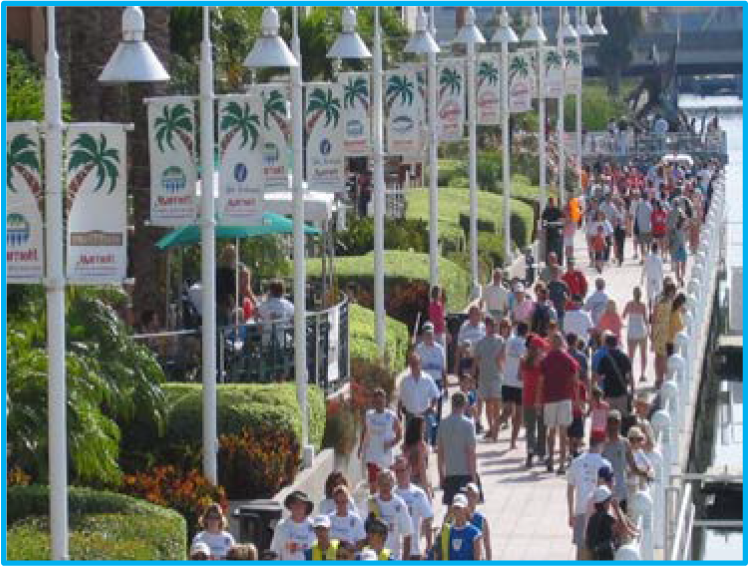
The City continues to create green spaces to conserve our natural ecosystem, protect our wildlife, create recreation facilities to accommodate sustainable and healthy lifestyles and foster our walkable and bikable urban policies.
Public Parks & Gardens
“Parks immeasurably improve the quality of life for our residents.” - Mayor Buckhorn
New Tampa Rotary Dog Park
This shady 0.62 acre site across from New Tampa Community Center facility is divided into small and large dog sections, and offer an ADA-accessible paved double-gated entry accented by the personalized bricks, drinking fountains with dog bowls, waste receptacles, dog station with disposal bags to avoid environmental contamination, benches and picnic tables, and a doggy wash off station.
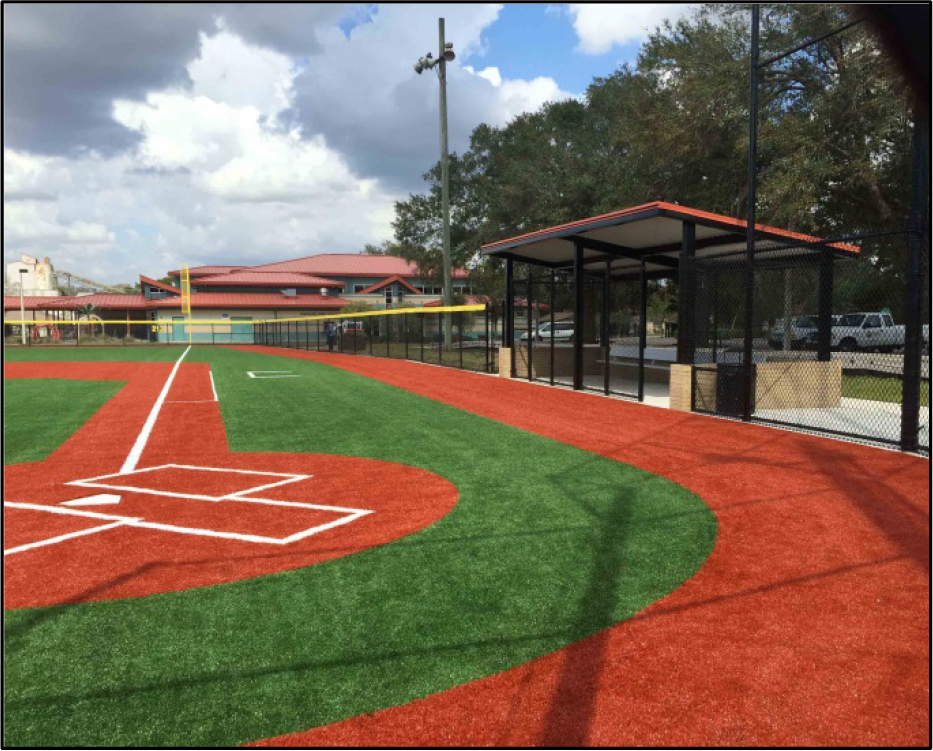
Cal Ripken Sr. Foundation Youth Development Field – Completed in April 2016
A partnership with the City and the Cal Ripken Sr. Foundation constructed the City’s first artificial turf youth development field at Springhill Park. This field and programs provides social equity for local youth as a safe haven to develop sports skills, life lessons and a sustainable healthy lifestyle.
Gateways
In partnership with Florida Department of Transportation (FDOT), two major roadways are receiving landscape and irrigation upgrades. Dale Mabry Highway from Gandy to MacDill Air Force Base will serve as a memorial gateway for soldiers that have given the ultimate sacrifice for serving our country. Hillsborough Avenue from N. Lee Place to I-275 will provide commuters and visitors with a vibrant landscape experience.
Madison Street Park
A new urban park is scheduled for the Channel District. This active recreation park proposes tennis, basketball and a dog park, along with passive recreation elements.
Forest Hills Park Improvements
Improvements to this park include storm water solutions and redeveloped recreational opportunities. Currently in design, these physical improvements are slated for 2016-2017.
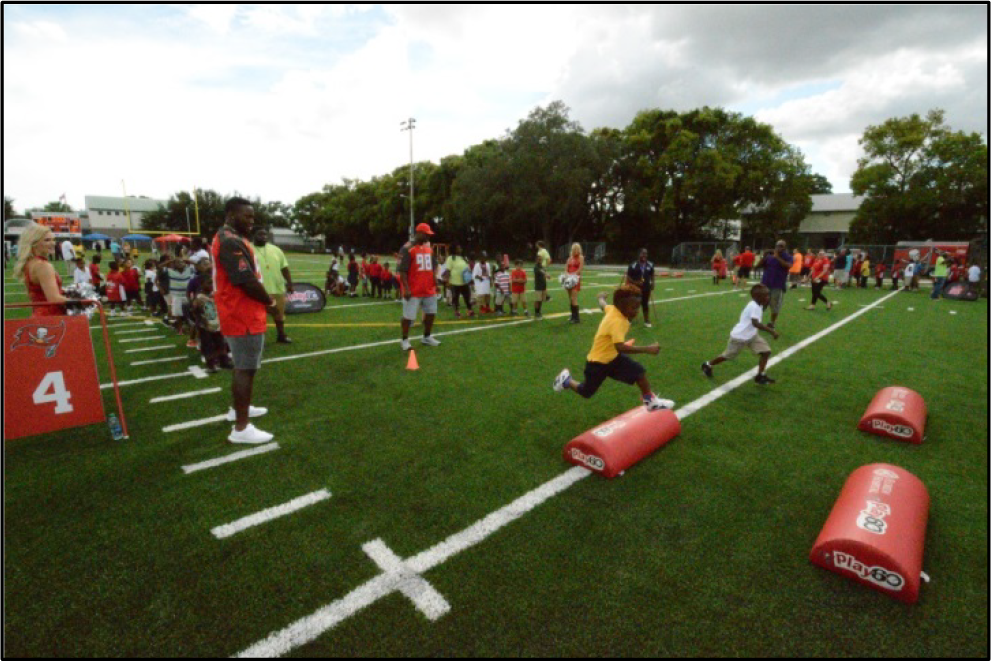
Jackson Heights NFL YET Center Multi-Sport Field Renovation
Completed in September 2016
Through a partnership with NFL Foundation, The Buccaneers and the Cal Ripken Sr. Foundation, a synthetic turf multi-sport field was constructed at Jackson Heights NFL YET Park. The field provides a professional quality playing surface for local youth involved in park programs and local sports leagues. The field is lined for football, soccer and men’s/women’s lacrosse. Mentoring youths and helping children learn a healthy and safe lifestyle brings additional social equity oppojrtunites to our youngest citizens. Sustainability is not just economic & environmental, it includes a strong social element
New Tampa Nature Park
New Tampa Nature Park is a 122-acre parcel of land that lies east of Interstate 75 and south of Bruce B. Downs Boulevard. The park connects to the Hillsborough County's Flatwoods Park trail system providing access to miles of trails. Amenities include a boardwalk that crosses wetland habitat, picnic areas and a 100-foot long zip line. Wildlife such as deer, turkey, alligators, bobcats, hogs, snakes, foxes, and many birds inhabit the park. The property languished for years, before it was acquired with help from the Florida Communities Trust Preservation 2000 program and the county's Environmental Lands Acquisition and Protection Program. The City is working with regulatory agencies to meet environmental requirements such as control burns, etc. In 2016, the city planted two hundred sixty eight trees across the park to increase the tree canopy coverage along the wetland edges, provide shade to park users and create additional areas to support wildlife.
Scott Street Improvements
The City’s first Complete Street project includes a pedestrian thoroughfare improving the walk-ability of the urban core connecting Perry Harvey Sr. Park and the Encore redevelopment project to 7th Avenue in Ybor City. Pedestrian amenities include over one hundred new trees to shade the pedestrian areas, benches, bicycle parking, drinking fountains and creative storm water treatment areas complete with Florida-Friendly Landscaping™ and stone gabions to filter and clean runoff.
Davis Islands Dog Beach
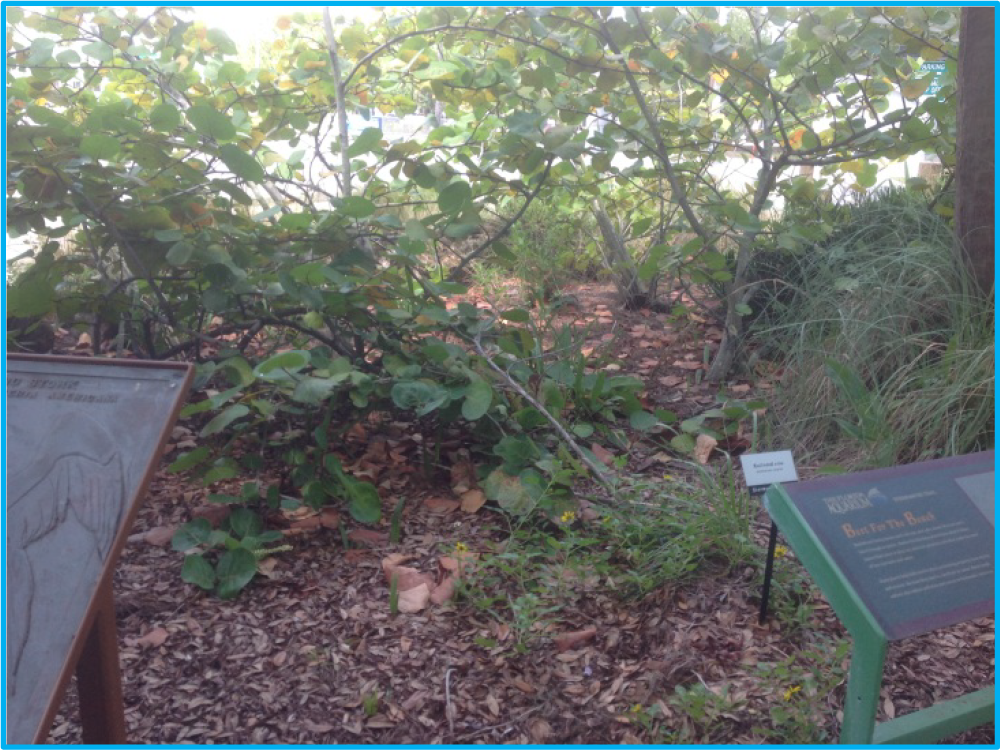
The dog beach is widely used and over the years has developed areas of exposed rubble and shoreline erosion. This restoration project included shifting the hard defined edges of the park entrance and wash pad further from the waterline, easing the slopes and grades to minimize erosion, stabilizing the slopes with stone, and planting new Florida-Friendly Landscaping™ along this area to further stabilize the areas of concern using natural shoreline stabilization techniques.
Takomah Trail Park***
Volunteers from TD Bank, in partnership with Keep Tampa Bay Beautiful, planted 21 Native Florida-Friendly™ trees to enhance the landscape adjacent to the permeable shell path leading to the new Takomah Trail Park fishing pier.
Cuscaden Pool ***
Cuscaden Pool has been renovated to minimize water usage and waste. The addition of new high energy efficiency heaters conserves energy to provide a cost and energy savings during the cooler months to allow a more economical and energy efficient solution to year-round swimming.
Tampa Greenways and Trails Master Plan (Ongoing)
In 2016, the City of Tampa and Hillsborough County Greenways and Trails Master Plans were updated and combined into one document that acknowledges a regional approach to trail and greenway planning, with alignments identified that connect the City of Tampa to neighboring cities and county facilities. The Master Plan increases public access to recreational and non-motorized transportation opportunities and is designed to link parks, schools, transit bus systems, waterfront areas, and places of cultural and historical significance. The planning process is citizen-driven, led by members of local neighborhoods, businesses, and public agencies
Cypress Point Park (November 2013)
A new 3,300-square foot playground containing play features for children ages 2-12 such as rope climbers, a see-saw, and spinners has been constructed at the starting point of the Tampa side of the Courtney Campbell Trail. If you fly into Tampa International Airport or drive into Tampa on the Howard Frankland Bridge, its white-sand beach is easy to spot north of the bridge.
Along with the new playground, the seawall is being repaired and a new restroom and concession building added at Ben T. Davis Beach as amenities to the trail. Additional comfort/rest stations with shade and weather structures, drinking fountains, benches, bike racks, and trash receptacles; security cameras; and, new landscaping will be installed by Hillsborough County.
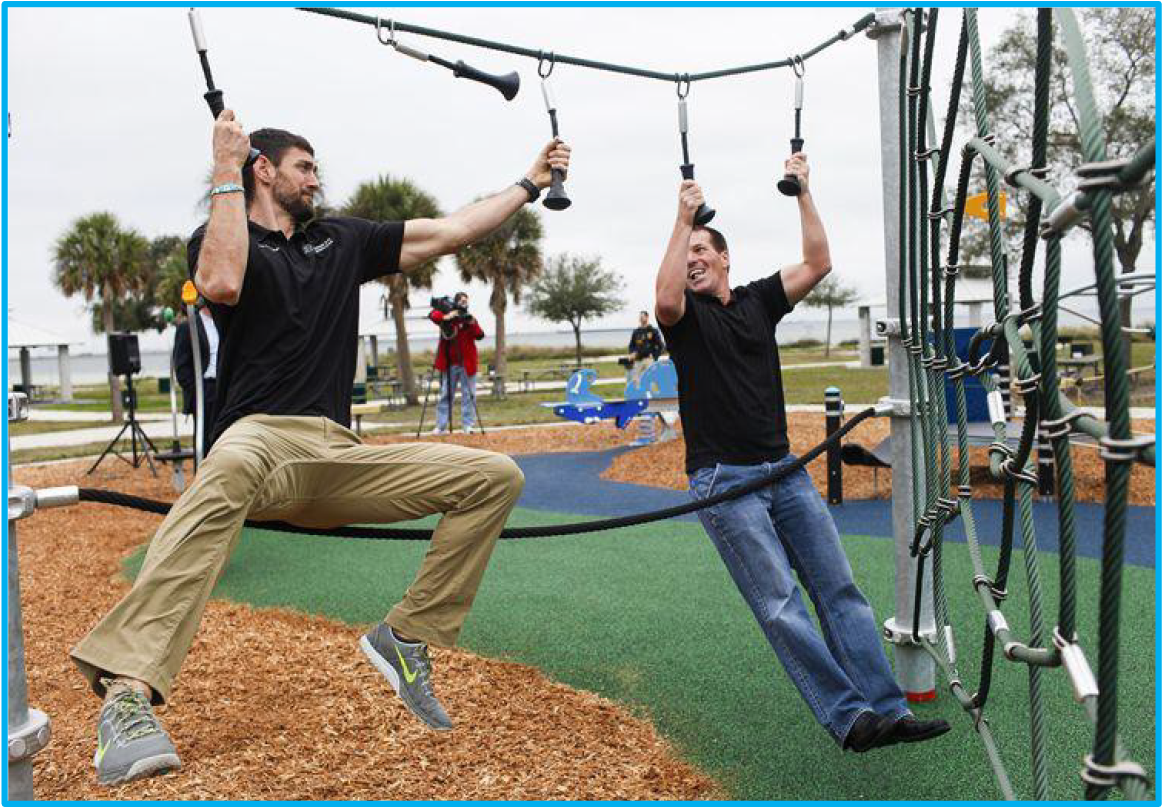
Ballast Point Park Grand Reopening (September 2012)
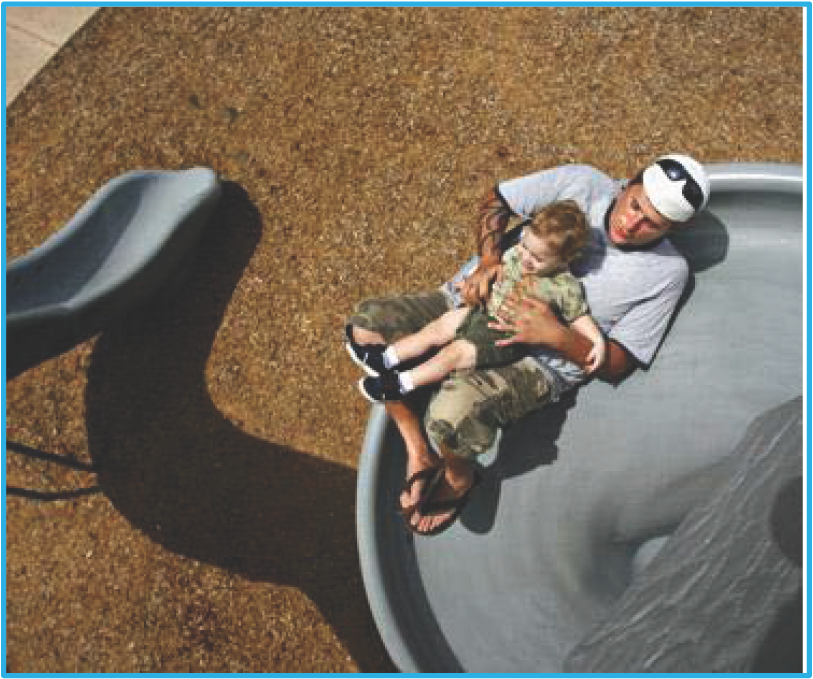
Ballast Point Park, a Tampa park for more than 100 years has reopened. Improvements to the park include a great circular lawn, the use Florida-friendly landscape throughout, a playground designed for children under 5 years of age, a splash pad, new picnic shelters, benches, and grills. The park, located on Interbay Boulevard, was developed as a tropical park in 1894 to serve as a terminal for an electric trolley-car line at the south end of Bayshore Boulevard. It was originally called Jules Verne Park after French writer Jules Verne who in his novel From the Earth to the Moon fired a cannon from "Tampa town," Florida to the moon.
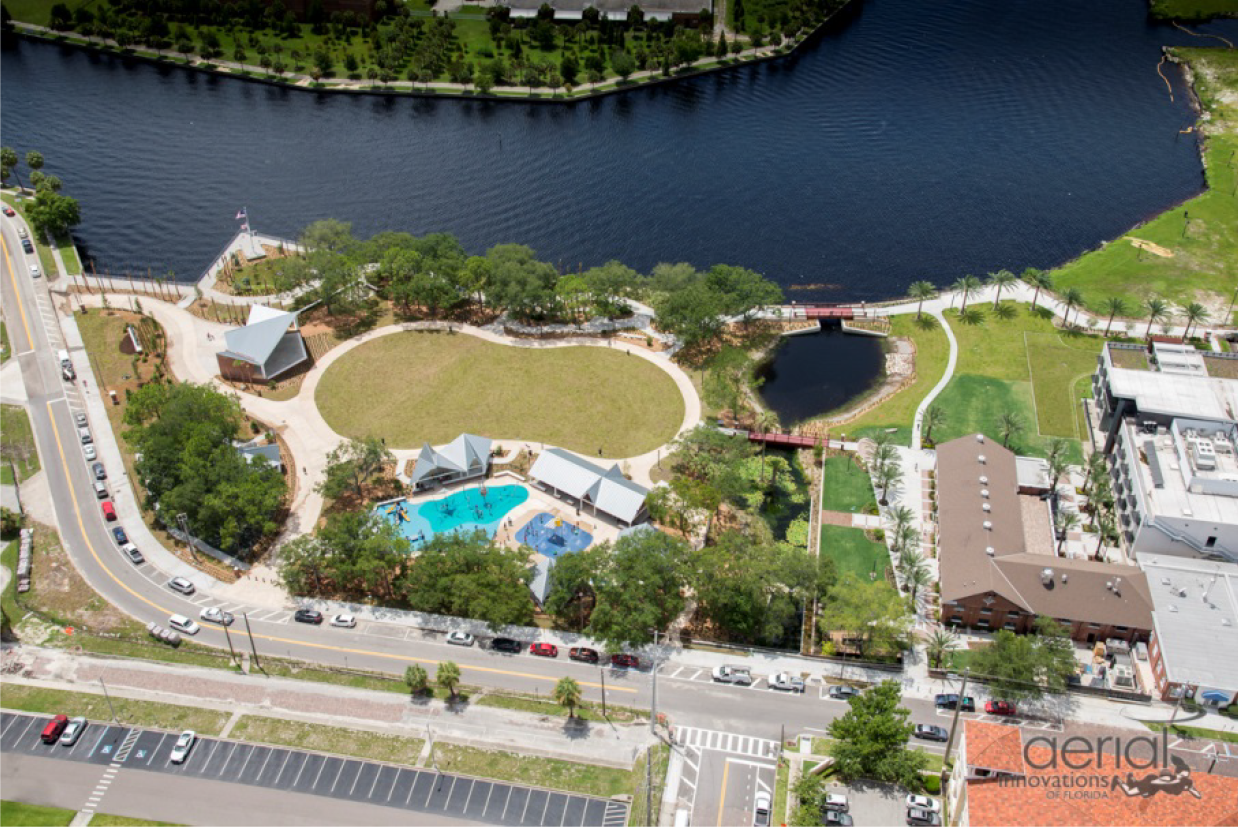
Water Works Park (October 2013)
Water Works Park, a 5-acre expanse of green space along the Hillsborough River in Tampa Heights, is home to Ulele Spring. The spring is Tampa's original source of fresh drinking water and was named for the daughter of a Timucuan Chief who saved the life of a young 16th Century Spanish explorer. The park property, along with a restored and expanded spring area, was completely redeveloped and opened to the public in August 2014. In addition to the Riverwalk construction and shoreline improvements, park amenities include the Clara Frye Garden, a festival lawn and event pavilion stage, boat docks with a canoe/kayak launch, children’s play area with a splash pad, and a dog park area. The century old Water Works Building located next to the park was restored by the Columbia Restaurant Group into the popular Ulele Tavern. Environmental restoration of the Water Works Park property was conducted under the City’s Brownfield Program in order to take advantage of State of Florida Brownfield financial incentives.
Julian B. Lane Riverfront Park (Summer 2016)
The 25-acre Julian B. Lane Riverfront Park is scheduled to get a complete make-over commencing in the summer of 2016. It is located on the west side of the Hillsborough River across from the Straz Center. The park opened in 1977 and was named after dairy rancher Julian B. Lane who served as mayor of Tampa from 1959 through 1963. Amenities include a state of the art rowing center that included a second floor, community space and rental opportunities; two special event areas; picnic areas; splash pad and playground; a dog park; additional parking; trails; tennis court; a synthetic turf multi-purpose field; docks with canoe and kayak launch; public art and overlooks the Hillsborough River and downtown skyline. Another consideration for the park is to extend the Hillsborough River Greenway, a trail that runs near but not directly along the riverbank, to bring new activity to the riverfront.
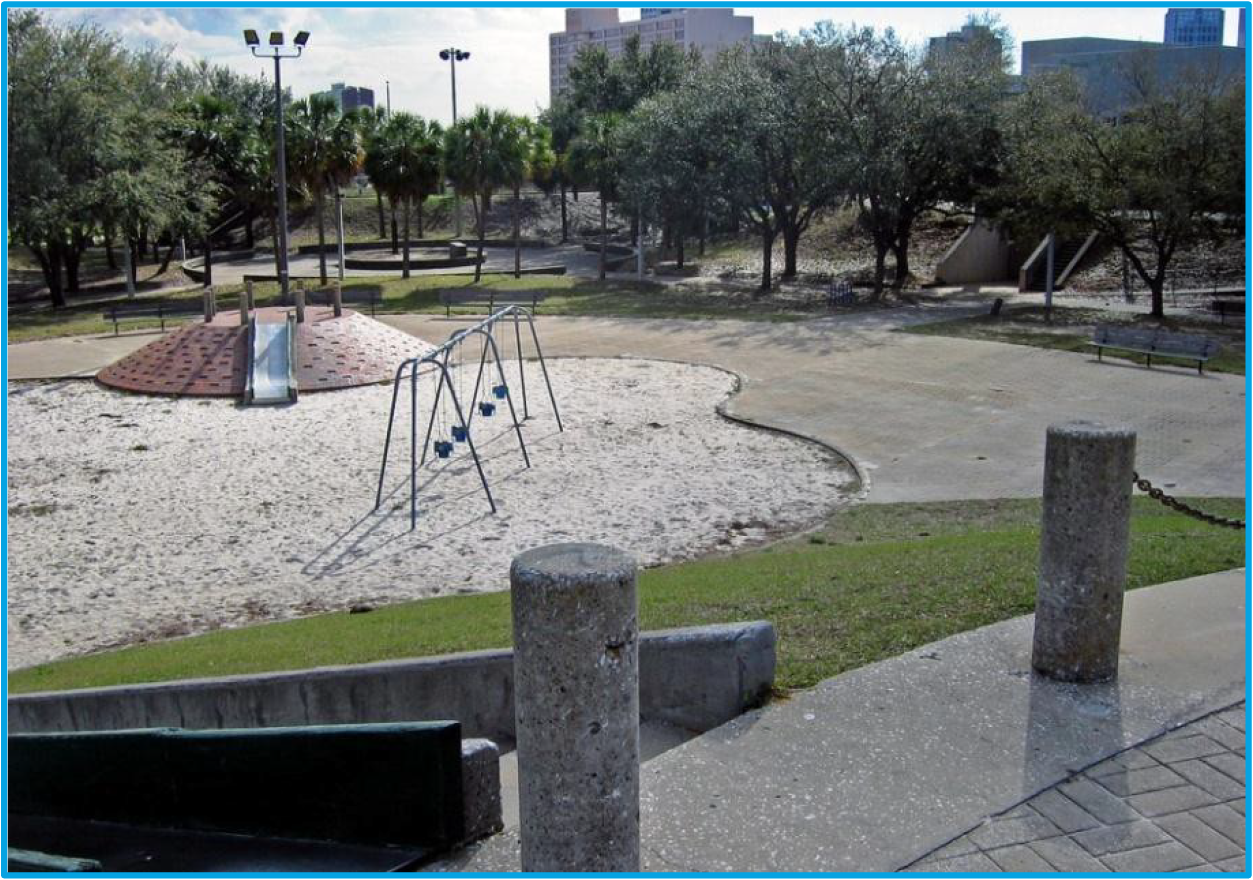
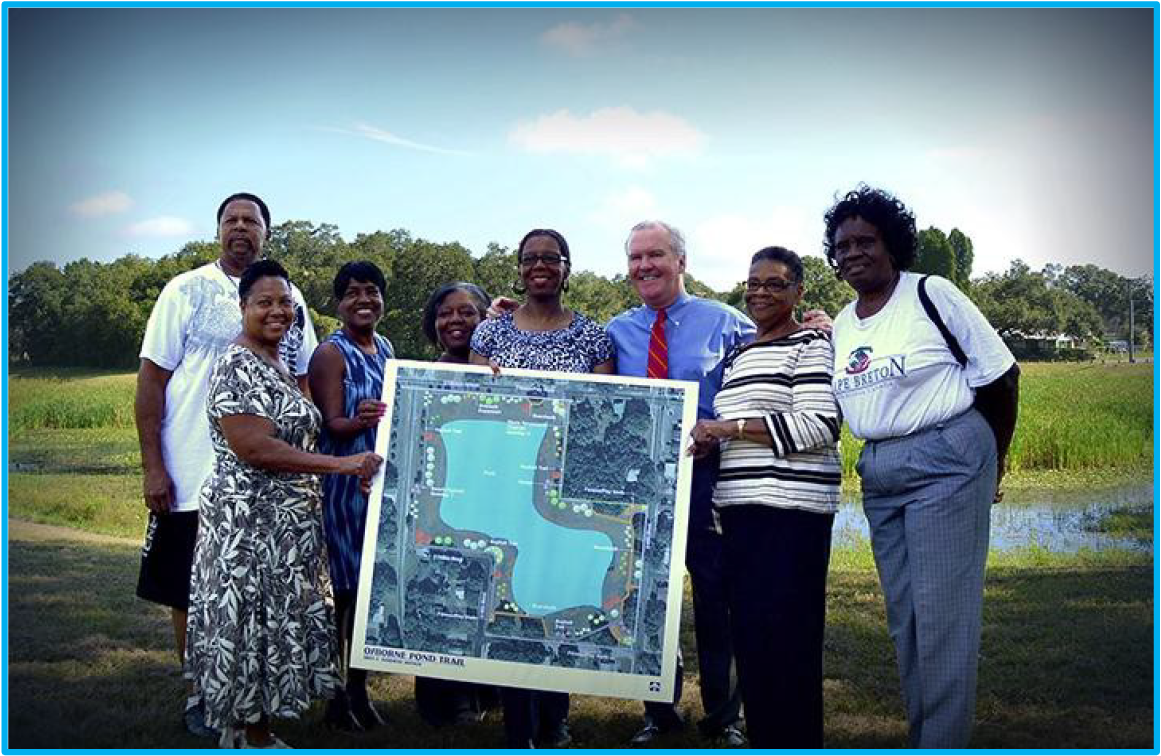
Clarence Fort Freedom Trail (Completed September 2014)
An exercise trail, 8 feet wide and about 0.4 miles long, and boardwalk was constructed to surround the 3.8-acre Osborne Pond. The half-mile trail has four stops along the way, offering eight pieces of fitness or play equipment. More than 110 trees, including palms and cypress were planted to complete the inviting look. The trail opened to the community in September 2014.
Perry Harvey Sr. Park Redevelopment (Completed 2016)
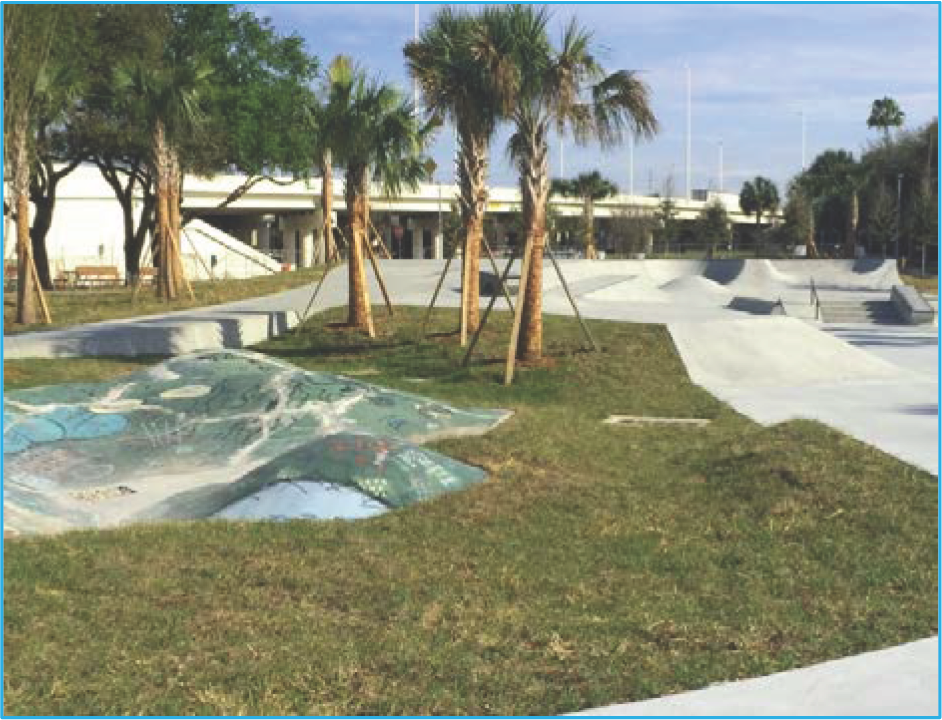
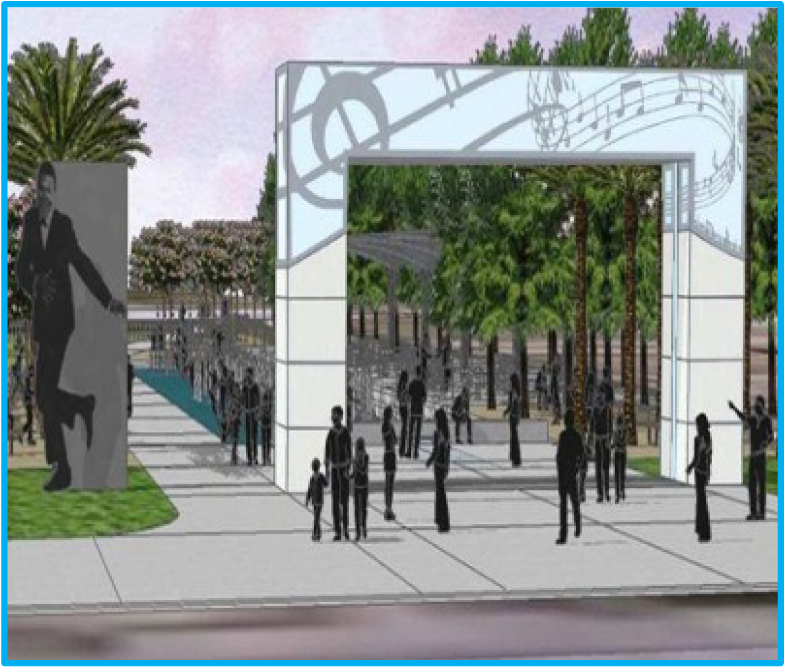
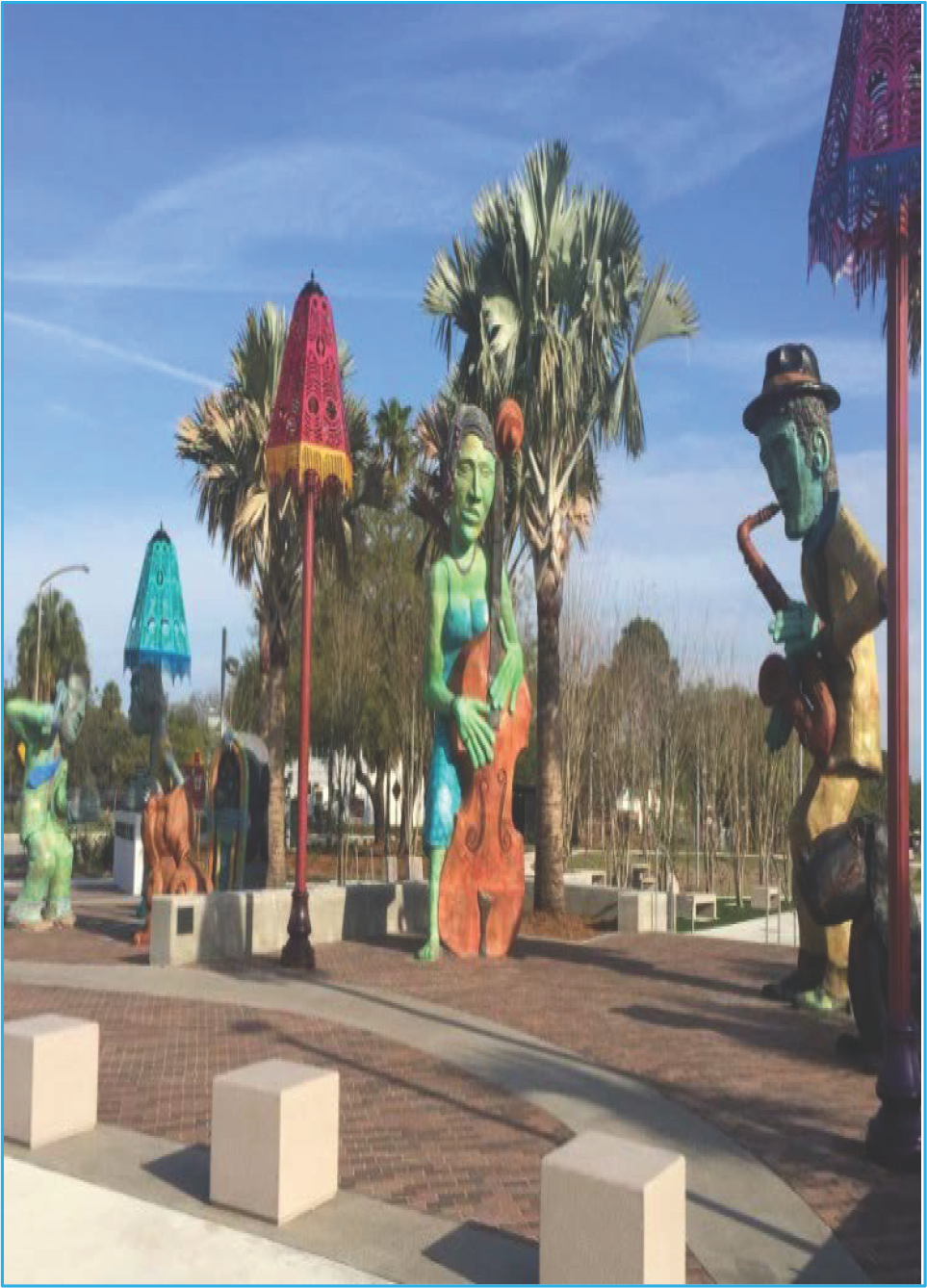
A complete redevelopment of Perry Harvey Sr. Park, adjacent to the Encore Urban Redevelopment Project provides insights to the rich cultural history of the area, the community and the businesses along Central Avenue. Amenities include a southern plaza with monumental sculptures of musicians, which act as a gateway to the Park, and interactive fountain programmed to music, a history walk with Life Tiles that show pictures of the era, a festival lawn, Leaders Row, picnic areas, basketball courts and a skate park. Perry Harvey Sr. Park includes:
- A history walk that would take pedestrians through a timeline outlining Central Avenue's development, its businesses, buildings and people.
- A study of the existing skate bowl.
- A fountain featuring lights and music.
- Open lawns with space for concerts or other events.
- Historical markers, but more than just bronze plaques.
Parks Department Honored by Florida Native Plant Society (February 2012)
Cotanchobee Fort Brooke Park
Received an Award of Honor for the restoration of the natural shore line. The concrete seawall and dock were removed and the bank was re-graded and restored along its entire length. Buffers were created through the use of rip-rap, oyster shell mounds and native wetland plantings to establish the shoreline and provide estuary and wildlife habitat. A dock with a floating kayak launch provides access to the water. The 6.5 acre park is predominantly planted with native trees, shrubs, grasses and ground covers. Located on Old Water Street directly behind on the Tampa Bay Times Forum, the park serves as a living demonstration of the benefits of using native plants to create a successful urban park.
USF Park
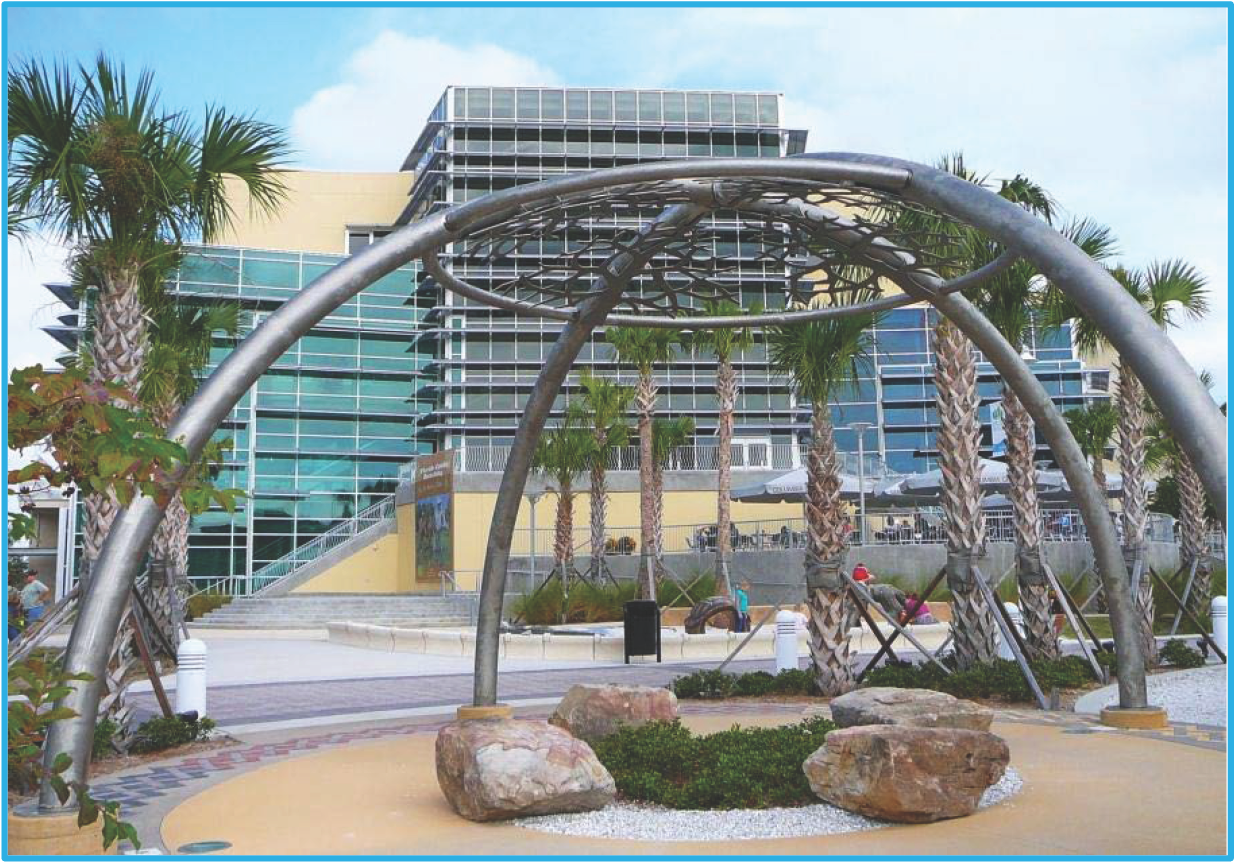
Received an Award of Merit for its environmentally-friendly design. The park includes USF Plaza, which honors the university’s contributions to the city as an institute of higher learning. The Riverwalk connection allows visitors to walk from the west side of the Tampa Convention Center all the way to the Channelside district. The park incorporates seating along undulating walks, surrounded by native plants that provide shade and interest along with views of the shoreline. USF serves as a great example of restoring a small urban site to a naturalized setting while recreating connection to the river in downtown Tampa.
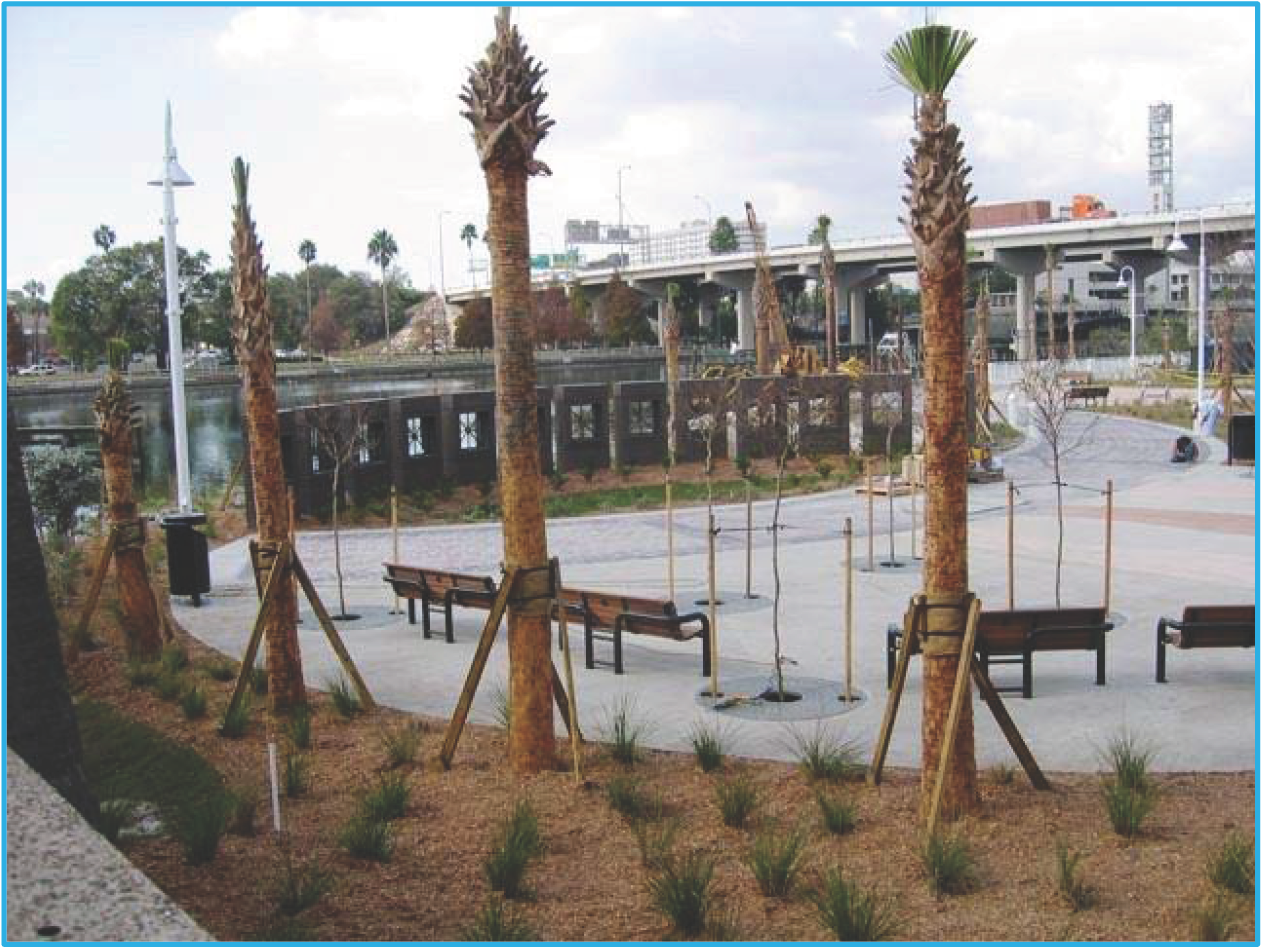
Greenways, Trails, Roundabout & Bridges
Upgraded Bayshore Boulevard fitness trail (November 2013)
The equipment at all 10 fitness stations on the Bayshore Boulevard trail has been replaced through the generous donation of local law firm Hill, Ward & Henderson. The trail stretches along Bayshore from the Davis Islands bridges south to Rome Avenue. The sand pits at each station were also upgraded with weather- and saltwater-resistant rubber surfaces. New equipment includes upgraded leg and hip stretchers, a pommel horse and a sit-up bench.
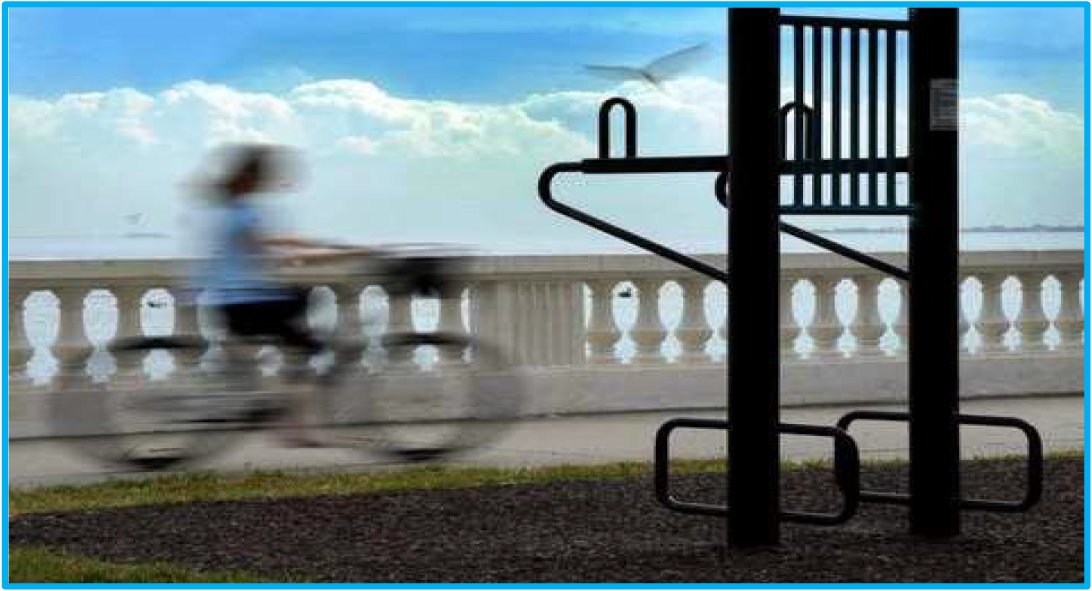
“Bayshore is a better place and our community will be a healthier place.” - Mayor Buckhorn
Scott Street Improvements
The City’s first Complete Street will be a pedestrian thoroughfare improving the walk-ability of the urban core connecting Perry Harvey Sr. Park and the Encore redevelopment project to 7th Avenue in Ybor City. Pedestrian amenities include benches, lighting, water fountains, landscaped areas and creative storm water treatment areas.
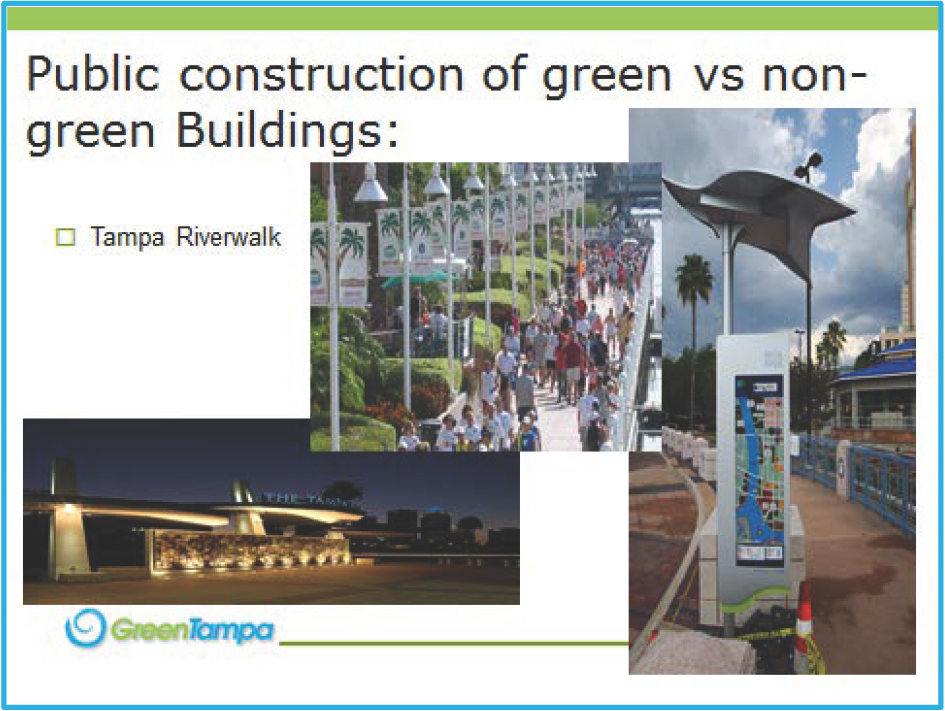
Tampa Riverwalk (Completed) ***
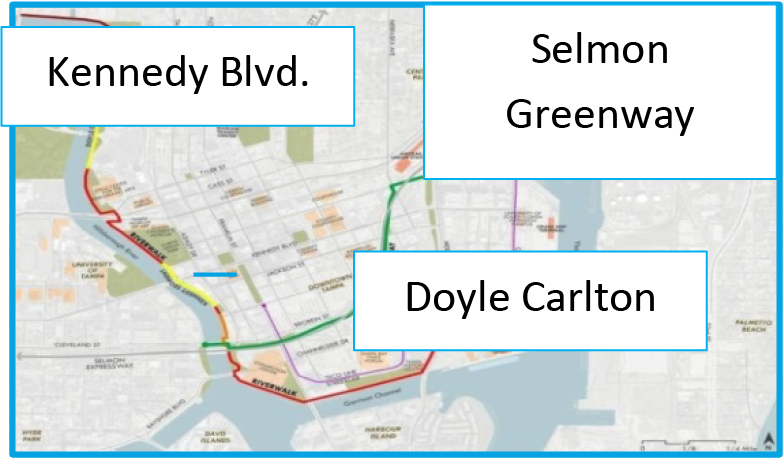
The City was awarded a TIGER grant in the amount of $10.9 million to complete the final two sections of the Riverwalk and design and construct the Selmon Greenway. The Greenway project, managed by the Tampa-Hillsborough Expressway Authority, will stretch 1.7 miles under the Selmon Expressway viaduct from the river (and Riverwalk) to 19th street. The two sections of the Riverwalk consist of the Doyle Carlton section linking the Straz Center to the Water Works Park, and the Kennedy Boulevard Plaza, 1460 feet of walkway over the River, connecting MacDill Park to Curtis Hixon Waterfront Park. The completed Riverwalk stretches 2.4 miles from the Water Works Park down the Hillsborough River and along Garrison Channel to the Channelside District. The Riverwalk provides a venue for pedestrian activity, serves as an impetus for other transportation means such water taxis and has restored deteriorating seawalls. LED lighting has been used in numerous places along the Riverwalk to conserve energy. The Riverwalk continues to expand its use of energy efficient elemtns and conservational techniques. Another solar map sign was also installed in the final section of Doyle Carlton. Also, the Stormwater Department has also installed a Stormcepter at the corner of Brorein and Ashley to filter debris from the streets. Recycling cans were added through Keep Tampa Bay Beautiful – Grant
 Kennedy Blvd. Selmon Greenway Doyle Carlton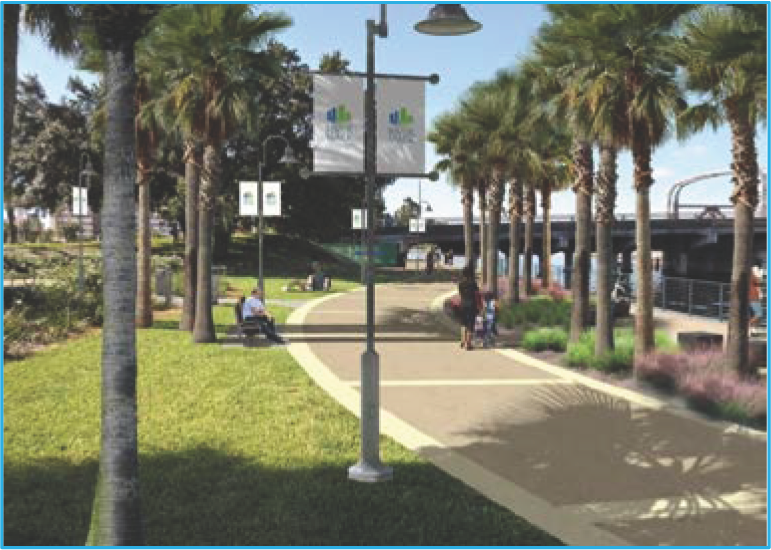
South Plaza segment of the Tampa Riverwalk
The Tampa Riverwalk’s South Plaza is the beginning of the waterfront pedestrian corridor that spans from the Channel District to the Brorein Street Bridge. The Plaza serves as the gateway to Cotanchobee Fort Brooke Park and the Tampa Bay History Center. It incorporates contemporary shade structures and informational kiosk signage, whose maps and lighting are solar powered.
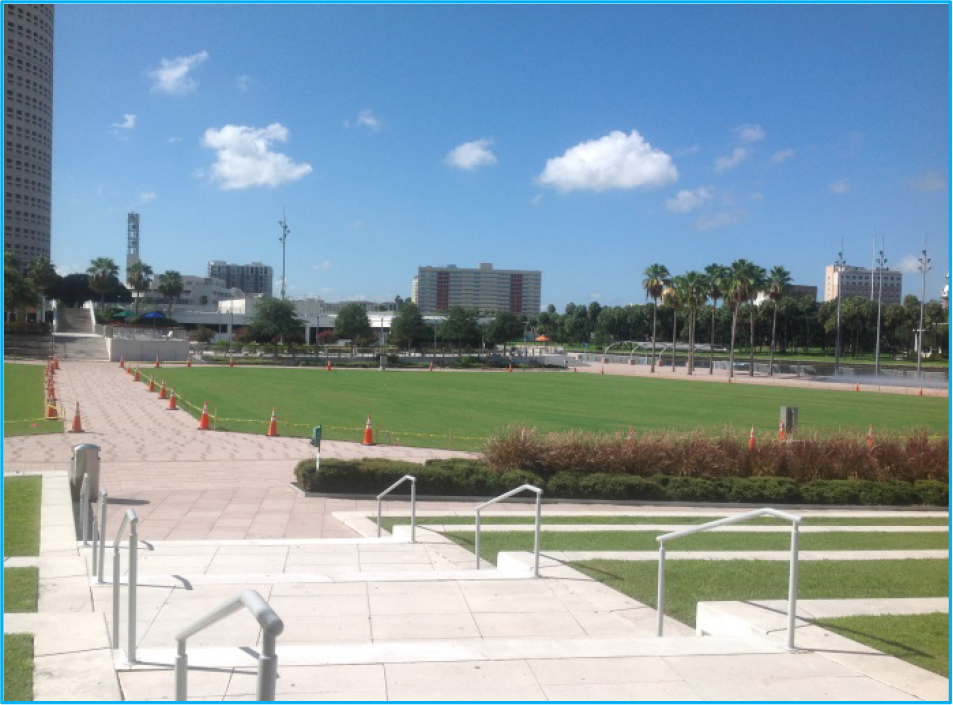
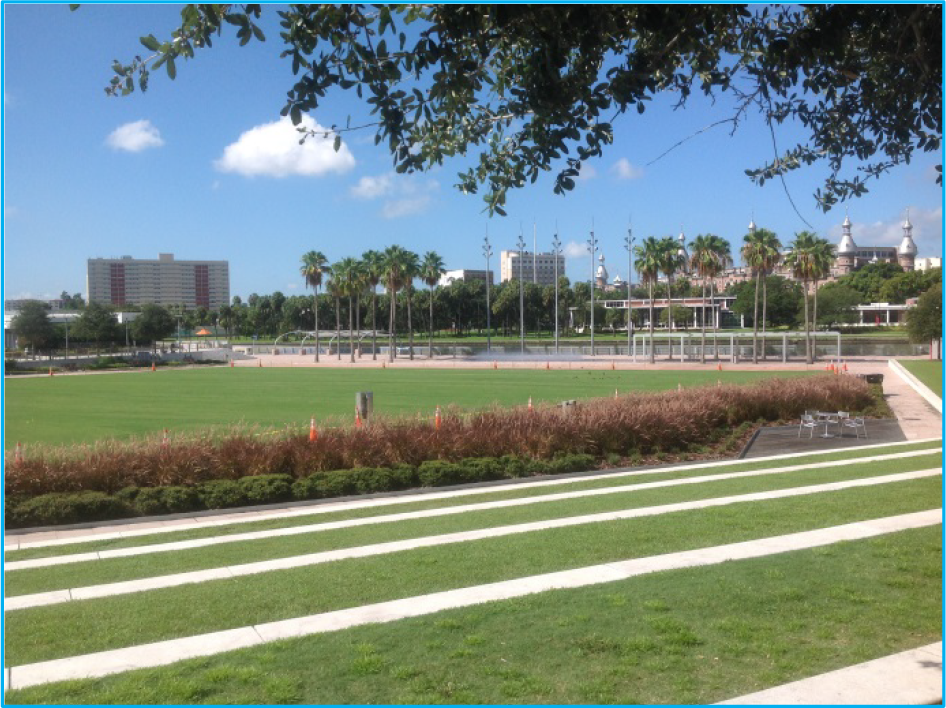
Curtis Hixon Park
Drainage improvements help control water runoff near the river and reduce turf damage that would require increased fertilizer use. Other improvements include better walk and drives within the park and an improved stage set up area. LED lighting was added to improve energy conservation efforts along the walkways and railings.
Courtney Campbell Trail Amenities
The Courtney Campbell trail connecting to the Pinellas Trail and beyond is an incredible destination and heavily used. In partnership with Hillsborough County and the Florida Department of Transportation various amenities are planned along the trail: comfort stations with shade, a water filling station, bike repair stations, and enhanced landscaping will provide trail users with additional comforts.
Trail Opened in South Tampa (February 2012)
A new one-mile asphalt multi-use trail running along the east side of South Manhattan Avenue at Interbay Boulevard has been constructed. The Manhattan Avenue segment of the Friendship Trail Project is part of the City's South Tampa Greenway, a planned 15.8-mile trail linking Bayshore Boulevard to the Gandy Bridge and Picnic Island. A pedestrian crossing just south of West Iowa Avenue allows users to ride along the west side of South Manhattan Avenue up to Legacy Park Drive, just south of West Tyson Avenue. Additionally, 82 Florida-friendly trees were planted along the trial to create a future-shaded walkway.
West River Trail at University of Tampa
A trail from Cass to Kennedy was constructed on the campus of the University of Tampa. The segment runs along the Hillsborough River and is expected to connect to a trail behind Tampa Prep and into the redeveloped Julian B. Lane Riverfront Park (construction commences June 2016).
Downtown Opportunity Corridors (August 2012)
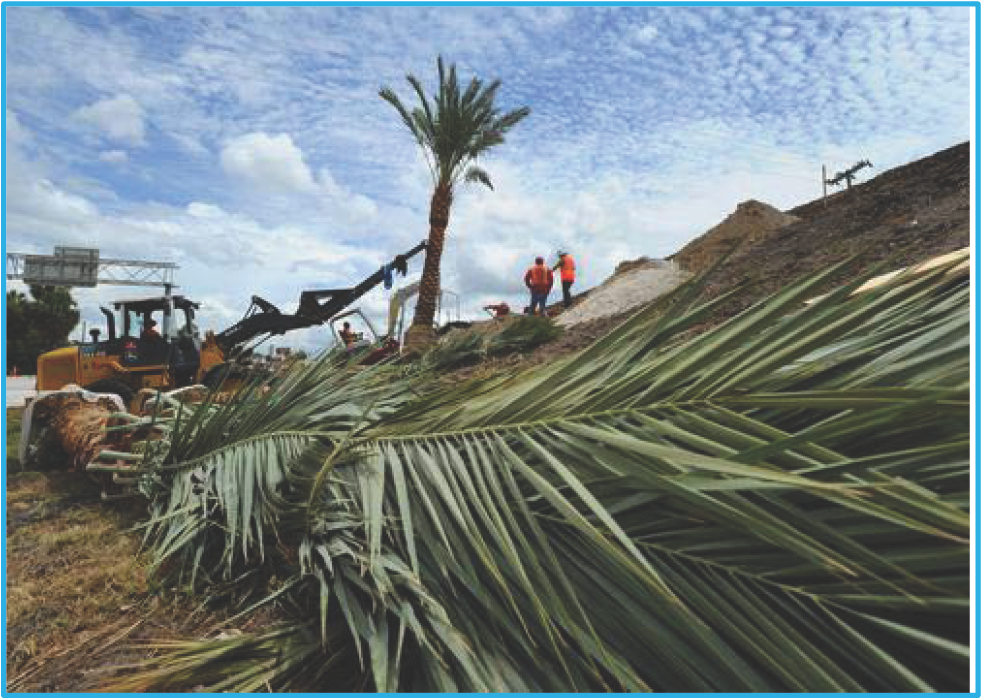
As part of the Opportunity Corridors project, 782 indigenous trees such as Southern Red Cedar, Chickasaw Plum, and Sabal Palms were planted in and around downtown. The project will be expanded, working in concentric circles, during the upcoming years to include major transportation arteries, such as Ashley Drive, Nebraska Avenue, and Martin Luther King Jr. Boulevard in an effort to create a more pedestrian-friendly environment. The downtown Corridors include: Bayshore Boulevard from Platt St. to Rome Ave.; Ashley Drive; Orange/Jefferson Interchange; Union Station; Laurel Street; Franklin Street; and Nuccio Parkway.
Tampa Greenway and Trails Master Plan (Ongoing)
The Master Plan increases public access to recreational and non-motorized transportation opportunities and is designed to link parks, schools, transit bus systems, waterfront areas, and places of cultural and historical significance. The planning process is citizen-driven, led by members of local neighborhoods, businesses, and public agencies.
22nd Street Roundabout (September 2013)
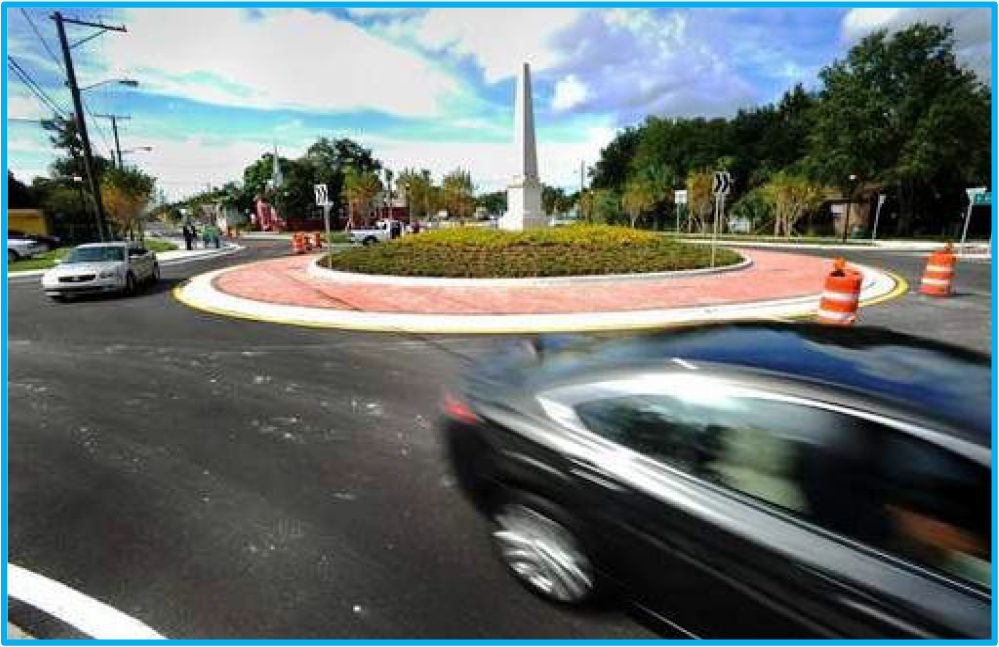
The 22nd Street road work is on a stretch of 22nd that links Ybor City with East Tampa and includes the College Hill neighborhood and the Belmont Heights Estates complex from Dr. Martin Luther King Jr. Boulevard to 21st Avenue. Improvements include landscaping, irrigation, crosswalks, a 10-foot-wide multi-use trail on the west side, more sidewalks, bus bays and shelters, signs alerting motorists to share the road with bicyclists and, in some areas, bicycle lanes.
New Tampa Boulevard Bridge (February 2013)
A new bridge has been constructed in response in New Tampa to a New Tampa Area Traffic Safety Study. The bridge, just under one mile in length, includes a 5-foot sidewalk on the south side and an 8-foot wide multiuse trail on the north side, allowing pedestrians and bicyclists to safely cross the interstate without using the high-traffic and construction-filled Bruce B. Downs Boulevard.
“The bridge will improve the quality of life for area residents.” – Mayor Buckhorn
Urban Trail linking 20 miles of Tampa destinations
Looping, nearly 20-mile-long bicycle and pedestrian trail connecting Tampa neighborhoods with key city destinations is a step closer to reality.
The proposed Perimeter Trail would provide well-marked, safe routes linking such destinations as downtown's shopping and event districts, the banks of the Hillsborough River, city parks and schools, and neighborhoods including Ybor City, Rowlett Park, Sulphur Springs and Lowry Park.
The trail, a joint project being considered by the city of Tampa and the Hillsborough Metropolitan Planning Organization. The proposed Perimeter Trail dovetails with the City’s InVision master plan to create a more walkable, bikable city.
"The Perimeter Trail will be a significant addition to the City of Tampa's bicycle and pedestrian circulation system, as it connects residential areas to parks and other bicycle and pedestrian facilities such as the Selmon Greenway and the Riverwalk extension," says a report on the feasibility of the trail.
The segments include: State Road 60 and Adamo Drive to the intersection of 21st Avenue and 29th Street; 21st Avenue to East Hillsborough Avenue; East Hillsborough Avenue to 22nd Street Park (including the 22nd Street Park); 22nd Street Park to Sulphur Springs Park; Sulphur Springs Park to Sligh Avenue; Sligh Avenue to West Hillsborough Avenue; West Hillsborough Avenue to Dr. Martin Luther King, Jr. Boulevard; and Dr. Martin Luther King, Jr. Boulevard to Palm Avenue.
Completing the entire trail involves identifying low-vehicle-traffic streets, installing roadway signage, creating both dedicated bicycle lanes and sidewalks as well as shared roadway lane markings, and installation of pedestrian- or biker-activated traffic signals on higher traffic volume streets.
Urban Forest
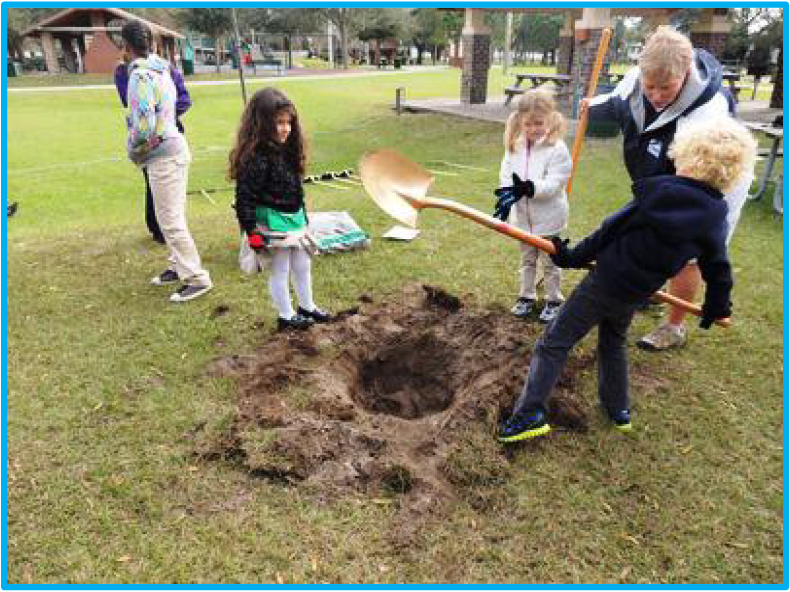
Arbor Day Celebration (Ongoing Program)
MacFarlane Elementary School students and the Parks and Recreation Department celebrated Tampa as a Tree City USA® by planting three American Liberty elm trees at MacFarlane Park. The National Arbor Day Foundation recognizes cities across America that effectively manage their tree resources based on Tree City USA® program standards.
The City boasts over 4 million trees that assist in the removal of air pollutants, provide energy conservation, conserve soil and water, and bring the natural environment into our lives. For the past 34 years, the City has received the “Tree City USA designation by the Arbor Day Foundation for it its street canopies, planning efforts, planting programs, and proven urban forestry practices.
Urban Ecological Analysis (November 2013-5 Year Ongoing Updates)
The City conducts an Urban Ecological Analysis every 5 years in partnership with the Tampa Bay Watershed-Forest Working Group, a consortium that includes the University of South Florida, the University of Florida, and the University of Florida/ Hillsborough County Extension, and concluded with a 5-year update in November 2013. The study takes a detailed look into the economic and ecological characteristics and values of the urban forest. The results from this assessment serves for the basis of enhancing the understanding of urban forest values, improving or developing science- based urban forest policies, ensures effective planning and management of the urban landscape and provides data for the inclusion of trees within environmental regulations. The model also quantifies urban forest functions such as: energy savings, air pollution removal, carbon storage and sequestration, and compensatory or replacement values.
Executive Order 2014-01 - April 2014
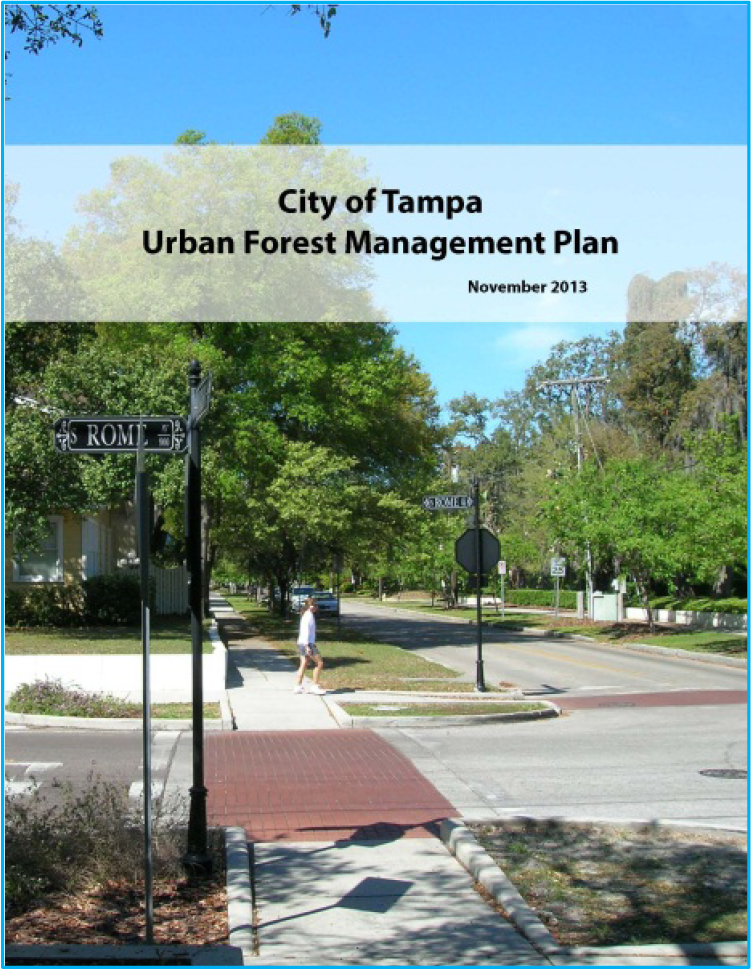
The city of Tampa has extensive tree and landscape requirements that are codified in ordinance form. The city of Tampa recently had The Urban Forest Management Plan approved through city Council with implementation policies executed by The Mayor by executive order 2014-1 The Plan requires, and is premised upon "right plant right place". The Plan itself is regarded as a state of the art policy document which has already been used to revise code and landscape requirements for the city of Tampa based on the science of the Plan. Included in the submittal packet is a recent newspaper article which provides a nice synopsis of the plan and its value. The Plan is a strategic plan, with a 20-year planning horizon, defining criteria, performance measures, and alternatives for action; and, by following an adaptable, quantifiable, and science-based approach, the City of Tampa will address the challenges to growing and maintaining a healthy urban forest, in an efficient and sustainable manner; to insure balance, consistency, and efficiency in interdepartmental coordination and public engagement, the Plan calls for the formation of an Internal Technical Advisory Committee comprised of department directors and their appointed designees, and the creation of an Advisory Committee on Natural Resources, which will be comprised of members from a variety of government, business, and neighborhood interests.
Swann Pond
A one acre of upland around a Tampa-Hillsborough Expressway Authority owned stormwater pond on Swann Avenue. The stormwater pond was cleaned of overgrowth, extensively landscaped and enclosed by wrought iron fencing. Other additions included a lighted fountain, new sidewalks with benches, improving pedestrian access to the park like settings and two custom shaded bus shelters with brick pillars.
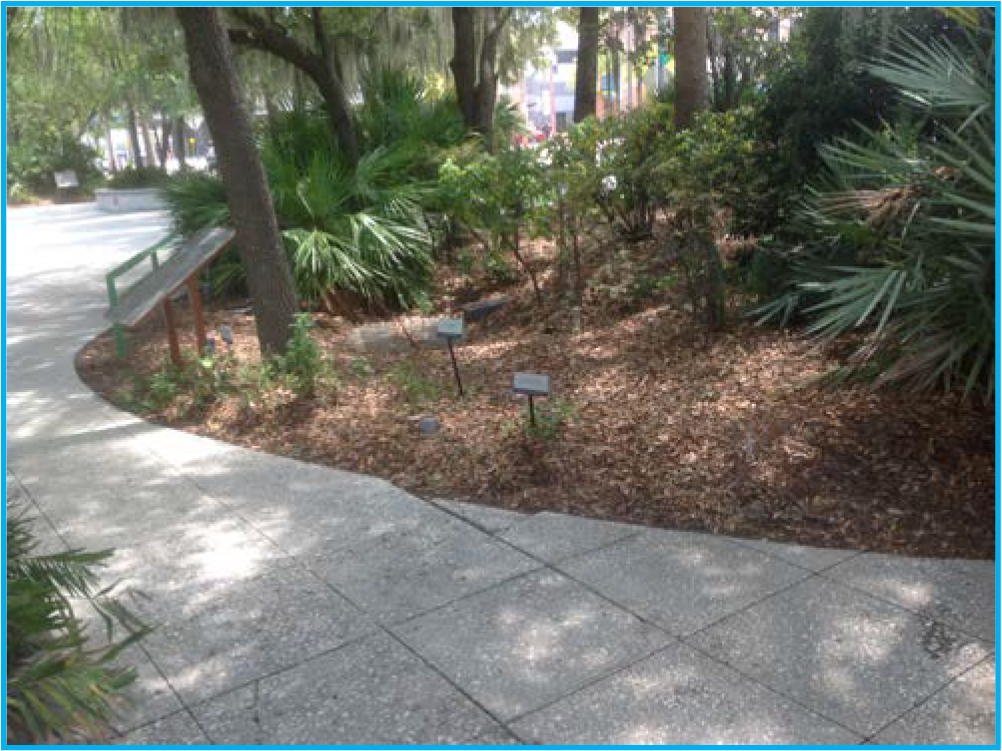
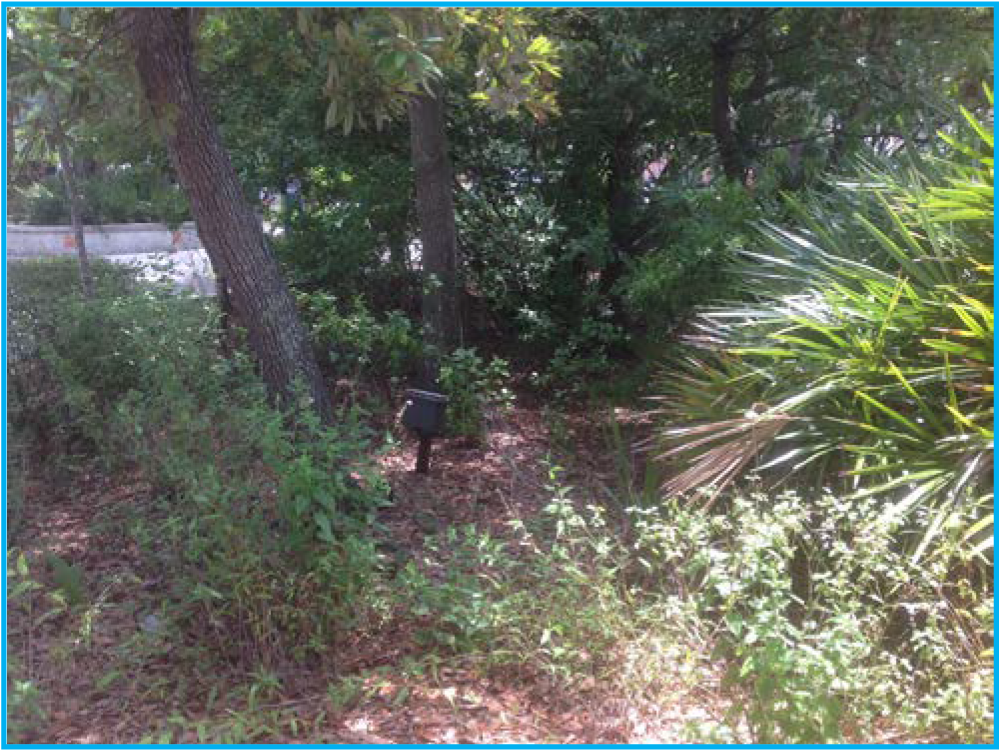
Bioswales (2013-Ongoing)
The Facilities Management Division has incorporated bioswales into the stormwater retention system c u rr e n t l y b e i n g used in the redesign of the major streets in Drew Park to provide runoff quality enhancement. Bioswales and other runoff water quality enhancement systems are more and more being used throughout Tampa by the City as well as private developers alike.
Green Environment
The City continues to balance relations between humans and the various natural systems on which they depend through changes in public policy and individual behavior.
Nehemiah Project, WIN, SWEEP & River Cleanup***
Nehemiah Project: (January 2013-Ongoing)
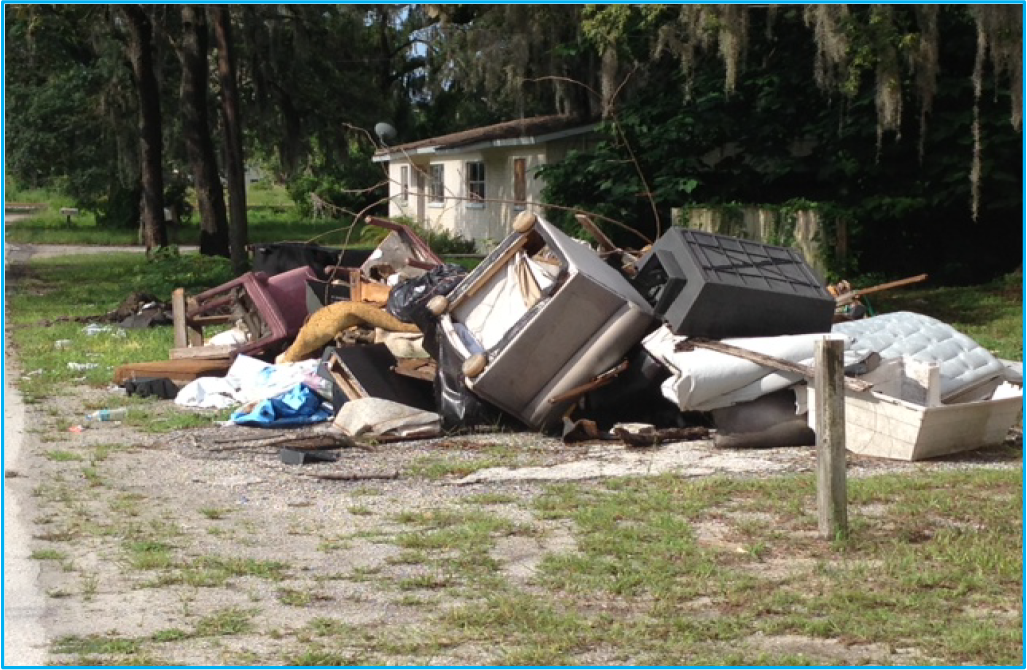
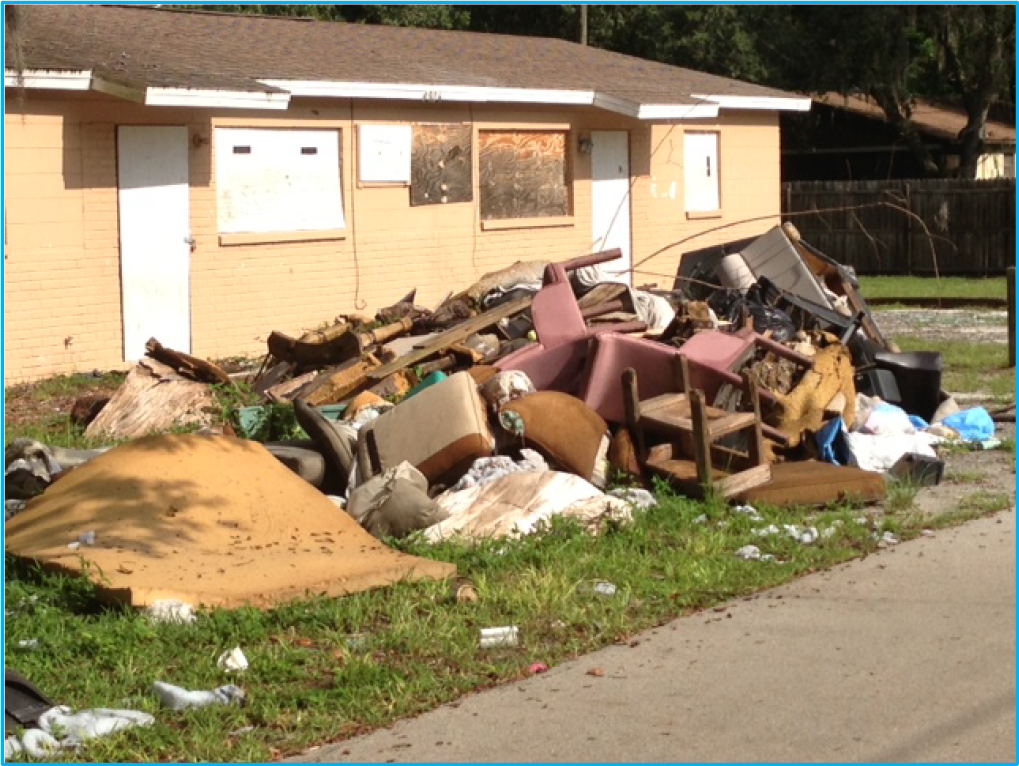
The Nehemiah Project has been implemented in the Sulfur Springs area to eliminate blight caused by illegal dumping and poor property maintenance in one of the City’s most impoverished neighborhoods.
The Code Enforcement Department began by demolishing the worst abandoned homes and picking up approximately 100 tons of trash primarily from illegal dumping. The second phase of the Project is to rebuild new affordable replacement homes along with sidewalks and bike paths starting in areas close to the neighborhood’s elementary school and recreation center thereby improving the neighborhood a few houses at a time and ultimately attracting private investment.
Abandoned and derelict homes create “a cancer in our neighborhoods.” – Mayor Buckhorn
Since 2013, the Department’s Code Enforcement and Clean City teams have removed, 2,000 tons of garbage, trash and debris. This dumping, littering and abandonment breeds environmental cesspools and works contrary to anything we are trying to accomplish with new energy efficient homes. It also removes serious health and safety risks to the neighborhood residents. Between July 2015 and December 2016 a total of 353.38 tons of litter and debris has been removed from the Sulphur Springs area.
Nehemiah Phase II
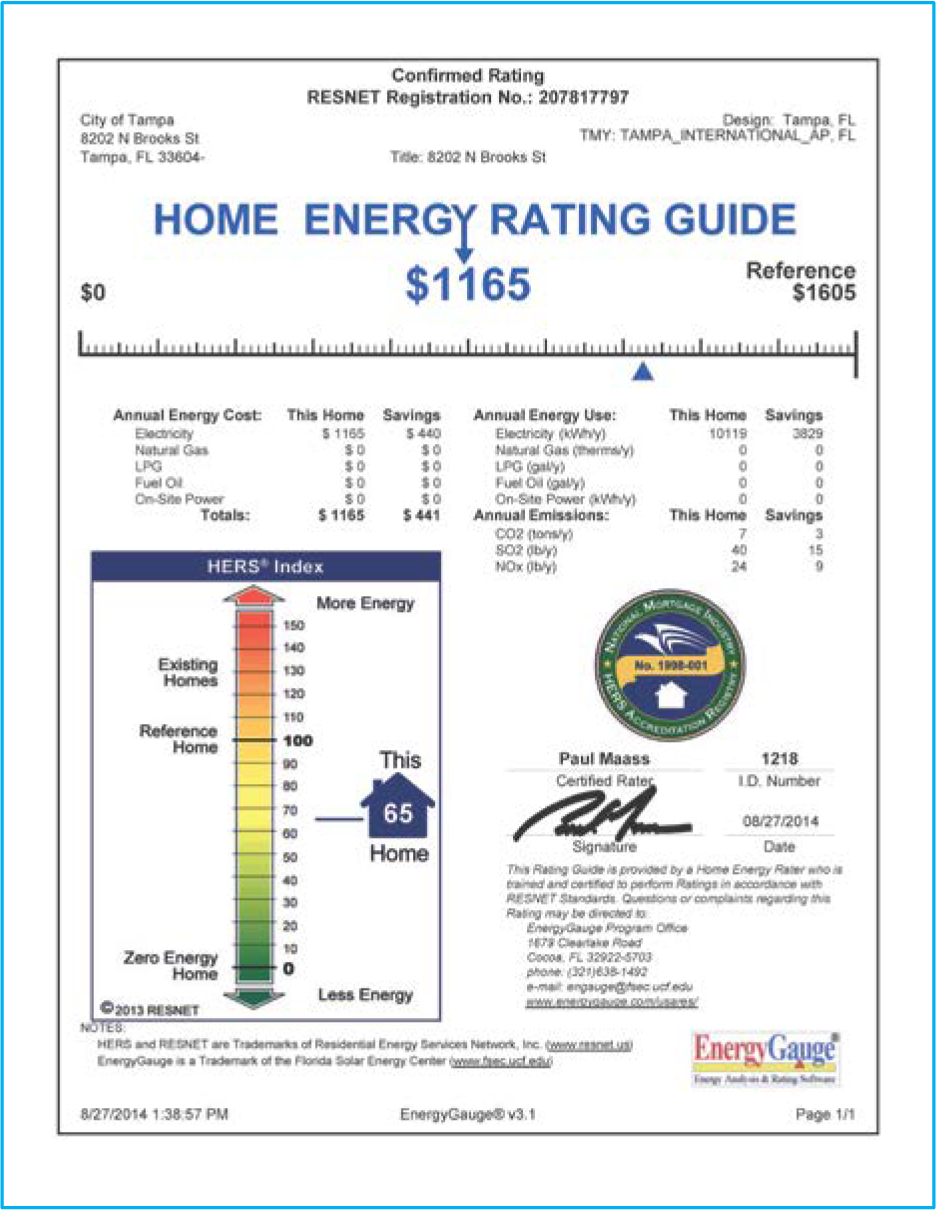
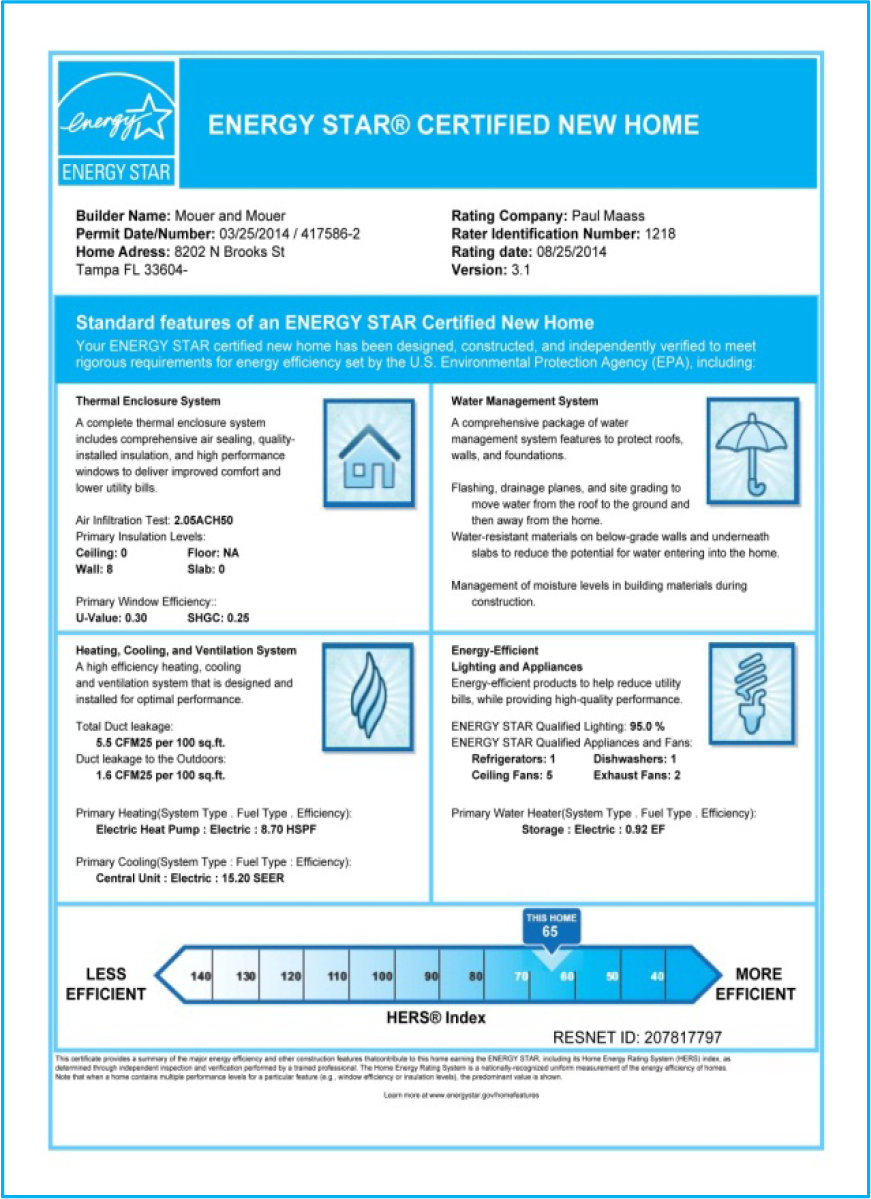
An important element of the Nehemiah Project was the construction of 11 new single family homes. These homes are energy efficient, HERS rated and were offered to income qualified families to enjoy the benefits of energy efficient, sustainably designed homes. The City has made available an additional 20 lots to build HERS rated energy efficient single family homes. Thus continues the work of the entire Nehemiah Project.
Nehemiah Project: Home Energy Rating Guide
Home Energy Rating System (HERS) Index is the by which a home's energy efficiency is measured. It’s also the for inspecting and calculating a home's energy performance. A certified Home Energy Rater assesses the energy efficiency of a home, assigning it a relative performance score. The lower the number, the more energy efficient the home. The U.S. Department of Energy has determined that a typical resale home scores 130 on the HERS Index while a standard new home is awarded a rating of 100. A home with a HERS Index Score of 70 is 30% more energy efficient than a standard new home. A home with a HERS Index Score of 130 is 30% less energy efficient than a standard new home.
- (http://www.resnet.us/library/one-millionth-home-receives-hers-index-score/)industry standard
- (http://www.resnet.us/library/whats-the-big-deal-about-the-hers-index/)nationally recognized system
Nehemiah Project: Plans on File
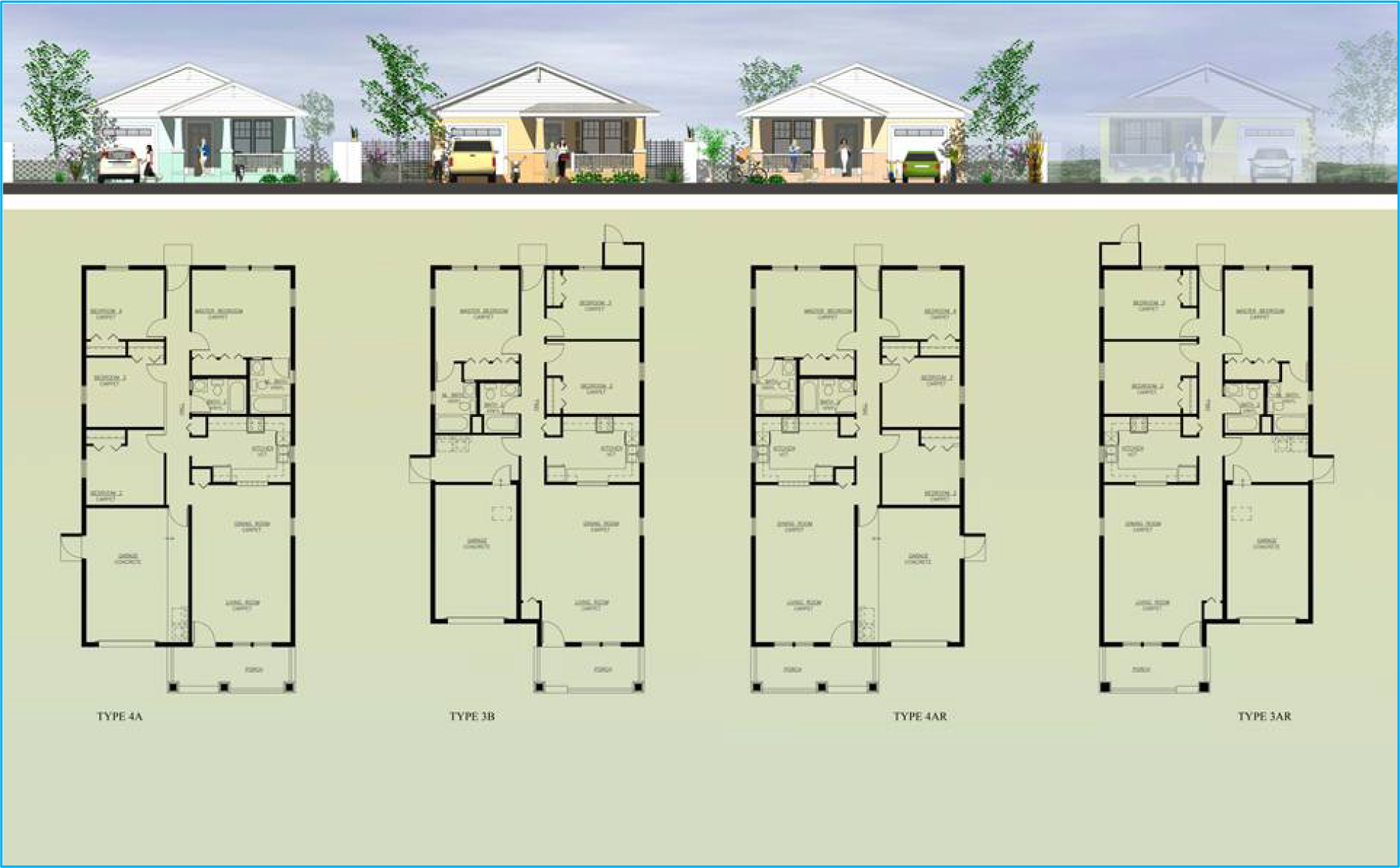
As a green incentive, The City of Tampa has energy star rated green affordable housing plans “on file” available for use to any contractor desiring to build these homes. The houses can be built on city owned lots, as is the case in the Nehemiah project, or private developers can acquire their own lot and use the plans at no cost. Using the plans on file saves the developer the cost of hiring an architect to draft a full set of building plans, which represents a substantial savings and provides an incentive to build energy efficient affordable housing The City of Tampa owns and has the rights to the plans which are “permit ready” and fully Florida Building Code compliant.
Working in Neighborhoods-WIN Program (Ongoing)
The Working In Neighborhoods program (WIN) was created to beautify thoroughfares, medians, and parkways, and reduce litter, graffiti and illegal dumping, to both restore and enhance the City’s environment and improve the quality of life for citizens. The WIN program kicked off in August 2011. The City held its annual Clean City Day along with Friends of Clean City, during the Great American Clean Up, the nation’s largest community improvement program.
Annual River Cleanup (October 2012-Ongoing)
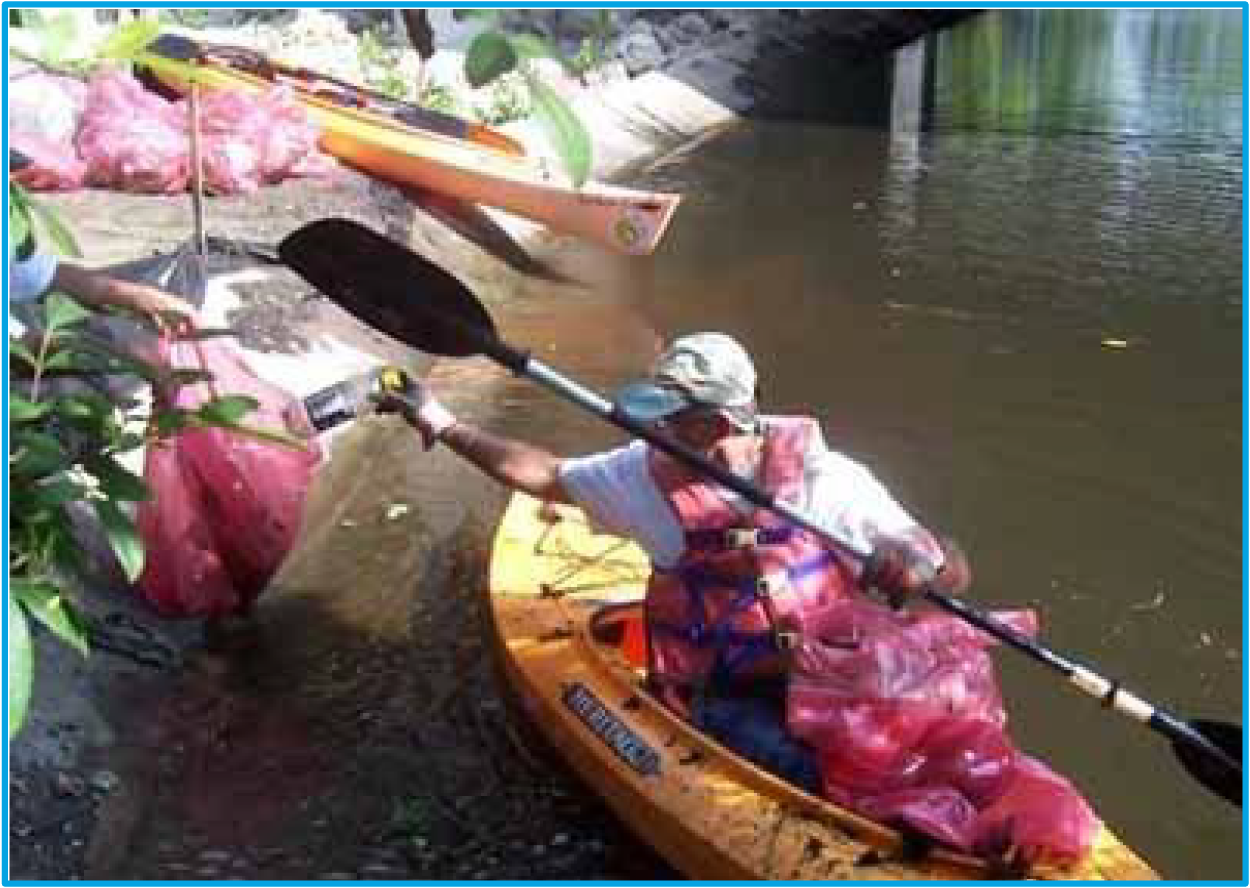
Tampa’s Water Department and Solid Waste Department set up an environmental education booth at the Lowry Park Boat Ramp’s Annual Hillsborough River & Coastal Cleanup. Debris of all sizes was removed from the waterways during this event which is hosted annually by the City’s partner, Keep Tampa Bay Beautiful,
Clean ups by Keep Tampa Bay Beautiful in Cotanchobee Park and along the Riverwalk.
The City of Tampa collaborates with other agencies on watershed stewardship projects to reduce the non-point source pollution and improve the water quality of the Hillsborough River.
Storm Drain Markings
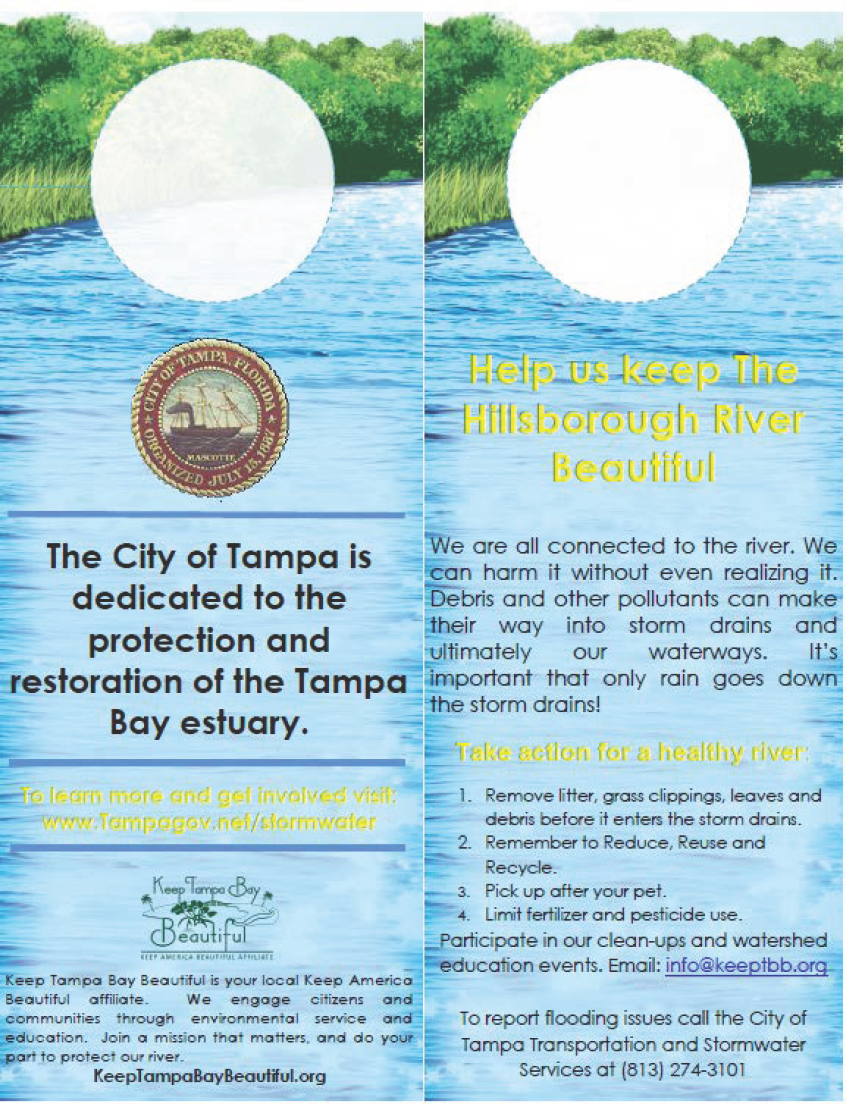
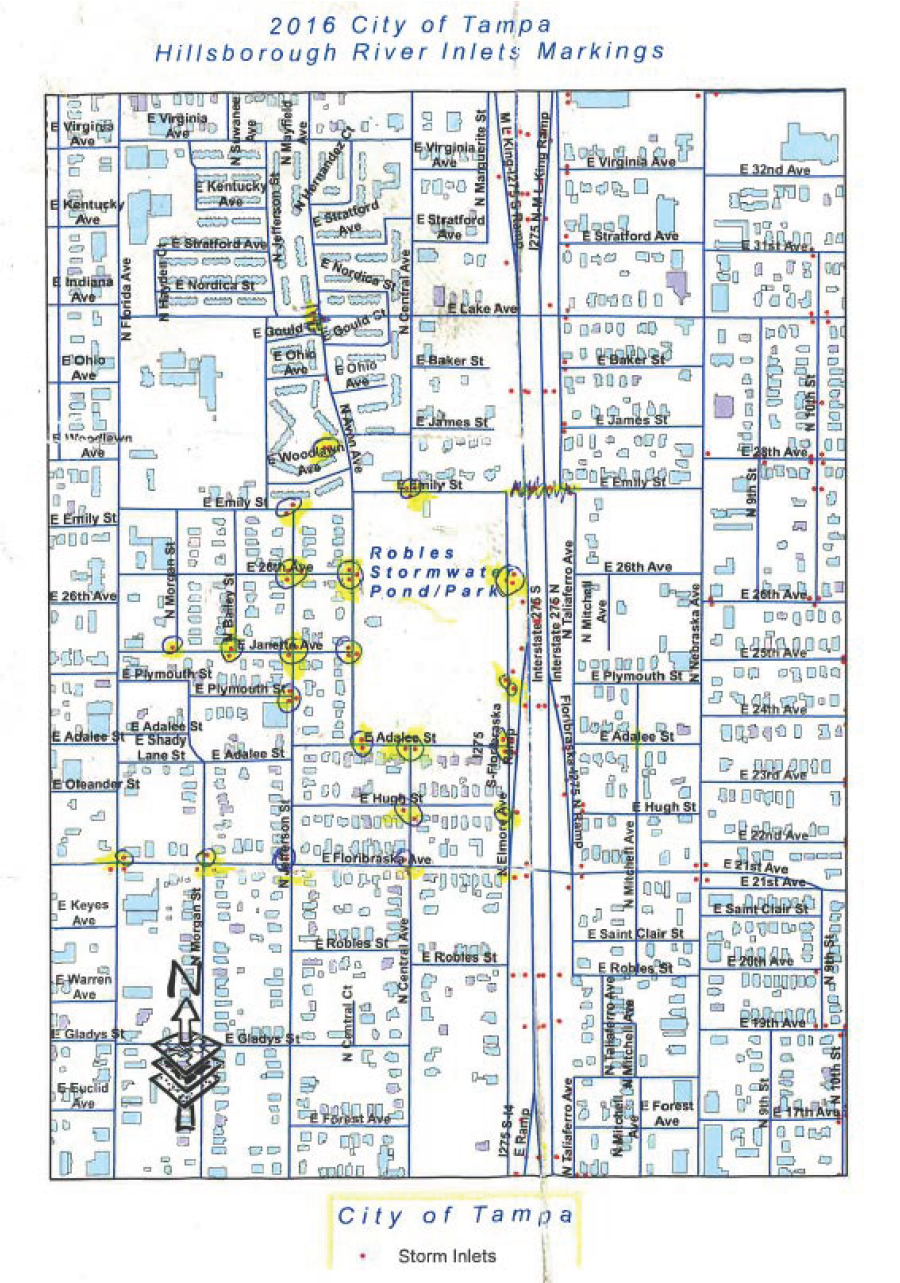
In 2015 and 2016, Keep Tampa Bay Beautiful (with support from the City of Tampa) hosted a series of land and water-based cleanups, storm drain markings and watershed education activities throughout 2016 to develop environmental awareness, stewardship and a respect for our natural resources.
Several volunteers helped in protecting the Hillsborough River in communities such as Robles Park, Tampa Heights and at Rowlett Park. Activities included removal of trash along the river, installing storm drain markers and place door hanger educational materials in residential neighborhoods.
The focus of these cleanups drive volunteer efforts to counteract behaviors that damage water quality and cause aesthetic blight and significant ecological effects on native plants and wildlife. Not to mention the damaging economic impacts and possible health risks to residents.
Tampa marked 1,510 storm drains covering an area of around 13.5 square miles. Door hangers were placed on 1175 homes, at the census average of 2.4 people per household, the educational materials reached a minimum of 2,820 people, not including all of the pedestrian traffic we encountered and educated at high traffic areas.
Robles’ Park Community Enhancement Project
Volunteers distributed door hangers, marked storm drains, removed 55 bags of litter and found 2 illegal dump sites.
S.W.E.E.P. Program (Ongoing annual program – 40 weeks)
The annual Solid Waste Enhanced Environment Program (SWEEP) provides 40 weeklong neighborhood bulk trash pickups. Over the past decade, SWEEP program can be credited with enhancing Tampa’s neighborhoods by removing over 27,000 tons of bulk trash items and debris.
Fertilizer Ordinance (Implemented June 2012)
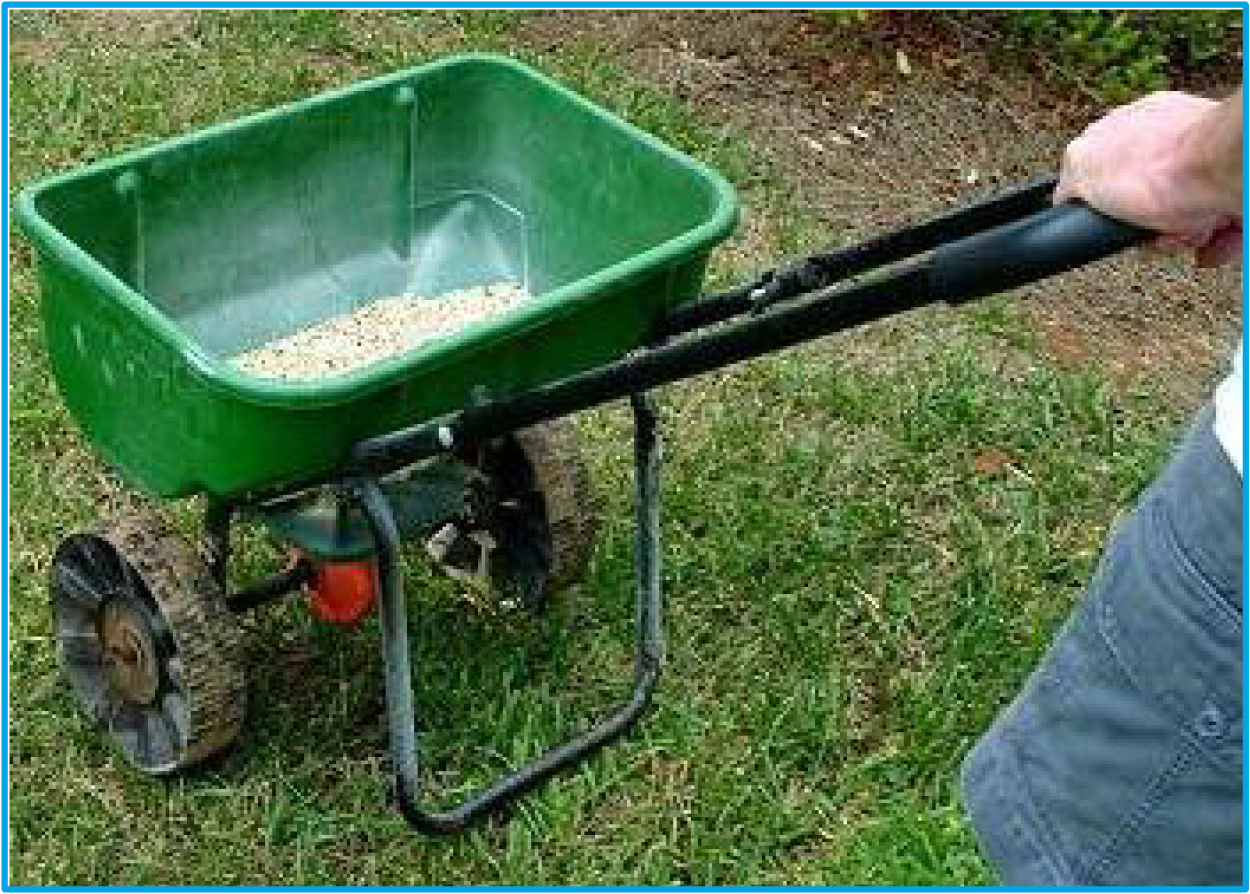
The city enacted an ordinance to improve water quality in our lakes, streams, rivers and bays. The ordinance establishes a restricted period from June 1 - September 30, when the application of lawn and landscape fertilizer containing nitrogen and/or phosphorous is not allowed. The ordinance is designed to reduce the potential of nitrogen and phosphorous carried into our waters with stormwater runoff and is supplemental to the rules of the Environmental Protection Commission of Hillsborough County. Both City and EPC laws must be followed within the City’s boundaries. Fertilizer isn't a pollutant when it is applied to the landscape, however, if too much fertilizer is used or it is applied at the wrong time it can wash off of the landscape and flow untreated into bays and streams. Once in the water, fertilizer can stimulate the growth of harmful algae and aquatic plant growth.
Code Updates***
The Department of Solid Waste & Environmental Program Management is working with the Legal Department to update its code of ordinances to reflect improvements and efficiencies in solid waste collection services and its impact on the environment. These changes will offer incentives in several areas including front-end load container service for commingled and cardboard recyclables. The Department will also strengthen sections of the code to discourage contamination of recycling containers by residential customers and will increase education, monitoring and enforcement. Code revisions will also include registering recycling collectors and dealers to numerate the volume of waste being diverted from the waste stream.
Clean-Up of Contaminated Properties***
Multi-Purpose EPA Pilot Grant (Awarded June 2012)
The City was awarded a $400,000 EPA Brownfields program grant to conduct assessments and cleanup activities, and to secure funding for the site located at 1103 N. Nebraska Avenue. The goal of program is to clean up America’s land, boost local economies and create jobs while protecting public health. The Economic and Urban Development Department manages the City’s Brownfield Program to rehabilitate and redevelop contaminated site, typically old industrial sites in urban areas.
The site was assessed and remediation included the removal of an underground oil tank and contaminated soils. The items removed from the site were transported to a permitted disposal facility and the site was backfilled with clean fill material. Land use restrictions were required for this site prior to the issuance of a Conditional Site Rehabilitation Completion Order (SRCO). The Declaration of Restrictive Covenant was recorded in Hillsborough County Court in October 2016, and the Conditional SRCO was issued by the State in November 2016.
This Cooperative Agreement resulted in the completion of site characterization and remediation to bring the site within the commercial/industrial cleanup threshold for redevelopment, community involvement as it related to the project’s progress and in reuse development planning. Locally, $209,124 was allocated to MBE/WBE subcontractors; resulting in an MBE/WBE utilization of 55%.
Brownfields Incentives
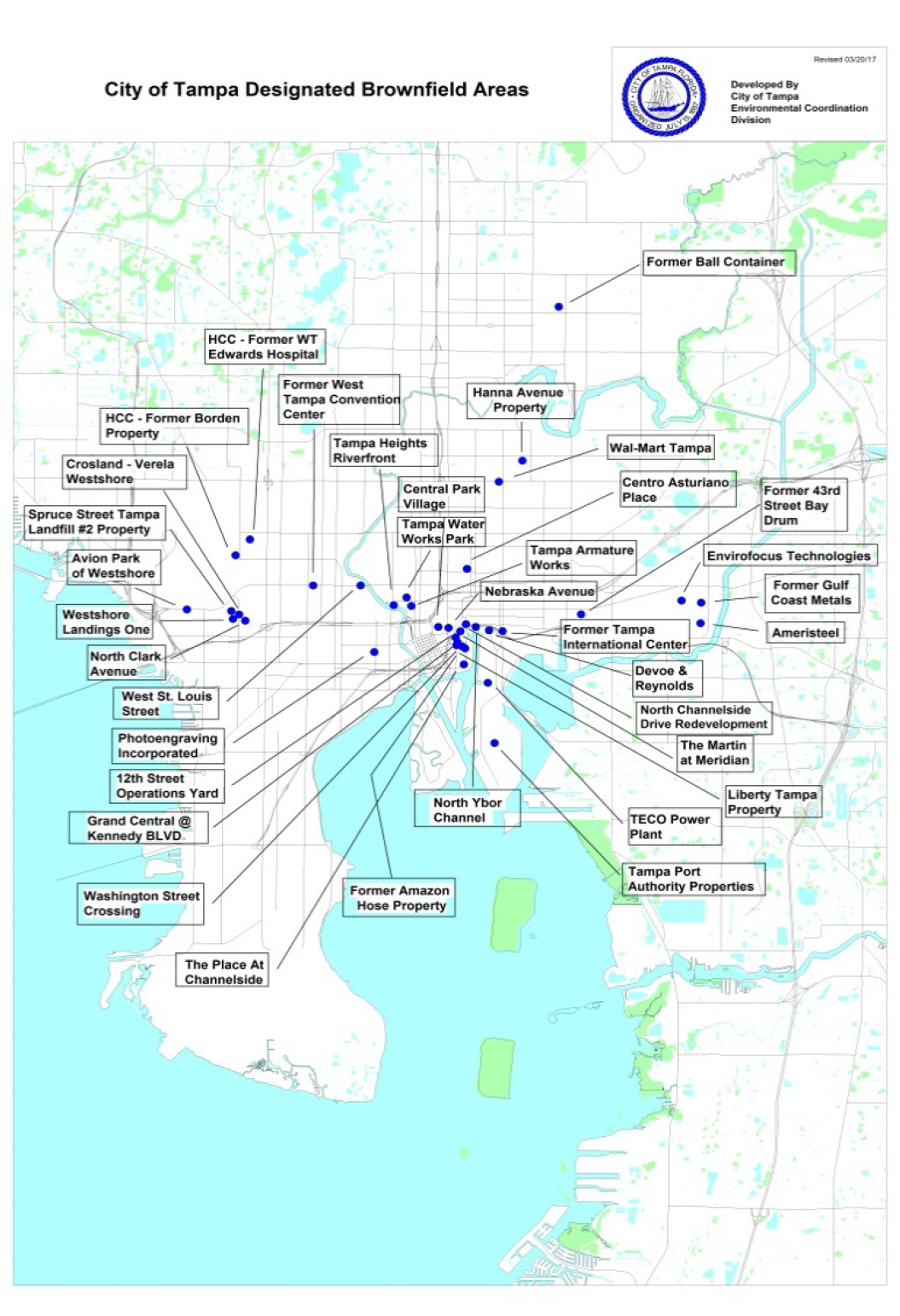
The City sponsored Brownfields Community Redevelopment Program provides qualified applicants an opportunity to pursue State financial incentives. Since 2001, the City has designated 36 Brownfield Areas (more than 1,200 acres). Florida’s Voluntary Cleanup Tax Credit and Job Creation Bonus Programs are just a few of the incentives available to those who complete environmental remediation and redevelopment projects in designated Brownfield Areas. In addition to promoting the Brownfield Designation Program, the City has also taken advantage of State financial incentives for some of its own redevelopment project sites that have had environmental impacts. To date, the City has received $550,075 in Voluntary Cleanup Tax Credit Certificates for environmental assessment and remediation completed at two City owned Brownfield Sites. These certificates were later sold through a tax broker.
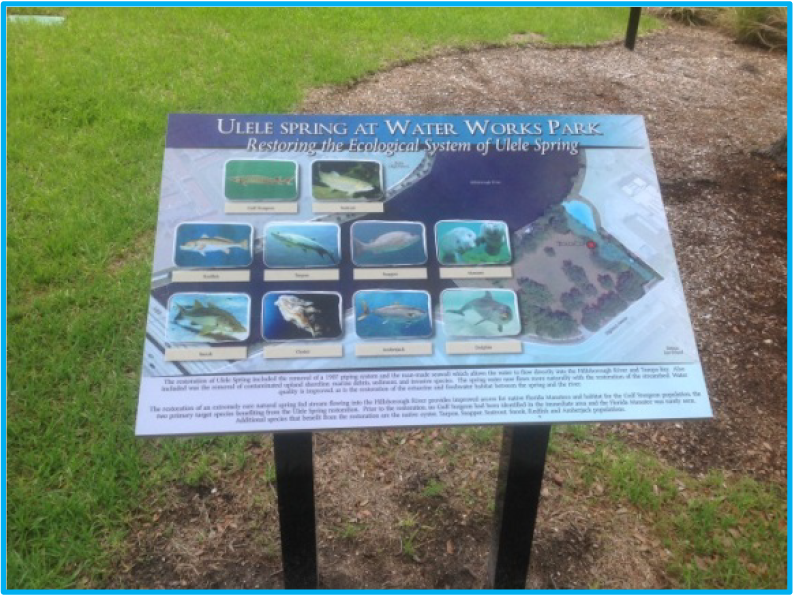
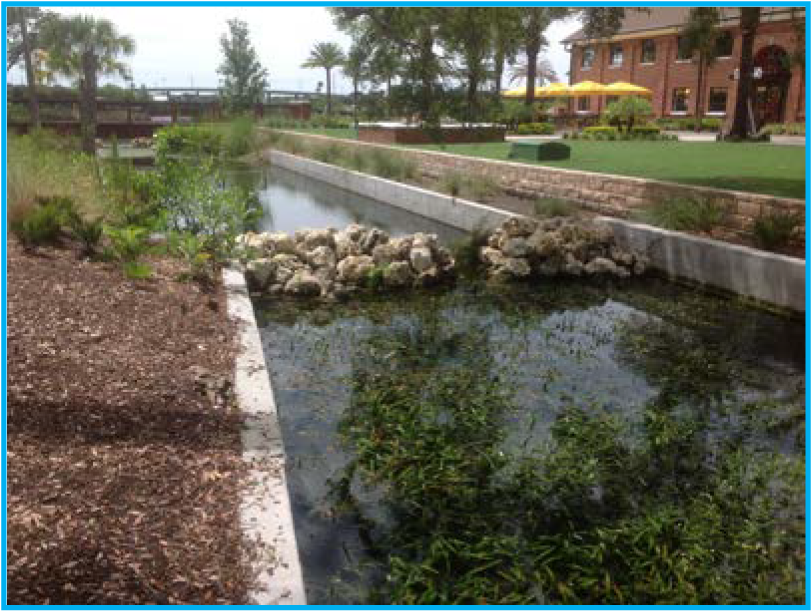
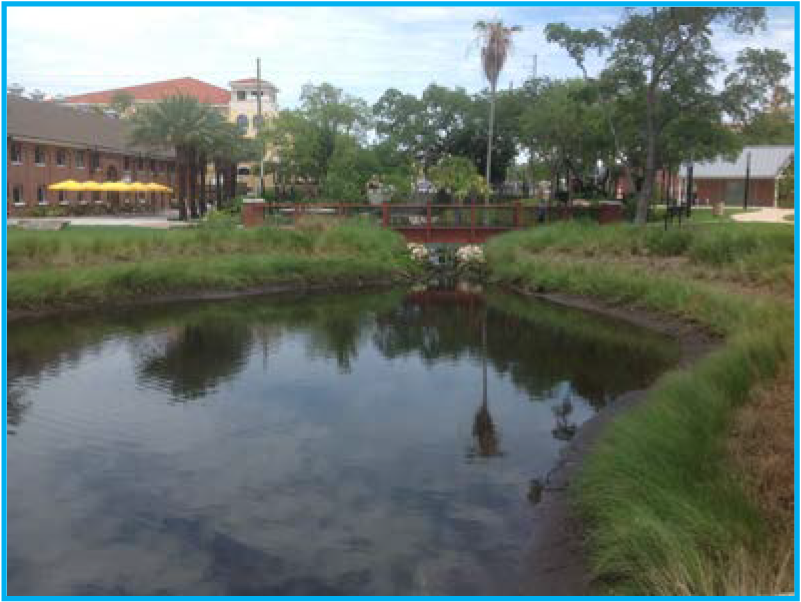
Ulele Spring
The Ulele’ Spring restoration (as part of Water Works Parks) has created a basin that allows the water to pool on its way toward the Hillsborough River. The immediate shoreline to the spring has been restored with mangroves and the spring is now teeming with fish and wildlife. Manatees also frequent the spring itself. Volunteers from The Krewe of Princess Ulele, Green Artery, Rowers Crewe, Tampa Heights Civic Association, Tampa Federation of Garden Clubs, and Scheda Ecological Associates, Inc. planted a variety of native plants surrounding the restored Ulele Spring. More than 4,000 plants, ranging from cordgrass species to spider lily were planted. Plants were paid for by the Tampa Bay Estuary Program and the Florida Freshwater Fish and Wildlife Commission. The spring restoration component of the park was funded through a partnership with the Southwest Florida Water Management District and the City of Tampa, as well as assistance from Ecosphere Restoration Institute, the Tampa Bay Estuary Program, National Oceanic and Atmospheric Administration, and United States Fish and Wildlife Service.
Urban Infill
InVision Plan for Downtown (The Tampa Center City Plan presented November 2012. The Hillsborough and Nebraska Corridor Master Plan presented September 2013)
The City was awarded a $1.2 million Sustainable Communities Challenge Grant in 2011 from the U.S. Department of Housing & Urban Development to develop a plan for the Nebraska-Hillsborough Avenue Primary Transit Corridor. The InVision Team prepared a plan focusing on recentering downtown around the Hillsborough River and connecting area neighborhoods in a pedestrian, transit friendly manner. The plan includes 10 forward moves designed to continue the resurgence and momentum that the Center City is experiencing:
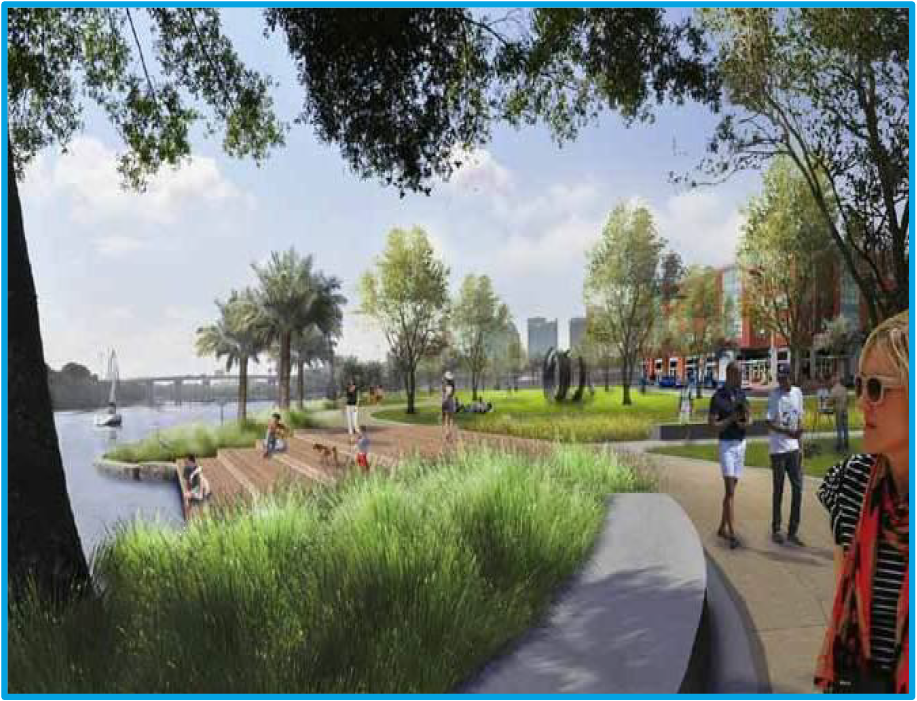
- Nurture new river places that spur activity and create access to the Hillsborough River and Garrison Channel.
- Make north downtown neighborhoods multimodal, walkable area to extend the value of the Riverwalk and cultural venues east to Nebraska Avenue.
- Establish streets and parks as primary elements of civic identity to catalyze downtown as the location of choice for new private development investment in the region.
- Redevelop south downtown in a pattern of streets, blocks and public spaces that connect the Channel District with venues in the Downtown Core.
- Reposition street corridors to residentially-oriented “Neighborhood Connectors” and local business to “Main Streets.”
- Rebalance Tampa and Florida Avenues as local streets, joining neighborhoods while providing regional access.
- Develop an attractive, safe, cross-city, multi-purpose trail linking the Center City to neighborhoods and the Riverwalk.
- Create a premium local transit route crossing the river from the Channel District to North Hyde Park to link residential, employment, and academic areas and capture “choice riders.”
- Continue on the mission of repositioning the large parcels of property within the Center City for development.
- Leverage substantial education and healthcare assets and investments by linking their large workforce and student populations with community revitalization.
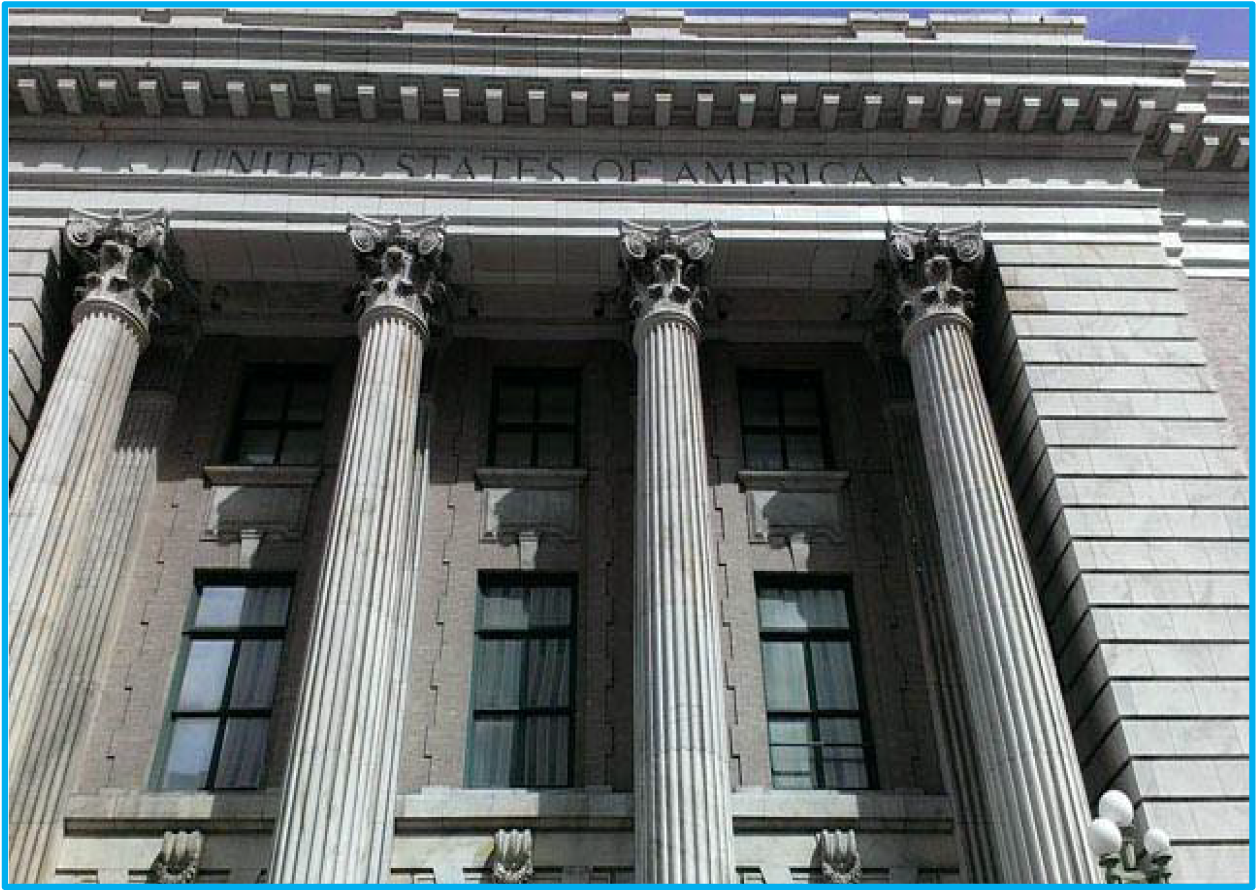
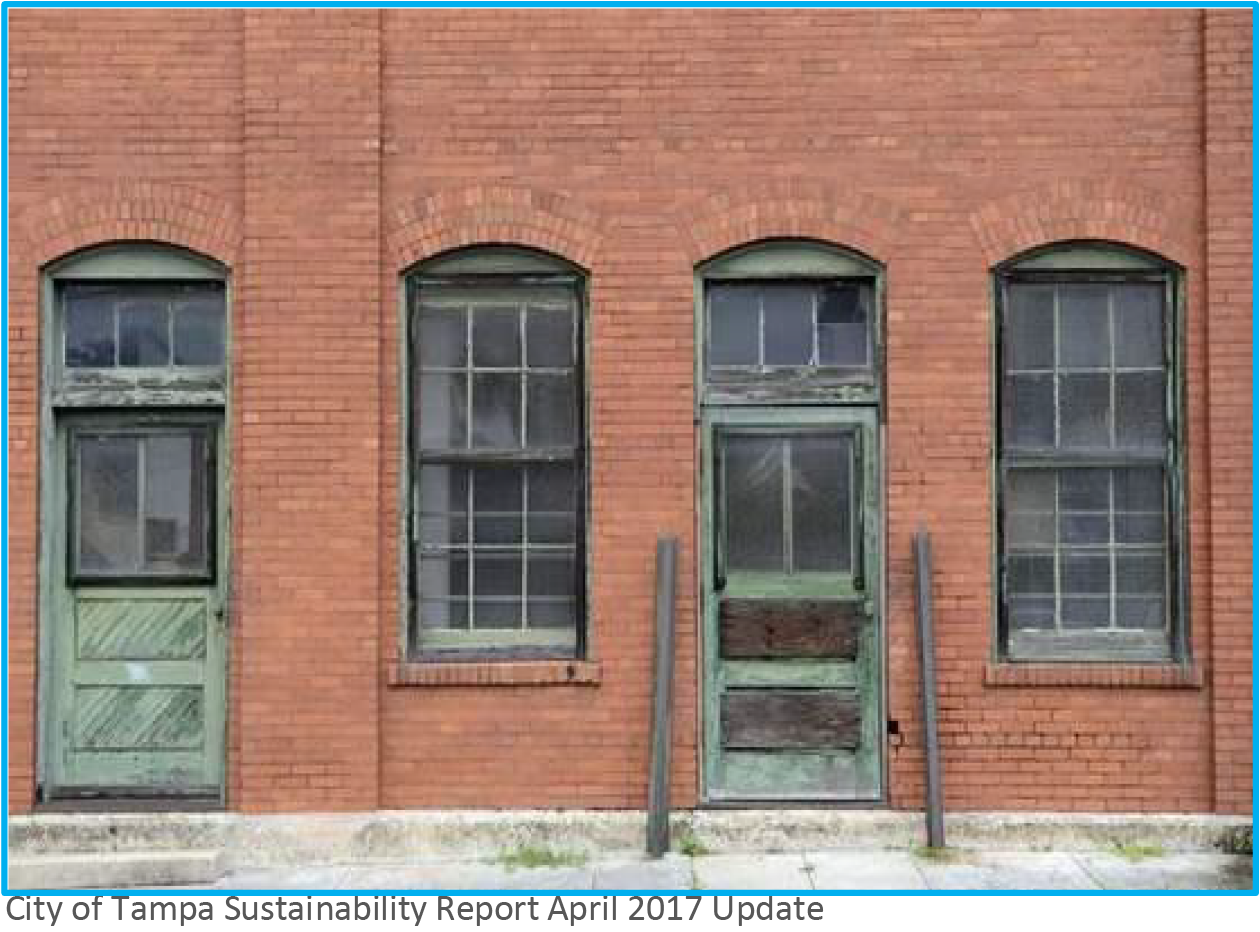
Preservation of Historic Resources (Ongoing)
The City continues to be actively engaged in the preservation of Tampa’s historic resources through an approach that achieves quality urban development while respecting the architectural accomplishments of the past.
“Repurposing is now part of the downtown mantra.” – Mayor Buckhorn
Code Changes (Ongoing)
Many code changes were adopted in May 2011 to include community gardens throughout the City and in 2009 to reduce use of turf area. Turf area percentages were lowered from 50% configured with a permanent irrigation system to 45% in 2009. In 2011, the allowable percentage was 35%, and will continue to decrease 5% annually until reaching 25% in 2013. The City’s Community Gardens Ordinance (Ordinance 2011-62) became official May 2011. Under the ordinance, Development Coordination & Zoning approved the first city community garden on September 6, 2011. The review and drafting of the City’s Tree and Landscape Code is underway. Revisions will be based on the science surrounding the urban canopy development from the Canopy Analysis.
Land
New Urbanism & Form-Based Zoning (Ongoing)
The City continues to modernize its land development codes by incorporating New Urbanism and Form-Based Zoning concepts to promote urban redevelopment. These concepts are designed to go beyond land use to address not just the physical form of buildings but also surrounding streets, blocks, and public spaces in order to create, protect, and revitalize sustainable communities. The Seminole Heights Form-Based code was adopted March 2011 with the rezoning effort slated for approval Spring 2012. The concentration of new growth within the existing core reduces infrastructure needs, increases walk-ability and use of public transit. Visions Plans have been designed for historic Seminole Heights and 40th street neighborhoods towards this effort.
Daniel Rose Fellows (Ongoing)
The Tampa Mayoral Team, named one of the Daniel Rose Fellows in September 2011, continues to work with the Urban Land Institute Rose Center for Public Leadership in Land Use to determine the best sustainable land use policies for the City. The Urban Land Institute is a global nonprofit education and research institute supported by its members. The City continues to collaborate with the Urban Land Institute. The Manager for the City’s Planning and Urban Design Division was appointed to the U.S. National Product Council: Transit Oriented Development Council (TODC). It is a 5 year term, running from 2013through 2018.
City Water Initiatives
The City continues to ensure a superior sustainable supply of drinking water for residents by developing innovative projects and master plans for its facilities, continuing its efforts to protect its water supply source, and using reclaimed water.
David L Tippin Water Treatment Facility
The Hillsborough River is the City’s primary source of potable water supply. The Hillsborough River Reservoir, the stretch of river between the dam and the 40th Street Bridge, impounds more than 1 billion gallons of water. The adjacent David L. Tippin Water Treatment Facility, one of the largest surface water treatment facilities in Florida, has been treating the river water supply since 1926. The river water goes through a six-step process before it becomes finished water and is pumped through 2,200 miles of pipe to the approximately 611,000 people we serve. All water used in the David L. Tippin Water Treatment Facility is recycled and reprocessed from the Hillsborough River.
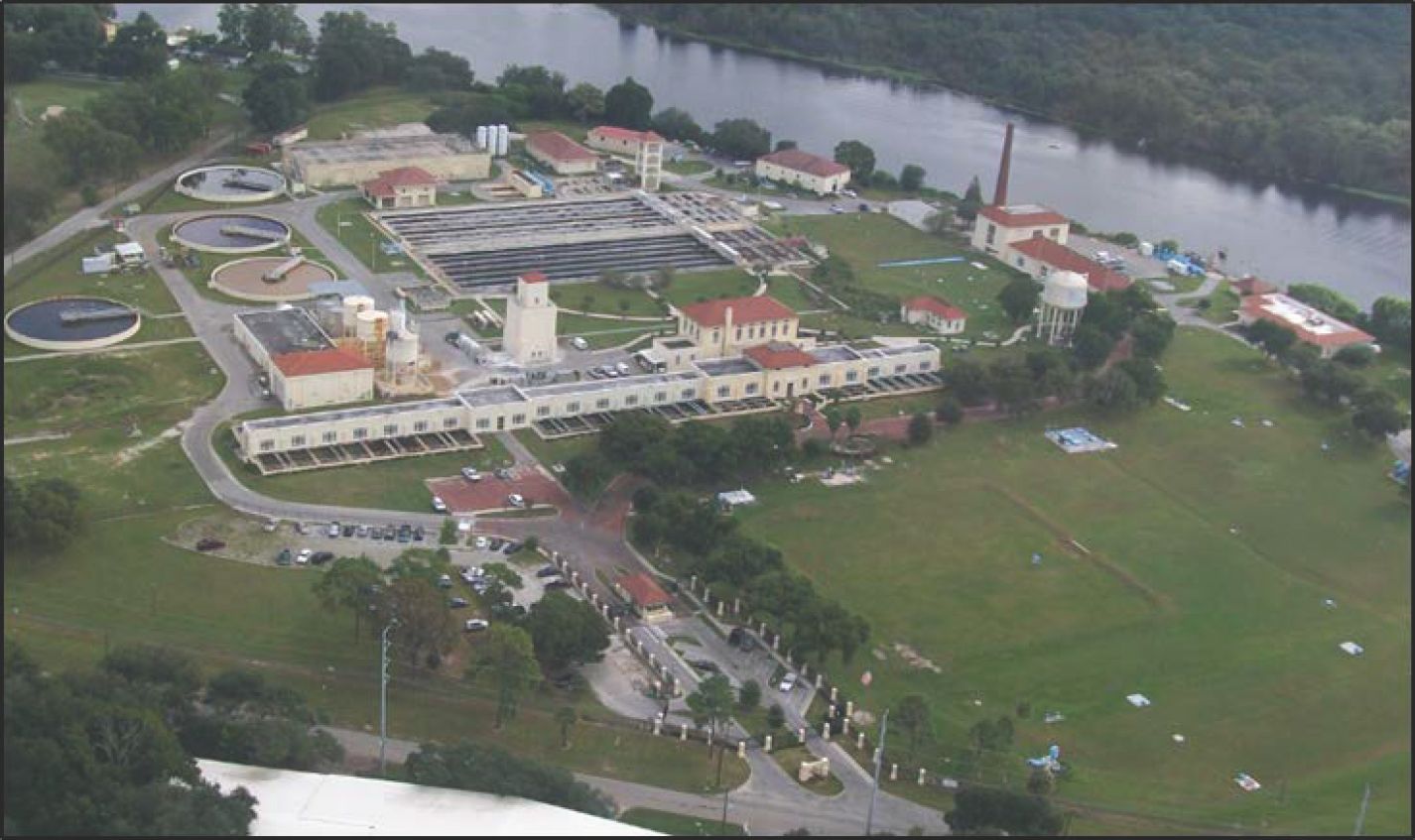
The Water Department is nearing completion of its master plan for the David L. Tippin Water Treatment Facility for a 15-year planning horizon that is directed at optimizing treatment, improving treated water quality, reducing operating costs, and enhancing the reliability of treatment and operations.
Expansion of Reclaimed Water Program (Began fall 2012)
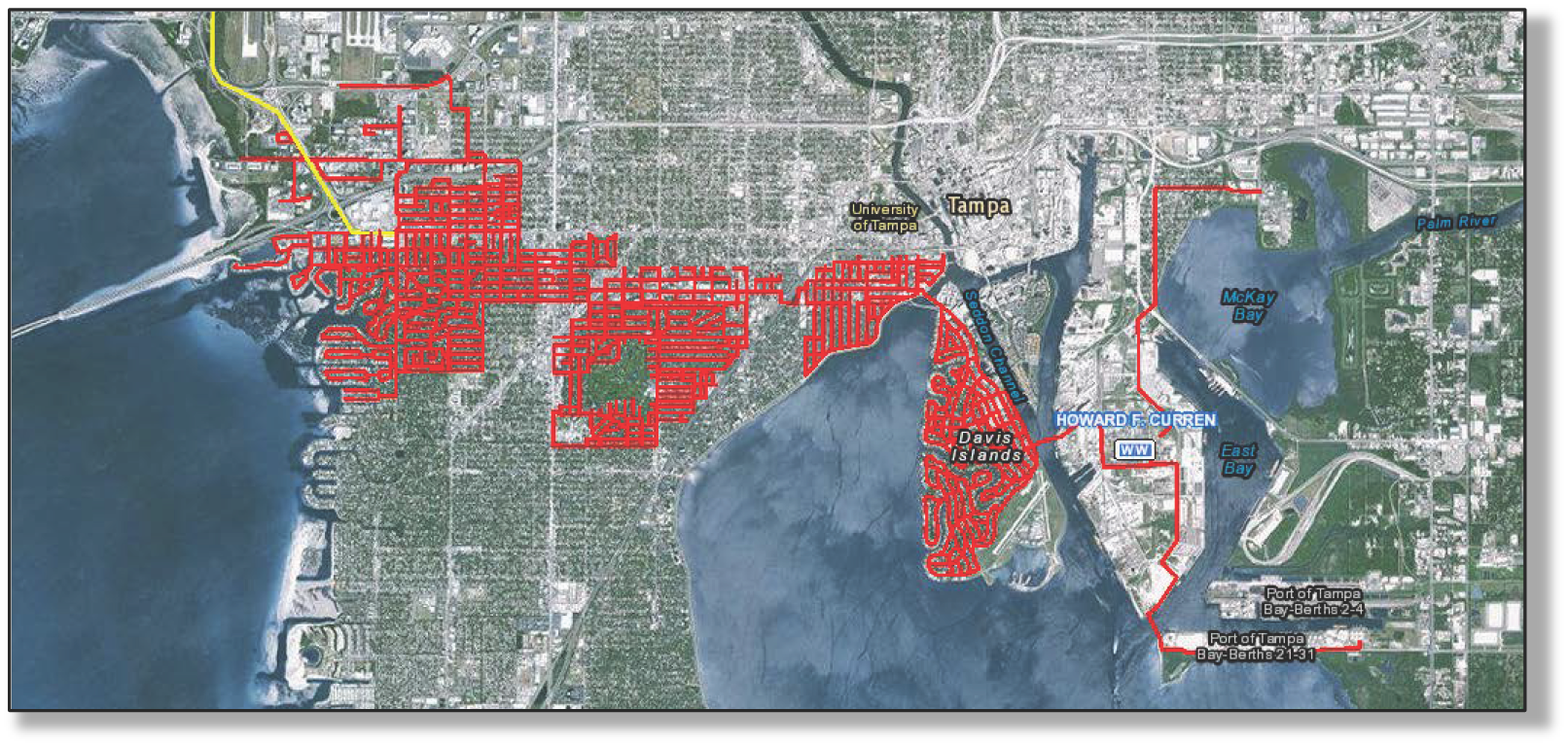
Reclaimed water is in use at Tampa International Airport (TIA) for irrigation and for cooling at one airside. Work is underway with TIA to facilitate the expansion of reclaimed water use to additional cooling towers in use at that facility. Reclaimed water will also be used to irrigate public parkways along Bayshore aiding in conserving Tampa's potable water supply by an estimated 22,000 gallons per day and reducing wastewater effluent discharge into Hillsborough Bay.
Reclaimed Water Use throughout the City (Ongoing)
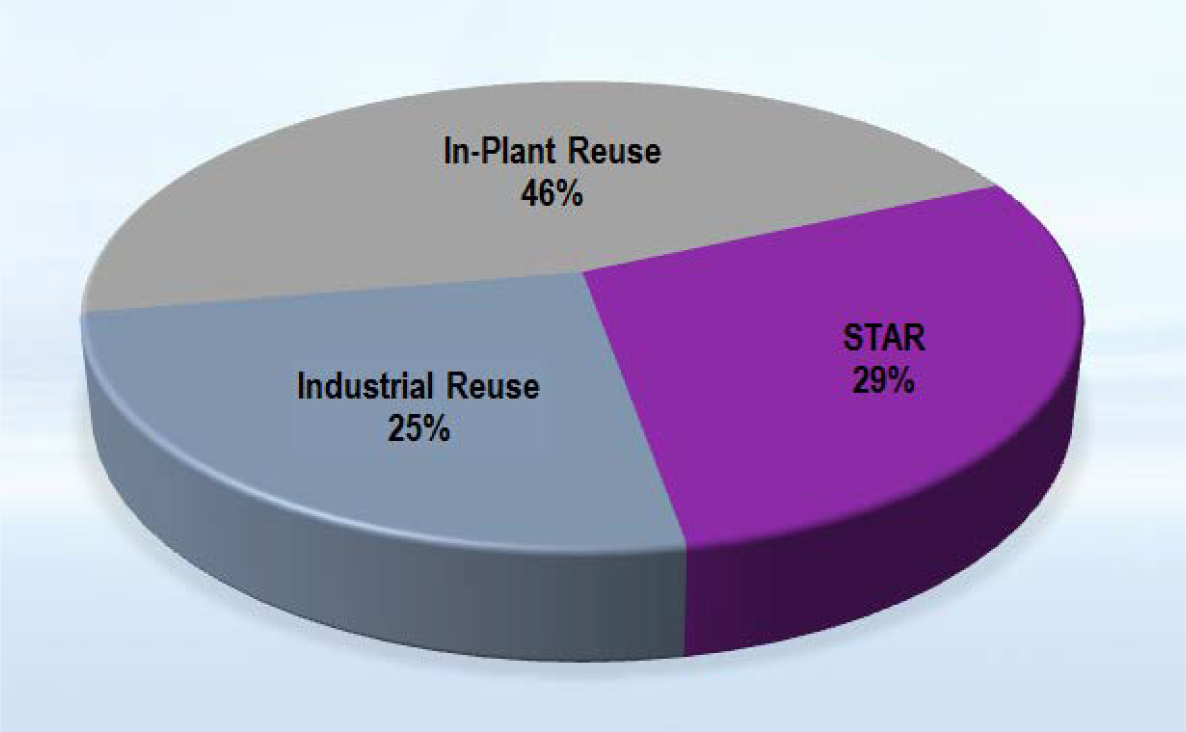
In FY2016, the Wastewater Department continued its program of finding uses for reclaimed water in its operations. Wastewater Department utilized 5.9 million gallons per day of reclaimed water saving approximately 2.1 billion gallons of processed potable water use. The Solid Waste Department uses reclaimed water at the McKay Bay RTE facility and its cooling tower. In FY2016, the McKay Bay RTE facility used 0.6 million gallons per day of reclaimed water saving approximately 200 million gallons of processed potable water use. Mosaic continued to use reclaimed water for cooling its facility and Tampa International Airport expanded its reclaimed water use in cooling towers to multiple airsides.
Additionally, Tampa’s reclaimed water customers used 3.2 million gallons per day of reclaimed water for lawn irrigation saving 1.2 billion gallons of potable water.
Solid Waste Department
The Department o f Solid Waste a n d E nv ir o n m en t al P r o g r am M an ag em en t is now using reclaimed water at the McKay Bay Refuse-to-Energy facility and cooling tower. In FY2016, the M c Ka y B a y F a c i l i t y u s e d a b o u t 202 million gallons of reclaimed water instead of using potable water; conserving this precious resource.
NexLube
The reclaimed water program is helping to bring Florida’s first oil recycling plant, NexLube, to Tampa. The planned re-refining facility on Pendola Point Road in Port Sutton, will produce high quality base oil and lubricant products by recycling used oil. The NexLube facility is expected to re-refine approximately 24 million gallons of used oil a year, reducing air emission and using 50-80% less energy than the crude oil refining process.
Infrastructure Upgrades
The Tampa Water Department continued with its Capital Improvement Program targeting aging infrastructure replacement in 2016. The replacement of old water mains reduce the volume of finished drinking water lost to leakage in the distribution system while realizing improvements in system reliability.
Blue Sink Pipeline and Pump Station Project
As previously mentioned, the Hillsborough River is the City’s primary source of potable water supply. Hence, its protection is critical to ensure its environmental viability. The Water Department continued with its implementation of the Lower Hillsborough River Minimum Flow Recovery Projects by completing construction of the Blue Sink pipeline and pump station project consisting of a 3-mile, 16-inch raw water transmission main and a 2-MGD pump station to deliver raw water from Blue Sink to the base of the Hillsborough River Dam when needed.
Potable Water System Master Plan
The Water Department continued to work on its 5-year update of the Potable Water System Master Plan. The main objective of the Potable Water System Master Plan is to provide a reliable and redundant potable water system with adequate capacity and accommodate future growth within the City. A critical component of the project is to enhance the risk based pipeline prioritization framework by building a dynamic and interactive risk-based prioritization model that will provide matrix-based prioritization results for recommending rehabilitation and replacement projects with life-cycle cost optimization for the Water Department’s aging pipelines.
Monthly Meter Reading (January-September 2012)
Between January and September 2012 the department implemented monthly meter reading for 100 percent of customers. A timelier accounting of water use provides customers the ability to discover and promptly repair service line, plumbing or irrigation system leaks sooner and make usage adjustments to control their bills.
Hydration Stations (2012-Ongoing)
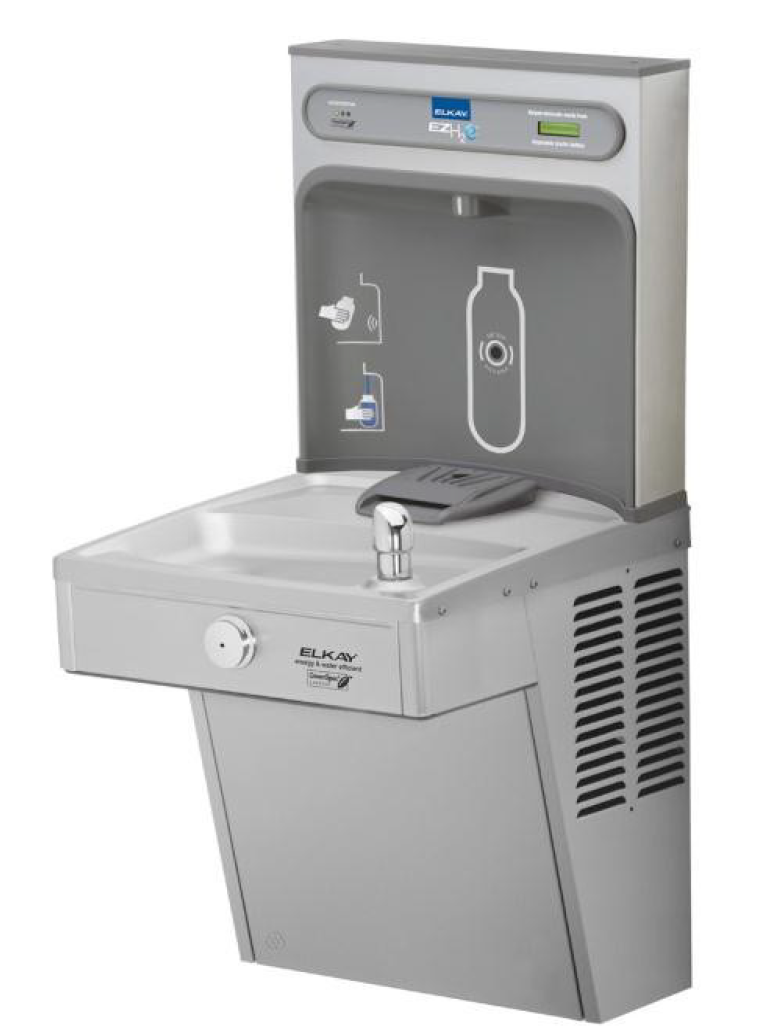
Three pilot water cooler/filling station combinations have been installed to replace existing drinking water fountains (2 at Tampa Convention Center/1 at Tampa Municipal Office Building) to evaluate maintenance requirements and collect consumer comments on usability. In addition to encouraging tap water use, the stations provide a more efficient water transfer mechanism than traditional fountains for those filling containers, resulting in less water wastage and energy loss (for cooled water). The stations feature energy-efficient refrigeration systems and their use is estimated to have offset the disposal of approximately 14,000 plastic water bottles in FY2013.
Water Conservation-Consumer Programs
Kits & Sensors Provided to Consumers (Ongoing)
In 2016, the Water Department provided to customers:
- 1,074 free plumbing kits (including low-flow showerheads, faucet aerators and toilet leak detection tablets).
- 1,044 free leak detection kits (including toilet leak detection tablets and the Home Water Efficiency Tool Kit).
- 157 free rain sensor devices to achieve compliance with Florida Statute and local ordinance. The devices inhibit or interrupt operations of an irrigation system during and/or immediately following periods of significant rainfall. The device can save an estimated 20 percent in outdoor water use.
- 127 phone consultations to assist with water demand evaluations and site-specific recommendations.
- 42 on-site irrigation evaluations for customers experiencing high demand levels.
- 50 events at community locations in our service area and 2 community “walk-arounds,” which included door knocks to distribute water conservation information and water-saving devices.
- 100 plus informational and/or interactive Web pages to assist residential and commercial customers in evaluating and managing their water efficiency.
In 2016, the Water Department participated in the following community partnerships and activities:
- Funding provided for 186 consumers to attend a rain barrel educational workshop and receive a 55-gallon rain barrel to assist with offsetting potable water use with rain water. Sponsored in partnership with the University of Florida and Hillsborough County Extension Service.
- Funding provided for a Florida-Friendly Landscape Workshop presented by the Hillsborough County Extension Service to provide Tampa residents with information about outdoor water conservation along with hands-on instruction from subject-matter experts. An estimated 70 people attended this free event at Hillsborough Community College’s Dale Mabry Campus.
- Funding provided for 17 account holders to attend an 8 week Home Improvement course to provide participants with basic skill sets to identify and repair water leaks and to repair and/or replace existing appliances and fixtures with water efficient upgrades. Course work offered in partnership with Hillsborough Education Foundation and Hillsborough County School District – Erwin Technical Center.
- Funding provided for classroom teachers in Tampa, in total $5,000, for small classroom grants to develop and implement water conservation activities for their students. Programming administered through the Hillsborough Education Foundation.
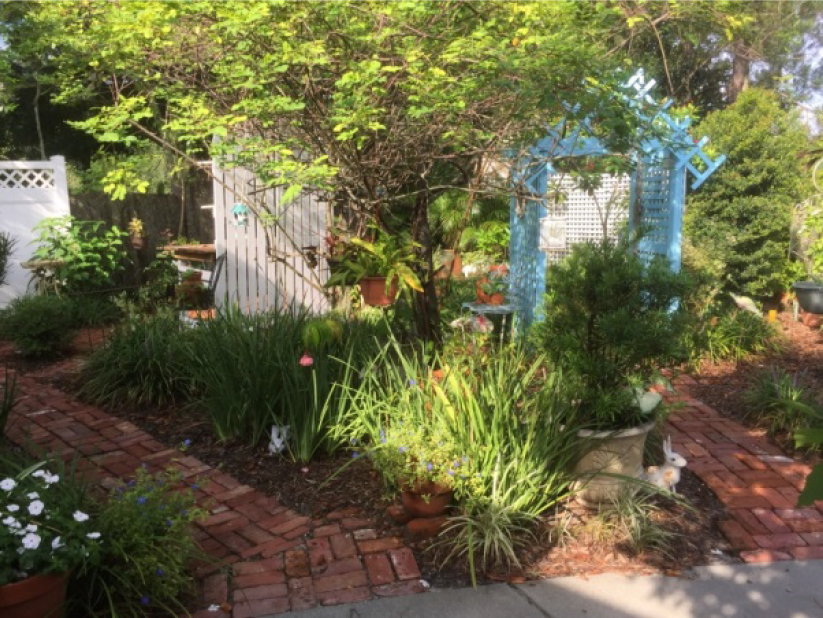
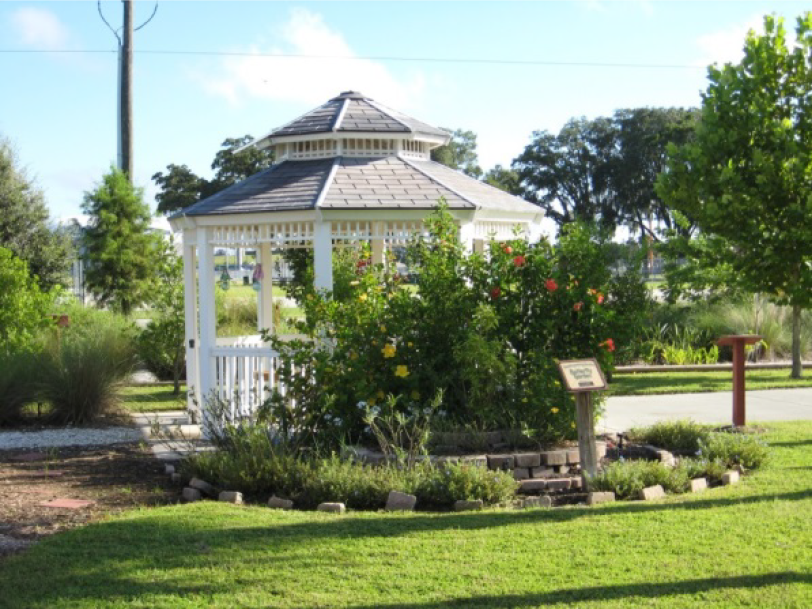
- Partnership with Tampa Bay Water and the Hillsborough County Extension Offices’ Florida Yards & Neighborhoods Program to recognize those who use the best water-efficient landscape design and maintenance. Past Community Water-Wise Award landscapes have demonstrated the beauty and resiliency of water-wise, Florida-friendly landscapes. A Tampa located non-profit and a Tampa homeowner received regional awards in 2016.
- Sponsorship of county-wide annual Science, Technology, Engineering and Math fair, hosted by the Hillsborough Education Foundation, to include additional funding of special awards in the following divisions and amounts: Elementary Division, $50; Junior Division, $100; and Senior Division, $150.
- Sponsorship and participation in the Great American Cleanup and the Hillsborough River/Coastal Cleanup for Keep Tampa Bay Beautiful.
Build Your Own Rebate Program (January 2013)
The Build Your Own Rebate Program initiated in January 2013 expanded during 2014 to offer rebate opportunities to both residential and non-residential account holders. For residential consumers, a limited number of rebates were offered to motivate single-family account holders to commit to and achieve potable water use reductions. The rebate amount is determined by the percentage of water consumption reduction. Participants choose their own ways to reduce use and are assigned a personal efficiency coach to help them achieve established goals. For non-residential consumers, a menu of rebate options, ranging from toilet and urinal rebates to sub-metering to cooling tower pre-treatment capability. Rebate amounts are determined by conservation measures implemented.
Partnerships (Ongoing) ***
A grant program offered classroom teachers in Tampa grants ranging from $250 to $5,000 to develop and implement water conservation activities for their students.
Department of Solid Waste & EPM, Parks and Recreation Department, and Keep Tampa Bay Beautiful created a Partnership in 2016 to increase public access to recycling. Fifteen permanent recycling containers were installed in Al Lopez Park, Cotanchobee Park, and along the Riverwalk. The program is expected to increase in 2017 with an additional 15 containers added to the Riverwalk and 10 containers along Bayshore Blvd.
Department of Solid Waste & EPM partnered with Parks and Recreation Department to promote our 3R’s Recycling Art Contest. We do not technically have partnerships with schools, but more of an increased participation in the program.
Recognition for Water-Efficient Landscapes (Ongoing)
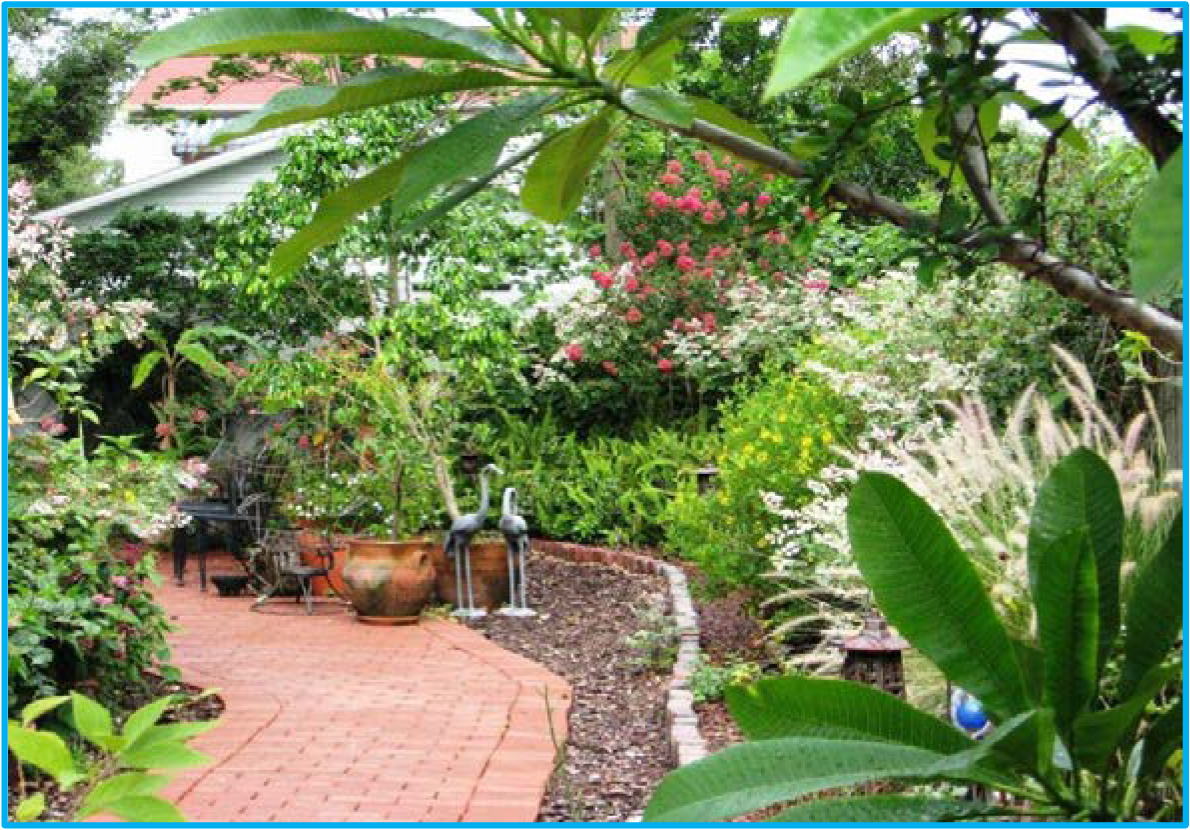
For more than a decade, the Water Department has partnered with Tampa Bay Water and the Hillsborough County Extension Offices’ Florida Yards & Neighborhoods Program to recognize those who use the best water-efficient landscape design and maintenance. Past Community Water-Wise Award landscapes have demonstrated the beauty and resiliency of water-wise, Florida-friendly landscapes. A residential homeowner received the award for 2013.
Florida Friendly Landscape Workshop (March 23, 2013)
The Tampa Water Department sponsored a Florida-Friendly Landscape Workshop presented by the Hillsborough County Extension Service to provide Tampa residents with information about outdoor water conservation along with hands-on instruction from subject-matter experts. An estimated 125 people attended this free event at Hillsborough Community College’s Dale Mabry Campus.
Florida Water Star (October 2013)
Began working with Southwest Florida Water Management District to identify existing structures in Tampa eligible for Florida Water Star certification and to increase availability of information about and recognition of Florida Water Star building and retrofit guidelines for conserving water in residential and commercial design and building practices.
Tampa Augmentation Project
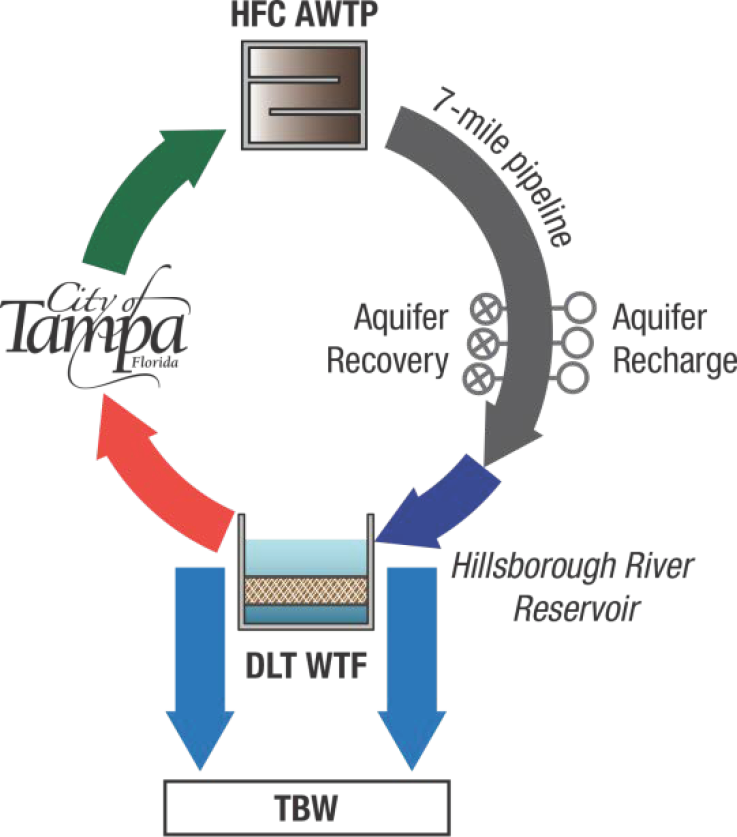
Under the Mayor’s direction, the Water Department kicked off the Tampa Augmentation Project to evaluate the cost and feasibility of increased use of reclaimed water from the Howard F. Curren Advanced Wastewater Treatment Plant (HFCAWTP) to potentially augment the potable water supplies available for the region. The Water Department is receiving 50% cooperative funding from the Southwest Water Management District. The goal of the project is to determine the feasibility of using natural treatment systems, to enhance the quality of the reclaimed water currently discharged, from the HFCAWTP for delivery as a source of potable water. If determined to be feasible, this project will enable continuous use of the reclaimed water during both dry and wet seasons, drought-proof our water supply, and reduce nitrogen loading to the bay. It can also be an additional option for meeting the Minimum Flow requirements for the Lower Hillsborough River.
Water Quality
Upgrades to Pump Station in Sulphur Springs (June 2012)
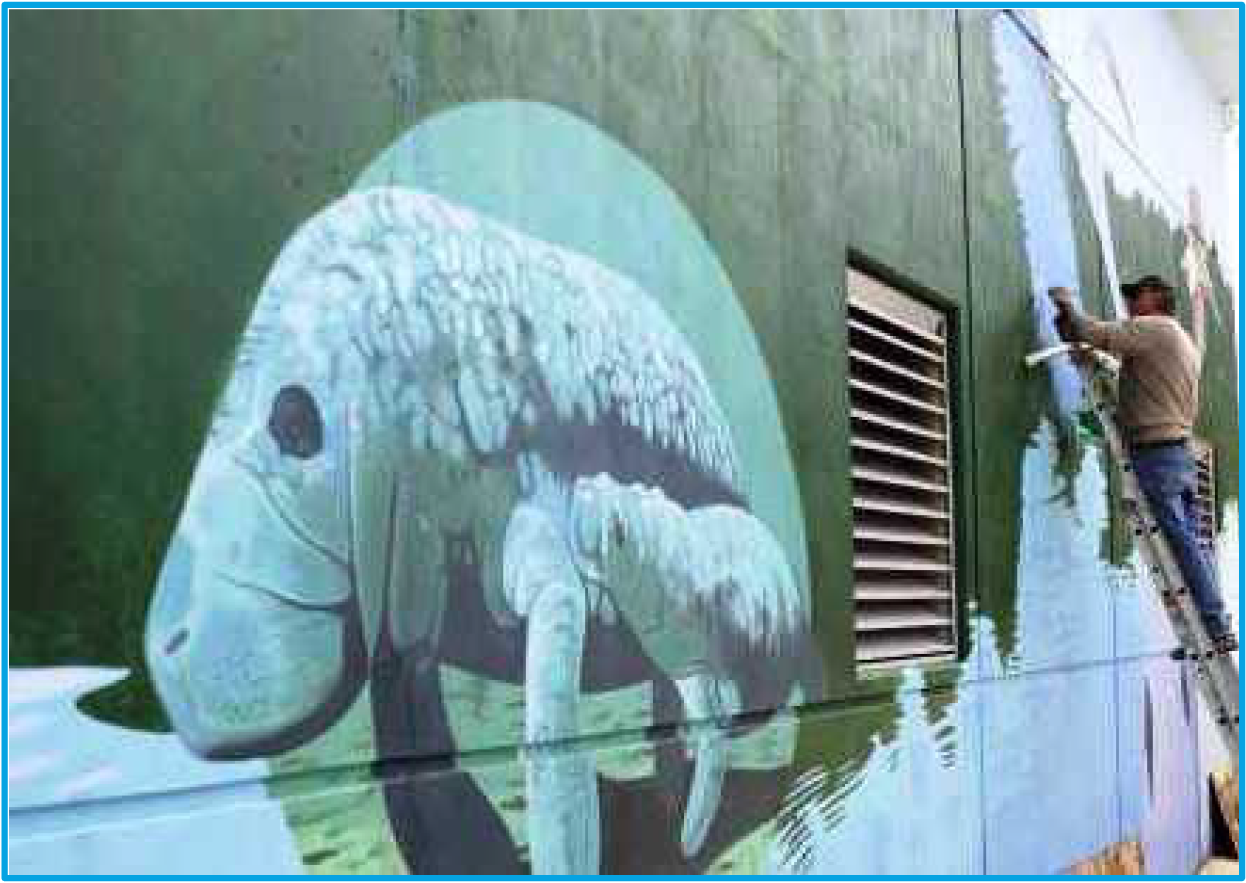
Upgrades to the decades old pumping system at Sulphur Springs will enhance water quality as well as provide a new community landmark. The upgrades are part of a multi-year plan to increase water flow in the Lower Hillsborough River and support environmental recovery. The improvements double the amount of water going to the river below the dam, enhancing water quality by providing a much needed freshwater zone downstream of the dam. Since the 1960s, Sulphur Springs has augmented water supplies in the Hillsborough River Reservoir during times of low rainfall or to bolster flows in the Lower Hillsborough River. The new pumps will help maintain a thermal refuge area for manatees, and improve estuarine habitats. A mural wrapping the building by artist John Gurbacs depicts the ecosystem of the river.
Greenhouse Gas Emission Reduction
Energy Efficiency and Conservation Plan-EECP (Ongoing)
One of the most innovative ways to reduce Greenhouse Gas (GHG) Emissions and lower our carbon footprint within the Transportation sector is to reduce the amount of hazardous waste produced by the City’s Fleet. The City’s ongoing Energy Efficiency and Conservation Plan-EECP goal to reduce transportation emissions by 54% which is back to 1990 levels by the year 2025.
A Greenhouse Gas (GHG) Emission Study and Energy Efficiency and Conservation Plan (EECP) were completed in June 2011. Following the state’s adopted GHG reduction target, the City has set a goal to reduce emissions back to 1990 levels by the year 2025. Sources of emissions include transportation, electricity and natural gas use, landscaping, water and wastewater pumping and treatment, and treatment and decomposition of solid waste. The dollars saved will be calculated solely based on fuel savings. Reduction measures recommended in the Plan to achieve this goal are:
- Energy Reduction Measures-41.5%
- Renewable Energy goal of 25% by 2025
- Residential Energy Efficiency Retrofits
- Commercial Energy Efficiency Retrofits
- Solid Waste-2%
- Waste Reduction goal of 12% by 2018
- No Waste Sent to Landfill
- Area Source-1.5%
- Substitute LED lighting for landscaping for energy savings
- Transportation-54%
- Smart Growth Planning
- Expand Use of Low/Zero Emission Vehicles
- Bicycle Infrastructure
- Encourage Telecommuting and Alternative Work Schedules
- Tampa Bay Area Regional Transportation Authority (TBARTA) Master Plan
- Water & Wastewater-1.2%
- Conservation Efforts
- Green and Gold Lighting Project
Household Chemical and Electronics Collection***
Interlocal Agreement for Expanded Collection Program (January 2016)
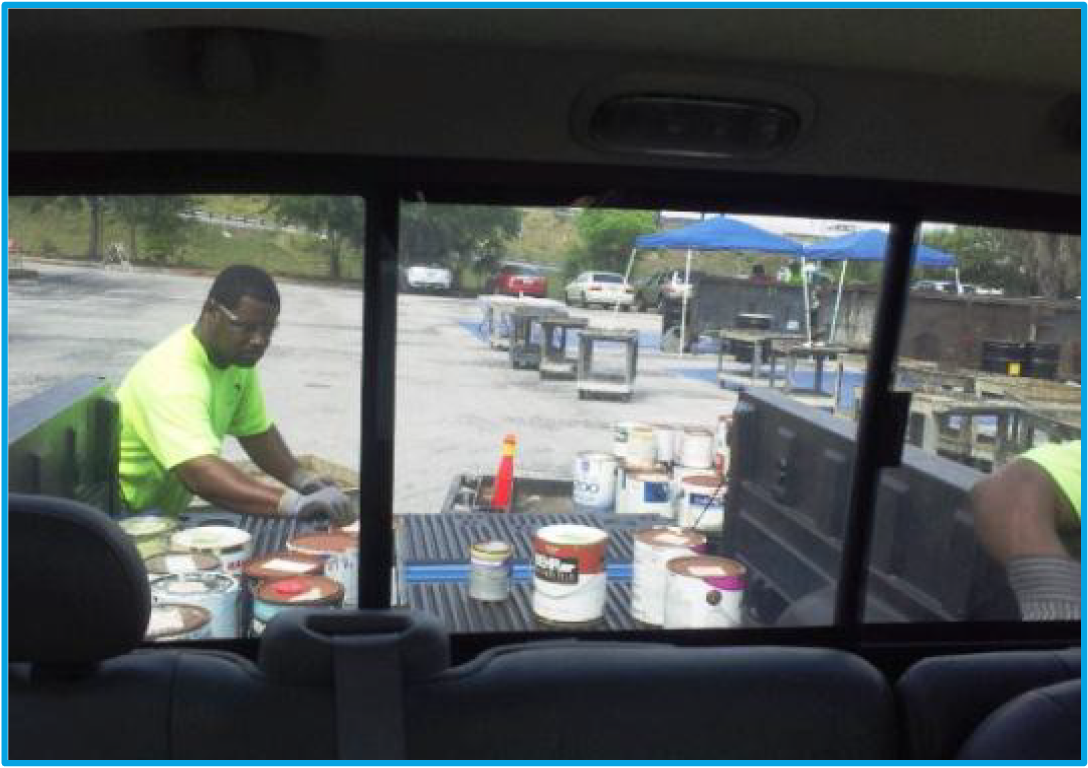
This collection provides residents with the Each year, the City conducted one Household Hazardous Waste and Electronics Collection Event to provide residents the opportunity to safely dispose of unwanted chemicals and electronics at no additional charge. In January of 2016, the City entered into an Interlocal Agreement with Hillsborough County to expand this program substantially. Under this agreement, City residents are able to dispose of household hazardous waste 3-times per month at 3 alternating locations, and dispose of electronics and paint 6-days per week at 4 Community Collection Centers. The City has agreed to reimburse Hillsborough County for the cost of City residents using these disposal locations.
Green Operations
The City is dedicated to implementing long-term sustainable methods of operations that become a natural part of our work and continually reduce our carbon footprint.
Energy Efficiency projects funded through the 2009 American Recovery & Reinvestment Act (ARRA)
The City received a $3.7 million Energy Efficiency and Conservation Block Grant (EECBG) in 2009 through the AARA to implement programs aimed at reducing total energy use, improving energy efficiency in the transportation and building sectors, and creating and retaining jobs. Following are the programs completed or currently being completed.
LED Lighting for Traffic Signals & Street Signs
All City traffic signals (480 intersections) have been converted from incandescent to LED lighting, reducing power demand by 70-80% per lamp, reducing electricity cost by about 60-70%. The City is currently working towards illuminating street signs for better visibility.
Al Lopez Park
- Upgraded park trail lights to LED; Repaved inner trail = 1.2 miles for easier pedestrian use; Installed recycling cans (acquired through Keep Tampa Bay Beautiful - Grant Initiative).
- Parks & Recreation Department conducted a vegetation clean-up in Al Lopez Park ponds to remove invasive hyacinth and improve aquatic conditions to sustain the natural life dependent on the pond.
Retrofit of Parking Garage Lighting
The City has replaced inefficient lighting with energy efficient induction lights in five municipal parking garages, reducing electrical use by approximately 55% equating to an annual savings of about $315k. Retrofitting of the downtown Whiting Garage and Police Department are currently underway.
Bobby Hicks Pool
New high energy efficiency heaters installed at Bobby Hicks Pool providing savings of gas to heat up pool during the weather, while conserving energy.
Traffic
Replacement of Traffic Signal System to Result in Reduced Air Pollution (Design 2013)
The City is working in conjunction with the Hillsborough County Metropolitan Planning Organization and the Florida Department of Transportation to upgrade the existing traffic management system. The project will include the replacement of current traffic control software, communications equipment and existing communications cabling in the field some of which is over 30 years old. The project will also upgrade the communications plant to fiber optic cable and replace controllers. The goal is to move the City’s traffic signal system to the next generation of traffic control and help ease congestion throughout the City which will result in reduced air pollution.
Refuse-to-Energy
The McKay Bay Refuse-to-Energy Facility uses about 94% of the City’s post recycled waste as fuel to produce clean, renewable energy. The facility produces 500 kWh of electricity from each ton of solid waste. Each ton of waste used as fuel offsets the use of 1 barrel of oil or ¼ ton of coal and prevents 1 ton of CO2 equivalents from being released from fossil fuel power plants and landfills. The facility also recovers about 8,000 tons of ferrous metals and 240 tons of non-ferrous metals per year for recycling. The facility uses about 202,000,000 gallons of wastewater each year from the City’s advanced wastewater treatment facility.
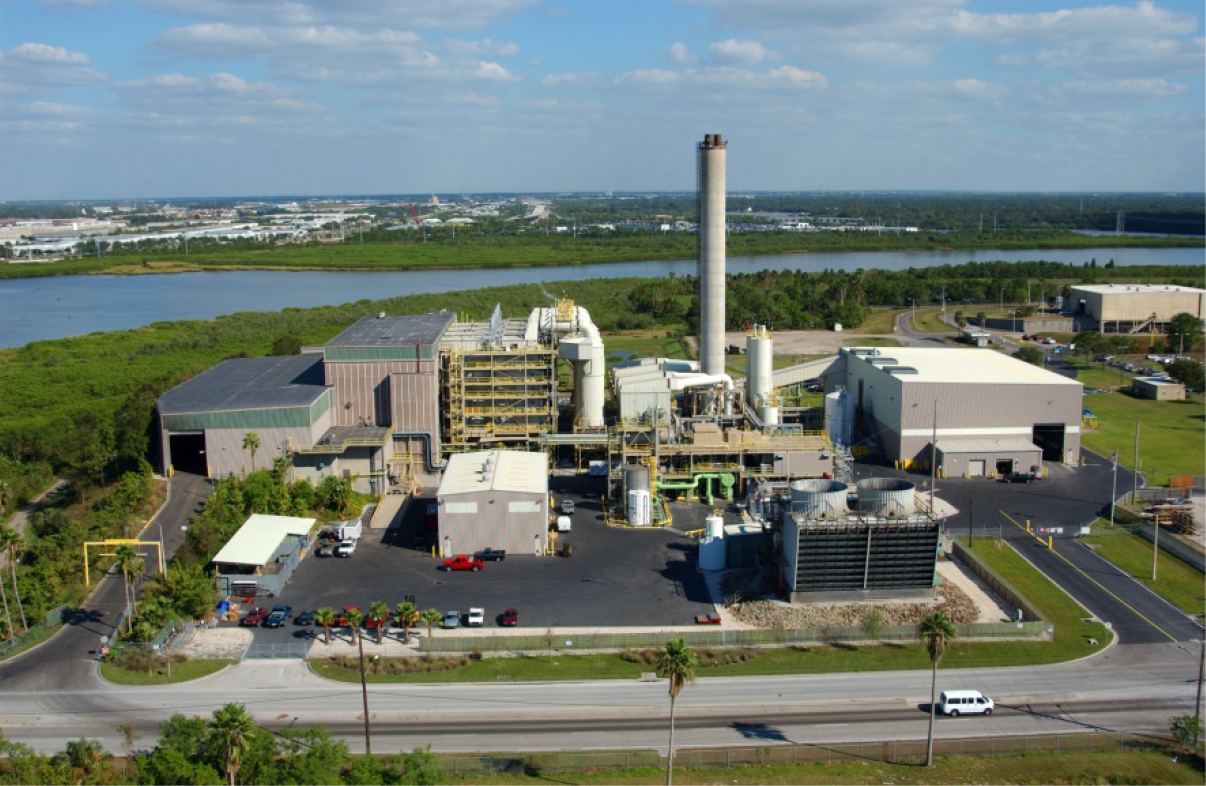
The City took over operations at the McKay Bay Transfer Station in October 2011. The transfer station is used to sort mixed loads of waste into separate waste streams that can be recycled (yard waste and white goods), used as fuel at the refuse-to- energy facility or landfilled. The City has been able to decrease the amount of waste previously landfilled, increase the amount used as fuel at the refuse-to-energy facility and is looking to increase the recycling of C&D debris in the future. The McKay Bay Scalehouse added an automated scale in July 2009 to speed up the processing of Solid Waste & Environmental Program Management trucks and reduce wait (idle) times for customers.
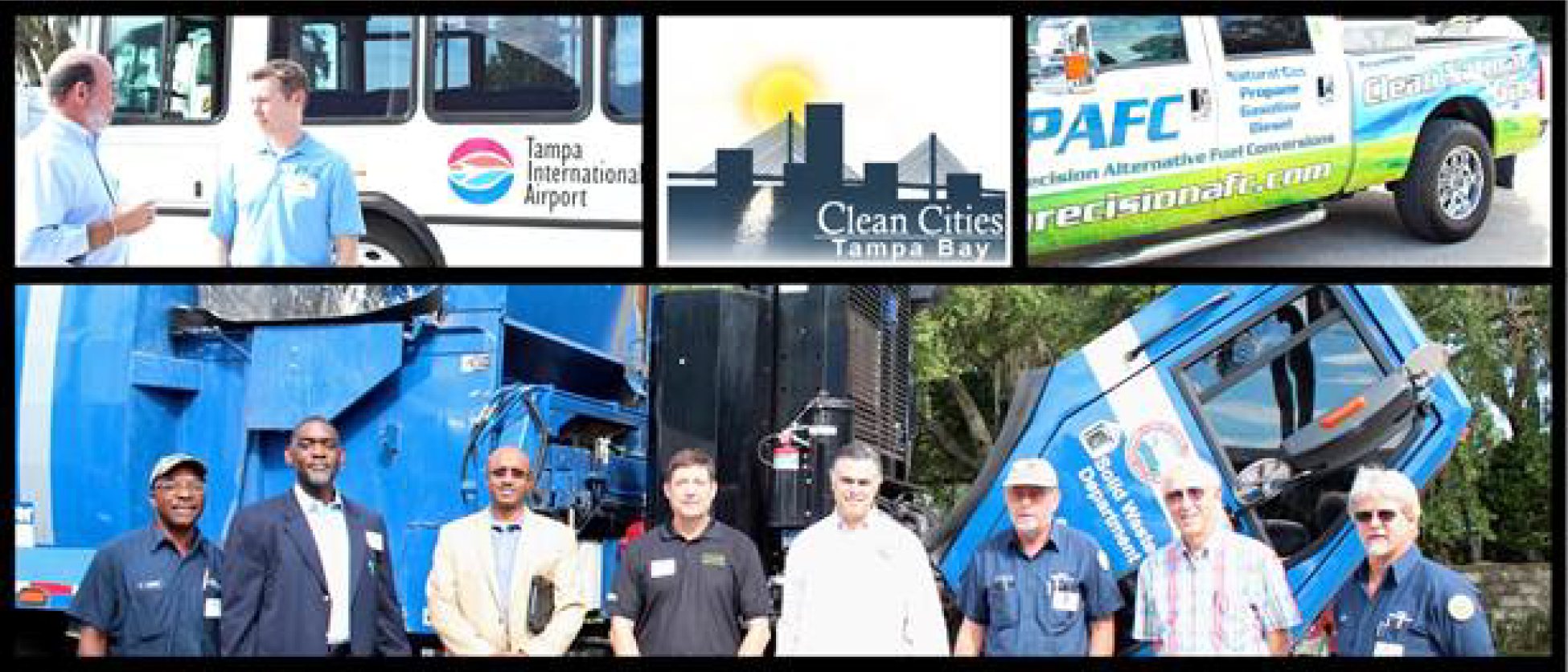
Clean Cities – US Department of Energy
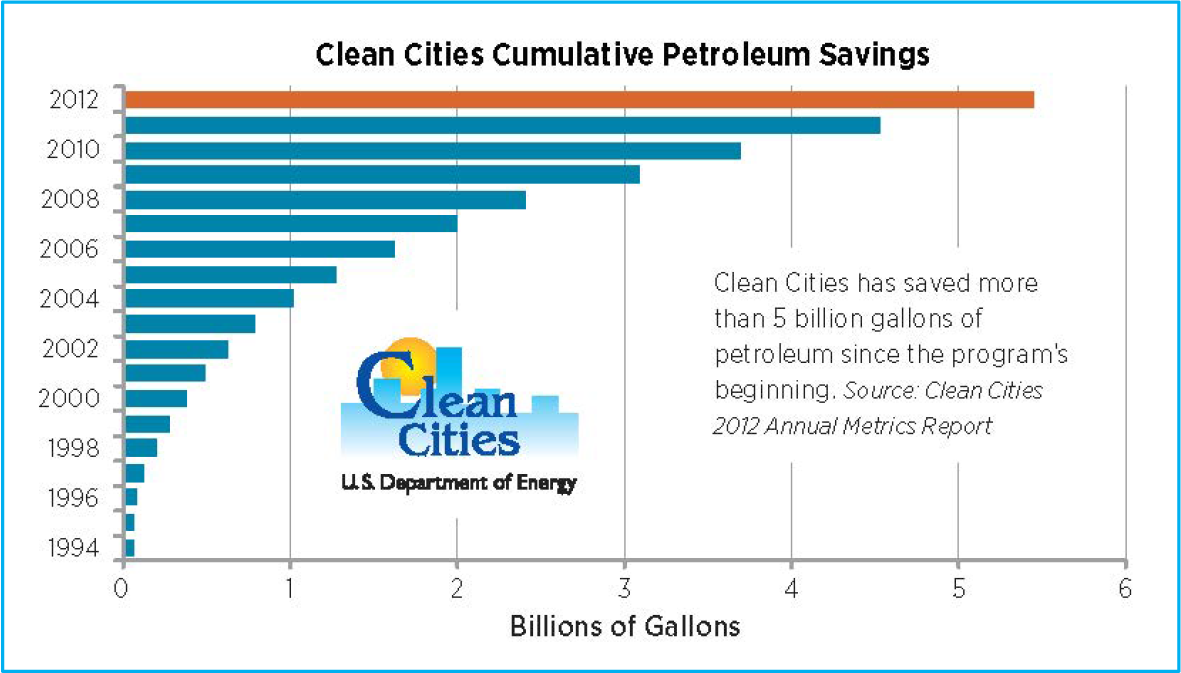
The City of Tampa was one of the first municipalities to join and support the creation of Tampa Bay Clean Cities Coalition. The Mission of Clean Cities is to advance the energy, economic, and environmental security of the United States by supporting local actions to reduce petroleum use in transportation. It is especially important to reduce our consumption of petroleum products as we continue to find transit options and improved land use development patterns. The U.S. Department of Energy's Clean Cities program advances the nation's economic, environmental, and energy security by supporting local actions to reduce petroleum use in transportation. Part of DOE's , Clean Cities has saved more than 5 billion gallons of petroleum since its inception in 1993. The following slides shows some of the ways we were able to accomplish Tampa’s contribution to that achievement.
Recycling
In 2016, the City recycled approximately 18,173.59 tons of material from residences and commercial businesses. The Department of Solid Waste & Environmental Program Management continues to increase recycling through outreach and education efforts in our Parks and Recreations Centers, City buildings, commercial businesses, schools and special events.
The Tampa Convention Center (TCC) has improved its recycling efforts by adding additional recycling containers within the building and around Sail Pavilion. In 2016 the Tampa Convention Center recycled over 312 cubic yards of commingled material which includes, aluminum, plastic and mixed-paper products. In addition to the commingled recycling TCC recycles over 77 tons of source separated cardboard annually.
Automated Cart Recycling (February 2013)
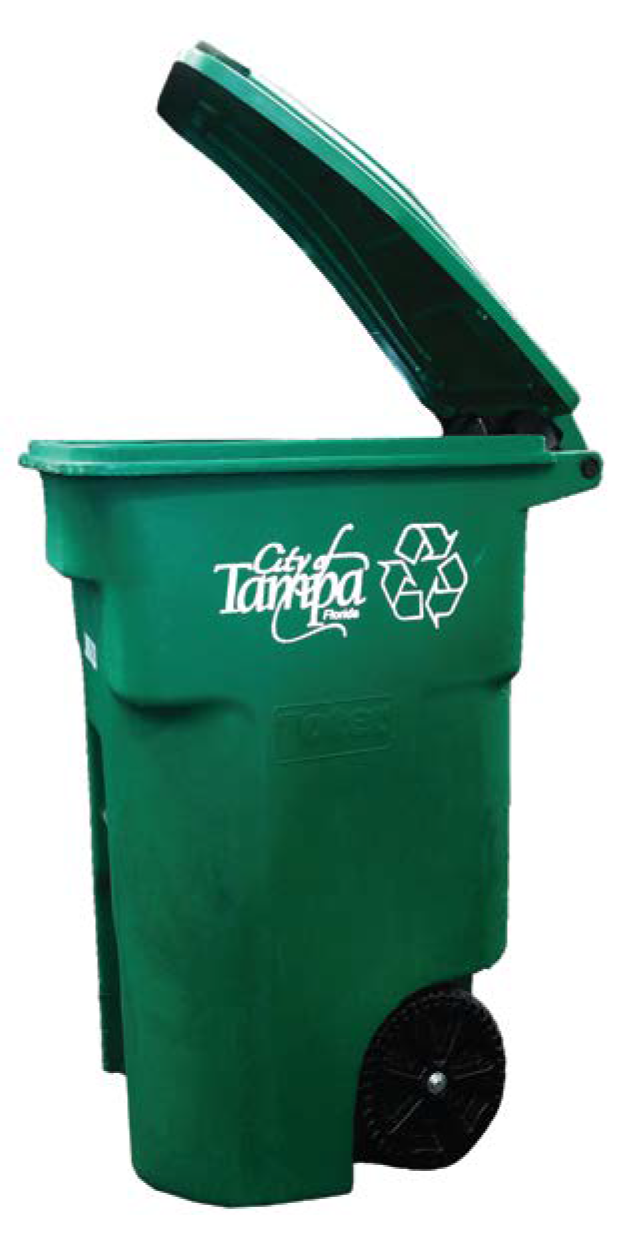
The Department of Solid Waste & Environmental Program Management launched a new “Be Smart, Use Your Cart” program for City of Tampa residents. Over an 18-month period, the 14-gallon blue bins currently used were replaced with new 95-gallon green recycling carts, complete with tracking technology. Through the implementation of automated carted recycling residential participation rates increased from 33% to 67%. The 2016 residential participation rate is at 84% and the tonnage of recyclables collected has been more than doubled since the implementation of recycling carts.
New Solid Waste Recycling Initiatives (ongoing)
The City continues to expand and improve the recycling options available to residents and businesses alike with the addition of new commercial recycling accounts; the establishment of new neighborhood recycling collection centers; enhanced collection programs for special events; and the provision of recycling collection services to occupied City of Tampa facilities and Parks and Recreation facilities.
Reduction of CO2 Emissions (June 2010)
Because of a city-wide program implemented in June, 2010, the number of households with curbside yard waste collection increased from 45% to 100% while decreasing the number of vehicles on the road by 10%. CO2 emissions were reduced by 500,000 pounds per year. Additionally, in 2009, a revised collection schedule was implemented for holidays saving about $500,000 per year in collection costs and 140,000 pounds of CO2 emissions per year.
Office Recycling & Reduction in Paper Use (Ongoing)
The City purchases green and or environmentally friendly products for 21.3% of its office supply needs. Office supply orders are made electronically via the internet using P-Cards, thus eliminating the need to print and mail hard copy orders. The City currently participates in the Hewlett-Packard (HP) Recycling Program. Original HP ink and LaserJet cartridges are returned to HP and HP gives the City credit points towards free equipment and supplies. The City recycled 760 toner cartridges in 2013. Additionally, the Tampa Convention Center actively pursues donation of surplus event materials to the community as part of a landfill diversion effort as well as the donation of unused food to local charities.
The City is also making it easier to “Go Green” by providing offices with recycling desk caddies. Caddies were delivered to all City of Tampa Municipal Office Buildings including buildings that have not previously enjoyed recycling collection service.
City of Tampa Department of Solid Waste and Environmental Program Management Recycling Program Expands to Include ALL City Offices
In honor of Earth Day 2016, the City of Tampa’s Department of Solid Waste and Environmental Program Management expanded its recycling program and sustainability initiatives to include all City of Tampa government buildings. This enhancement will also assist the State of Florida with meeting its goal to recycle 75% of all waste generated by the year 2020.
The service expansion occurred in phases from April 27, 2016 through May 25, 2016.
The City of Tampa’s Recycling Team is focused on educating others on how to recycle right! The City will lead by example to promote the benefits of recycling to Tampa’s local environment and economy. “Our Department is excited to be able to offer this service to a greater audience. Each step we take reduces Tampa’s carbon footprint and improves the added value of using post-consumer made products,” said Mark Wilfalk, Department Director.
Other Solid Waste and Environmental Management efforts include
- Increased the Department’s Compressed Natural Gas (CNG) Fleet.
- Added a temporary CNG fueling station and obtained approval for the construction of a permanent, time-filled, CNG fueling station.
- Began collection service of commercial roll carts using residential trucks to improve efficiency and reduce fuel costs.
- Recycling - Outreach & Education
- Increased participation of the Department’s 3R's Poetry & Arts Recycling Team - visited "Green Team" Leaders at Roland Park to enhance education and partnership opportunities
- Continued participation in the annual Great American Teach-In, visiting 8 schools; and educating over 1600 students on the importance of recycling and environmental stewardship.
- Increased recycling at Special Events
- 48 events, plus an additional 10-15 events at Curtis Hixon thru cart collection
- Began a partnership with the Parks & Recreation Department and WM-Recycle America to offer tours to Summer Camps for the 1st time (4 TENT Summer Camp tours currently scheduled).
- Together with the University of South Florida, College of Sustainability, the SW&EPM Department joined the Bulls as they hosted Tampa’s 1st - National College Game Day Recycling Challenge at a home game at Raymond James Stadium.
- Recycling - Outreach & Education.
- Increased participation of the Department’s 3R's Poetry & Arts Recycling Contest.
- Opened voting on the City of Tampa, Solid Waste website.
- Continued participation in the annual Great American Teach-In, visiting 10 schools.
- Educated over 1600 students on the importance of recycling and environmental stewardship.
- Continued recycling and outreach at Special Events, 28 events.
- Continued partnership with WM-Recycle America to offer tours to public groups and schools.
Green Spend Purchasing
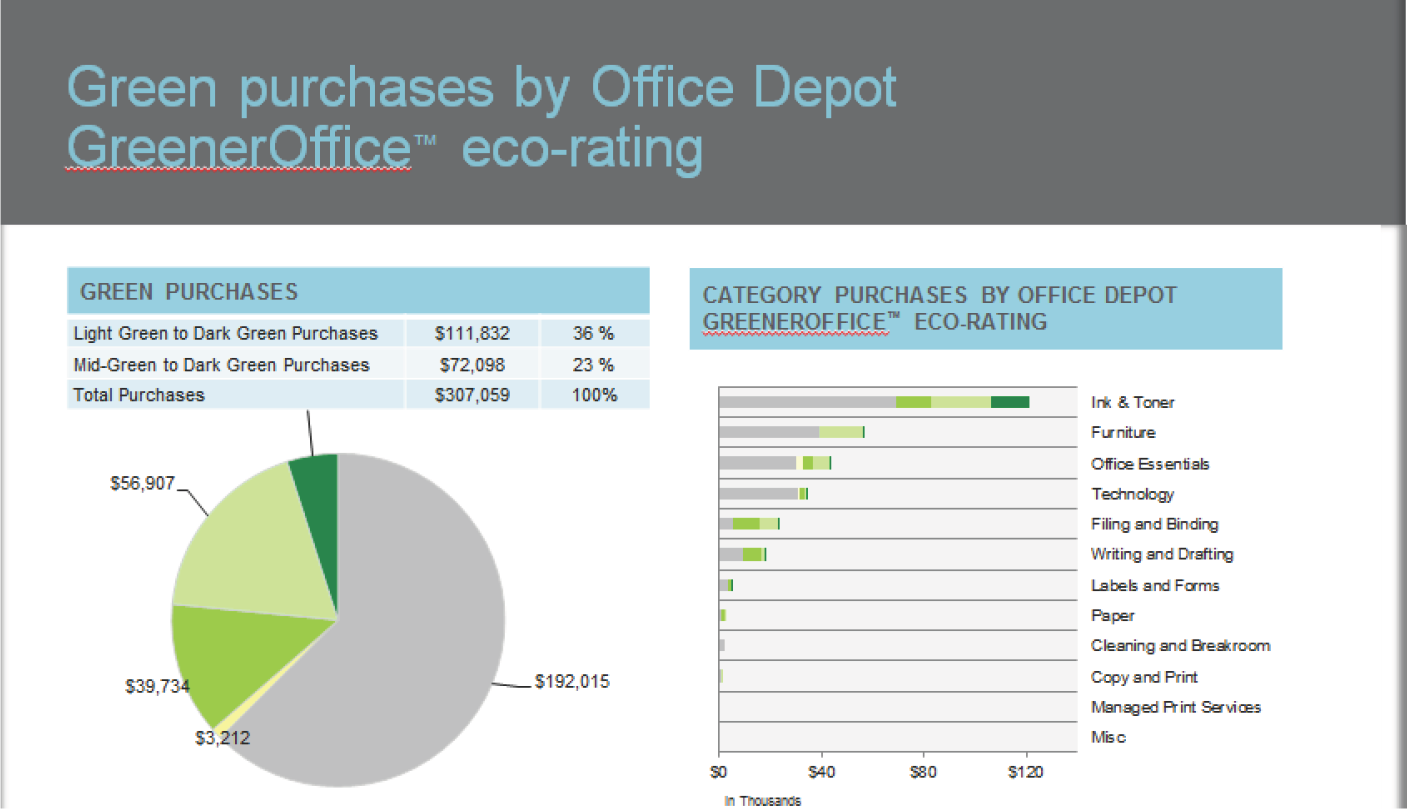
The City as a whole, achieved a 54% “Green Spend” in its use of various office products. Each year, we will strive to improve the percentages as our departments are made aware of more sustainable products.
Purchasing
Inventory is currently participating in the recycling of copy paper and are working with the Water Department to have a cardboard recycle bin placed by the trash dumpster so Inventory can recycle the cardboard boxes that are discarded.
Purchasing worked with Solid Waste Services on the award of a portable CNG fueling station at Solid Waste and the purchase of CNG trucks for them.
Purchasing’s Janitorial Contracts require that the vendor supply “Green Seal Environmental” Products when available. Here is the verbiage from a recent Parks & Parking Division RFP: “The City has established a goal to clean and maintain all parks, community centers, parking lots and garages with chemicals and equipment which are more in line with the Green Seal Environmental Standards. As part of the bid submittal, Bidder shall be required to provide a detailed list of the products and equipment, including applicable Green Seal documentation, required to perform the services of this award as detailed in this specification. Since improvements in the “green” technology are still emerging, the City shall have the right to require the Awardee to use Green Seal products and equipment as they become more available - most notably in the areas of disinfectants, mildewcides, degreasers, and acid bowl cleaners. No cleaning compound without the Green Seal of approval on the label will be allowed without the written approval of the City.”
Earth-Friendly Products (Ongoing) ***
The Fleet Man ag e m en t office has incorporated green, earth friendly products into their work centers such as lead free wheel weights, battery cleaners, parts washers that recycle and utilize a micro-organism base instead of petroleum solvents. The Tampa Convention Center uses locally grown produce and sustainable products to lesson transportation emissions.
For 2017 Fleet Management has added an Automated On-Site Oil Analyzer that will allow on-the-spot oil analysis needed to determine interval integrity and the measurement of timely Preventative Maintenance Services. Extending oil drain intervals translates into less environmental pollution and less dependency on foreign oil.
Also for 2017 Fleet Management has added a SmartWasher® Bioremediation Part Washer which uses biological agents such as microbes or plants to break down or neutralize “hazardous substances” or “contaminants” thereby removing dangerous chemicals from the environment. Bioremediation is defined as the accelerated break down of organic compounds through the use of enzymes, bacteria, or fungi…nature’s way of cleaning the environment. The science of bioremediation is listed as one of the Environmental Protection Agency’s (EPA) innovative technologies.
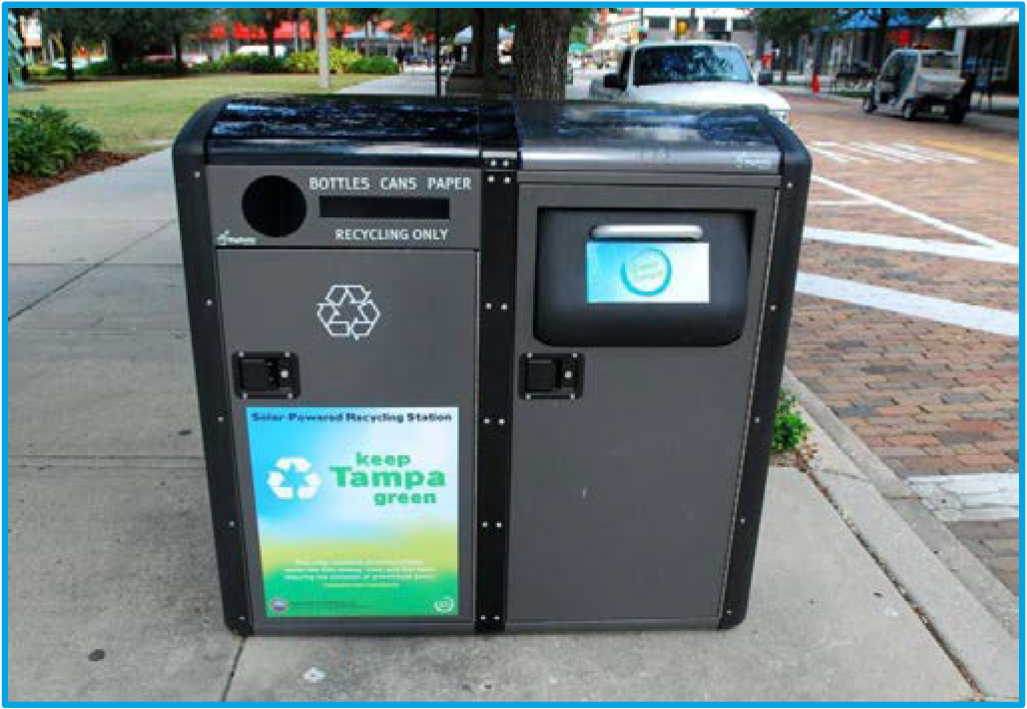
Solar Trash & Recycling Compactors (December 2010)
The City continues to collect data on its six solar-powered trash compactors located downtown. The goal is to replace 32-gallon trash cans saving money and reducing greenhouse gas emissions by fewer pickups by a city vehicle. The device is powered by a solar panel on top that recharges a 12-volt battery. An electric beam triggers a ram that compacts garbage until it reaches maximum volume. Whenthe receptacle is ready to be emptied, an electronic message is sent to a Website monitored by city sanitation employees. The technology emerged several years ago, and solar compactors can be found on street corners, in parks and elsewhere in cities including Boston, Philadelphia, Baltimore and New York. They also are being used in many state and national parks.
Construction Debris Recycling
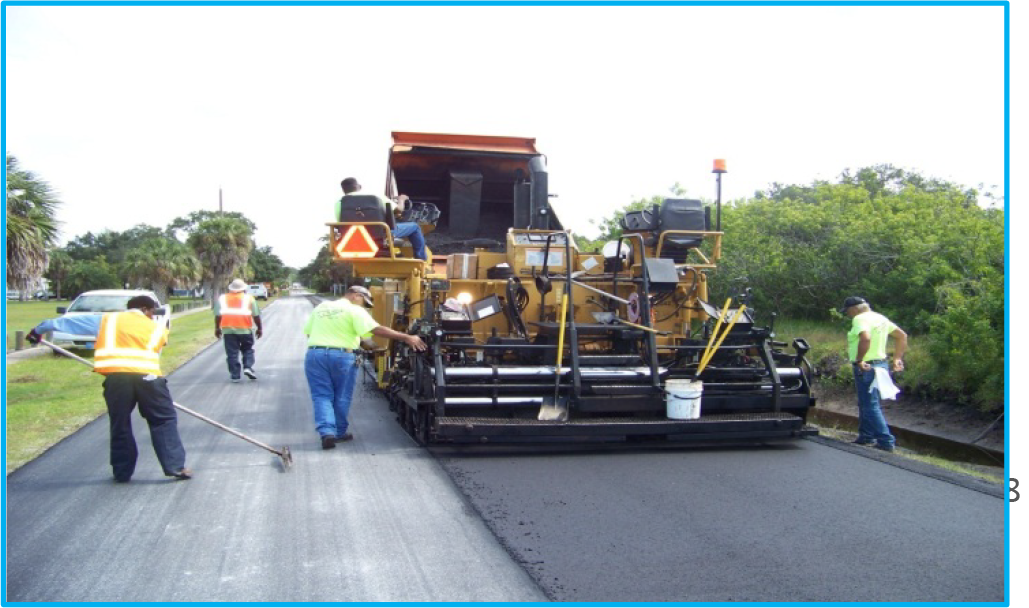
Cold-in-Place Asphaltic Recycling: The project achieves cold- in – place recycling of bituminous pavements at various locations throughout the city.
Solar Parking
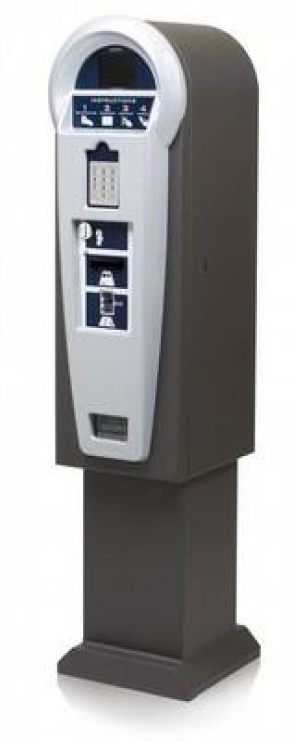
The City continues to save energy with its 146 Solar Parking Pay Stations with the elimination of conduits, power or the need to set up power meters at the stations. The City’s reduces its carbon footprint by using less power.
Green Transit
Walk-Bike Plan Phase III (October 2013-Ongoing)
The Transportation Division supports upgrading the bicycle and pedestrian network throughout the City by implementing feasible multimodal concepts on all capital improvement projects including resurfacing projects. The Transportation Division also works closely with the Hillsborough County Metropolitan Planning Organization in the development of the City Walk-Bike Plans. These planning level studies identify and prioritize needed bicycle and pedestrian projects that provide neighborhood and activity center connectivity.
Tampa’s City Hall can be accessed by transit utilizing the Hillsborough Area Regional Transit Authority (HART). Use their trip planner at http://www.gohart.org/routes/plan/tripplanner.html for the best route from your location. Bike racks are available on the west side of the building for those who chose this green mode of transit. HART has deployed 28 new Compressed Natural Gas (CNG) vans to replace its diesel-powered models. In 2015, HART expects to put 22 new CNG buses in service as its diesel buses are retired from service. By the end of 2015, HART expects a total of 59 CNG vehicles to be in service providing additional green transit opportunities for Tampa residents.
Bike Share Program (Spring 2014)
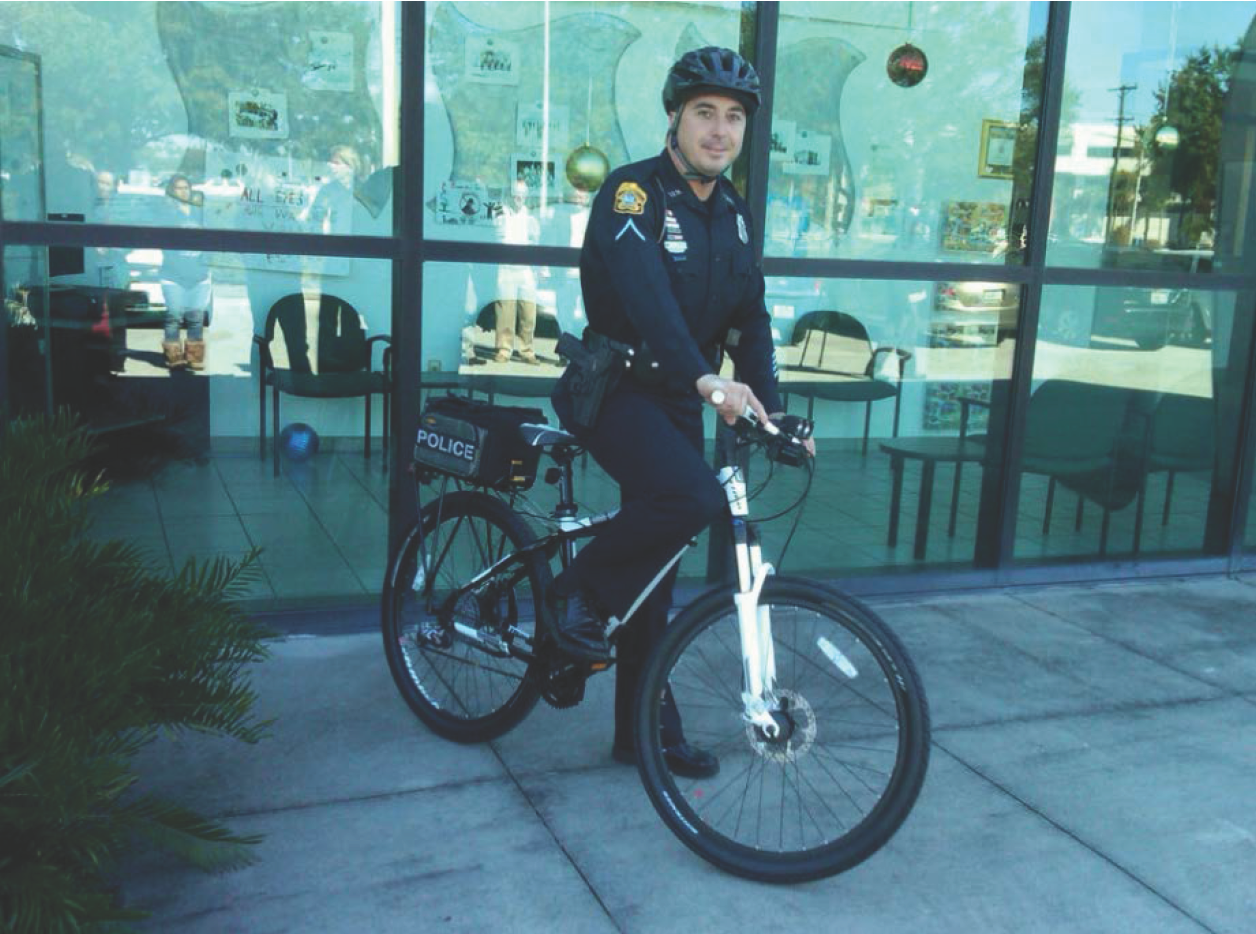
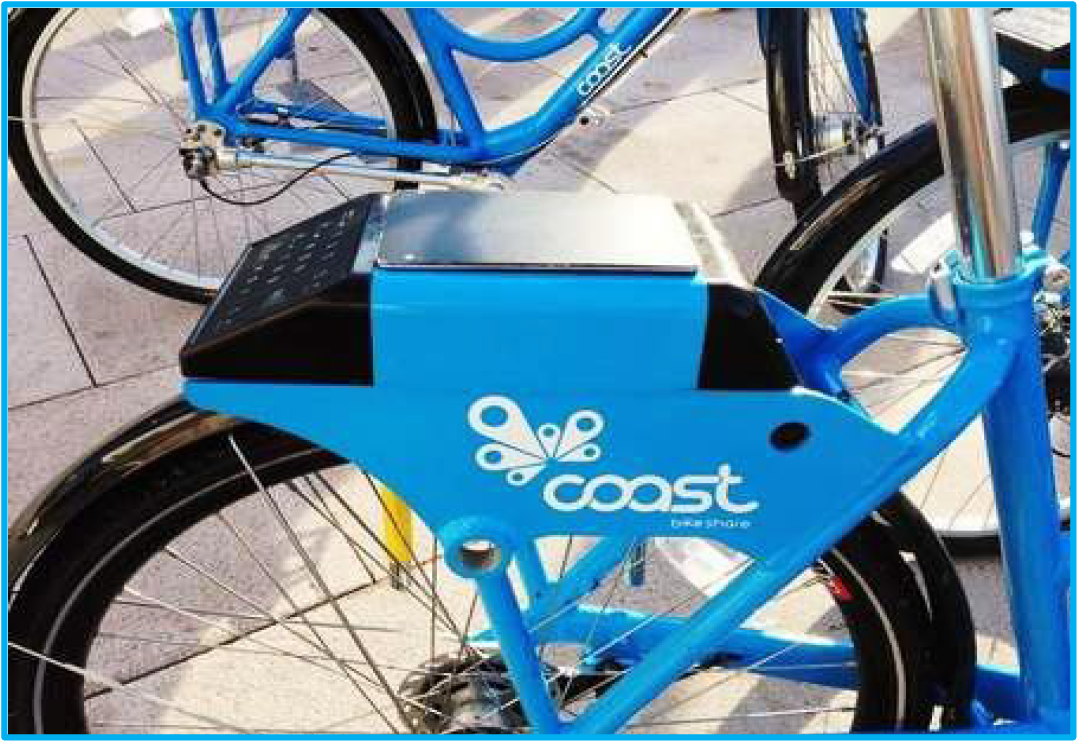
Tampa’s Coast Bike Share is a joint venture between Social Bicycles and CycleHop LLC, which will manage the program day to day. Riders will be able to use cell phones or credit cards to rent bicycles on an hourly basis or by membership fees, using a pin code to unlock the bikes. The bikes are equipped with drive shafts instead of chains for grease-free propulsion, LED headlights and tail lights for night time riding, adjustable seats and baskets out front. The bikes will be housed at designated sites and with their onboard technology riders can leave them tied up anywhere when they’re finished. The proposed hub locations for the first phase of implementation will encompass downtown, Hyde Park, Ybor City, and Davis Island.
“Bike sharing programs like ours are an easy, affordable, and healthy mode of transportation.” – Mayor Buckhorn
New Bicycle Lanes (April 2013-2 year project)
Bike paths are being created as part of an overall strategy to make downtown more accessible and safer for pedestrians.
The City has unveiled the protected two-way bike track on the new two-way Cass Street – the first in the state of Florida!
The to-do list includes adding bike lanes to: Doyle Carlton Drive north of the Straz Center; Palm Avenue in Ybor City; Laurel Street between North Boulevard and Tampa Street.
Existing pavement markings are removed using hydroblasting, allowing for the roadway to be restriped without having to completely resurface the roadway with a new layer of pavement providing a substantial cost savings. Hydroblasting uses no additives or chemicals and creates no dust, thereby protecting the public and environment from contaminants normally associated with resurfacing.
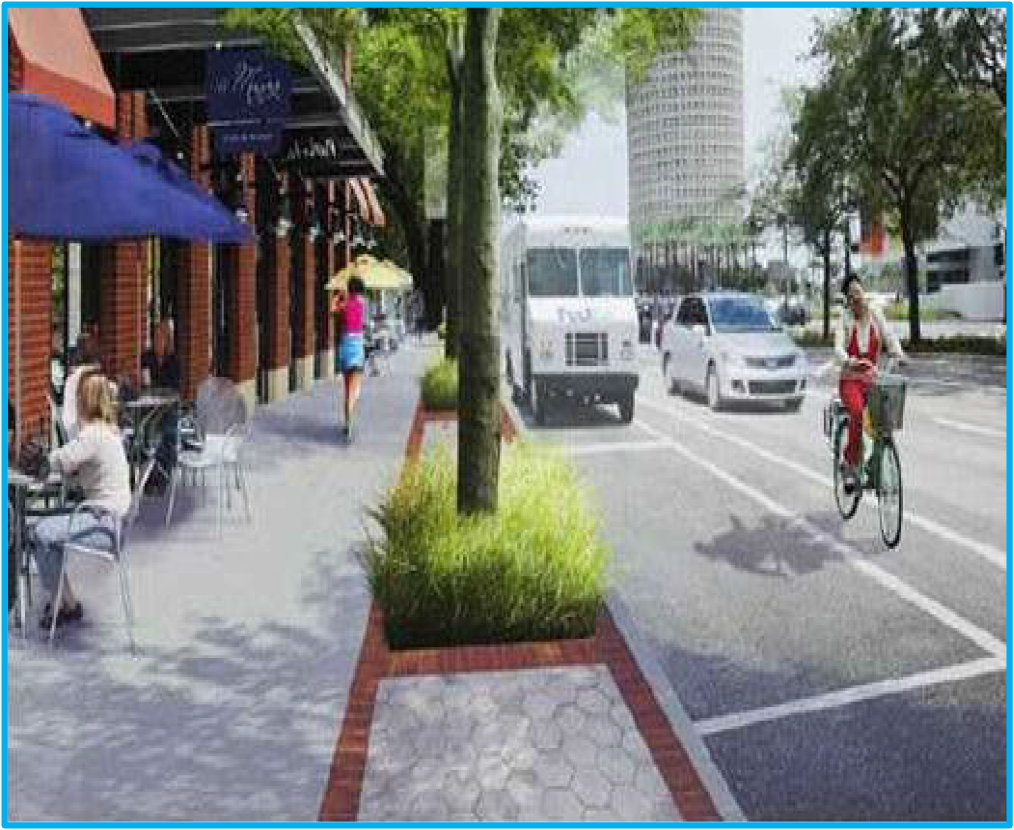
Platt Street Traffic Calming (March 2015)
The City of Tampa recently redesigned Platt Street in South Tampa, adding on street parking, lowering the speed limit, and creating the City’s first buffered bike lane. Green paint near busy intersections help draw more attention to the new bike lane.
This is the first such design in the city, which was added as part of a larger, $2.4 million repaving and traffic-calming project. Additional buffered lanes will be added on Cleveland Street. The traffic-calming project reduced the speed limit on Platt and Cleveland from 40 mph to 35 and reduced the three-lane roads to two, allowing for the creation of the bike lanes. This project further helps reduce carbon emissions, by slowing cars down and encouraging the use of non-vehicular bicycles. These improvements are part of Mayor Buckhorn’s pledge to make Tampa safer for pedestrians and bicyclists.
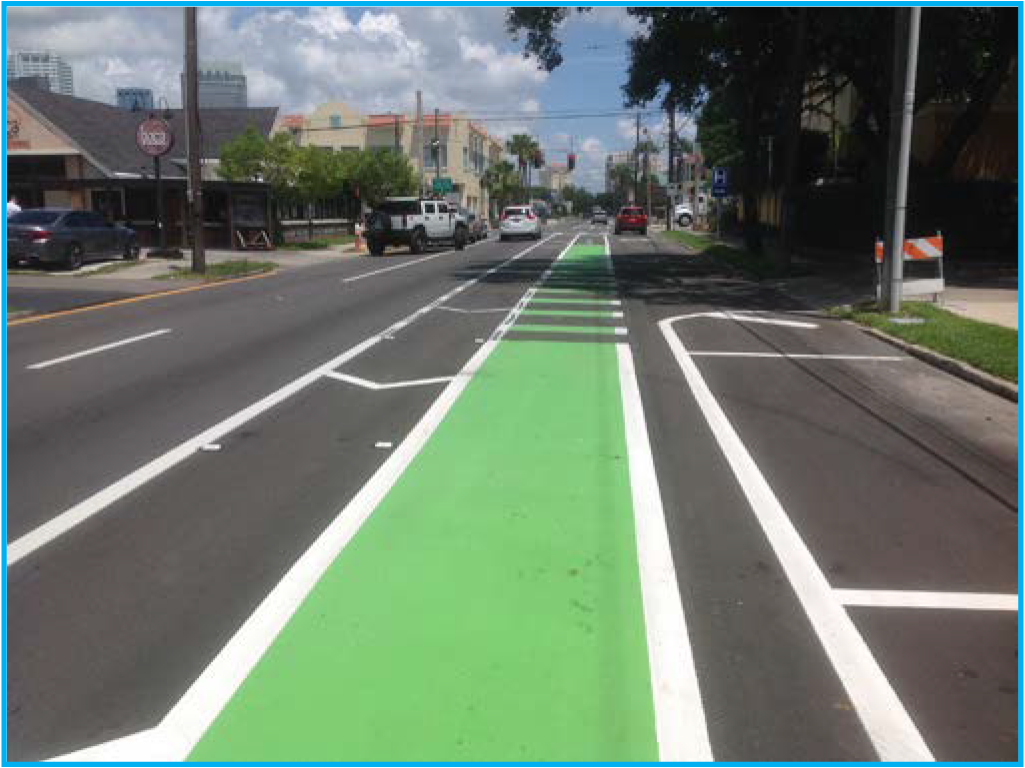
Cass Street Dedicated Bike Lane
Tampa is making progress on safe bike infrastructure and has completed a curb-protected two-way lane on Cass Street downtown.
The Cass Street project is one of the first protected bike lanes in Florida — a notoriously dangerous state for biking and walking. It’s about three-quarters of a mile long and the city intends to extend it in both directions. Tampa Mayor Bob Buckhorn (right in the green button down) led a ride celebrating the opening of Tampa’s new protected bike lane.
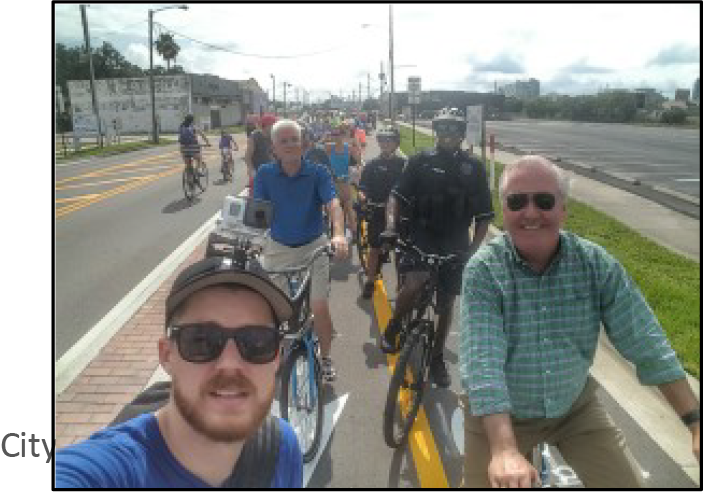
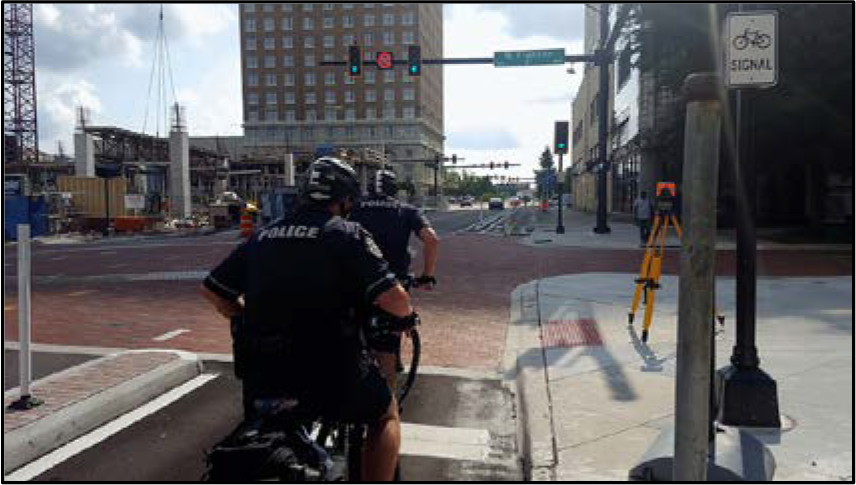
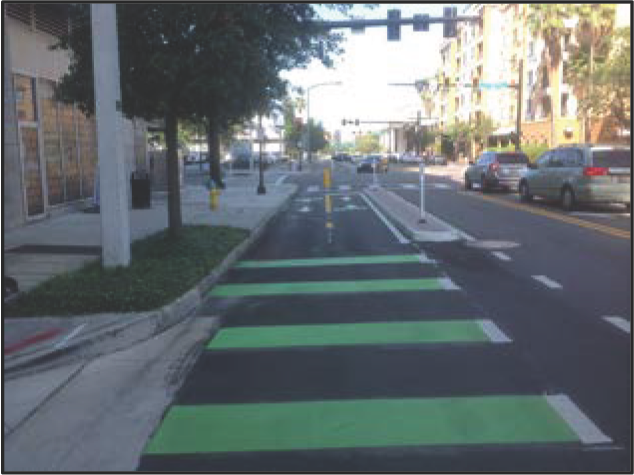
Electric Vehicle Stations
Through a grant program, the City received 10 electric vehicle charging stations at no cost in October 2011 to help reduce greenhouse emissions. The stations are part of the Charge Point America program sponsored by Coulomb Technologies through the American Recovery and Reinvestment Act and the Transportation Electrification Initiative administered by the Department of Energy. The goal is to provide electric vehicle charging infrastructure to regions in the US and foster the adoption and readiness of EV’s throughout the country. The stations are located at the following public parking garages: Fort Brooke, Tampa Convention Center, South Regional, Twiggs Street, Centro Ybor, Palm Avenue, William F. Poe, and the Jackson Street surface lot.
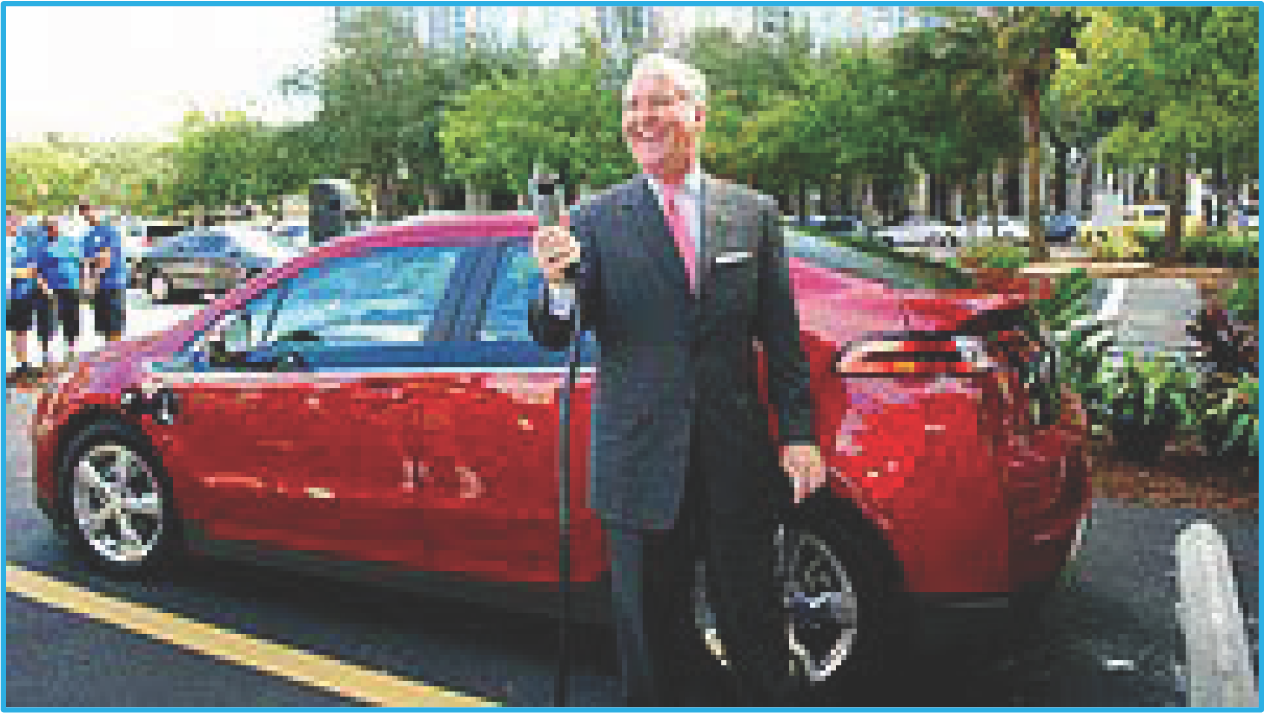
Electric Vehicles
The City of Tampa participated as a sponsor helping Tampa Bay celebrate electric vehicles with Drive Electric Tampa Bay. A one-day event presented by the City of Oldsmar in partnership with NovaCharge and the Sierra Club. The event took place on Saturday, September 20, 2014. This event is part of the 4th Annual National Drive Electric Week (formerly known as “National Plug In Day”) in which nearly 100 cities across the country participated. The event celebrated the myriad of benefits that electric vehicles can bring to cities from coast-to-coast. Plug-in electric vehicles have enabled millions of miles of cleaner, oil-free driving, including here in the Tampa Bay area.
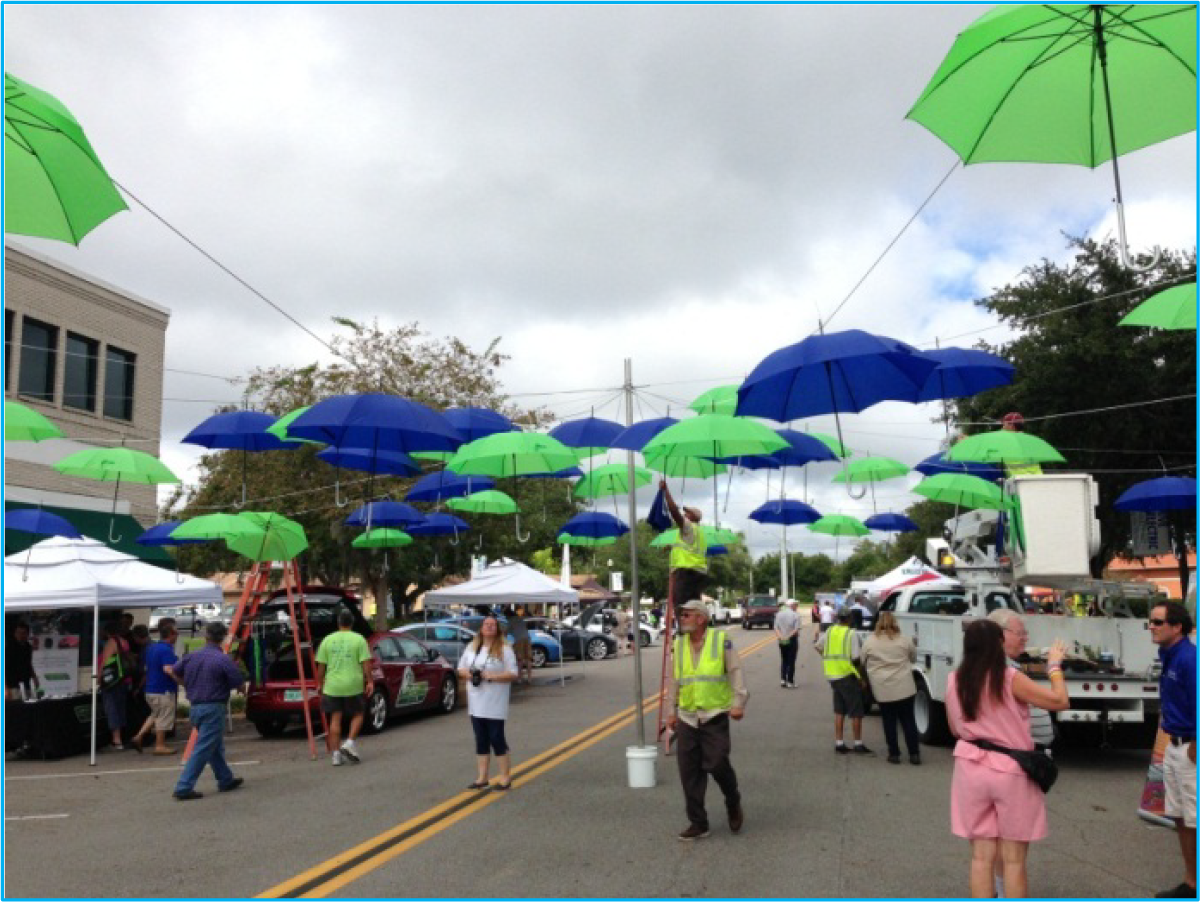
Global Electric Motorcars (GEM) Cars
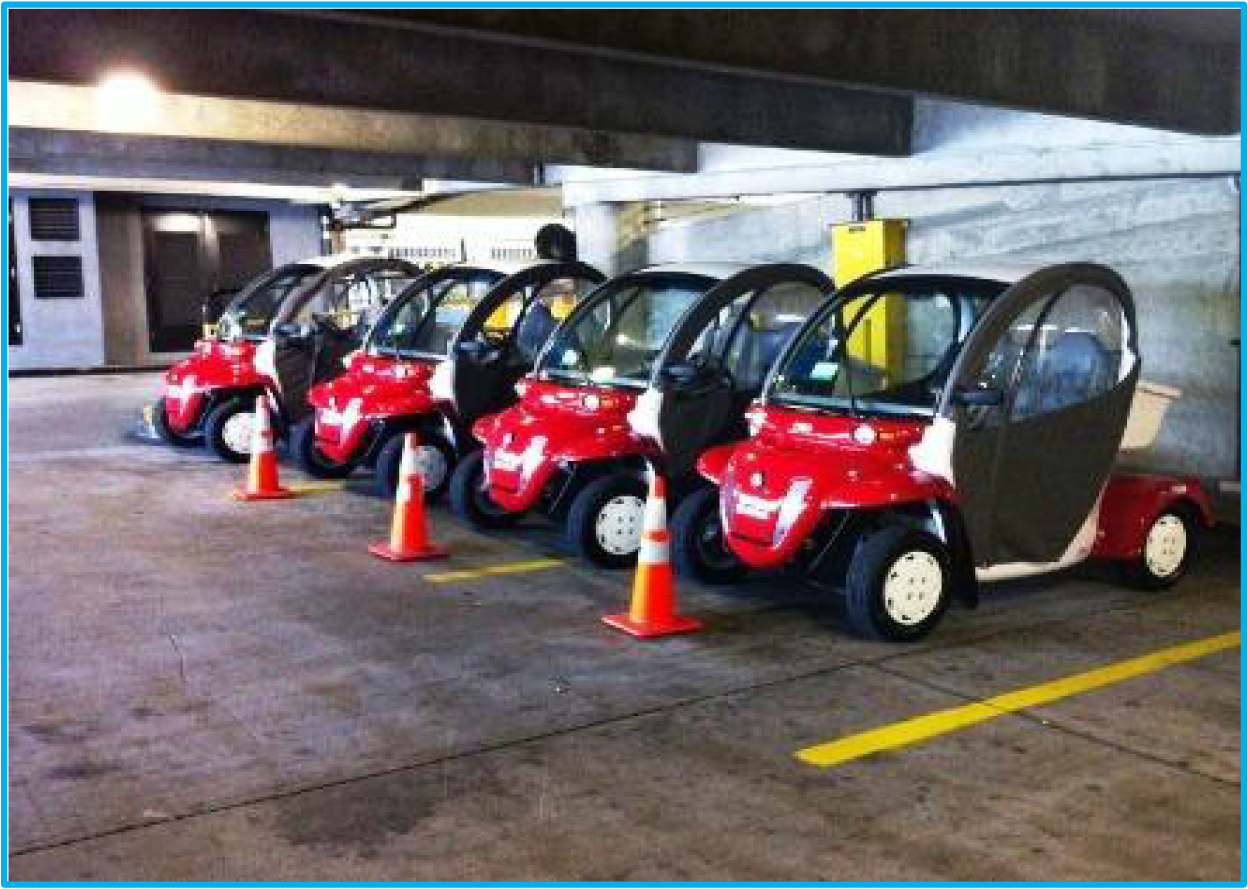
The Parking Division has replaced several gas-operated trucks, cars and 4-wheelers with GEM cars. This has resulted in a substantial reduction in fuel costs, emissions and noise pollution while allowing for greater mobility and higher visibility.
GEM cars have a top speed of 25 mph and a range of up to 30 miles (on a charge. They are battery-electric, operate on a 72- volt battery system and plug into a standard 110-volt outlet for recharging, and fully recharge in six to eight hours. GEM cars are used by local, state and national government agencies, resorts, master-planned communities, universities, medical and corporate campuses, sports teams, taxi-shuttle services and individual consumers.
TECO Line Streetcar System
The Tampa Convention Center offers free Streetcar passes to convention attendees as an eco-friendly method of transport around Downtown, Channelside and Ybor City. Over 28,000 conventioneers utilize this service. The Streetcar also connects with several HART bus routes including Route 30 Ride-n-Fly Airport Service.
Mass transit connects communities, mobilizes residents and fosters growth and civic pride within the community.
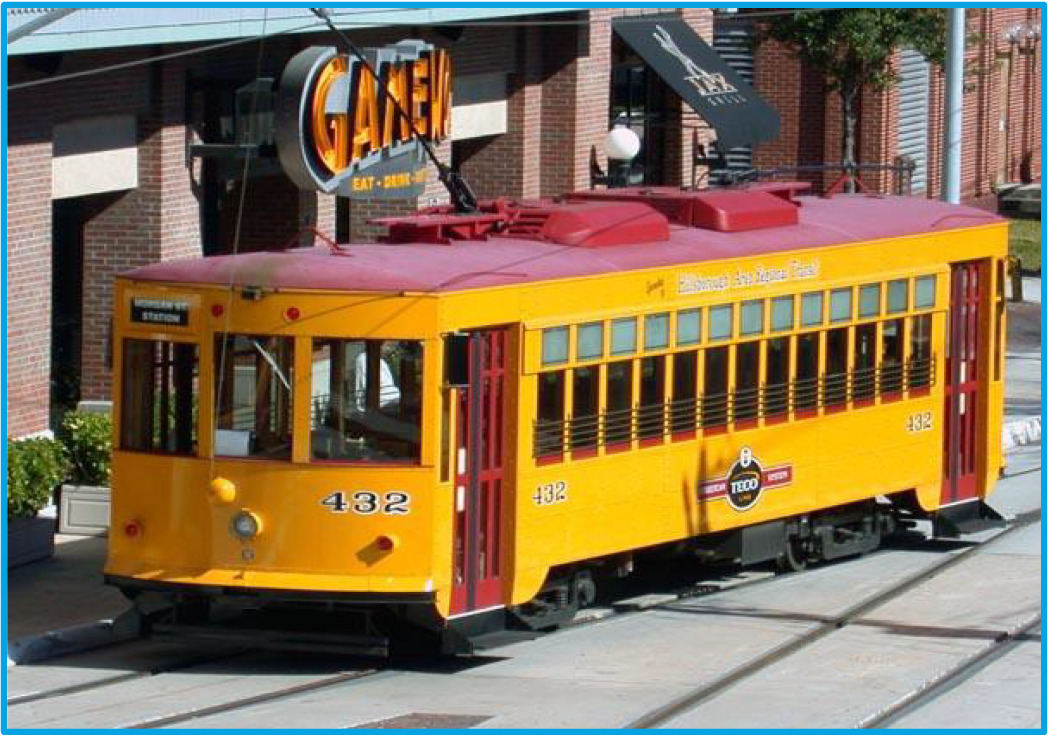
Alternative Fuels/Fuel Efficiency
Compressed Natural Gas (CNG) Garbage Trucks (2012-ongoing)
The Department of Solid Waste and Environmental Program Management operates forty-six refuse vehicles fueled by CNG. Additional CNG trucks are expected by the end of 2017 which will increase the departmental fleet to 65 CNG fueled vehicles. The Department installed a second temporary slow-fill CNG fueling station on site at the Solid Waste Yard which allows for the fueling of 18 units, simultaneously. A permanent, on-site CNG fueling station has received funding approval and the planning process has begun. The permanent facility will be built in phases to keep pace with the acquisition of additional CNG vehicles. Once completed, the station is expected to accommodate the entire Solid Waste fleet.
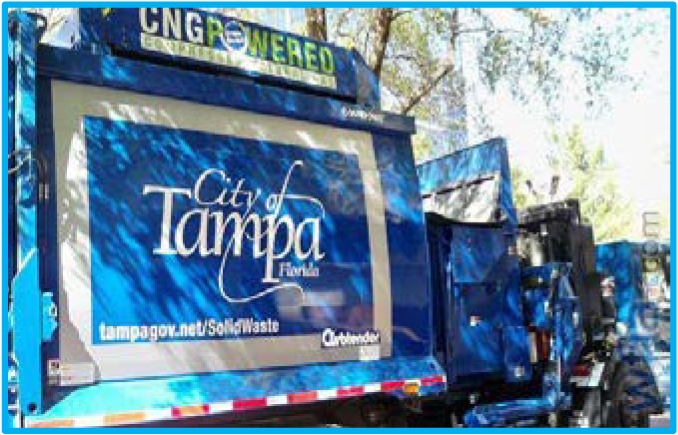
GPS Route Optimization (June 2015)
The Solid Waste & Environmental Program Management will be purchasing a GPS Route Optimization system. The system will determine the most cost effective routes for garbage pickup thus saving fuel and increasing overall efficiency in picking up garbage.
Fuel Consumption Down (FY2013)
The Fleet Maintenance Department’s unleaded fuel consumption is down 1.1% when comparing FY2012 to FY2013 based on increases in MPG because of newer and more efficient engines. The Wastewater Department has begun the process of downsizing its fleet vehicles with more efficient models that provide higher gas mileage. In appropriate applications, 4- cylinder (18-22 mpg) vehicles have been replacing heavy duty 8-cylinder work trucks (8-12 mpg) to reduce fuel consumption. Evolving automotive technology allows smaller engines to provide power and performance that would previously have required larger, less fuel efficient engines.
Ultra Low Sulfur Diesel (2006-2013)
Ultra low sulfur diesel purchases have been approximately 950,000 gallons a year since it has been phased in, reducing sulfur content in the fuel by 95%. Bio-diesel has not been purchased due to lack of availability and operational concerns when it was previously tested.
Diesel Engine Replacement (2011-2013)
Since 2011, the Fleet Department has replaced 100 old inefficient diesel engines with newer diesel engines with selective catalytic reduction (SCR) exhaust systems. SCR is a method of converting harmful diesel oxides of nitrogen (NOx) emissions, by catalytic reaction, into benign nitrogen gas and water. SCR can deliver near-zero emissions of NOx, an acid rain smog-causing pollutant and greenhouse gas. The combination of ultra-low sulfur diesel fuel and the sophisticated emissions devices on the new engines will result in more than a 90% reduction in soot and oxides of nitrogen.
Automotive Materials Recycling (2013)
In 2013 the Fleet Department recycled 57 tons of metal, 462 gallons of anti-freeze and 10,654 gallons of used oil.
Energy Conservation Projects – Wastewater Department
Wastewater Pump Station Rehabilitations and Upgrades (2013-Ongoing)
Pumping equipment, electrical improvements, and valve replacements were made to 26 pump stations to increase efficiency, ensure reliability, and provide long term protection of system assets. Newer pumps and electrical control systems reduce overall energy requirements.
Wastewater Electrical Co-Generation Program (Ongoing)
The Wastewater Department continues its program of electrical co-generation from the combustion of digester methane gas at its treatment plant. In calendar year 2016, the Department generated 3.7 million KWH of electricity thus avoiding having to purchase this from Tampa Electric, for a savings of $251,000.
Wastewater Treatment Plant Improvements (2013-Ongoing)
The Wastewater Department has completed projects for the rehabilitation of the High Purity Oxygen Generator Facility, De-nitrification Filter Media Rehabilitation, Final Sedimentation Tank Rehabilitation, and currently conducting a treatment plant master plant study to determine improvements to increase reliability and operating efficiency. The Wastewater Department completed the installation of catalytic converters on diesel generators at the standby power facility to reduce the emission of greenhouse gases.
Tampa's largest pumping station is up and running
Tampa crews just completed a $7 million upgrade to the city's largest and oldest pumping station. This upgrade will improves energy efficiency and environmental quality by avoiding sewage back-ups. Currently, the city has 230 stations. Work started in August of 2015 after record rainfalls.
"We are investing in our wastewater infrastructure, as we should, because it causes health and safety concerns if you have overflows," Brad Baird.
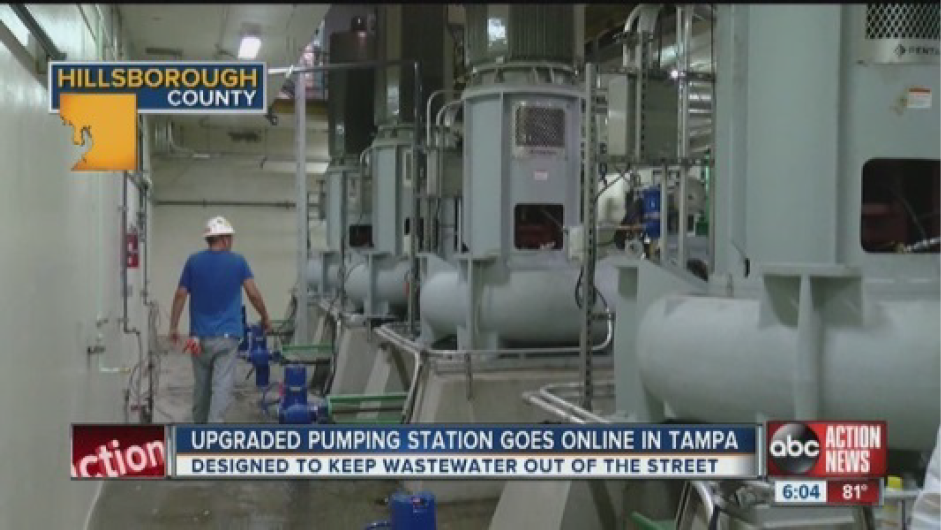
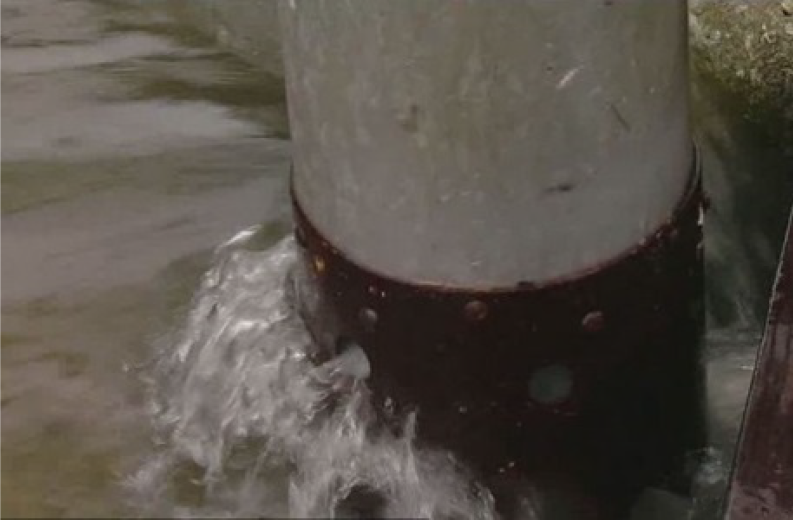
Energy Conservation Projects – Facilities Management Division
Facilities Management continues its upgrade program for the city’s buildings, offices, parks and properties.
Energy Management Systems
The City installed Energy Management Systems at Old City Hall, the Tampa Police Department and Tampa Fire Rescue headquarters to reduce electrical consumption by controlling operational hours of lighting and equipment, fresh air usage and interior space temperature. Savings range from 10% to 25% and are expected to increase by using remote monitoring capabilities to detect problems early, allowing for improved response time for remedial actions.
The Facilities Management Division continues to implement energy saving measures such as lighting upgrades, roof upgrades and installation of energy management systems at various locations. Energy management components optimize electrical consumption in city facilities. Energy reduction is accomplished through controlling operational hours of lighting, equipment, fresh air usage and the interior space temperature.
LED Strobe and Induction Lighting (Ongoing) ***
Several thousand high-pressure sodium lights with induction lighting have been replaced in the City’s Parking Garages resulting in a 50% savings in electricity costs along with brighter, whiter light, allowing for clearer visibility. Multi-colored, high-powered LED strobe lights have been placed on all security vehicles. The strobe lights give the appearance of more vehicles, and allow for higher visibility and increase peace of mind for our customers. The Parking Division has done upgrades of lighting to LED lights on 60% of the surface parking lots.
Lights under on-site storage tanks at the Water Department’s Production Division have been converted to LED technology and retrofitted the entrance roadway at the David L. Tippin Water Production Facility with induction lamps. Building perimeter lights for the chemical and maintenance buildings and the main pumping station have been converted to induction fixtures to improve lighting quality while achieving a 50 percent reduction in power consumption.
FACILITY MANAGEMENT PROGRAM REVIEW Ongoing and Completed Projects ENERGY/LIGHTING UPGRADES
| Category | Title | Customer | Responsible Department | Facility Manager | Project Cost | Funding Source | Status | Completion % | Start Date | End Date | Details | Energy |
|---|---|---|---|---|---|---|---|---|---|---|---|---|
| Ongoing Energy Upgrades | ||||||||||||
| Upgrade | TMOB Flag Light upgrade | Facility | Facility Mgmt | John Mayer | $17,000.00 | Operating | In Progress | 5% | February-17 | April-17 | Flag Light upgrade | x |
| Upgrade | Lowry Band shell LED lights | P&R | Facility Mgmt | John Mayer | $15,000.00 | Operating | In Progress | 5% | February-17 | May-17 | LED light upgrade | z |
| Upgrade | Cotanchobec LED light upgrade | P&R | Facility Mgmt | John Mayer | $250,000.00 | Operating | In Progress | 10% | November-16 | July-17 | LED light upgrade | x |
| Upgrade | Columbus Statue Park LED Light Upgrade | P&R | Facility Mgmt | John Mayer | $20,000.00 | Operating | In Progress | 10% | February-17 | April-17 | LED light upgrade | z |
| Upgrade | YBOR RR Light upgrade | YCDC | Facility Mgmt | John Mayer | $15,000.00 | Operating | In Progress | 5% | March-17 | Junc-17 | Light upgrade | x |
| Upgrade | Fir« Station 4 | Fire | Facility Mgmt | Lynn Lindsay | $250,000.00 | CIP | Planning | 50% | November-16 | January-17 | HVAC upgrade | x |
| Upgrade | Fir« Station 13 | Fire | Facility Mgmt | Lynn Lindsay | $250,000.00 | CIP | Planning | 15% | December-16 | February-17 | HVAC upgrade | x |
| Total Ongoing Enerq | $817,000.00 | |||||||||||
| Completed Enerqe/Light Uparades | ||||||||||||
| Upgrade | Parking Pay Station Light Upgreade | Parking | Facility Mgmt | John Mayer | $11,000.00 | Parking | Completed | 100% | September-15 | November-15 | LED light upgrade | x |
| Upgrade | TPD D-1HVAC replacement | Police | Facility Mgmt | Lynn Lindsay | $37,770.00 | TPD | Completed | 100% | December-15 | February-16 | Order Material | x |
| Upgrade | TPD D-2 HVAC replacement | Police | Facility Mgmt | Lynn Lindsay | $37,770.00 | TPD | Completed | 100% | March-16 | April-16 | Order Material | Ł |
| Upgrade | TPD Bomb Squad | Police | Facility Mgmt | Lynn Lindsay | $25,000.00 | TPD | Completed | 100% | March-16 | April-16 | Order Material | Ł |
| Upgrade | Palm Garage LED lights | Parking | Facility Mgmt | John Mayer | $13,001.14 | Parking | completed | 100% | April-16 | May-16 | LED Light upgrade | Ł |
| Upgrade | YBOR Grage LED Lights | Parking | Facility Mgmt | John Mayer | $12,000.00 | Parking | Completed | 100% | April-16 | June-16 | LED Light upgrade | Ł |
| Upgrade | Ballast Point | P&R | Facility Mgmt | Lynn Lindsay | $12,000.00 | CIP | Completed | 100% | May-16 | June-16 | HVAC upgrade | x |
| Upgrade | Centro Ybor Parking | Parking | Facility Mgmt | Lynn Lindsay | $8,418.38 | CIP | Completed | 100% | May-16 | June-16 | HVAC upgrade | Ł |
| Uparade | Free Librar | $67,000.00 | CIP | Completed | 100% | Auaust-16 | September-16 | HVAC uparade | Ł | |||
| Upgrade | Pier light upgrade | P&R | Facility Mgmt | John Mayer | $10,000.00 | Operating | completed | 100% | February-17 | March-17 | LED light upgrade | Ł |
| Total Completed Energy | $1,802,523.52 | |||||||||||
ROOFING UPGRADES
| Category | Title | Customer | Responsible Department | Facility Manager | Project Cost | Funding Source | Status | Completion % | Start Date | End Date | Details | Status |
|---|---|---|---|---|---|---|---|---|---|---|---|---|
| Ur irade | Police & Fir« Trainin | Fire/Police | $163,506 | CIP | April-17 | Iflat roof replacement | ||||||
| Total Ongoing Roofing | $163,506 | |||||||||||
| Completed Roof Projects | ||||||||||||
| Upgrade | TPD K-3 Bldg | Police | Fcitlity Mgmt | Terry Scott | $141,708 | CIP | Completed | 100% | June-16 | July-16 | flat roof replacement | x |
| Upgrade | TMOB N. Roof Replacement | Admin | Facility Mgmt | Terry Scott | $153,432 | Operating | Completed | 100% | July-15 | November-15 | N Roof replacement | x |
| Upgrade | TPD District 2 Roof Replacement | Police | Facility Mgmt | Terry Scott | $135,551 | CIP | Completed | 100% | November-15 | February-16 | S. roof replacement | Ł |
| Upgrade | TPD Bomb Squad Roof Replacement | Police | Facility Mgmt | Terry Scott | $77,311 | Police | Competed | 100% | March-16 | April-16 | Shingle & Flat roof | Ł |
| Upgrade | TPD District 1 Roof Replacement | Police | Facility Mgmt | Terry Scott | $195,551 | CIP | Completed | 100% | March-16 | May-16 | S Roof replacement | x |
| Upgrade | west Tampa Service Center | Admin | Facility Mgmt | Terry Scott | $49,316 | CIP | Completed | 100% | May-16 | June-16 | Roof replacement | x |
| Upgrade | Interbay Pool Roof Replacement | P&R | Facility Mgmt | Terry Scott | $43,567 | CIP | Completed | 100% | May-16 | June-16 | Roof replacement | I |
| Upgrade | Taylor Art Studio | P&R | Facility Mgmt | Terry Scott | $100,000 | CIP | Completed | 100% | April-16 | June-16 | Flat Roofs | Ł |
| Upgrade | Free Library Roof Replacement | Admin | Facility Mgmt | Terry Scott | $100,376 | CIP | Completed | 100% | May-16 | September-16 | Tile & Flat roof | Ł |
| Upgrade | Taylor C&S | P&R | Fcitlity Mgmt | Terry Scott | $15,000 | CIP | Completed | 100% | October-16 | November-16 | flat roof replacement | Ł |
TECO Energy Conservation Task Force
The City continues work to implement recommendations from the Mayor’s Citizen-TECO Energy Conservation Task Force:
- The City & TECO seek funding sources to support aggressive, community outreach programs for low income residents.
- Encourage landlords/property owners to make energy efficient improvements using TECO and City rebates & grants.
- Review the feasibility of requiring Section 8 rental housing to have standard weatherization and ceiling attic insulation improvements as a condition for entering a HAP contract.
- Collaborate with TECO in expanding current energy conservation education programs.
- Develop a Neighborhood Energy Audit / Weatherization Roll-Out Program.
Green Building
The City is committed to designing and constructing more environmentally friendly buildings using proven LEED certified practices and systems.
LEED Certified Buildings
The City promotes LEED (Leadership in Energy & Environmental Design) standards per City Code, Chapter 17.5. LEED buildings are designed to 1) lower operating costs and increase asset value; 2) reduce waste sent to landfills; 3) conserve energy and water; 4) be healthier and safer for occupants; and 5) reduce harmful greenhouse gas emissions. To earn LEED certification, a project must satisfy all LEED prerequisites and earn a minimum 40 points on a 110-point LEED rating system scale. Homes must earn a minimum of 45 points on a 136-point scale. There are 27 newly registered LEED certified buildings through the U.S. Green Building Council to include commercial, multi-family and single-family residences.
Springhill Park Community Center
Silver-Level LEED standards were met for the Springhill Park Community Center, located in the Sulphur Springs area. The 16,000 square foot building includes high efficiency HVAC and lighting systems, CoolRoof rated materials, use of regional and recycled materials and Florida-friendly landscaping.
ENCORE
The ENCORE, a mixed use development for varying levels of income is currently under construction in Central Park just outside downtown.
The ENCORE is a LEED certified development using sustainable construction practices and efficient energy and water systems. The 28-acre Encore includes 794 mixed-income apartments, 300 condominiums or other privately owned units sold at market rates and 268,000 square feet of offices and stores, including a hotel, museum, school and grocery store.
The Tampa Housing Authority hosted its First “EARTH DAY” Celebration
The installation of Solar Panels, Storm-Water Collection Vault, District Chiller Plant, Electronic Car Charging Station, LEED GOLD Buildings and SWFWMD’s Water-Star initiatives, are steps that are actively in place at ENCORE!
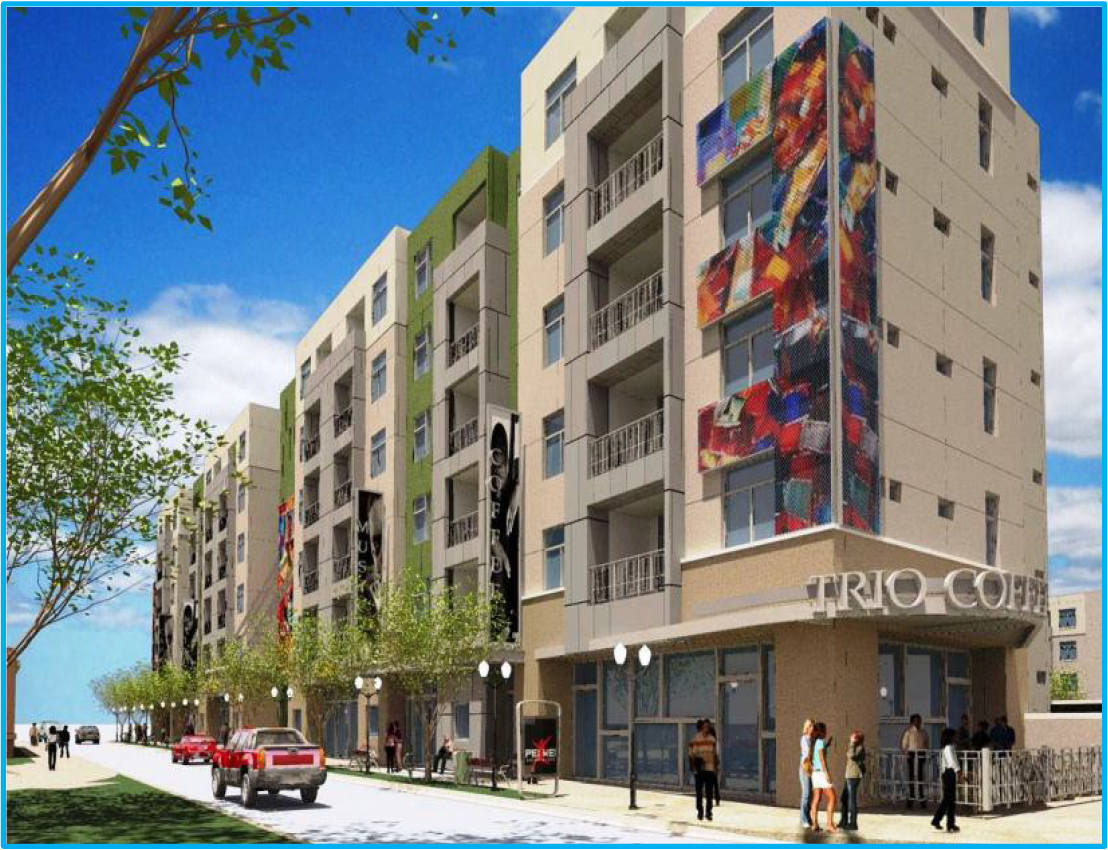
Assistance to Firefighters Grant (2009-2012)
The City received $1.7 million Assistance to Firefighters Grant for Fire Station Construction as part of the federal stimulus American Reinvestment Recovery Act. The Tampa Fire Rescue Department was one of 100 selected from 5,000 fire departments across the nation to receive the funding.
Fire Stations #11, #19 and #22
These fire stations are constructed using LEED Silver standards. Building sustainability features include high efficiency lighting and controls, solar-powered exterior lighting, an energy-efficient HVAC system, solar-powered water heating, and use of recycled materials. Site sustainability elements include preservation of the onsite wetlands, Florida-friendly landscaping, and the incorporation of bioswales into the stormwater retention system to provide runoff water quality enhancement.
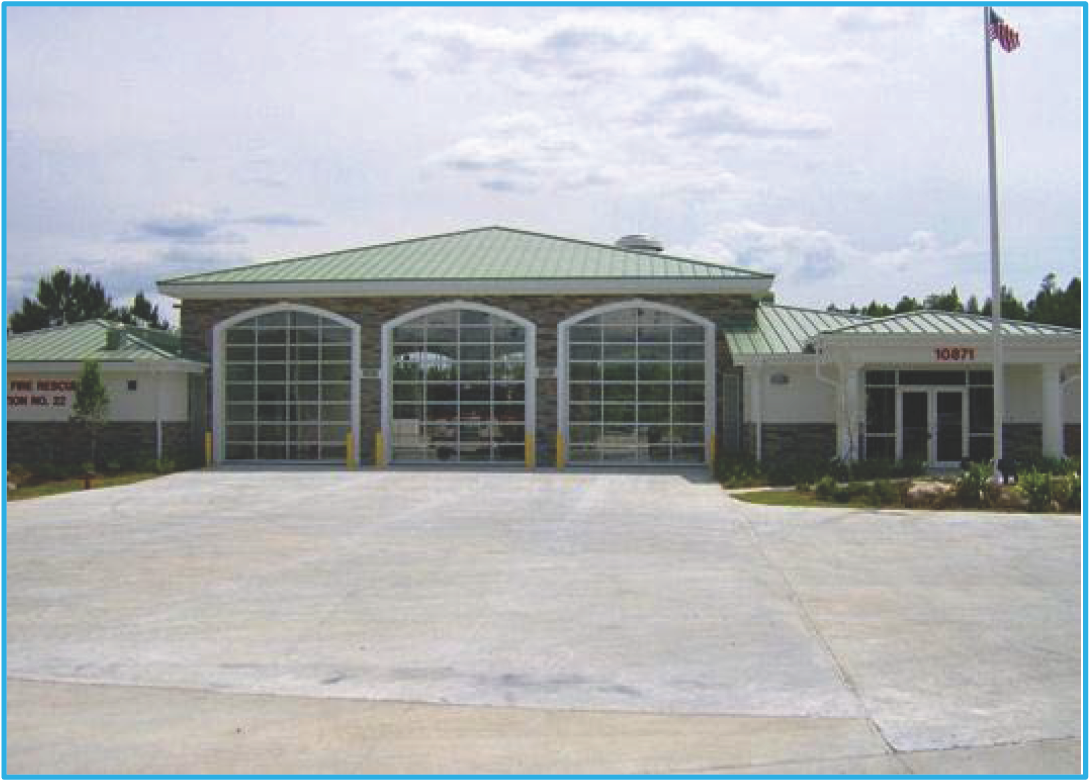

EPA WaterSense Program Green Home Builder Webinars (May 9, 2013)
EPA is hosting informational webinars to share more about the benefits of WaterSense labeled new homes. WaterSense specification for single-family new homes was designed to work in harmony with other green building programs, so points can easily be earned towards LEED® for Homes and the National Green Building Standard. Products bearing the WaterSense label are 20% more water efficient than average products in that category and achieve water efficiency through several technology options.
Affordable Housing
The City of Tampa has continually provided funding for green, sustainable, energy efficient, affordable housing. Projects listed below demonstrate this commitment. Each of these projects went through a competitive Request for Proposal (RFP) process where they were specifically awarded points for constructing green and sustainable buildings and systems, creating environmental benefits internal and external to the project and improving the overall quality-of-life for its residents. Phase-II of the Nehemiah Project in Sulphur Springs will bring 20 new, energy efficient, single family homes to the neighborhood.
Trio at Encore
The Trio at Encore is a 161 unit LEED gold certified multifamily residence. The city contributed $2.75 million dollars toward their construction. Sustainable goals have been met.
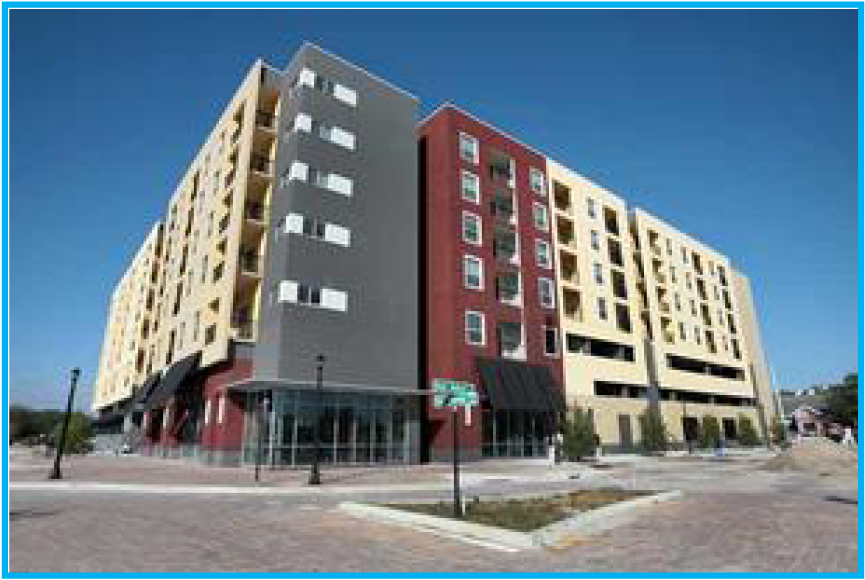
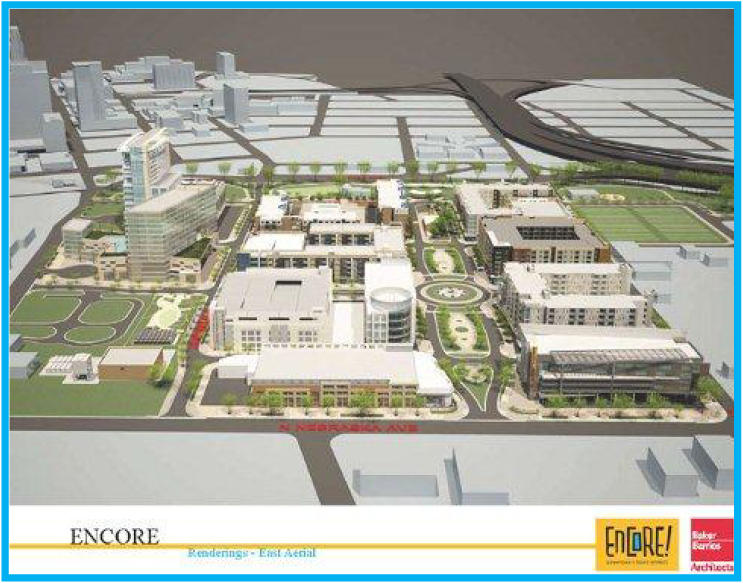
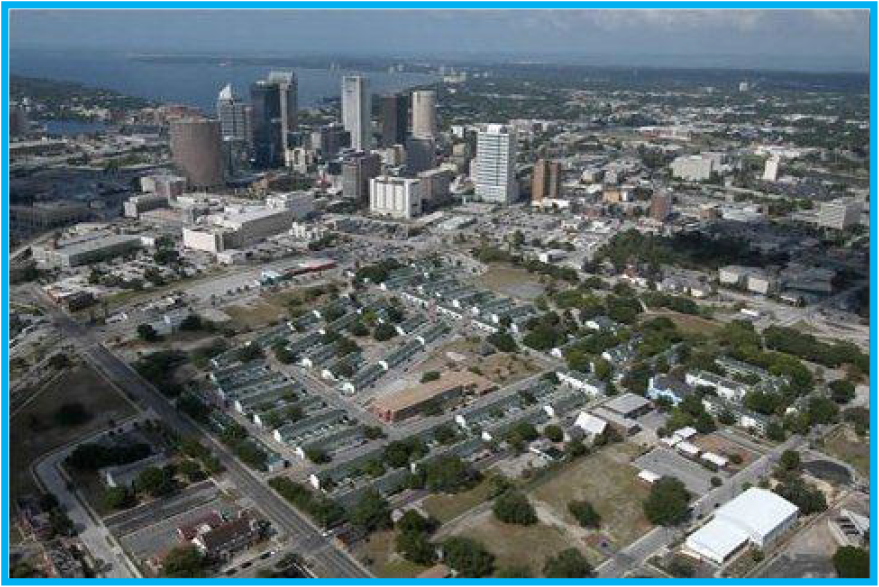
Eco Oaks
Eco Oaks is a Platinum level LEED certified 18 unit multi-family project serving female veterans and their children. The City of Tampa awarded $3,747,709.00 in funding.
Tampa Convention Center
Lighting (ongoing)

An ongoing program to replace older lighting technologies with LED lighting is being done at the Tampa Convention Center. The Convention Center is one of the few convention centers to have LED lighting in the exhibit halls. The efficiency of LED’s and the extreme long life reduces energy and maintenance costs.
CoolRoof (Ongoing)
CoolRoof material is being used throughout the City for minimal slope roof replacements above conditioned spaces to reduce heat gain. The Aluminum clad membrane material reflects the sun’s heat back to the sky instead of transferring it to the building.
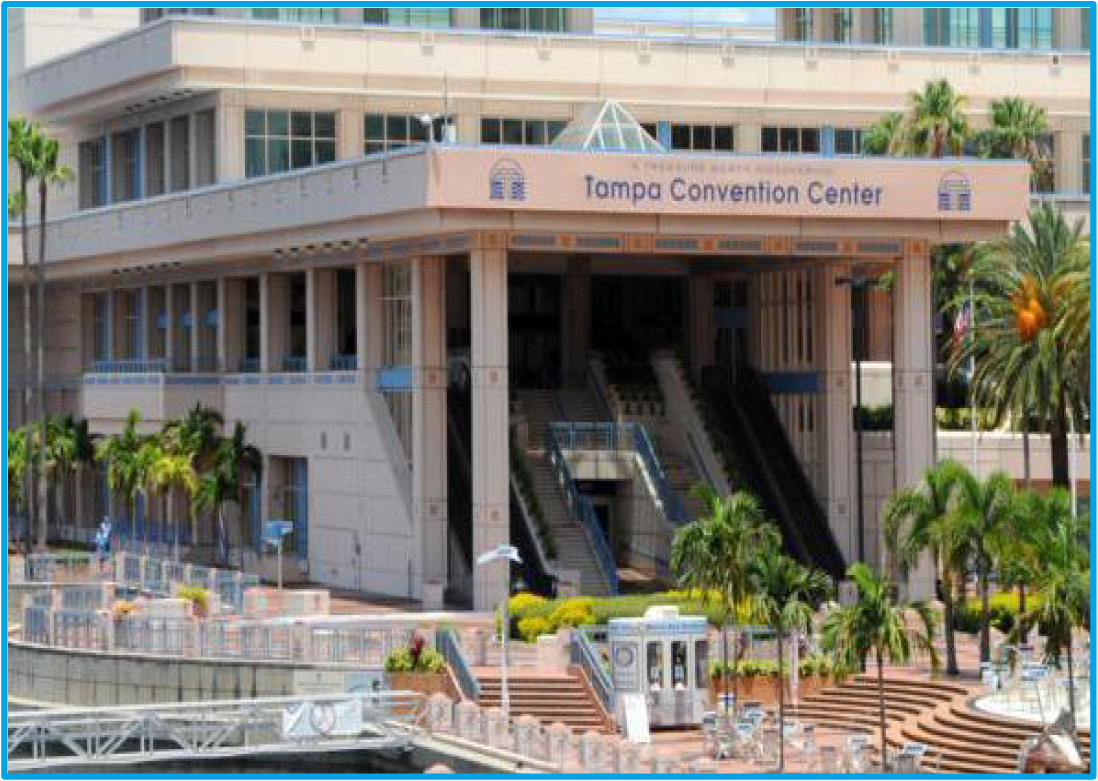
The Tampa Convention Center has 17.8 acres of energy-star reflective roof covering to minimize solar heat loading by reflecting infrared energy up and away from the building. This reduces the amount of energy needed for cooling and reduces the “heat island” effect at night.
Energy Management Systems (Ongoing)
Energy Management Systems is a computer-aided tool is used to monitor, control and optimize the performance of HVAC systems and lighting in office buildings. Energy Management Systems utilize CO2 demand ventilation reducing energy consumption and helps lower carbon footprint. This is used throughout the City to include the Tampa Convention Center. The Convention Center is able to match the cooling and heating needs to the varying levels needed for different types of events and the number of people present in the building at the particular time.
Efficient Chillers (Ongoing)
The Tampa Convention Center installed two “TurboCor” Chillers that utilize magnetic bearing technology, allowing electromagnets to “float” the rotating parts. This process reduces energy consumption for air conditioning and eliminated the need for the oil changes and disposal. These units combined produce 400 tons of cooling capacity. Overall the Convention Center has six chillers with a combined capacity of 4500 tons.
Daylight Harvesting (Ongoing)
The Tampa Convention Center practices daylight harvesting to utilize sunlight while turning off lighting during the day. This saves energy and reduces heat that is normally produced by the lighting fixtures. Additionally, the life span of the bulb is extended.
Energy Star Partner (Ongoing)
The Tampa Convention Center is an Energy Star Partner. Energy Star is a federal EPA program that ranks buildings by their energy consumption compared to others of similar size and use. TCC ranks very high at 84 percent of building efficiency as compared with other convention centers. By utilizing green building operations techniques, the Convention Center has seen a 12 % decrease in energy usage since 2013 over prior years, helping offset power rate increases.

Escalators (Ongoing)
The Tampa Convention Center replaced 10 escalator units with new, energy efficient units, that utilize a drive system that consumes 20% less power per unit. Additionally, these units are sealed, require no petroleum lubricants, and are environmentally friendly. The elevators are being replaced with modern more efficient drive units during 2017/18.
Renovations
- New restroom facilities will improve accessibility to all visitors
- New HVAC system will improve air quality and energy efficiency
- Renovation of exterior door systems will improve energy efficiency as well as security
- Renovation of kitchen equipment will improve air quality in the Convention Center
- Rehabilitation of multiple lighting fixtures to retrofit to LED to improve energy efficiency and lighting quality
- New ramps to lower Riverwalk will improve accessibility
Fast-Track Plan Review
As an incentive for using green building technologies, the City provides a Fast-Track Plan Review process to anyone planning to build a sustainable project. Green design strategies include recycling construction and demolition waste, using recycled material in concrete, using Forest Stewardship Council (FSC) Certified Wood for framing, installing graywater system, installing Energy Star-qualified windows, and using renewable flooring materials.
The City continues to require green and sustainable items into its Request for Proposal for participation as part of the affordable housing design standards.
The City also encourages builders and developers to exceed the minimum requirements for energy efficiency of the Florida Building Code by sharing information on training, tools and resource efficient development such as the National Association of Home Builders “Guide to Developing Green Builder Programs;” the Florida Green Building Coalition’s “Green Trends” annual conference; and achieving LEED accreditation through the Florida Gulf Coast Chapter of the U.S. Green Building Council.
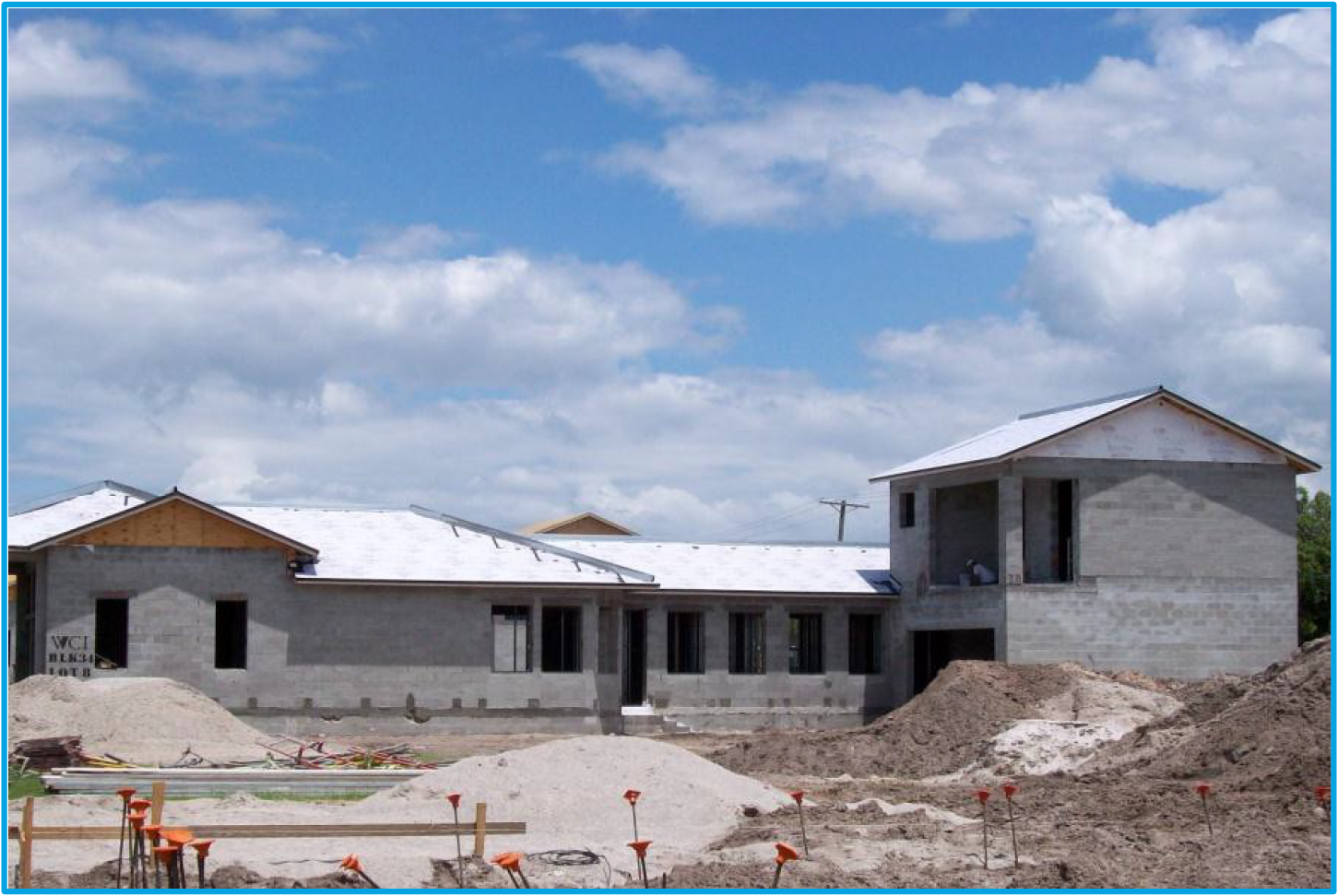
Green Business, Outreach & Education
The City promotes sustainability by partnering with the Sustany Foundation to offer local businesses a sustainability assessment to identify and acknowledge best practices and measure results.
Green Business Designation
The City continues its partnership with the Sustany Foundation to offer a Green Business Designation Program (GBDP). The program was developed to formally recognize businesses that adopt energy efficient and sustainable practices. The certification is signed by the Mayor and a GBDP logo is provided to help market the business as a leader in sustainability and environmental stewardship. There are currently 17 businesses who have received this designation:
- Bayside Engineering
- Bayshore Solutions
- Birkitt Environmental Services
- Children’s Cancer Center
- City of Tampa
- DLA Piper eBridge Solutions
- EcoAsset Solutions
- EVOS
- Florida Business Interiors
- Geyen Group South
- HOK Architecture
- Law Office of Jeanne L. Coleman
- Straz Center for the Performing Arts
- Sykes Enterprises
- Tampa Bay Times Forum
- Tampa Downtown Partnership
Recognizing the time and technical constraints for small businesses interested in the green business designation, Sustany developed the Sustany Sustainable Business Program (SSBP) to launch in 2014. The SSBP is a 12-week program that includes a curriculum, workshops, and access to sustainability consultants to guide businesses through the self-assessment. Businesses can experience improved profitability through energy efficiencies and waste reduction, reduced environmental impact, and greater community engagement.
In 2014, Sustany partnered with the Tampa Downtown Partnership to host the SSBP for the following businesses: 22squared, Anise Global Gastrobar, Bamboozle Cafe and Bamboozle Tea Lounge, City Bike Tampa, Duckweed Urban Market, Malios Prime Steakhouse, Moxies Cafe, Renaissance Planning Group, Sunny Side Up, and Zudar’s Deli.
Outreach and Education
Learning Gate Eco Fest
The City participated in EcoFest, a community event organized by Learning Gate Community School, the City of Tampa and the USF Patel College of Global Sustainability to celebrate the many businesses, organizations, and individuals in the Tampa Bay area dedicated to the principles of sustainability – Ecology, Equity and Economy. Activities included live music, workshops, demonstrations, informational booths, green living products and services from local artists, green businesses, environmental organizations, alternative health practitioners, renewable energy specialists, and organic farms and gardens with fresh local produce.

25 years of Summer Camps at Mangrove Marcus
The Mangrove Marcus Adventure Team provides a week of hands on activities in salt and fresh water locations while exploring aquatic habitats and developing eco-citizenship. This very popular program gives campers a chance to snorkel, swim, use seine and dip nets and visit a variety of marine environments.
City of Tampa Parks and Recreation Department receives National Award
The City of Tampa Parks and Recreation Department recently received a National Excellence in Innovative Programming Award by the National Recreation and Park Association (NRPA). Each year, NRPA National Awards are presented to individuals and agencies across the U.S. to honor their efforts—both professional and personal—in the field of parks and recreation.
The award highlights the efforts and impact an agency/organization has made in promoting or increasing the awareness of the benefits of parks and recreation in their community through offering a variety of programs. This award recognizes the agency that best demonstrates programming innovation in two of the three NRPA Pillars – conservation, health and wellness, and social equity.
The Stay & Play Program
The Stay & Play Program focuses on curbing the rising tide of violence that plagued East and Central Tampa every summer. This program demonstrates social equity and promotes a safe and healthy lifestyle. In the summer of 2015, over 16,000 teens visited the 14 sites in 56 days and this summer looks to see even more participants.
The Tree-Mendous Tampa Free Tree Program
Was originally established in 1997 and then rebranded in 2013 as a part our commitment to renewing the Urban Forest of Tampa. The program is funded through the City of Tampa’s Tree Trust Fund. In addition to planting trees, an educational component was added to help residents by providing the “best management practices’ for trees. Since 2013, we have planted a total of 2,178 trees for residents of the City of Tampa. The program, is free and provides individuals and neighborhood associations with trees for planting on City land, greenways, and street rights of way. The program fosters the replenishment of Tampa's valuable and gracious tree canopy. Trees are a community resource that provides tangible benefits, in terms of visual and aesthetic attributes, environmental assets, health benefits, and economic value.
“These awards only reaffirm what, we here in the city, already know,” said Mayor Bob Buckhorn. “Whether it’s keeping Tampa’s youth off the streets with our world class Stay & Play programming, that I truly believe has saved lives, or beautifying neighborhoods with our Tree-mendous initiative, our Parks and Rec department is world class.”
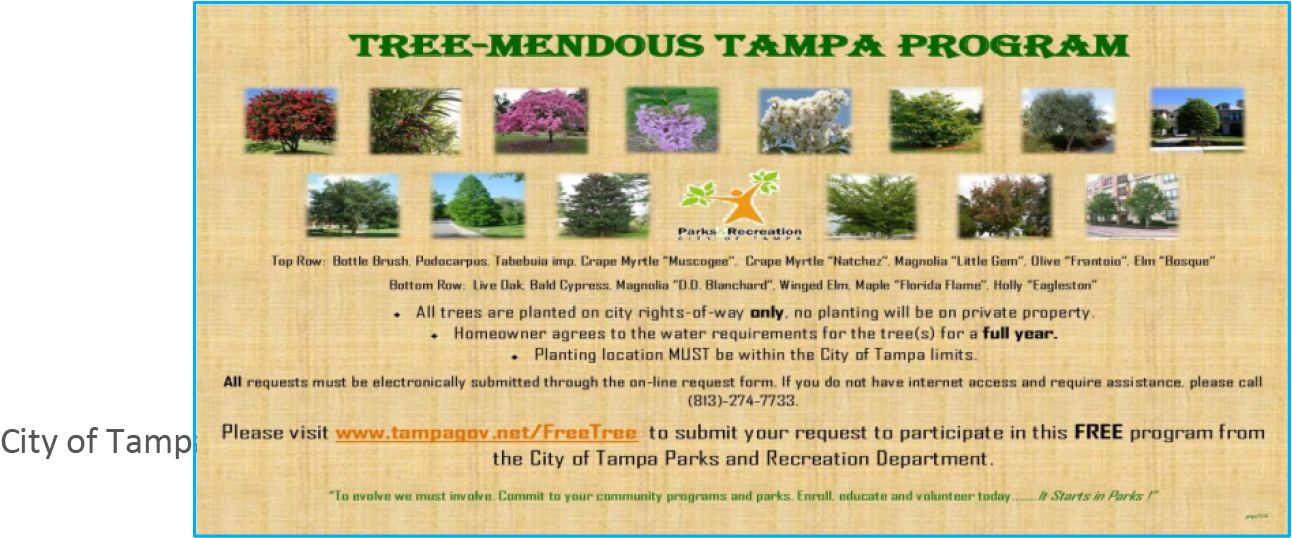
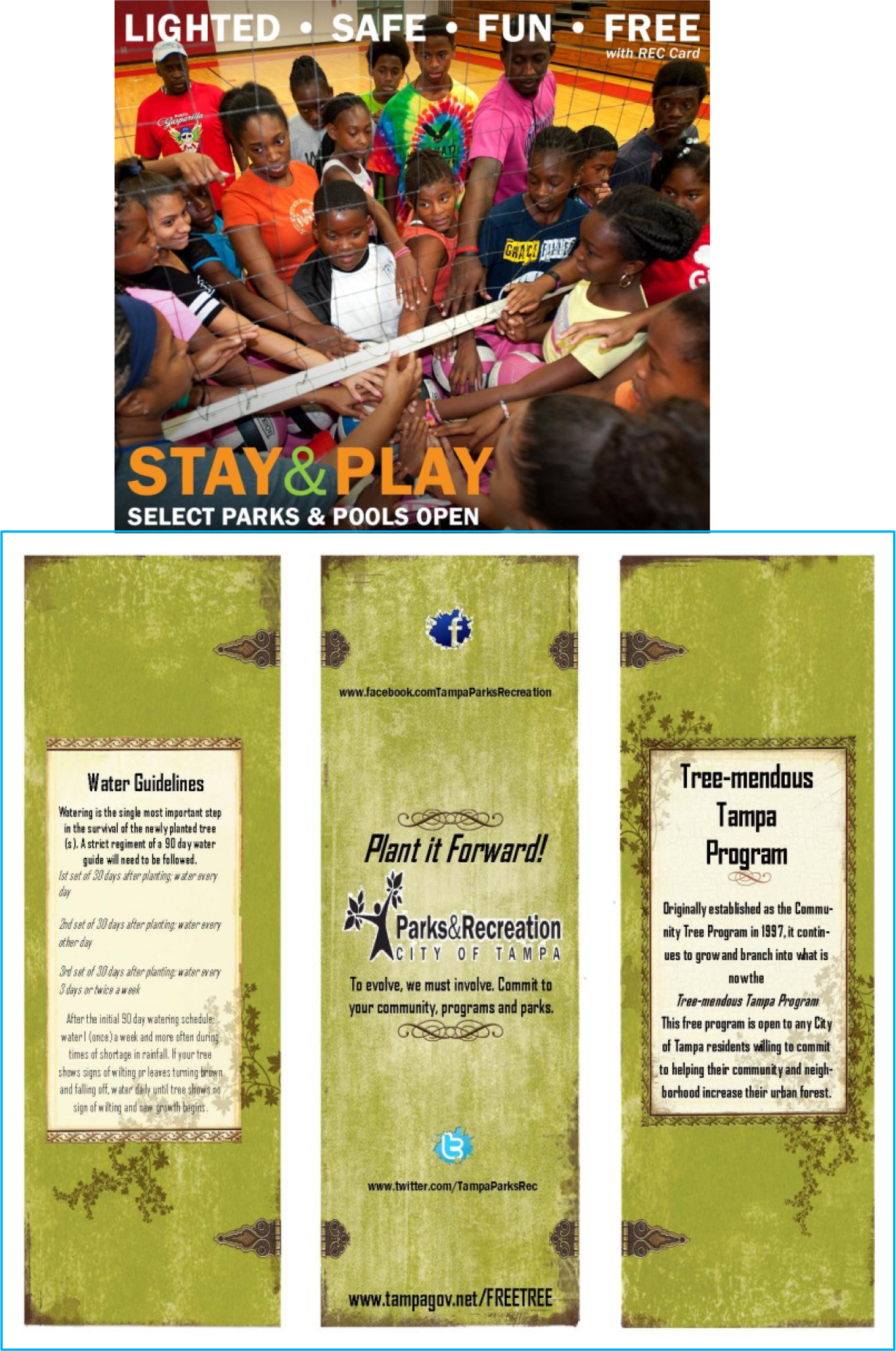
The Mayor’s Neighborhood University (MNU)
The MNU provides a formal leadership training program for neighborhood leaders. In addition, the MNU builds upon the existing City’s Neighborhood Empowerment program offering enhanced technical support services for the City’s neighborhoods. As part of an ongoing educational opportunity the Green Officer presents to each class of the MNU to discuss ways citizens and neighborhoods can help forward their City’s green and sustainable initiatives
Florida Green Building Coalition (FGBC)

The Florida Green Building Coalition (FGBC) is a nonprofit dedicated to improving the built environment. Its mission is to lead and promote sustainability with environmental, economic, and social benefits through regional education and certification programs.
The FGBC is continually finding new and innovative ways to educate builders, developers, local governments, and consumers about how to achieve a healthier, more environmentally sustainable future. The purpose of the FGBC is to administer certification programs based upon the green building standards, educate the general public, businesses, institutional and governmental bodies of the long term benefits of sustainable development and green building practices and encourage housing affordability by increasing building sustainability.
The City of Tampa was the second city to reach gold-level certification with an impressive score of 41% for its initial certification. Our re-certification improved on that number and achieved a score of 52%. Certified green governments promote being more energy and water efficient, safe, healthy, and durable.
Communicating Science in Sustainable Communities
The purpose of the daylong seminar was to share our organization’s unique perspective and knowledge in a highly engaging and interactive facilitated session; Uncover new insights into the Tampa Bay Sustainability Community; Revel who we all need to become to serve our customers; Perhaps most importantly to impact the design of new PCGS educational programs to be of greater service for organizations in the community at large.
USF Collaboration
The City has met with the University of South Florida with the intent of partnering with USF on projects furthering a sustainable region especially considering ways to mitigate the effect of various climate change and sea level rise impacts. The focus is on our infrastructure, including water, waste water, storm water and flooding and transportation and roadways.

Collaboration with The Office of Sustainability at Hillsborough Community College Beyond Sustainability Conference
Featured speaker regarding Tampa’s overall sustainability efforts. Important to make connections with other like-minded people and organizations who are affecting change in our community through their hard work.
University of South Florida Student Green Energy Fund
The City continues to serve on the review panel for projects submitted for consideration for funding from the USFSGEF.
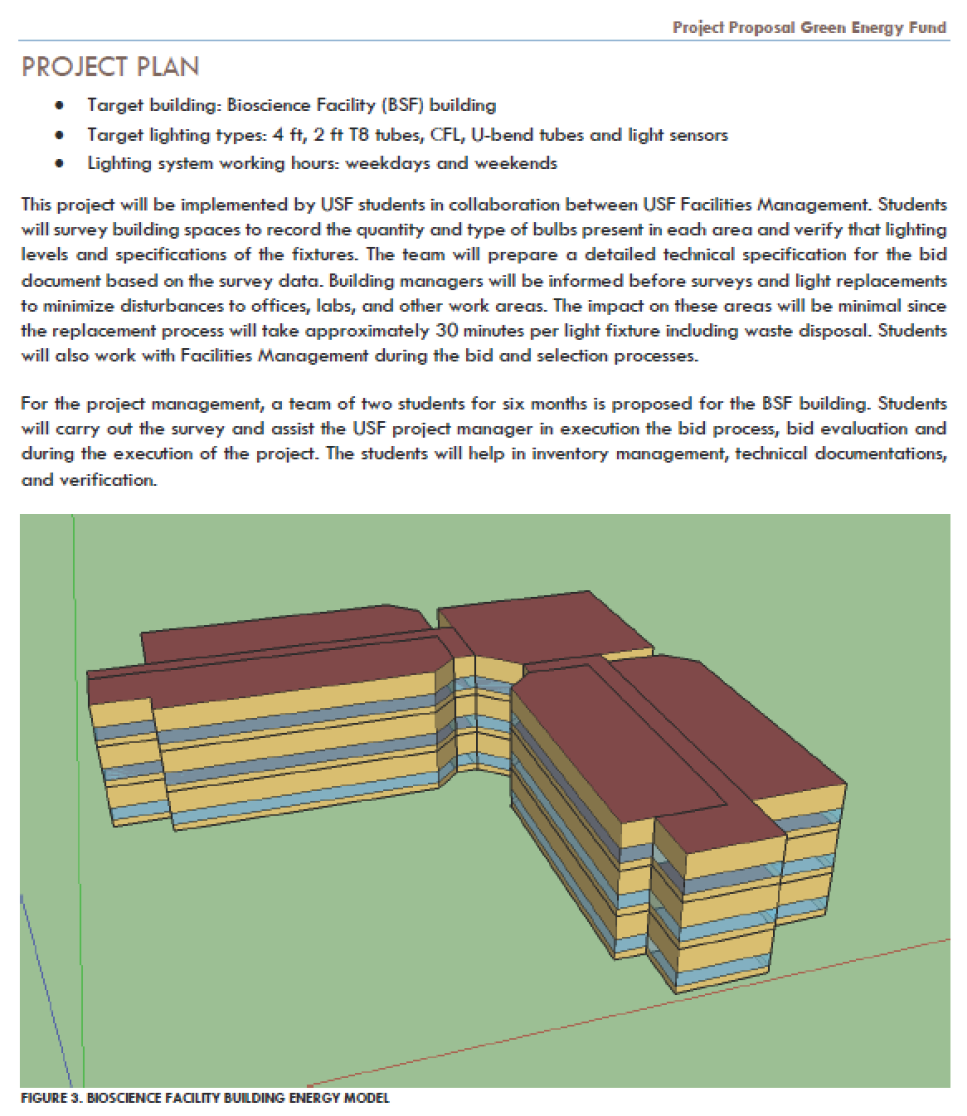
Community Relationships
Tampa Heights Community Garden
The Tampa Heights was twice named the best community garden in the State of Florida which is sponsored by a garden club (the Tampa Garden Club), and last year was named the best community garden in the Deep South region of the National Garden Club. They have grown from their original 17 gardens to 86, including several youth gardening groups, a butterfly garden, herb garden, group strawberry patch, and blueberry garden. We currently have three gardens which provide veggies to the seniors in the Ella at Encore.
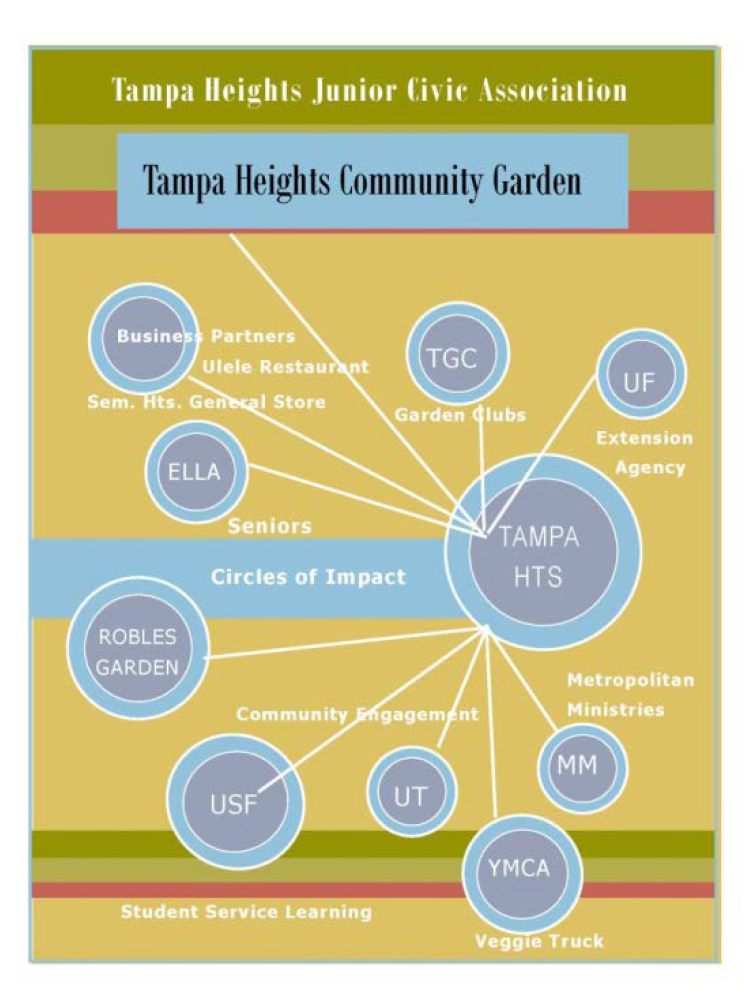
29th Annual Paint Your Heart Out Tampa!
Saturday, April 22, 2017, marks the 29th annual paint day for Paint Your Heart Out Tampa. This city-wide program lends a helping hand to low-income, elderly citizens in the community. Over the past 28 years, volunteers and sponsors have given of themselves to paint, repair and clean up the homes of more than 2,800 grateful and deserving homeowners. This year on paint day, 2,500 volunteers helped beautify Tampa’s neighborhoods by painting and repairing homes, spending more than 18,000 hours volunteering. The assistance to upkeep homes allows people to remain in their house and help keep neighborhoods and the environment clean and free of debris and litter.
Strategic Property Partners, LLC
Will construct, maintain and operate a chilled water distribution and return system, for the delivery and return of chilled water in the City of Tampa. This will contribute to the areas energy efficientcy and sustainable development in the heart of the City.
University of Florida, Institute of Food and Agricultural Science, Hillsborough County Extension Office
Tampa residents took advantage of free "Landscape Selections that Save Time, Money and Water!” tips at the 2016 Florida-Friendly Landscaping™ 101 workshop. The workshop provided talks on Florida Friendly LandscapingTM yard recognition based on the nine principles, landscaping tips to save time and money and Florida-friendly groundcovers and ornamental grasses.
- Free rain sensors for City of Tampa water customers
- Maintaining Your Sprinkler System video
- Do-it-Yourself Irrigation Checkup Guide
The Florida-Friendly Landscaping™ 101 events are presented by the University of Florida’s Institute of Food and Agricultural Sciences (UF/IFAS) Hillsborough County Extension Service and sponsored by the City of Tampa Water Department.
Community Redevelopment Areas***
Drew Park
The Drew Park CRA completed construction on the Lois Avenue infrastructure and streetscape project. This project consisted of eliminating excessive flooding in the area through stormwater bio swale practices, water, sewer, and streetscape upgrades that included new pedestrian lighting, and street furnishings. The project transformed the appearance of Lois Avenue by converting drainage ditches to piped infrastructure, adding landscaping, and decorative sidewalks. The project was funded by SWFWMD, Florida Department of Environmental Protection, Drew Park CRA, and the City of Tampa.
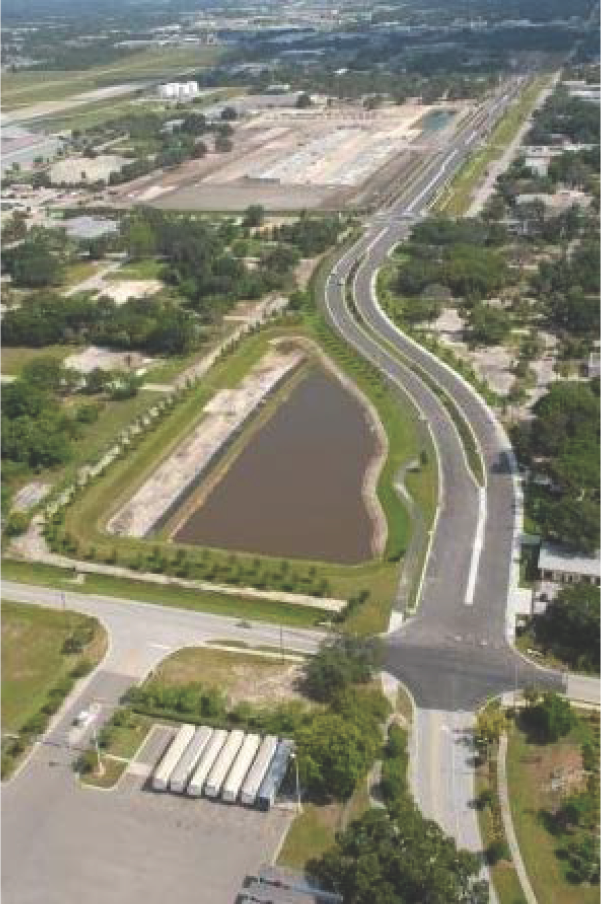
Ybor City
21st/22nd Street Improvement Project
- Stormwater improvements along 21st Street
- Major water main improvements the entire length of 22nd Street improving conservation and distribution elements
- New wider sidewalks to improve pedestrian sense of safety
- New bike lane improvement with better connection to the Selmon and other city bike trails, which improves mobility and reduces traffic congestion and emissions
- No truck traffic ordinance that will reduce emissions
- Installation of trees, plant material and palms helping carbon sequestration
- Brick crosswalk installations with ADA ramp improvements and pedestrian signalization at each intersection
Streetcar Park and Ride Options
- Early morning streetcar commuter service pilot program
- Extended hours to serve cruise ship visitors (AIDAVITA and others)
- Promote park and ride option during peak times (connecting downtown, Channelside and Ybor)
- Reduce traffic congestion emissions and parking issues downtown
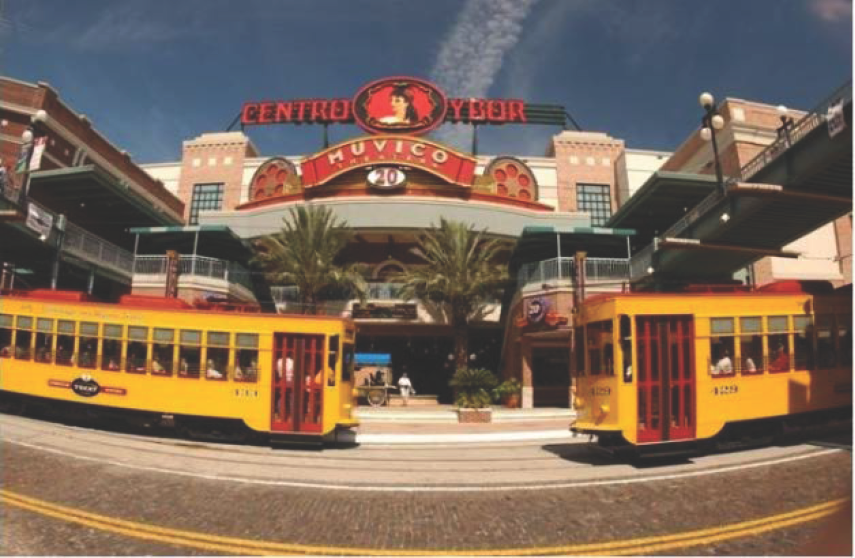
Palm Avenue Safety Audit Improvements
- Improved and safer crosswalks with flashing pedestrian beacon for safe student crossing
- ADA improvements at each intersection
Centennial Park
- Replacement of LED lights to improve energy efficiency and lighting quality
District-wide Tree Trimming, Installation and Dead Tree Removal
17th Street Alley Stormwater Improvements
Improved LED Light Installation in Residential Areas
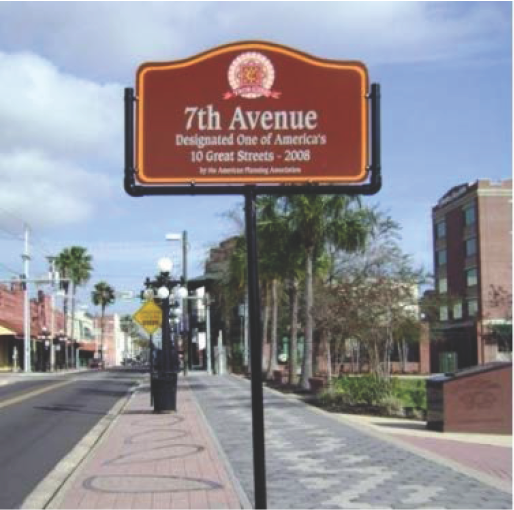
Downtown
The Downtown Shuttle Program:
- Reducing emissions as carts are 100% electric
- Offers people another way to get around downtown without using their cars (reduction of emissions)
- Reduces traffic congestion
The InTowner
- Offers people another way to get around downtown without using their cars (reduction of emissions)
- Reduces traffic congestion
Scott Street Parking Lot
- Parking lot is designed to retain large existing trees
- Parking lot uses BMPs for storm drainage system and water treatment
- New wider sidewalks to improve pedestrian access to site and around site
- Add improved lighting with Dark Sky compliance reducing light pollution
- Lot is designed to take advantage of Marion Transit Center for “Park & Ride”
Cass Street Cycle Track
- Dedicated two-way cycle track to improve mobility and reduce traffic congestion with alternative to cars
- Improved and safer crosswalks and signals
Jackson Street Cycle Track
- Dedicated two-way cycle track to improve mobility and reduce traffic congestion with alternative to cars
- Road Diet to reduce one lane and improve pedestrian safety
- Improved and safer crosswalks
- Bump outs to shorten crosswalks and improve pedestrian/vehicular visibility
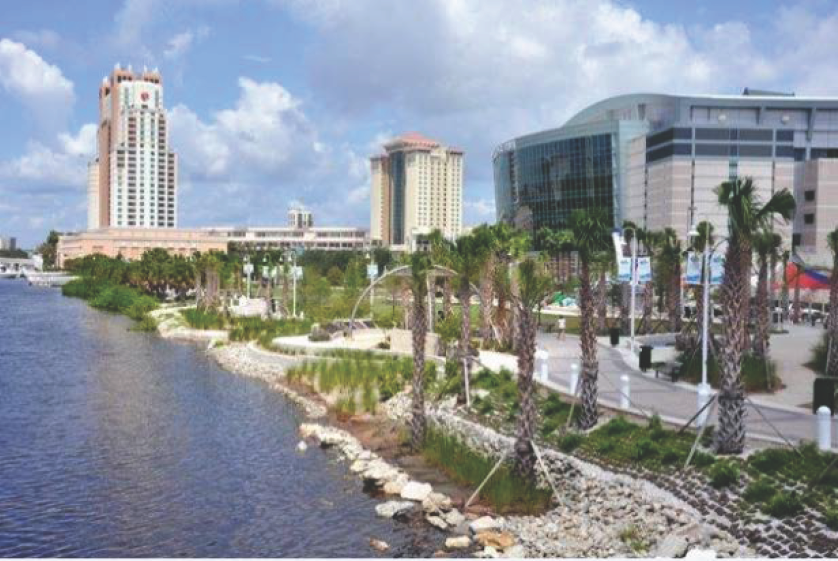
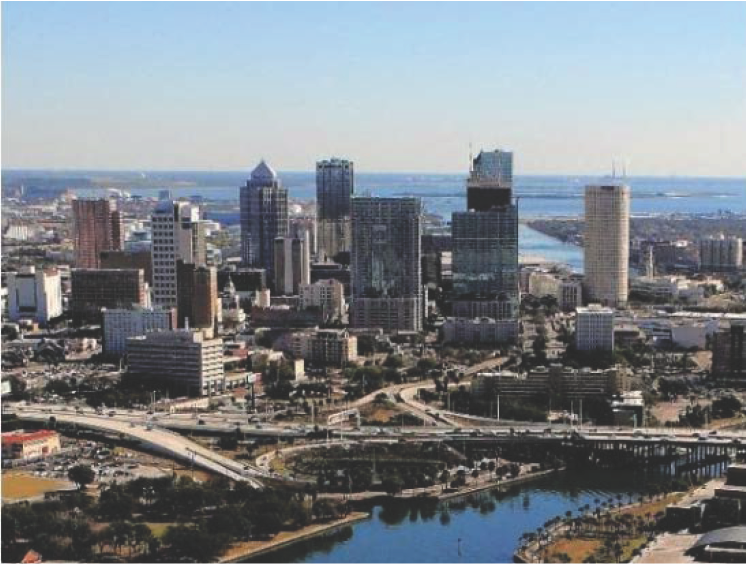
Channel District
Waterfront District (SPP Project)
- Re-aligning the street network to improve traffic flow and reduce congestion
- New roadways will be multimodal and wide sidewalks
- Project is implementing Wellness Standards to improve the health of the residents and visitors
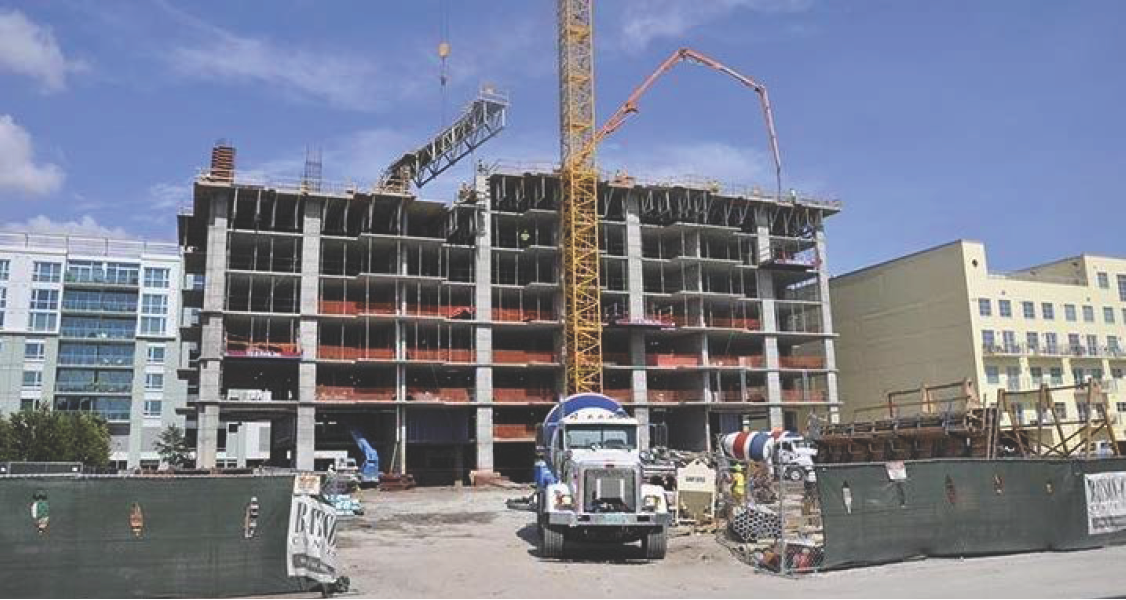
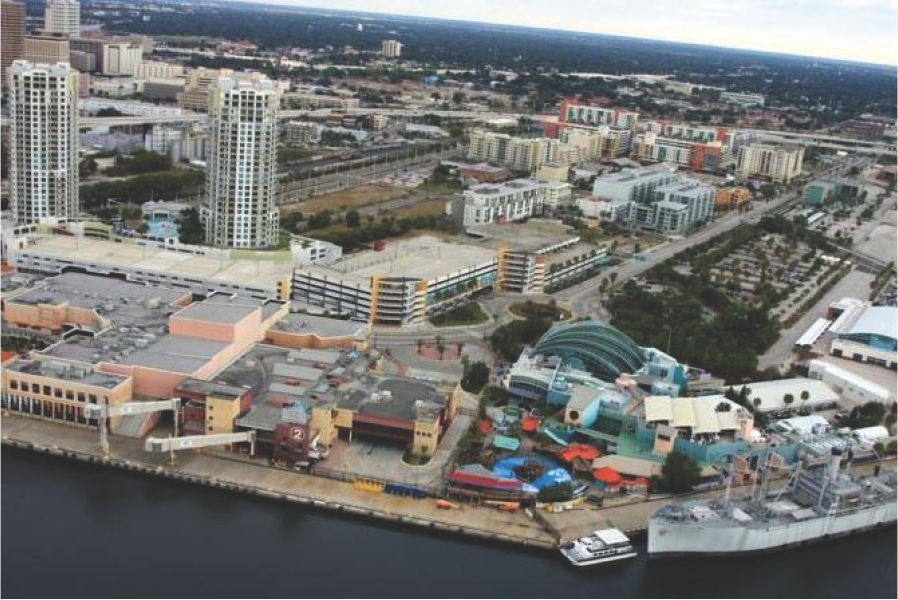
Human Resources
Human Resources continue to maximize its use of electronic technology to reduce the need for paper use products.
Risk Management
The Risk Management Division Claims area now provides a copy of the Liability Claim Form electronically on the Internet. Citizens with Internet access can now visit the website, complete the liability claim form and forward back to the City electronically. This eliminated the use of mailing paper copies of the liability claim form to each citizen that files a claim against the City of Tampa. On average, Risk Management has approximately 1,200 open liability claims at any time.
Risk Management implemented a Citywide Incident Documentation Management program to save incident related documentation and photographs electronically, reducing the amount of hard copies necessary for incident and claims management.
Employee Services
Employee Self-Service now includes an option for employees to change their beneficiary for their GE Pension Plan Death Benefit online. This has eliminated additional paper.
Employment Services has significantly reduced the amount of paper used to print applications since we launched JobAps.
Training and Development revised the application to the eLearning process and made it paperless. Also three new-hire forms have been eliminated by completing the information directly into Oracle. JobAps accounted for the elimination of two of them.
Tampa Police Department
PowerDMS
PowerDMS is an electronic document management system implemented within the City of Tampa. It is secure, online storage and management for internal policies, procedures, accreditation standards, manuals, trainings and more. By transitioning to a paperless central repository, it eliminates the need to produce paper copies of manuals and books that are updated quite frequently. PowerDMS also trackers and estimate of paper, and trees, saved by the agency utilizing the software.
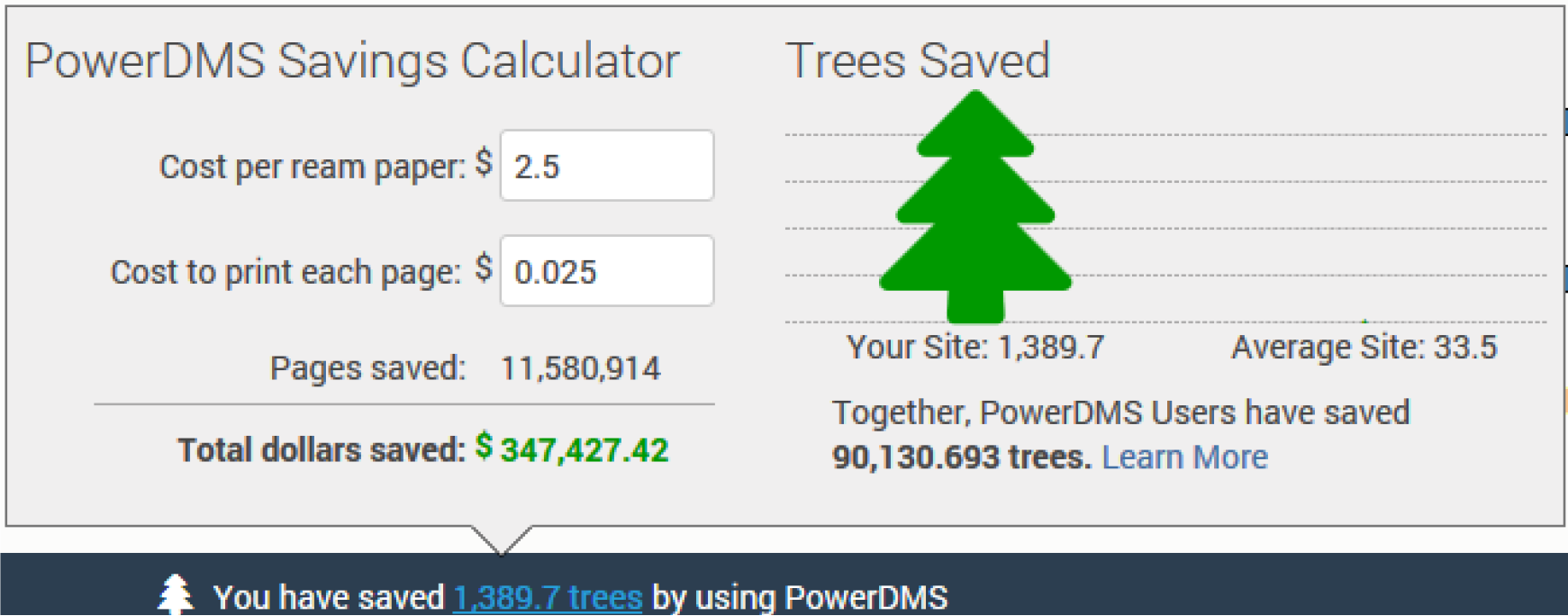
Tampa Police Firearms Training Facility-2016
On the southernmost point of the Tampa Police and Firefighter Training Academy, a state of the art firearms and practical training facility was constructed and completed in 2016 in an area of the city that would not be able to be utilized for traditional construction. The firearms training facility is environmentally friendly with the utilization of a bullet trap system which collects the lead from the firearms and disposing it into a large container for recycling. The facility was designed to provide law enforcement officers the ability to conduct a variety of training, including scenario based, computerized simulator and various firearms training. Safety and environmental concerns were paramount in the design and construction. The structure consists of solid concrete walls and concrete baffled ceilings, which were engineered to prevent bullets from escaping the facility. The walls and ceilings of the range are lined with an environmentally safe noise mitigation paneling, designed to absorb noise and reverberation which helps to mitigate health hazards to the officers shooting as well as the firearms instructors working in this environment on a daily basis. Bamboo trees were planted along the perimeter, also to help reduce the sound of gunfire. Because of the design and layout of the facility, the potential for installation of solar panels in the future is a distinct possibility. This facility will train around 1000 police officers in better tactics but while being friendly to the surrounding area.
TECO partnership
TECO partnered with Tampa Police and gave over 10,000 CFL energy efficient light bulbs that use 75% less energy to disseminate in our community to ”light up the night”. The program focuses on illuminating residents homes to deter crime and create a safe environment. It also makes it easier for Law Enforcement to locate an address. The bulbs are disseminated by the police at porch roll calls in the community, neighborhood watch meetings and as officer see the need when responding to residences. The program also educates the community how to report street light outages through the cities Customer Service Center on line.
Bicycle Response Squad
The Tampa Police added a full-time Bicycle Response squad. This squad will primarily be located in the Downtown Core but does respond city wide. Not only do they do bicycle patrol functions but they also promote bike safety and hold numerous “bike rodeos” throughout the city. They partner with generous donors and give out 1000’s of bicycles to children all over the city.